Larry Siedlick | Entrepreneurship is a Lifelong Craft
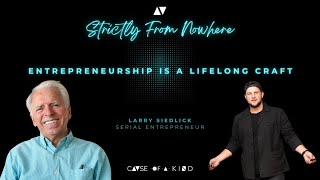
In this episode of the Strictly from Nowhere podcast, host Justin Abrams interviews serial entrepreneur Larry Siedlick. Larry walks through his multi‑decade career, beginning with a modest start after military service when he founded Sunrise Medical Labs, a medical‑diagnostic lab that grew from two founders to 450 employees before its 2007 exit. He discusses the core philosophy that guided his early go‑to‑market and sales efforts – building trust through transparency and hiring people smarter than himself. After selling Sunrise, he ran the ARX Group (a financial‑services firm for healthcare) and later pivoted into hospitality by buying and renovating a rundown Montauk motel into a boutique hotel that emphasizes art, music, and seasonal experiences. He then launched Left Hand Coffee (Montauk Coffee Company), turning a modest retail coffee shop into a full‑service coffee brand with its own roastery and online sales. Throughout, Larry emphasizes the importance of cultural fit in hiring, treating internal staff as “customers,” delivering exceptional customer experiences, and leveraging peer groups like Compel CEOs for shared wisdom. He also reflects on work‑life balance, noting generational shifts and the need to protect personal time while maintaining business momentum. Looking ahead, Larry plans to focus on expanding the coffee business and remains curious about new opportunities, including AI‑enabled ventures. The conversation ends with advice for entrepreneurs to increase their “surface area of luck” through networking and continuous learning.
Chapters
Welcome to Strictly from Nowhere, a podcast for tech founders by tech founders. Each episode explores the trials, tribulations, successes and some comedy as we follow innovators and their journey from zero to market. What's up everybody? Welcome to another episode of Strictly from Nowhere. I'm your host, Justin Abrams. I'm the CEO and co founder of Cause of a Kind. We build software and websites for you. You know, one of the things that I'm super fortunate to have in my early entrepreneurship journey is the pursuit of collective wisdom from other entrepreneurs that have been down this path, that have traveled through the trials and tribulations of business ownership and operations and doing all things right and wrong. And my personal goal, and one of the. One of the thesis of the Strictly from Nowhere podcast is to collect as much advice, wisdom, storytelling that I possibly can from those who have experienced business before me. And so one of the ways that I have gone about collecting wisdom, I must tip my hat to compel CEOs. Compell is a local Long island entrepreneurship and leadership program that my partner and I subscribe to and that gives us access to all sorts of individuals in entrepreneurship as business owners, founders and leaders of amazing organizations. And it gives me unbarried access to their wisdom. One of those individuals is joining me today on Nowhere. Larry Siedlik, a serial entrepreneur, has been in all sorts of industries across hospitality and other sectors. And we're going to unpack your zero to market story today, Larry. But welcome to this episode of Strictly from Nowhere. It's a pleasure to host you.
Well, thank you, Justin, and thank you for having me.
Yeah, it's my absolute pleasure. And you know, one of the things that's most valuable to me is increasing my surface area of luck and being as valuable to the people that I come into contact with as I possibly can. So while I aim to learn a whole bunch from YouTube today, maybe you might even learn a little something from me. And so I'm appreciative of your time, absolutely appreciative. You know how I like to start these conversations off, is learning a little bit about you. I know you at the surface level, but one of the interesting things that you and I had encountered in our recent Compel summit is my last name rang a bell for you and my mom appeared in your phone book. And so I know you have a previous life of other businesses that you've been successful through. But before we get into business, I'd love to learn a little bit about you, a little bit about the path that you've walked and Maybe a little bit about your human experience before we jump into business.
Well, I mean, I grew up here. Here on, here on Long Island. I've been working, working my entire life. Started when I'm 15 years old. Whatever it took to have a little spending money. So that was, that was always fun. And then after some time in the military, I went, went back to college and wound up getting a summer job in a clinical laboratory which does blood testing and things like that for doctors and hospitals, and got super interested in it. That was actually led me to my first career in the medical laboratory diagnostic business, which was my core business for almost 40 years.
And so if you recall going through that original business, coming out of the military, going through your original schooling, and then finding that business, business to stand it up. Do you recall, like, what your early tribulations were in going through a business? Like, did you operate it with business partners? Did you start as like a small organization? Did you begin with like a lot of capital that was dumped on a big problem from investors? Like, what was your original climate that you had to navigate through in starting that early business?
40 the original, the original climate was I had no money. No. So it wasn't, it was a little stressful. Yeah. But you know, I always say that building a business isn't about chasing an opportunity. It's about trying to create something, something meaningful that's meaningful to you, that's meaning to potential customers and things like that. You have to, you have to love what you're about to do. I personally discovered in my own personality what, what I loved most was I loved most about running a business. It almost didn't matter what the business was. I just liked the idea of controlling my own destiny and being able to, you know, run my life the way I wanted to run my life. So it was an interesting startup. You know, we started with a company called Sunrise Medical Labs, which started with just myself and another, another person working in room. 35 years later there was 450 employ. And that business, we exited that business in 2007 or so because it was just 24 hours a day, 365 days a year servicing doctors, hospitals, that kind of thing. It just got, it just wears you down after a while and the timing was right.
You know, I have a question, a curiosity of mine, especially in my, in my business development brain, from a sales perspective and a marketing perspective, and how do you represent yourself in the modern market as competitively as it is, and trying to just stand out and get some attention. The playbook of that Original business and trying to acquire first customers and your marketing motion and how you represent the business as valuable. Totally different strategy that you might have had to deploy back then in comparison to now. But I also know that you're a very modern entrepreneur and still have a bunch of very active, very relevant brands that you're working on today. So I'd love to do a little bit of a dual question here, which is do you recall what your marketing, advertising, go to market strategy was back then? And then of course we're going to matriculate into what are some of the businesses that you're running today and how has that climate shifted.
Some of some of the basic things stay the same. I mean we, at the time we were doing the medical laboratory business was extremely. You were competing against these gigantic companies that were well established, well funded. And the way, the way we built that business is one is I learned to, I think my one key business strength, I always tell people is that I know how to recognize smart people, people that are smarter than me, and figure out a way to be able to work with them. And so that's always been a key thing across all of my businesses. And I think a key factor in any startup business is building trust. When I say building trust, I mean building trust not only with the customers, the potential customers, but with building trust with the people that you work with because you get the most out of people. You help most people reach their potential by being as transparent as you possibly can and trying to establish a level of trust between yourself and the folks that you're working with and to translate that to potential customers, the customers, they hear, it doesn't matter what industry you're in, they hear a thousand pitches about I'm the best, oh, I have personal service. But you really got to work on that concept of why, why is your pitch believable as opposed to why should I trust you with my business?
You know, I often navigate that scenario today where I'm in a strictly service based business. My sales process looks like a trust fall. You know, I'm trying to get the individual or business on the other side of that call to believe truly that we are the fiduciary of their idea, that I not only am capable of bringing their idea to market, I build software and web experiences that not only am I capable of building that thing, but that I'm also truly invested in them and truly care about the results that they get. And so I find that some of these, your wisdom and how you represent yourself in the sales opportunity, this is not just a pitch. This is really about being an asset, an ally, a true partner to your customers and a valuable resource where they can go to where their knowledge stops that yours then can pick up for the future. And so as you fast forward now, I know that you're still very much active in business and you have a bunch of modern businesses that are, that are that I'm a customer of actually. And so I'd love to know like what is happening in the climate? Did you change industry verticals? Does that change your approach to acquisition of customers and partners? So I'd love to know a little bit about the evolution into the industries you're in.
Well, I think, I think that the evolution for me was prior to, I mean post sale of Sunrise, we had another business at the time that overlapped it called the ARX Group. And the ARX Group was a financial services business that serviced healthcare systems around the US and stuff. And then eventually we, we sold that business in 2015. I'm not, I don't golf and I'm not a sit on the beach guy. So I knew I was going to be doing something. So this opportunity came along to buy this old rundown motel out in Montauk block off the beach that needed a complete renovation. So we had some capital from the sale of the previous two businesses. So we wound up buying it and then renovating it into, you know, a boutique hotel that has a different set of customers base than we previously had. So I had to relearn what those customers want. Those customers tend to be more desiring of an experiential kind of service as opposed to just a. In the hotel business, here's a room and here's the beds are made and that whereas the customers for that particular marketplace are looking for an experience. So we built an experience around the hotel that was designed to kind of bring in a little music, a little fashion, a little art and stuff. You know, like our hotel lobby is an art gallery curated by our creative director. You know, our operations guy coordinates all of the, the fashion brands and all of the music selections that are brought in for the season because it's a seasonal business, summertime only. And that set of customers, they are built on again the experience, but they're also built on social media, which I'm sure you're very, very familiar with because you're basically our target audience. So it was like you had to do a lot of research as to what they wanted. Fortunately, I have two millennial children, so I was able to get feedback from them to tell me what their expectations were, which helped me give me the basis. But it was a definite learning process. But it's been super successful. It's a very hot spot out in Montauk.
Now, what's it called? I know what it's called. That's it. I've been there quite a few times. And you know what I find interesting about Montauk is a very interesting place for anybody that's listening that really doesn't know about Montauk. There's really nothing commoditized about Montauk. Like, there's a 711 that's like as close as you'll get to like a recognizable commoditized brand. Everything out there has its own unique wrinkle. Truly, truly a unique wrinkle place to open a business and sustain for a long period of time. And so there's a little bit of competition in the area for the hospitality space. Each one of those has its own little wrinkle. But you're all kind of appealing to a very similar category. Some of these places are a little bit bigger than others. Some are much smaller than your facility. But all of them are really kind of competing for the same, same type of attention and same type of foot traffic. What I find very interesting in my career, I've been fortunate enough to work with the most recognizable hotel brands in the world. I won't name drop them. They get enough credit all over. But if your brain is thinking like a household name brand of a hotel, I have worked with those and I'm fortunate to have. But I have very little experience on the business side of boutique hospitality. And so what I find very interesting, you even alluded to it, especially second ago, which is in those environments, it really is about the turnkey of the room. You know, it's all about a heads in beds scenario. And I'm not sure if that's like your indicator. I think your indicator is maybe, can I populate a party? Can I get general foot traffic through the hotel as. As more of like a visual artistic experience? Can I become part of somebody's vacation? So story, can that be the epicenter or the hub of a family or a millennial or generational experience where when they think of their trip to Montauk, they think about your facility that's very different than if you're going to stay at a Marriott or something like that?
Yes, it's definitely a different experience. I mean, the whole goal, the whole thing that we strive for is we strive to create. We want you to come Whether you're coming for two days or a week, we want you to go away feeling that one. You are immediately welcomed and being part of the family out there, because it is a very, you know, very social, very intimate kind of a placement talk. And you want people to go away and say, that was like, I'm gonna remember that for a long time. And, you know, the challenge is that you are. You're staying fresh. The model that we have now when you come to the property is not the same as it was, you know, a decade ago. It's constantly evolving so that each time a guest comes and stays with us, it's almost a little bit different experience than the previous day, you know, and.
So I'm very aware of the hospitality phase of your career. I also know that you're in additional verticals as well, if you're comfortable to talk about those. And then that will lead me into a certain series of questions around trials and tribulations of building different types of businesses and being a student of entrepreneurship. But are you comfortable to talk about the other verticals of business that are active at the moment?
I mean, the other. We have another business out there called the Left Hand Coffee, or the Montauk Coffee Company, and that started out as a retail operation not far from the hotel. One of the things that we recognize, and I do have a partner there, my partner Yanni. He and I both agreed that you could not get a good cup of coffee in Montauk. So we were like, you know, somehow that 711 coffee just didn't do it for us.
Wasn't doing it for you. Yeah, yeah, yeah.
So we thought, okay, this is an opportunity to try and bring a little bit more upscale, a little bit more unique coffee experience to the community out there. And so that's what we did. And it started off as we thought it was going to be this moderately successful business as like, an offshoot to the hotel business, and it turned out to be an entire business on its own. Absolutely. It's, like, super, super busy. And. And now we've recently added a. Our own roastery out there in Montauk also.
I was gonna ask.
Okay, so we're roasting there, and it's. It's. It's our own blends and stuff, and we sell it online and under the Left Hand Coffee brand. And it's just gotten super popular with a super set of loyal customers that just show up every day.
You know, it's the very first place. It's got to be 10 years ago at this point, if My math is right where I had Kyoto coffee. It's the first time I ever walked in and saw a literal chemistry science experiment to make one drip at a time. The richest, highliest, caffeinated, smoothest, zero bitterness coffee that I ever had in my life. And then of course that's pop. That's now become popular and I've seen that all over the place. But you guys were revolutionizing right out of the gate. And what I find very interesting about that business, having to know a little bit about the coffee business or just been around it and have quite a few friends that are involved in that industry. There's a lot of moving parts, a lot of moving parts about, about acquiring a certain quality of product at the root that you can offer. There's an experience that happens within a coffee shop that's memorable, that causes people to come back. There is this moment in people's day where you're providing them with the thing that is usually the catalyst of the next moment that they'll have. It could be the coffee right before they go to drop their kids off to school and how is that going to cascade their life? It could be the coffee right after a workout class and you're attached to a Pilates or a yoga studio. It could be right before, before a business meeting. It could be right before an interview. Coffee has like this intimate root in people's lives, but it's the intricacy of running that business. You first of all are finding people to work there that are truly talented. Like a barista that you would hire at left hand is not a commoditized barista that you would see at like a chain. These are like craftsmen of coffee. They know, they know everything from the nose of the coffee to its effectiveness to its, to its shelf life to its distribution to the way you pour to. There's so much science that goes behind all of this. So I find it very interesting. But I have to ask, when you first started this, this business, what was the thesis like? You just, you just wanted a nice cup of coffee, but how did it turn into a world class coffee experience?
I mean, one of the things I said earlier is that I think my one strongest business talent is, is recognizing smart, talented people. And my partner in that, Yanni in that business happens to be quite the coffee gourmet. I used to think I was coffee gourmet until I met him. And I'm going like he has a really, really super sensitive palate and he developed most of the most because his palate was clearly much wider than mine was. And he brought just a distinctive kind of a feel to the blends to the environment. And he's largely responsible for the way that business looks and feels to customers when they come in.
I can tell you it is one that stands out in my mind. I've had plenty of artisan, we call it third wave coffee in my day. It's hard to rival, it's hard to rival in my experience. In my mind, it's attached to, to some very important, formidable experiences out of my youth. I mean, Montauk is a place that I grew up and it's a place I go back every year with my family and like, it's that one place that I'm excited to go to to experience every time I go out there. You know, there's, there's literally maybe one or two places. Long time ago I'll just, we'll name drop. It was like the surf lodge to go for a party, but now I can't sit in the door. So forget surface camouflage, I'm going for a cup of coffee instead. So, yeah, I, I'd love to hear a little bit of the dark side of running business. You know, along the way we've talked about a bunch of the successes and active businesses that are happening right now. But, you know, I'm sure you've taken some licks along the way. And I certainly have my own stories of trying to go from zero to market and then be a sustainable organization. What are some. You could cherry pick this entirely, but what are some of the trials and tribulations that you went through that you had to overcome? And when you answer this, I want you to remember that the majority of the audience of Strictly from Nowhere is trying to build something from zero to market. Maybe it's first customer, maybe it's first investor, but also people that are trying to scale. They're stuck, maybe stuck at a revenue mark or stuck at a growth mark or something like that. So what are some of the challenges that you've experienced and where is some of the wisdom of overcoming some of those things?
Well, I mean, I think as I said earlier, it's one of the things you need to do is you need to figure out how do attract talented people to bring into your organization as you're starting up. In particular, it's important. I think if I had to look back and say what slowed me down was every now and then you would hire some people into your organization and a few months in you would know they were not a good fit for you. Culturally all right. And it's, I would say, make them available to the industry sooner rather than later. I understand it sounds so much more polite than saying fire them, but it doesn't. You need a cultural fit. And I always say, you know, that there's an old cliche, I don't remember exactly how it goes, but it's basically, you want to bring people into your company that are a good cultural fit and you should be hiring them for their behavior and for their skill set. You can help train them for their skill set. It's not someone. You know, we all have this idea of a checklist when we interview people to bring into our companies. And that process involves, oh, you know, how to do this. Oh, and you check off this box and you know, and you check, you go down this checklist of things without really discovering, all right, you know, what kind of a personality. And then, you know, they get hired because they've got all the right technical skills. And then you discover that their personality is an obstacle towards your growth and everybody. And it's a bad, toxic influence on everybody around them. So I would say, you know, you definitely want to make sure that the people that you bring into your organization are a good cultural fit for your vision of the business.
You know, it's one of the challenges that we have is it takes money to bring on talent. You know, definitely takes a. It takes a vision and like it's a chicken and an egg scenario. Do I bring on the talent because it can accelerate me to new revenue, or do I find the new revenue first and make promises to customers and hope that I can find the talent to backfill the role? I think different industries are going to have a different strategy as you move through that. And so my next question is over the different industries that you have been in. Has the strategy of acquiring good talent changed as you're building the business?
Yeah, you know what? I don't think it is. I think what we're looking for, if you look at, to me, every business is a service business in one form or another. Even if you're making products, it's still a service business. People have to interact with your business and they have to believe that you will do the right thing by them. And so I think what you want in most businesses is you want folks that are very customer service minded that they will do the right thing by the customer, even if it involves admitting that they may have made a mistake in where they rendered that service or product to them. If you stand by it and get them to Understand that you're going to do the right thing by them no matter what. It's, you know, it's going to come back to you in spades. And it builds, it builds your reputation. So the whole, you know, the marketplace now is mostly built a huge amount on peer to peer reviews of businesses. Of course, the customers trust another customer's review online. And there are dangers online, obviously, but the more people see the first thing that they do is you say, I want to do business with Justin. And then the first thing you do, but I don't really know Justin. So you reach out to friends and you say, does anybody do business with Justin? What kind of guy is he? What kind of company is he? You know, and those judgments are trusted more by the upcoming consumers. The previous thing where you did celebrity endorsement, I mean, don't get me wrong, there are still businesses that celebrity endorsements work for. But the reality of it is, is that especially in a startup business, it's those first handful of customers, you want to make sure they get treated right because they're the ones that are going to refer, refer you when they get that text message or that inquiry on social media saying, hey, who knows about this company? I mean, you have to protect your, you know, which back in the day when I first started, you didn't have to worry about your online presence and.
Right.
What did people write about you on online?
That's right. Yeah. That is definitely a massive shift in the way that people pursue different products, services and solutions. It's definitely very much crowdsourced. It's very influenced. And so I find that interesting. I'm seeing, you know, there's a big arc there of how that has changed originally, but the fundamentals were always true. Even though the way that you could record that back in the day was a little bit different, you'd still want to have those same fundamentals of providing customer excellence, of providing a service and solution that is worth referring, worth talking about. And so even though we have to protect ourselves of the way that is now evangelized on the Internet, the same fundamentals ring true. And so often I get, I give the advice to young business owners. The one thing that you don't really need money for is to ensure that you provide an excellent customer experience, especially if you are the face of your own business. And that doesn't necessarily even need to be foot traffic customers. That could be to your staff, that could be to your family members as you're building a business, a very stressful experience. Experience. So like, how do you make them feel. And when you have a life of serial entrepreneurship and you have your wife and kids going, oh, no, not again, because it's horrible for them. So how do you, how do you control the customer experience on all of those levels? That doesn't really cost any money. That really costs a deliberate, you know, a deliberate step of ensuring the experience that people want to get. And then hopefully you get some credit and some volume, volume on that and people recognize you for that experience. My next real question has to do with that, which is in a life of serial entrepreneurship, which kind of looks like this is going to be my path. It's just like you. I, I do golf and I do like to sit on the beach, but those often turn into very valuable first introductions for me because I can't stop talking to people. So I spread my surface area for luck. But I definitely am on the path of serial entrepreneurship and already have portfolio of companies that I'm proud of and trying to build from zero to market. How do you balance the rest of the experience of life with business? And I asked this a little bit selfishly, but I think that there are other entrepreneurs that are out there where they kind of maybe get a little bit stuck business focused only, and forget about the other things that create a life well lived.
Well, the, what do you call it? I mean, I think there's, there's a, there's a generational issue here. So when, when, when, when I grew up. All right, I've got a couple of years on you. When I grew up, balance, it was like, okay, and I'm gonna hold my hands up so you can see. It was like, okay, professional careers over here, personal life is over here. All right, but now it's the other way around for most folks. So, so you have to, you've got to get that. You know, it sounds cliche expression of work life balance. You've got to get that. You know, sometimes you, you need to have a family or a spouse or a partner that is willing to tolerate a little bit of that balance shifting every, every now and then. But as far as, you know, you can get people on board that can, that you can bring into your organization who add that ability of the original entrepreneur to take that personal time off. I've always subscribed to this theory that the old cliche is the customer is always right. So I say to entrepreneurs, I go, well, who's the customers? Me. My first set of customers of all the people in my company. That's how I view it.
Totally.
I have to Treat them right and I have to make them the number one priority in my customer list. And then there's the external customers who are they buy your product or service and if you want them to have a good customer experience, your number one customers in house internally have to feel like I'm being treated right and I gonna help this entrepreneur to, you know, when he needs to take some time for his personal side. I'm going to help him be able to do that by stepping in and letting him not worry about what's him or her word, not worry about what's going on.
That's some, that's some sound wisdom there. You know, I don't think we often think about our internal customer. We very often talk about the external customer and what is best for them, but who are actually the highest priority. If all of this kind of burns down to the ground, you still have your internal team and I think you have sectors of that internal team. It could also be your immediate family represents a customer that you need to have care for. So I love that idea. Often think about that. So that's a big takeaway for me today.
Yeah, I mean you have to expect like how is it that, how do you expect your staff who's going to interact most of the time with your customers? How do you expect them to do the right thing and to be give them a great customer experience if you're not giving them a great customer experience?%.
Right, you're 100% right. So I have a question. Cancer. Still don't golf? Don't sit on the beach. What's coming next for the serial entrepreneur Larry side like are you working on any new endeavors? Are you, are you feeling like you're coming towards the age of your retirement? Like what does it look like for me? I don't even know if I could sit still. I'm always curious about getting into new.
I always tell my children, I go, I'm going to save you a lot of money. That is because you're going to be able to throw my retirement party and my funeral on the same day.
There you go. I love it. So what comes next? Are we staying in this current industries right now? Do you have industries of curiosity with the advent of AI and how accessible technology is these days? Where are your curiosities?
Well, I mean definitely would like to probably work on expanding our coffee business which, which has we think a good potential to expand. We just have to get focused on it because right now we're like folk. We got the hotel, we got the coffee business. And then we have a little side yoga studio business.
Yeah.
Which is a whole other story. But it's, I think it's going to be focused on building that coffee business. And we're looking at, you know, opportunities to expand that business, and we'll take it from there. And then whatever we encounter along the way that we find interesting, we'll probably say that might be worth pursuing.
I love that. I love that. Well, Larry, I've enjoyed our conversation today, and as we round third base, I'd love to give you the opportunity to tell us how people can get involved with you and the things you care about. And where can people find you online or around town?
Well, what do you call it? I'm active, as you said, in Capell CEOs, which is, you know, I've been involved with that group for like 20, over 20 years, who they add serious value to helping me build those businesses in a better and a sustainable way. And it's, you know, I would recommend every entrepreneur coming up to find a peer review group that they can, they can participate in because that is where the shared experience, experiences add real value to your business. You know, entrepreneurship is, it's a, it's a lifelong craft. All right. It's. Every venture that you, that you do is, I like to say, is another, another brushstroke in, in the big picture of who you're going to become as a business and as an individual. It's you, you definitely want to, you know, you definitely want to, like, learn from every experience. Experience. I have an expression where I say, I tell people, I go, how I built a successful business by stealing every thought, word and idea that I heard from every person I ever met. It's like, it's, you know, the more people you meet, especially on the business side, the more people you meet, the more business ideas that you get and the more wisdom that you can, you can attain from. From those interactions.
Well, you, you cracked the code as to why I even created this podcast in the first place, is to increase my surface area for knowledge and try to not feel so alone on the journey of entrepreneurship. And I'm also, of course, fortunate enough to be part of compel, and they've been integral in shaping my business in its earliest days and helping us to mitigate mistakes and even navigate the mistakes that we have made. And that's just natural on the journey of entrepreneurship. But, Larry, it's absolutely a pleasure to host you on this episode of Strictly from Nowhere. It's a pleasure to be part of your network and dare I say, your friend and I thank you so much for your time and your wisdom.
Justin, thank you so much for having me. And I hope, I hope I brought some something of value and meaningful to both you and your viewers.
Thank you so much. And I'll see you at the beach house, huh? Got a couple months ahead of us. All right, Larry, see you.
It.