2021 Overwintered Nucleus Colony Snapshot Update
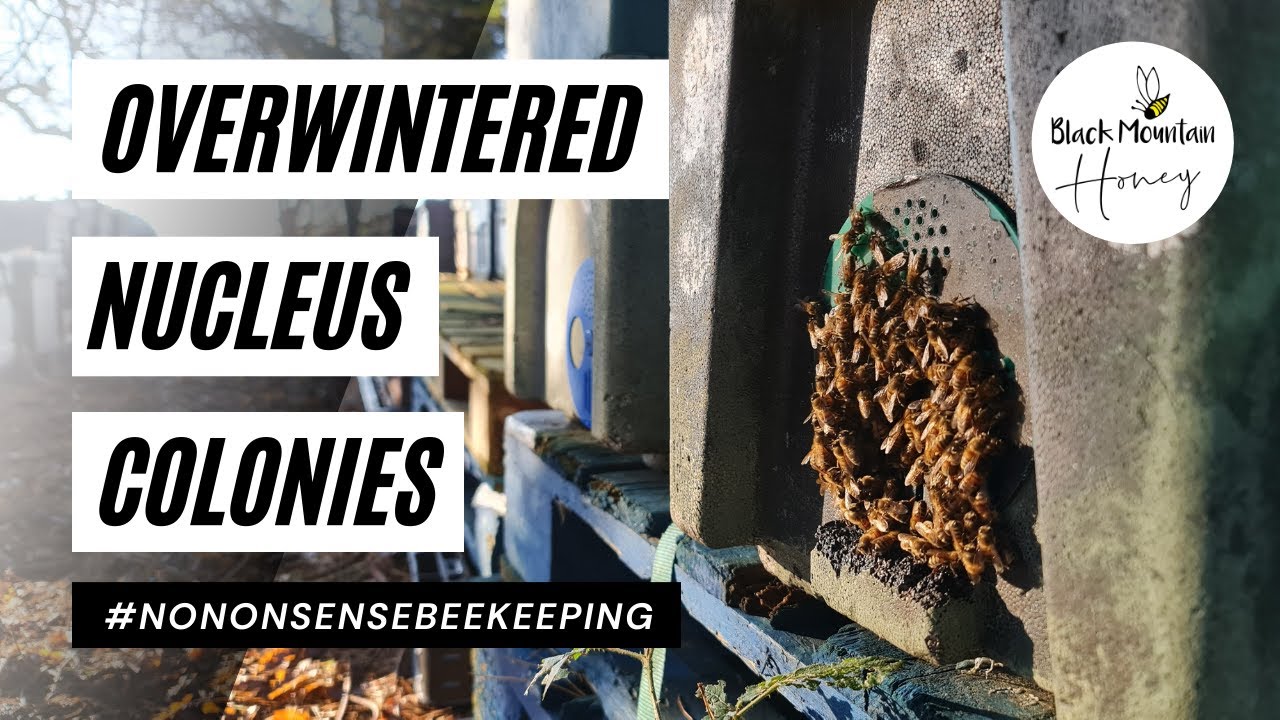
Laurence Edwards of Black Mountain Honey walks through 20 overwintered nucleus colonies sold out with a waiting list. He checks frame coverage, brood, food reserves, and fondant levels on each, noting which are strong enough to ship in eight weeks and which may not survive.
Chapters
Hi, I'm Laurence Edwards from Black Mountain Honey. Welcome to another episode of No Nonsense Beekeeping. Just going to give you a really quick look at some of the overwinter nucs that we're offering this year. Unfortunately, they are all sold out and we do have a very, very long waiting list, so we're not taking on any more orders. I just wanted to give people who have ordered the nucs a little bit of a snapshot into some of the nucs, show you how they're going. So we're not pulling out any frames, we're not doing anything like that, I'm just going around checking them, make sure they've got enough food, adding fondant if necessary. We'll run through, got about 20 nucs in this apiary, see what you think. So there's the first colony covering about 50% of the frames, really nice looking colony, really nice and gentle, a little bit light, so we're going to add some fondant. Next colony, nowhere near as big but still covering about a third of the frames. You really don't read too much into that this time of year, this is a good-sized colony. That is going to boom over the next 3 to 4 weeks. So it's always worrying when you see this, you open up the feeder and they've just polished off all of the fondant. My concern here is always that they've starved. Luckily, really nice big colony inside, so we've caught this one just in time. I'm going to add some more fondant, get these guys fed. So nice size colony there, again 50% of the size. This is probably about average, this is what we're looking for at this time of the year. Don't want them booming, filling all the frames, because they can just get through the feed too quickly. These will expand very, very quickly though. Now this one's pretty much full. Really, really big colony here. We're gonna have to keep an eye on this one because these will go early, and we'll probably have to knock them back a little bit because there's no way these can stay in this box for the next 6 weeks. So these will probably get promoted up to a full hive. Again, all of my fondant's gone, so I'm completely empty on fondant. Luckily I can see bees coming out there. Not as big, but 50%, really nice size. This is a good healthy nuc. Middle of February here, got another 8 weeks before these going out to customers. Over to a Payne's nuc now, really nice and heavy this one, really well clustered, probably 40% size, but loads of bees, just what we want to see. Another really nice big filled nucleus About 60-70% full, lots of bees, just what we want to see. Nice and heavy as well. Now this is one of our darker Welsh Black open-mated colonies. You can see they're considerably darker than the rest. These are actually on a 14 by 12. Now you can see the queen cage still in this one. This was a very, very late September split with 2 frames of brood. You can see they're full, they're They're pretty much full on that box. This is a Murray-McGregor Gelanta Queen. This one's not actually going out to customers, this is one of our own, but really, really nice looking colony. So a little bit of variation in this colony, you're talking 30%, and this is about as small as I'd be comfortable in saying these are probably going to get through. Definitely a lot smaller, but these nucs in poly nucs, they expand so quickly. So you look at the way they're clustered up, I'm confident these are going to get through. They're not going to be box fillers, Um, in the next couple of weeks, but they do grow very, very quickly. Now this colony here, this is a double brood, so these go all the way down to the bottom. Really, really big, nice strong colony here. This is— this isn't a nuc, this is like a full-size national hive. It's got 12 national frames in it, it's covering all of them. Really happy with this one. Now before I even lifted the lid on this colony, I knew it was going to be full because this colony here, it just always fills whatever box It goes in, it breeds that brood so, so quickly. It's a little bit light, needs a top-up on the feed, but can't argue with that. Middle of February, look at the size of that nuc. And then on to the colony next door. Really a lot of work to break that propolis seal, so they're not very happy with me. But yeah, look at the size of that, full to the brim with bees yet again. Lots of brood rearing going on here. These are strong, strong nucleus colonies. Now this is another one of the 2-frame September splits that I made. Definitely made it through. It's not quite as big as the other one, but that is a really good-looking nuc. Lots of weight in this. Really happy with these bees. Now, if you had to ask me any of the colonies that I had here if there was going to be one that was going to be dead, it was this one. I had loads of issues with this colony last year just in terms of getting queens mated, getting them moving, adding brood to them. They went into the winter a little bit weak, but they look perfectly fine now. Really nice-sized cluster there. Definitely one of the smaller ones, down to about 25% of the brood area on the top. But I'm almost certain we're going to get these ones through. Another one of the September splits there, as you can see, with the addition of the queen. This one's over 4 frames, probably covering 60% of the box. Really nice looking bees, very happy with these nucs. Another one of the September splits, as you can see, with the queen cage in there, covering 50%. Big strong colony, couldn't really get much better than this. So this is the smallest colony here I've got by a long, long way. Still covering 2 or 3 frames, they'll be clustered down there. I'm not writing this one off at all. Definitely one of the smaller ones though. Another one of my September splits, really looking nice, probably 75% there. You can see the queen cage in there. These guys are really, really doing well. I'm so happy with the state of these nucs. Now if I had to hazard a guess, I'm going to say that these ones aren't going to make it through. They're the smallest by far, probably only 20% in terms of an area on top, but something doesn't just look, just doesn't look a little bit right to me. So if I'm going to take 1 or 2 as a loss, I can take that. A couple of shiny-ish bees there, you can see that one. So whatever happens, this one won't be going out to customers. We always take less orders than the nucs we have because we factor in a few that are going to fail. If I had to make a shout, I'd say this one here is going to fail. Another big-looking colony there, probably 45-50%. Really nice weight to this colony as well. Lots of activity, lots of flying. Happy with these. It is astonishing the state of some of these colonies. They look so, so strong and they're nearly filling the box. This one here again, 75% full. Lovely colony of bees, really strong. Gonna make such a good nuc when we send it out to someone. So this colony here was a little bit light earlier on in the year, and this is the only pains one where I've had to slip a bit of fondant down there just to try and give them something. Seems to have done the trick though, they're over at least 50% and they're working the fondant, that's what the important thing is. Going to be a really good nuc to get this out to someone. Little bit concerned about this nuc here, considerably smaller than the rest, just not got a good feeling about it. You see that mould growing in the corner? Now these guys might prove me wrong, I've had colonies like this middle of Feb and they've been fine come the middle of April. Definitely one just to keep an eye on though. And the final nuc, nice to finish with a relatively strong one, plus the addition of a slug in there as well. We'll get that out before we send it out to anyone. But yeah, really, really happy with all of these colonies. So there you have it, that's a snapshot of 20 nucs in the apiary. Some really, really nice ones there. Around 8 weeks before they're going to start getting sent out to people, so middle to back end of April, and we're at the middle of February at the moment. So there's a lot of time for these guys to develop. The big important thing at this time of year is that there's enough bees for them to sustain their weight, and they've got enough food, and they've started to rear a little bit of brood. That's what's important. I will do a snapshot of some of these nucs before we send them out, compare it back to this video, and see how much they've grown in the last 8 weeks. So as always, thanks for watching. Please hit the subscribe button, please hit the bell so you're notified of every video, and I'll see you next time.










