3 Week Old Packages
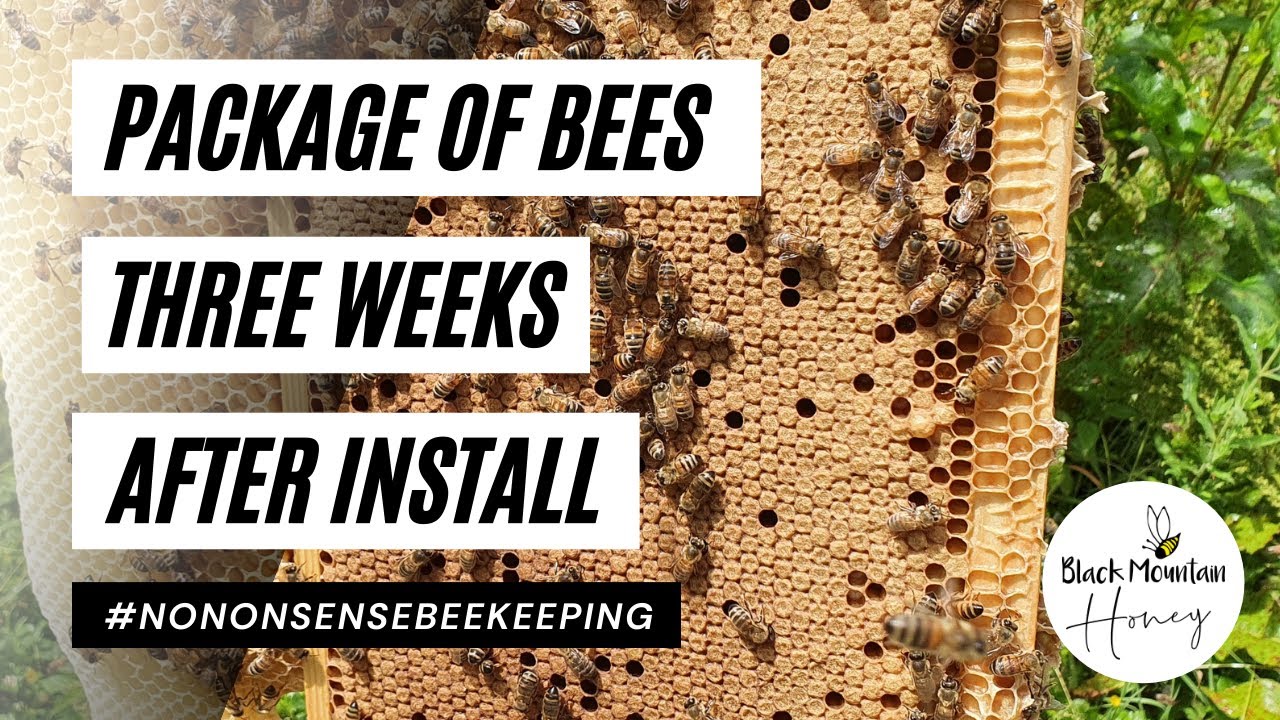
Laurence Edwards checks 60 bee packages three weeks after installation, finding an average of four frames of brood per hive and some already needing a super. With temperatures between 17 and 25 degrees Celsius and strong nectar flow, he walks through his split strategy using National Deep frames to prevent swarming later in the season.
Chapters
Hi, I'm Laurence Edwards from Black Mountain Honey. Welcome to another episode of No Nonsense Beekeeping. Today I'm going to show you what my packages look like 3 weeks after installing them. So I bought, uh, 60 packages this year. I had the first batch of 20 around the 20th of April And then I had the second batch of 40 around the 5th of May. So we're now on the 26th of May, got a week off work, so I'm getting loads of bee stuff done, which is amazing. And I just want to give you an update as to how incredible some of these packages are. So what I found with the packages, especially in this apiary here, is they're a bit of a mixed bag. And the reason for that is, if you've seen some of the videos, some of the bees flew off and they just kind of came back to whatever hive they wanted to. So on average, I've got about 4 frames of brood. I've got some that are on 3 frames of brood, and I've got some that are filling the box and needed to have a super. So I think out of the 40 I've got up here, probably 10 have got a super on now. And I'll probably super it up a little bit early, but I always kind of prefer to put that super on a little bit earlier, especially with the weather forecast like it is. You know what I mean? There's heavy flows going on at the moment. Today it's really, really cooled down to kind of 17 degrees, so it's a bit of a cooler one, but the rest of the week, 24, 25 degrees. Glorious sunshine and there's loads of plants still in flower and the brambles coming on as well now, which is really, really early, hence why I've got the super on this colony. And I'll show you the reason why. I mean, the bees are in there, they're repairing the old drawn comb, they're already up in that box. Not loads of them, but they're kind of moving their way up. So as soon as a couple more frames of that brood emerges, they're going to be into that super, clearing that and putting honey away in it. So I reckon next week, we might follow this up with a video next week I reckon they're probably going to be about halfway full in that box. But yeah, I just wanted to do this video to show you 3 weeks on what the packages are looking like, you know what I mean? They came, I shook them in, put a queen in, they had 2 frames of drawn comb and that's all they got. And they've been fed and then all they've had is kind of natural resources after that. So let's get in, we'll take a look at them. So as you can see there, do you know what I mean, they're moving up No way going to fill that with bees yet. I wouldn't expect that after a package after 3 weeks, but there's bees up there. That means when the bees' colony number expands, they're going to be straight up there. So what the bees are doing up there at the moment is they're cleaning it out, getting that comb ready for some honey that they're going to bring in. So for the purpose of this video, we can safely remove the super. Nothing to see in there for the time being. And as you can see already, there's quite a lot of bees. So they've not completely filled that box out yet, but there's— it's a 14 by 12 box, so each of those frames represents maybe 1.5 times the brood. So if these are in a brood box, standard national brood, they'd be absolutely jam-packed by now. So first frame there, as you can see, they've probably drawn about 2/3 of it out, and then they've drawn the other side of it out. So they've moved all the way to the rear of the hive. Just going to rest that frame on there. And then that frame is basically syrup, lots of fresh nectar in there. And they started to cap it off as well. So what I would do with this one is I will remove that and just reorganize it a bit. And then we're into brood. So all of that there is brood. This is why I like 14 by 12. It gives me that safety net. It gives me that ring of nectar, the ring of stores, just in case we were to have a drought. Not that that's looking likely in North Wales at the moment. No. Glorious sunny weather. So yeah, on that side as well, full amount of brood. Then we've got a lovely frame of capped brood there, and as you can see, we've got that ring of nectar as well, the ring of capped stores all the way around it. Capped stores at the top, bit of nectar at the bottom. And then the same on the other side as well. So that's 2 really, really big frames of, uh, brood at the moment. Brood in all stages. First one was eggs, a little bit of capped brood. This one, all capped brood. So then I've got my National Deep that I put in here. The reason I put these in was to keep the colonies in here, so these will get removed later on in the season. I've got 2 of these in each hive, and then once I've got my breeder queen up and running and I've got grafts ready to go, I'll split these off, take the drone comb off the bottom, and then I'll make up 2-frame nucs using all of these. So it's a good swarm prevention tactic because each package will get an additional 2 frames of foundation And it's a good way to split the nucs off as well and get what I need. Like I said, I've got 60 of these packages, I've got about another 30 nuc colonies as well, so I've got about 90 in total. Each have got 2 frames, so I've got lots of resources there to make up my nucs without really, really hurting these colonies. Same on that side, loads of drone— loads of brood, really, really healthy, friendly bees. Next frame, absolutely jam-packed with brood again. Nice ring of stores, nice ring of pollen, really nice laying pattern. There's the Ginger Bullet, as I like to call her. Um, really like this queen, really like this colony. Nice temperament, but also really, really nice pattern. Really, really quick off the mark. That's what I like to see. There's my second national deep frame. You can see quite a bit of drone brood in that one, but they're filling that back, filling that with nectar. Like I say, this will become part of my nuc, so these will get removed and get filled up with normal 14 by 12 foundation. You can see it's a nice amount of pollen on that frame as well, with some drone brood as well. And then the final frame, they've just filled it out and the other side is foundation. So I always like to turn them around at this stage, so I'll put the foundation facing the colony, gives them a bit of a kickstart, and then they go and help draw out that foundation. So it went in that way, I'm just going to flip it round. So as you can see, really, really healthy looking package. You've got about 6 frames of brood there, but it's— they're 14 by 12, so essentially you're looking at about 9 frames of brood. So they've pretty much filled the brood area. You might be asking why I put the super on so early, and like I said, it's a— it's to do with the weather. I'm expecting a really, really strong flow. I'm expecting the numbers to skyrocket, but I'm expecting the amount of nectar that's going to come into that hive to go up very, very quickly. And what I want— what I don't want them to do is I don't want to fill those spare 3 frames of 14 by 12 foundation in the brood area. I don't want them to fill them with nectar because then that's a classic way of getting them to swarm. There's no real negative, we're just giving them just that little bit of extra room. It also gives me a bit of contingency and it means if they do swell and fill that box without me realizing, I've got a little bit more time for kind of swarm preparations. So I'm really, really happy with the packages. That one is towards the higher end, it's definitely not the biggest though. Some of them have actually filled out that box. I just picked one at random. Um, and then some of them a little bit smaller as well, but I'm really, really happy with where they are at this stage of the season. That's huge, do you know what I mean? It's 26th of May. Give that one a couple more weeks and that is going to be a true foraging colony. Um, and hopefully if the weather sorts itself out, that'll just be past the June gap. So I'll make sure that they've got enough food to get through the June gap if we do have one this year. Um, and then as we get onto the summer flows They'll be ready for that, and I'd kind of had them earmarked for late flows, so balsam and heather, but it's looking like they're really, really kind of advanced of where they should be at this stage of the year, which is great. Really, really good for me. Like I said, those 2 national deep frames that are in there, I'll be taking those out. I'll be using those for splits. It's a good method for kind of keeping swarming low, so I'll be doing that probably in the next 2 weeks. So once that box is completely full, I will take those 2 frames out, I'll make up a little 2-frame nuc with them, I'll add a queen cell from my breeder queen, I'll leave that queen in the box and I'll just replace it with 2 frames of foundation, and then that gives the queen some additional space to lay within the 14 by 12 brood box, which should suppress the urge to swarm kind of towards later on in the season when they're a little bit less likely to swarm. So the bees are having great fun coming and stinging me. I've got one in the eye, one in the chin, So we're going to call it a day for this video. Um, they're a little bit tetchy. Maybe the flows aren't kind of going very well today. So I hope you've enjoyed the video. We'll update it again in a few weeks. Please subscribe to our channel. Please hit the bell so you're notified of every video. I'll see you next time. Bye.










