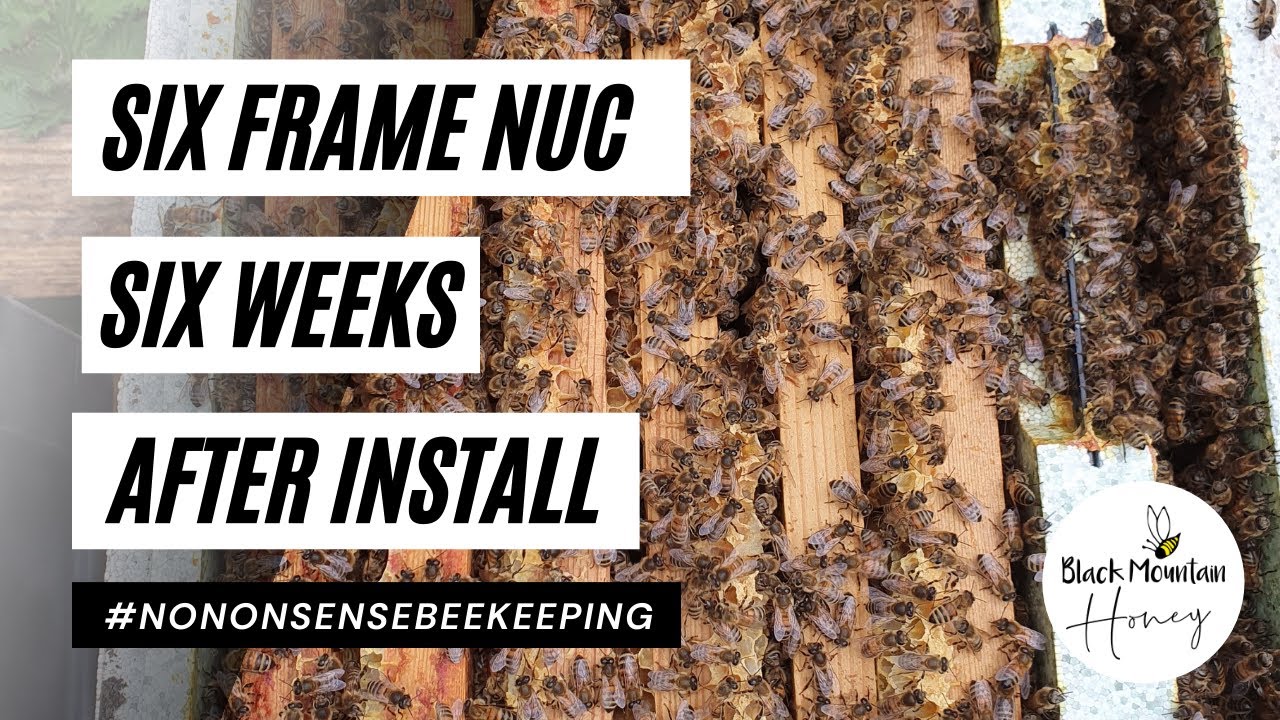
In this episode of No Nonsense Beekeeping, Laurence Edwards of Black Mountain Honey provides a detailed walkthrough of a 6‑frame nuc he installed six weeks earlier. He shows a heavily honey‑filled top box ready for extraction, a clearer box currently being cleaned and prepared for honey storage, and a brood box packed with brood and nectar. Edwards explains how the strong spring weather in North Wales drove rapid colony growth, leading to nectar overload in the brood area that could trigger swarming. To prevent this, he removed nectar‑laden frames and redistributed them to weaker colonies. He discusses the timing of nuc purchases—ideally in mid‑April for overwintered nucs—to maximize spring and summer honey yields, estimating a potential £50‑£60 harvest per colony under favorable conditions. Throughout, he offers practical beekeeping advice, emphasizes the importance of monitoring flow and brood dynamics, and encourages viewers to subscribe for more content.
Chapters
Hi, I'm Laurence Edwards from Black Mountain Honey. Welcome to another episode of No Nonsense Beekeeping. Today we're going to be looking at a 6-frame nuc that I installed 6 weeks ago. So they're in this box here, and I'm really, really happy with these nucs, you know what I mean? Early on in the season, I had big strong, healthy 6-frame nucs, 5 or 6 frames of brood, and I've installed them into my hives. You might have seen the manipulations that I did. So they came on a national frame and I moved over to 14x12, so I went through various manipulations. You might have seen the videos. I wanted to get the bottom 14x12 box full of brood and I wanted to get honey upstairs onto the national frames. So these are previous videos, you've seen these hives before. I just wanted to give you a quick Update to show you what the 6-frame nucs have turned into in 6 weeks. So the weather in North Wales has been glorious. I wouldn't say this is kind of average growth. You definitely don't get kind of performance like this every year, but the weather's been good, the flows have been strong, and this is what it's ended up with. So the top box is so heavy, like absolutely jam-packed full of honey, that top box. All of that is ready for extraction, and the reason that's on the top is because I'm waiting for the clearer boards to go into the middle, just waiting for that flow to die down, and then I'll clear them down, maybe put a little feeder if we get a June gap. But that top box looking really good. So just to give you an indication of some of the frames, you know what I mean, full from side to side, probably maybe 50%, 60% capped, but that'll be capped very soon. And every frame is the same. So that's ready for extraction now. You can tell, done the shake test on it, absolutely nothing coming out, but we'll give it a few more days because there's still a good flow on. Really, really nice top box of honey. Lovely white cappings. So we'll pop that box to one side, if I can lift it. So that top box, not only was it full of honey, it was full of bees as well. Now this next box is my clearer box, so I'm waiting to put the clearer board on there. I'll put the top one on the top. So as you can see, plenty of bees in there. No stores though, no brood. I mean, they're working that out at the moment. They're drawing out all that foundation where it was foundation and cleaning up the existing drawn comb that I've put in there, doing a really good job of that. So, I mean, give it a week, that'll be full of honey, no doubt. And then we go down into the brood area. Now what I've had to do in this brood area, because these guys are so prolific, is they're filling up the brood area with, with nectar as well. So not only have they filled an entire brood box with nectar, they filled about 3 or 4 of the frames in here as well. And if you don't clear these frames out, that's a surefire way of getting swarming. So what we've done is we've taken those frames out and we've just given them to some weaker colonies, and then we'll have to deal with them at a later date. So you know what I mean? So that frame of foundation, that was completely drawn out. That was all nectar. Same with that one. Do you know what I mean? They're jumping straight on it. They're going to draw that back out. So those two frames there, do you know what I mean? That was one of them, pollen and nectar. And I've distributed the other ones over there as well. This was wall to wall with brood and nectar. So then we jump into the colony again. You've got a full frame of brood there, really nice amount of nectar and stores around the edge, not too much but just enough. And then you're into the brood factory, so that's all brood. That's a really, really nice frame of brood. That's a nice frame of brood. That's all brood. That's all brood. These guys don't mess around. Whole frame of eggs. Whole frame of eggs. Eggs and brood. Brood in all stages on these ones. Food in all stages, and then we've got like a mixture of nectar and eggs in these ones, and then they're just finishing drawing that one out there. So a little bit more space. I mean, so I've had to be a little bit proactive with them. Like I say, I've taken 3 frames of nectar out of here as well. But there's 1, 2, 3, 4, 5, 6, 7, 7 really, really good frames of brood all the way to the edge on a 14 by 12 format. That works out about 11 frames of national brood, so not really a big colony. And this was a nuc 6 weeks ago. So when people come to me and say, will I get honey in my first year as a beekeeper buying a nuc from you? You might. I mean, I'm not going to guarantee it. I'm not going to say, yeah, you'll get this much honey. This is definitely one of the better performing nucs. I've got some that aren't performing as well, but they've still pretty much filled the box and they're kind of starting to fill the honey now. Maybe got half a box of honey. But if you buy the nuc at the right time of the season, so if you buy that overwintered nuc off someone, getting it kind of in the northwest North Wales, kind of middle of April, really, really good time to get a nuc. You've got a chance of kind of this rapid expanding and growth to give you a good crop as long as the weather plays ball. So I just wanted to give you a heads up. I mean, this is the kind of growth that you can expect to achieve if you're buying a nuc from a really good reputable breeder and the weather is on your side as well. So yeah, really happy with this. I mean, that brood box there next week is going to be full end to end with brood again. And I have no doubt they're going to have filled that additional box up as well. So if the weather, I mean, the weather goes to plan, you're talking maybe £50 or £60 here from a summer crop from one colony. Sorry, as a spring crop from one colony, which is really, really good. Let's just hope we get some rain, we get a June gap, and then we can go forward into the summer. So that's it for the video. Just wanted to give you that quick update. 6-frame nuc in 6 weeks, this is potentially what you could get. So I hope you've enjoyed the video. Please hit the subscribe button. Please hit the bell so you're notified of every single video we do. I'll see you next time.