A Look Inside ANOTHER Abandoned, Neglected Colony - No inspections for 2 Years!
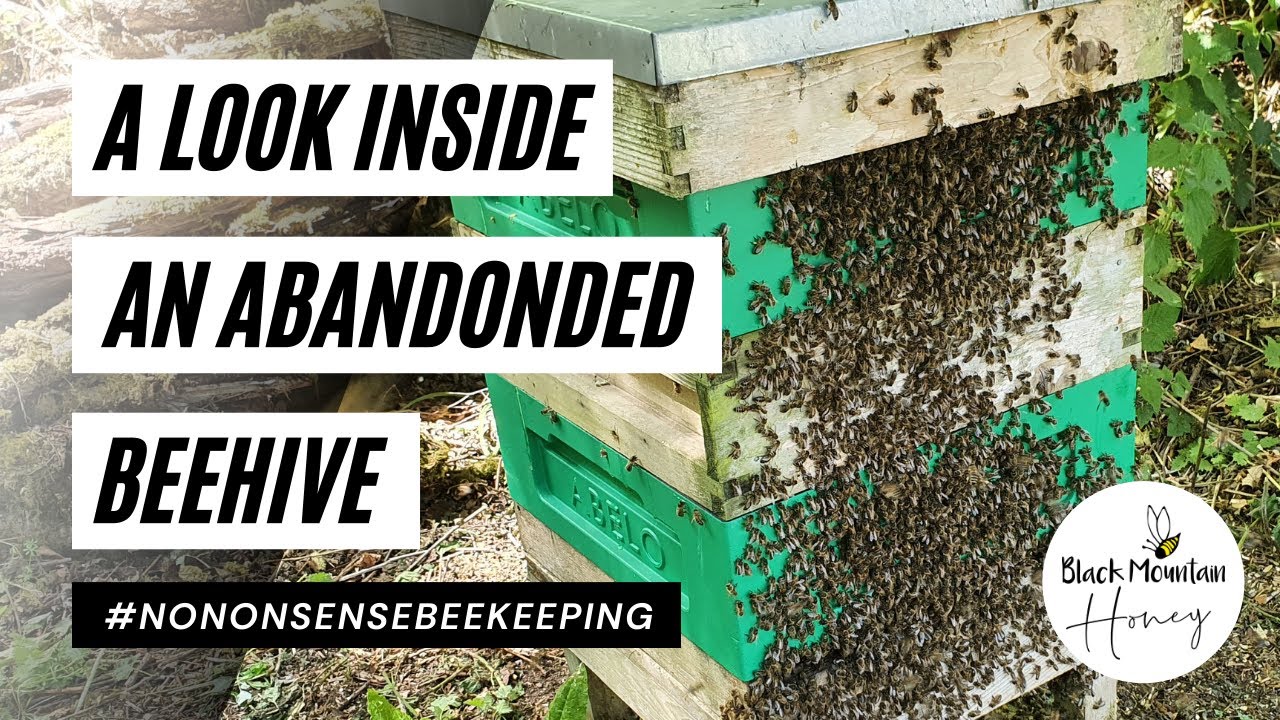
Laurence Edwards rescues a four-box hive abandoned for two years, finding only a small nucleus of bees and a queen. He walks through inspection, feeding 2:1 sugar syrup, applying varroa controls like Apivar strips and oxalic acid, and winterizing the colony in isolation to prevent disease spread.
Chapters
Hi, I'm Laurence Edwards from Black Mountain Honey. Welcome to another episode of No Nonsense Beekeeping. Today we're going to take a look into an abandoned, neglected hive. So we did a video like this earlier on in the year where I went to an owner's property and they had an abandoned hive that hadn't been looked into for a couple of years. And the exact same thing has happened again. So someone rung me up and said, I've got a colony that I haven't looked at for a couple of years. They completely lost interest in beekeeping. Can you come along and just take it away from the property? I don't want it here anymore. I'm moving house tomorrow. I need it gone. Please help me take this hive away from my property. So that's exactly what I did. He said to me, it's 4 boxes high. Absolutely jam-packed full of bees, loads of activity, they're all over the place, please help me come and move it. So I got to the property and I didn't want to do the video there because the guy was a little bit distressed. So I started to remove the boxes to get it to a point where I could get it into the back of the pickup truck. Took the roof off, took the first box off, nothing in it. Second box off, nothing in it. I thought, get this, this box is guaranteed to be empty. He's telling me it's full. He's telling me it's 4 boxes high full of bees. It wasn't. Got down to the final bottom box and there were some bees, and that's what I'm going to show you today. There really, it really wasn't that many bees there, but there is probably maybe a nucleus worth of bees in there. And it just goes to show you, it's kind of back end of October at the moment. This hive has been neglected. And I stopped and had a chat with the guy afterwards, and he told me that he's probably lost 4 or 5 swarms throughout the season, but he didn't know what he was doing, so he didn't know how to intervene, didn't do any inspections. And this is what happens if you neglect your hives over the season. If you just get a big colony and you put it in a garden and you don't do inspections and you don't treat for varroa and you don't do any of those things, this is what you get. You get a Small, weak colony that all of its resources has kind of flown off over the horizon and gone somewhere else, and you're just left with the absolute bare minimum. Now, that's not to say that what is in this box isn't going to become a really nice colony next year. I'll open it up in a bit and I'll show you what is in there. And I mean, the purpose of this video is to show you what, what this has become, what happens if you neglect your hive, and what you end up with. But also I'll show you how to give it the best possible chance of getting it through the winter and then making the most of those resources as you go into the new year. So that's what the video is going to be about. They're all sealed up in here at the moment. I've got a floor for them to go on. We're in a segregated part, so we're in a different apiary to normal. Obviously I don't want to kind of bring any disease risks into any of my apiaries, but also a bigger kind of impact at the moment is I don't want to bring any varroa-laden colonies into my apiaries where I've treated all of my, all of the other colonies. You quickly get drift between colonies and they quickly reinfect other colonies with varroa, so you really do need to kind of have somewhere separate and segregated from all of your other colonies if you're moving potentially diseased colonies over at this time of the year. So I'll get my bee suit on and you can take a look at this neglected abandoned colony. Right, so I used an upturned Suiyenti roof as the base for this. I didn't block up the colony as it was, I just moved the box in between a— in between 2 roofs to move it. So the first thing I need to do is take the roof and the crown board and the brood box that the bees are in and just place that onto a floor just so the bees can get in and out and there's no risk of me crushing the queen. So I expect them to fully kind of fly up and get me. Not entirely sure what the temperament of this colony is like. Then the next really important thing to do on that floor there is just check to see that the queen's not there. Really, really careful. Have to be so careful at this time of year to make sure you're not killing the queen and to make sure there is a queen in the colony. So thankfully there's no queen there. We'll just leave them at the front. So then, as you can see from the video over in the corner, there's really not much to, to this colony at all. It's got some food in there. I'm hoping we'll find a queen, we'll find some brood. We need to note and we need to make sure that there's something that's worth saving. These guys have not been treated for varroa, so I'm probably gonna find that Deformed wing virus. Hopefully it's not that bad, but I just don't know until we get in and we start to take a look. So the bees don't look too unhealthy. There's no noticeable deformed wing virus from what I can see at the moment. I'm on to the second frame. I still can't see any brood. I've not found the queen, but they're relatively gentle bees, which is quite nice. Just being really careful that I don't crush that queen. Or drop her into the grass because it's a late season inspection. And now I'm 4 frames in and I can confirm that we've got a little bit of worker brood. So that's really, really good news. That means there has been a queen in here. Um, it wasn't really a difficult kind of method to get them removed, so I'm pretty confident the queen will be in here. Take me a little while to find her, maybe. Well, I found the queen. She's on this frame and there's a big hole in it, and she's just burrowed herself down into the back of this comb, and I just can't get her out. So I'm not going to risk damaging the queen, but I've seen her. That's the most important thing. I've seen her and I know that she's on this comb. So I'll put this comb back really gently. And then what I'm going to do to the colony is I'm going to get a feeder on it because there's about 3 frames of brood in there. It's really difficult to get a close-up shot of that brood. But there's a queen, there's some brood, there's not that much food. So what I'm going to do is I'm I'm going to get a feeder onto them. I'm going to get a polystyrene feeder, which means I get some good insulation on them as well because they are in a wooden hive. So insulation above is really, really helpful. I'll give them some 2:1 feed and I'm going to put some Apivar strips in there because they've not been treated. I'm going to give them an 8-week treatment of Apivar. I'm also going to give them a Christmas blast of oxalic acid, so some Apibioxal, just to give them that bit of a mite drop. I mean, these treatments, they're too late. You really need to get in there early, like we've said, kind of back end of August, early September for your varroa treatments. But on a colony like this, you've just got to make do with what you can, get those treatments in when you can get them in. So there's about 6 frames of bees in here, and there's only 3 frames of brood, so I'm only going to use one of the 2 strips of Apivar. Just going to place that in down the middle. I haven't got a screw or a toothpick for the Apivar, just forgot it, but the feeder will hold it in place, so you don't really need to use it, but it is preferable. And then you just want to put your feeder on and get some syrup in there for them. Now, we've done the video showing you how to weigh your hives, how to feed them to weight. You want to get a nice good glug of 2:1 syrup in there. So this colony, because it's so small, it's probably not had a real influx of kind of any food for a good while now. So hopefully the, the queen will respond well to that. Still relatively mild for kind of back end of October, so hopefully she'll take some of that syrup. They'll store the majority of it, but she should kind of give you a little flush of late brood, and that will help with the numbers for the I forgot to say, always kind of take the lid off like that, crack it, and just dribble a little bit down. It's a new home for them, they're not sure where that feed's coming from. Always good kind of good habit just to trickle a little bit down, and it helps them kind of go up there and find where that feeder is. Get them nicely strapped up, and that's all I would really do for winter. I mean, there's not a huge amount to see. There's not a huge amount to do. It's all a little bit too late. But if you do come across a hive or a colony at this time of year that needs a little bit of help, or someone's kind of abandoning it, that they're the steps pretty much that I would follow. Get them into some suitable equipment. So here we've got a Suyenti floor, a cedar brood box, a Suyenti poly feeder, and a Suyenti roof. Get some feed into them. They're probably going to be light. They could probably do with a feed. You don't need to check for the queen, but I think, I mean, if you're going to put the resources in, you might as well just quickly go through and double-check that they're there. Those frames were all over the place anyway, so there's no harm going in and checking. And then try and do a late season varroa treatment just to give them that kind of relief from the obvious varroa load that's going to be there. And that's about it. As always, I hope you've enjoyed the video. Please hit the subscribe button, please hit the bell so you're notified of every video, and I'll see you next time.










