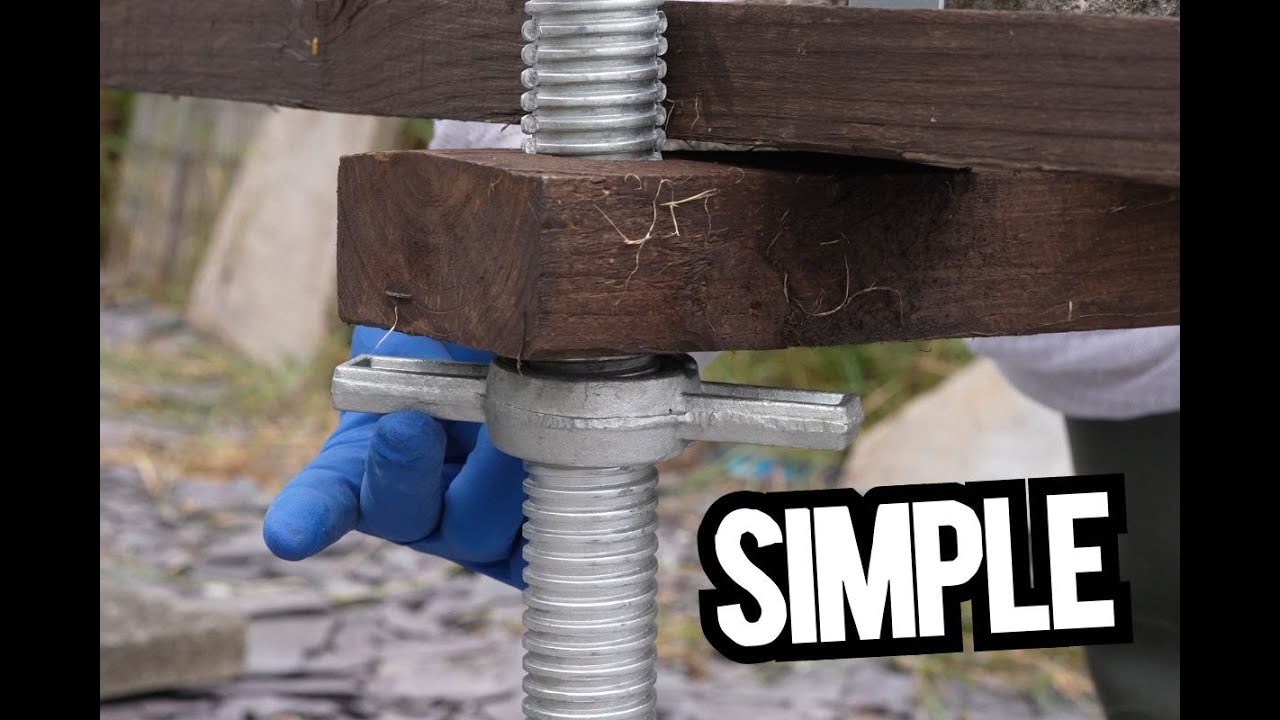
Laurence Edwards visits Adam's apiary to see a hive stand made from scaffold jacks, galvanized brackets, and timber rails. Each leg costs about £7, totaling roughly £45 for a full unit. The adjustable jacks level the stand on uneven ground and tilt it slightly for drainage.
Chapters
Today we're looking at a really unique design of hive stand. So I'm in Adam's apiaries, we're doing loads of videos, it's taking much longer than Adam thought it would take, but we are here talking about these hive stands. Now these are really, really cool. Tell me about why you needed a hive stand like this, but most importantly, tell me how you made them.
So I, I've made the ones, as you can see, in the previous video, and they work well, but I wanted something that I could add more to a lot easier. I wouldn't have to keep building more every time I wanted to add a new hive or a nuc. And these— this rail system works really well because you can add, as you can see, multiple nucs which will progress maybe into full hives next year, and just keep adding. And it's very easy once you've got the initial setup. And also on the— it doesn't have to be perfectly flat.
That's what I really like. So they're fully adjustable. So each leg is adjustable. So you basically level out any inconsistencies. But what are these clamps like? What are they? Where'd you get them?
So they, I actually, it's not my idea. I saw it, I think it was the Apiarist site. Very helpful. A lot of different styles on there. And this one there, so these are scaffold jacks and he tells you basically exactly what to do and maybe just adapted it a little bit to suit the apiary. But yeah, as you say, you can put them as high or as low. It doesn't have to be perfectly flat. So, and the weight of the hives will hold them in place. And then you can just put a piece, eventually I'll put a piece underneath and I'll strap the hive to that over winter.
So scaffold jacks, they are like, they're solid, solid metal, obviously been coated in galve here, galvanized metal. How much were these?
Maybe £7, £8 each, which is—
Really, really cheap. So you've got 4, so you're making up kind of like £32 for the metal, maybe a couple of pounds for the galve brackets there, and then just the cost of the timber. which you can get free if you've got any skips nearby. But brilliant, that's great. So that's probably cost you no more than, say, like £45 for a big hive stand like that?
Yeah, we had— we took a fence down, so we had the rails already, which is even more helpful. But the other thing was, you can turn them on the other end to give a bit more strength.
Yeah, stronger that way.
I just thought I wanted a bit more surface area to hold the hive, and that's why I've added a middle piece as well.
Okay.
give more support, that they're not going to be a sag in the middle if I put a full hive on there.
How strong are they?
I don't really want to test, but, uh, yeah, pretty, pretty strong.
Yeah, they, they are really strong. You can tell. I know there was a bit of— I know there was a bit of wobble there, but you could tell. I was going to stand on it, but then I thought, I don't want to break them, and I weigh quite a lot. Um, excellent. I love stuff like that. So, so it's as simple as you buy the jacks, £7 each, drill Drill some holes and then you just kind of like spin it around like that to get it.
Yeah, I like it.
And then look, as I'm kind of like rotating that up there, just I'm adjusting the height of this. So if that's like slightly out of level, you just—
Yeah, spirit level. And you can get that slight decline of the hive as well.
Yep.
It's supposed to sit with— to let the water drain out.
The water tracks out. Love it. That's a brilliant design. Definitely, if you're interested in making yourself a hive stand, these are really, really cool and they don't cost a lot of money.