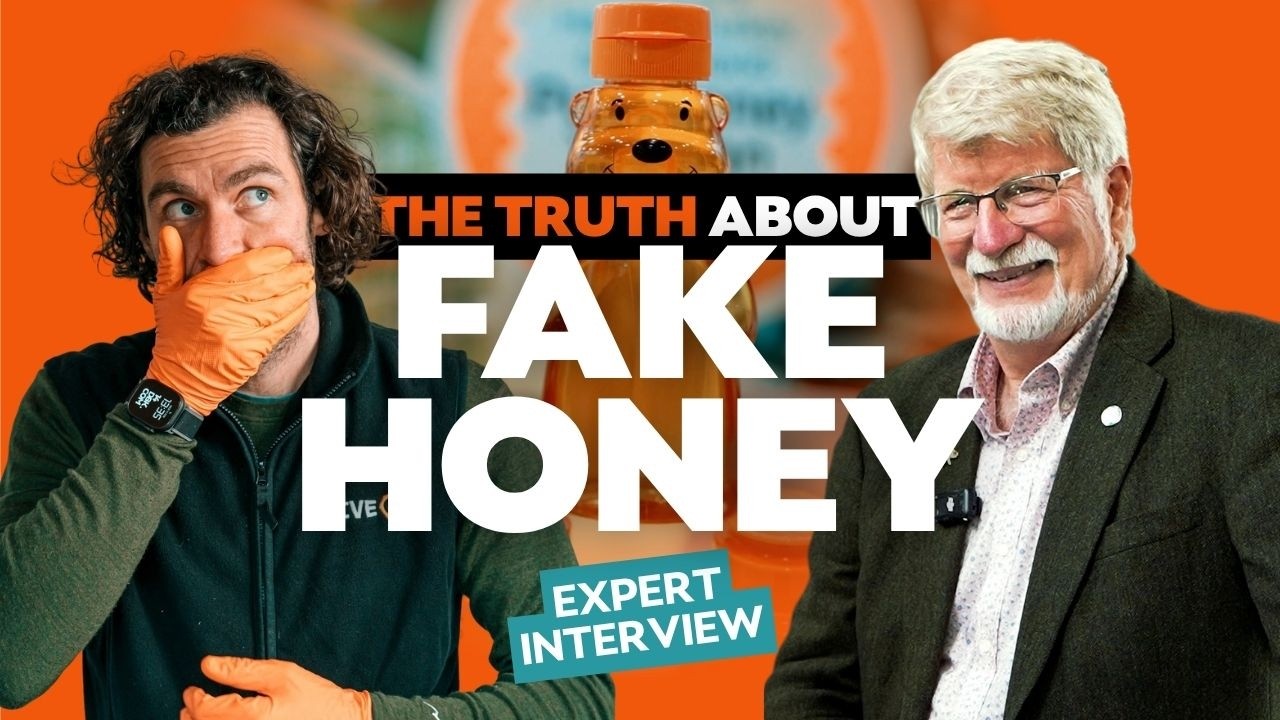
In this YouTube interview, host Laurence Edwards sits down with Jeff Pettis, the president of Apimondia – the International Federation of Beekeepers' Organizations. Pettis describes Apimondia’s role as a global network representing beekeepers from over 124 countries, highlighting the scale of its biennial congress in Copenhagen (8,000‑5,000 attendees). The conversation moves through the breadth of bee‑derived products (honey, wax, venom, pollen, propolis) and the ecological web surrounding a hive, including wax moths and the invasive small‑hive beetle. Pettis shares his personal beekeeping practice (about 80 hives used for relaxation and modest honey sales) and his scientific background with the U.S. Department of Agriculture. They discuss how modern beekeeping blends art and science, noting the surge of sensor‑based innovations that monitor hive weight, humidity, and health. The interview pinpoints two major challenges for the global beekeeping community: (1) pests, diseases, and pesticide exposure threatening bee health, and (2) market pressures such as honey fraud and low prices that undermine beekeeper livelihoods. Pettis outlines his presidential term (four‑year term, re‑elected, serving through the upcoming Dubai congress) and emphasizes the need for continued collaboration, innovation, and fair market practices to sustain beekeeping into the 21st century.
Chapters
I have managed to snag Jeff Pettis, the president of Apimondia, and I think I'm just going to stop talking and let someone who knows what they're talking about get on. Jeff, hey, absolute pleasure.
Lawrence, glad to be with you.
Yeah, yeah, I am blown away by Apimondia. You have outdone yourself again. Tell me about it, tell me about Apimondia, what's it all about?
Well, so we're the International Federation of Beekeepers Organizations, and we represent beekeepers from all over the globe. And here we are in Copenhagen, Denmark. We have over 8,000 5,000 attendees at this conference, 5-day conference, 124 countries represented. So it's like, yeah, I mean, we're delighted. We're delighted with the turnout. And, uh, yeah, bees, bees expand all over the globe.
Yeah, so the biggest challenge that we have in the UK that I find, yeah, is getting beekeepers to agree on stuff.
You probably know what I'm feeling.
How have you managed that on such a huge scale? Like, we do it on a tiny little scale and we fail in the UK. You've succeeded on a global scale.
Yeah, we haven't really succeeded. When we come together, we still have discussions, sometimes heated discussions. But no, I'm from the US, and in the US we have 2 big national organizations because they can't quite agree. So it's very common. Beekeepers are an independent type, pretty much. But for this, for the Congress here, First of all, we move all over the globe. Every two years we're in a different place: Istanbul, Chile, now Copenhagen. We're going to United Arab Emirates. We were in Korea. So we move around and make friends in all those corners of the world. But no, beekeepers are a they're just an independent lot. But when we come together, we feel like a big family.
We we really do. And that's what I love about it here because you've got people here selling honey. You've got people here selling hive tools and different types of beehives. But then people collecting venom, and it's like, it's bigger than just the bees in the hive, isn't it?
It's much bigger than just— much bigger than the bees in the hive and just the honey. I mean, the next thing they think of is wax, but there's all these good products for our health and stuff. Yeah, uh, bee venom for one, uh, pollen, propolis is really good for the throat. And so there's all this, uh, value-added things that come from bees.
Yeah, I learned something so cool that I've never thought about beekeeping. Okay, the guys that do the European, uh, the log Yeah, yeah, yeah. And they said, sometimes it's not about what the bees bring when they're there.
Right.
It's more about what they leave behind. And I was really intrigued. So what they say is these big log hives, they get swarms come in, right? The swarms naturally die.
Right.
And then they monitor it afterwards and they say, when the swarms die, they leave behind the wax and the wax moth comes in and breaks it down. And then that brings in another creature. And they've got all these different other creatures that can only survive when the honeybee dies.
Yeah.
That's really interesting.
It is cool. Well, actually, the wax moth is a good example. It's kind of like other things, they're recyclers. So there's all this wax, they recycle that wax. There's something else like in Africa that's spreading around the world called small hive beetle, and it gets in, it'll eat some remaining things. Yeah, so there's a— it's all ecosystem. Yeah, yeah.
So what excites you about beekeeping? Because like we said, there's so many different bits and everyone gets their own choice. What's your number one favorite thing?
Well, I'll tell you what So I have about 80 hives myself.
Okay, nice.
And I use them for relaxation. I get a little honey, I sell it in the local market. But for me, the act of beekeeping is just—
is a very relaxing thing.
So I like that. As far as being part of Apimondia in this big global world, it's that there's a hobby part of it. There's also the bees themselves.
Yeah.
Fascinating biology and behavior. I like it all. I'm a scientist. I'm the president. But I'm still a scientist. I worked for the Department of Ag for over 20 years.
Cool.
Studying all kinds of things about bees. So yeah, I'm a scientist, a beekeeper, and now president of Apimondia.
Yeah, easy. Well, a very, very successful person. What, uh, what I love about beekeeping though is that depth and breadth that allows you to pursue those different bits within beekeeping. So you can be a scientist, or you can be a guy who's just lugging loads of honey hives to the almonds. Like, you can be everyone in between as well.
Yeah, yeah. When I started my career, I was studying what did I thought about entomology or botany. I wanted to be a botanist, and actually bees bridge that gap because of pollination they do. So it's a great yeah.
Yeah, yeah, I do. So when does your when's your presidency end?
In two years.
So do you do you do the Dubai one as well?
I'm supposed to do Dubai. So I was elected for four years, and then reelected in Montreal. And is it right? I think yeah. And so yeah, I would serve out two more years into into Dubai. Eight years total. Wow. Oh. Volunteering work. Yeah, right on. Volunteering. So yeah, it's a lot of work, but there's a lot of reward.
Yeah.
Yeah.
Well, what I see as a challenge for the whole beekeeping community, and I see some people here really doing it well and some people maybe just stuck a little bit. How do we bring beekeeping into the 21st century?
Well, if you look around the trade show, AP Expo, there's tons of innovation, tons of innovation, all kinds of sensors and things. Put this in the hive, get the weight, the humidity. We can tell everything. But I can tell you, beekeeping is also truly an art. You really need to go in with the bees, understand them, and look at things yourself with your eye. You can, as a good trained beekeeper, you can understand what's happening in the hive. But there's a ton of innovation going on.
Yeah.
And as far as moving the art of beekeeping forward.
I love the innovation side of it, and I love seeing people breaking the barriers and trying new things. And I don't mind if those things fail. I quite like seeing regular, you know, regular iteration of failure to get to something that's really cool. Right, right.
Yeah.
What do you think the biggest challenges we face then as a beekeeping community are, like, across everything?
2 things, really. One is, I'll just lump it together, is pests and diseases, varroa mite and pesticide exposure, things with bee health. But the other is the marketing side. Honey fraud is a huge issue where the beekeeper sets his or her price for local honey at like this, and the supermarkets are selling it down here. And this is often not good honey, it has contamination. So The consumer is getting cheated 2 ways. I mean, they're not getting a quality product and the beekeepers are not getting a decent price for their product. So it's that lower honey prices and all the challenges we've seen in keeping bees healthy.
Yeah.
Yeah.
Because I guess unless they can get a decent price for their honey, like what's the incentive to keep the bees? And it's a little bit of a challenge and we're pretty much getting kicked out of here. So, Jeff, I'm going to wrap it up. Yeah. Yeah. Because they are booting us out. But thank you so much for giving me the time to do that. And I wish you the very best.