Beekeeping At The Heather – What Really Happens At The Heather Flow
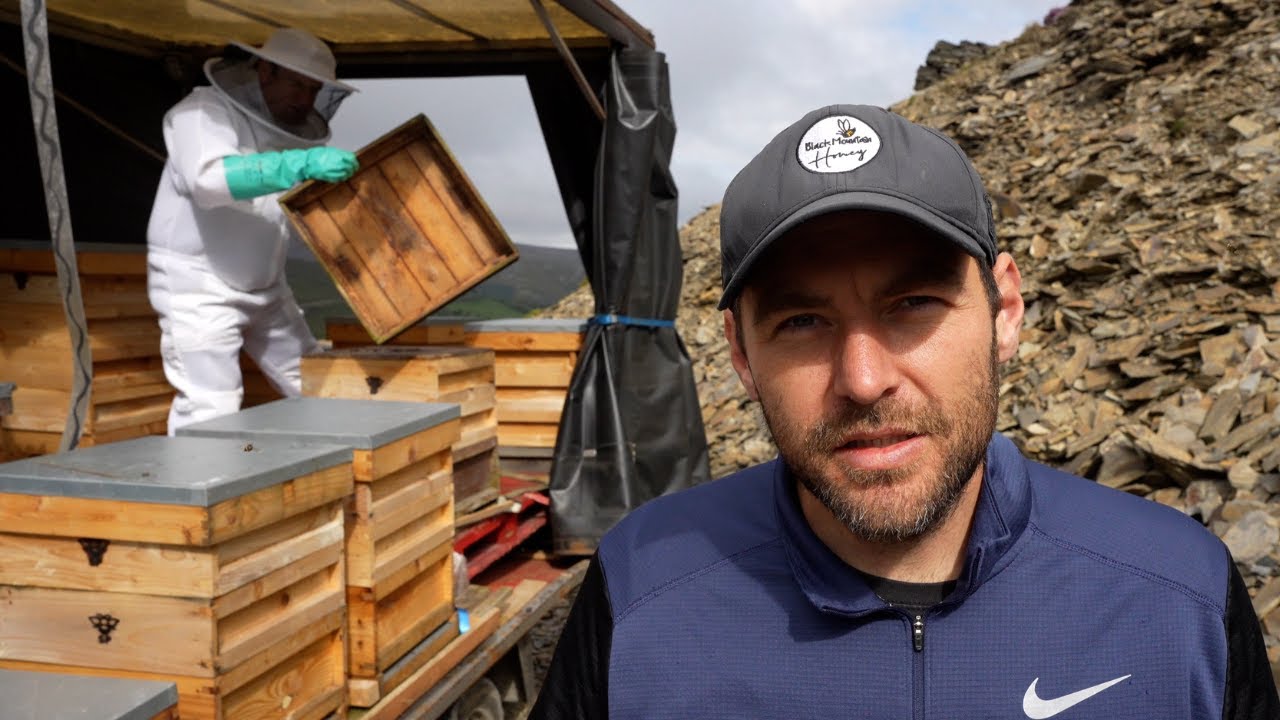
Laurence Edwards visits beekeeper Joe Arnold at Staunton Park Bees after fourteen colonies were stolen. They cover security measures, moving hives to the heather, dealing with poor nectar flow, varroa treatment, and honey extraction methods.
Chapters
About six weeks ago, fourteen hives were stolen from Llangollen. Today in this video, I'm with a beekeeper who is still keeping bees in Llangollen, Joe Arnold from Stoughton Park Bees. In this video, we're going to look at all of the hives that are still in the area, and I'm going to show you what's in that trailer behind me. So I told you that trailer was going to be pretty cool, and what we've got is Joe inside the trailer working his bees. It's a really neat, simple method for bringing your bees up to the heather. So before I jump away and get my bee suit on, what we're going to do in this video today is I'm going to do a bit of a Q&A with Joe. We're going to talk about the stolen hives in Llangollen. We're going to talk about how to prepare your beehives for taking them up to the heather. We're going to do our very, very best not to get stung in the face.
I think that was a sting in the face, everyone. I think that was a sting in the face, safe to say.
You carry on talking, Joe.
The British black bees obviously don't like Laurence. You know that he's a Buckfast man. These Welsh black bees, they're going to have him, aren't they? Come on. 1 for the AMM, 0 for the Buckfast.
Right, so those bees absolutely battered me. They literally took me down. So Joe, welcome to the channel. Tell me exactly what you're doing.
I'm just out to have a look to see how the bees have been getting on. We've had a good bit of weather the last few days, so I was hopeful after all of the rain that we've been having this August that the sunshine will have encouraged the bees to have started to pull in the honey. So I'm just going through checking the supers, seeing what's what, and equalizing a bit. If I've got some bees that are not doing very well, shift the supers onto the stronger hives.
Right, so Joe, before we get any further, the elephant in the room here is what happened to your roof?
Well, this is not designed for pole dancing. This is definitely meant to be a structural piece of the roof. We were coming down the dual carriageway just outside Oswestry on the way into Llangollen, And someone drove alongside me, started beeping the horn, shouted out the window. I was like, what does he want? I wound down the window and he's like, your roof's come off, your roof's come off! So this blew off on the dual carriageway.
It's a bit of a nightmare that it's come off. I guess the bees don't really care because they've got a roof anyway. But tell me a little bit about the trailer. Why have you gone for a trailer? I have to say I'm a little bit jealous.
I live about 2 hours away. I'm from here originally. When I started keeping bees, I wanted to taste honey from home. I came up here last year with 2 hives. I only started beekeeping then. I did pretty well. I wanted to bring more and I just thought, you know what, it'd be so much easier if I just had a trailer I could load my hives on, leave them there, and then bring them home again. Not as simple as that, but that was the idea behind it.
I really, really am jealous. I think it's a great idea for a reasonable amount of colonies where you're not cramming them in and closing up entrances and getting yourself into all sorts of trouble. A massive time saver. So before we go any further, I should introduce Joe a little bit more. So this is Joe Arnold from Staunton Park Bees, which is a YouTube channel which, if you haven't seen already, you haven't subscribed, definitely hit that subscribe button. Loads of good videos on there from Joe. Right, Joe, let's get into some of your bees and we will continue continue the conversation. Maybe we prop this roof up a little bit, what do you reckon?
Yeah, let's do it. So this is actually one of yours. Remember I bought some queens from you earlier this year? Queen I opened up, I popped the cage and the queen flew off.
No.
I couldn't believe it. So this is actually one of yours. So let's crack in and see how your bees are doing.
Right, so Joe wasn't joking there. It's actually got my name on the top of the box. Really interested to see how these bees are doing here. How do you think they're coming along?
Looks like they're doing okay. They started to pull some honey in there. They are pretty chilled out. Good temperament bee. And what more can you say other than they're trying? I'm a little bit I'm a little bit disappointed, to be honest with you, that I'm not getting as much honey in as I thought I would, but we're early, early on, aren't we? So hopefully in the next couple of weeks they may improve.
Can we get into that one, have a look in the brood box? Right, so these ones here, these are Buckfast bees that come from me. They look quite dark. Do you reckon that they are the same ones, same queen, or do you reckon it might have superseded?
I think it's superseded and it's, and it's definitely mated locally to me. So you sold me F1, this is probably F2, right?
Okay, cool. Right, so let's get inside here, take a look in the brood nest and see how strong that colony actually is.
Great. And obviously we're near Llangollen where things got stolen, so you'll see we're I actually brand up my hives so that if they do get pinched, there's no disputing they're mine.
I think that's a really clever way to do it as well. I think towards the end of this video, we'll go through some of the good ways that you can make sure that your colonies do not get stolen, or at least put in place some mitigation if they do get stolen to try and slow down the thieves a little bit. And I do think, yeah, branding can be really, really good.
Pretty, pretty empty, to be honest with you. There's obviously— I think because of the rain that we've been having, I don't think they've been able to get on the, on the food as much.
So don't feel bad, Joe, at all. This is exactly the same issue that I'm having this year, probably worst heather year that I can remember. Weather's been bad not only for the buildup but also for the flow, and some of the colonies are just not in a good enough position to take advantage of that nectar for the few days that it's even available.
So you've got a good brood pattern there, so at least you've got some bees coming.
Yeah, really nice brood pattern, clearly a well-mated queen, but like you say, if it was an F1 and they've gone down to an F2, maybe the colony's dwindled a little bit while it was building up, while that queen was out going and getting mated.
I also had a really good crop, spring crop. Wasn't sure how well they were going to do up here this year because I pinched quite a bit of honey off them. I was a bit worried with the weather the way it was.
It's interesting, I think a lot of people in the same position. Really, really nice spring crop and then the summer crop's been shocking, and then I think people are playing a little bit of catch-up with late summer crop and the heather crop as well.
Yeah, I also went from 12 hives at the beginning of the year and I'm up to 50 now, so I've been doing quite a lot of splits this year. This year I was more concentrating on building up my numbers of stock as opposed to building up my honey reserves.
So I think that's a really good point, Joe, in terms of building up. Like, I remember doing exactly the same thing as you and building up and building up and making splits and not getting too much honey. And I always think you need to choose one or the other. And I used to take my bees up to the heather just to build them up for winter, just to get a good feed inside of them, to build up the smaller splits that I've made. So although you might not get a bumper heather crop, like you can see here, the bees, they've got some heather up on the supers, they're backfilling the brood nest as well now. So it's going to save you money, the colonies are building up nicely, and then what you should get is a good colony coming through the winter as well. So it's probably worth pointing out as well, it is Very, very cold here today. Very, very windy as well. And the bees not really out flying at all. So we are disturbing like a pretty much full colony of bees there. But good to see that they are there. That's always a positive, isn't it? Opening it up and they are still there. They're queen right. There's eggs, there's brood, brood in all stages. They're working up into the super. You never know, you might come back and you might get like half a super worth of honey out of that one. How are you going to extract your heather honey?
That's a good question. We'll wait and see, eh?
You wait and see. No, I haven't got any plans for it.
Yeah, I have got, I've got a 20-frame electric extractor that I bought on eBay for £500. Can't believe it, it was a real good deal, and that's been a lifesaver. So honestly, if you're gonna spend any money on any kit, an electric spinner is the way to go.
Does it spin tangential?
No.
Have you got to get some cages in there to get it to go tangential then?
We're gonna see.
You're gonna see.
So I have like a roller to try to roll it out. Last year I had to do the crush and strain method, but it was only 4 supers worth, So this year I need to save, I need to save the supers. So I'll cross that bridge when we get to it.
Yeah, well, let me know how you get on trying to extract heather honey radially. Like, I have struggled a little bit previously trying to do that, but most extractors, you can modify them with a steel cage on all 4 sides, and then you put the frames in kind of perpendicular to radial, and then you do the front and the back.
Okay.
Sometimes it can be a nightmare to spin out, but if it doesn't work, you can always just crush and strain it again.
Yeah.
Right, let's go and have a look at another colony then.
Yep, so this one here is a BB. This actually came from Becky's Bees, so I bought some AMM queens from Becky's Bees, see how So what's your thoughts behind the AMM bees then?
I see like a lot of your ones here, you're going for AMM over Buckfast. Are they your favorite? Is that what you're going for?
Yeah, I mean, when I started doing this, you know, talking about food shortages all of the time, everything that's going on in the world, AMM bees are our native bee. So I'm not really, I'm not doing this to try to get the most honey in the world. It's also about doing good for the world. We do a lot of sponsored beehives. So I've got a lot of corporate businesses, mostly in London and in the property sector, because my main business is in property, and they sponsor beehives. So we give them an opportunity opportunity to build up their corporate social responsibility, so when they go for tenders and contracts, they can tell them what they're doing in the world. Part of that for me is about trying to build up our good black British bee. So I'm, uh, I have local bees to me. I've also brought them in from Jonathan Getty in Northern Ireland, and I'm just really trying to bring back the black British bee. So I only sell AMM bees.
So I've done previous videos on AMM. I've tried AMM myself. I've got my own opinion on it, but what I love hearing you talk there, Joe, is you've really got like a strategy. You've thought about this. You want to keep AMM for a reason. You're sticking to it, kind of going down that corporate social responsibility route and looking after the native black bees. I really do like the fact that you've got a good plan there, and I'm interested to see what these AMM queens are like.
Well, they're definitely a lot more feisty. They're definitely a little bit more rogue.
This is the worst timing in the world. I don't think you can blame the fact that they're AMM for this one here, but They've gone to town on that frame there, haven't they?
It's amazing.
What's going on there, Joe?
Well, it's just, I think, I'm not sure whether it slipped on the move and then they've started rebuilding it. If you can see.
I love going into my colonies and finding these wonder frames, you know, where it's slipped, the foundation's gone down, the wires have pulled out, and the bees just kind of look up at you and say, don't worry, we'll fix that. And they've sorted it out. And you know what? When they go to swarm, where do they put their swarm cells? Right in the middle. They tuck them away right in the middle, don't they?
But this time of the year, we'll be all right, won't we? Because they're not going to go swarming now. Hopefully.
Yeah. So I completely stop my inspections as soon as we get past the longest day of the year. I maybe give it like a couple more weeks and then I just don't bother doing any more inspections whatsoever. I'll go back to my colonies, check they've got enough space above the queen excluder. If they need more space, I'll add another super on the top or under super. Either way, I'm genuinely not fussed, but I definitely don't bother going through the brood nest. Now, that's not to say that the bees won't swarm at that point, but for me, when you're managing like a number of colonies, say you've got 100 colonies, I say, well, Maybe I'll lose 2 swarms out of 100. Is it worth me going through and checking every single one to save those 2 swarms? In my opinion, definitely not. Right, let's go to another one, Joe.
Yeah, cool. So you'll see that these are pretty weak. So as I say, my strategy this year was to boost my number of bees. So a lot of these were splits that I've made this year. I brought them up to the heather so they get real good nourishment and they can grow.
So just on that bit there, when you brought these up to the heather, how big do you think they They were on 6 frames. Okay, so it's interesting I'm just mentioning that because you're looking at these colonies here now and the brood boxes are pretty much full, but on a colony that size you're not going to get a huge amount of honey. But if they come up on 6 frames and they've built up and they've got themselves like a little bit of an excess and they've got their winter feed, but like I say, most importantly, they've built up to a strong size to overwinter. You've got kind of— it served a purpose, hasn't it, coming up here? You've got the free feed, you've got them building up. So I think they look really good and set for winter. Before we go on to the next colony, what's your plans for these going into winter? Like, what's your winter treatment, feeding, varroa treatments? Like, what they got in store for them?
Well, I've got 20 more AMM queens arriving in the next couple of weeks, so my plan is I'm probably going to be splitting some of these up again to take them through. I'll take them back, they'll feed on the ivy, and then I'll take through even more into next year. But my plan is, yeah, to take these back home once I've extracted the honey, and then they will have the varroa treatment going on to them, and I'll just have to try to see how I feed them. I do feed them with Hive Alive. I know people have their views on it, but for me, it boosts the numbers of bees really, really well, and it's all about having a good clean gut, and I think that up at the heather as well, this is the best feed for them. A friend of mine did a study. He runs a big organization. They supply like Marks& Spencer's and Harrods and a few others, and he said that the best thing for your bees is to rear them up on the heather. You get a much better overwinter success rate.
It's, it's so interesting. And again, people always have like their differences of opinion on this. I know a lot of people that say the worst place to overwinter your bees is on the heather because they get really bad dysentery. And I find personally the best place to overwinter my bees is on the heather, like literally up on the heather. And I'm just on the edge of the heather, so they get access to different forage all the way through the year and at the edge. But I find the fact that they build up nice and strong and they get that heather honey in there, I don't see any signs of dysentery, and I get the best overwintering success that I can possibly get. Right, where are we going next?
Should we go back into one of your ones? Cool. Yep. So this is one of yours. I can't remember if it's the same original queen or not, to be honest with you, because I didn't note that one down.
Wow. Now here we go. Now this looks good.
All right, all right. Just because it's yours.
I think all it is here is that you've probably got a colony where it not swarmed. That's the kind of difference between getting a good honey crop and not getting a good honey crop. Sometimes you just get lucky and they don't swarm, but I always think when you see bees up in the super like that, that is the hard bit done, and that is the job of the beekeeper done. You're kind of left then to the environment really to see if you're going to get any yield.
So we've already got honey here up in the top, top super. Yeah, these are doing well, so I definitely want to put another super on this one before I go today. You see they're coming up through the middle, they're not touching the sides. Yeah, so normally I would checkerboard them. Oh, you see what I've done? I've made a mistake here.
Go on, what's the mistake?
I haven't put my queen excluder in.
Oh no.
And I haven't got my hive tool on me, have I? So it's taking me a little while.
Oh yeah, that's not what you want to see in the super, but what a beautiful queen in terms of that brood pattern. I love that.
Yeah, well, as I say, this year I'm all about trying to boost my numbers. So for me, I really don't care because I'm not after the honey, I'm after bees. And I want to say I want to do 20 splits when I come back from here. So this is good news. I don't mind. Happy days.
It might come across that you're putting a brave face on there, but I was in that position for 4 or 5 years, and it is exactly right. You want to build up as many bees as possible in order to make splits. Yeah, and if you get some honey, it's a bonus, but really you're not in it for the honey, you're in it to build up the number of bees that you've got.
I don't know where the queen's gonna be, the weather's pretty rubbish, so I will leave them.
Right, so I'm reading this one here, last one by poxy poly.
Oh yeah, so this is my referencing. So that's the last one by the polytunnel. So I keep bees next to my polytunnel to pollinate my polytunnel essentially. So this one was on 6 frames when I brought it up. Obviously I have a super on anyway because I just don't know how long it's going to take for me to come up here. I live 2 hours away.
So look at this one then.
Let's crack her open. Yeah, not a lot going on, but they're definitely doing better than the 6 frames that they were on.
Yeah, it looks like a decent-sized cluster of bees down there.
Yeah, see I've left the feeder in. There was a feeder on these. This is one that I'm just building up to overwinter, put it out of frame. So yeah, they've got a lot of, uh, bit of stores there. Bit of pollen. I've got some brood in there too. Nice. Well, there we go. I tend not to go into them too much, to be honest with you. I tend not to dress them out, just leave them to it. They're not going to be swarming this time of the year. I'm just trying to build them up and just try to cause the least stress possible, really.
Yeah, I think that's a good shout. It's exactly what I do as well. I definitely don't go inspecting my bees when they're up at the heather. I just pack them in and hope for the best. Right, let's go for your best hive here. Which one do you think is the best? Which one do you think is going to produce the most amount of honey for you?
Well, I've got a competition going on because, as I say, I do corporate social responsibility. I have a firm of chartered surveyors in London and I got 2 clients and they were all level pegging. And I know that Foxtons, who are one of the biggest estate agents in London on the stock market, they will want to know how their hive is doing. So let's go and crack theirs open for them.
So I should have said before, thanks for showing me around, Joe. I'm really enjoying it. And I've been saying on all of these videos, it's so much more fun coming and seeing what other people do and me not having to do the beekeeping and just to talk about it. So it's really nice. Thanks for having me up here. I'm really excited to see how your bees are getting on now. and how the company develops going into the future.
Do you know what this looks like? They're not doing very well.
I have to say, I'll kind of pan around at this point and show you the weather up here. Like, we must be, what, 1,000 feet, 1,100 feet up?
I think it's 1,300 feet above sea level.
1,300 feet above sea level in Wales, in Llangollen, which is the beef theft capital of the world, I think, at the moment. But it is also the rain and miserable weather capital of the world. I think that covers pretty much the entire North Wales. This year has been shocking, and I gave up on the heather maybe four weeks ago now because I shook swarmed all of my colonies and they just weren't big enough to take advantage of it, and I wasn't doing any splits. So I just thought, you know what? I'm just going to pack it in and call it a day because the weather's not been good. And I admire your kind of enthusiasm for this, and I know the reason that you've done it. You've come up to build them up, and they're definitely building up really nicely. But like, I'm not surprised that there's not a huge amount. of honey here, but you've got good healthy bees, so no doubt you can split again, come back here next year. And the heather is so hit and miss. Some years you'll get 3 or 4 supers full, other years you do need to feed your bees at the same time, and unfortunately this year here I think is one of the latter.
Yeah, it's a little bit disheartening because as I say, I was, I was born here, raised here, so I want to eat everything that the mountains have to offer. So this for me is like the pinnacle of the year. I want this honey because this is like, this is a part of me, you know. But there we go, such is life.
Definitely persevere with it though. You will come up here and you'll get your bees to a state where they're big and strong. And I find with mine, like, I almost want to get them like filling the brood box, like boiling over the brood box, maybe 2 or 3 supers full of bees, absolutely full. And I'll shake all those bees off, put them onto new boxes for the heather, and they kind of come up here, you know, like this configuration here with a brood box and 3 supers. And I bring them up similar time to you, maybe last week of July, but they are full.
Right.
Full of bees and bearding at the front. And you almost need that kind of like quantity of bees in order to take advantage of it, but it would have made no difference this year. If you'd have brought them up like that this year, they would have probably starved and you'd be coming back now and you would have dead bees.
Yeah, I came up, when we brought them up, one of my strongest colonies unfortunately didn't make it. It was really upsetting, to be honest with you. I opened up the front and they all just fell out basically. I'm not sure whether they overheated on the way or what had happened, and because I was trying to bring up a strong I've got some strong ones to bring in the honey, and I wasn't sure whether to do some Demarais splits and things, but I just thought with the transportation of bringing them up, it's that fine line of bringing up a massive colony and then something happens on the journey. I much prefer it if I could have my bees here all of the time.
It is a difficult one, and it's happened to me before. Like recently I was doing shook swarms, so we were going around shook swarming whole apiaries and we were putting them into Langstroth panes poly boxes, and I had had 4 on one site where we shook them all in, and we're talking like 4 or 5 boxes of bees all shook into a nuc, and they were bearding out the front. And I was thinking, do I give them more space or not? So I just get them going, and I'm always worried with shook swarms that the queen's gonna go. So you close the queen excluder on the front of the nuc, and I went back there the next day to give them some more space, and I had 4 dead.
Oh God.
Completely dead. And what had happened is the drones had tried to get out, and then they got blocked, and then the bees panicked When they can't get out, and then they sit on the foundation and it's too heavy, and then this foundation drops, and within a few minutes they're just all dead. 4 colonies like that.
Nightmare.
So don't beat yourself up about it, like, it does, it happens to everyone.
I've had the most honey out of this one. This is the one I've had the most honey out of this year.
So, okay, so this, this maybe is a good one to have a look inside.
Fingers crossed.
What I would say though, a good investment in a hot year is the ventilation screens you can get. You get them from Thorns, and they're just like a crown board with a big ventilated screen. And you can make them yourself. They're pretty cheap to make, and I would say going up to the heather, doing a 2-hour journey, it's a good investment. Yeah, because they're like maybe £15-20 each. You only have to buy them once. Yeah, and then you just, you don't bring them up on the roof, so they've got ventilation below, ventilation above. Kind of impossible to kill them that way.
This year as well, or last year when I came up, because it was my first year beekeeping, so I was like massively eager. I was up at 4 o'clock in the morning, had everything all in the back of the car. I was here about half past 7 in the morning waiting for them to open up the locked gates, so it was like it was nighttime, it was cool. This time it's a year on and like I've got to get all of this into a trailer, the roof blew off on the way, so I think I got here around about 2, 3 o'clock in the afternoon and it was quite a hot day. Yeah, so I'm not surprised that I lost something, but this is all a learning curve, isn't it?
It is exactly that, and as long as you don't make mistakes too many times in a row, but believe me, we all make big mistakes like Right, let's get inside this one and see how much honey's in this one.
Come on, baby, come on. Well, we're doing a competition, right? So Foxtons and Arnold and Baldwin and Heighten Agency, who created all of our branding and they are our massive ambassadors, they've literally gifted us everything that they do. They're amazing. So we do have a bit of a competition on. So if I pretend this one's full— I'm only joking. No, this one looks like there's nothing up in the supers. They're not doing very well. I wonder whether it's because they're exposed with the wind coming through here as well. Are they A bit cooler, I'm not sure.
It could be. I genuinely, even if you had them, I think in the perfect conditions up here, I just don't think the heather's yielding. And the problem that you have up on the heather moor where you're so up on the moor like this is that if the heather doesn't yield, they've not really got anything else to go at.
No, just some gauze. Well, these ones, okay, Carissa, Hygiene Agency, you're definitely, uh, you're definitely ahead at the heather.
You pull out a frame, just have a look, see if there's anything in there. I honestly, Joe, I think it's a success. that there's no bees that are dead here. And I say that in the best possible way, like knowing from my apiary where I've got the heather, they have not been bringing in anything at all. And you can see they have been bringing it in here. And that is classic Kaluna there. That is Ling honey. Go on, give it a smell.
It's all good. It's all good. Beautiful.
Oh yeah, unmistakable. Right, so tell me about this one here, Joe. You've got 4 supers on this one. Do you think there's any honey in there?
Yeah, definitely. These are my OGs. This is my original. These are my OG Local AMMBs. Everyone says, oh, there's no AMMBs in Herefordshire, they're only left in Northern Ireland, they're only left up in like Newcastle sort of way. We have AMMBs at home, so like people say, test it, how, like, what percentage are they? I don't know what percentage they are, they're just my black local bees and they're on 4 because they came up the other week and they were doing really, really, really well.
Excellent, okay, well let's have a look. Interested to see what these are like.
I don't want to tempt fate now. Because obviously everything else has been pretty dwindling. But we can have a look. They tend to be very snipey. Oh, look, there you go. See, they're up in the, up in the third super. And what do we have in the third super? We've got a good bit of— we definitely have honey up in the third super there.
Yeah, they've got pollen up there as well, which generally means that you've got quite a big colony if they're putting pollen that high up.
Yep, got a couple of stings on my shoulder already.
Oh no, let me jump out one sec. I'm, uh, yeah, I'm not gonna, I'm not gonna say anything about the suit. I've got exactly the same suit and I've been gone through it as well.
It was the sales when Simon closed down. I was like all over the sales trying to buy everything as cheap as possible. I was like, this is a bargain.
Have you seen the smokers that he was selling?
No.
Have you seen the recall notice on the smoker?
No.
There is a recall notice on a Simon the Beekeeper, plus lots of other companies' smokers as well, for containing asbestos.
All right. Oh really?
Yeah, we'll have a look at your smoker.
I was just told invest in a Daydon.
Oh, okay, you've got a Daydon. Okay, perfect. Yeah, Daydon is the best smoker. I like a Rouch Boy as well. Rouch Boy's a good one.
So my OGs, look at these beauties. So these were local Herefordshire bees. They were purchased from Black Bee Company, who was my mentor as well.
Okay.
Yeah, definitely starting to cap over there, look. So I'm going to be able to have some heather honey this year.
Nice. Yeah, very white cappings as well. You get that on the Ling, but you definitely get that with AMMBs. So you're saying these are AMMBs? Yeah, or like a mongrel They are a mongrel AMM.
So, but obviously when you have the queens are mating with 20, 30 drones up in the sky, so you can't really control what's above you. But my beekeeper told me he floods his area with as many drones as possible. So I don't sell these, these are my stock. I sell AMM bees that have come from others who've done the testing and they can tell me that they're 98% AMM so that I'm selling with confidence.
Oh, very nice.
If people want my local, I had a local cider farmer and he wanted some local, local bees, so he's had Some of these, but you can see they do have the stripes on the shoulders, the Buckfast stripes on the shoulders, so they definitely had a mixed mating along the way.
Hey, these are some lovely frames of honey in here though. That's definitely Ling heather, and that's probably, what, 50-60% capped, ready to go. We'll get a decent amount of honey out of this one, I reckon.
All right, hands off, they're mine.
Yeah, let's go down one super further. So I'm interested about your spacing as well, Joe. Tell me about your spacing. You put them on SM4s there. Do you intend to, once they're drawn, get them onto Castellations or anything?
This year is about trying to build up my stock. So these— this is all new foundation, they're not doing anything in here.
Yeah.
So I'm just going to leave them alone, put these back together. But yeah, I've just wanted to— like, your frames are gold dust, aren't they? Drawn comb is so important for when you're rearing bees and for your honey production. If you can pop drawn comb on, it just helps life. So this year is all about me investing in the future, and so I'm just running everything 12 frames inside. I do have some castellated frames at home. But yeah, so this year it's all about trying to get as many frames drawn out as possible.
Right, so you've got 16 colonies up here and you're in the beekeeping theft hotspot of North Wales and probably the world at the moment as well. You're not worried about your hives getting stolen?
I'm not worried about my hives getting stolen. Life is what life is. If someone wants to come and steal my trailer of bees, like, good luck to them. There's so many gates, there's security cameras around. Why would you want to come and steal my bees? This is ridiculous.
It's a very refreshing approach, and I do think the people who steal bees are the absolute lowest Lowest of the low. I think in terms of measures though, I love that, I love that your hives are branded. I think that definitely deters thieves. Obviously coming up here, like, I know that no one's stealing these beehives. They are well, well out of the way. Good luck finding them. But generally what bee thieves do is they will just come nick everything and then just shake the bees onto new equipment and new frames. So I know the branding is good, but maybe not deterring them. The way that kind of came to me as a really, really good way to deter thieves leaves is maybe like a sign saying that your queens are marked with discs, plastic discs.
Okay.
As opposed to marking the back of the queen and obviously actually putting plastic discs on the back of the queens as well, because then that really slows them down. You know, they've got to go through, they've got to shake all of the bees off onto new equipment, but then they've also got to go in, find the queen, and then either kill the queen and put a new queen in, or try and take the disc off the back of a queen, which is impossible because they are super glued And I just think little bits like that can really deter thieves. They kind of think, well, yeah, maybe not going to go for those ones, that's a lot more work, I'm gonna go for someone else's. Uh, but yeah, there's no way they're finding them up here. This is, uh, well and truly out of the way.
Could I ask you a question then? So why do you think that they're stealing the hives?
To sell them.
Just to sell the bees on?
They'll steal the bees, they'll put them onto new equipment. They do it at this time of the year, they'll probably feed them up, varroa treatment, overwinter them, and then smash them out as nucs in the new year. once they're worth a little bit more.
Sad.
I'm surprised that more thefts aren't happening, you know, driving up here and where I live kind of in Llandegla Way, you drive over the moors and you just, you see so many beehives. And I know up in Yorkshire and I know Scotland to like of a lesser extent because they're quite out in the middle of nowhere in Scotland, but I'm surprised more hives aren't stolen. And it goes to show the fact that when they were stolen, you look at like the, uh, the media coverage that it got Yeah, it doesn't happen all the time, so I do think people are against it. And obviously those hives were now found, which is really good as well. So a massive thank you again to Joe at Staunton Bees. If you haven't done already, go and subscribe to his channel. Really good to see new beekeepers coming into the market trying new things. Possibly got the best beekeeping vehicle I've ever seen in my life as well. When he turned up in that, I thought, oh my God, that is the coolest, coolest car I've ever seen.
I want to say thank you very much to you for everything that you've done for us beekeepers. Your videos are amazing. I wouldn't have been able to have learned everything that I know without you. So I designed the t-shirt with you in mind. A little bit of Lawrence covered in bees because you can't be getting stung in the face.
It's like a snapshot to the beginning of this video thinking that I could come and do it with no veil on. Thanks, Joe. That's really kind of you, mate.
I've got a bee sticker as well which I put on the back of the car just to caution bees on board and a little bit of Hereford honey on the back for you too, mate. But thank you for all that you do.
Nice one.
Really appreciate it.
Cheers, Joe. Thanks for coming on to the channel. As I said, if you've not done already, go over to Staunton Bees on YouTube. Hit that subscribe button and we'll be back next year to do the follow-up video.
I'll see you there.










