Bees Living In The Wild - Bees Living In Rotting Tree - Do Bees Live In Trees
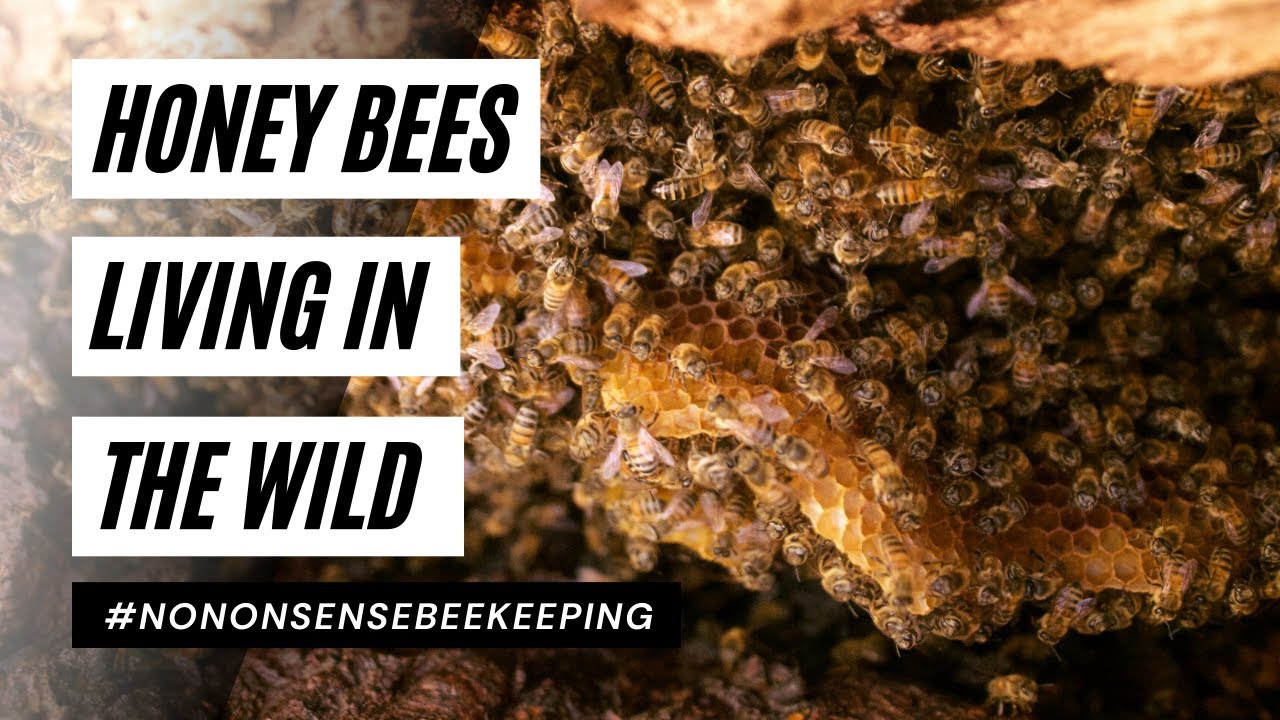
Laurence Edwards finds a wild honeybee colony in a rotting tree after a storm and decides against moving it in winter. He gets stung multiple times while weighing the risks of disease, weather, and predators, then wedges wood over the entrances for temporary shelter until spring.
Chapters
For fuck's sake. Let's see what we can— ah, bit of a false start there. Today I've been called out to a wild colony of bees in a collapsed tree. Hi, I'm Laurence Edwards from Black Mountain Honey. Welcome to another episode of No Nonsense Beekeeping. That is a new record for me. I didn't even get to, hi, I'm Laurence Edwards from Black Mountain Honey, And I got 4 stings to the face. So I've been going through taking the stings out. That serves me right for going to a colony where I'm not sure of what the temperament's like. In this video though, we're going to take a close look at this wild colony of bees that's in a collapsed tree. They're in a little bit of a bad way, they're broken up, they're a little bit aggressive, understandably so. I'm going to get in as close as I possibly can. Obviously you will see any stings that I take. Hopefully I won't take any more stings to the face because they are hurting, the ones on my forehead. Just going to take a look at this colony though. We're going to devise a plan in terms of what we're going to do to try and help this colony get through. First off though, I watch loads of videos on YouTube. I see people going and taking colonies out of chimneys and fridges, and you know what, they're always nice, really calm bees. You can do it with your hair down, you can do it without a bee suit. I can't do that with this colony of bees here because they are really aggressive. All I had to do was get within a couple of feet of them and they battered me in the face. So I'd love to do a video like that, but when I come and finish off this colony and I move them away, I'll probably have to put a bee suit on. I know you enjoy watching me get stung, but there comes a point where even I can't take too many stings to the face. Right, so this colony of bees then. I have an apiary about a mile away from here. When the landowner alerted me to this, and this is just on the fringes of his land, he said, there's a colony of bees here, do you want them? And obviously I grabbed my tripod, I grabbed my camera, and I came straight out because I'm always interested to see What's going on with wild colonies? Now we had Storm Arwen here about a month ago and this tree came down. It's a big, huge tree, 1 meter in diameter. And you take a look at this down here, there's a lot of rotten insides in this tree. So the tree was really in not a good condition in terms of being able to stand up. It was actually in a really good condition for bees, nice rotten core, loads of space for the bees to go inside. And when it was standing, it was probably 2, 3 meters tall. Yeah, it was a big tree. 3 or 4 meters above ground level. Perfect place for a colony of bees. Now unfortunately, when this tree's come down, it's broken off into about 3 or 4 bits, and it's split right down there, which has fully exposed the bees. So in this situation, my original point of view is let's try and leave them until April. Don't want to be messing around pulling out wild combs and trying to strap them into a nuc at this time of year. Not the time of year to be doing that. It's cold, And it's going to damage the colony a lot. You're probably going to lose quite a lot of bees. It's going to be hard to find that queen. Really not the time of year to be doing that. However, this colony here, you look at them, they're really, really exposed. So what you don't want to happen is you leave them and say, right, we'll leave them until April and then we'll come back in April and we'll do the manipulation then and we'll try and get in there, rescue this colony because it might get cold, it might get wet, they might get windy, they might abscond or they might die. So it's always a bit of a 50/50 call. Do you leave them? and try and get them through the winter, or do you take them out now and risk them failing as you take them out? I'm going to cover all of that in this video in terms of what I'm going to do, but the first thing I'm going to talk about is why do I need to rescue this colony of bees? And I've done a couple of other videos like this recently, and a few people have commented and saying, why are you going out and rescuing wild colonies of bees? Now, if this tree was standing up, there's no way I would go and rescue this colony of bees. I would just leave them in the wild. Obviously, all countries have wild colonies of Wild colonies of bees is a really good thing. Bees are checking me out again here now, they're not liking me talking about rescuing them. But why do we need to actually go and rescue this colony here? So the first thing is that their tree is in a really, really bad condition. They're exposed and I don't want to let them die over the winter when they can't go and move to a new home. But the second bit, and this is what I was saying to other people the other day, is there's a disease risk there. There's a colony of bees here that's quite close to my apiary And I don't know what the disease status of that colony is. This is why we have beehives with removable frames, so you can go in, you can do regular inspections, you can check for foulbrood, and then if you find foulbrood, you can kill that colony in order to stop it spreading. So let's assume this colony here has got foulbrood, and obviously I need to assume that when I'm going in, touching them, getting stung in the face anyway, so I'll wash everything down. But let's assume this colony here has got American foulbrood. If I did nothing here and that colony died out over winter, come April, all that's going to happen is that all of the local colonies, all of the wild colonies, all of my colonies about a mile away from here are going to find the remnants of all of the AFB-contaminated honey and they're going to bring that back to their hive. So it's a real disease issue. So I'm not one for going out and hunting wild colonies and saying, there's a wild colony up in the tree up there, I'm going to chop it down and take them out. But as soon as you're alerted to the fact that there's a wild colony there, I do think it's the right thing to do to take all of the precaution to get it into a beehive, to get it into some frames, put it in a quarantine apiary, assess the disease level of that colony, and then you can take it on from there. Right, so enough of me talking. I know you only kind of want to see me get stung here, so let's go in, take a closer look at this colony, see if we can assess what the damage is like. I'm going to show you the bees as well. No bee suit, no smoker. Let's get in, see Right, so the access here is really, really poor, and I know I'm tempting fate by doing this, but I just want to get in, take a look, see what this colony is looking like, see what we can— Ah, right, not doing that again. That's the second time I've got in there, the second time they've stung me in the face. You can see that it's very different to kind of semi-domesticated bees that you keep in a beehive that have been bred for temperament. These are wild bees, and that's not to say that all wild bees are horrible, But these are definitely horrible bees. That's like the 6th or 7th sting that I've taken to the face. Happy Christmas, there you go. You've got to see me get stung in the face again a number of times. I'm not going close to that again. I'm going to get the zoom camera out and I'm going to show you the bees. I'll zoom in a little bit just so you can see them. Right, so this is the tree that's fallen down. That's the stump. That's at least 3 meters tall, maybe 2.5 meters tall, that stump. And then you can see, look how big this stump of this tree is here. Following it down, you can see that it's started to rot as well. The bees are over there in that cavity, and you can see the cavity's opened right up. But then take a look down here. This is what's really interesting, is if you look a little bit further down, you look at the quality of the wood, you look at how rotten it is. See all that rotten wood down there? And then you can see all the mushrooms growing on that. That's really rotten. This only came down the other day. And then you look in here and you look at that cavity. Could you get a better spot for bees? I really don't think you could. The bees actually are over there in that little crack. You can see them. I'll zoom in a bit there. It's a good, decent-sized colony of bees and they're very, very exposed. So we're going to have to somehow try and fix how exposed that beehive is. So we're on the other side of the tree now and you can see that's where it's fractured. And when you look inside, you can see where the bees are getting in. So the bees are through that hole there, and they're using this hole here as a bit of an entrance. That's probably where the entrance was originally before the hive fractured and broke and fell down. Absolutely perfect place for a beehive. Nice big high entrance. You can see it would have been all that way, that high up. So a good I'm going to re-estimate it, maybe 4 or 5 meters above the ground, and then a really good-sized hole, and then they've built that colony over to the corner right out of the way. Right, so here's the bit you've all been waiting for. Let's take a look and see what this colony of bees is looking like. For some reason, they're not too fussed about stinging me on this side. Seems it's only when I go down that they see that I'm a threat. Really strange because I did think that I'd be kind of at risk of getting stung over here as well, but not so much. They're letting me in, and you can see that colony there goes all the way down. Nice big strong colony of bees. So just had to jump out the way there as well because I got attacked again. These are really not very nice bees at all, but it's understandable. They're very threatened because their home is pretty much in tatters. They're exposed to the wild. They've probably got foxes and badgers and all sorts coming and getting them. They're in easy reach of of all of the predators that they've tried to get away from by going so high up in a tree. So their temperament and their trigger to be so defensive is, is very natural, I'd say. What's really interesting about this colony though is how dark they are. And you hear about it, like we've had the discussions before. You look how dark that colony of bees is. That is a really, really dark colony of bees. Is it AMM? Is it close to AMM? I don't know. I'm not an expert on that. All I can say here is that is a very, very dark colony of bees. So if you look up here, you can see lots of damage over here, lots of damaged combs. You can see there was an old nest that was built in there as well. Maybe it was a squirrel, maybe it was a bird's nest. I'm not really sure, but there was something else going on in this tree. And in terms of the size of the colony, it's very, very difficult to see how big that colony is. You can see how far it— ah! You can see how far it goes down in this direction here, and it's probably about 2 combs deep, no more than that. And you can see that the combs are broken up as well, so they're just clustering up as best as they possibly can. But there's nothing to say that that doesn't go really, really deep down here. You look how deep that trunk is, can go down another 2 feet almost, so it could be A big, big strong colony of bees, and they might just go further down. Just impossible to see at the moment. Right, so what are we going to do about these bees then, apart from cursing about how aggressive they are and stinging me in the face? At the moment, I'm definitely not going to move them. There's been too much disruption there. The combs are all over the place. The bees are really, really aggressive. They're in a really inaccessible location as well. So I'd have to drive across a number of fields to try and get them to a point where I can actually get them out. But I do think at this time of the year— spoken to the landowner, they're happy for them to stay here until April— I'm gonna leave them here. I think I'll do more damage than good trying to get them out of there at this point, although it'd be fun watching me get stung, I know, but I just don't think it's the right time of the year. Now if the landowner said to me, we're chopping up all this wood tomorrow, you need to get them gone, or we're going to have to get someone in to get them eradicated, then that would change my mind and I would go in and I would take them out. But it means you get a follow-up video. So in April, we'll come back, we'll take a look at this colony, and we'll try and get them out. We'll see how big they are, we'll see if we can get them into a nuc, see if we can get them into a beehive, take them away, and then build that colony on. And I'll put it somewhere separate. I'll try and keep it somewhere out of the way of my Buckfast drones, and we'll see what the colony is like. It's an aggressive colony though. You can see already this is not going to be something you're going to want to breed from. I do not like aggressive colonies. I don't like them in the wild. I don't like them in my apiary. I'm not saying all black bees are aggressive, but sometimes black bees definitely are aggressive. And this is definitely not a colony that I would look to breed from just because they're black. So what are we going to do in the rest of this video? I want to somehow try and give those bees a little bit more protection. They're in the wild. They're in a situation that they didn't ask to be in. They didn't design this situation themselves. So I'm not going and tampering with a wild colony and saying I know what's best for them where they've designed it themselves. They've not. This tree's fallen down and they've put themselves right next to the floor in a situation where you can get like driving wind and driving rain. So all I'm going to do is I'm just going to try and offer them a little bit of protection from the top because they don't need that entrance at the top anymore, from the sides, just to give them a little bit of Respite from the wind and rain. That's all I'm going to do here. Obviously I'm going to get stung again while I try and do it. I'm doing this for the bees' good. I'm not going to go overboard with it, just going to try and block things up a little bit just to give them a little bit of protection from the wind and the rain. Right, there's some perfect bits of wood knocking around here. So over here, if you remember, we've got the hole. That hole is just going to pour water in when it rains. So all I'm going to do, just going to place a bit of wood on there like that. Just to try and block that hole off a little bit. It's pretty solid, this. I don't think that'll blow off. You might still get a little bit of moisture tracking down into it, but that's gonna give them a little bit of help stopping the water pouring in from the top, which, as we know, bees do not like being rained on. Right, so for this side here, it's gonna be a little bit more difficult. I'm just gonna try and wedge this in without annoying the bees. Anytime I put anything near them or go near them, I do get stung. So I'm gonna do my very best to do it without getting stung. I just want to get something in there to stop kind of badgers going up and taking a bite out of them. I think they can probably get through the weather, they can get through the dampness, the wind, and the rain because they're relatively well protected here and they've got a nice cover on them and I've put this bit of wood on. Just want to give them a little bit more protection from kind of badgers coming up and trying to rip them apart because if it gets really cold the badgers will just come and take that apart in a matter of minutes. So I'm going to get this one in, it's going to be the last thing I do on this video so I'm probably going to get battered by them. We'll see how we get on. I'm going to try and wedge it in, give them a little bit more protection. Right, I got stung on the hand there. I don't mind getting stung on the hand, they can take that all day long. So I'm not sure how well the bees are taking to that. They're kind of thinking, what's going on here? They think I'm doing something bad to them. Just going to get one more piece of wood on just to stop the wind blowing in here. It's quite exposed over there, you're going to get a bit of wind. Anything I can do just to make it a little bit more cozy for them It's definitely going to help them get through. I've wedged that piece of wood in there now. I'm just going to block off this other entrance. So there we go, this is what we've done. We've blocked off that top entrance there, we've blocked off the side entrance there, and then when you come down to see the colony down here, we've just wedged in a piece of wood there, hopefully just to give them a little bit more protection from badgers and anything else that's sniffing around. Obviously we We've not blocked them in to the extent that they can't get out. There is tons of holes there. You can still see the bees in there clustering away. They should be fine until winter, but obviously there's no guarantees. So there we go. The bees should be okay to get them through the winter. Obviously there's no guarantees there, but we've done all we can at this time of the year. And my shout at the moment is it's better to give them a bit of protection, come back in April and see if we can get them through, as opposed to going in there now, getting battered by stings, But disturbing them any further. They've been through a lot, these bees. The combs are all over the place. They just need to cluster up, see if they can get through the year. I've taken my cap off here just so you can see the amount of stings that I've taken there. Taken quite a lot to the hands, but loads. I've got about 3 on the eyelid there, 1 on this eyelid, loads in the middle there. I think there might even still be a stinger, and then loads on the forehead as well. Probably taken 15 stings there. So like I said, happy Christmas, you've got a video with lots and lots of stings. But I will always show you the stings, no matter whether it's a wild colony or it's my own colony. Nothing to hide here. Bees will sting you. If you keep bees, whether they're wild or if you keep bees, you keep them in the apiary, you will get stung at some point. So good to show that on YouTube, good to show that you do get stings. I would add though, if you're going to do something like this, I would highly recommend putting on a veil, putting on a bee suit. I don't mind getting stung, I get stung all the time. But if you're not used to getting stung all the time, definitely put the equipment on and protect yourself from bee stings. So we're all done. It's Christmas Eve today. I'll come back in here and do an update around February time. I think I'll come in, take a look, see how they're getting on, and we can make a call. If we get some really nice weather towards the end of February— and I think back 2 years we had 28 degrees at the end of February, it was crazy— but as soon as we get a nice warm day above, say, 20 degrees Celsius, no matter what time of the year that is, I will come in, I will do the rescue, I'll get all of the bees out, I'll find that queen, I'll bungee them into some frames, I'll take them away in a nuc, and then we'll follow that colony throughout the year and see how they get on. So I hope you enjoyed that video. As always, please hit the subscribe button, please hit the bell so you're notified of every video, and I'll see you next time. Thank you.










