Bees Surviving Five Years Untouched | How This Colony Endured Against All Odds
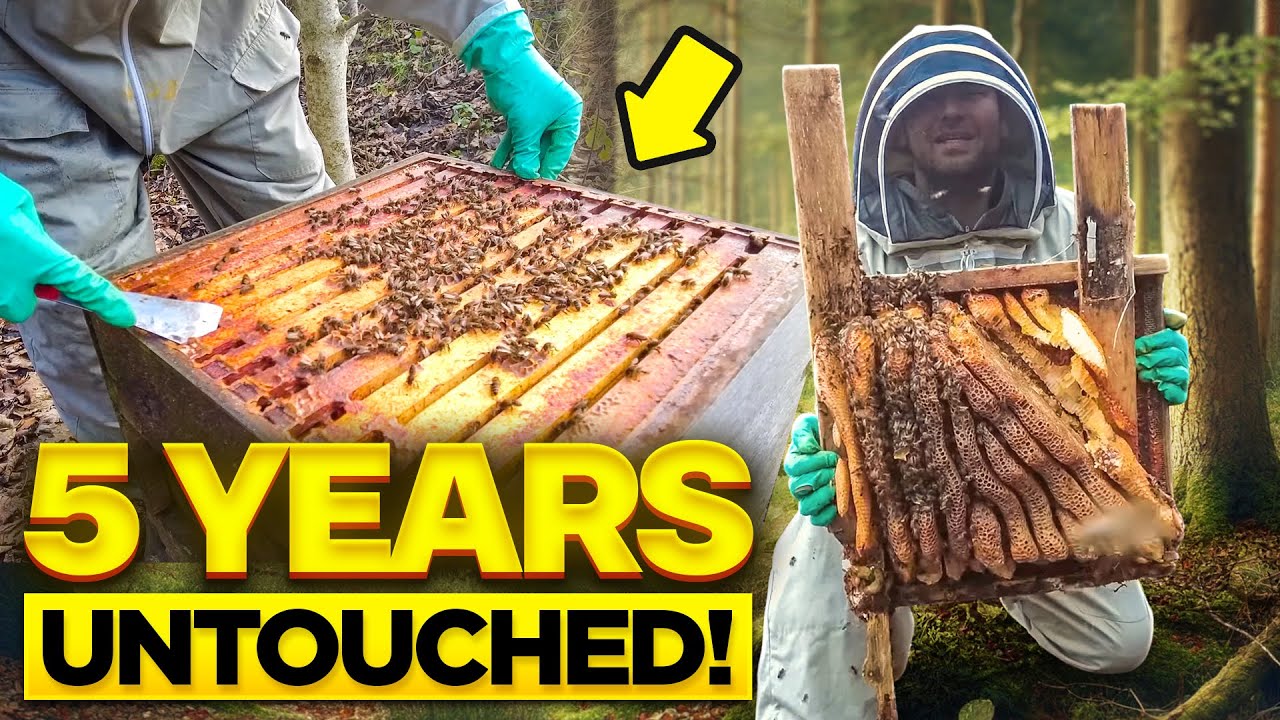
Laurence Edwards inspects an abandoned five-year-old apiary in North Wales to find most colonies still alive. Cedar hives survived intact while plywood rotted; he found strong colonies with no visible brood, a wild colony under a deep box, and signs of wax moths and varroa. He recommends leaving them untouched until spring, applying strict biosecurity, and replacing damaged equipment.
Chapters
My friend called me up the other day, said that he'd located an abandoned apiary that's not been touched for 5 years. In this video, we're going to take a look inside each and every single one of those hives, see if there's bees inside there, see what they're looking like, see if we can identify any disease, and then come up with a plan to take these bees away. So on first glance, the beehives are definitely active. Can see the bees coming in, can see the bees going out. There's pollen going in there as well. My friend's already come and had a look and opened some of these hives, and I can confirm there is definitely bees inside there. Some really big strong colonies as well, and he reckons there's some really aggressive bees down here as well. So what we're going to do in this video, I'm going to get my bee suit on, we're going to get the smoker on. First thing we're going to do is we're going to take a look inside the colonies, see what the bees are looking like, and then we'll come up with that plan going forward. But the big risk that we're looking out for here and what we need to prepare for in this video is the fact that there might be foulbrood disease here. So we're looking for EFB, we're looking for AFB, and we're putting in place all of the measures to make sure that we don't transfer that to anywhere else across all of our apiaries. The final thing to say is we need to get in and do this intervention now. My recommendation here is that it's the middle of December at the moment. I said best to keep these bees in situ until, say, middle of April, get in there, do a full inspection without moving them, Identify if there is any disease, but the landowner is not willing to do that. Need to get these bees out as soon as possible. So in order to assess the disease nature of the colonies, we're going to have to get in here. It's the wrong time of the year, but luckily it's a relatively mild December, shouldn't do too much damage. We're going to assess to see if they've got disease before we move them on. So I'll get my bee suit on, I'll get my lighter lit, I'll get my friend to come and help me, and we'll get inside, take a look at these bees. Right, you might know it's a slightly different bee suit to normal, and that is all part of the disease control. I'm not going to come in here with my normal bee suit because even if I go out and clean that bee suit afterwards, there is a risk if these colonies do have AFB, you can transfer it back to the car, back to your house, back to somewhere else, and then it can be transferred to your colonies. Chance of AFB though, it is very, very low. But in this video, we are going to go through, we're going to break the seals, look at the bees, take out some frames, see See if we can see some brood, although it's highly likely at this time of year we're not going to see much brood. But you just can't take too many risks when it comes to disease. So let's get in, take a look at the bees. So these are the first two hives. We've got what looks like a bit of a bodged 14 by 12 on the left with a couple of supers on, and then a standard national deep with either a super on or an ick to bring that up to 14 by 12. The hives look a little bit battered, but. Wooden hives, they look like cedar hives, they're designed to stay outside, they're not rotten, so pretty good health in fact, the hives there. You look over there though, over the top, and there's a few battered bits, some plywood nucs that didn't make it as well. So my friend's been here before, he's taken a look and got all the rubbish and stacked it in a pile over there. Quite a good advert really for cedar hives. You look at this one here, this is a plywood nuc, and that's been outside for say 5 years now, and that's rotten away. And then you look at the cedar nucs over here and they're in really good condition. They're bleached because of the sun and obviously there's a bit of wear on them as well, but they're solid and there's no rot. So really good advertisement for cedar beehives. So coming up to the next beehive here, nicely dotted around again. This one here looks like a 14 by 12 box, a little bit of wear on it, still got a super on it, so we might find some honey in there. Lifted up off the ground, still got the brick on, everything in good condition. 3 beehives so far. Hopefully we're going to find some really good colonies of bees in here. On to our next colony here, and you can see something a little bit surprising down here, which is they've built wax underneath the box there. Really interesting to see what is actually going on there. I'm so excited to see this one. I'm going to leave this one till last because this really is going to be so interesting. You can see the wax there, they're completely open to the elements, but take a look, there's bees in there. So is that colony there as a result of a separate colony underneath the floor, or is that just one big colony that's got a hole in the floor? You'll have to wait until the end of the video to see this one, we'll do this one last. And then the final colony here, it is just a polynuc, and there's no roof on the polynuc. My friend found this one before and the roof was all over the place. We're going to take a look in there as well, but if you pop this open, really, really interesting. Look how much they've propolised that roof up. Don't like the light coming in from the top. This one's second to last, so if you want to see if there's bees in there, make sure you watch to the end of the video. So whenever you're working with colonies that you're, you're not aware of the temperament, really good idea to bring a smoker. Bring a new hive tool or a hive tool that you can segregate. Don't use your normal hive tool. Obviously everything needs to be cleaned afterwards if we do find any foul brood. Give them a really, really good puff of smoke though. John, this is my friend here, he says they're going to be an aggressive colony anyway, so I know you all like watching me get stung, but we're going to do our best to limit the amount of stings that we take. We use a lot of smoke to do that. So we're just puffing that entrance there. Entrance block is in, so the first thing we're going to do is just take that entrance block out. Might get a few bees come out here. This is probably going to be really difficult to get out, really well propolised in. And I'm going to abandon that idea straight away because it is just way too propolised. So I'm just going to get in there, puff the smoke in as much as I can, give the bees a chance to get nice and calm. So first off, really interesting look inside the roof. I do think this is interesting. This has not been touched for 5 years. Look how wet it is up here. This is a really good indication of what's going on inside this colony. You can see there we've got a crown board with holes on the top. There's going to be a lot of heat coming out of there, a lot of moisture that's condensing on that roof, and it's showing that you've got liquid water sitting in that roof. Really good idea for you to get those closed up, make sure that none of that water can come up to the top. Gives the bees good insulation. So let's get inside then, see what we can see. First thing, we've got a very friendly spider. So nice spider there. But look at the quality of that equipment. Loads of propolis on it. Really good and solid still. So no rot at all. Right, so a look down into the colony then. First super, we've not seen any bees yet. I'm just going to lever this one down. I can hear the bees though, they're getting grumbly inside. These are so well propolised. But there we go, that's the first super off, and it's a really heavy, heavy super. What's really interesting here, and what you can see, is crystallised honey. At first I thought maybe that would have been some drone brood or some larva, but it's not, it's definitely crystallised honey. That's been there for a long time. And then obviously what you can see there as well is that is some bees and you can really hear the noise building on this colony now. I think when we take this super off, we're going to see a big, strong colony of bees. Right, next super off. Same, that's full. So we've got 2 full supers of honey and then we've got a colony of bees as well. Right, so we've got bees in the first one. That's really good. Nothing worse than coming and doing these videos and blanking. So we've got 1 out of 1. I'm just going to puff these bees though, because we don't know the temperament. They don't actually seem that bad. Some of my bees doing this, you'd be getting hammered by now already, but the smoke really, really does help. Right, so this is the first colony here. Really nice big strong colony covering 1, 2, 3, 4, 5, 6, 7, 8, 9, 10. 10 frames of bees, that's about as strong as you're really going to see them at this time of year. Nice local dark bee. They've been here for 5 years, they've not been touched. Looking at the bees though, can't really see any varroa on them, no deformed wing virus, but obviously that's not to say there isn't varroa. Chances are it's going to be a high varroa load in here. The bees are fanning. We're going to take out a couple of frames, probably going to get a little bit grumpy because they're going to be so well propolised in, but we need to do this in order to check to see if there's foulbrood here. Leaving them here isn't an option. I'm not willing, and my friend's not willing, to move them away to another apiary at this time of the year if there's any risk of foulbrood. Relatively warm today though. You can see the bees, they're not tightly clustered, they're moving over the frames. We can get inside here, take a look, see what we can see. So as you can see, look how tight these are, really propolised together. If you were to go in there and just lever that out, almost certainly going to break the lugs. So you need to be getting in there and doing it like this. There's not much space to do it. But you've got a much better chance of breaking a seal like that than doing it on the lugs. If you need to get in there as well, you can chisel down into this bit here. This is the kind of thing you need to do in spring. But just look how tightly packed those frames are. Just need to take your time on it. Don't go in here and do it. You need to get these frames out. Right. We're in the business. So there is the first frame that we've managed to get out. Can't see anything sinister on there. I know around here it does look a little bit dodgy, but this is just pollen, this is just capped stores, no brood in here. Can't see any eggs in here either. Right, so I've been through all of this colony now, pretty much all the frames in the center. I'm not going to go to the outer ones because it's quite clear that there's no brood in here. What you're seeing here though does look a little bit alarming, but it is just a mixture of pollen and crystallized stores. They're going to work their way through that. Obviously this is an area, a little bit of concern here, but there's definitely not any foulbrood in there. This here is just honey, you can see really nice honey. So we're going to put this colony back together again. Unfortunately there's no brood in this one, so we can't sentence it either way. We've done the minimum, we've gone in, we've checked, we've not identified foulbrood, but unfortunately we've still not ruled it out. Right, so what are we going to do with this colony then? Not really a huge amount we can do. We've gone in, we've tried to find some brood. There's no brood at this time of the year. I'm going to put everything back together again, and I'm going to advise that this colony here isn't moved until the spring, until they start rearing some brood, and until you can identify if there is an actual risk of foulbrood. Until then, I'm going to treat this colony as if there is foulbrood. Just take all of those biosecurity measures. I'm not going to burn my suit, but I'm going to go and give it a really, really good wash. Definitely get that hive tool, get that clean as well. The gloves are going to get thrown away. Much easier to err on the side of safety than to risk anything nasty. Like I said, just for clarity, we've not identified foulbrood, but we've definitely not ruled it out. So just a little tweak that I'm gonna make to this colony here, really simple. Just gonna take an old battered piece of plywood, just gonna break that off into 2 bits, place them over the holes like that. That should stop any moisture coming up and rotting this board anymore. This roof here, it is getting up through, it is making a little bit damp. That should stop it, keep the moisture down below in the beehive. Right, next colony then. We're going to get inside this one. No supers on this one, but we're going to get inside, take a look, see what the bees are looking like, maybe get some frames out of this one as well just to check for brood. But if they're all showing no signs of brood, I'm not going to go through all of them and disturb them because my recommendation is going to be that they need to stay here for a few more months until they're all back into brood season. So interesting, this one here. They've had some fondant at some point. You can see the leftover package in the roof. And then you go over to the roof and you can see they've started building some comb up here as well. You can see life down there, so I'm going to pop this one open, see if we can see some bees in here as well. Same again, a little bit of smoke top and bottom. And this one here looks so, so much smaller. Doesn't mean there's not a big cluster of bees. And what I'm going to show you with this one is if you're seeing this in your colonies, you're seeing not many bees here, the first place to look, see if you can crack the floor and you lift the floor up like that. And that is where you're going to see a colony. It's always good just to take a check underneath. This one here, much, much smaller, maybe a late season supersedure. Let's get inside, see what we can see. Now, whenever I see colonies like this of my own, I always get concerned. No visible clustering, considerably less bees, little bit more tetchy. If these were my own bees, I'd hazard a guess that they've probably not got a queen in there, or they've got a drone-laying queen, But you really can't tell until you get in there and take a look. Now see if I can get a couple of frames out again, see if they've got any brood in there. Maybe we'll see the queen. Hopefully we don't find any foulbrood. So just because, my friend, this hive here was actually completely collapsed when they first came along and saw it, fallen off the hive stand, it was in pieces. And that makes real sense from what we're seeing here. Much weaker colony, probably didn't have a watertight warm hive in order to build up. But how resilient are these bees? If we go in here, we see some brood, we actually see some bees, maybe the queen, They've had to live in a very substandard hive for a number of years with lots of water ingress. Right, first frame out really looks very, very odd. You don't often see this in here. This looks to me like crystallized stores. Like I say, you don't often see this in a hive where you get so much kind of crystallization of stores like that. Shows that they've been working it a little bit down there, but up here it's getting more and more difficult for them to work. So chances are the So stores are going in there, they're crystallizing, the bees are going out, they're foraging more, and this stuff up here, just nice capped liquid stores, is so much easier to work, and they're just neglecting the crystallized stores down here. Nothing sinister though, it's definitely just honey. I'm going to scrape a bit of it out just to show you that now, because this is present on all of the hives we're seeing at the moment. Just better to be safe than sorry, take a look, see exactly what it is. But I'm pretty sure it's just crystallized stores. So it's really hard, rock solid. So you can see here now, much, much smaller colony. Nothing kind of to the right-hand side here. So we've got 1, 2, 3, 4, 5, maximum of 5 frames of bees here. It's about a nuc's worth of bees. And still nothing I can see in the way of brood. Lots of capped stores over here again. Solidified caps stores that the bees aren't working very well. No sign of any brood. Wouldn't expect it really at this time of the year anyway, especially with local bees. They do tend to go through longer broodless periods. And there we go. There's the queen. So you can see the queen in the middle there. Not the biggest queen. Don't want to say she's a runt queen, but she's definitely not a very, very big looking queen. Like you look at that. If I was looking at that in my own colony and I saw that over winter, I would probably say that was a runt queen. The fact that there's no brood in here as well, the fact that it's a very, very small colony, if I had to make a guess, I would say that this queen here is a runt queen, not mated, and this colony here may well fail going into winter. So John, if you want to mark this one, if you want to give it to someone else, that'll be good. Keep the good ones for yourself. But that is a very small queen. Like I said, I reckon she's not mated. Late season supersedure, which you do tend to get a lot in wild colonies because they need that break in order to Keep the varroa levels down. I can't even see that queen. Can't see it? Even though you're pointing it out. So the queen's there. So I'm going to put this one back together as well. No brood in this one. We found the queen. Much smaller colony. Again, my advice will be the same. Don't move this one until April, until you see some brood and you can confirm that there's no disease. Right, so that's 2 hives down, 2 hives with bees in it. No AFB, no EFB, nothing sinister found yet. Let's go and take a look at some of those other colonies up there, see if we can find anything interesting. Right, we're on to hive number 3 then. Let's get inside, see if there's any bees in there, see if there's any honey in the super, see if we can see some brood or the queen. Again, very, very heavy roof. You can see it straight away. Look at all that moisture that's coming up into the roof, sodden with water. It's because the crown board vents are left open and it's not coming out the side, so you You can feel that in that roof already, absolutely soaked. And you can feel it in the crown board as well. The crown board's really light because it's gone through that wet and dry cycle. Onto the super here. No bees in the super, but you can see a couple just popping up now. You can see the water damage on these frames here, these dark edges. That's showing all the moisture is sitting in here, making it dark, but it looks in relatively good condition. Right, we've got a bit of honey in this one as well. Probably six or seven frames. All really nice equipment though. Wooden framed wire queen excluders, my favorite. And then again, we've got some bees over here. So like I said, I'm not going to go through every single one of these now because it's quite clear that all of these are the same bee. They've been here for five years. There's no point me going through and disrupting them. This one again, quite small, not as big as the first. One, two, three, four, five. Call it six frames of bees. You've got all of this crystallized honey, probably as a result of all the Himalayan balsam around here as well. But very, very similar what you're seeing on all of the other colonies here. I wouldn't say it's an overly small colony, but I'd say it's probably about average for the local strain of bees around here. And they're not too aggressive, like I've not taken a single sting yet. I've got a couple of rips in my gloves as well where I've been ripping things open. They're not too bad, these bees, at all. But I'm going to close these ones back up, see if we can go to those exciting hives at the end, see if we can find any bees in those. Right, this is the one that is so packed away, like I just can't believe the brambles and stuff getting to this one. And as you can see, it's a Payne's poly nuc and the roof has blown off, so unfortunately the bees have only had this clear plastic polyboard to work with. Let's take a look though, see what they've done underneath this polyboard, see how much propolis is underneath it. Now you've got to feel a little bit sorry for these bees. Look at the level of propolis that they've put in there. Just to try and give themselves a little bit of respite from that sun that's coming in there. Bees like dark places, like tree cavities. They do not like roof lights or light coming into the hive at all. And you can see that from the copious amounts of propolis that they've used to try and seal that up. Now, I'm not going to be unfair on these bees and start opening them up because I really do think that could wreck them. We're going to have to give them a little bit more time than that. The benefit that we're going to get from checking is very minimal considering that there's no brood in the rest of them. This is just a very small colony. You can see it over in that corner there. My recommendation for this one is get a nice solid roof on it and assess it again in the spring. But just check out all of that propolis— absolute gold mine in terms of the amount of propolis in there. Right, here's the one that everyone's been waiting for, including me. Looks like a big colony, maybe it's 2 colonies. We're going to take a look underneath first and see if there's any connection between that Colony underneath and the colony in the brood box. Maybe there's just a gap there, they ran out of space, but they're doing so well. It's been really mild this autumn going into winter, but they have no protection down there. They're living with the rain, they're living with the wind. Very, very hardy bees. I'm not going to go in there and start breaking the frames open, but I'm going to get in and try and get a real close look to see what they're looking like. Right, here we go. Let's take a look at this colony here. It's a National deep box with an Econ top turning it into a 14 by 12. It's got 2 supers on it, looks in really good condition. This one here, probably the best condition out of all of them. But what really interests me about this colony here is the fact that there is comb sitting underneath there. Now I don't know if this comb here is connected into the brood box and it's just an extension down. I'm going to try and get under there now and have a look with the camera. It's a little bit difficult though to get in there, so what I'm going to do is I'm just going to tilt it up and See if we can see anything when we tilt it. Right, as you can see, I've tilted it up and that colony underneath is completely separate. It's a separate colony. So there is a wild colony living underneath a beehive middle of December, and there's still bees underneath it. I think that is amazing. So I'm going to take this colony off here. I want to get down and have a look at that colony whilst doing as minimal damage to it or disruption to it as I possibly can. But I'm just so interested to see how that colony is surviving without a beehive in the middle of Wales in the wind and the rain. Right, how interesting is that? It is 2 separate colonies. I want to take a look inside, so I'm going to lift this whole beehive off. The floor is essentially the roof of the colony below, so I'm going to leave that. I'm going to take the roof off, contain the bees in the top hive, move it off to one side, and then we'll have a look at the colony underneath. Right, so what is so interesting here, lifting up that, that is a National Deep with a 14 by 12 eke, 2 supers, and I've lifted it straight up. Really not very heavy at all. So what I'm thinking here is that we're not going to find a colony in there. The colony is underneath. They've swarmed, they've attracted all of the bees down underneath. My guess is now we're not going to find a colony in there, but do stay tuned to the end of the video because we will check in that one, see what we can find. But now we're going to take a look at this colony down here, see how they're surviving in the wild. Right, so there's lots going on here, really, really interesting. On the floor of the colony we've got sawdust, really fine sawdust, absolutely loads of it. We've got lots of rotten wood knocking around as well, and then to the left over here we've got what is clearly a badger set. So again, what I'm thinking here is the badgers have come along, they've attacked the beehive, The bees have gone away. The queen's maybe come out. The badger's gone in. They've eaten all the honey. They've eaten all the wax in the beehive that we'll take a look in at the minute, and then the bees have just come back and clustered underneath, made themselves a new home down there, and the badger's gone off tummy full of honey and left them to it. Obviously, can't prove that that's happened. That's just what I'm thinking. Really keen though to get in here, have a look at this colony because it does look really nice and strong. Right, and there we go—a wild. Colony of bees. Take a look at that. That is absolutely fantastic. Take a look at that. A wild colony of bees, not been touched for 5 years, surviving in the wild in North Wales. We're not going to move these because we think it might be a disease risk, but we're definitely going to make their home a little bit easier for them over the next few years. But how about that? You do not see that every day. Bees are fantastic, incredible creatures. Right, so what we're going to do with this colony, I'm going to put this one back down. I'm going to go and have a look into that hive and see if there's anything in there. I'm guessing there's not going to be anything in there, and if there's not, we're going to somehow transport these bees into there just to keep them a little bit warmer over winter, just to get them through. Right, what an amazing video this is turning out to be. We're going to take a look in this final beehive now, see if there's anything in here. Could be wasps, could be Asian hornets, who knows. Gonna be a real mystery box, this one. My guess though is there's not going to be any bees in there, but you just never know. Let's take a quick look down, see if we can see anything. Right, so an empty super, lots of damage, real weird smell in this one. It's not foulbrood, it's the smell of fermenting honey. So the bees, like I said, they could have abandoned it at some point. Definitely got some sort of damage in there, whether it's mouse, whether it's badger, something's had a go at that one. So I'm going to pop that one over to the side. Again, next super, lots of damage, really light, nothing in it. Something's had a go at that one as well, or the bees have abandoned it. And then what we're seeing here is really, really interesting. You look closely at this, this is drones, drone bees, and they've been able to not get through that queen excluder. But just look how well they've preserved themselves. 5 years since anyone's been in here, these drones are just sitting there. Lots of wasps. Something's happened to this hive, something's killed it very, very quickly. Maybe we can see what it is when we open into the brood box. So you can feel this one really has struggled with the moisture. Very wet, very fragile, a lot of rot in it. And I'm just going to take open a couple of frames here. Right, so this tells me everything I need to know on this frame here. Look what we've got. We've got a cluster of dying bees. You see, this happens when a queen supersedes late in the season. Like we've got this cell over here, whether this was last year, year before, we don't know. We've got a couple of cells on there. You've got a small cluster of bees. Leads me to believe what happened is late in the year, the queen superseded herself, realized there was nowhere to go, came back underneath the colony. Maybe she was a clipped queen. That often happens with clipped queens. The new queen that was in the hive didn't mate. The cluster dwindled over winter, and then you get this little cluster of bees and the new colony underneath. That's what I reckon happened to this colony. Right, so what am I going to do? Only thing I really can do with this one here is I'm going to move all of the frames out of the brood box. I'm going to put the brood box back onto the existing location where the bees are. I'm going to transfer them over, just lifting up that floor. Hopefully they fit in the brood box. That's going to give them the best chance of getting through winter, and then we'll cut to the end and I'll tell you what I recommend for all of these colonies. Right, what you can see there looks like a wax moth larva, That's what you're expecting to see. Not going to be a small hive beetle because we're in the UK, but that is what a live wax moth larva looks like. Be very, very surprising not to see something like that here. Nothing to worry about though. Obviously, if you're going to use these beehives again, I'll be recommending that all of these frames are burnt, or at the very minimum melted down, get all the wax out, clean them in caustic soda, completely start again. This here though, wax moth larva, nothing to worry about. Right, so all I'm going to do, I've got the wild colony here, I'm going to place this brood box on there. I'm not going to worry too much about finding that queen. I'm not going to put a floor in there. I'm just putting that brood box on, and then we're just going to try and rest this colony directly into that brood box. Right, I know that's not perfect, but what I'm going to end up doing with this colony, and I'll do it with my friend John later on in the year, is we'll cut those frames apart, we'll bungee them into some real frames, we'll put them into a beehive, But you're not going to do that in the middle of December. It's just too disruptive for this colony. And again, I know I've got a big vent up here, not good for the bees. I'll cover it up as best as I can, but if you look at the way they were before compared to how they are now, this is going to see them through, give them a little bit more protection from the wind and the rain. Hopefully we can see them through until spring.










