Before You Stop for Winter, Check These Things in September
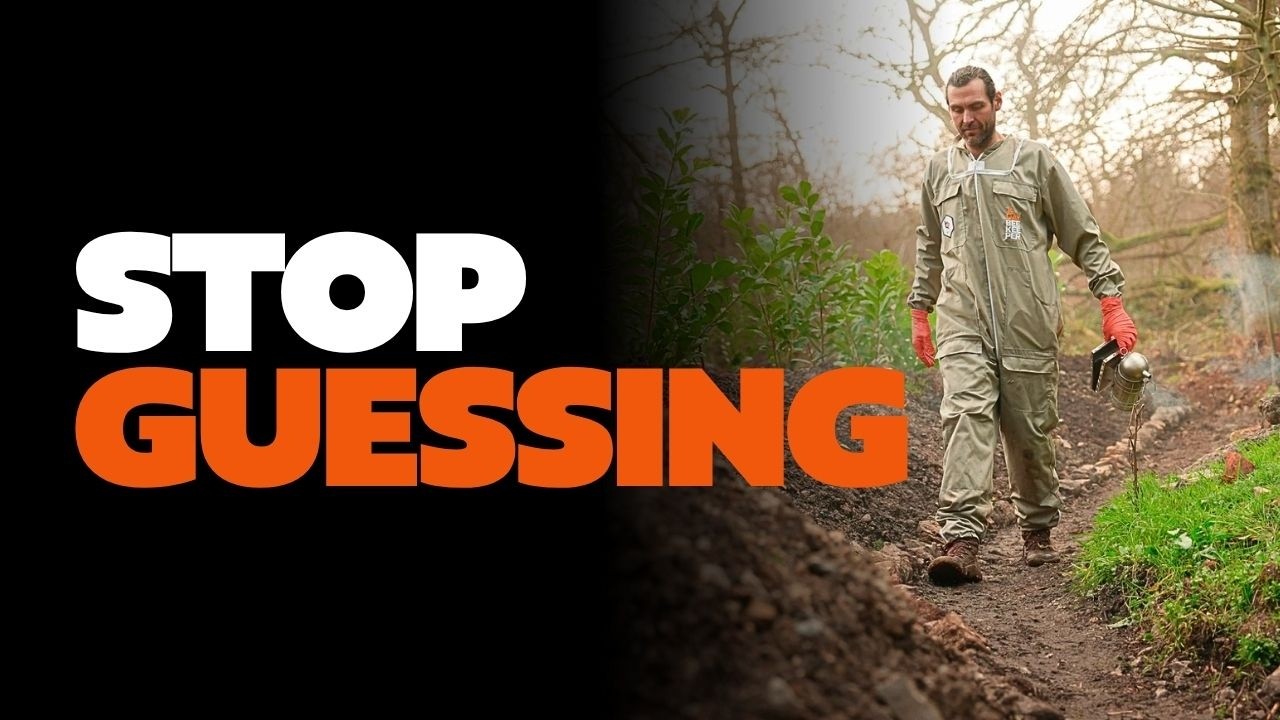
In this instructional video, Laurence Edwards walks UK beekeepers through the essential September tasks and mindset needed to set up colonies for a successful winter. He emphasizes trusting the work done in August—harvest, varroa treatment with Apivar, and colony health checks—rather than second‑guessing in September. The core actions highlighted are: (1) applying a timely Apivar varroa treatment and planning its removal after 8‑10 weeks; (2) preparing for a supplemental oxalic acid sublimation treatment during the natural broodless period, typically in November‑December; (3) feeding the colonies appropriately—monitoring natural nectar flows (especially ivy), avoiding over‑feeding, and targeting a hive weight around 40 kg; (4) using hive scales and weight graphs to decide when to top up colonies; (5) completing winter preparations by ensuring hives are at target weight, removing treatment strips, strapping hives, and securing stands, then adopting a “do‑nothing” approach through the winter months. Edwards also warns against common mistakes such as unnecessary September inspections, over‑feeding that compresses the brood nest, and neglecting treatment timing. The video concludes with a channel migration announcement, directing viewers to the new “14 Day Beekeeper” channel for future content.
Chapters
In this video, we're going to cover all of the questions that you should be asking yourself as a beekeeper in September. But before I go on and do that, this is the last video in the playlist on the Black Mountain Honey channel. I'm moving everything over education-wise to the brand new channel, 14 Day Beekeeper. So head over there for October's video and make sure you subscribe. Beekeeping in September is very, very easy in the UK. It's the easiest month, it's the nicest month because everything is done and you don't have to do anything. The honey is harvested, the bees are treated for varroa, you've done all your inspections, you've made sure you've got a really nice good strong colony, the queen is laying well, the brood pattern is good, you have got all of the information you need to sign that colony off and for them to get through winter. The mistake that a lot of people make is they answer the questions wrong in their head. They make up something like, I'm not sure if the queen is okay, or I'm not sure if the bees have got enough food around The only way to tell if that's true is to go in and do an inspection, just to satisfy my own curiosity. And believe me, I know that because I've been there. We all do that. You want the best for your bees, and you think you need to go in to give the bees the absolute very best. And having the confidence in September to say, no, I've done everything that I need to do at the beginning of August, and now the bees have got enough space, they've got enough food, they've got their treatments in, the queen is there. I'm just going to trust that I'm following a process that is going to yield good results. And it's amazing when you change your mindset around like that. Not only do you follow the process that you're actually supposed to follow, but you avoid all of the mistakes that you were making, the damage that you were causing to your bees. So you get this double uplift effect. Whenever we go through teaching stuff in 14-Day Beekeeper and people go through their first winter, so they do the treatments at the right time, middle of August at the absolute latest in the UK, using a proper treatment like Apivar. Now we've covered all of this in previous series and previous months of this playlist as well. So if you're missing anything, you can go back through. But in September, you should have done all of that. All of these things should have been done. And as I said, I watch people transform through this process, which is they'll take their first bees through the winter, treating them at the right time, feeding them at the right time, using the right concentration of syrup, but most importantly, not doing anything at the right time. And it's a super long period. It's from kind of middle of August maybe through until middle to back end of March, early April. So it's a full September, October, November, December, January, February, March— 7 months, maybe 7 and a half months of doing nothing and trusting the process. And then they open up their bees in spring and they've never seen anything like it. And they always message and say, I can't believe it, like, I'm putting a super on and it's the back end of March. I got to May last year and my bees hadn't filled the brood box before I tried to put a super on, and then they swarmed. before I got there and I didn't get any honey. And then the same people message back at the end of the year and they say, I've got like 250 pounds weight of honey, I just don't know what to do with all of it. So I love seeing this transformation, and it means that September is a very easy month. Now, it doesn't mean that everyone's going to be in that same situation, and definitely don't think, oh, if I didn't do the things that he's saying to do in August, then I shouldn't do them in September, like it's too late. It doesn't work like that. A lot of the things that I say in earlier months are treat the bees for the rower. You've got this exponential rise in the number of varroa per bee as a colony compresses down for winter, and they are starting to compress down for winter now. You'll see the impacts of more varroa per bee if you were to go in and start to look at this time of the year. But if you haven't done a treatment yet, that doesn't mean it's too late. It means get in there as soon as you possibly can and do a varroa treatment. Nip that in the bud. Get your Apivar strips in. You'll have to come back in 3 brood cycles later, so 8 to 10 weeks later, to take out the strips. You can't leave them in over winter. But just that single thing there is going to give you the biggest uptick, I would say, in health coming through the winter. The supplementary one that we do after that, and this is the one that I would say you're preparing for in September, you're getting ready for, is some form of oxalic acid sublimation. Now check what is legal in your country. Generally the non-pure types are the legal ones, which is frustrating, but the, the perfectly pure oxalic acid is what is legal in some countries to use and is very effective When you have all of the brood out on the bees. So if the mites are able to hide in the brood, oxalic acid, even sublimated, is a decent treatment but not highly effective because all the brood just hang out where the sublimated gas cannot get them. Um, so it works much better if you do it when the colony is completely broodless. Now the system that I've developed is like a 3-week freeze system that we will be covering definitely in October and November, but it essentially gives you an opportunity around November, maybe early December, to go in and sublimate the bees and target all of the varroa mites because there's no brood, because you're in a broodless period, a natural broodless period that you're able to identify from the outside. So it's great, you don't need to go in and pull frames apart to identify it. But if you do the first treatment, do your Apivar, and then do a supplementary oxalic acid treatment, those 2 things are gonna transform the health of your bees the following season. Now, if you just did those 2 things, then you can still mess the colony up. And a lot of people do this— they really mess colonies up with feeding through the process of blocking the brood nest out. They take 4 or 5 supers off, go and harvest it, compress the bees down to a single box, think, just taken like 200 pounds of honey off this colony, so I better give them 200 pounds of feed back. And they feed the feeder up— or fill the feeder up, I should say— and and come back the next day and say, wow, the bees have taken down 8 kilograms of syrup. I better give them another 8 kilograms. And they just do that continuously thinking, this is easy beekeeping, isn't it? You just take the honey off, you stick loads of syrup back in to feed them up over winter, treatments are in, I'll see you in the spring. And what happens there is you end up with very healthy bees that come through winter still. It doesn't impact their health, but you start off with 10-frame big box of bees that's compressed, and you end up with like 1 frame of bees in the spring or 2 frames of bees in the spring. And the problem is, is that you compressed and congested the brood nest where the queen wanted to continue raising brood and you blocked it. You've taken off all the honey supers, limited the space, and fed, and then there's nothing for the winter bees to be raised on, which means that you get this massive collapse over winter. So it's combining all of these things. They're the main 2, I would say: feeding at the right time, feeding with the intention kind of for brood rearing, or feeding for storing, knowing what you're feeding for, getting the concentration of syrup right at the right time of the year. But the big one to avoid is overfeeding. You can do a lot of damage overfeeding your colonies at this time of the year. So we're still in that kind of do-nothing phase, see what happens with the IV. I've seen a lot of peaks coming up on the graphs, and I guess you could turn that around as a question, which is, should I be feeding my bees still in September? And yes, I'm going around and feeding my bees every single week. I'm going in, I'm hefting, I'm trying to judge, was this heavier last week or was this lighter last week? Are the bees treading water? are the bees increasing weight on their own, which they definitely have done this week. I've noticed anecdotally, like hefting, thinking, oh, they are getting a bit heavier. And then looking at the graphs that I've got access to around here as well, saying there is an ivy flow on, it's visible, I can see it on the ivy, I can see it coming in. There's lots of ivy nectar coming in, which means that maybe I won't need to feed that much. Maybe I need to adjust the amount that I'm going to top up later on in the year. The post-harvest season can't really be written down because it doesn't work on a year-by-year basis. It works on a let's train the beekeeper to make sure that each stage throughout that post-harvest, the bees have what they need. That's either through them going out and getting it by themselves, which is obviously ideal in most circumstances, and then the beekeeper is a little bit of a backup. And at the moment, I'm going around and, and probably feeding most of them like half a liter, liter at a time once a week because they're naturally getting what they need. Then What will come over the next few weeks as we go from September into October is you'll start to see the colder weather come in. It'll probably wipe out the ivy. The Himalayan balsam will be gone, the bramble will be gone, the clover will be gone. Everything is gone. And if you've got a graph, you can see that because the graph's going up with all the ivy flow going in, and then all of a sudden it crashes, and you'll start to see the weight come down quite quickly. They obviously start fanning down all the nectar, but then once there's no flow, you'll see that at this time of the year there's still a lot of brood that's been created, and the bees will burn through their stores quite quickly. As you progress into a broodless period over winter, you'll see if you've got a graft that it flattens. The bees just stop raising brood, cluster up, and then they're in a much more energy-efficient position and they don't go through the stores anywhere near as much. So what your job is, like, what your job to do at the moment as we go into September is to try and identify when the ivy flow starts, identify when the ivy flow finishes, identify How much more feed your bees need. And it's quite simple. All the time we're judging and saying, well, give them a little bit and make a judgment call. But at this time of the year, once you get to the point where the ivy flow has finished, it's quite easy for me. I've got my target weight, which is about 40 kilograms-ish. I don't— if it's 39, that's fine. 41, that's fine. Um, even 38, 42 is fine. I know if I'm getting 31, 32, I'm thinking, no, they're a bit light. But as long as it's up in the high 30s, close 40. I'm very content with that. And then my job is simple. I just need to go around and top up each colony to that weight. What I say now is the winter bees are there. I can see tons of brood that's been produced, and all of these bees are now there. They'll still continue to create brood, and there'll still probably be a lot of brood in the colony at the moment. The likelihood is they're not on a brood break. The likelihood is if you were to pump them full of syrup now, It wouldn't do the same kind of damage that it would have done in August when they're just consistently pumping out brood, because they might be on the last round of brood. Let's say I'm filming this kind of middle of September, but as you get towards the back end of September, say they're on the last round of brood and you think, right, that's it, I'm just going to go 10 liters and give them everything in one big feed of invert. They would go up and they would take down whatever they could, and they would just like backfill around the brood. That brood would then emerge, and the bees would probably just go back up and get the rest of it and bring it back down. And if that was the end of the brood rearing, then there's no harm done. So you'll get to a point, and you— it is around— it's in between kind of like the end of the ivy flow wherever you are, plus like 4 to 6 weeks, something like that, where you can just go in and pump them full of syrup, get them up to weight. And then that's my favorite bit. That's what we're going to cover in October, which is going around, taking the Apivar strips out, making sure the hive's up to weight, putting the lids back on, strapping them all up, making sure your stands are not going to fall over and that they're completely solid. And then just saying goodbye to them because there's nothing to do in winter. And this is where I'll be able to cut out so much rubbish out of winter beekeeping— going and faffing around with your bees in winter. I literally get them up to weight and I don't come back to them until like February now. I'll still go around and I'll check and I'll give them a little heft because I like, I like to see how the bees are getting on. But from my experience going through that process, feeding them up, getting them that strong, They do not need fondant, they do not need pollen sub, they don't need anything because all the hard work is already done. So I love September, I love October as well. I kind of really enjoy the off-season now because it's not anywhere near as busy as the busy beekeeping season, but it gives me a chance to kind of get into all of the things I wish I'd been able to do throughout the summer, like all of the admin tasks, all of the cleaning the boxes and scraping things down. And this is going to be the focus over winter, so there might not be much beekeeping going on in October, November, December, but there is tons of stuff that we do to prepare for the following season. It is so cyclical. It's the same thing year in, year out. No year is the same though, and it is on you to predict and assess and adjust to the conditions around you to try and get the best out of your bees. It really is a very, very fun and challenging hobby. Now, as I said, this series of videos where I pose every single question that beekeepers should be asking themselves each month is moving over to a brand new channel. We're putting all of our beekeeping education over there, so if you're into learning more about your bees, learning the systems, trying to get the best out of your bees, definitely head over to 14 Day Beekeeper and subscribe. And if you're wondering where the October video is in this one, it is over on the new channel.










