Black Mountain Honey: Let's Talk Bees with Laurence Edwards - Episode 57
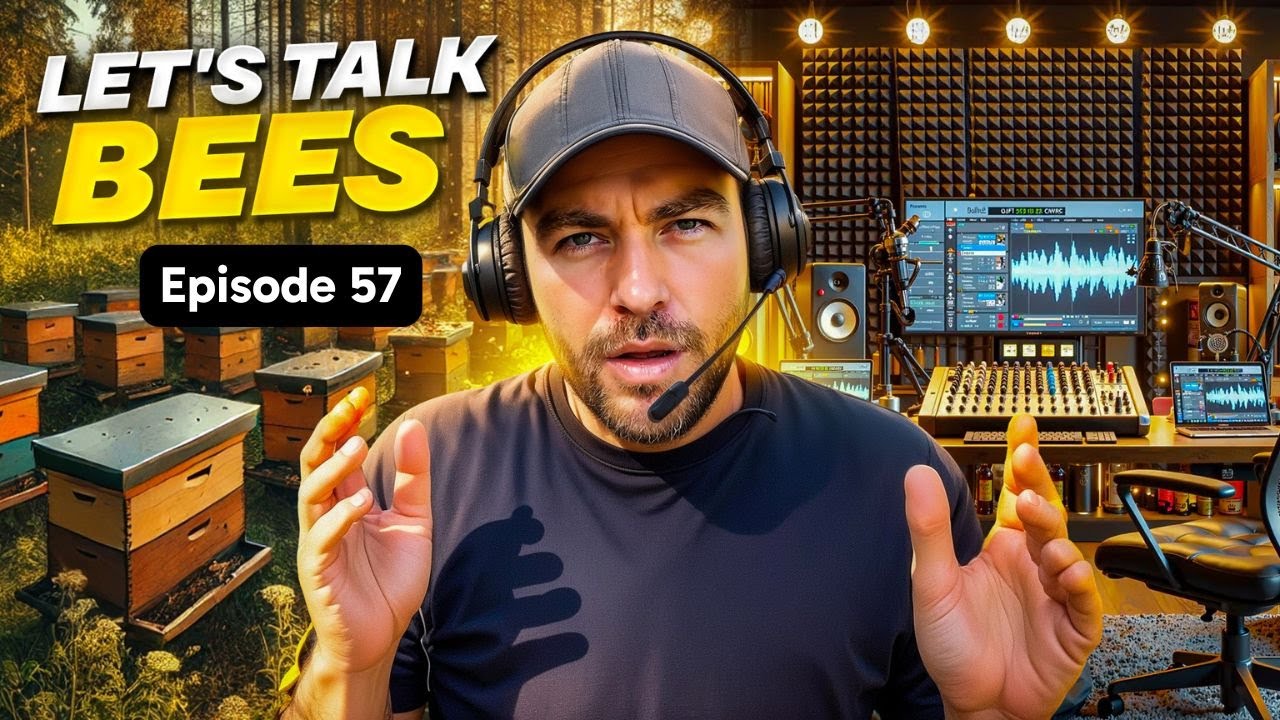
Laurence Edwards answers rapid-fire questions on spring beekeeping: when to add supers, how to handle swarms, queen selection and rearing, Varroa treatment with Apivar and oxalic acid, and whether to use Flow hives or wooden boxes.
Chapters
Good evening everyone and welcome to another episode of Let's Talk Bees. So reminder, we're doing these every other week on a Friday at half past 7 and then every other Saturday in the morning at about quarter past 10. This is going to be the long one though because I will be here today until I've answered every single question that is in those comments. And what a week it's been! I just, I can't quite get over how nice the weather is outside. Should probably talk about the headband, shouldn't I? So if you're watching this on the podcast or listening, you won't see that I'm wearing A headband, which I've taken to wearing now because my hair has become so long that when I go and do beekeeping, it just all kind of like goes in my eyes and I can't see anything. And I can't even put a hat on it now because it's just too boof. So I've taken to wearing headbands. Let's jump straight in and answer some questions then, because I see that there's lots of beekeeping that's going on kind of all across social media. So first in is Steve. Good evening, Steve. He says, hi Lawrence, sorry if this has come twice. Hive swarmed yesterday and I caught it. How best to combine it back to the original hive as soon as possible for maximum honey? Removed all capped queen cells today. So there's no real easy way to do that. I know that's the nicest thing to do, isn't it? You've got a colony of bees and it's kind of swarmed into 2. You've got the swarm and the original hive. You want to put them back together again for maximum honey. I have found pretty much every single way that I've tried to do that, they swarm again, and then you don't necessarily catch them this time. So I would almost like hedge my bets a little bit and say I'm just going to keep that as a separate colony and then almost build them up separately to try and get a little bit of honey off both of them. And then if you want to combine, combine later on in the year. That would be my recommendation, and I think that's the easiest, easiest thing to do, and it'll probably give you the most honey in the long run, even though it might think like putting them all back together you're going to get more honey. I think an early swarm like that— what do they say, like a swarm in May is worth some hay? Basically saying if you get a swarm in May, it's pretty good. If you get a swarm in March What what can the what can the slogan be for March? A swarm in March is don't know something about some larch. Don't know I'm not good not good with words. Someone's got to come up with that, but basically a swarm in March is going to be worth loads and loads of money and honey and bees. So that's what I would do. Andy the Bee Man channel member says roll up roll up hit the like button folks and good evening everybody. Good evening to you too. Thanks Andy and hit the like button. Frolly's Bee says hey Lawrence another amazing week's weather down in South Wales. How is it up there? I managed to get out. managed to get some supers out last weekend. Have you managed to get some out? So yeah, unbelievable weather, like the best spring I think I've ever encountered, and just long may it continue. We have no risk up here of it like, oh no, there's not enough rain so the plant don't yield. And it's like, no, it's Wales, it yields. So just keep this— keep the sunshine going. We don't need any rain, got plenty of water up here, and, uh, the nectar will follow. Uh, channel member says, good evening all. I wonder how many queen cells people found this week. So I think I'm up to about 6 messages that I've had from people where their bees have swarmed already. I get lots of messages, and I'm always a bit like, really? Go on then, swarm in March. And I've seen loads, so there is a lot of swarming going on, and it's understandable because there's brilliant weather, perfect conditions for expansive growth. And if people don't keep up with the boxes, then the bees will swarm. That is what the bees do. But yeah, lots of swarms going on. Brilliant. Good evening, Lawrence, and to all of the chat. Good evening to you too, Carol. Hi, good evening. What a fantastic start to the spring. The warm days are a very welcome start to the season. Let's hope it lasts. It feels to me like it just should be sunny all the time now. Every day should be sunny. Famous last words. Carol says, no cells in north of Scotland. Do you have her on double brood now though? Um, so I think a lot of people would have double brooded, and I think double brood early this season would have really, really paid off. Um, says, what the hell? Oh, it's for the hat. Okay, for my headband. Yeah, of course. There we go. Sorry. Graham Astor says good evening. Good evening to you too. Um, oh, Andy's saying it was actually the hair. Okay, it was just the headband. Sorry, I'm taking— I, I, I'm wading through the insults. It's fine. The best one that I saw came through the other day I won't swear because they did swear in it, but they said— what did they say? How did it go? Oh, it's something like, rubbish suit, stick to having a shit haircut. Sorry, I put the swear word in, I didn't mean to do that. I thought that was quite a good comment because it was like a double negative, very nice. But it's water off a duck's back, you can't say anything that would actually offend me, and if you did, I'd just ban you anyway. So there we go, I won't ban anyone, right? Good evening, Lawrence. Holiday in 2 weeks' time, I'll keep you posted. This man goes through 4 passports per year. Uh, channel member says, evening guys and John McEnroe. I'm loving the weather at the moment, hence why my summer headband on. channel member says, strong flow on here in North Wales. One flow super almost half full, looking good so far. Wow, gonna be some bumper honey crops this year and bumper, bumper swarming. Um, Carol telling me off about the hair as well. Sorry, Carol. It's a good thing people aren't coming here for tips on fashion or hairstyles or how to look good. Just, uh, I've got no— I've got no good advice to give you. Any tips on a good camera to start making videos with? My iPhone isn't the best, I feel. I would say for 99% of people, the best camera phone that you can get is going to be kind of like up there. I find— I'm just seeing if I've got any other cameras here. No, I've not. I find like my camera— I've got loads of phones. I get through loads of phones as well. What have I got here? So I got my old, I got my S21, I got my old, my Sony, and then I got a new, a new S25. I always get like the latest phone because I think it's good for taking videos and stuff. And then I've got like GoPros. The, the camera on like an iPhone, a good iPhone or a good Android, I find personally is way better than a GoPro, like much, much better quality. I don't know why it is, it's something to do with the processing because I think the sensor's bigger or at least like the same size on the GoPro. But I do, I do prefer a phone, but also with like my Osmo Pocket 3, that was like £700-800, and okay, it's got a gimbal, but it's, it's not as good the image. And then you jump up to like that camera that I'm filming on there, that's about £3,000 plus a couple of grand for the lens. So it's like a real jump up to get any good quality for video. For camera, it's not as big a jump up. I would stick to your phone and just get the very— I get the best iPhone, the latest iPhone, and you'll get some really, really good quality footage. Ian says— Ian, channel member, says, hi Lawrence, you suggested a few weeks ago, uh, adding an extra brew box below the existing to increase. I've tried this, but as yet the bees haven't drawn out the foundation. How can I encourage them? So bees will only draw out foundation if they have the requirement to draw out foundation. So if you've got— might as well draw it. Let's do some drawing. Everyone does like the drawing. Oh, I didn't want the color one though, right? So say you've got a box of bees like this. So that is your box. And then let's take the snap off and say you've just got like some little cluster of bees up here. then if you go ahead and put another brood box underneath, they're just like obviously not going to do, not going to do anything. And then the colony will grow like this, be getting bigger and bigger, and they'll probably fill kind of up here first and go something like that, and then that box will be full. And then once they get to that point, they'll only just kind of like start creeping into this bit here. They won't do it really, really quickly. This time of the year though, I would just say get that box, take it up to the top, because the risk of it being cold, kind of like for any long period now, has probably gone. And I would say you're better set up with those boxes underneath now above. If you've— if they're underneath and they're drawing it out, you can, you can leave it as it is. It doesn't make a massive difference if you're going to stick on double brood. But if you're going to double brood from now, I definitely put it above. But, but the long and short of it is the bees won't draw it out until they feel the need to draw it out, until the conditions are right and there's enough heat in the colony and there's enough like nectar coming in, or you're giving them feed. That's only the only real way to kind of like turbocharge them. It's definitely not because the box is underneath, as you will see in a video that's coming on the channel very shortly. Evening from Spain. Finally the rain has stopped and the sun is shining. It's like it switched, isn't it? Because it has not stopped being sunny here for 2 weeks, which is very, very odd. Ben says, hi Lawrence, I still haven't inspected my beehive due to the weather being still quite cold, around 10 to 12 degrees every day for me. However, I'm worried I'm leaving it a bit late for the first inspection. Uh, so I, I agree, I'd be getting in there, um, as soon as possible really to do your first inspection. And if you're thinking about putting your supers on, you could just kind of go and put the supers on, um, overnight without actually doing a colony inspection. You could put the supers underneath if that's what you wanted to do as well. There's a few options there, but I wouldn't, I wouldn't wait too long with the amount of swarms that I'm seeing and, and, uh, How advanced the colonies are, I think it's worth just getting in as soon as possible and having a look. Loma Vista Bee Company says hello, Lawrence, from California. Hello to you too. Graham says hi, Lawrence. I freeze some capped drone comb. If I give it back to the bees, will they repurpose the wax to draw out foundation? So let me do that again. You freeze capped drone comb. If I give it back to the bees, will they repurpose the wax? Or if it's if it's actual like with drones in. like larva, it will pupa inside, just burn, just burn the frame, just chuck it away. If it's just drone comb, like drawn out frame of drone comb, empty drone comb, then I just give it back to them and let them do what they want with it. They might repurpose it, they probably won't at this time of the year. They'll probably just lay it up with loads of drones, which I like. I like lots of drones in my colonies. I would do one of those 2 things. Good evening, Lawrence. We have oilseed rape flowering now here in Kent in a field directly in front of our apiary. Should supers go on now? Definitely. I just think everybody in the UK, if you're getting similar weather to what we've had in Wales where it's just been calm, not that much wind, lots of sun, 15, 16, 17 degrees every day, get your supers on now. All of my supers are on, definitely. And we're, you know, we're North Wales, we're quite high up. I dread to think how far advanced people are on the south coast. Weather just now was almost as good as last year in the northwest Highlands. It's, uh, it's been truly stunning. Richard Mallion, channel member, says, thanks for the video where you show how to find a pesky queen by putting the bees in an empty box above a queen excluder. Use that method and it worked a treat. Excellent, I'm glad you worked— uh, you used that one. Should we just draw it just for fun, even though there's no question? Because it is quite a good— it's quite a good system, this one, right? So if you're struggling to find a colony of bees— a colony of bees, I just— me trying to talk and do stuff at the same time. If you're trying to find a queen and you've got, uh, let's put the snap on. So let's say you've got, I don't know, double brood or something like that, a couple of supers on, and somewhere in there is a queen, but you don't know where it is. Uh, the, the best way of doing this is to— is you take this hive here and you go put it just over there somewhere out of the way, and then on the, the same stand you want to put— get your snap back on. Put a box of bees— sorry, so an empty box like that— and then from the hive that's kind of over there, you want to pick up some frames of open brood and shake them over there, just basically back into the box. But you want to take those empty frames— those frames of— I can't, I can't do 2 things at once— uncapped brood, so frames of open brood, and put them kind of in this hive here. Set it up like that. Get as many as you can, but you just— you don't want to put any of the bees. Not a single bee can go in. It's just frames of open brood. And then you put another box up here with a queen excluder along here like that. So it's kind of like a shaker box. So you've got, um, no bees, but that's empty, empty brood here, queen excluder here, and then that's just shaker box. And then you just shake all the bees in. from that hive over there, just constantly just shake them all in, and basically what will happen is all of the bees will go down like that because they want to get to the brood, and the only one who can't is the queen, and you'll just find her on the queen excluder like that. This app here was supposed to make my artwork look a little bit more professional, and that still looks like 6-year-old artwork, so we have to work on that, but hopefully you got the gist. It's a very useful tool, that one, when you need to find a queen. There's nothing that really comes close to that one there, so I'm glad it worked for you too, Richard. Scoutabout says, can't believe how much pollen was in the hives today, absolute slabs of it. There's going to be a few shocked people who are waiting for t-shirt weather to inspect. I found that out a couple of weeks ago, they are way, way ahead of where they should be at this time of the year, which is a good thing. Manage it well and it will yield crazy amounts of honey. Manage it poorly and do nothing and the bees will swarm. Melanie Keating, channel member, says, good evening, Lawrence, appreciate all your videos and lives. Please can you explain the difference between being a YouTube channel member and Facebook one? That's a very good point. There isn't any difference really apart from on YouTube there's various different levels. So you can be like a channel supporter, we get a nifty badge, or you could have early access videos where you get early access to the videos that I put on YouTube that are going to be like for the public. And then there's the VIP exclusive mentoring section, which is where you get access to all of the exclusive VIP videos. That is the equivalent on Facebook. So if you sign up on Facebook, that's the membership level you're signing up for. And then on YouTube, there's also the premium membership where you get to join in with a group WhatsApp chat. And then if you want to go all out, you can have the exclusive WhatsApp membership as well. So YouTube has a lot of— a lot more different membership options. But as I said, the VIP exclusive one on YouTube is the exact equivalent over on Facebook. Hope that explains it. Hi Lawrence, I want to expand my apiary and get some Black Mountain honey Buckfast queens. What's the difference between the £40 and £50 Buckfast queens that you sell? Um, so there's, there's a few different Buckfast queens on there. So we sell the F1 Buckfast, which we import from Malta. That's just a standard F1 Buckfast. I'm underplaying it, they are very, very good, but that's kind of like 90% of what we sell. We then do a VSH Buckfast, so we sell F1 Buckfast queens from mothers that are proven to have excellent varroa-sensitive hygiene, and then the daughters from those mothers are also tested to be like able to sell them as VSH queens. So they're £50. And then our UK-mated Buckfast, so the ones that we produce myself, kind of available from like back end of June, back end of May, uh, to early— back end of May, early June, all the way through to like middle of August. They're the ones that we sell. They're £50 as well. All of them are very, very similar apart from like in terms of like their general genetics. Good, good quality Buckfast, obviously well mated. You're going to get nice, nice colonies, prolific colonies, lots of honey, nice calm bees. And then with the VSH ones, you're just adding that Varroa-sensitive hygiene on top. It's not, it's not bred specifically for reason. It's obviously all of the rest of the Buckfast is ticked off. It's still an F1 Buckfast, it's just kind of got that additional seal of approval in terms of, uh, the VSH tendencies. Good evening. Good evening to you too, Steve. Good evening everyone, perfect bee weather, get busy, they won't wait. That's excellent advice. Good evening, I have 2 hives, strongest one had 15 queen cups, no actual cells yet, stuck a super on each one, might be doing very early splits this year. Yeah, it might be doing very early demerays this year as well, because I normally say kind of demerays for me early to mid-May, and I think there's no way we're getting through to May before doing the demerays on those colonies. As soon as I get 2 supers full of bees, it's demeray time, there or thereabouts. Uh, we're not there yet, but it's not far off. Right, let's go. Hello. Hello to you too. Inspections last week and plenty of drones in the mix. How long before they're mature enough to mate? So normally it's not until kind of back end of April, early May that the drones are mature enough to mate. We're about 2 weeks early this year, so I think middle of April will be there or thereabouts. I might curse everyone and just start grafting, and then as soon as the virgins— it's basically like the virgins emerge and they wait like a few days to become sexually mature, and they're just about to go out the door, and then it rains, and then it will rain for the rest of the year, and everyone can blame me. That, that is what will happen. But at least we've had some— at least we've had a nice spring. Uh, Demby Honey says, I'm loving the new multicolored bee suit, mate. Bee suit, mate, I'll need one in my life. Getting lots of comments on the bee suit. It's cool, wasn't it? My idea, that, as well. Um, it's funny when you, you design a bee suit to look like a clown suit, uh, knowing that you're going to get people say, oh, you look like a clown, and then they still feel really like smug and confident about it when they put it— oh, you look like a clown in that suit. And it's like, yeah, So that's kind of the idea behind it. It wasn't a mistake to look like a clown. It was, it was very, very deliberate. But well done on your observation there. Sorry if I've offended anyone there. A lot of people did laugh about the bee suit. I, I am taking it in, in good jest. Uh, right, where are we going next? What's the fastest way to get foundation drawn in the super? Do you feed and leave the queen excluder off until they start to draw comb? So no, I never ever leave the queen excluder off, ever. I don't want the queen laying a single egg in any of my supers ever, so the queen excluder is always there, and I don't feed through the supers either. I just, I find I like to leave the bees to it. And you think this year everything's so accelerated, so like to accelerate it more, you'll just knacker your bees out kind of before you even get to May. So I'd be taking like putting boxes of foundation on supers now, I'm thinking, oh, that'll slow them down a bit. I'm thinking, what can I do to slow the bees down? I want to extend the season out as long as it can really be. I don't want them to get to the point where they're just going to swarm in the middle of April. So I see that as a positive that they're not drawing up the frames quickly because it means that the colony can expand and hopefully you kind of get more or a better yield in a few weeks' time because of that kind of a slower build-up. It's a difficult one because I can understand the frustration, like you're looking at it and thinking, come on, just do something, just do something, but before you know it, you'll be too far ahead. So just enjoy the slow ride while it's, while it's still there, I would say, and I wouldn't feed through at all. You just end up messing things up. Hi Lawrence, what happened with the Carl Lockyer queens that you bought? Have you used them for queen rearing? So I had 6 or 7 queens off Carl and all of them died within 2 months, and that wasn't just from one batch, that was every time he'd send me another one. Oh yeah, sorry about that, I'll send you another one, sent me another one and it died within 2 months. and it's, um, that it is— it's not as clean as it needs to be out there. So there's some sort of like issues with the queens just dying through infection. Um, so I've not— yeah, not, not recommending those queens to anyone. Good evening, Lawrence. Unreal spring so far. I transferred a nuc with a Black Mountain Honey 2024 queen 3 weeks ago. 6 frames is now 11 frames, and I just took a split. Supers have some weight in them already. Oh, we're gonna have to have a competition, aren't we, to see who can get the most honey from a hive? That sounds like good fun. Shell's Shed says, good evening, I'm late but, uh, I got here— sorry, I'm late but at lead tea got here this week. Wow, look at next week's weather! I can, I can definitely get down with the weather next week, that is looking good. Uh, Graham says, do you still like the Apisolis smoker, smokeless smoker? Um, I've been meaning to message Damien. Damien, the, the owner of that, messaged me a couple of weeks back to see how I was getting on with it. Um, I do, I do still like it, but I just don't find it has the same effect Like on a really nasty colony than a than a big proper old-fashioned smoker. So so I just come back to using the old-fashioned smoker. I do I do still like it though, and I think it's good for areas where prone to fire. Peter says evening all mash the like button. That's good. Everyone hit the like button. Much appreciated. Nigel Lavender says good evening Lawrence. I was a bit like a kid at Christmas when my nuke arrived yesterday. It's in place now, and the bees have been exploring their new location, leaving in the nuke for a few. More days. It is proper exciting, isn't it? Like, I get excited for all of the people buying, like, getting their first nucs. So people ring me up, they're like, I'm really sorry, I'm like a kid at Christmas. And I'm like, no, no, no need to apologize, I'm, I'm equally like a kid at Christmas just giving you your nuc. And I love hearing people's stories and stuff like that. But at that time where you get your first nuc and it turns up on the doorstep, and then you're like, it might be a bit, might be a bit daunting. I, I certainly would be daunted by it. But the first thing that you do, isn't it, is you, you, you know, you take it out to the apiary, you put your little Correx roof on, give it 10, 15 minutes to settle down, you open the entrance and they all come out and you think, oh, it's a bit much, and then it settles down and then you think, this is pretty chilled out, this is quite nice, and you sit there and you're watching it with your tea. And those 3 or 4 days, I would say, are probably the happiest day— happiest 3 or 4 days of any beekeeper's beekeeping career. And not because, like, it's not more interesting or it gets worse or it's kind of like downhill from there, it's not, it's very much uphill still from there, but it's just that like the unknown, but they're there. So kind of the whole spring, the whole winter, you've been thinking, I'm gonna be getting bees, and you're thinking about it and it's exciting, but it doesn't really hit home until they come and they're there and they're flying, and it's a bit like, oh wow. But then you've still not gone in and you still don't know like what's gonna, what's gonna greet you inside. So I do, I like those days, ignorant bliss, and then it all kicks off in a good way. Right, let's have a look where we're going next. Well, there's lots of, lots of comments. Where are we here? I have gone all the way down to the bottom. Here we go. Uh, James says, hi Lawrence, going for the John McEnroe look? Indeed I am. Good to keep the hair out of my eyes. Uh, Margaret says, 2 to 3 weeks ago I said I'd found uncapped queen cells but couldn't find the queen. Then had 2 weeks of rain. 16 days later got in and found 6 capped queen cells with piping queens inside and fresh eggs, plus the original queen. Interesting. Definitely an aborted swarm, that one. Um, it's funny, isn't it? They will abort, but they obviously aborted it too late, and you've got virgins coming out. So there is going to be a battle royale. Um, Nigel says, will they need feeding? So in the nuc for a few days, I, I would give them like maybe a litre of 1:1 sugar syrup just to make sure. Difficult. I always have to try and give like generic advice on that one because some of the nucs would have been really heavy and some of the nucs would have been light, and the last thing I want to do is, is honey-bound anyone's nuc. but equally I don't want them to starve. So a litre is like a safe one. You're not gonna, you're not gonna completely honey-bound your nuc with a litre of syrup, but it will stop them dying for a couple of days. So yeah, I would go with 1 litre of any syrup that you've got. 4 new queens arrived, installed tabs off Sunday evening. That is equally as exciting, kind of introducing queens, I think, as well. Thanks for your order though, Stephen. Hi Lawrence, collecting my bees tomorrow. Given the weather at the moment, would you still feed? I'm in the South west. So yes, I would, I'd always feed when you, when you put a nuc into a new hive. It just makes the, the colony, uh, it makes the colony's life so much easier by just giving them a feed. You don't need to give them loads, they'll still go out and forage nectar, they'll still go out and forage pollen, but it, it really does turbocharge the colony and gets them going very nicely. Good evening, Laurence, could you explain the pros and cons of wooden hives as opposed to poly? I certainly can. So when I started off beekeeping and I was looking at what, which ones do I get, It, it was really, really simple because the poly hives were about like 25% or maybe 30% the, the cost of poly. So you're thinking, well, they're loads cheaper and also better insulation for the bees. And the bees definitely do better in poly, there's like no debating that, both in the winter when they need the insulation to keep the warmth in, but also in the summer when they need the insulation to the kind of warmth out, and then you get the insulation properties overnight in the poly as well, which the bees need to keep the temperature up to fan down all of the nectar to turn it into honey. So poly is much, much better for the bees, like there's no debate in that. I don't think anyone thinks that wood is better for the bees. Wood is way more durable, so you can bang wood, you can knock wood, you can scrape wood, you can burn wood, it will last like probably a similar amount of time as the poly, if not a bit longer. But also it's natural, isn't it? Like, it will just decompose down and you can start off a brand new beehive with no, with no plastic. I think that is a really big positive, that one. I do use them interchangeably, and I do think I still, when I look at like the setups that I've got now, a lot of the setups are kind of like this. This is what I'll draw. So I have— I don't know why I keep on doing that. So we have like the, the bottom of the hive is— uh, snap it in my pound jar. Uh, so bottom of the hive like that is generally a wooden underfloor entrance. And what that bit, little nodule bit was. So I'll have a wooden underfloor entrance, and then I'll generally have— this is like generalizing here, I've got loads of poly boxes— but I generally have a wooden brood box. And then wooden supers. Really, all of my supers are wooden, but this goes back to when they were, they were cheap, you know. You could buy like a wooden super for like £11 or something. But then let's change the color. I have a poly Ashworth feeder there. Don't know why I've drawn it like that. Seemed a good idea to have it on snap. And then I, I have a wooden roof So you can see like most of it really is going to be wooden. Like if I if I had to choose between the two, oh I don't know though. I do like my polyhives. I do I do really like and you'll see like the Langstroth ones that I've got where they're all license polyhives. I do I do like it. So I mix and match. Sorry, I'm not even answering the question which was what's the differences? I'm just telling you which ones I like better. So wood loads more durable, completely natural will will. Compose down, decompose down to nothing, will probably last a little bit longer, probably a little bit cheaper than poly is as well now, and you can paint it. Poly, much better for the bees, way more insulative, much less durable, so you get like dings and bumps and stuff in poly, not quite as easy to repair but still repairable. But the big thing, the big thing that I like about a poly hive, especially like the fully moulded ones, is that they come fully made Like, if you, if you don't know what you're doing when you make your first wooden beehive, you will not make it correctly unless you're particularly good at making things. I, I think I got to like 20 beehives before I even got close to making one that was like correct with the correct bee space and stuff. So that's a big plus on a poly hive, is that it comes and it's just complete, ready to go. Hi Lawrence, how's it going? You look like John McEnroe, the greatest tennis star, with that headband on. I can't believe it. I, you know what, when I put it on, I just thought, well, this is just going to be quite a convenient thing to keep my hair out of my eyes. I did not know it was going to be John McEnroe. I like John McEnroe though, he's quite funny, isn't he? Right, next question. Hi Lawrence, question, what factors do you use when requeening hives, i.e., age, performance, current brood pattern, etc., etc.? Hmm, so age I don't necessarily change them out. So, so unless it's like 3 years old— if it's a 3-year-old queen and the colony's not looking the best, I will kill them. But I'll give them 2 seasons so they can have the, the year— they can have the full year that the queen is mated in, and they can have the full next year. The year after that, I will kill them just because of age, because they will— I know they're going to go at some point in that year. Like, to get them into the third— you get queens that run through the whole third year, but they're probably not as good, but they're still okay, okay. But then that fourth year, they're terrible. terrible. So I would kill them at some point in the third year. Uh, performance is a difficult one because I find with like the majority of my queens, they're quite consistent across the batch. I don't generally find you've got like 10 healthy colonies that haven't swarmed with young queens and like one's got like 50% less yield. Um, so I wouldn't— I don't— I wouldn't— I wouldn't select for that. Most certainly, that's the biggest one for me. If I see like a poor brood pattern, unless it's the first round of brood in the season, you do occasionally get that first round of brood looks a bit like, oh, it doesn't look good, and then you go in again and it's like, wow, that's perfect. So I'll give them like a week or two's grace at the beginning of the year, but definitely poor brood pattern and it's time to replace it. But the one in there, the biggest reason that I requeen my colonies in there is temperament. So if I get a colony that's just horrible, and I had, I had one today in the apiary where I wasn't even doing any bee work, and I knew there was— I know there's 2 colonies there that aren't quite right, um, in terms of temperament, and they, they stung me, just came over and stung me out of nowhere. So I just went and killed their queen, um, and I've taken them somewhere else as well. Little gits. Loads of nectar going in in Lynx. Good to hear. Hello from Colorado. Hello to you too. Will you be getting any more Carpathian queens? I blinked and they sold out. I'm really sorry, not this year. So they, they only had one mother queen for the Carpathians last year and it died over winter. So they're going to be getting another one, I think, in like July. But then you fast forward from July, there's no way that they're going to get that mated this year. So next year, hopefully, the Carpathian and the Przewalski will be back. Do you get your labels printed with the people that designed them for you, or do you use a third-party website? If it's a website, who do you use? Um, so I, I use printedeasy.com. That's what I use to print all the labels, and they don't do any sort of design at all. You just got to send them your PDFs, but they're very good. We'll be getting a little spring snow tonight but doing splits on Monday. Oh yeah, it just feels like here we're so far away from snow, it's unbelievable. Hi Lawrence, I need to move some hives about 12 to 15 feet. What is the best way to do this? Thanks for answering questions earlier in the week, my pleasure. So let's draw something here. So this is the standard moving hives philosophy. So if you have a hive here, you can move it in any direction 3 feet. So if you move it kind of to the left 3 feet or to the right 3 feet, the bees will, the bees will find their way in. If you move it 6 feet or 4 feet or whatever, and you know, it's not, it's not an exact science, this one. The bees don't find their way in and they just cluster up where the original hive was. So then you have to go up to 3 miles in any direction to kind of like cancel that out. So it's called the 3-foot or 3-mile rule. So that's the rule. If you want to move your beehive, you can move it anywhere up to 3 feet, that's fine. If you need to go over 3 feet, you need to go to at least 3 miles before the bees won't stop clustering up at the original spot. So this is how to do it. You can do this like in mini steps. So say that's your hive here, you move it 3 feet over to there. So that's 3 feet, and then give it a couple of days and then just move it again 3 feet. And just kind of keep on going, and you'll end up kind of over here somewhere, 15 feet away. Might take, might take you a week to get from there all the way over to there, but if you just do it in like little small steps and then every day let them fly from the new step. So what I would do is I'd go out at like this time of night, um, and move it 3 feet so there's no bees flying, and then tomorrow they literally won't notice, and you'll just see bees coming, coming in, coming out with that new location. And just keep on doing it at like kind of like 8 or 9 o'clock at night when it's getting dark. And then before you know it, you'll have them in the new location. It's quite an easy one. Right, let's go to the next question. Peter, channel member, says, good evening, Mr. E. I like it. Made 2 splits today from very full overwintered double brooded nucs with your 2024 queens ready for 2 F1 2025 queens arriving from you next weekend. Lovely queens, thank you. Well, that's good. I like, I like to hear that, like a success story. Red Mac says, we just put double brood underneath, but we're about a month behind the southerners in Northwest Highlands in terms of flow. Oh, I'm sure, I'm sure the weather will catch up with you up there. It's, it's way too early really. Very, very kind, thank you very much. He says, looking forward to getting a few queens from you next week. I will always be here to help out, but thanks for that, much appreciated. Says, what's the best way of inspecting a double brood box, please? Let's go and do some drawing, right? So the obvious, what you can do is Like take off the roof, take one brood box off, put it in the roof, and just inspect both of them one by one. That's the way a lot of people do it. Or you can do— let me draw this bottom box. So imagine that's your bottom box there, and then let me take the snap off. What you can do is you could just tilt the box up like that. So that's your second brood box there, and you basically just have a look in there. And if there's any swarm cells, they'll be hanging down off the bottom of the cells there, and you'll be able to see them. So that is not foolproof, and that is not always the case, but a lot of bee farmers who run double brood use that system. And you do generally find it if you have a double brood nest like that, that's the gap where they put the swarm cells, because there's quite a nice— there's like a bee space gap there, so it gives them the space to do it. And that saves you loads of time. Doing that really, really good. Uh, Frollies B says, same here, hoping to do 8 or 10 splits start of May, end of April. Very nice. There's some— I, I could see the amount of people splitting because I can see the amount of Queen orders coming in. Absolutely bonkers. So we are sold out, like we sold out for this week obviously because at the end of the week now we sold out for next week, and then the following week we pretty much sold out for the following week. But then the week of the week after that, we're not far sold. We're like There's maybe 5% left on that week as well. It's not till the first week of May where there's like any decent availability, and then by the time we get to that, it will be— they'll all be sold as well. Oh no, I've just seen a comment down there. Benjamin Outdoors says hello. Ben Davis says, if I inspect the beehive when the weather is around 12 degrees, will that be okay? So it's fine to go in when it's 12 degrees, yeah. know, you want it a little bit warmer than that ideally, but just from my own experience, it's better to go in a little bit colder, um, at the right time than leaving it until the temperature is what people deem to be correct and it's just too late. Channel member, says good evening, Laurence. Good evening to you too, Robert. Good to see your bees today, they're looking brilliant. Hi Laurence, good evening. No longer on Twitch. I just completely forgot to hit the Twitch button, sorry, that, that was my error. I am still doing it on Twitch. I'll be back next week. Hi, I hope you're well. I'm very good, thanks Keith. Hope you're well too. I tried to find my queen with empty super and queen excluder method you showed us, but they wouldn't go down, but clustered in piles of bees at the top of the super. Feel like a right loser. What went wrong? So what's really important, you need, you need to have open brood there. If you do that manipulation without open brood, or you give them any other place to go, they do what they want. But it has to be lots and lots of open brood underneath it, and And I'd be surprised if you put the under— if you put the open brood underneath, I'd be surprised if the majority of them didn't go down. Um, but mate, but, but the only other way— no, no, they should still go down. So let's see, let's see if that happened. I'm sure you'll comment again. Says queen cells in 2 hives, all charged and days away from capping in Surrey, so 2 splits done already. What will be interesting is to see like whether these queens get mated. I, I think queens kind of coming out to mate in the next couple of weeks. Might stand a chance. I think, I think it'll be interesting to see though. Scout About channel member says, do you think adding a clearer board below the top brood box on a Demeray would stop the bees backfilling the top brood box with nectar? Um, if you had to, uh, so, so possibly, but you, you'll restrict the amount of bees that you need up there to keep the brood warm, so I wouldn't, I wouldn't advise doing that. You can, if you time it well, if you're on it with a Demeray by the time they've— all of the brood has emerged, there's only probably like 20% stores in those boxes, and a lot of it's nectar, so you just shake it out if you want. You can get in there before it's like completely full of honey. Hi Lawrence, I hope you enjoyed that the spring is here. I certainly did. One question, did you have some dead hives this year, and how many? So I never like to kind of give like the figures out for this because I don't know, it can make people feel bad because I see some people saying like it's 30-40% losses or something. We're well below 5% losses this year, and we've been working down for a good few years now. But we cut that season short and we treat our bees so early with Apivar. And I saw a study that came out and it was just saying that the way to keep varroa down is just by doing the correct treatment at the right time of the year. And I kind of read it and thought, obviously, but it's true. It is as simple as that. It's— there's a real trend for people doing it as well, which is cutting the season short and letting the bees have that last bit of the season to kind of sort themselves out before they go into winter. And I think if you do that in the UK, you've got a very, very good chance of getting your bees through the winter. So yeah, not that many dead at all, well below 5%. I was very, very happy with that. I was just building a brood box and I was actually wondering about your thoughts on top versus bottom bee space. Turns out you're live, so I can ask. I'm, I'm not that fussed in terms of top versus bottom brood space. Like, if I had to choose, I'd go with top bee space because I do find it is a little bit easier to work and get the bees down without crushing them. So if I had a choice, I would go top bee space, but just the worst thing is if you're mixing, mix and matching them. Is a bit of a pain if you've got different boxes with different bee spaces. And some people do like the top space bee supers, so I've got a few bee space, top bee space supers that I think I inherited from someone, and it's really annoying knowing. So you have to keep them all on one hive and it works okay. But if I had to choose, I would, I would go with top bee space. If everything could be top bee space, it'd be nice. Um, Rug Havara says, making, uh, make a video about requeening In phasac brood deceased beehive. I'm not 100% sure what that means. I'm gonna have to work that one out, I think. Ian says, thanks for answering my last question. I stopped feeding now, but I think that I overfed. My strongest colony has loads of stores, probably syrup. Should I do anything to ensure space for the brood? So there's not really anything you can do within the brood nest other than just take the brood frames out and put foundation in. I would definitely go in and check though, like the colonies difficult to say what your colony looks like, but like my big strong colony should have like 7 or 8 frames of brood, like about, about that at this time of year. That's what I'm seeing roughly at this time of year. If you're seeing like 2 frames of brood and then lots of frames of honey or stores or syrup or whatever, then you need to remove some of them and just put sheets of foundation in. Yeah, needs a little bit of work and balancing at this time of the year to make sure they've got exactly what they need. Wow, there's a lot, a lot of questions. I'm gonna have to start going a bit quicker, right? Laxman says, good evening, my honey hive I left— wait, start again. Good evening, my honey hive left, I don't know where. No, no bees anymore. I don't know why the reason must be, but it's not in the hive. There was full of honey in the hive. I did a good harvest. Um, so I think what you're saying is, is the bees absconded outside of the hive, and the biggest reason for bees absconding throughout the winter is high varroa load. And high viral load on the bees, and they just have to get away from the varroa. And the varroa reproduce within, like, underneath the cappings of the brood, within, like, kind of the, the cells where the pupa sits, and they're, like, chewing on the body fat. So the bees just say, right, we're going to go, we'll leave all that varroa there, you've still got the phoretic mites on us, but we're just going to go to get away from it. So it's almost certainly going to be high varroa load. Uh, Denby Honey says, we bought some lavender smoker pellets off Griff this week. Oh my, they're a real game changer, Lawrence. The smoker kicks going for ages. They are really, really good. I did a, I did a video today, so I've got someone filming for my online course, the first video today, it's like practice. And I did a video on how to, how to set up a smoker and how to light a smoker. So I did that with those pellets and saying about how, you know, it lasts all day. And then did that about like 10 o'clock, and then I had to go back up there at 4 o'clock to, um, to put some queens in. And I'd left the smoker out just to like let it, let it die down, and it was still going. and like still properly going, smoke coming out of it, and it was still going 6 hours later. They are very good pellets available. Tell him that Laurence sent you, he'll like that. Says love from India as well. Thank you, love to you too. Says, with there being so many different hive tools, which hive tool do you find the best and why? Um, so I am very much a simple hive tool man. I like the one that just kind of looks like that. That is the worst drawing of a hive tool I've ever seen, but you'll know exactly what I mean though. It's just a standard hive tool. There's no like J-hook or any like weird thing coming off it like that. I just like the standard one. I like it to be as long as it can be, the biggest, strongest, longest one. I don't like any handles or anything like that on it, um, and I like it no paint, just stainless steel so I can clean it. That's what I go for. Really simple one, that. Uh, right, Mem says, can you tell Mr. where the queen was on your website that you gave away? The whole site was full of bees. Um, I can. It was, it was hidden in a Hot Fire Honey listing. So let me, let me see. Oh, I don't think I can find that to show that the same way. Let me see if I can. Um, so you'll all know for next time. Uh, no, I can't do it. So it was, it was just hidden on the Hot Fire Honey listing. And it two people found it. I don't know how two people found it because I put the inventory as one, so we had to give away two prizes, which is slightly annoying. But you know, hey ho, we'll live and learn. But I'm definitely going to hide it somewhere better next week because it the people found it way too quick. But it was it was good fun, and looking at the statistics of the amount of people that went on there looking for it, we will we'll keep that up. It worked really really well. Um, I'm excited. I'm excited about it. I'm only smiling because my daughter was really really intrigued about it, and my wife. was telling her, oh yeah, so like Dad has, um, has hidden a queen on the site for people to find. And she's like, what do you mean? What do you mean he's hidden it on the site? What's— like, she was really, really intrigued and wanted to learn more. So I thought what we might do next week is I might find somewhere to hide it and then tell Ivy that she has to create like a riddle, and then I'll send the riddle out, maybe with Ivy reading it in the email. For anyone who doesn't know what I'm talking about, you need to go on to blackmountainhoney.com/subscribe and subscribe to the email list, and then you will be in the list, uh, when I send out the emails to people to say there is a free queen hiding on the website. You have to go and find it. It'll be Wednesday morning. I've got my calendar all set up for that. Paul Watterson says, hi Lawrence from the Isle of Man. I got my first nuc of bees yesterday, so looking to get going with them over the spring and summer. So keep those tutorials coming please. Certainly will. If you've got any specific questions, just give me a shout, Paul. Uh, The Jizz Wizard That's surely— the Jizz Wizard says, did you hear that commercial beekeepers in the USA are suffering 70% losses? Is there anything like that happening in Europe? So no, we don't get these massive crashes the same way. You do, you do get crashes, but not to the same extent. It's, it's like another level out there, and I'd love to actually understand what is going on out there. I don't think it's a single thing. I don't think it's like, oh right, they found it and we can fix it. I think it's a lot of different factors kind of all Manifesting together. That's so weird because I just said manifesting as I was reading the word manifest. Probably not even the right word, but no, it is manifesting in major, major colony collapses. So I, I don't know what it is, but it's very, very sad, and I'm glad it's not happening in Europe. And I just hope everyone in the USA can kind of get through it. Kerry Smith says, brought a buck fast from you late last year after the original queen was superseded and then a July swarm. Tough year. Opened the hive last weekend and she's laying like Beauty, excellent. I thought that was going to be a bad comment at first there, but I'm glad I carried on reading it, Kerry, and good to hear that she's doing so well. Fingers crossed she gives you lots of honey this year. Margaret says, last year I had a hive with CBPV. For anyone who doesn't know, that's chronic bee paralysis virus, which I left in a double deep and did nothing with. They survived winter but were horribly aggressive in the first inspection, 150 meters before I could remove it, before I could remove the suit connection. Possibly Yeah, I would say you, you do find when there's like a, an aggravator or a stressor on a colony, it can really, really impact on their temperament. So yeah, I would say that's probably, probably connected. Um, but if, if it's me though, they've got CBPV and they're aggressive, I would just get rid of them. I know that sounds harsh, but like, that's probably the best thing to do in terms of securing the, the temperament of future generations and not spreading disease. Good evening, Laurence. Is there a certain space you should have between hives if adding hives in the future? Will it be problematic if you move existing hives to accommodate the new ones? So, it's a good question. You can have your hives really, really close to each other. So you'll see, let me draw, you'll see some people have like a big long hive stand like that. I've got some like this as well, and you have kind of like one hive and then like 2 hives, get the idea, all the way along. They're getting bigger and bigger to take up the space. Let's just go around like that. So you'll see a lot of people have hives like that, and it's not ideal because you've kind of— you get drift. So you'll get like a bee comes out of that hive, and drones are really bad for this, and they'll just come back and go into that hive and then that one, and before you know it, they're just like one big homogeneous mess. So I— but I have colonies like this, and sometimes it's the only— it's the only real way to do it. If you think— I'm gonna go to like a bird's eye view now. This is a good way of doing it. So a lot of people do this, they'll have a pallet like that, and then they'll have 4 hives on a pallet. They're kind of like all back to back with each other, and again, I'm not— you get the idea. They're supposed to, supposed to be the same, uh, size blocks, but 4 hives on a pallet like that. And then what they had is 4 different entrance directions, so this is where the bees will fly in and fly out, and that's a much, much better setup to have kind of hives set up like that. And then what's nice is you can— you basically stand here to inspect that hive, and then you stand like there to inspect that hive. So the whole, the whole time with that set up there, you've got a really good position to be able to stand and inspect the hives, and all the bees fly off in different directions. And then the other thing that I was going to say is that when you come to do the next hive, the next stand, you'd put it like at an angle like that. So this is like in an ideal world. And obviously it's not going to snap like this. We have your 4 hives there, and then you've got these different angles, and that's what it's all about for bees. It's the different angles that help them orientate and navigate. If you have them all kind of like facing the same way, you will get a lot of drift. So I would, I would set them up like that. I know that's not quite what your question was. So your question was, is there a certain space you should have between the hives? I would say a minimum of like 6 to 10 inches, absolute minimum, but you can you can have them touching each other if you want to have them next to each other. Best practice really though is to leave a hive space in between, so like a full hive space, enough space to actually put a hive with like a couple of inches either side, and then before you know it, come the end of the season, it'll all be full up, but at least you start off with the best intention of trying to give them a little bit of space. Hi Laurence, doing my demerars at the moment as big strong colonies on brood or brood and a half. Do you always use fresh foundation in the new brood box or drawn comb if available. So you can use either, it really doesn't make a massive difference for the bees. I like the demaray because it slows the bees down, and I want my demaray to be longer because then it kind of takes up more of that awkward swarming period. So if you give them fresh foundation, you extend the length of a demaray. If you give them drawn comb, you compress it because before you know it, it's all laid up by the queen. So I prefer to use fresh foundation because we sell, you know, sell a lot of nucs. We're always just adding new foundation in, which I do think is good for the bees. It kind of keeps the bees nice and healthy, and there's no viral load that gets built up in the drawn comb. Appreciate if you're not selling nucs, you might have drawn comb. If you use drawn comb, you'll end up with more honey overall, but it's just a case of like compressing or extending the length of that demerite, and I find that foundation will extend it, which is what I want. Hi Lawrence, I overwintered 3 nucs, each with your mated queens. And opened them all up today. Those queens are laying machines in this weather. Moving time early next week to full hives. A-star queens. I love all the positive feedback on the queens. That was brilliant. Um, I had turned off WhatsApp, but I don't know why it comes up on there, so sorry about the noise. Aaron, I'll get back to you in a bit. Uh, talking about nice temperament as well. That's what it's all about. Kerry Smith says, thoughts on the Flow Hives powered by Smart Hives? We've done really well with them. I really like I really like my Flow Hive. I like my Paradise Smart Hive. The bees, the bees are doing well in both of those already this year, so it'd be interesting to see how much honey comes from them. I will be doing videos comparing them and future videos on them as well, but I, I really like them. They're, they're not for everyone, and it does take away, um, the ability to kind of manage the hive in a certain way, but I just think if you're going to have one or two colonies in your back garden and you're happy to do the inspections and you're happy to take out of splits, then Flow Hives or Paradise Smart Bee Boxes are a very, very good bet. Um, I like them very much. Right, Kieran says, is there a preferred method to requeen an AMM colony with a Buckfast queen? So when you requeen an AMM colony with a Buckfast queen, generally what happens is they accept her, they let her lay some eggs, and then they kill her, and then they try and supersede on some of the eggs that have been laid, which is like stupid. I don't know why they do that. But they do do it. So what the best way to do it is to introduce the queen and get her out of the cage, but then every like 2 or 3 days you need to go back in, and when they start to do supersedure cells, you take them down. You've got to do it every 2 or 3 days. If you do it any longer than that, they just kill the queen. And then by the time some of the brood emerges, some of that back-class brood emerges, they stop trying to supersede her, and you're pretty safe after that. Another way of doing it is getting one of the queen trap cages, so not the queen excluder one but a queen trap, so nothing can come in and nothing can go out of that. And then you can introduce a frame with that Buckfast queen on and put it into a queen trap like that. And then that way you've kind of got like a hive within a hive, and then they'll get used to it that way. So 2 methods there, both of them pretty good. Channel member says, hi Lawrence, I have 2 nucs that have a lot of activity but they're on 2 frames of brood and it's only small patches with the queen still there and laying. Is there a way I can speed them up? So unfortunately there's no real way to speed colonies like that up. You could feed syrup, but if there's not enough bees there to process the syrup, it's not going to speed them up anyway, and really the weather should be speeding them up. So I'd be looking at them and thinking maybe, maybe their time is up. 2 frames of brood, pardon me, 2 frames of brood and small patches is not a lot at this time of the year. So I'd be giving them everything to kind of see if you can get them through, so definitely feed them some 1:1 sugar syrup, or 2 to 1 if you've got it, and that should have an impact. But I suspect there's something else probably going on, right? If I want to squish a queen and buy a queen from you, should I buy the new queen before or after squishing the old queen? I always say this to people, have a look on the website, see what dates are available, and then place the order for the— if you can, place the order for the queen like a couple of weeks in advance and then kill the queen kill your queen, you want the new queen to arrive at least 8 days after you've killed the queen. Because what you're going to do— kill the queen, wait 8 days, take down all the emergency cells, and then add the new queen in on day 8. But she can go in on day 9, day 10, day 11, whatever. You can leave them for a couple of weeks really without a queen at that point, and then, and then that should be fine. If your queen does arrive before day 8, all you need to do is put her into the colony in the cage, but don't the tab and then don't open the tab until you've reached day 8 and taken down all of the emergency cells. So whatever way you do it, whichever way you do it, there is— there's a way to kind of manage it. Hi Lawrence, long time lurker. If price wasn't an option and you had lots of planks floating around, would an oak beehive be a good idea? Great question, and I'm glad that you've lurked and now kind of joined in, which is good. Um, I made an oak beehive with some floorboards that I had. I had leftover floorboards and thought, oak, oak's nice, isn't it? Let's do an oak beehive. And it's— it was the most— it was the heaviest beehive I've ever had. Um, it didn't weather very nice either, and my joinery skills are non-existent, so obviously it kind of just came apart pretty quickly. It was all right, actually. I, I did— I glued and screwed it, so it didn't come apart that quick, but it was so heavy, like the most ridiculously heavy beehives. So for that reason alone, I probably would use the oak— use the oak frames for— or the oak boards for something else. Just go and buy some nice cedar to use. Said it's all kicked off this week in Suffolk. We collected a swarm during the week and I made my first split today after finding some queen cells. There's a lot going on in there. There's hundreds of swarms gone already, I reckon. Uh, where do we go? Says, hi Lawrence, uh, I— do I have to do a split this year to stop them swarming with the new bees you supplied me this week? So it's impossible for me to say whether they'll swarm or not. What I always say to people, the first thing is only good colonies swarm, so if your colonies swarm, you've got a good colony of bees that might have been slightly mismanaged in terms of space. If you want my recommendation, I would definitely make a split. It's a no-brainer. I've sent people out a nuc, so a box of bees in a nuc, and then after a week they take those bees and they put it into their beehive and they just got this spare nuc knocking around. And then to help the colony along, what I recommend, and I'll send this out, I'll give emails to people, uh, kind of with warnings on this as well, I recommend taking out a frame of brood, a frame of stores, a good shake of bees, and add in a new mated queen. Now you can do that, you can add the mated queen to either side, it really doesn't make a massive difference. but it slows the bees right down and it does knock them back a bit and gets them through the swarming season. The other option is— sorry, so what I was saying is you've got the nuc there, so for the sake of a £40 queen, you've got everything you need to make yourself up a nuc, which if you don't want, you can sell and recoup some of your money. So I do think it's a good learning experience, you've got all the equipment to do it, you might as well do it, and then it helps protect your honey investment as well by reducing the swarming in that colony. Another idea for moving the hive 15 feet, if you move them and close off the entrance for 3 days. When they get out of the, out of the second day, they will do reorientation flights. Yeah, I wouldn't, I wouldn't do that. You're talking about closing them in for 3 days, I wouldn't do it because it's quite, it's quite stressful on the bees doing that, and there's no real need to do it because it's just, it's, you know, 5 or 4, 3 or 4 3-foot moves. It's not, it's not the end of the world doing it, and, and the bees won't care at all, whereas like pushing them over and locking them in for 3 days, you could risk damaging that colony. Keith says, do you think it'd be okay to steam clean nucs? Certainly, certainly is. Channel member, says, hi Lawrence, how many honey productive hives do you have and how many jars of honey do you get a year? So probably like 150-ish, and we get like— I don't even really kind of measure it up that much now anymore because it just goes into buckets and I count up the buckets. Didn't we have like 250, maybe 300 buckets last year, something like that? It just gets stacked up. Um, but we don't get— we don't get mega yields up in North Wales. It's a shame, not like the South Coast. Discovered capped and charged swarm cells on first inspection today but put nude brood box under on 3rd of March double. I think we saw brood in all stages today but now not 100% on eggs. Beginners. Too late for an artificial swarm. So was the queen there? That's always the kicker. Is the queen there? Is there still eggs in the colony? And then you can do an artificial swarm. If she's gone, you just got to knock down all the cells. I've knocked down all the cells, add in a mated queen, or knock down all of the cells bar one and let them requeen. I found a couple of colonies with only drone brood today. One is still quite strong, but the other one is just a couple of frames. Is it worth worth giving such a weak colony a mated queen. So I would, if that was me, I'd probably merge the 2 and give them, like, the merged colony a single mated queen would be the way that I would do it. One of my hives is struggling with numbers going into winter. I've got a queen but no new brood, as I think they had to abandon brood to a lack of bees. I've moved to a nuc. Anything else? Um, is the, is the queen okay and is she laying? Because a lot of the time when you get this that mass reduction in bees but the queen's still there, it's a problem with the queen. Um, it can be, it can be a problem with varroa as well, but it might be that you've got a queen but the queen's like knackered. So I would, I'd put them into a nuc, I'd give them some 1:1 sugar syrup, and I would see what they do. If there's enough young bees in there and there's a queen that's laying, you'll, you'll see eggs and brood within maybe like 3 weeks. That's what I would do. Gail's Bees, a Buckfast arrived in the post today from you. Thank you. I like the cages you are using. What is the QR code for? The cage seems to have 2 entrances. Should I take the— break the tabs off both? So the QR code will link to our website eventually, links to Melita Bee's website at the moment, but it will be like just instructions on how to introduce your queen. Uh, the cages, the cages do have 2 entrances. The queen can only get out of one of them, but I always, uh, I always suggest and recommend opening both of them. So open both of them them, but the queen can only get out of one. Rosie says, what's the minimum time you need to leave a new nuc before you can transfer to a hive? So I would say minimum is 24 hours, but some people I've had this week do it, do it on the same day, you know, put the nuc on a hive stand at 10 o'clock and then come 3 o'clock they're transferring them in. I wouldn't recommend that unless you're experienced. I'd give it at least 24 to 48 hours. It's kind of like the optimum time. Hi mate, I hope you're well. Getting my first nuc Sunday morning, any advice in general. I could go on for hours, advice in general. Always keep ahead of them, always give them enough space, feed them when they need to, don't get too obsessed with the honey, give the bees what they want. If you keep healthy bees, you'll get lots of honey. If you just focus on the honey and don't worry about the health of the bees, you'll end up in a bit of a mess. There we go. Been scrubbing and bleaching secondhand poly hives, never buying used again. I've used your bleaching method, thanks for that. Does it take long for the chlorine smell to go? Um, no, it doesn't take that long. Within like— have you hosed it? Have you hosed it all down afterwards? So once they've been dipped, I kind of like pressure wash it all off and then I hose it all down, and I find kind of like within a few days of hosing it down, you can't, you can't really smell it, but at least you know it's clean. Regarding finding the queen, I put 2 frames of open brood in the empty deep, shook in 4 frames of bees. They crawled up the sides and clustered at the top. So was there, was there a queen in there in the end? That's, that's the only other question, because if there's not a queen in there, sometimes they don't go through as well. But that's strange, that's strange. I've not seen that one not work before if there is a queen in there and there is open brood. So, ah, shame it didn't work. Sorry about that. How long does a drone take to mature, as I have quite a bit of drone brood and some drones? It's at least a couple of weeks. It's probably a little bit less than that. Again, I don't read the textbooks, but I I know kind of when I see lots and lots of drone brood, you've got like 3 weeks really before you're gonna have any sexually mature drones. So some of that time is spent inside the cell and some of the time is spent outside of the cell. I don't go down for exact science of numbers, but give it— if you've got, if you've got a frame full of drone brood now, give it 3 weeks and they should be sexually mature. And like I said, it's early this year, so that only takes you through until like the 20th of April. We're really— for me, it's back end of April, so we're a good, good 2 weeks— 10 weeks to 2 days— 10, not 10 weeks, 10 to 14 days early, I think. Good evening, Lawrence, to you and your family. What do you think of the Smart Hive? I like the Smart Hive, you know. I've still not taken any honey out of it, so I'll reserve kind of like complete judgment on that until later on this year. But I, um, I do like it. I do, I do prefer working that to the Flow Hive, just a little bit easier. Scout About says, we have a queen coming for you on Friday the 18th. Will this still arrive on a bank holiday? So no, I need to— I need to— I don't want to change the listing on that one because we're kind of sold out anyway, but I'm hoping to get the queens on the Wednesday. So if I get the queens on the Wednesday, for anyone who's ordered it for the Thursday, we'll send them on the Wednesday to arrive on Thursday the 17th. Uh, JK says, no hat raffle this week? Unfortunately not, we sold out. Gone. All the hats are gone. So I'll have to work out something else to raffle. Yeah, I've got some other things I can raffle or we just give away, do whatever. But I did forget about that, sorry, my bad. I bought my 8-year-old son his first hive and he is so enthusiastic about getting involved. He's now sat up watching his live— this live stream at the time of this message. Can you say hello to Louis, please? Hello to Louis, a massive hello to Louis. You are— you're only 8 and you're already involved in beekeeping, and like my daughter She oh, she's just obsessed with everything to do with beekeeping, and I'm sure you'll be the same. So you're definitely still up because it's Friday night, isn't it? There's no reason to go to bed. So hello, Louis. I hope you're enjoying the stream, and say hello to your dad from me. Margaret said I have to have some tea. Thank you very much. Mike Moore, channel member, says found one dead out from eleven hives when checking yesterday. Bees I had seen coming in and out must have been robbing. Can I reuse? The frames, or is that risky? Do you know when they say like, ask 10 beekeepers and you'll get like 11 different answers? You will always get different answers on this. For me, I always melt down those frames now, just as simple as that. And I, I'll work out when a colony's a dead-out through lack of activity early on. I'll seal up the entrance and just try and reduce that rubbing as much as I possibly can. I certainly wouldn't reuse those frames. I'd be melting them down and starting again. Rebecca Walker says, hi Lawrence. Hello to you too, Rebecca. She says, just to thank you, I received my 2 new queens today safe and sound. sound and in their new home. Excellent, I'm glad they arrived safely. It's nice to have got through the first— the, like, the second week of nucs and the first week of queens. I've got my, like, my totals list up there and then just build the list up as we go on. Um, busy week though. I did my first inspection last week. The hive was on brood and a half. The super has 3 frames of capped brood with some drone brood. All the rest of the frames are honey from last year. The brood box has 7 full frames of capped brood, full frame of capped drone brood. The other 2 are nectar and pollen. I added the queen excluder and a super. I didn't find the queen due to the amount of bees. Is there anything else I should be doing in the next hive inspection tomorrow? No, nailed it, got everything right there. That colony sounds absolutely brilliant. All I would say is with the weather as it is at the moment, just err on the side of giving the bees additional space. So if you're thinking, do they need 1 or 2 supers, it's 2 supers. Do they do they need two or three? It's three. Always go with one extra. Just give them a little bit more space. That additional space at this time of the year in the hive is not going to cause them any issues for heating. So I would just give them more. Jackson Trumper says that dog needs belly rubs for sure. He does. Jazz, Jazz, we do. Hey, boy. Here he is. Go on, paw. Jazz, paw. Do it. Poor. Why is— oh, they did it. He did it. He did it there in the end. The laziest dog in the world, that one. Uh, Margaret says, first Velutina queen in the garden here in Spain. Smashed her good. I have 40 traps set up, um, in a 1.5 kilometer radius of the apiary this year. Stay vigilant, UK peeps. Oh, lucky, lucky that we've not got to deal with that that much at the moment. But yeah, stay vigilant. Thomas Lindsay says, good evening, Lawrence. Good evening to you too. John says, public service announcement, scammer season has started, so please report specific comments as original post tends not to be from the scammers. Thanks for listening, and now let's back to Let's Talk Bees. It's a good point. John does such a brilliant job of kind of keeping things on track on the No-Nonsense Beekeeping Facebook group, but there are lots of scammers out there to try and get your money, so always buy your beekeeping stuff from reputable outlets, not through random comments on Facebook. Good evening, Lawrence, enjoying the stream. Went through 3 hives today, loads of bees, supers are now on. Long may the good weather continue and the nectar flow. Feels like we're all being very, very spoiled. Like, when was the last time you got like a full week of sun? And we've had like nearly 2 and a half weeks, and then next week just looks like a full week of sun as well. It's almost going to be like a month of sun, and I love it. I really do. I love the sun, really nice. Oh, we did that one. Uh, Jizz Wizard said, it said GIS for geographic information systems is computer mapping, is my profession. I'm really sorry for calling you the Jizz Wizard. Um, I can't— I'm sorry, the GIS Wizard. Okay. Um, I, I'm just gonna laugh to myself because I just found it really, really funny, but it probably was inappropriate, so I do apologize. Uh, Paul Ginger says, hi Lawrence, looking forward to receiving my first ever Nook from you on the 24th of April. Can't thank you enough for all the videos and advice you put up on YouTube. It's been invaluable and so helpful. Oh, thanks, Paul. It's a very nice thing to say. I'm excited to get you your nuc, but always here if you have any questions. Best was to get mini mating nuc foundation drawn out for use. Just stock it with the right amount of bees. If you get enough bees in there and you get the flow on and you get like juice and fondant in there, they will draw it out eventually. Much easier once you've got drawn frames to put in there. How do you handle timing the June gap? If this weather keeps up, I need to harvest to avoid running out of supers, or do you take the supers a bit before the gap so they can build up before the dearth? Um, let's draw a picture on this one here, right? So this is a really, really good method for the June gap. This is the one that I like the best. Just— it's not, it's not the one that I use, it's just the one I like the best because it's really Yes, right, so that's your brood box there. You've got a queen excluder running over it, and then you've got, um, let's say like a few supers on here. So let's, let's go ambitious, let's say you've got 4 supers. They are all supposed to be the same size, right? So 4 supers, so 1, 2, 3, 4, queen excluder, and then a brood box. So this is the technique that I would use. So let's say they're full of honey, so let's take away your supers. So all your 4 supers have gone, you're back down to 1 brood box. At that point, you put another brood box underneath like that, and you put a poly Ashworth feeder on top. So then you put a bit of feed in there, and your bees are in here, and then during the June gap, the bees have got access into the feeder, and they've got access here to grow if they want to grow. June gap's only going to last for like a few days, maybe a week. And then once you start to see the nectar coming back in, and when you're feeding here, you're feeding like very, very little amount. You're not pumping that full, maybe like a litre of syrup every 3 or 4 days, something like that. When the flow starts to come back in, you take your poly Ashworth feeder off like that, and then you just make the decision, do you want to stick on double brood or do you want to go with supers? Sorry, or do you want to go with a single brood like that? I would suggest just sticking on double brood because double Sub-brood is a really, really nice winter configuration. So then all you do is you just take the polyaxial feeder off and then you just go back on with all your supers that you've used and they're nicely extracted. And then that system there, like everyone should have a polyaxial feeder on every single hive, I think so anyway, but that system there, the only thing that you need to do that is an additional one additional brood box and it means that all of your supers can be used in the spring and then all of your supers could be used in the summer. and it gives you, you know, it gives you a week, gives you enough time to just about get all that honey out. So I think that's a good system. Which is better, the warm way or the cold way? So it's all down to perspective whether which one you like. So let's draw the 2 of them. So in a national hive, it doesn't really work in Langstroth, in a national hive you can have 2, you can have hives set up like this. So what I'm showing you here It's like a bird's eye perspective. So let's take the snap off. So imagine the bees are flying out in that direction, and then put snap back on. So that is the warm way. So these are frames lined up like that. That way is the warm way. You get the idea. And then that way is the cold way. So the only difference for me—the bee—the bees don't care. Bees don't care, the bees do it any which way they want in, in the wild, so they're really not that fussed. The only difference it comes down to is where are you going to stand. So if you're going to stand behind your hive there, the warm way is way, way better for you, it means you're not going to twist. If you're going to stand by your side of your hives there to inspect, then you can see that the cold way gives you exactly the same access, so it's kind of like from there, same to here. So The bees don't care. Just set them up, work out where you're going to stand, and then set the bees up, set the frames up so you've just got an easy way to lift them out, and then everyone's happy. So I, I always inspect from behind because I have big long kind of lines of bees, so I always go the warm way, but only because I'm inspecting from behind. Julian says, evening, Lawrence. Evening all. Sorry, out with the family this evening after a hectic bee day. Queens all in. Thanks again, Lawrence. Have a great great live chat. Thank you, Julian. I'll catch up with you soon. Big, big hypothetical, but if the weather stays and I double brood now, how long I can do an aggressive split of 5 to 6 2-frames? Looking to pre-order queens so I don't miss out, but don't want to go too early. Um, so if you think about like a frame of brood, if the queen lays it up and then it's got to go through kind of like egg and then larva and then pupa and then emerge roughly like 3 weeks, 3 and a bit weeks for all those bees to come out. So if you've got like 6 or 7 frames of brood in there now, fast forward 3 weeks, probably going to have filled that double brood box. So I would say, to be safe, 4 weeks you should be full from now. You can order the queens if you want to order the queens and then just delay them, we can do that as well. It means that you'll definitely get them kind of roughly when you need them. Oh sorry, Jeremy Whitefield says hi, shouldn't miss that one out. Hello Jeremy. Hi bud, do you always advise waiting for full brood to be drawn out before adding a super after putting a nuc in a hive? Currently I'm around 9 out of 13 drawn out in my brood boxes. So I work on like roughly 80%. I would say though at the moment you can go down to 70% because it's so nice and warm. So 9 out of 13 is not going to be far off 70%, so I would, I would get on there, stick the supers on. Hey Lawrence, any recommendations for managing Carniolans? Already overflowing the brood box, doubled up now. Totally caught off guard compared with Local Mongols, thanks. Very unusual for Carniolans to do that, to be so big and prolific at this time of year. They are notoriously slow starters. They make up for it later on in the year, um, but I suspect that they're— well, I don't know, they're obviously, they're obviously doing something very, very well. Um, I— they, they're very swarmy bees, Carniolans. I would split them if you've got them on double brood. Uh, I, I'd wait until they're filled, they filled both of those boxes, and I would make a split. That'd be the best way of doing it. Jeremy Whitefield says, hi there, I have double brood and it needed more space. What are your thoughts? So if you're filling up double brood, you need some supers on there, and that's the only way to give them space at that point. Where are we going next? Just completely lost where I am on here. Here we go. Will says, I've recently bought 2 full bee colonies. One colony is not doing well, loads of mites on on the floor, colonies on 1 brood and 2 supers. What would you recommend for treatment at this time of the year? So if you're looking to kind of keep them as honey production hives, you're very, very limited in what you can use at this point in the year. So you need to remove the supers. There's nothing really that's licensed. You used to be able to use Max and MiteAway Quick Strips, which is a formic-based treatment, but you can't use that anymore. They changed it to Formic Pro, and now you still have to take the supers off. So I would I would take the supers off. I would move them back to like a single brood box, and if they need space, go to a double brood box. And then I would treat them with either oxalic acid, like Apibiox, or sublimation multiple times at 5-day intervals. Or if you're just going to keep them without supers off for 8 weeks, you could put Apivar in now as well. Would have been better to stick it in in Feb, um, but if they need treatment, then they need treatment. Elizabeth says, "What is the earliest I can start grafting queens?" So we normally go kind of like mid to back end, generally back end of April around here. It's a bit earlier this year, but I think I'll still I think I'll still stick to kind of maybe like yeah back end of April. I think I'm going to go in the UK. P Case oh it's not working oh no my thing's broken that's not good. I can't remove Elizabeth's comment. Let's try and do something else. Oh no, the, um, the stream— there we go, working now. I was gonna say, that was, that was disastrous. That could have completely crashed it there. Right, let's jump back on. Right, so PK says, hello Lawrence, if I'm going to receive my nuc at the end of April, how aggressively would you check a board with new foundation without risk chilling the brood? So I wouldn't, I wouldn't do anything fancy like that. Don't, don't you don't risk chilling the brood. Like, rapid expansion, like through checkerboarding, is— you can only really do it on like a really massive strong colony. Definitely wouldn't try and checkerboard a nuc. So I would just follow the instructions on the nuc, get it into its— get it into its like hive, let it expand. Once the box has reached 80%, get the supers on, um, and then wait, you know, wait until it's like quite an advanced colony before you start doing anything like that. Hi Lawrence, nice hair, looks similar to my dad. I'm going to take that as a compliment, Harry. Not seen what your dad looks like though, I'm sure he looks good. Denby Honey says, Beekeeping Basic, any tips before I take it? You'll nail it, Paul, you don't need any tips. Harry says, I did the Beekeeping Basic and it's dead easy, just need to know how to inspect a hive and build a frame. Like I said, I think you'll be good, Paul. John Sylvester says, have you thought of changing all of your hives to Smart Hives or just have a mixture? I quite like having a bit of a Variety there just for the YouTube videos. If I was going to change them all, I'd probably change them all to traditional hives. Harry's looking forward to his queens arriving tomorrow. Eleven queens on their way to you, Harry. Pick them all out myself. You'll be happy with them. Silk Wolf channel member says regarding the smart hive, I'll give you a heads up. It's more of a trickle hive than a flow hive. Takes way longer to extract eight hours, whereas my flow hives I can do all seven frames simultaneously in three hours. Interesting you say that, and interesting to see whether it's. the, the type of honey that's slowing it down. What I love about the Paradise Smart Hive though is that you can just, you know, you just turn the knob and just leave it and it just does it for the day. The bees can't get in, they can't steal the honey, so you can kind of like tap all of the frames. So the 8 hours for me is fine because I'll just tap it one day, I'm just going to collect it the next day, so I'm not going to wait there. Whereas the Flow Hive, you've got to wait there and do each frame individually, and it takes, takes a good few hours. Right, let's have a cup of tea. Gary says, evening Lawrence, hope you're well. Can't believe how many hornet queen wasps there are around at the moment. Crazy, innit? I've seen a few. I saw maybe 3, 3 or 4 queen wasps today. A lot of them around. Dale Hancock says, hi Lawrence, night temps down here still dropping to 6 or 7 degrees with these easterly winds. Is that too cold for supers? Just worries as the daytime temps are now 12 degrees plus and today was just 18. Um, Definitely get the supers on. Don't worry about that, you're all good. The mild winter has resulted in lots of queen wasps, etc., surviving the winter. Brace for the wasps in the summer. Yeah, like last year was the, the least waspy year in the world. I have a feeling we're in for a very waspy year. Drones reach sexual maturity between 10 to 16 days after emerging, says Google. So once capped, plan queen rearing 24 to 30 days from being capped. Good stuff, John. Thank you very much. Got my Black Mountain honey nuc today, many thanks. Should I give them some 1:1 syrup once they go into the wooden hive on Monday? I do have frames of foundation, drawn comb, and frames of stores that I can give them. I would definitely feed them. Keep them on foundation is, is best for a small colony like that, and feed them, and it kind of like stimulates them to get them going. That's what I would do. Hi Lawrence, just wondering how many employees, uh, you have since you have a separate full-time job. P.S., do you need an accountant? Laugh out loud. So we have no employees, it is just kind of me and my wife that do it, we do everything, and it is mainly Helen that does most of it. I just get to do the fun stuff, it's brilliant. Do you use dummy boards? I was told to use them to stop the bees drawing out too much to the wall of the hive, but I don't seem to see many people using them. What are your thoughts on them? I think some hives you need to use a dummy board on, so like my fake Flow Hive where there's like a half frame space actually need to use them. Some of them you don't need to use them, so like the Abello 12 frame and the Abello 11 frame, they've got like a really good space, like sizing on the side, so you don't need to use them. I quite like a dummy board, gives you like a bit more space to work, but I don't use them unless I do— I actually need to use them. Would you still treat VSHB? So for me, I would. I always treat all of my colonies to make sure that they're in the the best possible health that they can be. If you're buying bees because you want to kind of like transition towards treatment-free and you're buying VSH bees to kind of like boost the genetics in the apiary and you might want to see how they work without any treatments, then by all means don't treat them. Personally, I treat all of my colonies. Brindie caught a lot— oh, Brindie caught a live even if I've missed the first 45 minutes. When's the earliest I can do a shook swarm? Interesting that one because I've got a shook swarm to do on, on that wild colony, and I'm thinking I want to let them build up strong enough first. It's not so much about the weather, it's about having enough young bees there. You don't want the old bees, you want that first kind of like flush of young brood to come through. So I'm waiting, I'm going to go like back end of April, early May, I think, before I do any shook swarms. Um, I, I enjoyed the Brindley Court reference as well. Um, but yeah, predictive takes a nightmare. Have you ever used Varomed for mite control, very little withdrawal before supers can be put back. Um, that's good, that's a good one to know actually, the Varomeda. It's a mix, isn't it, of formic acid and oxalic acid, I think, off the top of my head, and then you drizzle it on. That's, that's a good shout. If the withdrawal of that is much lower, then maybe that's a good way of doing it. You can't use it with the supers on, but you can put it back on pretty quick afterwards. Hi Lawrence, we have a lot of oilseed rape in Norfolk and it's not far off flowering. Is there anything I should consider when it comes to off oilseed rape honey? Yes, definitely. So normally with any sort of honey, you basically want the honey to be at the right moisture content before you take it off so it doesn't ferment. And the, the way to give you a visual of that is when you pull out a frame, it's all capped, or the vast majority of it is capped. If you leave oilseed rape honey that long, you will not get it out the frame. No chance, because it would have started to granulate and crystallize. So you take out any frame bit of oilseed rape honey and it will be like not capped at all. If you shake it and nothing comes out, so it's not nectar, that is good for extraction. And you'll kind of, you'll kind of get the hang of it, that it's probably like mid to back end of May is when you'll do your extraction. I'm trying to say like normally it'd be back end of May, but this year I think maybe it'll be mid-May. It'd be interesting to see how the oilseed rape, if you've got it near you, responds this year, because I feel that the varieties that they're planting are flowering a little bit earlier the bees aren't ready, but this year I think they'll be ready, so there could be some really, really good bumper crops on the go. Hi Lawrence, looking forward to getting 2 nucs from you in a few weeks. My plan for the season is to do a split and end up with 3. When splitting, would you take brood from only one or both hives? I would stick to just doing one hive. They say colony— bees from 2 colonies will fight, bees from 3 colonies won't. I just think to limit the risk of any kind of like disease transmission spread keep it, keep it neat and just do it from one. Um, that'd be the way that I would do it. When you extract your honey, do you keep honey from each site separate or is it all mixed? Um, so I keep it separate in the buckets, but then when I come to put it into the tanks, I do, I do mix it all up. It's a weird one because like for a lot of people they want to know kind of like the honey's from this exact site, but then also what a lot of people want is they want like a honey that's going to taste kind of similar each time. So if you give them honey from one site, then honey from another site, they might be like, oh, that was amazing, and then I didn't like that one. Because if you mix it all together, you end up with something that's kind of like, kind of repeatable, which, you know, like for some people it's like, it's not what I want, and for some people that is what they want. I can't believe I'm at the bottom of the list, it's brilliant. 3 overwintered hives, all treated and fed at identical times, all were strong, only one came through headed by Black Mountain Honey Queen Beekeeping. It's very annoying when you think you're doing everything right. It's very annoying. Uh, Harry says finished all the questions before 11 PM, must be a record. I love it, just doing quicker, quicker answers. Uh, Sean says he received his mating queen today. Thanks, we'll let you know how she does. Excellent, I hope it all goes very, very well. Well, I have reached the bottom. I can't believe it, I'm just like choking. And that is the rule, is that when I reach the bottom, I'm going to bed. So I have had the busiest week ever. It has been brilliant. We've sold sold a lot of queens. We've got a lot of nucs out of the door. If you want to order your queens, get them orders in as quick as you possibly can. If you want more, uh, to understand more, kind of like more support with what's going on with your bees, definitely sign up for either the channel subscription over on Facebook or one of the channel member options. Got lots and lots and lots of videos coming this week. I hope you will enjoy them. Oh, thank you to everyone that's dialed in. Next time I'm back is next Saturday, not tomorrow, a week tomorrow, about quarter past 10. We'll do an hour then, and then I'll be back again for a long one on the Friday as well. Um, a few thank yous there. Thank you to everyone for dialing in. Hit the like button on the way out, and I hope you all have a wonderful weekend. See you later.










