Black Mountain Honey: Let's Talk Bees with Laurence Edwards - Episode 73
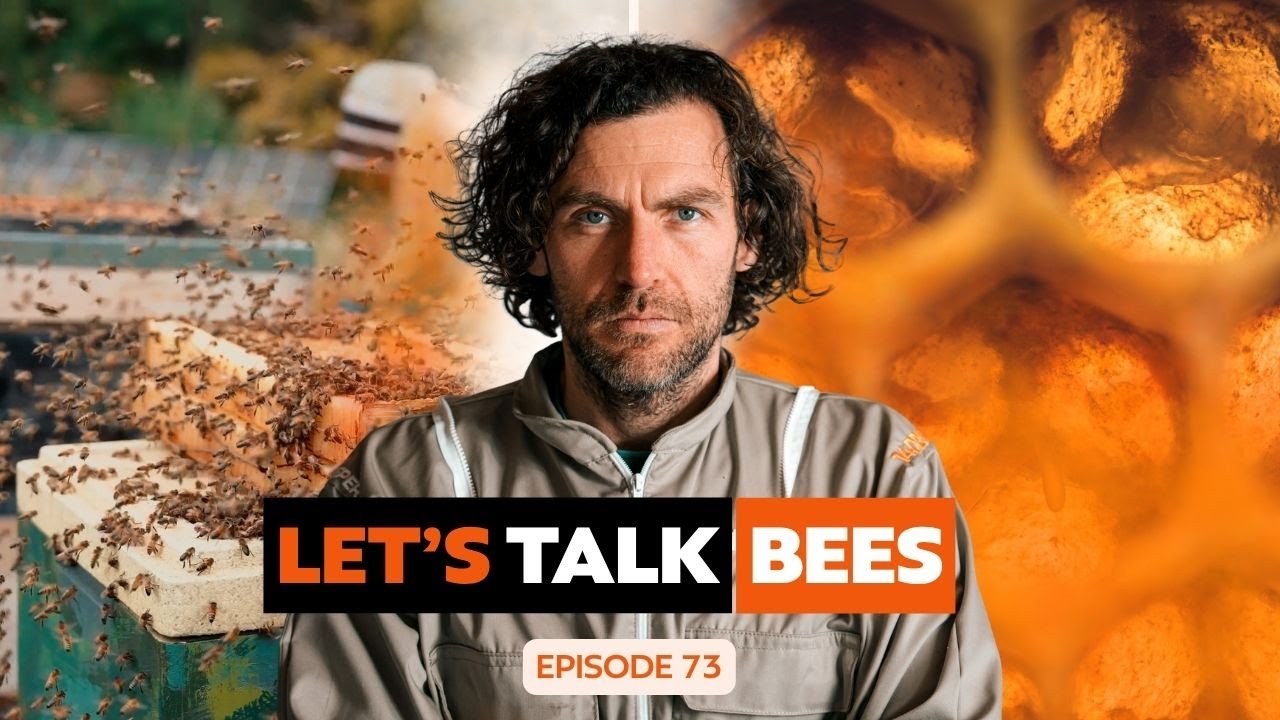
Laurence Edwards covers April beekeeping tasks for North Wales, announces a revamped 14-Day Beekeeper course with a single subscription model and free upgrades for current members, and answers viewer questions on swarm prevention, varroa treatment timing, and bee breeds. He's consolidating the platform while expanding internationally and exploring solar-farm apiaries.
Chapters
Good morning everyone and welcome to another episode of Let's Talk Bees. I was looking when I was doing the title there that we're on episode 73 of Let's Talk Bees. I was quite impressed with that and we'll probably get to the 100 at some point this year or maybe over Christmas. But what's going on in the beekeeping world today? Actually quite a lot is going on. There's a huge amount of change in the wider beekeeping world but also here at Black Mountain Honey and here in the weather as well, because it's a bit cold and it's a bit miserable. And then the forecast this week, I don't know about you, and I think if we get it in North Wales where you get this really nice hot spike, which forecasts for Tuesday, you generally get it elsewhere as well. And it's timed in really nicely. It's Saturday the 4th of April today, and I've kind of been forecasting roughly for us in North Wales, specifically for us, first week of April for inspections. And it's going to tie in really, really nicely because Monday, Tuesday, and a little bit of Wednesday going up to 16, 17 degrees around where we are, so probably hitting 20 most places across the UK because it is quite cold where we are, and it really is perfect time to go in and do a full inspection. The queens are available now, so you've got your backup if you need a backup, and whatever happens over those next 3 days, there's going to be a significant amount of nectar coming in, so you're going to be looking at space restrictions as well and having to do something to stop those bees swarming. I've seen people with bees that are swarming already, swarm preps that are going on. So the season starts now, I would say, very much so. There's no more sitting on your hands. You need to get in there, you need to go and do stuff. This is the week to do it. The weather looks really, really nice. I'm hoping that having underbrooded the vast majority of my colonies and fed them up during that cold period, post a little mini warm period, that all of that brood will have emerged or kind of been capped over. And then starting to go through that process of emergence now. And if there was enough stores in the colony, I should, I should have some very nice big strong colonies to go back to. But that will all happen this week. There's loads going on, loads going on this week. So we're going to try and get inside, look inside my colonies. We've got queens going out again, we've got nucs going out again. So everyone on the overwintered list, I'm looking, I keep on looking at my watch and it's because I'm just so in tune with the dates at the moment as to what's going on with queens and nucs. But everyone who's ordered overwintered nucs should now have a delivery date or a collection date. So if you've ordered it and paid your balance, all of that information will come through. And then I would say it's probably about a week or two away before we start sending the emails out for summer nuc customers where we're going to deliver the nucs in May. So I just wanted to do a few of those updates there as well. The other thing that I know a lot of people are talking about, and it's caused a little bit of chaos, but I'll just be completely open and honest in terms of what I'm doing. So We created— I created 14-Day Beekeeper, and then the community that came alongside 14-Day Beekeeper was called HiveQ. We might change the name. It seems a lot of people have stolen that name even though we have the UK trademark on it, and I'm not one for confrontation, so we might change the name of the community. But the idea was always this, which was if you bought 14-Day Beekeeper, then you've got free lifetime access to HiveQ. Now it's become apparent to me that the system that it is all built on at the moment isn't good enough. So I'm going to change it and I'm going to make it much, much better. Everybody who's bought it so far will just get this as a free upgrade, and the upgrade is going to be a significant upgrade. So it's going to be a platform upgrade, it's going to be different types of videos coming in there, it's going to be different ways communicating. These live streams will fall into the community. The one of the, one of the biggest comments that keeps on coming back was when we watch the full Indo Beekeeper videos, we want to comment on the videos and we want to kind of communicate via that method. And at the moment, the system that we have doesn't allow that, and there's no way of fixing it. So the new system that we're moving over to will be the same as the HiveQ functionality at the moment, but on the videos. You'll be able to go in, comment on the video, share your own interpretations of it via videos and images, and communicate with other people within that community. The functionality just gets, uh, multiplied by 100. So I have to go ahead and do this because I believe it's the right thing to do. And then As part of consolidation of my time, like, it is a little bit difficult. My time gets incredibly stretched, obviously, with what's going on with Helen and her breast cancer as well, and having to look after the kids way more than I would normally have to look after them. My time is really stretched, so I have to look at how I can consolidate things down and make things a little bit easier for me as well. So there's 2 things going on at once at the moment. There's that one which is I'm not happy with the quality of 14 Day Beekeeper and HiveQ in terms of the functionality, so we're going to be moving over in the next few weeks to an incredible upgraded system. And everybody who's got the lifetime access to HiveQ and 14 Day Beekeeper will continue to get that. My consolidation though comes in the form of channel memberships. I can't continue to do channel memberships in their current format where I'm sending some to Facebook and sending some off to YouTube and just it It's it's not that it's too much work. I'm not giving you the value that you deserve. So I've decided to bring all of those things together. So the Hive Q community now will include the live streams, these live streams here. They will include all of the channel member videos, all of the ones, 131 backdated, and then one per week throughout the season, one per fortnight outside of the season. That's going to be the commitment. And then it will also include something very beneficial for people that will be quite nice. So when people were channel members at the moment, they would get early. Advert-free access to all of my YouTube videos. So when they went up onto YouTube, they sat in the channel member section and people could get early access to them. Now when the video goes live, the adverts go on and then the channel members have to watch the adverts. But in the new community, what I can do is I can just upload all of the videos into a native format and you'll just get access indefinitely to all of my videos without the adverts on. So it is changing the platform a little bit to make it easier to manage. And then by making it easier to manage, it makes it way more— or it gives me the ability to improve it significantly. So all of those things will be bringing— coming together. Now the problem that I've had is that I've said you've got these 2 different pricing mechanisms. The original one, 14-Day Beekeeper, came with lifetime access to HiveQ. Now I've had to split these 2 things out. The 2 systems are just not compatible in the way that they were originally designed to be compatible. And in order to go ahead and transition to this new kind of all-singing, all-dancing very expensive platform, then I need to continue, uh, channel memberships kind of paying into that system. So we have to change things, and this, this is the driver for the change here, which is going forward everybody who buys 14-Day Beekeeper, when I draw a line in the sand, will not get free lifetime access to HiveQ. They'll get 12 months access. There's going to be a breakdown of other courses as well, and then anybody who wants to just join HiveQ will be able to, and the price will be £8.99 a month. So there's no real change. If you want to— if you're a channel member at the moment and you're happy with what you're getting, this is my offer to you, which is it's going to be the same price and it's going to be much, much, much better. And you're going to get kind of lifetime access to all of those advert-free videos that remain off of YouTube. But what I propose to people is, is saying, like, I promised free lifetime access to HiveQ to anyone who bought 14-Day Beekeeper, and I'm still advertising that at the moment. So until I make the switch The smart decision really is just to go and buy 14 Day Beekeeper, and then you've never got to pay the £8.99 a month, and it'll only be people going forward that pay the £8.99. So 7 minutes, it sounds like a hardcore plug for all of that there. It's really not. It's me trying to say to people, the people who supported me for 14 Day Beekeeper and HiveQ, thank you so much. I really appreciate your support, and you will get free lifetime access. But equally, like completely equally, and in some cases more so than that, Thank you to everyone who supported me as a channel member as well. I'm now giving you the chance if you want to kind of get in on that basis, which is pay pay for a year and get lifetime access forever. I just give you the heads up because I think that's the decent thing to do for all of the channel members who have supported me as well to get you in on that system. I don't care how many people get in by that system. It really isn't. It isn't a way to kind of generate money. It's a way to make sure that all of the people who have supported me get access to that deal. If you want to get in. 40-Day Beekeeper gets you lifetime access to that community, and it's going to be super cool. So the biggest change I would say to that community that's going to happen is that it's not just going to be me. I've come to the realization doing the videos now that— not, not that it's kind of like exhausted the knowledge, not that there was a huge amount of knowledge to exhaust anyway, but I just think it's— beekeeping isn't just about one person at all. It's not about one person's interpretation of what's going on. It's the complete opposite of that, and I want to bring people in And here's the kicker, without any bias or agenda, so we can bring people in who want to talk about native black bees and why they're the best and why Buckfast aren't great, they can talk about whatever they want, it's fine, I don't, I really don't mind that, I want to create a space that's open, but I want to bring professional beekeepers in, I want to bring scientists in, I want to bring leading researchers in, I will pay them to come and present to you, to give you something that isn't available at the moment. So hopefully people will look at it in a few months' time and think, That's that's a really good community. I want to be part of that because there's nothing like that anywhere else in the world. And then what we will be doing, and this is the really exciting bit, is that we will be branching out worldwide, and we'll be reaching out kind of like stateside and different places in the USA and all of the English-speaking countries to see if we can cascade that out and get different leaders in different countries to to get access to their experts, but to bring them all together under that umbrella. Watch this space because it is a very very exciting thing that's going on, and I will just always do my best to try and keep. Everyone on side. I am aware that I cannot keep everyone happy, but I will do. I will do my very, very best. Right, ten minutes. I do apologize for the talking there. Right, let me jump straight into it. Grant says good morning. Hope all is well. Good morning, Grant. Good morning, Paulie. Good morning, Adam. Good morning, Sam. Michael Gill says, oh, I'm not putting up anymore, am I? Let's have a go. He says, good morning, Lawrence. Will you only be selling Buckfast Queens this year, or are you going to be selling different breeds as well? I want to keep the Gustica bees. If not, is there someone you can recommend? So we can sell all of the lines that we sold previously. Logistically, it's, it's a challenge for us, and there's always— it always has been a challenge to have that many different lines in there. And then going back and just looking on the stats, well over 90% of the people buy the Buckfast anyway. So we, we still have access to all of the lines that we always had access to, and what we can do for you if you, if you do want those lines is we can order them in for you, but they're ordered like on demand. So if you, if you rung me up today and said, can I have some Lagustica, I'd speak to my contacts and then they go through the process of lining you up for the next set of grafts. And then they would say when they're ready, they're ready. So it can take like kind of like a full, a full 6-8 week process depending on the logistics side at the beginning to get them into the line. But we can, we can get them. Um, I, I've had a lot of questions about the Lagustica, more so about the Obsidian. People are saying, where's the Obsidian gone? I love them. But we can, we can get all of them. And then what I will do as well is I will promote certain batches. So I'll just, I'll just take a punt and say, right, um, let's, let's order, I don't know, 100 Lagustica or something and then put them on offer for June and then let people build up orders against them. So we'll do some of that as well. It's a bit busy, sorry, at the moment. I know, and I've missed out on that one, and I've missed out on the communications to tell people that the lines have gone down. It's for this consolidation exercise to try and keep, um, giving people access to everything that they need in, in a simple, a simple sustainable way. The idea. Here we go. Oh, Jürgen Binder! I saw Jürgen Binder come on and become a channel member, so he's got a little badge here. He says greetings from Rome. Season has already started here. So we've just started, Jürgen, and it's really funny because as I was talking about all of that community stuff before, I was thinking we need to get Jürgen Binder back on because he is like super cool and just takes no prisoners and just tells me tells me everything that needs to be told. So Jürgen, you are more than welcome. me an email, blackmountainhoney@gmail.com, if you would like to come on. And it is a paid gig, so we will, we will sort that out and get Jürgen back on because he's a top guy. Uh, Sam says hello. Uh, let's have a look. Uh, Ntab says morning all, looking forward to the week ahead, first time in. Hello to you. Let's have some questions then. Can you decrystallize OSR honey, which is oilseed rape honey, when it is set in the frame in a warming cabinet, or do you have to cut it out and melt it? This is my first year chasing an OSR crop. So you do have to cut it out and melt it. There's no way that you can kind of really get it out of the frame just because of the temperature that you need to get the honey up to to melt it is also a very similar temperature to— well, it's not. 65 degrees is where the wax is going to start to melt and you'll be able to reduce, like, or liquefy the honey before that, but the structure of the beeswax goes, so it doesn't work. The only way that I've seen people do it is they cut it all out and then they raise the temperature up really slowly in like a Meliflora or an ApiMelter. and they tap the honey out at a very specific temperature before, um, before it's basically ruined by all of the wax. But it is, it is a standard, standard process of getting it out, but there's no way of getting it out in the frame and then spinning it. Hi Lawrence, found charged queen cells in one hive in Hampshire earlier this week, knocked them back and split the colony today. No second apiary. Okay to feed the nuc? Strong OSR flow here. Tom, so it's okay to feed the nuc and you don't have the issues with the robbing that you have at this point like later on in the year, but all I would say is if there's a strong OSR flow on, I wouldn't feed because it just accelerates a challenging situation anyway with all of that nectar and pollen coming in. So I would just make the split, make the split, hope for good weather, monitor it, and if the weather goes bad again, then I would say yeah, go ahead and feed the little split. Can those frames just be given back to bees in a split or a nuc? So even better than that, yeah, sorry, than trying to get it out. Definitely, and people don't often do this. When it goes really, really hard, they sometimes struggle to do it, but if you've got comb that's just got like granulated or set honey that's just gone, if you, if you take as much of the cappings off as possible, give it a little spray with water, and then go and put it in the brood box in between 2 frames of brood, the bees really, really don't like that. They just move it back upstairs, but the only problem with doing that is that you're kind of just moving the problem back up again, so it's just taking it from one frame to the other. They will, they will break it down, but it seems to recrystallize very, very quickly using that method there. The other, the final option is just to use it in making up a nuc, so do it, do it in a nuc, take the, take the frames out, and then do the same thing, put it in between 2 frames of brood, but then with nothing above it, and then the bees, they just have to consume it eventually. Looking forward to the changes. I really do think a lot of people will be looking forward to those changes, and I'm sure they will be good. I'll stop talking about it, I could talk about it all day. I'm very excited. Had to add 2 supers to my strongest colony, wintered on brood and a half, bursting with calm bees. Worth splitting now or wait for queen cell to appear or do a Patterson-style split? I love this question, Sam, and this is, this is the one that gets a lot of beginner beekeepers. This is the one that I wish I'd taken my own advice early on, which is make a split now. 100% make a split now because it's the easiest time to make a split. There's no robbing bees, you can make little mini one-frame splits, frame of brood, frame of stores, preferably take it somewhere else, but even at this time of the year, if you just do that late on in the day, keep them locked in overnight, a bit of grass, bit of sticks in the entrance, and get the majority of them to reorientate back to where kind of that new little nuc that you're making, then it will build up. And it will build up without any of that robbing pressure. And like, come, come the end of the year, if you did that now in the UK, come the end of the year, that could be a full-size colony with a super on top. Like, they really do grow that quickly. But the best thing about it is that the, the 2 best things that I love about that system there— one, you basically get a free colony for nothing because the resources to make it are so slim. But the second thing that I like is the fact that it, it knocks the main colony back just enough, especially if you've taken the mated queen out and placed it somewhere else and done the requeening in the big size colony. Then it knocks the colony backward, it takes them out of the swarm danger zone for quite a long period during that swarm danger zone. So it gives you, gives you that relief, which ultimately gives you more honey. And then, um, I think that's it. There was definitely another point I was going to make there, but it's, it's just, it's a freebie. It gets you through that difficult part of the season. It means that your colony is not going to swarm. It means that you end up getting more, more honey at the end because you've got the majority of the bees through the part of the year where swarming is most difficult. And then you've also got a little mini nuc to take away. So I definitely wouldn't wait for queen cells to appear because it's so easy just to add a mated queen in there. The risk of doing it like that with a mated queen is great, like you can do that 100%, but the risk is you miss the capping of the queen cell. So as long as you're going in regularly and you're checking them and you're confident that you will intercept the swarm cells before the cells are capped over, the colony goes ahead and swarms, then just wait, and you can do it without having to add in a queen, and at this time of the year that's a good time to do it as well. But all I would say is, for everyone, if you're debating making a split, if you're thinking, oh, maybe I will make a split at some point, Make it now because you've got all the resources there to make it now, and you'll be able to fix it a lot better having made a split than fix it versus the colony going out and swarming, and then you trying to find virgins and stuff. Right, there we go. Go next. I've got my coffee here. I've not drunk any of it yet. Butcher's Adventure says, "Yo man, looking forward to your queens in mid-April. Thanks for enabling that." My pleasure. Sending a lot of queens out at the moment, a lot of, a lot of people being happy with them. Uh, Bon says, morning Lawrence, I received 5 queens from you this week, all getting acquainted with their new hives currently. It's really, it's really good. I, I love following. I've had a few people like tag me in posts and tag me in stories and stuff like that, and I said, I'll do, do more of that. I really like it when people kind of share, share the stories. And how about this year, we are changing some of the way that we do videos as well, so this is an idea that I've got at the moment. I thought it'd be really really cool, which is when, when the first UK queens are available, I'll go in, I'll harvest some queens, I'll do a little clicky-clacky short and take the queen and put it in a cage and seal it up like that, take it to the post office, hand it to the post office person, and then I'm going to post that video. And I'm going to say to everyone who gets queens from that batch, like, film your little ending. So I've taken it to the postman like that, and then you can get it back from the postman and open it up, put it in the cage, put it in your colony, maybe get some eggs, get some brood, get some honey. It's basically finish the video and send it to me and I'll pick the best one and then I'll merge them, I'll merge them all together. I thought that would be quite cool. It sounds like a lot of work saying it back now, but we will definitely do something like that. Good morning. Good morning, Marcus. Adam says, bit of a fun one, what song or anthem would you best describe your beekeeping season? So Adam, very kind, that is a great, great question, that one. Adam, and he did very kindly give me, give me a heads up because there's no way I'd have remembered it. So I was sitting there this morning saying, what would my favourite song be? And I'm, I'm not one for— I'm not like a massive music listener at all, and the only one that came into my head was She's Electric by Oasis, just because of the fact that they sting you, and that's it. I'm, I'm not, I'm not really with it too much in the morning when it comes to music, Adam, but there we go. Anybody else, who's got a good song or anthem that best describes your beekeeping season? I was thinking more like Panic or something like that, but I couldn't get the— I couldn't get the song to fit. But she's electric, she's electric, Swan. The words, the words quite good. She's got a sister. Here we go. How can you make a constant supply of mated queens throughout the season? I only need a few per week. Oh yeah, that's a good one. It's definitely not as easy to have a constant supply of queens throughout the season versus just doing it all in one hit and packing everything back away again. I would say for small scale, it's probably worth just hitting it all out at the time of the year when you're going to get the best mating, which is like for us kind of earlier on in the year than you would really expect, and then I'd go ahead and bank them. So we didn't do any banking at Black Mountain Honey, but I'm not against a queen bank at all. A queen bank is a very good tool in the beekeeper's arsenal for doing exactly what you want there, which is you only need a few per week. So if you need a few per week, I'd break it down into kind of like cycles, how many queens, how many queens are you going to get out per cycle if you're grafting like 10 queens for a frame or 12 queens for a frame, and you need 3 per week. So each cycle for you will last 4 weeks, and I would just do the first cycle, bank all of the queens, and then do the next cycle. I start the next cycle as you're harvesting the queens out of the bank. Now, a properly well-maintained bank is not, it's not a bad place for queens as well. It's a really bad name, a queen bank, in that it's some crazy harvesting system, but you're effectively keeping the queen confined for a very small amount of time. So I'm not saying to keep them in there for 6 months. You're probably going to get a couple of weeks max really out of a good— out of a good quality bank. You can keep queens overwintered in a bank like that. I don't think you should be keeping them in there for kind of weeks and weeks on end, but for a couple of weeks it's fine. And then what it gives— what it gives the queens is this incredible luxury of just being fed amounts of whatever they want because it's just a big flood of young nurse bees that all they want to do is feed the queens. And then when I was in Malta, Amano was saying to me that they're a useful selection tool as well. So he said if you, if you put like 20 queens or something in a bank and you go back and you see that they've neglected one, so you'll see them kind of all being fed evenly and then there's one that's not got anywhere near as many bees on, it's a selection thing and the bees are saying, No, no, she's like the worst one, she's no good. So they, they reject them. So then Amano will just go in and take that one out, and kind of they don't send those ones, they don't use them. So it's a little bit of a selection process. So that is what I would go through. I'd break it down like that, and then I'll bank them. Otherwise, it's just— it's a very, very long-winded process of kind of setting up the conditions to raise the queen cells every single week, and it's very inefficient as well on your resources. So yeah, I'd go with something like that. He loves the Obsidian, such calm bees. We do need to get the Obsidian back as well. A lot of people do like the Obsidian, kind of like, um, Incognito. I'm not even gonna say it, but they're very dark bees. The, the one that I liked most, um, about the, the selection— I told you this one before— was a Caucasian one. So a guy came back and said, I bought 10 Caucasian queens off you last year, and lined them up, and he said that they're next to your Buckfast, and they produced— pretty sure he said— an extra 2 supers of honey compared to the Buckfast. None of them swarmed, all in exactly the same conditions. And I said, it's, it's very interesting you say that, and I'm so intrigued to taste the honey because the, the Caucasian, like, element of that Obsidian mix is that it has a very, very long tongue, so it means that it can access nectar that the Buckfast bees can't access because it's got a smaller tongue. So— oh yeah, sorry, and then, and then he was looking at his, his Obsidian colonies as well and saying they were, they were smaller, like they weren't as big, so it wasn't a case of they were just much bigger than the Buckfast, they were smaller, but they found something that Buckfast couldn't find. So you do get these crazy genetic traits like that, and I do— I want to work out what that honey could be. And I'm pretty sure there'd be a scientific way of working it out, wouldn't there? Just in terms of like the depth of nectar— what, what, what nectar source is just out of reach of honeybees that would yield to a honeybee with an ever so slightly longer tongue in that kind of quantity in that area? I want to know what it is. I'm, I'm baffled we didn't get to the bottom of it. Uh, Andy, good morning, Andy, how's it going? Oh, he's got his little spanner on there, good man. Uh, Hi Lawrence from Spain. On Wednesday I saw one of my hives swarm. 10 minutes later they were clustering in a tree, but then all returned to the hive. Queen not clipped, 18°C, sunny. Why abort? Had to wait until yesterday. Oh yeah, so, so I would say like the aborting would normally be kind of clipped queen. It could be basically any reason why that queen might not fly, but sometimes it can be noise-related as well, because you hear, you hear the myths— I didn't say there's a myth— you hear the theories of people like clapping or making loud noises or banging pans and stuff like that to imitate thunder when a colony swarms to try and get them to go back in. And like I said, it's not a myth. I have seen people do it. Whether it is the pans clapping, I don't, I don't know. It does make sense, the logic, but it could be something like that. It could have been a noise that put them off. So perfect weather conditions, but like a noise might have done something like that, or, or damaged queen, or just trying to think why, why they would bother going out there unless, yeah, it just must be that the queen cannot fly. There would have been a queen there and she just couldn't get out. I've got a few people, they've got Ashley saying, looking forward to getting my bees at the end of April from you. It's a lot of excited people, it comes around very quick and April goes even quicker. Um, got another one from Bert there, okay, had to wait until yesterday to inspect and they were swarming when arrived, definitely a prime swarm, caught and hived the swarm, inspection showed lots of capped cells, none hatched, none virgins, Right, so there was none, there was none that had gone at all. So the only thing that I can think then is that it's like a pre-swarm where they've got too hot, if it's really nice conditions there where they are just so, so ridiculously clustered up. But like, that is just me guessing, I'm not saying that with any conviction at all. It's baffled me a little bit, that one. I don't know why they would go. And if it was, you know, prime swarm, and the original queen is there and not clipped. She must just say no. They must have said, come on, swarm in, and she's like, no, not going, not going, you're on your own. Morning, my queen arrived from you this week, thanks for that being possible, waiting for a week for a peek. That's a really good one there, good one for people to get in their heads as well. Be patient with the queens, put them in, follow the instructions, pop the tab once you've taken out all of the queen cells, And then do nothing, do nothing for a week. And a note for people as well, because we get this one come back so many times on email, it is the bees within the colony that you're putting the queen into that are going to eat their way through the fondant and release the queen. It's not the bees that come with the queen that are going to eat their way out. It would take them about 6 years, I think, to get out of that fondant plug. So if they're not getting in, it's not the bees or the queen inside, it's the bees outside. Always a good one to fix first. Right, here we go. Hi Lawrence, one of my hives is on 14 by 12 with 2 supers on and it's rammed with bees. I'm hoping to do a Demaray towards the end of the month, but I'm having trouble finding the queen. Any tips? So unfortunately, with the Demaray, it is a prerequisite that you do need to find the queen. It's the most difficult part of the manipulation. So all, all that you can do is you can kind of just maybe shake all of the bees through Queen excluder, so put a shaker box on queen excluder. Take the brood box out from underneath. Put a couple of frames of open brood down below it, and then just shake off all of the bees into the brood box with the queen excluder underneath it. So if that's not clear, imagine that's your brood box there. You you you you imagine that's your brood box there. You have to take out all of the frames from the brood box, so it's a little bit messy. But the better way of doing it is just moving the brood box away, putting putting a brand new brood box there, finding. one frame of open brood, shaking all of the bees off back into where the brood box is and putting that underneath. So you've got that box at the bottom with just one frame of open brood in it, then a queen excluder, and then another empty brood box or super or any box just to shake stuff into, and then that's a shaker box. And then you need to go through, shake off all of the brood frames and the super frames if you've not got queen excluder on or you're unsure where she is, but you'll be able to identify where she is. I'm assuming she's in a brood box. So shake off all the frames of the brood box through the shaker box like that, all of the bees will go down because they want to get down to the capped brood, and the queen should get stuck on the queen excluder. The only other thing I'd say, 14 by 12 brood boxes with a demaray is very heavy, like borderline too heavy to lift, because it's up to like 60 pounds of weight right above your head. It's really, really, really heavy, like 30 kilos in some instances, so do watch out for your back. I've got some 14 by 12 colonies, and I always run my 14 by 12 colonies on a single brood throughout the season, and I just run the risk of them swarming. And a lot of the time they don't if you manage the brood box well. So I would maybe, yeah, question the use of a Demaray there. If you can lift it, it's great, it does work well, but it's not as efficient as doing it on National Deep, and you lose a lot more honey into the brood boxes. Last year I bought 7 queens to put into splits through the season, but my introduction rate was shocking. I only had 2 Black Mountain Honey F1 Buckfast Accepted. How do I increase introduction rates? So if you're introducing them into non-Buckfast bees, that potentially could be the problem there. So, pardon me, if you've got like dark black native bees or local feral mongrels, whatever you want to call them, and you're introducing Buckfast in, generally the process is— the process is exactly the same. Kill the queen, wait 8 days, take down the emergency cells, and then put the queen in, wait 24 hours, pop the tab. wait a week, all is good. That process works all the time, but when you have really dark bees, what they try to do is that once that queen is out, they let her lay a few eggs and then they try and supersede her and kill her. So what you need to do in that instance there is this— so it's not, it's not the introduction that's failed, it's this kind of forced supersedure that the bees are enforcing on the queen, the new queen, or the, the eggs that she's laying and the larva. So what you need to do is that instead of going back in after 7 days, I do is you need to go back in after 3 or 4 days, basically twice a week, so every 3 or 4 days until all of the eggs that the new queen has laid has started to emerge into bees. So it needs to go through the full, full process— eggs, larva, pupa, and then out— as to kind of— you'll see the orange bees coming through. And then, and only then, at that point, go back to weekly inspections. And I know it is a faff, but once you get all of your bees overstocked, you never have to do it again. They're, they're very finicky and fickle when it comes to genetics, and even though the new queen is there with her new genetics, they still want to supersede and kind of get whatever is in the air. It seems to be a bit of a survival trait, and that's probably what it is, so I would go down that route again if you get them all in. If it was the introduction rate, I would look at the process of going through and making sure that you're following all the steps, making sure you get the timing right, making sure you're getting every single cell. Biggest recommendation that I give to people, and I don't see enough people doing this, is shaking the frames, because If you, if you find your existing queen, you kill her. It's horrible, no one likes doing it. You wait 8 days, you come back in, and then you're pulling out the frames and you're looking at them. Oh, is there a queen cell there? Yeah, that's one. Taking them down. Don't do that. Just take out the frame, shake all the bees off, because there's no queen there, so you don't need to worry about that. Shake all the bees off, go and put it somewhere and say, right, where are these cells? And take down every single one and do that however many frames you have. That— just, just doing that, making sure you take the cells down, will really improve your introduction rates as well. So hopefully, hopefully you get a bit better this year with it. I had a case of Nosema last week, a cluster of poorly bees hanging off the lid, an inspection inside, no signs inside the hive. Is this possibly a trade-off of a clean Buckfast queen I've replaced? Oh, I'm not sure the reference to the clean Buckfast queen, like the Buckfast, I don't think I've ever seen, kind of, no, I've never, never had it tested, Nosema in a Buckfast colony. It does, it does tend to be kind of more, uh, local colonies that will have issues with, with Nosema and dampness and dysentery and all of those things that are combined. But I, I don't— only if I had like a terrible case of it would I even dream about like seeking testing for Nosema and kind of getting it under a microscope. But in terms of dysentery, what I find a lot of the time when you have a colony that you open up and there's hardly any bees there and there's dysentery, you, you go like— I'll say it before I even get in, I'll say it's drone lag. and then you go in and it's a drone layer, and it's just that they lose that coordination. Bees, when they're clustered up, they're kind of like holding on for life. They know what they have to do, and they don't go to the toilet. And then when, when a colony's just in chaos, when you've got a drone layer and they don't know what's going on and it's too cold and they're running around the place, they say, yeah, whatever, like, who cares? We're all going to die anyway. It sounds a bit, a bit morbid. Um, so just, just because there's kind of poo and dysentery there doesn't mean there is Nosema, and you would need to go and get it tested. But no, I wouldn't, I wouldn't say it's any sort of a trade-off for Buckfast. I'd say quite the opposite. In Buckfast, you're much less likely to get stuff like that, is my experience. So Sam was saying, yeah, all colonies were hopelessly queenless with cells taken down on day 8. Okay, so yeah, and was it a case of they didn't get introduced correctly, or was it a case that they, they were introduced and then superseded? Be interested on that one. Hi Lawrence, one of my colonies swarmed 3 weeks ago onto the hive stand. I collected and put it into a new nuc and moved to another apiary. Next day the queen was out again. I put her back in and she's not doing much as there is minimal bees. What to do? Remove some frames of brood from a strong colony to boost numbers, or question mark? So this is, yeah, it's the age-old question of like, what do you, what do you do with your bees? Good question. But it's the, it's the mentality, and I definitely had the, the same mentality when The same mentality when I started out, which was like leave leave no hive behind because it's nice that that's what you would think, isn't it? In in life, leave no hive behind or leave no person behind. That's generally how we're conditioned. But with beekeeping, I've learned over the years that you have to flip that on its head, and not in a horrible way, not in that we kill the bees or we don't we don't like rescue the bees. It's it's the transfer of good to bad, and I don't— that doesn't stack up well in beekeeping. You lose a huge amount of resources trying to fix the problem colonies by throwing resources from your good colonies at it. So this is what you're kind of insinuating here, and I do appreciate it because you kind of like— this colony swarmed, you've done the right thing, you've taken it elsewhere, maybe the bees have gone, and now you're left with a situation that you've not planned. So it's not— there's nothing wrong with thinking about this, but the question that you have now is, do I add something good in to try and recover like a problem, or do I just alleviate the problem? And when I say alleviate the problem, I don't mean do anything horrible, but normally if that was in an apiary, I would say just shake that one out, take out the queen, put it in a cage, use it elsewhere, do what you want with it. Um, it might be an old queen if they're swarming anyway, and then just shake the bees up into the air and like rejig the hives a little bit, let all the all the bees go back into the hives. And you, you go from 11 hives down to 10 hives, so you get that, you get that reduction in number, but you've got the same amount of bees that are there. And then you progress from that state, which is, okay, where's the healthy colonies that I'm going to make my splits from? Always make splits from healthy, disease-free colonies, ones that can handle it, ones that have got strong queens, ones that have got lots of brood, ones that have got stores, ones that can recover. And then you never kind of encounter a lot of these problems because you're always just making splits with the good colonies Fixing the bad colonies without weakening the good ones. So what would I do with that one? It's funny because I'll just completely go back on what I said there. I think what you need to do there is just take a frame of capped brood over to that colony. That's what I would do, take a frame of capped brood. Hopefully you can get it over there pretty quick without it chilling. If, if you can't do that, put it into a nuc with some bees on and just do it like that. Shake off the majority, like pull out the frame, give it like a little tremble like that, and you'll see 20-30% of the bees come off, and then it will leave behind a really high proportion of nurse bees. Put that into a nuc, take it off to the new site. Just, just put it straight in. Like, it's a bit of a gamble at the moment. Chances are a frame of nice young nurse bees are not going to kill a queen. And then you've got everything you need there. I'd probably give them a little bit of sugar syrup at that point as well, just really easy, like half a litre of body temperature 1:1 sugar syrup. Make sure they're getting access to it. Dribble a little bit on top of the frames, and then you should be good. Then you've got everything you need to get that colony back on track. There we go. Nilius— I got really bad eyesight, I should probably be in here if I'm reading that, so I do squint a bit, sorry. It says, good morning, I wish you a great weekend. Also, thank you for doing what you were doing. My pleasure. I have to say, I really do like the Saturday morning slot for Let's Talk Bees because it doesn't affect anyone, kind of like doesn't affect me. I've been up since 4, so it's like a nice— it's like lunchtime for me, and then I think it's early enough for everyone else that they can kind of maybe watch before they go off and do whatever they're doing on a Saturday. I am enjoying it. Right, next question. Paulie Lobster says, I've got an apiary right next to a solar farm. I've seen a few people say their bees don't do very well near solar farms. What are your thoughts? Please just purchase 40 Day Beekeeper. First up, thanks for purchasing 40 Day Beekeeper. You'll get lifetime access to the community, which would be cool. Solar farms, I don't think there's anything like bad about like the solar element of the solar farms other than they're very sparse spaces if they're done on an industrial scale. So some of the ones I've seen in the UK are done on quite an industrial scale, and I would think the bees would make do there, I think, because in the UK everything's quite compact. But if you're somewhere else where you have these huge, huge solar farms, and there's not really much else around, I would just— yeah, I would— that would be my first thought. Have they got enough access to decent forage all the way throughout the year? Are they going to be healthy enough there? Are they going to need any sort of feeding? And then if they did, if they needed to live on a life support machine for that entire time, then I'd probably question— I'd probably question going there. We, we do a little bit on a solar farm, and what I found is quite good for solar farms is, is for that exact reason they become quite attractive to me, which is there's no, there's no forage around, it's a bit, it's a bit desolate, not many beekeepers around here, and then there's me kind of rubbing my hands saying, right, we'll go there, that's good, which is for queen, queen rearing, queen mating. So these, the sites that are terrible for a lot of other beekeepers because there's no honey, if you're happy to put the colonies on that life support machine and then use that kind of like sparseness or sparsity— I make up words, my wife does say to me I make up words. Um, so if I ever make up a word, you can put it in there and I have to do like a £1 fine or something like that. But that could be a real advantage to someone going in there and raising queens. So yeah, check it out is what I would say. Go and check it out, see what they're like, put a colony in there for a season and then make a decision. It's really hard to do splits and check on swarm cells when the weather is still really bad, rainy, it's still kind of cold. Afraid it's too cold for splits. And how likely for a virgin to mate if you have weeks of bad and cold weather? So this is, this is where you, you come to a point in the season where you just have to gamble. And if you gambled a few weeks back when it was freezing cold that your colony were going to requeen and then you were going to go out and get mated on Tuesday or Wednesday next week, you would have done really, really well. It's a terrible bet to make because normally it wouldn't work, but it's not going to stay this cold and miserable throughout the entire summer, I would say. At least, at least the chances are relatively low. If you're desperate to make splits at this time of the year. Of course I'm going to say it because I sell queens, but I make up a lot of splits as well, and I know, I know which method that I use, which is just putting in a mated queen at this time of the season. It mitigates all of that completely because you've not got to worry about the cold weather, and then you can just feed them and build them up and kind of get to, get to May, and you've got really nice big strong colonies, and nobody else can get them mated because it's just, it's just miserable. rainy the whole time. I do hope we get some, we get some good weather because we need, we need some good weather for the people who have lost all of their colonies to, to requeen and kind of get their, get their bees back, back on track. Oh, don't need to ask me twice, John, thank you very much. I'm drinking a coffee. I don't want to sound like a coffee snob because I'm really not a coffee snob, but I do like, I do like my coffee, and I signed up to this subscription service called Ozone. No affiliation. And they send me a little packet of beans every week, and they come from all over the world. So I had Bolivia and Brazil and Thailand. And like I say, I don't, I don't know what any of it means, and it tells you all the different types of way that they've made the coffee and stuff. Anyway, I had one sent through from Thailand, and it's by far and away the nicest coffee I've ever had. And I bought another kilo of it, and that's what I'm drinking now. It was really, really tasty. So thank you, John. Uh, right, here we go, next question. A bit of a silly question, a bit of a silly question. Are Black Mountain Honey Buckfast bees bigger than other bees? I use the Thorns XP Plus excluders, the wet supers on my Buckfast bees seem hesitant to go up into the super. Bee box is bubbling. Right, so, so first thing I would say is double-check the measurements on your queen excluder. Queen excluders are not all made equal and some of them have the incorrect sizings. However, I read the next bit, which is it's a Thorns XP one, I know the Thorns XP ones very, very well. Highly unlikely the sizing is wrong on that. They are good queen excluders. So no, it's not a case that the bee's not going up. It is just a standard thing that happens every single year, which is the bees are kind of looking up there saying, yeah, we're not going up there, no thanks, nice and warm down here, cold outside, we're going to hunker down here where, where it's nice and warm and where we need to be warm, and that's it. And they're not going to go up until they're ready to go up. I bet you any money come Tuesday, Wednesday next week when that weather's coming in and the brood box is saturated with nectar, they're going to be looking up there saying, yeah, we've got that now. And it will just be a really slow transition to go up there, but it is worthwhile for anybody who is experiencing that to challenge the queen excluder sizing earlier rather than later. Get a micrometer on it and make sure that it is the exact correct sizing for a queen excluder to let only, only the worker bees through. It's really you! Love the videos from Texas, USA. Starting 6 hives next spring to get Tax exemption. Oh cool! Hoping to fall in love with beekeeping. Well, I'm sure you will. I don't know many people that start beekeeping and then don't fall in love with it. It is definitely really me. I should say about my background as well. A couple of people had commented on the background, and I've unfortunately decided that I'm taking down the honey. Ah, I got it wrong. It's up there, isn't it? The honey, right? The honey that is up there is all coming down for one simple reason: not that it doesn't look cool, and not that everybody can just fake AI backgrounds now. This like real background, that's actual plant. But I just— I've run out of space already, 4 weeks or whatever it is into this room. I'm just looking around, yeah, I need to, I need to reclaim my shelves and put some stuff on there. Hi again, Laurence. I have a colony trying to supersede, 3 cells capped and no queen seen. What stage did they kill the queen? The cells look very small. I can take them down and donate frame of eggs with nurse bees. So if 3 cells capped, little cluster edge of the brood nest, does sound like superseder. But generally, like, the confirmation for me for supersedure is seeing less than 3 capped cells and the queen. So I'd probably look at it and say, is it supersedure if the queen isn't there, or have you accidentally killed the queen and are they emergency cells? So as always, you've got there the cells look very small. So if the cells look very small, it's making me think probably emergency cells. And then if it's 3 emergency cells, then that indicates more to me that The queen's been killed the previous week. So can I take them down and donate a frame of eggs with nurse bees? So yes, you could. It wouldn't be my recommendation at this time of the year if you've got access to queens, because it's a much easier one to fix. You've got capped cells, so you know if you take down the cells, instantly hopelessly queenless, as long as there's no open brood. Gives you a nice really access or kind of introduction into getting a new queen like that. But if that's not the case, then— If that's not the case, what I would probably do is not take them down. and just leave them and let them get back up and running with an emergency queen, and then later on in the year when you maybe have better conditions, do that again and just force a supersedure on that emergency queen. It sounds counterintuitive, but you're probably up against it time-wise. But if it's only like 3 small cells, depending on the size of the colony, you might need a mating quicker than— you're effectively knocking them back a few weeks by taking down the capped cells, or a couple of weeks at least. Whereas if you let them emerge, you're 2 weeks ahead. I'd probably go with the 2 weeks ahead option, I think. Hi, Laurence, from Australia. I've read that in the wrong order, but he says, I've built some of the underfloor entrance bases you use. How would you handle using Formic Pro with these bases? Oh, how would I handle using Formic Pro with these bases? First thing I would say is that it completely corrodes the mesh that you use. So if you're going to do it, make sure that you do it with stainless. But I'm pretty sure When I used Formic Pro on my even on my stainless metal, it corroded it all as well. I am not a fan of Formic Pro. Not gonna lie. Never been a fan of it because it's incredibly harsh. And then the formula we it was a different formulation before, so we different. I'm not sure even sure if it was a different company. I think it might have been. The brand name in the UK used to be Max, so M A Q S, which was Mitaway Quick Strips, and then have now Formic Pro, and it's essentially the exact same product. So kind of like nappies impregnated with formic acid, which is horrible stuff if you ever get a whiff of it or get it in your eye. It's the same stuff that red ants fire out, so not nice stuff. But the benefit in the UK of using Max was it was formulated and regulated for use with supers on, so you could go into a colony middle of July, early July, like even early August, and say well, I'm going to treat that colony with all of the supers on because like the mite infestation is very, very high. Perfect if you're taking your bees off to the heather. Say you've built nice strong colonies up, you're thinking, I'm going to go to the heather back end of July and they're going to be there until the first week of September, like a high-risk period for varroa. Used to be able to take one of these MiteAway Quick Strips or 2 of them, put them downstairs in the brood nest, leave all of the supers on to give you that buffer of space for all of that formic acid kind of gas to move around and do what it needs to do and penetrate down within the wax cappings. But they changed the formulation, so now Formic Pro, you can't use it with the supers on. So you need to take the supers off and you need to condense it down into the brood box. Now, Formic Pro and Max and anything with formic acid is incredibly harsh anyway— much higher risk of killing your queens, much higher risk of kind of deforming or killing any open brood that's in there. It will is very, very effective at killing varroa mites, and it's very, very effective at penetrating down into the capping. So it does, it does very, very well at resetting or reducing the amount of varroa that's there. But the collateral damage is huge. And then not only is the collateral damage huge, the fact that they've taken away the ability to use it when the supers are on— for me, I say, well, there's loads of other better products out there. Apivar would be my first pick, and then oxalic acid as a supplementary. Do, do both of them. So you're not just kind of relying on a single hard miticide. I know in Australia it's very, very different in terms of what's licensed at the moment, and I think you'll, you'll see fast movement on that when new treatments and new methods will become available. I would focus more on oxalic acid-based methods and not on the foggers. You know, a lot of people using foggers— pretty sure it was widely accepted that fogging oxalic acid was, um, was completely useless and it didn't work. Just sublimate it. So you need to convert it from a solid to a gas instantaneously with no like mixture of glycerin. It just needs to be the pure form. But there we go. Sorry, so I'm not, I'm not a fan of Formic Pro like that. How would you handle using Formic Pro with these bases? I would, I would make sure that you're using stainers on top of them. I would challenge the use of Formic Pro and use the bases normally, and then they won't corrode. I've got loads of things that I wrecked with formic acid. There we go. Is 14-Day Beekeeper relevant to American beekeepers? I've watched so many videos and I feel like I've learned the from yours? I love that question and it is incredibly relevant to American beekeepers. I see a lot of comments of people saying, well, beekeeping is localized, beekeeping is only relevant to the place where it's relevant to because it's so localized, and I agree with that point there, but I would say things like, what about varroa? What about small hive beetle? What about Tropilaelaps? What about chalkbrood? What about bald brood? What about sacbrood? What about swarming? What about how to raise queens? What about how to split your hive? I could go on and list all of the 300 videos, the close to 300 videos that are in 14-Day Beekeeper that are just completely relevant and transferable to any beekeeper. And then 14-Day Beekeeper is not about saying this is the way to keep bees. 14-Day Beekeeper is your guidebook to say, look, this is what bees do, this is how to understand them. You need to take this information and apply it to your very specific location in the world and the way that your bees work. then you'll understand your bees a lot better. You'll be able to not look in the book and say, yeah, the season starts on the 1st of April. You'll be able to look up at the sky and you'll be able to look at your bees and you'll be able to feel the cold and say, I think it's going to start around here. So it informs people and it gives you the ability to make that decision. Go and have a look at some of the, the comments that people make about 14-Day Beekeeping because it is the easiest sell for me because I know that once people go into it, they say, yeah, that was the best value ever. We're seeing a lot of people signing up from the US. We did some advertisements on the Nabi videos and a lot of US beekeepers coming in. And as I said, I'm looking to branch out into America, maybe go to different states and get some regional champions to get involved in that community. So if you're interested, do reach out. Thank you. I'm in Cornwall, 7-acre solar farm, plenty of woodland and crops and gorse around, so foraging shouldn't be an issue. Changes everything, that does. That sounds perfect. I reckon that'd be really, really nice. Just keep an eye later on in the year, you will have like not drought-related problems, but you'll get the water shortage will impact on the forage a little bit quicker just there. But if you, if you say you've got plenty of woodland, they should be able to fly to the woodland and get access to the trees and stuff. So that sounds really nice, go for it. Good morning, and Steve's Bees also says, looking to start my inspections this week, looking to swap out a couple of queens this season when we have wires, queens for sale. Queens are for sale now. Early season queens come in from Malta. They're available all the way throughout the year. UK ones are scheduled for last week of May, but it could be, could be first week of June. We just have to see what happens with the weather. Lloyd says, what queen markings pen do you use? Mine always comes off. So the, the luxury of being like a— I hate calling myself like a YouTuber— doing videos on YouTube means that I get to try out loads of different pens. So the ones that I'm using at the moment, I've got the Clink ones just because they're quite nice colors. For me, I don't think it really matters too much what pen you use, as long as it is an oil-based pen, and as long as you make sure that the queen is still— not even still, she can walk around on the frame, but make sure the paint isn't passed around while it's been drying. And then once it's dry, it's kind of like completely cured and they are fine. But the Clink ones are nice. I'm not a fan of Posca pens. I just, I've got no time for Posca pens whatsoever. I would be more on the let's not bother marking our queens than have Posca pens, 'cause you're adding in tons of risk. You can still flood the queen. I know you wouldn't be using them, Lloyd, because you're an experienced beekeeper, but for a lot of people they do get sold Posca pens, and I just think, what's the point? You go through the whole process and difficulty of marking a queen, and you come back next time and most of it's just been buffed off anyway, so you might as well, might as well go without. There we go, right, I missed a question, so well done, John. So, take a drink, oh sorry, there we go, let's get it out. After the take a drink comment, How many boxes to add on to OSR colonies? I would say a minimum of 2. I do note Chris Manton's post, if anyone, if anyone follows Chris Manton on Twitter, which is like the oil prices are going to dictate the amount of supers and boxes that people are putting on and the swarming or inspection frequency. And it is a good point, the diesel price is going, is going through the roof. But I always, as a pretty much the standard, I'll stick a couple of boxes on early on in the year if we've got nice fair warm weather. there's not too much risk of losing heat up, then I always double up anyway, especially for all-seed rape though. Uh, there we go. Oh, that was the one, that was the next one, that's crazy. Around my apiary is flowering all-seed rape. When putting supers on, how many do you put on? Seen some advocate no messing, 4. Um, okay, so I don't know, I don't know where John— I'm, I'm well confused here. I wouldn't put 4 on, some beekeepers do. I would say it doesn't make a massive difference to the bees. If it's nice and warm, if it's up like 21, 22 degrees in the day, 10 degrees at night, whatever, if you're putting 2 supers onto a big strong brood box or you're putting 4 supers onto a big strong brood box, I don't think it makes a massive difference to the bees. The only risk with doing that is that there's nothing worse here than going back to a colony that you put 4 supers on and they've just like chimneyed up the top, which is definitely what they would do. So I would almost prefer, for me, 3 nicely packed full supers to go and harvest than 4 really annoying part-filled supers, some that are kind of like half frames, somewhere they've not touched the frames, maybe you've got a bit of foundation in there as well. So if you want nicer managed supers for uncapping or selling, then I would go incrementally, um, 1, then 2, then 3, then 4. 2 straight away is fine, 4 straight away is fine, but you'll end up with kind of maybe less easy to extract honey frames. Uh, well, here we go. Good morning, I have a jam-packed colony which was underbrooded in early March with the Black Mountain Honey 2025 VSH queen. I have noticed play cups absolutely everywhere, uncharged. Is this normal, please? So it definitely is normal, and underbrooding will bring about— doesn't bring about swarm swarming any quicker, but it, it gives you the clues that they're going to swarm at some point soon. So it's the 4th of April today. If they're doing play cups now, like, they're be going in probably like 2 to 3 weeks, maybe a little bit sooner than that. So they're just giving you the warning, which is good. Like, all of the bees will swarm given time. Might not be this season, might not be next season, definitely be the season after that, but they will go eventually. And your job as a beekeeper is just to work out what you want to do with those bees when they swarm. You can't indefinitely keep the bees in the box, so at some point you have to make a split or do something like that. And I do— I encourage everyone to sell nucs. It's a great way to fund your hobby a little bit, and there's massive, massive demand for nucs at the moment. I know so many, like, we sold out a while ago. I know so many people that are sold out, and, and people like to support kind of amateur beekeepers. People like to support beekeepers in their village. So make up some nucs and advertise them. You'll be amazed how quickly they sell. Uh, Steve Pugh says, hi Lawrence, we generally put Apivar in on or around the 23rd of Feb. I think you have to leave it in for around 8 weeks where we are in North Worcestershire. The OSR is in ready, yet we can't super the hives due to the Apivar needing to be in. Do you use different varroa treatment at the start of the year to free up your availability to put supers on ready— so on when ready? Thanks for the content you post, always so helpful. So, so for me, my— I, I don't use Apivar in spring, so I use Apivar middle of August, take all of my honey off my honey harvest, put my Apivar in, and then I'll do a supplementary oxalic acid treatment kind of using my 3-week technique, but probably mid Mid-November to end of December, somewhere around there. Those 2 interventions for me keep varroa more than where it needs to be all the way throughout the season. But you're right to kind of assess it in the spring, like as the colony starts to brood like that, the viral load or the varroa that's in the colony will increase, and doing a spring treatment like that is very, very effective. So all I would say is the timing of when you put it in is a little bit out. I would have gone in and put it in first week of February. And then first week of Feb, and you would have seen this when you put it in, it's not a very intrusive treatment to put in, but you can crack the crown board, take the feeder off, do whatever you're going to do. The bees are there and clustering, and you can just put a couple of strips in like that. If you did it on the first week of Feb— I know, I know, it doesn't fix your problem now, I know— if you did it on the first week of Feb, then it's the first week of April that it comes out, and it rarely interferes with any supering. And then the withdrawal period for Apivar is 0 days. If you've got basically means like the day that you take it out of the brood box, you can put supers straight back on. There's no need to leave it for a week or anything like that. So that would have fixed your problem there. All I would say now is that the only thing that you can do now is to take the Apivar strips out and then put the supers on, and the same withdrawal period will apply. You're not going to get the full 8 weeks. If you read the instructions on the Apivar though, it's not a fixed 8 weeks. I'm pretty sure if it's still on the same label, it says 6 to 10 weeks. So the idea is that it's at least 2 full brood cycles. I would work out when after the 23rd of Feb is the exact date for 2 full brood cycles, which is going to be kind of almost bang on 6 weeks, and then remove the Apivon and get supers on, and that will fix it. It's not like antibiotics where you have to finish the whole course. You can just take it out a little bit early if you need to. next year, put it, put it in a little bit earlier, we'll fix it. What are your thoughts on using double screen board for pre-swarm and swarm management for increasing honey yield? So I see a lot of people using this, and I've had a lot of people ask me to do a video on it. I would— this is where I need to bring other people in, and I need to reach out to other people who use different methods, because I explore a lot of different methods, and I will experiment with them, and I'm happy to set something up on that, Ben, and just kind of have a little play with it. It's not something I've ever done because for me, like, the Demaray is so good and so simple and fixes all of the things that I want, which is it extends that kind of season and makes— sorry, it doesn't extend the season, it makes that swarming season much more predictable and it increases the honey yield for me as well. So I don't experiment with other different boards, but I know a lot of people do use these boards for swarm prep and for increasing honey yield and for bleeding. So I want to connect with these people and go out and I can, you know, spend a day with them filming with Zayn and we can go out and understand how different people use different things. And as I said, there's no bias or agenda there. I want to go out and learn that for me and I'll just share that with everyone else. So it's an open offer. Where shall I go? I can't travel crazy distances for obvious reasons, but we need to find some nice local beekeepers that I can go and talk to and try out some of these other things. I will give it a go. I'll add it to the list, certainly add it to the list. Morning Lawrence, here in North Norfolk, North Norfolk, love it, it's been very wet, very windy, or both. Today 16 degrees finally, so I need to get my bees in over the weekend and make sure as the osier is starting to flower. Yeah, I'd be getting in. As I said at the beginning, that would be, that would be my timing. I'm looking at the weather now, looking at kind of how long the days are, and then looking at the the peaks that we're getting those days, the availability of queens, the timing of the season, yeah, there shouldn't be many people not inspecting their bees, kind of, I would say, below where I am in the UK. Scotland and above is going to be different, yeah. I know some people say they don't go in— 1st of May is the first time they'll go in, and that works for them. And going back to the comment about is 14-Day Beekeeper suitable for people in America, yes, because it will be a different day for you depending on where you are in America as well, and then what 14-Day Beekeeper does is it gives you the tools to understand when you should be doing these certain things. It's quite a cool system. Simon says, what do you think is causing so many people's winter losses? I personally think it is varroa and the lack of varroa management. A lot of the people who have lost a lot of the colonies— I shouldn't, I shouldn't generalize as much— some of the people that have lost a lot of colonies and all of their colonies treatment-free beekeepers, beekeepers that didn't treat their bees for varroa because that's the kind of mantra that they follow, which is, if the colony's died and they've not got the genetics that I want to be able to battle varroa. And then I look at situations like this where there's total wipeouts and just think, that was really not worth it, was it? Because you've not done anything there. Every single colony that you've selected is now dead, so you may as well have treated them, which is what I do advocate everyone doing. I understand the reasons for treatment-free, and I'm just not on side with it or kind of on board with it myself, because I feel, I feel bad for the bees, like the experimentation on them to try and find this— randomly come across this bee just in your back garden that is this super bee that can, that can tackle varroa. If we did the same with our dogs and our puppies, like, we, we'd all be in prison. So it's just, it's not one for me. I like to treat the bees. So what do I think is causing so many people's winter losses? I think it's either actively not treating bees for varroa or incompetently treating bees for varroa. We do, like, we see a lot of it here and it's pretty heartbreaking, but people say like, what do you think's happened to my bees? They were really, really good last year and we've gone in and it's all moldy and there's no bees there, and, you know, we put our Apiguard treatment on in early October so we just don't know what went wrong. I think you've effectively not treated your bees at all. Like for many years, and they've succumbed to the viruses that Varroa bring. And then last year was— it was a terrible year last year in terms of matings as well. Back end, it was very wet, and I think that wetness caused a lot of failed matings, which then manifest themselves as a drone-laying queen or an absconded colony or a very wet, slimy inside where there's just no bees and all the hive and everything and all the frames inside it have just started to decompose. And then people say it's the wet, it's the cold. I don't think it's the wet and the cold that killed the bees. That is, that's all I'm going to go ahead and say. Aha, hello, we've got Tom here. Hi Tom, he says, good morning Lawrence, the number one. Dad says he bought me 14 Days of Beekeeping. He did indeed. I think it's cool, I'm going to start watching it later. Exciting stuff. We're getting a new apiary ready today, this one has Himalayan balsam and we'd like to use this, but normally take the honey earlier, so do I wait or take off early anyway? Tom, so first up, hello Tom. you have to, you have to make sure that you are playing for Gloucester Rugby at some point as well. So the rule is, if you want to be a professional beekeeper, you have to have a second job, can't just do it on its own, and I think best second job for that is Gloucester Rugby, so keep at it. Himalayan balsam, it is quite difficult to get like a unique Himalayan balsam crop. What I used to love doing, and the benefit that I had in the apiaries that were covered in Himalayan balsam was it just gives you a really nice buffer against any starving at the end of the year, and it saves you loads of money on feed. I do like Himalayan balsam honey. It's quite, it's quite mild. A lot of people don't, don't like it that much for that same reason. But you— I don't know how, I don't know how to actually get it off as, as an exclusive crop. It'd be quite difficult. It's just, you could definitely do it, but it's just a lot of work to isolate it in that way. But I suppose it's the same thing that people do with ivy, we're just doing it a little bit earlier. But I wouldn't, I wouldn't try and do that. I would try and maybe extend the season out a little bit, get as much of it in as you possibly can, treat at the right time, and then just use it as a late season feed to get you back on track. Right, there's quite— oh, there's not that many comments. Right, I'll get to the bottom of the comments and then I will go off. I'm 2 minutes over, I'm sure Helen won't mind. The Bacon Wizard says, I'm keen to only raise my own local Queens for an emergency by your UK mated, and I'm scared of full inspections or splitting until I can be sure of mating. How long to wait? Cheers, Loz. Definitely not yet. Yeah, don't, don't do it yet. Later is better when it comes to UK mating. It's— I get personally frustrated with this every single year because you just don't know in the UK. You have to gamble. You have to go when it's like cold and frosty and icy outside. Maybe not that bad, but it's cold and you're thinking This is not mating weather. And then the queens that are getting mated on that batch could be in like 25, 26 degrees C. It changes very, very quickly in the UK, and you just have to— it's a numbers game. What I would say with mini mating nucs, it's a numbers game, and if you get it wrong, the resource that you lose each time is relatively small, although there's lots of them. If you're doing it on a big colony, if you're doing like a walkaway split, wait until the perfect time of the year, I would say, to do it. and then you should be good. What I would say, if you're going to raise your own local queens, are you going ahead and doing some sort of grafting, or are you waiting for the colony to naturally produce swarm cells? Because if you're waiting for them to naturally produce swarm cells, then you just, you just kind of wait, make sure you don't miss it, and you'll get the perfect time. I think we got that one for Nigel. Good morning from Norway, amazing! Hello, I love Norway. Do they make, do they make a queen rearing double screen board, queen excluder board for Payne's poly nucs because of the rebate. It's not, it's not made for— so it's not specifically made for that, can be used for that though, and the rebate is there. The rebate is there to give you the entrance when you put the other box on top, and if you turn it around the other way, it's a very, very useful queen-rearing double screen board. It is quite good. I know Richard uses one of his like that. Donka says, I watched your Let's Talk Bees streams from this time last year, episode 55 and 54, for people to get me prepped up. Awesome content. Thank you. Thank you for watching as well. Much appreciate it. The Bacon Wizard also says, "Oh, we did that one." Okay, let's go down. Jordan says, "What is a tip or tactic you heard from someone that you were certain wouldn't work, but tested and you were surprised actually worked?" Oh, I need these ones up in advance, don't I? Tip or tactic. Do you know what? I can't think of a specific one. If I think of a specific one, I will say it as I'm doing my monologue. Here. But what I would say is the biggest thing, the biggest bit of advice that I can give to someone here is to be open to trying a tip or tactic or something that somebody else tells you without saying, oh, that's not how you do it. No, no, no, I've been doing it. I've been doing that 30 years. That's not how you— this is how you do it. I hate that attitude. So I try loads of things that are like, yeah, that doesn't work. It definitely doesn't work. And I've had a number of a number of things coming through where I know deep down they're not going to work, but I think, oh, you know, I'm going to try that anyway. And most of the time they don't work. But let me think of things that do work. Maybe the smokers, that was a good one. So like the reaction of bees to artificial smokers, like seeing that in the flesh made me think, oh, okay, that's— I didn't think it was going to be as effective as it was. And I had quite low expectations of it, but it definitely kind of does seem to chill bees out depending on the formulation. Um, not a tip or tactic, but one that, that was constantly putting me off were people saying never buy a Flow Hive, like Flow Hive is the worst thing in the world, doesn't work in the UK, doesn't work with oilseed rape, doesn't work with this, can't manage the bees, the tap gets all covered in bees, and 80% of the stuff they said was true, but there were— it's the most fun beehive out there, like it's brilliant fun. I really enjoy going and extracting honey from the Flow Hive because it's just so different, it's so engaging, it's so nice and fun, really challenging, doesn't work in certain situations and can go wrong, but if I hadn't have gone out and just like given it a go, I'd have never known that. Concrete beehive, so when I got my first concrete beehive, someone said to me, that is the most stupid idea I've ever seen in my life, that is not going to work and this is what's going to happen, and I said, I kind of agree with you a little bit, but I kind of want to— I want to see it for myself and put the bees in there. They did— they didn't die. I had to move them out at the end because they were just too cold, but it wasn't good. They did not thrive in those conditions there. So you're going to get some people who really, really know what they're talking about who will offer you information. You're going to get some people who do not have a clue offer you information. I'm quite a polite person, so I'll always, with, with respect, kind of listen and try and understand it and maybe give it a go, maybe not give it a go. But definitely wouldn't like shame the person in any way whatsoever. So try, try new things, try new things. There's a few things there that I've tried that my mind— yeah, I've definitely thought, hmm, I don't think that's going to work very well, and it's, it surprised me. It's generally the other way. I can't think, I can't think of a specific reason where I've heard something from someone that I didn't think would work. I know, actually, I'll tell you what the biggest one would, would be from Richard, from, from shifting my Apivar strip and my varroa treatment treatment earlier in the season, and he said, you watch, your honey yield will go up. And I said, well, it's not going to go up, is it? Because I'm— I was harvesting in September or whenever, and now you're telling me to harvest in mid-August. And he said, yeah, yeah, watch, your honey yield will go up. And it took me a while to understand what he meant. He didn't mean that season, he meant the following season, because the bees will be so much healthier that over the course of the whole season you're likely to get more honey. And we did. And okay, it might have just been the peaks and troughs of the season, but over the— That was for like 4 or 5 years ago, and it's definitely made a significant difference to the health of the bees, the overwintering success rate in terms of the number of colonies that get through, and then the amount of honey that each colony produces. And even if you took down that last one, which was the amount of colony that each colony— sorry, the amount of honey that each colony produces— and you just improved your overwintering success rate, you'd still massively improve your honey yield. And that was the bit that I hadn't really clocked on to what what he was saying there, which was focus on really nice healthy bees, focus on getting as many bees as you can through winter, and you don't need like a tip or a strategy or a tactic to get more honey out of a single beehive. You've got loads more beehives for the same price. So I like that, eye-opening. Many thanks, Laurence, very interesting. Got to get on with Saturday now. I'm sure lots of people are in the same position. Hope you all have something good to go and do. Morning guys, I live in Nottingham, UK. I don't keep bees, but I think videos are fantastic. Okay, we could talk about something else. I'm gonna have— I'll let you in on a little secret. I invented the world's best breakfast yesterday. Here goes something random, not about bees. And when I say I invented it, I just slightly adapted my wife's breakfast that she makes for Ivy, which is she gets gluten-free flour, delicious, but it makes the best pancakes ever, nice thin pancake. And then get some sausages, chopped up sausages on there, a little bit of cheese, and And then I put a lid on the pan, so it's all cooking, the cheese is melting. I bet you did not think you were going to get a recipe this morning on Let's Talk Bees, but here's the best bit. Take the lid off, get an egg, crack an egg on. You can mush it around a little bit, and then put the lid back on so the egg all steams, and you roll it up, cut it up like that, and it is like a McDonald's McMuffin pancake thing. It's pretty brilliant. It's changed my life and my waistline. Right, Wayne says, good morning, thank you for my 5 queens. I have bees on OSR, all seed rate, most over 6 frames. I'm on holiday on the 12th for 2 weeks. Should I demerit today or double brood? Thanks. Demerit or double brood on all seed rate this time of the season? Right, so I wouldn't demerit because I think it's too risky splitting the brood at this time of the year if it goes cold. Double brood, you'll lose a lot of honey to the brood nest. Do you know, do you know what I would do? This is what I would do, much easier one. You've probably already used your queens up here. I'd split the bees. That's the way to do it here. Split the bees and take the existing queens out, make up one-frame splits, and leave the colony to produce their own emergency cells. Take down the emergency cells and requeen them just at the point of leaving, if you've got time to get in and do all of those. Appreciate it's— you might just have time to do all of that. And then what you'd have is you'd have your splits that would have tons of like unlimited space, give them a little bit of a feed, they'd be fine to go. So you kind of like maintain the old queens that you've got in the splits, and then because you've got the new queen in there, even though you'll be on a single brood box still, the timing of her getting out, there'll be a little bit of a brood break, should just give you enough of a buffer to get through before they're ready for swarming again. And because you've got the younger queen in there, they're much less likely to swarm, so they might even just say first year, no, we'll just, we'll just make do. not going to swarm. That is, that's a potential tactic. I wouldn't demerit them. If you don't want to do either of those, I would go double brood and just accept that you'll get a lot of honey in that top brood box. Yeah, that's what I would do. How's it going? He says, morning Lawrence, I started beekeeping last year using your amazing Buckfast. I've recently joined my local association who are really pushing local black bees. What are your thoughts? Very interesting as always. Yeah, Paul, what I would say, I think it is Paul, isn't it, you came you've got to make your own choice, and I have a lot of experience with Buckfast bees, and I have about 4 years of experience keeping local feral Black Welsh bees, so I'm one of these people that's got the experience of both sides of the argument, and I recommend to you, try and get the experience on both sides for yourself. So if they're pushing local Black bees, get some local Black bees and see, see how they do, and then you can, you can make the decision, and you can kind of assess them yourself. The reason that I moved away from the feral stock bees was that they weren't doing what I wanted them to do. I kept bees at that point to produce honey, and they weren't producing that much honey. Um, I kind of had this nice vision in my head that it was going to be a chilled-out, calm, relaxing hobby. They nearly killed me by stinging me too much, and then they just swarmed and got really diseased and weren't healthy, and everything that I wanted out of my bees, they weren't giving me. I switched over to Buckfast, they're now nice and calm, they don't swarm anywhere near as much, I get more honey than I need, there's nowhere near as much disease or chalkbrood or anything like that, I can make as many splits as I want. I don't understand where the comparison comes in here. I think if the local black bees were so fantastic and brilliant, I don't think I'd have moved over to Buckfast, and I think for them it would be a really easy comparison for you, like if their load's better, get some local black bees, do the comparison and see what you think. I'm not— I'm one for bees and beekeeping. I'm not one for putting anyone down. I know loads of people that keep local black bees and have really good success with them, and it's nice to see it. And I, you know, there's nothing wrong with it. There's no war here. I'm very much on the side of like free choice and beekeeping and happiness and peace. So give it a go and let us know and send me the video and we'll We'll share it on there as well. Your videos are awesome, by the way. Had one colony, my best, treated with Apiguard on brood and a half over winter with a full super of honey. They just didn't touch the super at all, looked like starvation, very odd. Hmm, um, so in, in the brood box, was there any signs of any, any brood in there? Was there any like dotted round bits of drone brood? That's generally what you would see there. It sounds like a drone layer to me, so they've died and dwindled before they got to point where they need the food. It's frustrating. Let me know though if there's anything in the brood box there. Banister Lifestyle, Life Outdoors says, popped early brood box under my bees as they have damaged all the foundation near the wires and it's flopped into a mess. Any thoughts? Oh, it's poor preparation of frames. Anything that the bees can do to the frames, the frames should be able to handle, so if it's kind of going all over and it's coming out, the foundation probably wasn't connected in, and then the bees go on it and it just kind of comes off, and then they fall onto the next one. It's, it's the structural integrity of the frames. I would, I would get 10 brand new ones, go there, take out the knackered ones, put the new ones in, start again. Sounds great, we'll have to try that. By the way, I love honey. Since having a spoon a day, I've not had hay fever for 2 years now. It's crazy how many people say that to me. I've not got hay fever, and I know there's no evidence to support honey being be good for hay fever, but it's— a lot of people do swear by that one. Uh, right, we did that one. We have reached the bottom. There we go. I'm 15 minutes late. I'm gonna call it a day there. I really enjoy doing, uh, Let's Talk Bees at this time of the day. It's gonna be about 4 to 6 weeks until we transition this community over. So for anyone who's on the channel memberships at the moment, I wouldn't cancel just yet. I'll give you the heads up as to when to cancel. It's just going to be another 1 or 2 month subscriptions. That's it. And then we will start moving over. If there is anything that you would like to see in the new community, drop me an email, blackmountainhoney@gmail.com, and I will do my very best to get it in.










