Black Mountain Honey: Let's Talk Bees with Laurence Edwards - Episode 69
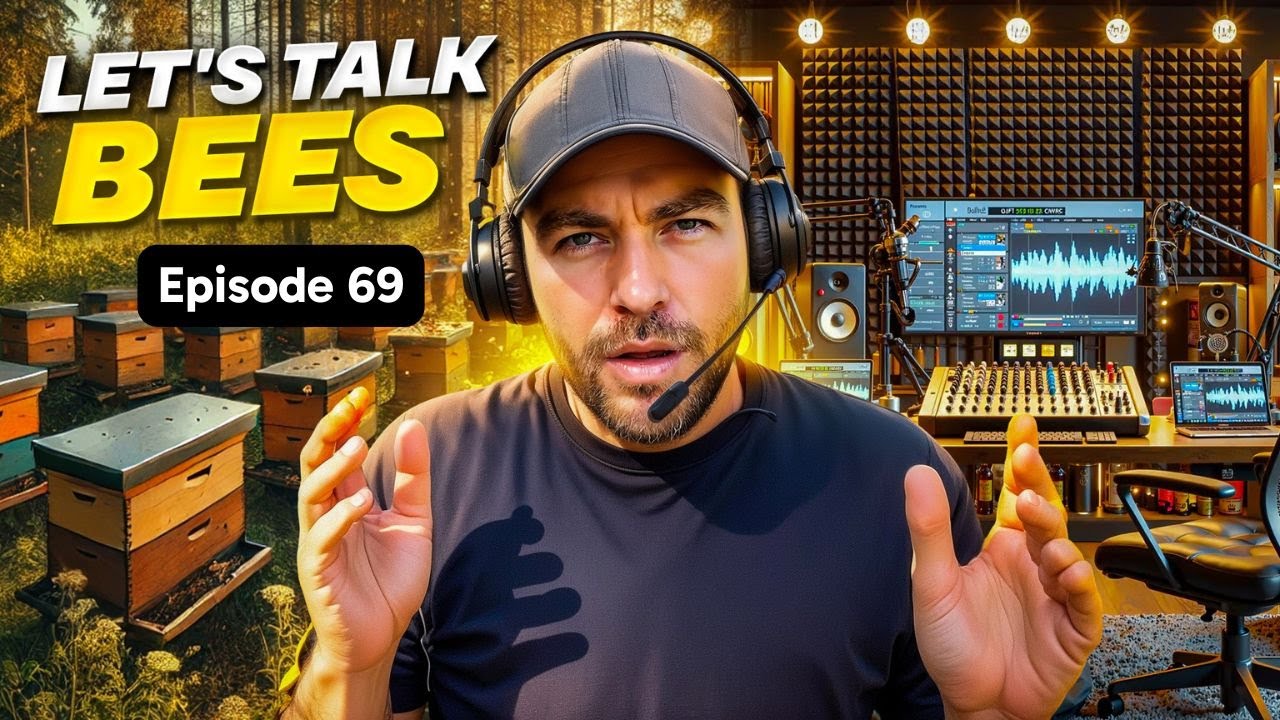
In this live chat episode, Laurence Edwards addresses a wide range of beekeeping concerns submitted by an international audience. He explains that recent colony losses in the UK are likely due to a combination of sub‑optimal varroa control and insufficient winter stores, emphasizing the importance of early varroa treatment and accurate assessment of colony weight. He advises cautious spring feeding, recommending modest fondant supplementation and warning against over‑feeding which can restrict space for brood expansion. Edwards clarifies the differences between standard and premium Lutz Egger queens, noting genetics, mating quality, and price as key factors, and announces upcoming videos with Lutz Egger. He outlines best practices for adding supers and frames after winter, suggesting an 80 % bee‑coverage rule for the first super and a gradual approach thereafter. Drone presence in autumn is described as normal and largely unmanageable, while Buckfast bees are discussed in the context of colour preferences and mating interference. Moving hives follows the 3‑foot (short distance) or 3‑mile (long distance) rule, with winter moves being safest when bees are not flying. Edwards promotes his 14‑Day Beekeeper training course, describing its video‑library, HiveQ community, and how it fills knowledge gaps on pests such as small hive beetle, wax moth, AFB, EFB, and CBPV. He provides detailed guidance on splits, Demerara splits, and the use of sections, cautioning against heavy 14 × 12 boxes for Demerara splits. Disease management advice includes avoiding crowding when CBPV is present and using double‑brood configurations to improve treatment efficacy. Equipment recommendations cover smokers (Dadant, Rauchboy, Empire) and hive types (poly vs wood), noting that choice is largely aesthetic. Throughout, Edwards stresses a calm winter mindset: regular weekly hefting, monitoring for deadouts, and intervening only when stores are low, trusting that well‑timed varroa treatment and adequate feeding will carry colonies through. The session ends with thanks to participants and a reminder to stay observant but not over‑intervene during winter.
Chapters
Good morning everyone and welcome to another episode of Let's Talk Bees. Now the one thing that I have come back to after going away for a few days away with my family is loads of emails from people saying we've lost lots and lots of colonies, like dramatic losses in the UK. I saw BS Honeybees doing something about this as well and they've obviously had communications coming in, so I don't know what's going on. I read a few of the comments to say it's quite simple, probably the simple things that people are missing. And I have to say, there's no point counting your chickens yet, but we're not seeing anything untoward at all. It seems relatively normal. The bees were treated well for varroa early on in the season, way before the winter bees were produced, and then they were fed well. And then that autumn period was a challenging period. It was a challenging period for wasps, so it was going to wipe out any of the drone-laying queens, it was going to wipe out any of the laying workers if you didn't treat them. at the beginning, which you should be shaking all of those out. And then it was a very warm back end of the summer, very warm autumn, and a warm winter as well, which means that that brood could— that brood is always there, or the gaps are much shorter than they would be. And then in those periods where there's nice weather and the bees can go out, they're just going to burn through those stores. So I do think it's as simple as this, is a combination of just maybe poor varroa management and then not understanding how much stores the bees actually need and taking action where necessary. I don't think there's anything else apart from that, and I'm crossing my fingers that there's nothing, nothing else going around. It's obviously quiet time in the morning, we've got 7 people in, so I will— I'll do my best, I'll stay around for any questions that come in, but once the questions are finished, I will head off for my day out. So PJ says, anyone else buzzing with excitement and spring is just around the corner? Very much so. Oh, it is the time to sit on your hands though, because it's— luckily this year it's not as bad as previous years where you get to this point in the year and you start seeing all the snowdrops come up and the crocuses and it feels warm. Like some of the days you're out there, it's 12, 13, 14 degrees and it feels like nice and sunny. If the weather where you are is anything like it's been in Wales for the last forever, um, it's like we're living in a cloud just all the time, 100% almost relative humidity. 6, 7, 8 degrees, really horrible weather. The bees cannot come out and do a single thing, and because it's kind of slightly elevated temperatures, they'll be burning through their stores a little bit quicker than I would like. Nothing that a block of fondant won't fix in 2, 3, 4 weeks, whenever that time comes when I'm hefting and the bees actually need it. But I do think the best thing that you can really do at this time of the year is just sit there and not do a huge amount at all. That's is what I'm doing. I'm kind of trusting my late season treatments and late season system to get the bees up to weight and be hefting, knowing that I've done the varroa treatment at the right time, to say, well, I've done everything that I possibly can. I've gone through anything that was weak way before the wasp pressure became big. So you're doing that middle of June, kind of as early as that, preparing these colonies and saying, well, I don't think that colony is going to make it because maybe there's a drone layer. I don't think this colony is going to make it because it's a laying worker. And then just compressing those colonies together, shaking them out, doing what needs to be done, because then all of those bees, they're going to be dead within a few weeks anyway, but they get the chance to kind of contribute to the success of that apiary, as opposed to going in at this time of the year, or going in in March and April, and maybe you've got 10 colonies and you've had a couple that have naturally died over winter, and then you've had a couple that really you should have identified before you went into winter, and then you're thinking, well, I've got 40% losses. my argument would be you've probably only got— I know the maths isn't perfect— you've probably only got 20% losses. There were 2 that were never going to make it, so you shouldn't really count them in your numbers. You should have taken the action prior to that. Looks like it's just me and PJ in here. This is fun, right? Next one from PJ as well. He says, any tips on feeding in the spring? My hives feel decent weight, but with all of the mild weather, give— oh, sorry, with all of the mild weather, I might give another 1 or 2 kilograms of fondant. So I'd never want to be the person who says, yeah, definitely don't feed anything, and then your bees starve. So I think we all err on the side of just making sure. And I think with feeding in like 1 or 2 kilogram fondant tubs, the damage of overfeeding is always going to be so minimal anyway. The problem that you could have at this time of the year is if you say, well, I'm going to put as an insurance policy on 12.5 kilograms of fondant, and then from now all the way through until middle of April, kind of back end of April, the bees are just working on that fondant as opposed to breaking down the stores that are in the frames. And what it does, like the obvious thing that it does, is it just completely restricts the space. And that means that the queen, the queen can't lay, the colony can't expand at the rate that it needs to expand at that point in the year. So a hive is really finely balanced with stores and space at that time of the year. So you do, you do get to a point after a few years, you do trust your gut and you know just how light a colony can go. And it is surprisingly light, but you know how light they can go and be fine. So if you know you're kind of 10-20% away from that because you can feel it through hefting, then shouldn't really be any problem. But yeah, the tip would be keep it regular, keep it often, don't overfeed if you're going to go through it. Oh, this is a good question, very timely question as well. So is there any difference between the Lutz Egger Premium Queen and the Premium Queens other than bred in the UK? So I've always gone with the philosophy over the past few years of saying like more is more, yeah, let's give more variety and more option and do as many things as we possibly can. It's become quite apparent that our structuring of the queens is confusing people, and it's confusing me. If it's confusing me, it's definitely going to confuse everybody else. So we are working on producing some really clear distinctions between the queens that we sell, and we're reducing down the availability of some lines as well at the same point. So just in terms of the differences between the standard and the premium one, we'll cover all of that, and there will be good kind of cover-all guidance to say what is the difference between a standard and a premium line. It generally comes down to how expensive the queens are. The quality of the genetics, but then also the, the mating location, like the, the purity of the drone flooding that takes place. Because in some, in some locations they're very, very isolated and we can get really high pure, um, queen matings there. And then in other areas where they're not, not as perfect, then it's gonna— it's not gonna bring the quality down, but it's just going to increase the variability of the F1 queens that you're getting there. So there's, there's lots of justification and reasoning, um, to try and kind of give that availability, like difference of availability to consumers, but I do appreciate it is confusing, so I will, we'll cover all of that. The website's due to go live in about 4 to 6 weeks. We've got Mem, he says hello. Hi Mem, hope you're well. Next question says, what is the best time to add frames after winter? Oh, so in terms of adding the super, it is a difficult one because normally my advice to people, if you're going to add a super, is you add your super when the box below is 80% full of bees, but during the winter is 80% kind of full of bees pretty much all the way through the winter, or at least, at least mine is. So if you— even if it shrinks down to 50, 60% and then it goes back up to 80%, you can't use that as the sole trigger to, to kind of go ahead and add supers. Because you could— if you'd have done that like a couple of weeks ago and looked in there, which I do not recommend you doing at all, but if you'd have gone in there middle of January and I'd have opened it up and said, wow, 8 frames of bees, okay, put my super on, then I'm losing all the heat upstairs, and then it gets cold again, and the bees are just going to struggle in that configuration. So it's a balancing act, and it's understanding like how far you can push it with your bees. I know for me, I've not got to worry about adding anything until April-ish, somewhere around that, maybe last week of March, first week, second week of April. So I'm certainly not worrying about it now, and I'll use a rule of thumb to add the first super on, and then after that I will go and just use the 80% rule. So when that top box is 80% full, I'll add the next box on. So if there's 10 frames in it, if the bees are covering 8 frames of bees, that's the trigger for the next box. The only other option, and I do recommend this especially for beginner beekeepers, which is the normal way that you would do it, is you have a single box overwintering, and then the advice is in the season you put your queen excluder on the top, put your super on top of that, and then that's how you start going upwards. But in the UK in particular, you can get very odd springs, and it's shaping up to be a really, really strange spring, this one, a very wet and damp one. I'm just gonna have a sip of coffee. But what you can do to kind of mitigate both of the major risks of not doing anything, which is the colony can starve if you detach it from the feeder, but the colony can also swarm as well if you don't add the boxes early on in the season and the bees are expanding and you miss it, then the colony will swarm as well. So the advice that I give to people is take— I think everybody should have an additional brood box when it comes to their colonies. So not single brood but double brood, so you've got 2 brood boxes at all times and then you can use that brood box at certain points of the year. One of the really valuable points of the year for beginner beekeepers is early on in the season, they're not sure about when to put their queen excluders on. If you know you're going to turn that colony into maybe 6 or 7 nucs, you're going to break it up and make some splits, or even if you're just going to split it once, you're going to want to double brood at some point in the year. And what double brooding really early on in the spring does gives you the ability for the bees to expand as much as they possibly can, but if you double brood by placing the new brood box underneath the original brood box, then you don't lose any of the benefits of that nice warm system where the feed is in direct contact with the cluster. For the bees, it's kind of just business as usual, but then when they want to expand, instead of having space upstairs, they've only got space downstairs, so they will expand downstairs. So it's kind of like having the best of both worlds. You get to put the boxes on really early, you could go and put the boxes on now, middle of February, of early Feb, find time to go and put those boxes on. Do it on a warm day, do it kind of 10, 11, 12 degrees when the bees are out flying. Just lift the box up, new box onto the floor, doesn't matter if it's foundation, doesn't matter if it's drawn comb, you just do what you would normally do. Then make sure that the bees have got sufficient stores, and if you want to feed them 1:1 in the feeder, you could feed them small amounts of 1:1 and they will start drawing out the frames below. So a few options for you there. Hi Lawrence, looking forward to the beekeeping show, will you be there? At the moment, no. not planning on being there at the moment. I will let people know if it changes. I haven't received any sort of invite and I've got a couple of other bits that I need to do around there. Morning, can you tell me why some bee associations have issues with Buckfast bees? I can tell you why some associations have issues with Buckfast bees, it's because the colour of them. They're not massive fans of the orange colour and they like to have local black bees and they don't like the fact that Buckfast drones are in the air. and then they get interference with the matings that they're trying to get. So that is the reason that they are not a fan of them, unfortunately. Hello, do you think early April is best for moving winter nucs to new homes? Yeah, I would say it's a good time, early April, roughly around then, that's when I'd be doing it if I had a 6-frame nuc. Similar to the comment before really, which is, in nucs it's strange because you'd think that they have A slightly— so I'm just checking, I thought a cable came out there and it was the microphone was gone. No, all good. It's a little bit, a little bit of a crazy setup in here at the moment with lots of cables everywhere. But yeah, early April, it's different with a nuc because the nuc is much smaller, you think you've probably got more time, and in some instances you might have more time depending on how big the colony actually is, but I would treat it with the same urgency. You don't want them swarming earlier, especially if you've gone to the effort of putting all that time and money into producing the bees and getting them through to that point. definitely don't want them swarming. So you can, you can move them in a little bit earlier, and then you could potentially dummy them down with insulated dummy boards if you wanted to just kind of get them in on a nice day. But yeah, I would get them moved over come April. Morning all, hi Laurence, any top tips on initiating a demo ray? Drool brood being made— sorry, I'm reading that wrong— drones emerging, mature drones on the frames. Cheers. So if you're talking about doing it now, definitely not. It's way too early for demo now. I go kind of mid-April through to mid-May, I'd say, is my slot around here. And you know, the trigger that I'm waiting for is based on the number of bees in the supers as opposed to any kind of drone brood being made. There will be lots of drone brood being made around that time. It is 2 or 3 weeks before like prime swarm season for me. Um, so sorry, Jay, if I've misread that question. I think I might have misunderstood a little bit of it there. Have you been to Buckfast Abbey and looked at where Brother Adam did his work? No, I haven't. That's a really cool idea to go down and do a video on that as well, wouldn't it? It'd be good fun. Um, hmm, I'm gonna add that to the list. Yes, that's a really good one. Huge congrats on 14 Day Beekeeper. When did the idea for 14 Day Beekeeper first begin, and how long was the journey to launch? Oh, that's a good question. I like that question. So I would— I get lots of feedback, yeah. People, people are very generous with their feedback, sometimes not, not the most positive feedback, but I always, you know me, I like— I take it on board. And the, the feedback that we got all the time was, we like the videos, yeah, so we like, we like your videos on YouTube, but we just can't find anything. We have questions, we, we need these questions to be answered, and there's no like your videos say things like, you won't believe what's in this beehive, and really it could have said, oh, I'm doing like, I'm doing an inspection of this beehive and it's National Beehive and it's got this brood frame or whatever, like a useful description. And I said, you've got a very good point, it's difficult to read. So I'm doing another little project at the moment which is putting all of the videos on YouTube. Believe it or not, there's 2,500 videos on YouTube now, but putting all of those little videos into into playlists. So that's kind of like my little evening hobby, which is I'll just go in and chuck 10 or 20 videos into a playlist, which means that going and searching for the videos now on YouTube is a lot easier. And I probably should have realized before doing 14-Day Beekeeper that it would have been as simple as that, just to go and put all the videos in playlists and change their name. But I didn't. I thought, no, let's go ahead and do— let's go ahead and do a training course like 14-Day Beekeeper. But I guess it stems originally from like the difficulty and the challenges that I had a beekeeper starting out. And if anyone here is watching and is a beginner beekeeper, I feel your pain. I genuinely do, because I started and didn't— you didn't get any help and reached out to people, and you kind of sometimes get help from some people, and sometimes you get a very firm no, you're doing it completely wrong, you shouldn't be doing that. And you feel a bit like, sorry, didn't mean to make any mistakes or offend anyone, but I'll try again. But then having kind of gone through all of that and gone through that pain and being in a position whereby I've got a lot of knowledge, and it's quite basic knowledge when it comes to beekeeping, I wouldn't put myself down as a beekeeping, like, technical professional person, but in terms of that basic understanding of bees and fixing the mistakes that a lot of beginner beekeepers make, I'm quite well positioned to do that. So I thought, we can do this in a nice way, we can produce, we can make this nice and make it like nice videos. And I compare it back to my time as a beginner trying to work out kind of like what a picture in a book looked like, and just like, what's the bit of the frame? I don't understand what's going on here, and there's no search function, and there's no chat, and I just feel completely lost because I can't really learn in that style. So I thought we could do something different, different from an in-house physical come to me and I'll show you, which obviously I couldn't do for obvious reasons, kind of like working and stuff, but doing it virtually like that and just breaking up all the little chunks and filming the videos and building it up over very, very long time. Um, seemed like, seemed like a really good plan, an idea at the beginning, and it was, it was a lot more difficult than I thought it was going to be. Um, and it probably, probably took— it's taken, yeah, like 12 months, something, 12 to 18 months of, of effort, but that's like really small tiny little bits of effort just dotted around the place. So it's not been too bad. I'm very proud of 14-Day Beekeeper, and what the big thing that I would say about it is that It's gonna get so much better. We are working to improve absolutely every single element of not only 14-Day Beekeeper, the course, the way that the videos are presented, but also the communities that surround that, but then also the way that our website works and the way that different things interface within the website. So we're on a real journey. We definitely see kind of the launch of 14-Day Beekeeper as the start of the journey as opposed to, yes, we finally made it. We finally got to the start, which is nice. So you'll see, for anyone who's bought it, you will see these improvements coming up over over the next probably weeks and months, but hopefully before the season starts. Morning, I've just been given a hive of bees, it's in their garden, how do I go about moving and transporting it? Many thanks, Sam. So good question and a very timely one because I put the video out last night on when is the best time to move a beehive. So the rationale in that video for moving a beehive is to make sure that the bees aren't flying. Now you can lock them in and stop them flying yourself, but then you need to go with the 3-foot or 3-mile rule So if a colony is flying, you can move it 3 feet in any direction. If you want to go anything over 3 feet, so if you want to go to 4 feet or 5 feet or 6 feet, you can't. You have to go 3 miles to reset the bees, because all that will happen is you'll move them kind of like 10 feet away or 20 feet or a mile away or something like that, and all the bees will go out and fly and they just come back to the original spot. So winter provides a really unique opportunity, especially when you get a nice sharp cold frost for a good number of days, but really You can, you can just pick the colony up any point in the evening, make sure the bees are fully closed in, double and treble check that the bees are fully closed in before you move them, and then just pick them up and take them. And as long as they're not flying and they weren't flying before and they're not flying after, then you'll get a few little bees buzzing out, but apart from that, they'll all just go back in, and it is as easy as that. If you're doing it in the season or they're flying, there's a couple of ways of doing it. One is you move it away over 3 miles and leave it there for The advice is 2 brood cycles, so about 6 weeks, and then you can move it back to another space. You use the same rule again, and you should get very few bees going back to the original spot. And then the other one is that you do 3-foot jumps, so if you've got anything over kind of 15 or 20 feet, I would, I would not go with that second option because it will literally take you forever. Means Bean says thank you there. I'm gonna have a sip of my coffee. I've also got a cough. Excuse me for that. Rather Big Hands says, here in Dorset, on the few sunny days, lots of bees flying. However, on a couple of hives I've noticed there are several drones as well. Does this possibly indicate a problem for this time of the year? So it does potentially indicate a problem, but it indicates a problem that you have no power at all to fix, and there's no benefit to doing anything to actually kind of confirm it either way. To make you feel a little bit better, I've got loads of colonies where there's a few drones knocking around, but it's just a few drones. Um, the drones get kicked out towards the end of the year, but then you'll still have clusters of drones that find dead spaces within the colony, and one of those dead spaces is generally a little bit closer to the entrance. So I've had colonies where I could have swore I said, all I'm seeing is drones here, like there's 20 drones on the entrance and they're coming in and they're going out, it's quite clearly going to be a drone layer, and then going in and they've just been perfect, really nice brood pattern, and there's just a little cluster of drones somewhere. But there's no way of fixing it, there's nothing that you can do, just wait and see, cross your fingers, and hopefully, hopefully all is good. Hi Lawrence, had a drone lay— sorry, had a drone flying the other day in Yorkshire, is this normal? Didn't think drones were about at this time of the year. So that's— how interesting is that, the same one from before. So no, they're not produced, they will hitch a ride over winter. Generally they all get kicked out, but it's not unusual to see drones colonies, kind of, even in reasonable numbers. When I say reasonable, maybe like 5%, 2 to 5%, something like that. Um, it does depend, it seems to depend on the size of the colony and the shape of the box, and then also how quickly you go into winter. So if you're somewhere where, um, it just all of a sudden it's like, right, right, that's it, it's winter, and then the bees are like, we were, oh, we were just literally in the middle of kicking out all the drones, that's annoying, and then a few are able to hitch a ride. But as I said, there's nothing you can do. So So just take a look in the spring, fingers crossed all is good. Hi Lawrence, last month of summer in South Africa, tried doing the demo way for low-risk queen rearing this season. The strongest colony started to make 2 cups but was torn down in a couple of days. So it sounds like maybe the timing was done just as they were trying to start to swarm anyway. You need to like identify that time and go back. I always do that wrong, identify that time and go back, there we go. 2 or 3 weeks, because you need to do it way before the bees are thinking about swarming, but also as close as possible as to when the bees are starting to swarm. And I know that's really, really difficult advice. There's probably like a one— there's probably a 1 to 3 week slot in everybody's season where the Demaray works very, very well as a preemptive measure, and if you miss it and the bees start drawing cups or swarm— like, play cups, not an issue, but if they start actually drawing swarm cells and kind of charging them, then you cannot do the Demaray. You need to do some sort of prevention measure to stop that queen going. I think it will probably be a timing one. Walker Bee Ranch says, Christ, it's quarter past 5, too early, Lawrence. Oh, tell me about it. It's a difficult one getting timings right for worldwide audiences, so I do apologize for that. But it's the only other way of doing it is to try and do it late at night, and I just— I'm like a sleepy mess, like an old man. So it needs to be done, needs to be done on the weekend, I'm afraid, in the mornings. What's that? Mem is answering something else. Here we go, right, who's next on here? Pete. I'm just gonna have a sip of my coffee first. Is it okay for me to remove the super I left on above my brood box, which I should have removed before winter? I was told to leave it on, but I have a gut feeling it's not doing any good. So I'm not a fan of leaving supers on either above or below the brood box over winter, but it's really not, it's not a huge deal. The only risk that you're going to have on there, which I'm hoping that you've already done, is remove the queen excluder. If you If you've removed the queen excluder, then definitely don't do anything yet. Just leave the bees to it. There's too much risk going in now for, for a very little benefit, and the same benefit that you can get with nearly no risk later on in the season. So if you, if you took the queen excluder out already, just leave them to it. Fix it in April. If you didn't take the queen excluder out already, you need to go in quickly, open them up as carefully as you can, take the queen excluder out, inspect it, make sure the queen's not on it, shake all of the bees off. put it back together again in the opposite way. And the reason I say the opposite way is that if you're going in anyway to take the queen excluder out, you might as well nadir it at the same time, which is take the super, put it underneath the brood box, knowing that come the end of winter, the bees are very likely to be in the top box, which is where you want them to fix the kind of scenario that you're in, which is all of the bees up in the top box, which would then be your brood box, and no bees downstairs in the super. And then the fix to get it back right again is you remove the empty super, place the queen excluder on, put the super back on top. So as I said, that's the fix either way. It just depends on the timings for you, but don't, don't get too, too worried about it. It's really not that much of a big deal. Oh, Walker Bee Ranch says, sting that like button! I always forget to say stuff like that, but yeah, if you want to hit the like button, that'd be much appreciated. Thank you very much. Hey bud, hope all is well. I've ordered 5 Lutz Egger queens from you. Can you give us what we can look forward to in these queens? So I'm not going to say anything yet. All I will say is you'll be very, very pleased with what you're going to get. And I have already connected with Lutz, and we're taking Zane out to some of the islands where he gets his queens mated. And we will be doing a number of videos directly with Lutz. So there we go, lots and lots of exciting things. Um, we will have access to all of Lutz's genetics, um, in, in many, many different ways. So there we go, exciting news. Good morning, hope you're well. Great to start back up again. In it. Yeah, I— it's one of those words that I had one— I had one before. I don't know, I won't go through all of the words that really annoy me that I say, but in it is definitely one of them. Back to my roots, innit? Right, there we go, that's the final one I'll say for the day. Justified Jester says Australia— is it New South Wales? 9:20 PM, Pete. Okay, it works well for a nice little late night New South Wales one. I'll be sure not to do any live streams when we're playing in the Ashes. Because that's embarrassing. Thumpfy says hello from a beekeeper in Austria. It's great. I do find it crazy how it's kind of beekeepers from all over the world that tune in, and hopefully I can connect with more people from around the world and bring you some cool new content. Everyone's got different times. 11:20 AM, yeah, okay, you're probably into Europe a little bit. V Dub says thank you, great channel. Thank you very much. Carlos says hello, Laurence, greetings from Syria. I'm passionate about advanced queen rearing and instrumental insemination. Do you think a master beekeeper certificate like Cornell's is the best path for this specific Advanced knowledge. Also, since international payment is difficult here in Syria, could you recommend any free high-level resources, books, or experts to follow for genetics and breeding? Oh well, that's that's loads of stuff, loads of information there. So no, I don't think you need a master beekeeper certificate from Cornell. But you know, I'd love that. That'd be cool, wouldn't it? To go and learn from world-renowned experts. So so it is it is a cool thing to have. I'd like to have that, but I don't think you need that in order to learn artificial insemination. One of the things that I found—I'm just going to take the thing off there—one of the things that I found with artificial insemination is that the people who are experts at it are very, very reluctant to share that information. If they've got little skills or little ways that they make sure that they get really high insemination success or really high kind of like rates of cleanliness and making sure that everything is sterile, then they're not necessarily going to give their little tricks to their mates because they see it as a competitive advantage. And I understand the logic of it, and I've tried to. of get some of that information and put it in place. And I still do continue to seek people who are willing to share that information. It's not my area of expertise at all, like I couldn't do it, I couldn't show you how to do it because I can't do it myself. We rear a lot of queens, we do a minimal amount of selection when it comes to breeding, but we don't do any of the actual artificial insemination. So in terms of who would I recommend, there's not much out there, so hopefully I can go out there and I can find some good information, and of course Black Mums and Honey will put all of that out onto the YouTube channel and it'll be free, free for everyone. People will see that wasn't me fibbing, was it? There is lots of content coming, and believe there's a huge amount more coming as well. So where are we going next? Oh, this is very nice, you don't need to do that, but $5 tip, thank you very much. He says, in Australia, past the summer equinox, should I still get bees? Oh, this is a really good question. We see this a lot, and people are always surprised with the answer, and the answer really is no. It's a bad time of the year to get bees. Beekeeping, especially in the UK, it's a lot of investment, there's a lot of money that goes into it, and the last thing I'd ever want to do to someone is to sell them a nuc in August or September and say, yeah, yeah, it's fine, just do this and the bees will be fine. There's a huge amount of risk that you take over winter, and then resetting it from a point of failure is so much more difficult than just succeeding in the first place at the right point in the year. But then what I would say is, conversely, is don't put yourself down for the first nucs of the season. Don't get the first weak nucs of the season. I say like the first availability of nucs for the season because they are really challenging to manage in comparison to a summer nuc, and I'll explain why once I finish my coffee. So the overwintered nucs, when you get them early on in the season, we've had some pictures back from people where we send them a 6-frame nuc middle of April and they come back to us middle of August and they say, look at that colony, it's now on double brood and there's 8 supers full and I took a split out. And whilst that is brilliant and I really do like that, I think if we're sending them out to beginners like that, it needs to come with the warning, which is like, you have to manage the swarming. And so my recommendation to anyone is, if you're a beginner beekeeper, try and get yourself a summer nuc or at least get yourself one of the later overwintered nucs. If you're buying from Black Mountain Honey and you're in that position, you've got an overwintered nuc, I can put you on the last week of overwintered nucs, which will be like back end of April, first week of May, so there's no problem there. And then I go with the recommendation to say to them, what we recommend, what I recommend, is that you make a split in the first season. The bees come in a nuc box, you're going to place them into the beehive, after a few weeks of them building up, just make a split, do a preemptive split. It's kind of, you can wait for them to start swarming if you want to push your luck a little bit and do an artificial swarm, or you can just go ahead and make that split before the bees decide to do it. And the likelihood if you do that is that you'll go into the winter having learned all of the good things throughout that season with 2 strong, healthy colonies. Reverse that round to this one here, which is, should I still get bees? The likelihood is you'll get the bees, they'll build up, you're kind of rushing to try and learn everything, possibly the bees swarm late on in the season, you don't give them enough food, you don't understand when to treat them for varroa, you don't understand the different concentrations of syrup that you need at different times of the year, you don't understand when to put the mouse guards on any guards to stop any pests or vermin that you've got there. There's so much that can go wrong and you generally end up with failure. So I think it's a good question, and hopefully a lot of people heard that one, which is plan and get the bees at the right time and do preemptive management on it. And your focus for the first like 3 years is as simple as this: learn as much as you possibly can, try out a few new things, and push the limits of your knowledge to try and understand how best to manage your bees. And the honey will come and the splits will come, but see it as an opportunity to not let that season get away from you by letting the bees swarm. Worst-case scenario for a beekeeper in their first year is they get the first nuc of the season, they bring it home, they get the expand— like crazy growth, they think everything's going well, a couple of supers full, and then all of a sudden, oh, I've not got a queen. And that is the situation that so many beekeepers find themselves in, and if that's in your first year, you now have the challenge, which is, in order to save the colony— anyone watching 14 Day Beekeeper will know this because I talk about it way too much on there— but you have the challenge, which is you now have to find a virgin queen in that hive. 30,000, 40,000 bees, there's one, potentially many more than one, but there's at least one small virgin queen that's going to be very difficult to see, pretty much the same size as all the worker bees. You have to find her and kill her, or all of those bees are going to die. first year, that can be like 6 weeks into your beekeeping. So I do everything I possibly can to not put anyone in that position by kind of giving them the nucs at the right time of the year, but also giving them the information saying this is when this is likely to happen. If this is— if it's the first week of April, you can— we send out rolling emails to people, I'm going to add this onto the list, which is if you send you the nuc on the first week of April, really you should be making your first split kind of last week of April, first week of May towards the middle of May, somewhere around then. Definitely don't go to the back end of May without making a split because your bees are going to swarm. And it's not to say that the bees will always swarm, and when people are getting double brood boxes and 8 supers of honey, clearly the bees haven't swarmed, but they're probably using slightly more advanced management techniques. They've got double brood in there, maybe they did a Demerare at some point, I don't know, but they're not suitable, necessarily suitable for beginners without getting that basic understanding of the bees first. So should you get bees after the equinox? I would say no. Do you know what I would do? Go and speak to someone else, go and see if you can handle somebody else's bees because there's still plenty of the season left just as you get to the equinox and more than likely someone will just give you a little bit of a hand and show you the ropes and maybe you don't fancy it, you're like, oh no, that's not for me, and it would have saved you thousands of pounds or dollars if you're in Australia. There we go. Do you ever find disease an issue after condensing hives down after harvesting? One of my hives had CBPV in the autumn and wondered if overcrowding might have been a cause. So the vast majority of instances here, in terms of the diseases and pests and things that, that kind of like get at the bees, are improved by overcrowding. It makes it easier, so you've not got like dead space in the hive where wax moth can get in, or where small hive beetle can do things, or where even if you're treating bees using Apivar, like the compression of the bees and condensing them down means that the efficacy of the treatment is much better because you get better spread of the chemicals. The one downside— I should— I shouldn't smile, it's not— it's not a nice one— is CBPV, when crowding is, is the absolute worst thing that you can possibly get because it's just the transmission of a virus that goes throughout the colony. So that one of the best things that you can possibly do if you've got a colony that's got CBPV is give them space, give them dead space. So I would say just double brood them. at this point in the year, just stick an additional brood box underneath. It's not going to have any negative effect, but it's just going to give them a little bit more breathing space. It is challenging, that one, because you have to compress your colonies down towards the end of the year to get them through winter. You have to take the supers off, otherwise it's a bit of a mess. It does make CBPV, which for anyone who doesn't know, the acronym is Chronic Bee Paralysis Virus. You'll see kind of bees losing their hair, and they go a bit shiny black, and they quiver. a strange way, and they can't fly anywhere near as well. And it can be quite horrific, you get lots of dead bees kind of in the beehive and at the front of the beehive and not that far away at all. So compressing them down does make it worse. What I found, we're lucky around here, we very, very rarely get cases of CBP. I've had a couple of them, but it's one of those ones that the bees generally, once they get through it, it doesn't tend to affect them again. it's almost like they build up some sort of resistance to it. Unfortunately, it wipes out a lot of them and it does kill them, so hopefully they manage to get through the winter and hopefully all is good. The Sober Carper, The Sober Carper, hello! He says morning all. Adam says good morning, what are your views on the Spring Convention and the ban on talking about selling good queens? Do you know what, I'm gonna— I'm just gonna refrain from answering that one, Adam, because I feel— yeah, I'm gonna refrain from answering it. I don't— I think it's poor form. There we go, I'll say that. I have ordered 2 nucs from you for May delivery. How many splits could I safely make this season, do you think? Oh, I like a challenge like that one. So this, luckily, yeah, this is one of the easiest things to do in beekeeping, and it is really, really good fun. And if you like bee maths, it's good fun as well, because you can be massively aggressive when it comes to making splits like that. All I would say is don't don't make the splits when the nucs arrive. See people making that mistake. We have to— when we send nucs, they're almost slightly deliberately understocked with bees, but they're not understocked with brood. And the reason for that is that when they go through the postal system, the biggest risk in the postal system is too many bees blocking any of the entrances and then meaning that the air can't flow around and then bringing in too much heat and then everything collapses. So we found if we reduce it down by only like 10 or 15%, then The— with the same amount of brood. And once that brood emerges, it's absolutely fine. But what it means is you can't split the nucs immediately after getting them. You want to wait at least until all of the brood that is in there has emerged, and you'll be up to about 8 frames of bees probably at that point, which will only take 3 or 4 weeks. So that will get you through until the June gap-ish, depending on when your nucs are sent out. And then what's nice is that during the June gap, for those ones, all you have to do is feed the bees 1:1 sugar syrup. So you're just kind of going to keep on feeding them throughout the June gap, and I would say around that time then, so like 4 weeks after you've got them and built them up, you can turn each nuc that should now be on about 8 frames, you can turn that into 2, so split that out into 2 sets of 4. And then if you continue to feed the bees going again, you'll definitely get another split on top of that, so you've got 2 nucs and you've gone to 4 after about 4 to 5 weeks, and then before the end of the season you're likely to be able to double that up again to 8. Now You could push it one more round. I wouldn't recommend it though. It's one of those ones where you think, oh, could just push it one more. It's only, it's only one more split, and it takes you from 8 to 16. But believe me, I've been there. You're much better off with good, like, good strong 8 nucs going into winter, maybe even on doubles if they're, if they're struggling for space, and then you can split them again the following year. I just find it makes it, it makes it a little bit easier doing it that way around, a little bit safer as well. Allotment X says, hi, I'm new to beekeeping. I've been told to not get the Abello hive as it can overheat in warm summers and hard to clean. I live in Northern Ireland. It is interesting, isn't it, some of the things that you hear that are just quite clearly nonsense. Sorry, okay, I shouldn't say that it is nonsense because it's an insulated beehive, So you think, what's cooler to be in, in the sun, like a nice insulated house or a nice non-insulated house? It's the insulated one, so much easier because it creates a much more stable environment. Now that really helps the bees in winter when they're trying to keep all of the warmth in, and conversely it really helps them in the summer as well where they're trying to keep the heat out. So it's like a white-colored abeille hive is probably going to be the absolute best beehive that you could have. to make sure that the heat in summer doesn't impact the colony of bees. And I'd also probably say as well, like, you're on a very similar level to me in Northern Ireland, maybe a little bit higher up actually. The bees can cope with the temperature, it's mainly drizzle where we live, and it's more about coping with the drizzle, but there shouldn't be any issues with that whatsoever. All I would say is that bees will be fine in a polyhive, the bees will be absolutely fine in a wooden hive as well. I generally say to people that the choice between a poly hive and a wooden one is aesthetics really, and if you're dead set on wood and you put a poly ashworth feeder at the top, you can kind of have not the best of both worlds but a really nice happy compromise in the middle. Right, I've got 20 minutes to go. Dave, I thought it was gonna— I thought it was just gonna be me and PJ here, we've got a few more people coming now so all is good. Dave says, morning Lawrence. Morning to you too, Dave. Walker Bee Ranch says, I need to get you on one of my live streams. Always, always happy to do that. Probably going to have a clash of timings, but we'll change it so I'm not falling asleep. Rather Big Hand says, thank you, and loving the quality of your work around 14 Day Beekeeper, artist style, your headquarters, and the video quality of your live streams. Stark contrast to official association broadcasts, just saying. Thank you very much, we do aim to please. And as I said, like, for me, I've always said I'm not a perfectionist. I'm not someone who seeks perfection at all, but it has to work and it has to just kind of be simple and digestible for people, and I'm really keen to make, to make all of this work with the 14-Day Beekeeper. So I really do, I love the fact that we're getting so many positive comments coming in, and I just kind of feel inside, wow, wait until you see what it really looks like when it gets going, and we will, we will keep on trying to make it as, as good as it can possibly be. But thank you for nice words. Sections, I want to give it a go this season, and I know you had a couple of— I had a go a couple of years back. Any tips beyond super strong colonies? Oh, it is, it is a difficult one. So, so my experience with it was you're gambling too much. That's it, that's it really, gambling too much. You're putting too much into something to get back something which for me wasn't worth the risk. It was a case of you're taking like a whole colony of bees and you're putting them into a mode where they're almost swarming, like you are days or hours away from swarming, that's how compact you need to be to get them up into the sections, and then you're gambling that the bees aren't going to swarm. And for me, getting the sections back at the end of it, whatever sections we've got, I think we've got like a couple of boxes per hive, when I compared that to— and how difficult it was— but when I compared the whole scenario to just managing the bees normally and doing a Demerara split and taking off the honey and extracting it, there was only one winner for me, and it just, it was far too much work for something that wasn't always going to kind of do well at the end. and then you have the risk of the bees swarming, and I hate it when the bees swarm because not only do you lose all of the honey, but you lose the bees as well. So super strong colonies, I'm just trying to think what else would I do if I was doing it differently now. I think I used, I tried to do it previously where putting it directly on top of the queen excluder, thinking that was a good idea, good position for it, and all the bees did was just put pollen up there, which was nice. Some people actually did quite like the pollen in there. I think what would be cool, yeah, this is where I would go with sections, I would try and do something maybe a little bit different with it, and I'm not sure how you would actually do it, but how cool, how cool would it be? Imagine you've got the section of honey, the square section, and then you had like a ring of pollen around it. So not the— not, not section by section, but a ring that went all the way around. So on each section you had like a band of multicolored pollen and then some honey. I think if you could work out a way of doing that, then it might be worth the effort. I think something like that in Harrods or Selfridges or somewhere nice could sell very, very well because it's, it's kind of combining 2 superfoods together in a way that's not really been done yet. I just thought of this now. It's not for me, anybody else feel free to take that idea. I think that would work. Um, but then it's just working out how you would have to position that within kind of like the colony to get that repeatable. Hmm, I'm not sure. In terms of getting them to work the sections though, super strong colonies. The freshness of the wax, I found, was a big one, so making sure that you're kind of doing— putting the wax into the section directly at the same time. I've seen people feeding. I think it defeats the purpose. It defeats the purpose. It's definitely going to be way easier if you feed the bees 1:1 sugar syrup to get them to draw out the wax, but come on, it's going to end up in the honey as well, isn't it? So that's definitely not for me. I think a lot of the commercial ones that you see, not not in the UK, I might add, but a lot of the commercial sections that you see kind of on the supermarket shelves are so ridiculously uniform that there's, there's obviously something a little bit dodgy going on behind them. But no, that's the best advice that I can give, and hopefully, hopefully you give it a go. The Buckfast CDS queens I got from you last year are doing really, really well in 2 of my hives. Are you able to tell anything about their heritage, lineage, etc.? So not on here, I can't know, um, because I don't know it to hand, but I can send you the, the emails and the, the kind of lineage that I've got. It's limited from different breeders, they, they offer up different information, and I found on the website that a lot, a lot of people, they're not too interested in like certificates of maternal and paternal lines and things like that. And then the other way around, some people are like, oh my God, I'm so sorry, I shouldn't— some people say I really want to know that information. So it's just we're trying to work out how we can make certain things accessible to people, and then you, you know the score, you need to keep it nice and clean on a website as well, so hopefully we can do that. I spoke with Ian Stepler last evening and he's heading to the UK later this month. He certainly is doing his talk, a few people will be going to that. I have a lot of nucs on double brood this winter, but the bees have clustered in the bottom box Should they not be up in the top box? So the bees will cluster as low down as they possibly can to find the stores. That's the way that they do it. So they just say, right, we're going, we're going low, we're going as low as we possibly can, and we find the stores. And then they're there, they're consuming, and then just move up. So early Feb at the moment, really, they've probably got a good 2 months to get into that top box. And if I had to be— if I had to bet, I would say you come back, you did nothing, come back in the middle of April and they will be in the top box. So they just follow where the food is, but they start off at the bottom, and then once they've consumed all of that, they will, they will work up there, I'm sure. Wes says, hi Lawrence, a week ago I got anxious for coming temps down to -20 here in Latvia, went in, added poly insulation for the roof, now worried future dead bees might block airflow. Any advice? So any air— so we don't have any airflow at the top. So the way that we set up our colonies is we have, we have an entrance at the bottom, no entrance at the top, But we have an entrance at the bottom and mesh, a section of mesh, open mesh floor at the bottom, and then everything else above it, everything else above that is sealed, so there's no vents or anything at the top. That's a well-recognized configuration that works in most parts of the world. If you have vents at the top and vents at the bottom, you do get a chimney effect, which is not what you want, which is all of the heat going out the top box and sucking up air from the bottom box, so you just give your bees a really hot awful chill. So if you're worried about that you've put something in the top box and you've blocked vents up at the top, so long as the bees can fly still at the bottom— and I, I recognize you're saying it's down to -20 here, so there could be a lot of snow on the ground as well— then as long as the bees can fly, then there is no issue. If the bees cannot fly and they're blocked in through snow and you are using the top entrance not for ventilation but for access and egress, then I would go back in and make sure that the bees can get in and get in and get out. Not so much that they're going to go out and fly in -20, but the bees definitely know, they do. And maybe this is kind of because we're in the UK and we don't get crazy temperatures, the bees are generally fairly active, and maybe if they're in a tight cluster they wouldn't know, but I find the bees know if they're stuck in a box, and they just want to know, they say, okay, the entrance is there, right, a little bit of in and out, and we're happy to go now. But I would, yeah, if you've gone in and you've blocked their last and only exit, I would just double-check tomorrow. sure they've got a little bit, bit of a way out, and you can probably fashion something with a bit of pipe embedded in the insulation, and then you get the best of both. Justified Jester says, we still get 30°C days, very nice. It's very, very miserable here. With your huge commitment time-wise within beekeeping, do you still hold a regular job as such? So I shouldn't have put that one up there, working to a suitable resolution on that one. Also, I had 2 Buckfast CDS queens last year, best producing hives I've ever had. They are still alive. Hopefully they stay that way until spring and the first real flows come. That's good to hear. I love nothing more, yeah, than hearing people's stories about the bees that we send them, because we, you know, we say certain things about our bees. We say our bees are calm, and we say they produce lots of honey, and they say they're not like, not that swarmy, but you need to manage them still. And then when people get the bees and they listen to the advice and they say, we've kind of done what you told us to do and here's the result, we're really happy with the result, thank you, it makes me, yeah, makes me feel very, very good. So yeah, they are, they are very nice. I'm just reading that one there. Thank you for your time and effort, have a good day, Laurence. Thank you to you too. I think we're getting to the bottom here. I know you like winter, Laurence, as it gives you a break, but I find winter beekeeping actually quite stressful because you just don't know and you can't go in to find out, it's just fingers crossed. Oh, I know that one, yeah, it is, it's a mindset thing, isn't it? I do You— I've got to a point where, like, I just, I realized that there's nothing that I can do. So even if I kind of visualize it in my head and think, well, I think they're probably okay, but if I went in, like, what would be, what would be the problem? And generally the things that you'd see— the thing is, if you went in a lot of the times, I think a lot of beekeepers would identify a problem when there isn't a problem. If, if someone went in middle of December like I did, and pulled out every single frame, didn't see the queen and didn't see any brood, nothing, they'd be like, oh, the bees are gonna die, there's no brood, there's no queen, the bees are gonna die, right, what am I gonna do? I'm gonna merge them with another colony, and they try and merge them and then kill the other colony's queen because there was a queen in there and they were just on a natural brood break. So it's almost like you can't do anything, but if you try and do something, you're likely just to make more of a mess than if you had done nothing. And as soon as you realize that and think, well, Okay, that's, that's true. They're better off just left to their own devices, having been given the absolute best chance of doing well, which is moving that varroa treatment nice and early, giving the bees absolutely everything they need feed-wise going into winter, but also allowing them space to go out and get what they need. All of that back season crop just goes for the bees to overwinter on, all of the end of the bramble, the end of the clover, the ivy, the full ivy flow, if the bees need that, that goes in there. They've got access to all of those different nectars, all of those different pollens, they're treated at the right time, and then as long as you're hefting them and making sure that they've just got enough stores, there's nothing that can go wrong other than things that can go wrong that are completely outside of your control. So queens will turn to drone layers over winter, they'll go into winter laying perfect patterns of brood, and then they'll go into a brood break And then the season will come around again and the colony says, right, go on, start laying, and they just start laying drones. That will always happen, and there's nothing that you can do to fix it in the winter because there's no queens available. But come April, when queens are available, then it's a really, really easy fix. So I just— yeah, sit on your hands. I know it is difficult, I've been there on that one. You just have to completely free your mind, and it's more— it's the confidence thing. And there's the post that I did yesterday, it's knowing that you've done everything you possibly can and then you can be confident about it knowing that you've done what you can. That's not saying I'm confident that I'm gonna achieve perfection, like, we know that's not gonna happen, you are gonna lose colonies, but it's knowing that they're just naturally occurring failures when something goes wrong with a colony, something that you don't need to manage, something that you can't really manage, and then it's easier to sleep. Are you planning on attending the beekeeping show? So not, no, at the moment, no, I'm not attending. I'm planning, I'm afraid. Oh, I can't even talk this morning. I'm not attending the beekeeping show, I'm afraid, this year, but that might change, so I will— I'll announce it either way if I am going. Very excited to receive my overwintered nuc. 14 Day Beekeeper has really helped settle my worries and filled in any knowledge gaps. Excellent, I'm glad, I'm glad that it's been useful. A lot of people have said that about the knowledge gaps with 14 Day Beekeeper, in that they've got an understanding of how to keep bees and then there's just little areas they say, okay, I didn't really talk about that. And they say small hive beetle, I've never, I've never considered that. It's useful to have just access to that so I know what to look out for just in case anything bad ever happened. And then similarly, the same with wax moths and AFB and EFB. It's all very nicely itemized in there. I just, I was going to see if I can share my screen. Let's have a go. If I go that one there, because I put 14 Day Beekeeper on there. So hopefully you can see it there. If anyone has not been in there, that's, that's a picture of me, but this is what 14 Day Beekeeper looks like when you go in. And then on each, every single one of these things over on this side is the video. Hoping that you can see that. Yeah, I think you can. So if we click in, if you click into some of them, and you'll see there are, there are lots and lots and lots of videos. It's not that far off 300. But if you go into them, you click in there, and then each one has got a video that pops up. You can watch a video, 6-minute video there, and then a little kind of breakdown of what's in the video and any links that you need and key takeaways. And then John Begry, very, very grateful, John Begry has gone through and put in any related YouTube videos in there as well. So anything kind of on social media that's useful for people there, he's gone through and done all of that. I like that thumbnail, pretty cool thumbnail, that one. And then the discussion area. So HiveQ community looks like this, 538 members now. And you can go in here and you can kind of ask questions and stuff and get comments back from other beekeepers. I'll just go quite quickly here, and what I'll say once I stop that one there is this is an area we're looking to improve on. So I'm not saying all the HiveQ community is sorted and fixed. Like, I put a post in there a few weeks back saying, like, how can we make it better? And we're actively looking at ways that we can make it much, much better, and it will just continue to grow and evolve And hopefully become a really—I'd say become a better place because it's a cool place. It's a nice place to hang out at the moment. It just needs a little bit of fine tuning on my end to make sure that everyone's getting the best out of it. But yeah, I'm excited to send you over Winter Nook as well. I'm glad that Fort Indebt Keepers filling in the gaps. Jakir says, "Morning Lawrence. Hope you're doing well, buddy. My first time on your live chat. Thanks for stopping by. Any questions, just stick them in the comments." And he's done just that. So, first season swarm national, no honey, super's not drawn, brood got honey bound and are likely checkerboarded badly. Hive now locked, strapped with OMF and inverted Abello Ashforth insulation. I think there's going to be some more. There is. What is the best plan going forward for me and what would you advise? Should I replace the queen? Would it increase yield? The whole way through I was reading that, I was thinking this is, this is colony related, it's genetics related, because Colonies that are— colonies that are adapting themselves to survive, so they're just throwing out like swarm after swarm after swarm. This is generally what you'll see in the brood box, which is you might catch a swarm and they'll build up over 3 or 4 or 5 frames, and you're thinking, nice looking colony, really nice dark gentle bees or calm or whatever. And then you get to a point where you think, okay, they're getting to a point where they're nearly going to fill like the brood box, so maybe I'll put a super on. And you go and put the super on and come back a week later or so and the bees have swarmed and you think, that's not right, like they've not even really filled the brood box yet, there's still 2 frames of foundation in there, they've already swarmed. And these bees are just— it's the genetics of the bees, the bees are adapting to probably the viral load that's found in kind of like natural colonies and the only way that they can survive that is just by having regular brood breaks. because otherwise the viral— the virus level becomes too much for them to tolerate, and then the colony dies. So it's their survival mechanism, which is we need to swarm early in order to have these breaks. And then they naturally, and kind of like generally, have a much smaller brood area anyway, so you might be putting them in too big a box. So I would say change the queen, and you will see— just go for a queen that's got good temperament and good honey production capability. And you need to— I always say give it a good season. So if you do it early on in the season, really the first time to judge would be the following season. Make sure you're judging like all of the offspring of the new queen that you're putting in, as opposed to judging it before any of that offspring's even emerged. But the difference is quite stark, and we found multiple additional supers by choosing just queens with the right genetics. When is the best time to remove the extra brood box to start the season on a single Brood. So the benefit of that, and as I said previously with the additional brood box, is that it gives you that buffer early on in the season. So if you don't want the bees to move down into it, you can take it off kind of at any point now really, but all I would say is that don't take it off if it's going to cause any disruption to the colony. So if you're cracking it open and you can see, oh wow, there's bees on both sides here, no. nowhere near. If you're cracking it open and saying, well, right, okay, the bottom box is empty and I can't see any bees on the underside of the top box, then absolutely fine. It's a difficult one that you do need to time it quite well because the longer you leave it, the more chance the bees are going to go back down into the bottom box, which is obviously not what you want if you're starting off to do the demo ray again. Hello Lawrence from Columbus, Mississippi. Hello to you too, David. Uh, Mark Honey says, hey Lawrence, love the show and started to watch but kids get in the way so we'll catch up later. I feel your pain. Hopefully we'll move to an evening feed. Unfortunately it won't move to an evening feed. We did, we did the evening feed for, for many, many years and, um, I just get too tired, too tired in the evening like a broken man. So, um, I can only do it— this is the only slot that I've managed to, to get permission to do it on. So there we go, it's fixed. 10 to 11 Saturday mornings every other week. will be here once a month outside of the season, but in the season, so from now through to September, it'll be every other week. Thank you very much for the information, I'm really enjoying the 14-day course, wishing you and your family all the best. Oh, thank you very much, loving to hear all the comments from 14-Day Beekeeper here. Mark also says, quick question, this year I need to swap out a load of old brood frames, what is the best way to swap out brood frames? I know I need to move them to the outside, is that how you do it? So there's a number of different ways of doing it, you could just do a shook swarm. Shook swarm is just shake them all onto brand new equipment, It's very, very harsh on the bees. It's not something I would recommend unless you really do need to do it, but there's no denying that it is a very effective way to get bees onto nice clean equipment very quickly. If you are going to do it, don't do it early on in the year. Wait until, I would say, a couple of weeks before the bees are due to swarm. That's a really, really good time to go in there and do it. The only problem is that you lose all of the brood. It does set them back massively for for that one season. So if you're going to do it, just be aware that in that season you're not going to get a huge amount of honey. The other way of doing it, the much easier way of doing it I would say, is that if they're on a single brood, just double brood them. Double brood them with a brand new box like that, let them go up naturally into it, find the queen, take her, put her down to the bottom box, queen excluder in the middle, let all of the brood emerge, and then just discard all of the older frames, and everything will be on the brand new box like that. You can also do a Bailey comb exchange, which is kind of rotating it out throughout the season, but I just don't— if you're going to go down the double brood route, I find it just easier to double brood and then back to single brood. I'm trying to think if there's any other options. So sorry, so then the other kind of like maintenance option there is throughout the season you have to ex up your, your every single colony. And what, what that means is that you just have to pick the 3 worst frames every year, and you've got the entire year to do it. But if you're going through an inspection and you're like, whoa, that's terrible, that frame, stick an X on the top. Get the hive tool, big X on it, or marker, whatever way you want to do it. And as long as you get to the end of the year— I like to do this around the feeding time. I either do it just before feeding and treatment, or kind of like first or second time when I'm going back in to do my final season checks on the queen. But what I'll do at that point is, as I mark— sorry, earlier on, as I mark them with an X, obviously put them out to the edge so that they're not storing brood back into the season. They're more like to be storing stores or pollen, but then at the end of the season I just swap out those 3 frames. So when I swap them out though, I replace them with foundation, but I put the foundation into the middle. I don't put any 2 frames of foundation next to each other, I kind of do like a little bit of checkerboarding, putting the frames of foundation towards the middle, spreading everything else out like that, feeding them 1:1 sugar syrup. Do that in August and every single frame would definitely get drawn out and there will be no drone comb at all. So It's a nice, nice little system, that one. I think if everyone does that every single year, it becomes a very easy maintenance regime. I should have said good morning before I drank my coffee there. Good morning, Keith. Charlotte Arthur says— oh well, I'm gonna have to be quick because I've got— there is— there's not many minutes left. There is 1 minute left, but I'm gonna— I'm gonna go into fast speed mode, see how many— see how many comments I can get done. Right, Charlotte says, good morning, I would love to try and make some cut comb this year. Any tips? Tips, please. Oh, cut comb. Cut comb's quite easy, you know, because it's more just in the setup of like the cutting station. And as long as you're setting your frames up right, Manley sidebars are really good for cut comb because they're a little bit wider. And it's just nice, it's nice for cutting them. There's no wires or anything like that. Obviously, don't use wired foundation. Make sure that the foundation is the thin cut comb foundation just to minimize the amount of mid-rib you're getting in your teeth. What else would I do? Cut comb, so yeah, sharp knife, really sharp knife, dipping it in water every single time, wipe it, is that first cut is a really nice clean cut, and then if you don't clean the honey off the cuts, it becomes very, very sticky and messy, so you need to constantly keep cleaning your knife with kind of like, just keep the water clean that you're cleaning the knife with as well. But apart from that, it is, it's quite a regular system, it's just frames, so it's a case of just putting the frames in, the bees build them out normally. There's nothing different that you need to do like you would need to do with section honey. It's just a case of making sure that the bees don't swarm, finding the flows, getting the bees to draw out those frames, which is quite easy. And then as long as you're using the right frames, I would recommend Manley frames for cut comb, then it is more in that setup. I'll definitely do a video on that later this year. I've had a few people ask about that one. Hi, Lawrence. Greetings from the Netherlands. What and when would be your first four general steps coming out of winter? Oh, I like that question. Completely unprepared for that. First four general steps. So the one thing that I'm always looking out for at this time of the year is deadouts. Got to be on top of the deadouts. So when you're going up and doing your hefting, if you're going up on a day and it's 12, 13 degrees C, and it's warm, and all of the bees are flying, and there's one colony that's not flying, I always go and do a bit of. investigation into that colony there. There's no problem if the bees are flying, there's no problem just cracking the lid and seeing what's going on, and if you go in and you see that all the bees are dead and the bees have not been robbed out yet, you can intercept quite a major incident there. So with my underfloor entrances, I've worked out that this is a really easy solution for doing it. You just take the underfloor entrance, so lift the cot, lift everything up but leave the floor there, you turn it over like that, 180 degrees, just flip it over and you put the brood box back on it, and what it does is that it completely seals the entrance. So it seals it from the underside, which means that nothing can get in, nothing can go out. So any bees that are in there must be dead because they can't get out anymore, but what you've done is you've preserved the integrity of that colony and meant— well, not that much integrity because it's dead, but you've stopped any bees being able to go in and rob that colony out. It's a very small but a really powerful thing that you can do just to stop disease in your colonies. The next thing is you need to be aware of how quick bees will take down the stores now, and it's interesting, I'll go back to Adam's point, which was he said he's got his bees on a double brood configuration, which is a very tall configuration, relatively narrow like that, and he was saying he expected the bees to be up in the top, which you would kind of as you come out of winter, but at the moment they're at the bottom. So why are they at the bottom? So what people generally view in terms of consumption over the winter is this very straight line, which is you start here and you just kind of go all the way along, and every single week you're consuming a similar amount for the colony. But it is not like that at all. The beginning of the year, as they go into winter, they're consuming a lot more because they're producing winter bees, there's lots of brood rearing going on, and the exact same thing happens on the way out. So when people say about colonies starving, like the riskiest month of the year is March— March is— and April, but definitely March is the month where colonies starve, because you can go and heft a colony and whoa, that's a heavy colony, and then you come back the next week and they're dead, and it can be that dramatic. Now obviously the colony wasn't heavy enough if you're going in and hefting it and saying, well, that's, that's a heavy colony, and then they come back a week later and it's dead. Your, your hefting calibration is slightly out, but it is, it is easy to get it wrong. So second general step is go around constantly, do your hefting every single week, I would say, especially in March. Don't think you can go and do it once a month or once every fortnight. Once a month in March. And then the third one would be take action if needed. So if you've got a colony that you're struggling or you're hefting and you're thinking that they are getting lighter and lighter, definitely take action at that point. And I would just go ahead and put fondant directly in contact with the cluster. That is only 3 steps, but I'd say that's probably it. And then the rest of it is just, yeah, try and take it easy. I think we can squeeze 4 out of that one if I reword it a little bit, but that's a great question, thank you. Hi Lawrence, just a bit soggy here in East Sussex, can't wait for the decent weather. I cannot wait for a little bit of sunshine. Hey Lawrence, hello to you too. Hi Lawrence, love what you do, so useful to a new beekeeper. Do you do a Demerara split with your 14 by 12 boxes? Oh, I have done a Demerara split with 14 by 12 boxes and I would never do it again. It's the worst because it's— yeah, and when I did it, I moaned about the heaviness of the box that turned into a super, and I got told off by Murray who said you should never— you can never complain about a heavy honey box. So I took, I took that lesson on board. He does make a good point, but no, I do not recommend doing A Demeray with 14 by 12 for 2 reasons. One, it's too heavy to lift the heavy box from the top. Not moaning about the contents, but it is too heavy. And then the second one is that there is too much space. You lose way too much honey into the brood nest, both at the top and the bottom. So it's— it doesn't suit a 14 by 12 well. I would say with the 14 by 12, play to your strengths, which is it works well as a single box management system with very, very minimal lifting. a slightly higher risk of swarming. And I think if you manage it like that and do some sort of caging maybe, or some really small splits and then recombine, it's a nice system. I like them, even if the frame lugs do break all of the time. One more from me. If your winter nucs are stuffed with bees, including in the feeder, in an extension— sorry, is an extension a good idea, or wait it out until April and move them? Definitely see this one a lot. Just wait it out. They look, they look like they're packed in because they are packed in, but that's how they like it. They really do like it like that. There will become a point— there will— sorry, there will come a point in the season when you need to stop them swarming, and that point is definitely not, not yet. Uh, oh, I'm gonna say— I'm gonna call you Jay. Jay says, good morning, Lawrence, I have a little question. Go ahead, Jay. Uh, next question though, Sanir says, hey Lawrence, as this is early February and the days are getting warmer here in Nepal, today I have given new brood on the bottom I'm giving your suggestion a shot. Hope it works. Okay, cool. Let me know how it goes. The brilliant thing about that recommendation there, from my point of view as well, is that it's kind of no risk. It's not me saying go and do this thing that might work or it might really damage your colony. I'm confident that it probably will work, and if it doesn't work, it does no damage. Like, it's a free hit, but it's a good one. Gives you a really good buffer, and if you're making splits anyway, it's a brilliant thing to do. A few people saying hello to each other there. Got Bert. Hi Lawrence from Spain. I'm, I'm crazy, the amount of different countries that have dialed in and commented today has been absolutely amazing, so thank you for everyone's support. Hi Lawrence from Spain, just seeing you doing live chats again. Hope you're well. Awful winter here, rain every day for 6 weeks, bees needing to be fed but all colonies still alive. Need some sun. If they're saying that in Spain, that is pretty bad because Spain is generally quite nice and sunny, isn't it? It I hope, I hope the climate— I know the climate is changing, but I hope the climate in all of these nice places does settle down a little bit. Because Spain, if it's going to rain throughout the winter in Spain and then just be unbearably hot in the summer, it's, it's not good, is it, for people living in Spain? There's a lot more rain going around and a lot more cold. Like, there's a real cold front coming in or staying there or hovering. I just, I remember this. We didn't get this last year, but we had this the year before. Was it 2024? Where it just felt like we lived the whole year in a cloud, and it does feel a bit like that again. It's a breakthrough. Get some sunshine back. Jay says, "Can I order queens from you when I live in Sweden?" So unfortunately, no. The queens are only only for the UK. Sorry about that. Philly says, "Lastly, and this is a bit off topic, do you really think it's Arsenal season?" No, no, no, no, no, no. We'll we'll do the world's first quadruple on finishing. all of those things in second will go second place in everything, also known as losers. Oh, I don't want to be so negative about Arsenal, but I just, you know, once bitten, twice shy. I hope so. I've got the Arsenal. Rather Big Hand says, I fancy a new smoker. Are there any that you have used and would recommend? I have used many smokers. Ah, I— my best smoker would be a mix of lots of different parts from different smokers. I'm going to start chopping them. I'm going to start chopping them up and putting them back together again. I really like my Dadant smoker. Dadant smoker is the best, but I do not like the bellows in the Dadant smoker. It's just, for me, and I appreciate this preference, it's way too hard to spring. It's like, oh, you've got to put loads of effort into it. And then you go with the Rauchboy, which is like, oh yeah, loosey-goosey, baby, really nice loose spring. And then it's made with this felt that the bees just attack. You think, oh, that's annoying, because I like the spring in the Rauchboy, and I like the, like, the build quality and the size of the Daydent one. I like the looks of the Empire Smoker, the copper Empire Smoker. People might have seen that one on the channel. That's, that's my favorite looking one. So I don't— there's no perfect one. You'll be happy with any of those 3 there though: the Daydent, uh, the copper Empire one, or any of the Empire ones from Thorns, um, or the Ratchbury. Saying that, I have had a couple of people say they've had issues with the Thorns one, but I— the ones that I've had have been really, really good. Kevin says small hive beetle has never been seen in the UK. So yes, no, it has never been seen in the UK, and that's the, like, the exact reason that I put it in 14-Day Beekeeper, which is let's arm ourselves with the information. There's no reason to not understand kind of what it is and how to prevent it and what to do if you find it and who you should be calling and how to alert. Like, it's good for people to have that information there. So yeah, long may it continue with small hive beetle not being in the UK. I'm just jumping through the ones that are comments to people there. People saying small hive beetle can get bad in their apiary even with cold weather. It will, it will, it's— you see it happening a lot. Saturday mornings works well for me, you're currently in one ear as I'm high-siding the trees around one of my apiaries and using the brush to build roof rakes. Hello to Adam, doing hard work on a Saturday morning. Phil is obviously laughing my Arsenal prediction. I'm new to beekeeping, have ordered an overwintered nuc from you, very much looking forward to the upcoming season. Thank you for all your videos. Well, thank you, thank you too, Ashley. Thank you for your support, and if you need anything, just reach out and we will get back to you as soon as we possibly can. Right, 10 past. I was only 10 minutes late. I got through every single question there. Hopefully that was useful. I'll be back in 2 weeks' time to talk more bees, and until then, I hope you have a nice, a nice restful period. Don't, don't do anything, don't go into any colonies, Just go along, heft them, make sure they've got enough food, and all of the good fun and games will start very, very soon. So I hope you all have a good weekend and see you soon.










