Black Mountain Honey: Let's Talk Bees with Laurence Edwards - Episode 54
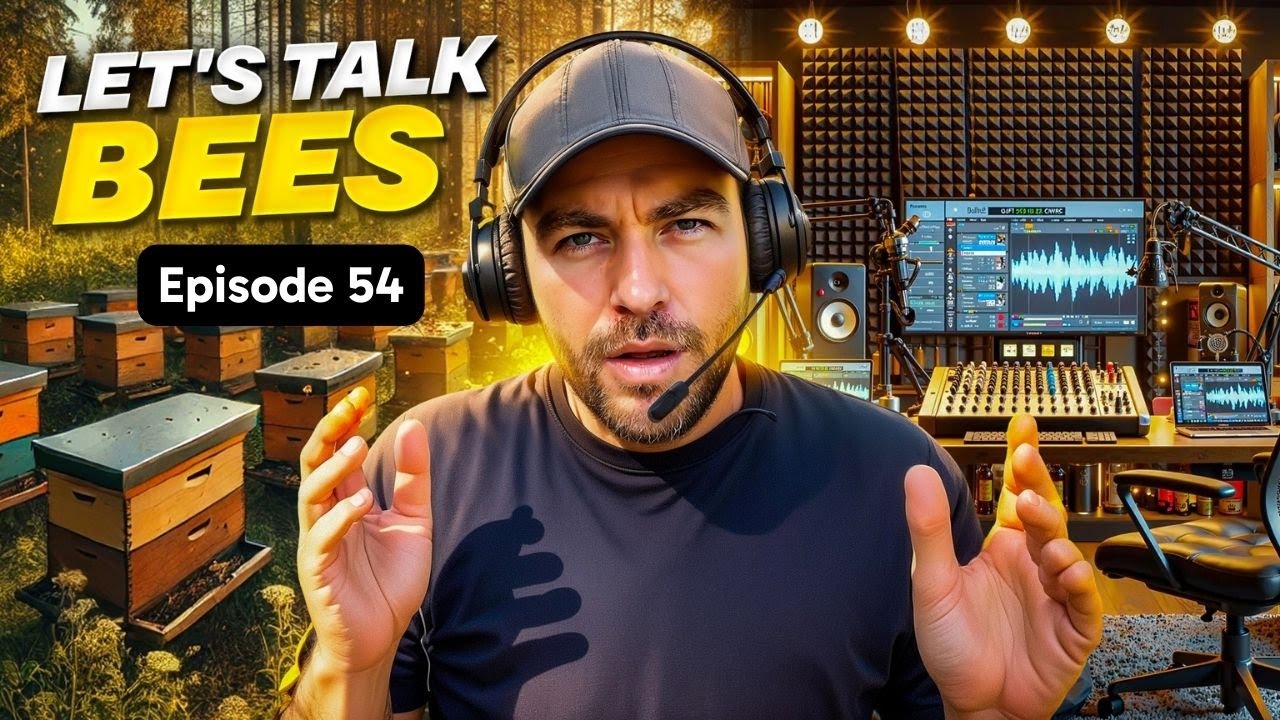
In this three‑hour livestream, host Lawrence Edwards fields a rapid fire of comments and questions from his beekeeping community. The discussion spans practical hive management—how to prevent swarming, when to add or remove brood boxes, the merits of single versus double brood systems, and the Demeray method—alongside seasonal topics like expected honey yields on seed‑rape crops. Edwards debates treatment‑free versus treated varroa control, shares his experience with Elgon and VSH queens, and offers equipment advice on feeders, extractors, foundations, and hive materials. He also addresses newcomers’ learning resources, recommends the Haynes Bee Manual, and talks about the upcoming ban on imported queens. A substantial portion of the stream shifts to meta‑content creation, where Edwards discusses thumbnail design, the impact of Shorts, video editing outsourcing, and strategies for growing a YouTube channel. Community engagement is highlighted through live chat interactions, a hat auction, and plans for future videos on queen reviews and treatment‑free experiments. The transcript captures a blend of technical beekeeping guidance, personal anecdotes, and channel‑building insights.
Chapters
Hello everyone and welcome to another episode of Let's Talk Bees. It feels like it's been years since I did one of these last. I have got some prizes for everyone. So I look a bit red today, so the elephant in the room, 2 elephants in the room. Yes, I have shocking hair, but I'm middle-aged hair crisis, so we're letting it grow. And 2, my red— my face looks a bit red, doesn't it? Looks a bit like flush. I've only noticed when I put the camera on. I've had a serious day, absolutely serious day today. So I've been moving all of my equipment from basically from one container to another, but I have to move the containers— not me, someone else moved them for me— but it meant that, oh, I've had a serious, serious proper day of work, and I'm not used to proper days of work. So let's guess, we're gonna do a competition. I've got 2, uh, B-Space. I have to put them kind of like roughly at the same level as my head, otherwise it's completely out of focus. But you can see it there. So, uh, they're called Entrances. You might have seen the video that I did about Entrances before. I got a couple of spare packs, £24 each these are, but you can see there's loads of bits. So 2 packs of them, and the way to win them is we're gonna have a competition and we are gonna guess— I say we, I'm not gonna do anything— you are gonna guess if you'd like to take Take part to win one of the free B space things. We're going to do guess my footsteps for today. Not footsteps. What's it called? How many how many steps have I taken today? And I've got it on my phone somewhere, so we'll show it up at the end. So you just got to guess how many steps I've done today, and you can win one of those. We'll announce those maybe five minutes before the end, and then wouldn't be it wouldn't be a Black Mountain Honey stream without giving another hat away. This is a hat with a difference. This one, this is the last ever hat. I've got one more hat apart from this one, but it's a— the other— this is a black and gold hat, yeah, which is like the original one. I've got some blue with black thread ones as well. I've just got one of those. There's only 2 hats left. I'm gonna auction them both, but that's the last one. So if you, if you want your Plat Mountain Honey hat, you need to bid on it. Highest bid wins it. And again, as always, I'm not, I'm not making any profit from these, so you have to give money to my charity of choice, which is the British Heart Foundation. So there we go, 2 competitions that we are running today: win a free hat and win some entrances. I've got a cup of tea which I'll have a quick sip of. Oh, I can see, I can see the guesses coming in already! Wow, how am I gonna, how am I gonna keep up with who has done that? So what I'm gonna have to do— this is how the stream's gonna work here— I'm gonna announce like 10 or 15 minutes before we finish the stream I'm going to finish the stream. So this is the actual steps, and then it's going to be your responsibility to come forward and to claim your prize. There we go. I will, um, I'll leave it for the whole weekend so you can claim it, so I won't give it to someone else in your absence. What else are you doing? Well, I just needed— I just need a drink and we'll get going. It's the longest intro ever, 3 minutes of waffle. Right, let's get into it. So Mr. John Begreat was here first. Thank you, John. The work you do. It says good evening. Good evening to John Hayes too. Hi John. Evening to Sean Seymour. Hope you're well, Sean. John Sylvester with the first question. He says good evening to you, Lawrence, and your family. What do you think of the Apimay plastic frames, and did you go to the Telford Beekeeping Show? So I've never used the, the specific Apimay plastic frames, but I have seen them and they're similar to the ones I have used. I can't get plastic frames to work, just can't do it. And the, the only way I can get them to work is if I just force-feed the bees to draw them out, and then once they're drawn out, they're fine. But my bees don't like them. I don't think the UK climate's set up for plastic frames en masse. You will see me using some still because I've got loads. I'm going to use them, but I'm going to use them specifically for pressing honey. You might have seen a few of the shorts someone else did, but it's a similar thing where you're just scraping the honey off the plastic frames going into the press. That's the plan. Well, I've realized what's going on here. I've got my computer set up slightly differently, so there we go. That's a lot easier for me. to see now. So did I go to the Telford Beekeeping Show? I did. I'm so sorry if I didn't get to say hello to people. A few people said, I don't think he was there. I never get a stand. I don't get a stand because otherwise I'm just kind of like confined to a stand for the whole day. But I was there and I spoke to many, many people, and I probably missed twice as many people as that. So I'm really, really sorry if I didn't get to catch up with you at the show, but maybe next year. It was good though. I had a very good time at the show. Saw lots of people there, and it was very cool. Very nice indeed. Hollow Works Stores says, "Good evening." Evening to you too. Broughton Bee said, "Evening all. Been a great day for the bees." Oh, it has been a very, very good day for the bees. I couldn't believe how busy they were. Lee Woodward says, "Hi Lawrence. It was great to see you at the Telford Bee Show." Good to good to see that I did actually did meet some people. It wasn't just there. I was genuinely there. Lee says, "Would you advise buying or making your own sugar syrup?" Cheers. So making sugar syrup is proper easy, really super easy, and it's a lot cheaper than making— like buying syrup because you're just kind of paying for the water, excessively priced water. So it is really, really easy to do, uh, in a— on a small scale and on a reasonably large scale as well. Like the one doing it in a, a— you like a clean oil drum, like a non-used, uh, sterile Uh, I, I'm only adding sterile in there. I don't want— I could just envisage people using like old oil drums with oil in them. I mean like an oil drum shape that's like had, I don't know, cherry concentrate or something like that in it. Use that one instead. But mixing up large amounts of sugar— so that's a 200-liter batch— it's really, really easy. You just, you can do it with a paddle mixer, like a plasterer's paddle mixer, or you can do it with a, like a pump, a pump that, like a garden pump that will pump through water, a like crunches up the sugar syrup as it goes through it. Both of those, you can get 2:1 to work. You can make up 2:1 syrup with cold water using both of those systems there. Just, you need to blend it for quite a long time to get it right, but 1:1 is super, super easy. The only downside I would say to making your own sugar syrup is it's a bit messy. It's just wherever you do it, you need to be able to like hose it all down at the end because it does get sticky and then the insects come in. But for the bees, it's much of a muchness. They don't really care. What they don't like is— I see some people like boiling their sugar syrup, so it's like they get it to like a rolling boil, and I'm like, whoa, that is not the right color for sugar syrup. Whenever I make sugar syrup, I only do it with cold water, and then you know you're not going to be making your bees sick, which is not what we want. So what do I do? I do a bit of both. I buy, I buy in invert when I've not got the time to mix it up. I like to feed invert at the end of the year. Early season though, I, I probably from like now all the way through until I start feeding for winter, I will make up my own 1:1, and then it's, uh, much cheaper. Uh, right, where do we get to? It's jumping around a little bit on the messages. Right, says, hi Lawrence, hope the family is well. Family is very well, thank you. He says, I'd like to make up some thymol solution for sugar syrup. What are the lethicin granules for, and can I make it without? So adding thymol to sugar syrup is, is is used to stop it fermenting. That's the only reason. Apparently it can be quite good sprayed on a colony that has Nosema as well, but you cannot do that. It is illegal. So do not use thymol as a medicine, but it is very good for stopping sugar syrup from fermenting. Really, really good. So if you— the only way that you really get thymol is in crystal form, and it's properly pungent. I opened some up today. I found some up at the, uh, where I was clearing out the containers, and I opened it up and it's just like white crystals. Looks like basically like meth. Not that I know what meth is other than what you see on Breaking Bad, but it's like, like crystals, like big glassy crystals. And if you just put that into sugar syrup, it will thymolate the entire batch of syrup. But what you get, it doesn't thymolate it properly, and you get these kind of like crystallate on the top. So you kind of like blend it all in and think jobs are good, and then you go back the next day and all of the crystals have just solidified on the top. And I'm guessing that it's not properly gone into the sugar syrup that you put it in. So lecithin is like an emulsifying agent. It's kind of like it gives you the ability to emulsify that whole solution. So what you do is you mix lecithin, which is this agent, with thymol, and you kind of mix that together. And then that takes the crystal from the thymol and blends it with the lecithin. And then it means that you can blend that whole mix with the syrup. and then doesn't separate out. So I would, if I was, if I was making some up, I'd probably add the lethicin in as well. Pretty sure it's like a, there's a recipe knocking around, a Pete Little recipe for that, which gives you the, like, I'm sure you've seen it because not many recipes call for lethicin granules. I think that is Pete's recipe though, who was a very good beekeeper indeed. Say hello everybody. Hello to you too. Hello everyone, first live stream. Excellent, well that's good to hear. It's probably worth saying at this point, the last time I did a stream We—I don't think we'd—I don't think I'd hit 50,000 subscribers, and then we've just had one video that has gone properly, properly wild. When I started up my my beekeeping YouTube journey, people say, "Oh, you know, it's not about the subscribers, and it's not about the views, and I don't really care about any milestones." But that is not me, unfortunately. I'm a—I'm a—I really like the data behind it. But obviously, you need you need a good milestone. Don't you need at least one good milestone or two? Something to aim for. And my YouTube milestones were always these were the two milestones. One was hit 100,000 subscribers. That's in my sights. Hopefully we get there one day. And and then the other one though was to have have a video hit a million views, and not like a short. It's quite easy to get well, not easy to get a million views on a short, but it is much easier. But to have like a proper full-time YouTube, you know, horizontal video hit a million views, and I've not hit either of those milestones yet. But one is very very close. It's got nine hundred fifty thousand views, and it has brought in a whole load of new subscribers to the channel. So so welcome if you're here for the first. Time. Every other Friday now at 7:30 PM, I come on here and I just waffle absolute drivel. But you know, we have good fun and I give stuff away for free as well. But, uh, let's go to some more questions. So Denby Honey says, good evening, Lawrence, it was nice to say hello at the show. It's good to see you too, Paul. Surprised you managed to drag yourself back to the UK, to be honest, from all your holidays. Uh, that was a joke. Peter says, should I requeen a 2-year-old queen? At what point in the year and what to do if the queen has been otherwise good. So I used to kind of like religiously change out the queens after 2 years, and I just stopped doing that now because I've got some, I've got some like breeder queens that are on their 4th year. And okay, they've been condensed down a little bit and not fully worked out, but you know, some queens will last a year, but some— but then you kind of, to even out that average, you get some queens that will last 3 or 4 years. So, so I kind of just give them the chance now. and trust myself on my weekly inspections that if I see something going on, so if I see them trying to supersede a queen in June and she's, you know, she's a yellow queen or whatever, to a 3-year-old queen, or a 3-year-old queen I should say, then I'd say, well, okay, well, it's straightforward, isn't it? There's something wrong with that queen, she's running out of probably fertile eggs. So I can make a decision then whether I want to leave them to supersede or I can just say, right, that's the time to go and kill the queen. and add a new one in. So I think if you're doing your inspections, I, I'm pretty confident that I would find a supersedure cell, or I would be able to like recognize when that queen was starting to go a bit bad. You know, certain times of the year you're looking at your colonies and you're looking at the pattern that your queen lays and you think, that's a really good pattern. And then if I knew a queen was 3 years old and I started getting like a spotty pattern at any point throughout the year, I'd say, well, that's it, she's gone. She's not going to really recover from that unless— the only caveat I would add on that is if it's the very first round of brood she's laid in the season. Seen that before where you, you pull out the first frames, you think, oh, doesn't look nice, um, give it a couple of weeks and they get a feed or they get some nectar coming in and then you see beautiful brood pattern. But I think I'd pick that. So, so in terms of religiously requeening, I wouldn't. And I know not good for my business, is it, selling queens? But I just keep them and then when you know you need to replace that queen, I would just make the decision then. So I wouldn't say do it in spring, do it in summer. I would say just Leave them to it, and hopefully they will they will supersede her before they try and swarm. And then and obviously you pick it up as well. That'd be good. Well, I'm gonna have a drink. A few questions in. Oh, there we go. Right, Scout About says we've been hefting our hives today. Most are falling in weight, but one has put on two kilograms this week and one kilogram last week. Is this nectar coming in? So either that or broken scales. Or they're robbing, and it could be robbing at this point in the year where they're just— that's a lot to be going up at this time of the year considering how there'll be brood in there and then sustaining all of their flight as well. So for them, that's not that they're going out and like gathering a kilogram of nectar or whatever, they're going out probably gathering like 3 or 4 kilograms of nectar. But there would— there will be very, very small amounts of nectar around at the moment, not much, but it's really easy for the bees to rob So if you've got, you know, if you've got 10 colonies in the apiary and 9 of them have successfully overwintered and one of them is just dead, dwindled away because it was a drone-laying queen, and you go in and the hive is like full of stores, and then all of the 9 colonies are just out thinking, yeah, brilliant, we've made it through until spring, right, let's go and get some— let's go and get some food, and they're just like sniffing around the hive next door, they'll rob it out within a day or 2 days. And, you know, there's a huge, huge amount of honey in there. So There's not really, there's not really much you can do. You can't kind of track it or anything like that, but I would just take a look at all of the rest of the colonies in the apiary and make sure that they're actually all flying kind of in and out and not just robbing behaviour like that. But there is bits, dribs and drabs of nectar around, but not— I wouldn't— if I had to guess there, I'd say I think that's robbing. Right, let's get some more questions. That's my own one there. Right, so Soren Jensen says evening all. Hello to you too. Lynette says good evening. Hi Lynette, good to see you at the show. Collector Rick's Honeybee said good day. Good day to you too. Uh, Rufus R8 says hi Lawrence, remember me? First in the queue, hope you enjoyed the show. I do. Hello. Yeah, sorry if I'd given you terrible advice before, I was well confused. It's too early in the morning for me, that one. But I do, I do remember you, first in the queue, very nice. Margaret says hi Lawrence, how do I tell the difference between emergency response and swarm response? First check of the year, how had 10 queen cells, 3 capped, and 12 queen cups. No eggs, very little brood. Had a swarm last 17th of March, northern Spain. So luckily it's really easy to tell the difference between the emergency response and the swarm response, swarm impulse. So for anyone who doesn't know what they are, the swarm impulse is the impulse that is used to create a new queen cell when the colony wants to swarm. They do that by creating kind of like what look like peanut-shaped queen cells, and they'll do multiple cells throughout the whole hive like that. So that's the swarm impulse. The emergency impulse is if you take away their queen or you kill their queen, they say, ah, we've not got a queen, we need— it's an emergency! Everyone runs around, it's an emergency! And then what they do is they try and create their own queen from eggs, or eggs that have hatched into larvae, so a young larva that's already been laid, and then they just feed it like copious amounts of royal jelly, and then that manages to turn them into a queen. So the difference between those 2 things though is that the swarm impulse, the queen goes and lays the egg that's going to become that virgin queen into a swarm cell, into a ready-made queen cell, so they're in the right place. In the emergency response, they have to use larvae that are in the wrong cells, so what you get is the queen cell is just straight like that, and then the emergency cell is like a 90-degree cell, but you can't really see it. So if you— beginner beekeepers will say, well, that's not 90 degrees, it's just straight down, but really it's just your angle of view. So the L-shape refers refers to like the cross-section. So if you were to cut down the middle of a queen cell like that, a queen— a swarm cell would be straight, but an emergency cell would have this 90-degree kink in it like that. So from your perspective though, where you can't see that cross-section, it's probably going to be about half the size. So like queen cell, swarm cell— sorry, swarm cell, emergency cell, swarm cell, emergency cell. And then that's the only difference. So It's caused by 2 very, very different things though. So telling the difference between the emergency response and the swarm response, you can probably work it out. Like, have you killed the queen? Have you killed the queen or have you seen the queen? And if you have, and you say that, but the thing is you say there's no eggs, which is a little bit worrying, but very little brood, and you said you've had a swarm. So that's the difference between the 2 responses there. If I opened up a colony, first check of the year, and I had 10 any queen cells, 3 capped and 12 queen cups, no eggs, very little brood, they've swarmed 100%. Like, because there's no eggs, which you wouldn't get after a swarm, but you get like that remnants of brood that's kind of gone through egg, larva, and then pupa and been capped over and stuff. So you're getting that— that's what you get with a swarm. You get capped brood but no eggs, and then you've got loads of queen cells. So That equally though, you could have— no, I was going to say equally you could have done your previous inspection, so last week's inspection killed the queen, and then you're coming back and seeing something similar. And if you didn't know the difference between a swarm cell and an emergency cell, then that kind of description there could mean that you killed the queen. However, you've said it's the first check of the year, so you'd be very, very, very unlucky for that queen just to randomly die a few days, like a week before you went to inspect. So I'm gonna say— No. they have swarmed, which is really annoying if they're swarming that early. Wow, global warming, eh? Woohoo, let's talk bees! It's been a long time, isn't it? Right, Pete says 17,000, Paul says 22,000, 21,242, uh, 23,587, 12345, like it, 9700, 13,000. You get the picture. I'll do a few more, flash them up. 28,000, So I'll tell you at the end how many— 2,400, that is seriously low. Ben Davis says, hi Laurence, I wanted to move my beehive to another location. When's the best time to do this, and do you have any tips to make the process easier? I hope you're well and looking forward to summer. So this is going to really annoy you, Ben. If you'd have asked me this 2 months ago, I would have had the simplest solution for you in the world, which is go outside, just pick up the beehive put it where you want it and job is done. But as it is warming up now and the bees are flying, you are going to be governed by the 3-mile or 3-foot rule, which is, for anybody who doesn't know it, if you've got a beehive and you want to move it, you can move it up to 3 foot in any direction and all is good, the bees will find their way in. If you move it over 3 feet, you need to go at least 3 miles away. So if you move it kind of anywhere within 3-foot radius, I guess that is, yeah, 3-foot radius, either way that's fine, but if you were to jump to say 5 foot away, taking up a hive and taking it 5 foot away, the bees will just go back to the original site where that original beehive was and they won't recognize it. And you know, take it with a pinch of salt whether it's 2.5 feet or 4.5 feet or whatever, that is the rule. So you need to go up to 3 miles, so that's why I always say to people, if you're going to have— I always recommend have more than one apiary, and I always recommend if you're going to have 2 apiaries, have them over 3 miles away from each other, makes your life so much easier on just a million and one different things, really does. I never— I've never spoken to anyone who keeps bees in there or kept bees in their back garden, got a second apiary and said, I wish I never got that second apiary, caused me loads of hassle. That has— never met anyone who's done that. They always say, oh man, I just— they go straight away and get a third apiary and then just close off the garden apiary. Oh yeah, here we go. Right, Collector Ricks B says me at, uh, don't know about that, 28,616. Well, I'm not going to read, I'm not going to read them all out anymore because it's probably not making for the most thrilling of podcasts. Uh, Danny B says evening, Laurence, from Danny at Danny B's. I'm going for 10,000 steps. Right, I'm just going to quickly flick through all of the brilliant guesses. Wow, lots of guesses, guys and gals. Right, through to Margaret there. So Margaret says, hi again, Laurence, from Spain. It's still cold, like, so down to -2 at night, and little forage, but my single deep is rammed full, 8 to 9 frames of bees, stores and brood, but still too early for a super. How do I manage? So if I hadn't have read your message up above, I would have said, oh, it's fine, you can compress bees down at this point in the year, they won't swarm. But it's slightly different for you in Spain, so you're probably like a lot more advanced than we are. But for people in the UK, if you've got— if you're in that situation I would say it's still winter. Like, it is still winter, and the bees can be compressed in that position and just kind of stay there for quite a long time, for like multiple weeks. So I wouldn't worry too much about that. The other thing you can do, which I've done a video on recently— I think I've done a video on it recently, but I've definitely done another version of this video that's coming out in a few weeks. Actually, I might, I might release this tomorrow because it's probably relevant. Yeah, I'll release it. I'll release it tomorrow, so you'll see it come up on the channel. Is that if you're going to double brood, just double brood underneath So if you add another brood box and just add it underneath your brood box, then it's kind of like doing nothing, but it also gives your bees additional space if they need it at that point in the year. So I do like that technique. I use that technique a lot on hives and also like modular nucs. It really helps the modular nucs, gets them going a lot quicker than doing it the other way around. So that's probably how I would manage, and hopefully you won't lose any more swarms. Uh, so some more, some more guesses there. James Camplin, channel member, says, good evening to you all. How many losses have people had so far? I'm curious in which part of the country people are seeing above average. Here in Norfolk, there are many peeps with above average losses. So really good question, that one. It's— I speak to, speak to some bee farmers on like some bee farmer chats and stuff, and you see the numbers that people are admitting to, and you think, well, it's probably a lot worse than that. But I'm just, I don't know, we're relatively small scale in comparison with the bee farmers, but we're not really seeing it. And it makes me think, oh, I don't know, I don't want to say like we're doing something right, we don't work our bees that hard, and they get, you know, like the nucs get fed whatever they need, but also moving that Apivar nice and early, and getting the treatments in nice and early, and getting your bees in a really, really good healthy position to rear lots of winter bees. For me, it's like Richard is the master at that. He really is so good, and I've learned everything, you know, everything I know about that is from Richard. But the second that I started doing that, I noticed much better overwintering performance. And what I think the kind of, like, the idea behind it is, is that you do a very early varroa treatment. So you're doing it at a point where the bees aren't overrun with varroa, so you can get that varroa level down really, really quick and very early in the season. But then You can't just leave the bees at that point, and what Richard does is he will trickle feed them. I know people don't like that term, some people don't like it, but he will, he'll kind of keep them topped up at that point, keeps kind of going back and giving them whenever they need some feed, he'll give them some feed, not to clog out the brood nest but to get the bees going. Like, there's pollen coming in but there's not a huge amount of nectar coming in at that point in the year, but he keeps them going and what it does is it expands the brood nest, you get lots and lots of brood. brood, and it means that when, when you want the brood nest to be at its biggest to rear lots of winter bees, you can do that under the kind of that system and that configuration. I think what a lot of people get caught out with is that they'll extend their season, they'll try and get as much honey as they possibly can, they'll take their bees to various different crops, they'll go to, you know, they go to the oilseed rape, they'll go to the field beans, they'll go to the borage, and then they go to the heather, and then they don't treat their bees until after they get back from the heather, and it's kind of like middle of September or like even early October, and then the colony fails over winter and they say, oh, it's annoying. You think you didn't really give them the best chance to thrive, kind of trying to take, take, take from the bees and never like give them a bit of a break. So I think if you do that to your bees, you will have really, really high overwintering losses. But if you just kind of like cut that honey harvest off nice and early and get the bees in a fit state, you need to just like— that first 4 weeks after the honey harvest for me is like your you're medicating your colony, you're trying to get that colony to a point where the viral load on the bees is as low as possible, but most importantly you're talking about the viral load on the summer bees that are there, the bees that are going to die quite quickly. So by bringing that viral load down very, very quickly, but whilst the colony is big and able to reproduce and create all of these big fat chubby healthy winter bees that don't have that viral load, then an easy job for the winter bees. They just got to kind of like sit tight and just say, yep, we're just waiting for spring. And a lot of my colonies look like that at the moment. You've just got lots and lots of bees there, huge amounts of bees, but we're not, we're not out of the woods yet. And this is why I wouldn't, I wouldn't kind of be looking at my bees and saying, oh, well, it's a— this is the percent that we've got yet, because until, until you get to the point where all of the winter bees are dead and all of the new bees that they've created kind of are enough to keep that colony going. You get like a switchover day. Until you get to switchover day, then you don't know. The best ones could fail and the, the little puny ones could, could thrive and kind of grow and expand. However, if you're going up there now and 50% of them are dead, you're kind of pretty confident that you're going to have at least 50% of them dead, aren't you? So it's a good— it's a really good question, and, and people can put it in the comments, and I'll kind of put your comments up if you've, if you've lost Lots. Let me know and where you are. It's it's not nice seeing it and seeing it in America as well. Like it's on a different scale, isn't it? In America, with lots and lots of losses at the moment. Right. Carry on going through these. Luke Dutton says, "Hi Lawrence, I hope you're well." Thank you very much, Luke. I am. I'm absolutely knackered. Like I I really am tired. Right, David. Has gone for the last ever black and gold cap with a bid of £10. Thank you very much, David. You are top bidder so far. It's going to be an easy one to outbid, but you've got to start somewhere, so thank you for your bid. Uh, Holloway Stores with her guess. Good guess. Um, Andrew Rogers says, thanks for helping me finally figure out what the problem was with upgrading my membership. Oh, no problem. Thank you for becoming a member. Hope you enjoy the benefits. We're gonna get a lot more videos coming through at the moment for channel members now that the beekeeping season has started. And I'm so excited about, um, what's going on up at the forest because I've just— I've made such good progress on it today. But what I'm going to do is I'm going to put up a little shelter up there, and it means that I can work when it's raining because in Wales it rains most days. So if you want to like do videos or stuff like that, or make up some boxes or make up some frames, I've I've either got the option of trying to do it inside in really bad lighting, or I want to go now and do it outside in this new shelter. But what I was getting at was it's— it will give me the ability to film. That's probably where I'll film all my channel member videos as well. Um, and just, I've got, I've got loads of work to be doing up there, loads of frames to be putting together. So I'll just, I'll put the, I'll put the camera on and just chat, chat to the camera. I might work out if I can do it as a live stream. The only problem with a live stream on your phone Is that it's really difficult to see the comments, and then I'm kind of like there just reading the comments, and I think I'm not actually doing what I'm supposed to be doing. I'm just skiving off with the live stream. James has a guess as well. Oh, EJ Arctic Beekeeping says, "Will I see you at the Happy Monday in Copenhagen?" So a very, very high percentage. Yes, not guaranteed yet, but my my um. Oh, someone's just messaged saying that there are some freezing issues. That's not good. Hopefully, hopefully that gets sorted. Um, let me just go down and see. Oh yeah, there's no, there's no other comments on there. I think it's just, I think it's just your reception, John. I, I don't— it may well be an issue, but hopefully it gets a little bit better. Uh, where do we get to? Right, so Happy Monday in Copenhagen. Yes, so my sister lives in Copenhagen and Uh, so I'm almost certainly gonna go, but I just need to work out which days to go to. But I think I am gonna go. I'm looking forward to it. So I'll see you there. I don't know how I'll recognize you. You have to wear like a big EJ Arctic Beekeeping banner or something like that. But I would— I'll see you there. Uh, says evening, Lawrence. Good evening to you too, Robert. Evening. I go with 1,250 steps. Cool. Wirral as in the Wirral. Is that not too far from me? On Facebook says, good evening, Laurence, from me in Cornwall. Good evening to you too, Kelvin. Justin says, great to meet you at the Beekeeping Show. When is it best to move the overwintered nuc to a full hive? So we will, if you're getting a nuc from us, we'll send out like proper detailed instructions to everyone way in advance. Someone calling me, strange time to call. And, but if you just want to know roughly when to do it, so what the thing is, is that I can't give generic advice on it because we send out, uh, the first week, we're aiming to go the last week of March. So you might have an overwintered nuc coming in the last week of March, or you might have it in the first week of May. And the 2 bits of recommendation that we would give are like chalk and cheese. You couldn't really get any, any more different. So what we would say to people in, in the beginning— sorry, at the end of March, if they get like the— if they're on the first round of overwintered nucs, is your nuc can stay in that nuc for definitely a couple of weeks. Easily got 2 weeks in that nuc if you just want to keep them in there. And if at any point throughout that first 2 weeks you get a nice day, then feel free to move them over. Fine to move them over, but they're also fine to stay in there for a couple of weeks. Um, and then, so that's end of March advice. And then my first week of May advice is do it within 48 hours. Yeah, because they're kind of— they're so much bigger at that point in the year. So just do it within 48 hours regardless of the weather unless it's like torrential rain, but it's warm, it's warm then, so you're not gonna worry too much about the cold. And as long as you've got, you know, half an hour of flying weather, then you can, you can do it as quick as possible. And then we adjust that advice kind of as we go through, so I just, you know, if it's a cold week, I'll say you can stay in the nuc. If it's a warm week, I'll say get them out as soon as possible, get them into their hives. But we do send full instructions on that one. Michael Menino says, good afternoon from the USA, New Hampshire. Missing you this year at the North American Honeybee Expo. I was a little bit gutted as well, but I hope you had a nice time, and I would like to come back someday, but we will have to see. But I see it's going from strength to strength. It's a brilliant show. I very much enjoy watching it from afar. Mem Mustafa says, hi Lawrence, have you tried the upside-down hive? I'm sure you did a video or spoke about it. Hmm, I've, um, I've not, I've not tried the upside-down hive, and I'm just, I'm just thinking like, what, what have we spoken about, about the upside-down hive? So, so I've not, I've not even seen it. So send me a link and I'll have a look because I've not done a video or spoke about it. Um, but I'm genuinely interested. The upside-down hive, cool. Unless I'm calling it something different. But Luke Dutton says, I have 2 overwintered on double brood If I want to go to single brood to then hopefully demaray later, is now the right time to remove the lower box? So if you go in and you kind of look and they're all in that top box and the bottom box is just completely empty, now is the perfect time to go and take it out. Perfect. If they're still in it, so if you're opening the boxes up like that— just do a little focus pull for you there, I love that new lens— and then you open it up and there's loads of bees in the seam, then you can't take it out anyway, so you might not get the chance. But if the bottom box is empty, absolutely take it now. Oh, I didn't see you at the show, so sorry about that. I, I think I'm definitely gonna have to either get a stand next year or just tell people where I'm gonna stand, um, or maybe have like one of those big, those like jackets that has a big light above me so then people can see where I am. Uh, but yeah, sorry, get to see— I didn't get to see a lot of people. Uh, Channel member says, hi Lawrence, Demeray split, when you put the brood box on top, what happens when you have used Apivar? Can extract the honey. So I'll do a full video on this this year. Probably the most talked— like, this is the question that I answer the most to people. People really love the idea of the demerara, and they do not— they don't like the idea of this tainted honey. So on a normal hive, yeah, forget the demerara, forget double brood at the moment. On a normal hive, this is generally what happens depending on space within the hive. Bees go out, they collect nectar, they come back in, they deposit that nectar just Anywhere, just get it out, they go, because I'm going back out to get some more. They deposit it generally around like the brood nest. If there's space within the brood nest, they'll take that nectar, they'll deposit it in the cells of the brood nest until that is completely full and saturated, and then they'll kind of venture off further up into the hive, into the supers, if every— if all of those easy options are kind of out of the way. So what the bees do then overnight is when they can't fly, they just like work to clear that brood nest, because for them they don't like the brood nest full of nectar. They like the brood nest to either be kind of in the middle of the season, like empty, so the queen can lay in it, or to have pollen, or to have what— you know, they want to configure it the way that they want to configure it. What they don't want is nectar. So what they do, they take that nectar and go and store it upstairs. So what I've just described there is exactly the same process as what happens with this process with the Demerara there. So the problem is when you put Apivar into a beehive, it's wax soluble, so the chemical amitraz somehow taints that wax, and on the reg— on the kind of regulations it says cannot extract honey from the frames that have been tainted with amitraz, that's what it says. So what you can do though is when you do the Demerara split and you move the brood box up to the top and that top box gets completely full of honey, if you leave it there you can just remove it quite quickly and then it just becomes an empty box, but if you leave it up there and the bees store lots of honey in it and the frames that you've used over winter are tainted with Amitraz, then what you can do is you just take that top box, put it all the way down to the bottom, so you've got floor, tainted box, brood box, and then same configuration above, and you bruise all of the frames. So you bruise in the wax cappings, just kind of like smudging it with a hive tool, putting it underneath. What the bees will do, they do not like lots of stores underneath the brood nest, so as long as you've smudged it and it's open stores now, they will just take it and move all of that honey from the amatraz-tainted frames into nice brand new wax honey super frames, and then you can extract it. So that is my detailed explanation. I only say because I never have arguments with anyone on kind of like Facebook or YouTube or anything, because I say, well, you know what, you probably know better than me anyway, so who am I to argue with you? But I will kind of like sometimes, you know, put a comment in or try and stand up for myself a bit, but they said they disagree, that's not how they— and, um, how they— oh, what did they say? That's not what the regulations imply. And I said, well, but it's like, if it doesn't imply it, it's gray area, isn't it? And I don't think what I'm saying there is a gray area, because I, I've likened it to the very natural, normal collection of nectar within the beehive, which is that it gets stored in amatraz-tainted frames for A very short period of time, and then it gets moved, and that is fine. That has been tested. So it's just the same process. It's not hit a nerve or anything. That one is not. But I do. I do have to answer that question and kind of justify that one a lot. But I will be doing a video on that and pointing everyone to that video in the future. Oh, I'm going to call you GM. GM says one question. I am Endrit, and I watch your channel constantly. Great content. Thank you very much. That's the best question of the night. You've won best question of the night. That's it. I'm guessing that there's more somewhere down here, so I'll get to it in a sec. But that that made me that made me smile for a bit. So thank you, Endrit. PK says, "What are your thoughts on the license 20 frame radio extractor?" Is Bello? Bello is selling them for £1,000 at the moment. I am getting messages coming through. Okay, turn that off. Sorry, I thought it was an emergency. I thought it was an emergency, John, and we'd all frozen up. Right, I'm going to turn my phone on silent because it is well distracting. Uh, where do we go here? Oh geez. Right, we're done. Uh, PK, right, so Lyson 20-frame radial extractors. So that is without a doubt their number one selling extractor. So that says a lot to me that A lot of people are buying that. It's—I know a lot of people that have got it, and a lot of people are happy with it as well. But I—I find it difficult answering these questions because my thoughts on it are: I know Lysen is a good company. I've got a Lysen extractor, and I really like my own—my own Lysen extractor. The customer service is excellent. The customer support is really, really good as well. But you know that if you know, say 5 years down the line something goes like wrong with the motor or something and you go to Abello and say something's gone wrong with the motor and they might say, oh, you know what, really sorry, so it's only a 2-year warranty, it's outside of warranty. But they'll get you something to fix it, like they'll find the bit in the motor like that you need to be sent, or they'll say, look, we can give you a new motor, sell you a new motor and it costs this much. And the aftercare and support is definitely there and I know that through my own dealings with them outside of kind of any other work that I do with them. So I can't say that about other companies because I've not had that experience with other companies. And this is, this is the difficult one because with extractors, you know, you only have a few extractors. You're not going to have like 20 extractors, are you, and try them all out? But I know, so I've got a license 30 frame and it is very, very good. I would say with the extractor, always just get as big as you possibly can. So if you're umming and ahhing and saying, I'll get the 12 versus the 20, yeah, just go with the 20. I would always go with the 20. It makes kind of— well, you're always upgrading your extractor until you get to like a 20 or 30 frame, and then you just, you're happy with it and life can get back to normal then. Oh, Lynette has bid for the hat, so we're up to £20 for the hat now. Nice bid, Lynette, and that's a good guess as well, 23,474. Kind of giving some subtle clues if anyone wants to re-guess. Uh, No Life Beekeeper says hello from Michigan. Hello to you too. Right, I need to drink some water after all those steps. Oh wow, it's one of those days where I got up and I quickly had some breakfast and did my emails and then went out and was out from like 10. I know people are thinking that's like proper lazy, but there's a lot of emails to get through. And then, um, I've just been moving stuff all day, just like, just beehives and boxes and frames and stuff like that, but literally for 8 hours solid. And then, and then came home straight into this. I know that sounds like, like I've just described a very average work day, haven't I? But it feels, it feels worse because it's me. Okay, right, I'll stop feeling sorry for myself. Channel member says plenty of activity over the last 4 or 5 days, loads of pollen being brought in bees everywhere around the garden. Can't wait. I really love this time of year, you know. I, I do hate it when you get the false starts though, kind of back end of Feb, early March. And it's— you look at it today, like I was, I was out by the bees today, 11, 12 degrees maybe, but there was, there was about an hour right in the middle of the day where it's like a summer's day and the bees were just filling the air. And you could stand next to the beehives, you just thought, oh, this is good. I cannot Wait, this is like really, really exciting. And I am, I'm genuinely like a little boy, a little child, just really, really excited about being out in the sun doing stuff, getting messy. I love it, I can't wait. David Bisco says, hi Lawrence. Hello to you too, David. GM says, he did have a question, he says, my question is, have you heard about the fact that you can add whey milk, whey to sugar syrup, and have you tried this? Hmm. So I have heard about it, and I'm not— I'm definitely not going to try it on my own bees, but I'm just not sure, like, why would you want to do that? So whey is just going to add like loads of protein into the mix, and bees get all their protein from pollen, so I don't even know if it's the same, if it's the same kind of protein. Like, I'm thinking about it now, thinking it's like protein's protein, isn't it? Or— but it clearly isn't, and the last thing you want is for the bees to get upset stomachs. But so no, so I've not, I've not tried it. I have heard, I have heard about it, but I, I kind of dismissed it quite quickly as why would you want to do that? Just feed them protein if they need protein in the form of pollen. But I will, I'm gonna have a, I'm gonna have a look. I'll go, I'll go a little bit deeper. and see if I can skim read something and see what it's about. Andrew says, oh, he did notice some already in flower. John, good guess, good guess as well. Did you see Thorn's new Polynuke? Any thoughts? So, you know, I didn't see, I didn't see that in flesh. I don't think it was at the show, but I did see the, uh, the, like, the post on social media about that. And it was funny, you know, the first thing I thought was, I'm really, really glad that I'm not designing a Polynuc or a Nucleus Hive. And if you thought that I was still designing a Polynuc or a Nucleus Hive, I quickly, um, I stopped. I've not publicly retracted the intent on doing it because I might do it again, like, I don't know, not ruling it out completely in the future, but I'm definitely not doing it now. Because once, uh, some of the beekeepers bought Pains, I spoke to Harry and said, look, we kind of just, we want like some tiny mods to be made to that. our plan is just to make a nuke that is just like similar to the Pain's, very, very similar to the Pain's, and just like tweak a few little bits and give us like extra functionality without taking anything away. And I don't really want— like, I don't really want to do it. The only reason I'm thinking about doing it is because Pain's were going bust. But now that you've— this is me talking to Harry— now that you've got the mold, um, I'd prefer to just— can you just— can you just make these minor mods to the Pain's mold and maybe we can you know, not have to make the nuke. And I, you know, I'm not sure what Harry's doing with it, but he said, um, the nukes— the nuke mold will be there. So you'll either be able to make— you'll either be able to buy the poly nukes as they are at the moment, both the National and the Langstroth, or we might make some small modifications, like really small modifications to it, and then you'll be able to buy the new form. So I said, great, that's great, that's all I needed to know, because the last thing I wanted to do was go into— we'll go into Poly hard manufacture, but then to go into competition with someone who is pretty good at bringing the margins— not bringing the margins down, but kind of like competing with kind of like higher volume, lower margins— that's something that we could never compete with him against. So I don't have to make my own one. And this is the first thing I thought. I thought, just imagine if I'd have gone off and said, no, no, I'm gonna make one, being all stubborn, and was halfway through it, and then this And then this popped out, the new Thorns Poly Nuke that no one knew about. And then there's another one. Who's the other one that's just come out? There's another— it's like either another seller of this same nuke. I don't know who was it I saw it on. But anyway, I'm really glad that I'm not selling one. But I've not seen it in the flesh, uh, but it's, uh, it's important. So I'm guessing it's being made out in China. So I'm interested to see what it's like. I, I do feel a bit bad, like, on the on the channel now where I should be— I should be buying all of these really and doing reviews on them. I guess, I guess I can do it on this new— can't I? I just feel bad because like sometimes you'll say something about a product without having like used it for years. So I think I should probably— I should probably use a couple and then I'll do the full-time review on it. But looking at it, I like some of the features on it as well. So I think as long as it's nice and insulative and it's hard this is the big thing, as long as the density is high enough that it's not going to like damage really easy, uh, then they should last for a very long time. And it's got like nice plastic inserts for the hive tool. It did, it looked quite, it looked quite nice and quite neat. So interesting, but, but great for the consumer as well. Great that there's like alternative options out there on the poly hive and the poly nuc market. Doesn't seem to be any slowing down of the innovation. Uh, Jen and Brian says hello from Colorado. Hello to you too. Lynette says, great to meet you at the show and chat about where we grew up. I bet it's really different there now. Crazy, we were chatting with Lynette and it turns out we, we lived literally like 500 meters away from each other where we grew up in London at different times, but that was a little bit random. And I do, I bet it's very, very different there now. I'm quite, I'm quite happy to, to not be down there anymore. Did you see the Bee Cooperative uncapper at the Bee Show? If yes, what did you think? So It's cool. I did see it. I also saw it last year, and I've actually— I've got one. I feel so bad. They sent me one, and I got like the timings wrong and had slight emergencies with honey extraction last year, which is why you didn't see any videos. But I've got one here, so it's downstairs in my, in my front room, which is not a front room anymore. It's like a storage room. My wife, my wife is a very good wife. So I, I saw it, and I saw it in action. again, this is— and this is the one where I just need to not get so excited about stuff and kind of be like, oh yeah, it looks amazing, it's definitely going to work. It— in terms of the uncapping, the idea of— so, so for anyone who's not seen it, it's like a big plastic box, the Big Cooperative Uncapper, a big plastic box, and then it's got these 2 metal stainless steel kind of like whirly things, cylindrical whirly things that sit next to each other, and then they're connected with these like rubber cables or something, or like an elastic. It's done in such a way that you take the frame and you push it through these rollers, and it kind of like slices along the frame, and then apparently that's, that's how you uncap out of it. So I've seen the videos and I've seen the honey coming out, but I've also seen people saying that it doesn't fully extract the frames. So I just need to be completely honest with the fact that I don't know how well, personally from my own experience, how well the honey comes out of the frame. I think in theory, in perfect environment, it would work very, very well, and I think with certain situations it might not work quite that well. The other thing that I would say about it as well though is that if you're uncapping, like, or like extracting quite a lot of honey, the wax cappings I think are quite a valuable commodity, and I get the argument that if you're not taking any wax out of the frame at all then the bees don't need to work as hard to kind of repair that frame. But I think like to a certain extent, I don't think it really matters that much. So if you use the cooperative uncapper, you don't uncap, you're not removing the wax cappings, you're just kind of like scoring them in such a way that it will let the honey come out when it's extracted. So it means you don't get your wax, which when you start uncapping a lot of frames is a very, very valuable commodity. Like, the wax is kind of like worth a lot more in terms of the effort put in than, than the honey even. So you don't really want to give away that or even give it back to the bees. I'd prefer to, to use it and, you know, trade it in and get your foundation. So that's, that's one of the downsides. But, but for people who've just got like a few hives and don't want to— I don't like— oh, I don't want to mess around with the cappings— then that could be a really, really good way of not having to, not having to deal with the cappings at all. I've got full-on dry mouth. I did not drink anywhere near enough fluids today, and, um, I kind of thought to myself I should, I should go home and fill up my water bottle. And on any other day I would have, but I just didn't have the time because I was so like back and forward and back and forward, and I had to get all of the stuff into the container. So I'd emptied these 2 containers Like the back of an Arctic, 2 back of Arctics, out onto the, the side, just kind of like out. And then they moved them, uh, to kind of like get them level because they were really off level at the moment. And then I had to put everything back in, so I didn't want to leave it out overnight because it might rain, and then it would have all been covered. And it's all like frames and wax and stuff like that. It wouldn't, it wouldn't survive a night out here. Something to come along and Wreck it. But, uh, where was I going with that? I can't remember. Oh yeah, I was explaining why I was so tired. Yeah, okay, right, stop feeling sorry for myself. Right, Mark Honey says, thanks for the video on the demerit, really good to see the whole season process and not just how to do it at the start. So I've taken that feedback on board, and that's what I'm really trying to do with my videos this season. That is my— that is my focus, is doing like the full story of videos. So not just doing Oh hi, I'm here to do a video and talk to you about it. But I'll just like cut them together, so I'll do like four or five visits and try and show you some beginnings and middles and endings, and no doubt lots of failure as well. We'll show you that we'll show you when I regularly mess things up. Right, Thomas, channel member, says, "Hi Lawrence, when will be a good time to feed one to one sugar syrup as my bees are taking down fondant quickly and I'm unsure should I buy another box of api pasta? Looks like." spring is fast approaching. So I would, I would say, like, try and heft your bees and just lift them up and see what you think in terms of weight. They might not need feeding, and it might even be like— I don't want to give out the wrong advice to people here, but sometimes going in to check to see how much stores they've got might not be a bad idea. But then you've got to weigh that up with the fact that you might kill the queen. Overfeeding at this point in the year is is quite bad, and I know like I sent a video out to channel members today to say like to go and put some fondant on just in case because March is the month where colonies die, and the last thing you want to do is kill your bees. But overfeeding them like really really sets them back. So if you're just like pumping happy pasty, I know I'm not suggesting you're doing this, but I'm saying if a person is just constantly feeding their bees and they fed. like too much in the winter, and then they've always been fondant on, they're just like, the bees are just feeding on the fondant, so they're putting on more. You can find you're going to this, you're going to the colony in the spring, and it's just gone like, it was like this, and it's just gone, it goes down to nothing. I love that focus pull on there as well. I'm gonna do it again, just amusing myself. And the reason for that is the fact that there's just no space for the queen to lay. So all of these old bees are dying, and the queen's saying, I want to lay, like, just clear out some of this space, and they can't clear it out because it's capped stores and just kind of not got any space. So then you get this massive drop in population, and it's just as a result of putting too much feed on the whole time. So I, I like to— it's not, it's not playing roulette with the bees, but I will go like a little bit further, you know, I'll push them a little bit further to try and clear out the brood nests because you've got You've got lots of old invert syrup, like sugar syrup, in there that you want the bees to use before you put the supers on. You're not going to get the bees moving that upwards because it's capped, so the bees should just kind of leave it there, but they might move things around a little bit. And certainly when those frames become uncapped, if the bees are going to use them, and then you might get nectar going back in there, the bees might just say, like, we'll just clear all of that, take it upstairs. And that's the last thing I want for my honey. So I like to clear as much of it out as possible. So for me, like, if I'm feeling a heavy box, I think, right, okay, just let them get on with it. They're going to eat all of their stuff. I'm definitely not thinking about feeding fondant or feeding syrup. But then when I get like the medium box, I'm thinking, okay, well, this is, this is good. And they're, they're the ones that where you have to make the most difficult decision because you have to weigh up like efficiency of your operation with, um, like The bees surviving. And obviously you always want the bees to survive, but you're trying to kind of— you're trying to build the best for the bees as well by letting them consume their stores. So for me, obviously I aim for not losing any colonies, and I've not lost any so far, like this year, for this very specific reason. But I do— I want them to consume the stores as best as they can and then to get the flow to allow them to grow with that space without them starving. And it is, it's a very, very fine line. So in terms of your question, like, what's a good time to feed 1:1? I would say, do they need feeding? And then kind of like ask it again, are you sure they definitely need feeding? Um, because I would guess that a lot of these colonies will have like sufficient weight, kind of like more weight than they probably need, and doing nothing could be like loads better than doing something. And, and I, I do, I properly get it because I was in exactly the same space. When you have like 2 or 3 colonies in your garden, you're just like, I just want them to survive, I just want to do everything I possibly can, like what can I do, what different color fondants can I give them? And, and sometimes just doing nothing is, is what they need. So I'm interested to see how they go. Don't, don't take that advice and then you come back next week and they say, yeah, they starved because Because you said that. So always err a little bit on the make sure they've got enough. I'd prefer to ever so slightly overfeed than for them to die. So you just gotta make that judgment call. It was, and it is a difficult one. Right, where's my bottle of water? I brought it up. That is not good. I'm gonna have to drink some tea. Oh, no way. Aha, someone on Twitch! Hello, anyone who is watching on Twitch, it's great. I've got, I've got YouTube and Facebook and Twitch on tonight, and I think there's about 3 people that watch on Twitch, very popular over there. He says, so Cosmic Beekeeping says, Lawrence, your queen introduction works well. Thank you very much. I'm not sure if it's my introduction, but it's one that I've probably documented somewhere or other. Toadie says, have you ever used birch water. I've not used birch water. What is birch water? Are we talking like when, when they tap the birch trees and you get the rise up in the spring and you get like this? Is it the sap rising? So I saw that on like a Ray Mears program. I love that. I love like a chilled out watching Ray Mears program, you know, where— and if you don't know Ray Mears, he just like whittles things and does, uh, that, that's, that's really playing down what Ray Mears does. If he heard that he just whittles things, he's like a survival man, isn't he? He can do like anything survival. But he, uh, tapped a birch tree once, and then you just kind of like tap this wooden plug into it and put a plastic container over it and then tap all of the sap as it's rising. And then he says you drink it, and apparently it just tastes like really, really nice clean water. But I think it's got like a bit of sugar in it as well, isn't it? Now that might not be what you're talking about, but I just— I, I've always wanted to tap a birch tree, and I might do it this year. There we go, we've got that out in the open. If that's not what we're talking about, then you're going to have to clarify that. But, and if that is what you're talking about, not in relation to beekeeping, um, I've just aspired to tap my own birch tree and drink the water. But I'm interested, I'm interested in, have you, have you ever used birch water in relation to beekeeping? Because I'm not sure how, how that kind of correlates, but I'm interested in learning more. Right, Luke Dutton says, do you still dislike the Old Castle Farms Polynook was thinking of getting some to try. Um, I wouldn't say that like I actually, I actively dislike it. Like the bees, the bees seem to like it. The bees are quite happy in there. That I just find it a bit weird, the whole painting thing. Like I painted it and it's just like flaking off now, so it just looks rubbish. But I don't think Polynooks look very nice not painted. And if you're going to have it in your garden, you don't want like a just big massive wedge of polypropylene or whatever it is, expanded polypropylene, in the Like it looks nicer painted, doesn't it? And you can't paint it. Like, as I was painting, I was thinking, what's going on here? It's like, it's like painting oil, just doesn't stick. It's like we're using water-based paint on like oil, and it's just going, nope, not having that. It did not like it, and it is just falling off in big chunks. Um, but apart from that, you know, it's all right. It's super light, and that's what I like about nukes, is you can kind of like hold and hold one under each arm. It's, uh, very similar to the BS Honeybees nuc, like very, very similar. You could say identical. Hi Lawrence, hope you and the family are well. When should I be opening up my hives as I haven't looked at them since autumn? When can I put the second brood boxes on as the sun is shining? So it's a difficult one to give people, like to give the whole of the UK or like wherever anybody else is watching from advice because it is so different for everybody. So, you know, like if you're like North Scotland, you're going to be thinking, well, I'm not going to be going in for 10 weeks or something like that, maybe, maybe 8 weeks, because it's still really, really cold and the bees are just, you know, I peeked under it, the bees are just like this, just like— I'm not going to do a Scottish accent, but I would have done like a bee, like a clustered up bee in a Scottish accent saying something funny. So John would probably have liked that caption competition there. But if I'm seeing that, then you're thinking, well, I'm not, I'm not going in for weeks now. Or, and then if you're Southampton and it's like really nice and warm and you're, you're like the lady Margaret in Spain thinking the bees are going to swarm, I'd probably be suggesting doing some inspections quite soon. But I, I do, I do think it is still sit-on-your-hands time. I'm certainly not going through any of my colonies at the moment. The good, the good rule of thumb, and this is a really good rule of thumb, is that don't inspect your colonies unless there's the backup that if you kill the queen, you can get yourself another queen. And I know that sounds very much like the guidance made up by someone who sells queens, so take it with a pinch of salt, but it is true. Like, that's the risk. If you do it now and you kill your queen, that colony's maybe gonna die, or it's gonna be set back to the point where it's probably not gonna produce any honey this year. Whereas if you waited 4 weeks, And that's when the first queen's coming in. I can't believe that. That makes it sound so real that it's 4 weeks away, and it is now. Wow. Oh, got so much to do. If you wait 4 weeks, then you do the inspection, then you can get a queen. You just ring us up, blackmountainhoney.co.uk. Let's just go full pelt advertising tonight. That will be the first batch of queens, which is like 70% sold out. That is not me trying to force sell because they would sell, but that is just kind of incidental, right? James Knowles says 1 out of 12 still alive. Wow, that's really not good. I've had experiences where I've lost like lots of colonies, lots of colonies from one apiary, but never anything kind of like above— it was like 35, 35, 36%, something like that, in a single apiary as a result of my stupidity. And moving all the bees to a single location and like over-splitting them and not giving them enough late season forage, and then you get massive losses. But that's, you know, you can recover still from 35% loss, but 1 out of 12, that is, that's really, really difficult. So I sincerely hope that your 1 out of 12 gets through and you can build up again, build up again as quickly as possible. I want to know, I want to know more. Why 1 out of 12 gone? What's gone wrong? Did you Did you treat? Do you treat? That's always my first question. And then where are you based? Where do you live? But 1 out of 12, wow, that's not good. Did you have many deadouts? I have 3 hives and one did not make it. What was weird is that it was my strongest hive. All have been treated for varroa with Apiguard and oxalic acid. They had stores, maybe a failed queen. So I've had 2 deadouts out of the apiaries around here. But you know, they're like, if it's a deadout, they could— what I'm basically saying is there could be loads more, but I've just not checked them yet. I've not gone through and had a look. But like, where I've seen one where it was clearly something was wrong with the entrance, you see like kind of like streakiness where they've got dysentery, and then you think, oh, that's not, that's not right, they're not good. And you look inside and there's just like half a frame of bees. I close those ones up because I don't want to contaminate stuff down. So they're my deadouts. They're I've got at the moment, but there'll probably be more. But yeah, that doesn't sound good. It's been— you say Apiguard though, so I do like Apiguard. Is my least favorite of all the treatments. It really is. I don't think it's— I don't think it does anything apart from like make this like the, the frames, the old frames smell like thymol. It's, it's really bad. And especially if you used it, if you treat it with Apiguard and you did it like kind of like late, mid to late September onwards, it's just like you've not treated. But then saying that, you've, you've said you've, you've used OA, so oxalic acid would kind of keep in check the late season Apiguard treatment. But you're saying they had stores as well, so yeah, maybe a failed queen. Anyone who's tried to get their own queens mated last year, like, you're going to have crazy high losses going through the winter. because it was the worst year ever for getting queens mated. Absolutely shocking, really, really bad. And, you know, the queens with a drone-laying queen, it's not always as straightforward as you kind of like pick it up early. It can just be that over winter they just turn off and they just say, yeah, no, not really more eggs or any more fertile eggs. So it could be, it could be a failed queen. Sorry to hear that. He says, with Nosema, can the bees survive it without treatment and will it disappear over time, or does it need to treating. So with all viruses— no wait, we're talking to Seymour here, aren't we? Oh, John, I honestly don't know because I've never like read a paper or had it happen to my bees and kind of gone through it like that. I would say I've seen mild, mild cases of what could be Nosema and the bees get through it, but it could also just be like dysentery. So you know what people, you know what generally the done thing is if there's a proven case of Nosema, it's definitely to not use thymolated syrup and they spray all the bees with it. You can't do that, that's definitely not the treatment for it. So there is no treatment, there's nothing that you can actually do to treat Nosema. But it is, it is known, it is known to be quite good with thymolated syrup to reduce the, the kind of the load on the bees. But then I do think the bees can manage this kind of thing on their own as well. I've not done the tests and I don't know either way, but thymolated syrup is effective. Right, Scout About says, uh, a friend is sending a few queens from Germany. We've sorted paperwork and have to to separate the queens from attendants in the National Bee Unit in their original cage. Do you have any tips on how to do this? It's not easy to do, so there's a number of ways of doing it, and there's no real good way that I can give you to do it without the bees escaping, and a lot of the bees escape, and it just makes me laugh because it's just the most hilarious process. That the, that the NVU make you do this process, which is you, um, no, you can't send that, you can't send those bees out because there's a risk of something on the bees. So like they think there might be like pests or something on the bees, or eggs of pests on the bees. So they make you like change the cages over and send them the original cages with the attendants. But to try and get the queen out of the cage with the attendants not getting out is impossible. It's actually impossible. There is no easy way. there's no way to do it at all, so you're just increasing the risk of spreading any of these diseases or pests or whatever it is. But that's the process that they've come up with as a sensible process to limit risks. So no, I can't give you any advice. What some people say you can do is dunk the cage in water, but I don't like dunking the cage in water. I just don't. I just like waterboarding some bees. But I understand it. You dunk it in water, you kind of like wet the wings, and they can't fly off as much. But they can still— I did try it— they can still crawl out the cage, and they just— it's a very, very difficult process. So I wish you all the best with it. I hope it goes well. It's not, it's not an easy, not an easy one. But let me know how you get on with it. 3,300 steps. Good guess. Not really. I'm new to beekeeping. Can you explain the difference between apibioxal and oxalic acid. So the only difference is, for some odd reason, the, the company who made apobioxyl decided to add 20% glucose to it. Uh, so you just have like pure oxalic acid, and then you get 20% glucose, chuck it in, and then that's apobioxyl. And it does an excellent job of clogging up everything that you try to use, uh, use it for sublimating, which is very, very annoying. They are working on a new formulation, but God knows how that will— how long that will take to get to the UK and how expensive it will be. Oh, there we go, sip of tea. John Sylvester says, sorry bud, is the frames where you clamp foundation in so you don't use wooden ones so the bees don't take to them either? No. Okay, sorry, so that was the first question, sorry, I've only just come back around to that one. Oh, okay, so it's strange because I saw some of those today, so I've I've got, uh, is it Beehive Bits? I think used to do some red frames that open up. They're kind of like this and then they open up. Love that. And then you clamp the foundation in the middle like that. And if it is those ones, then they're really, really good, you know. Like I say, they're really, really good. They work, they work before you need to, uh, like sterilize the frames. And you'll find you'll come to sterilize them and they'll just twist because they can't work with the heat, and then you just can't get them back into shape, which is really annoying. So If you're going to use them, just don't ever try and clean them or sterilize them in hot liquids because they will bend. But apart from that, they're fine because the bees get a nice sheet of foundation to work and they just work it really, really well. So I've not had any issue with that at all. David Bisco says, hi Lawrence, I know you talked about your gloves before, but I cannot find the video. Where do you get them from? Do you know what? I can't actually actually remember, because normally in the season I, uh, let's have a look on here. I just, I've got loads of what I buy, like 20 boxes at a time. Pretty sure when I did the video on it previously— yeah, I can't find it on here. Someone sent me a link and said they're like a third of the price at this place, and I was like, you are, you are correct, they are a third of the price. So I think I updated it, but if you, if you search on the channel for gloves, I definitely updated the link and put the link in the video for the, the cheaper version, but they are good gloves. Uh, View from Above says, hi Lawrence, Bibber are really pushing sustainable beekeeping and breeding from locally adapted bees. What are the benefits of using imported queens over local? Bibber really are pushing, uh, their agenda, I'll give them that. They are, they are not taking their foot off the gas. So what are the benefits of using imported queens over local Cool. So let's so let me state my position on the whole import versus export, whatever it is. I I just I really struggle with like the the thought process behind banning the importation of queens. It's really I I can't get my my head around the kind of like logic or the justification for it because the the best thing that I heard someone sent me their. Someone sent me their response to that, uh, suggestion kind of for information over the biosecurity for queen imports. Well, it wasn't queen imports, it was like a much wider thing, but queens were relevant in the discussion, and he hit the nail on the head with his response. So what BIBRA are trying to do is to stop the— like, ban the importation of any queen bees because they say, um, it could be really— it could be risky, it could be bringing over pests, could be bringing over different diseases and stuff like that. And then also we've got our own local native bee and all of the nice good quality imports are making our bees look rubbish. Oh no, sorry, no, we can't say that, sorry, spreading their own genetics elsewhere and it's causing all of this aggression. So that is, I say it tongue-in-cheek, my position on it is this: you should be free to keep whatever bees you want to keep, and beekeeping associations at any level from the top down all to the very bottom should support people in beekeeping. And that's it. You can't— why does every beekeeping association, or the British Beekeeping Association, or whatever, have to like pick a side and say we are anti-import, or we are like pro-import? Why can't you just say, just let's— what we all like, what unites us all, is our love of beekeeping. Why do we have to like get in arguments over whether we treat for varroa, or we don't treat for varroa, or we use a certain type of beehive, or a different type of beehive, or a horizontal beehive or a vertical beehive, or we want to keep a very specific color of bee, type of bee, and not be that fussed about kind of how angry they are or how much honey they produce or how much they swarm or how tolerant they are to disease versus the color of their body, then, oh, it just puts everyone in a very, very awkward position, I think, where it's you just get into arguments about stuff the whole time. So my position is you should be able to keep whatever bee you want to keep. This was the, this was the point that was made by this guy though, which was you're trying to stop pests and diseases coming in. So it's a big, a big part of the argument is in order to stop pests and diseases coming into the UK, they need to ban queen imports. So my— his response was twofold. The first one said, um, so queens have been imported for the last like 35, 40 years and there's not been a single incident where a pest or a disease has made it into the UK, kind of even temporarily, as a result of queen bee importation, because the necessary measures are in place and it's signed off by however many vets and only from areas where there is no disease or different pests there. So the control measures are in place, and that's meant that it's been a very effective process. So that's the first part of the argument, which is We've got it, we're managing it. But the second part was, was like even more relevant, which was if you, if you ban the importation of queens, so you make it so it's not legal to import them, what do you think is going to happen? And like you ask people that question and they say, well, we'll fill the void with UK queens, and you won't. You wouldn't fill the void with UK queens. It's not, it's not physically possible to have the queens ready for when you need them. But what would definitely happen is that someone would look at that and say, well, there's an opportunity to make some money there because the queen prices have probably doubled and gone up to like £80 a queen because there's only a limited supply in the UK. And then someone's looked at it and said, we're, we're gonna go, we're gonna go and get a ship to Holland and, and import some queens back, black market queens. And then you've lost all of the control that you had in the first place. So at the moment, the process is managed very, very well. The risk of pest and disease is, is there. It's always going to be there, but it's negligible and it's very, very small and it's in our control. Whereas if you ban it, then the risk, like, it goes up. Like, you're increasing the risk because you've not got any control over it anymore. So I, I've had these conversations with people from BIBA and they say, well, that's just rubbish, what are you talking about? And it's like, well, that's a very, very real risk. But I won't take a side in, you know, I respect what they're doing and I see why, like, they think that way and what their logic is. I disagree with it and I just think, I know from personal experience so many people that they go to the local beekeeping association, they get told you can only keep this very specific type of bee, they obviously keep that very specific type of bee, it grows into a reasonable-sized colony, it's very, very aggressive and stings a lot of people, and then they come to us and say, we want to try some calmer bees, and then they try the calmer bees and they're just genuinely amazed by how nice and calm they are. So I've seen that a lot, and it's just a bit sad that why can't they just start off with kind of like nicer, friendlier bees. Going back to your question though, I've spoken about that a lot, what are the benefits of using imported queens over local. So in terms of like the genetics, it depends on what, what is being bred locally. But like for us, like the UK Buckfast queens that we breed versus the imported F1 Buckfast queens, there's no, there's no real difference in between them. They use very similar Buckfast lines and, um, they're obviously bred just as well as each other and well mated. So there's no difference in that. But in terms of like local feral stock and a Buckfast queen, whether it's imported or reared in the UK, for me the difference is like chalk or cheese. It's like a highly selected pedigree bee, which Bibba will tell you is a bad thing. In my mind, it's a good thing. Like, I went through years of keeping lots and lots of not nice bees, and this is the strange thing as well. This is the one that I've not really seen anyone come up with a decent argument for it, which is you speak to Bibra and they say— if you speak to Bibra, you say, what's the problem? And they say, like, imported Buckfast queens. And then you say, well, have you kept Buckfast queens? And they say, no, I would never keep such things. It's like, okay, so that's fair enough. Yeah, so you've just got experience on one side. I've got experience on both sides. I've got experience managing like 70, 80 local colonies of bees, all from North Wales, all made from splits, all carried, or like gone out and collected swarms. And they were really not very nice bees, and they stung me a lot and, and put me to a point where I very, very like came very, very close to quitting as a result of like the aggression of these bees. And I just thought, I've invested so much money and time into this I can't— I see other people using these different bees and saying, well, they're nice and calm and they're not stinging me. So I just took kind of like the plunge and bought loads of Buckfast queens, and it immediately transformed my bees and transformed my beekeeping. And so I've got experience on both sides of it, could see it from the one side and see it from the other side. And their counter-argument would probably be, you're like a commercial beekeeper, aren't you? You're trying to squeeze the best out of your bees and get something out of it, which is true. And they're not, they might just have like 2 or 3 kind of colonies in the back of their garden, so they said we should have just like left the bees and, you know, not tried to push them so hard and they might not have been so horrible, which again maybe is a valid point. But bee farmers are gonna do that, we're gonna try and get the best that we possibly can out of our bees, you want the best yield, you want to get the most, the most harvest that you can, but for me, you want to keep the bees in the best condition, you want to like, you're treating them, treating them very, very well. So I don't know, it has hit a nerve, that one, I'm not gonna lie. We've spoken, spoken about that one way too much. Right, we'll jump on to the next one, but thank you, it's a good question, and, and, and a worthwhile discussion needs to be had about that. First beehive, do you still recommend Langstroth poly now that Abelo have a top Beespace National poly. Oh, if it's your first beehive and you're making a decision between Langstroth or National, it's— I definitely change my answer to this one probably on like a daily basis, I would say. Both of those hives are good hives. I have got both of those. So the top Beespace National is their 12-frame National, which is very, very popular. And I was gonna— yeah, I think maybe if I was starting starting like with nothing, didn't have a single beehive, I was going to buy my first beehive, the 12-frame National would definitely be on the list, but the Langstroth Poly would definitely be on the list as well. And then I think if I'd add in another one, I'd probably add in just like— I was going to say a Cedar Seconds hive, but I can't believe how much the price of the equipment's going up. Like, it's— we've had 2 or 3 years of mega inflation on equipment, and someone, someone along the, along the lines making loads of money. I wonder who it is. But which one would I go for? I'd probably go for— I think I'd go for the Langstroth poly, you know, if I was starting again. I do like the Langstroth poly. I think it's cheaper than the 12-frame one as well. Uh, Peter Nadine says, uh, just gloves. Okay, it was just gloves. There are, there are lots of gloves on there. Have a look through the video though, because it gives you a link to the very specific glove. Um, did that one from Scout About, right? Hi Lawrence, I have my supers ready to go on. When is the best time? I was hoping to do tomorrow. Is that too early? It's definitely too early, 100%. Yeah, I would— if you're going to do anything, I'd get another brood box and put it underneath. Um, but I, I would also say you, you've probably got at least like 3 or 4 weeks that you can just do nothing, and that would be fine. The bees should be, should be okay in a single brood box until at least the middle of March. And, and, you know, like, if I give that advice and, you know what, the one person who tries it is kind of like, colony's gonna swarm, isn't it? But I would say you've got 3 or 4 weeks definitely that you can sit on a single brood box at this time of the year and your bees will not swarm. And you kind of want to extend it as long as you possibly can before putting the supers on because there Absolutely nothing worse than going around taking supers off, having to blow bees out of empty supers because you put them on too early, and you had to put your feeder on to feed your bees to stop them dying. It's really quite annoying and very, very embarrassing. So I like to leave it a little bit later. Like, for us, supers aren't going on before we're in April, no way, and it's probably going to be like first or second week of April. So that gives you like ballpark depending on where you are in the UK. Lynette also says it's just glass, good stuff. All right, To get most splits out of a double brood colony, is it better to take out 3 multiple— sorry, multiple 3-frame splits, 6-frame splits, or split into 2 hives and double brood and split again? Oh, I'd say all of those are valid ways of doing it. I'm definitely one for building up a single colony into a double brood as quickly as you possibly can, getting them to a point where you've got like you know, 22 frames of bees and brood and stores to choose from, and then, and then doing mini, like the smallest splits possible. So you might want to go like 7 3-frame splits, and I think one turns into an 8-frame split, or you could just go like 11 2-frame splits if you do it early on in the season. I love doing splits like that early on in the season because it makes them so, so much easier to do. If you're going to do that, imagine you've got a double brood, 22 frames, and you take it out into 11 2-frame splits. want a frame of stores, frame of brood, and all of the bees, like as many bees as you can afford to split it up between them, and then you close it up into the nuc and then take it to a new site 3 miles away. You have to take it to a new site 3 miles away, you can't do aggressive splits and expansion like that in a single apiary, it just doesn't work, they all kind of congregate where they want to congregate and you just end up wasting all the brood, but take it to a new site and every single bee will stay in the nuc that you put it in. Means that you can instantly feed because there's no issues with robbing in the same apiary. But the real benefit doing it so early in the season is there's no issues with wasps either, so you can have like really, really small colonies kind of middle of May, and you can feed them straight away. And then obviously you need to add in your mated queen, continue feeding them for like until the nuc is ready to go, but that will That, that one frame of brood split with one frame of stores, kind of middle of that, it will easily— like, there's no way that you just get them to overwinter in that configuration. They'll need either another box on top or they'll need upgrading into like a full-size hive. So that, that is, that is my favorite way of doing it. I think what the other ways of doing it there, where you kind of like you split the double brood and then go up above— I tried to do a comparison video on this and it gets really, really confusing and complicated quite quickly. I just, for me, I think as long as the 2-frame split has got enough bees to manage that single frame of brood, that's the quickest way to getting as many splits as you possibly can done. Because if you do it the other way and you split that double brood, so you've got double brood like that, you split it into 2 and then double brood again, I find that that time of the year, you're probably talking like middle of May, back end of May, If it's before the June gap and they find something, they just want to store honey in it, and you'll end up with just like loads of bees— sorry, loads of the frames of bees and then loads of honey on top, which is not what you want. Oh right, sorry if I'm feeling, uh, or if I'm sounding a bit, uh, like, oh, like that. I'm, um, absolutely shattered. It's 9 o'clock, but we will get to the end of the comments, don't worry about that. Right, Ian Davis says good evening, loving the stream. Thank you very much, Ian. A few more guesses coming in on the steps there. I'll tell you what I'm going to do. I'm going to declare the steps because I'm not sure how much longer I can stay awake, but we'll get the important stuff done. Right, so the correct answer was 24,666, which I was really proud of. And then I told my wife, and then she put me back in my box and said, um, that that's pathetic. I do more than that when I walk the dog. It's like, congratulations. Um, so there we go, it's 24,666. So whoever is the, the 2 closest ones there can have, um, the B entrances. I'll send you those out free of charge. Um, you UK only, sorry, it does have to be UK only. Otherwise, I'm going to be sending them to America, and it is not cheap to send stuff to America. So I'll have to work out what to do—an America-only competition—and we can get you like a voucher or something to. Oh, I don't know—one of those American stores out there. Right? What else do we need to do? Okay, the bidding for the cap. Wow! Someone's going to get a cheap cap tonight. So twenty pounds. I think it's with Lynette at the moment, unless there's one further down. But that is the last ever Black Mountain Honey Cap. And you're not even buying it, you're donating money to charity. So, uh, we need some more bids for that. All right, Titan Games says, Cosmic here, your queen introduction I used worked well. Oh, it's on, uh, on the YouTube as well. I love it, thank you very much. Uh, David says, hey bud, when's the best time to migrate hives to out apiaries? Um, I— all of, all of mine just like live in their out apiaries all the time. I don't really like bring them in and bring them back. Is that, is that what you're saying there? Is that what you do? Um, kind of like have holding apiaries and then go to out apiaries. Mine just live where they live, they never get moved anywhere. I think, I think I've understood that correctly. Oh, pardon me. Right, Gary Wheeler says, hi Lawrence, I hope you're well. I'm gutted, uh, I missed the bee show at Telford. How was it this year? Thank you, uh, thank you. My bees survived so far, I'm super happy. P.S., love the mullet. Just kidding. We're definitely not kidding, it has gone bonkers, the hair, isn't it? But I should, I should really get it cut. But like I said, I'm just trying to, just trying to see, see how long we can get it. Um, oh, where'd we miss that? I'm glad that your bees are surviving. Very, very good. And, uh, yeah, a few people are saying that they, uh, they missed the beekeeping show, but it's always next year. Uh, right, David says, thanks Peter and Nettles. The gloves I had before were not that good, not very latex-like. I hope you get some nice gloves. Mem saying, how's Splodge getting on? Is she still going strong? Long live Splodge! I was thinking I'd get some t-shirts made up in it. Long live Splodge! Uh, I've not, I've not gone in to see her. The colony is flying, so that is good news, but I've not gone in to kind of confirm that she's there. But I, I'm confident, confident that she's going to be there doing her stuff. Uh, David McDowell says, is your— if your hive is syrup honey brown by the end of March, Watch today's member video. You should remove and put fresh foundation in. I'm just looking at that. I'm just trying to like work it out. Probably should. I wouldn't want to. I wouldn't want to take like a full box of stores and put a queen excluder and then start putting start putting supers on it because you know they're going to start moving stuff around. I'd probably yeah, I probably would. It can't hurt too much taking out the stores and. putting foundation in, or drawn comb if you've got it. But I do, I do find it's quite rare though, like whether you're going on a single brood box or going down to like a double brood early on in the season, I find that the bees are like processing, you know, when they're expanding stuff, so there's not a huge amount of stores ever left over. Right, Historic Honey and Bee Rescue says, good evening, what part of the season do you love the most? Oh, this is going to sound really, really bad. I love when it's all over, but I'm, I'm very much, uh, you know, some people like live for the, for the journey and they're kind of like, they love every day because it's the journey. I am very much a case of, right, I want to do this, build a fence or shed or whatever, and then like work, work, work, work, work as quick as I can, probably not to the highest quality, uh, and then, and then like make us— make myself a cup of tea and then like sit by the fence and be like, yeah, little fence. And it's the, like, getting to the end and, and then be like, ah, I can relax now. I feel like I've done, like, a hard day's work, built a fence, and now I'm going to drink tea and admire the fence. So, so it's not a case of like, oh, we're at the end of the beekeeping season, that's my favorite part. But that— I really do love that part. I feel a great sense of accomplishment, kind of like middle of September. And, and I know that it's— I finally get a rest the season is quite intense, in a good way. I like intensity and I like being kept busy, but it does get quite intense in the summer. So then kind of from September onwards, it quietens right down, and then we get to enjoy Christmas and stuff like that. So I do, I like the end of the season most, once it's all done, once the honey's in the buckets and you can sit back and all of the queens are gone and the nucs are gone, and then it's, yeah, that's the nice bit of the year. Robert Thomas, hello. He says, hello everyone, how's the weather up North Wales? Sun is out down here. Uh, yeah, down here it's, uh, it's been really nice today, very, very sunny. Been probably the nicest day I, I think so far this year. And then next, next week looks nice as well. It's like a couple of 13, 14 degree days. These will be very, very busy. And I think if it stays, it stays at this temperature, like double digits then the bees will be really, really happy. I don't want it to go back to single digits and the bees to kind of like restrict their flying. As long as they can get out for a little bit each day now, makes for very, very content and healthy bees because they're not like holding it all in. You know, it can't be good for them, can it? Right, I'm, I'm gonna actually have to go and find my water bottle, I think. I can't believe I came up here without— oh, I've actually found it. Brilliant. I'm so dehydrated. Oh, there we go. I feel better after that. Right, Chris Matthews says, hi Lawrence, I hope you had a good show at Telford. It's been busy this year. I realize we're further down south than you, but when would you look to remove the bottom brood chamber bees on double brood? So I would say any— you can do it anytime from now onwards, as long as the bees— as long as the bees are out of it. you can just remove it. It's like the quickest manipulation ever. Just lift it up, take it out, and put them back down. So it's fine to do it now, and, uh, and you can get on with double brooding. Or what were you going to do next, double brood or, uh, get the supers on? Oh, we did that question, didn't we? All right, saw a drone at the entrance of the hive yesterday. Lucky boy. It's always a few that get through, innit? They're probably the sweet talkers. stopping themselves getting thrown out of the hive. Says, peeped in all of the hives today, one dead, swarmed in September and failed requeen. 4 other hives and nuc filled wall to wall and bubbling over, so all nice and heavy, looking forward to this year. Excellent. It's quite nice kind of like knowing what's happened to the one of them as well, and not, you know, if you, if you think if it just dies randomly, you think, oh, I wonder what happened to that, did I do something wrong? But you know if it swarmed and then failed to requeen. Quite a straightforward one. Good evening, Laurence. When is the best time to take away the bottom brood on an overwinter double, and how do I deal with the frames if bees' brood is throughout the boxes when I come to manipulate? That's crazy, isn't it? We've had that same question 3 times today. So it, it's exactly that. You just need to kind of like open up the bottom 2 boxes, and if the bees are in the top box, then you can take the bottom box away. If the bees are not and they're just kind of like covering both boxes, it's difficult to know whether they have gone up to the top and then they're building back down, and then if they're building back down, then it's too late. So it is a little bit about timing, but also sometimes they won't. Sometimes they're just awkward bees— not awkward, but, you know, they don't play by the rule book and they don't start off in the bottom and go to the top, or they're kind of like moving around in a bit of a strange fashion. So if you come to deal with that, I would say there's not really a huge amount that you can do other than just take the frames out one by one and just place the ones that you want into the brood box and then just shake all the rest of the bees in and take the other box away. It's, um, that's the only other way of doing it, which isn't ideal at doing it at this time of the year, and I probably, I would almost like forgo the manipulation rather than kind of put the bees through that. It's not really worth it. Coffee and some bee chat, good morning from New Zealand. Good morning, wanted you to. I have quite a lot of family in New Zealand. Well, my granddad was from New Zealand, but I got, I got a lot of family out there now. James Campden up in Aberdeen, I am 6 for 6 still alive, which is 3 hives, 1 5-frame nuc and 1 8-frame nuc and 1 12-frame 6x6 nuc, most hardly on the fondant and 2 nucs needed a top-up. Good to hear they're doing well. When is the best time to do your first check? So I'm kind of up there like every week at least now, like hefting, seeing how they're getting on, making sure they've got enough food. And I'll take the lid off a few of them and kind of like peek through if they're nucs and they've got like their polycarbonate, and I'll be taking a look in. But doing the first frame, like for me, the rule's got to be if you can get the queens, then, uh, you can do your inspection. But I really wouldn't— I would say the first week of April, like at at the earliest for me to do like a full inspection. Some people might need to put supers on before that depending on the weather and depending on where they are in the world or in the UK. And it might be, you know, if you've got like a big mega colony on a single brood and you're on the south coast and it's very warm, you could be putting your supers on first or second week in— sorry, the last 2 weeks in March. But it's just all dependent on the weather, so it's a difficult one to answer when the best first time to do your check? I want to say like on average, that's a good way of saying it, on average kind of like first week of April, I would say. But you just need to adjust that with what is actually going on where you are. With his guess. Uh, it says, hi Lawrence, I just bought a new hive and the fella gave me tapered frames for the supers. Not manly. Can I use these? Um, yeah, that's what I use in for the supers. That's what I've got. So manleys are just kind of like completely flat, aren't they? And they go together. But then I've got the tapered ones. You wouldn't use the— the manleys are good for like cup comb. That's what I think most people use them for now. But you can use them just for normal honey frames as well. But I've got, I've got the tapered ones, the ones that go like that, like the SN4s, and they're, they're fine. They work well. Artem Tyrell said— oh, hi Artem. He says, hi Lawrence, good to see you at the Beekeeping Show. Can you share Richard's technique on nucs? On the last video he was using the same pains for starter shipping, probably saves a lot of time to clean the boxes. Uh, so, so that is— that's Richard's complete idea with it as well. He just wants like the, the boxes to follow the queen, and it needs to be a case of you putting your— putting your grafts in, or you're putting your queen cells in, and then the queens are being mated in the boxes that get finally sent out to the customer. Like, so there's no— there's never any movement from box to box, and it just, it just means that you've never got a cleaner box because you put a queen cell into a brand new Payne's box, it's the first time it's ever used, and then that's the box that gets sent to the customer, so nothing gets moved around. You will know this with your thriving nuc business as well though. I think we have all seed rape near the new apiary site, any advice on bees? So I love oilseed rape for the bees. I really like the honey. Not everyone does like the honey, but I love the effect that it has on the bees as well. So it just turbocharges everything during that period. Everything is great because you've got so much pollen coming in, so the bees go wild, the brood just goes the fastest it can possibly go. So you can get caught out if you don't give the bees enough space, they will swarm because there's so much coming in. But I find I think most bee farmers find that if the oilseed rape comes early enough, it's probably the easiest one, because if you give— I find if you give the bees enough space at that point, and you can put more space on than you think you need, à la David Wainwright, then the likelihood is they probably won't swarm because it's quite early on in the season still. And then it seems to be like just as it's coming towards the end is the time that they'll pack it all in and go and swarm. Then the only other thing you really need to think about is the way that it solidifies the nucs— sorry, solidifies the frames quite quickly. So it granulates and crystallizes very, very quickly, and it can crystallize in the frame, and then the only way of getting it out is melting it all down, which is a great shame. You don't want to melt down your frames because it's a lot of work cleaning them back up again. I say that from personal experience. But I like the honey though, so as long as you get it out. And the way to check it is you just pull out the frame, shake the bees off, and give the frame a shake. And if it's not shaking out, it's, it's good for extraction. I'm gonna have some more water. Here we go. Right, so I think we're getting towards the end, so we're gonna call for like final bids. Gosh, Lynette, you're gonna get a bargain there. The last ever black and gold Black Mountain honey cap. Uh, £20 was the bid, I think it was, at the moment. So there we go. 15,000 to 18,500 steps. It's close. At what temperature would you start feeding syrup? So, uh, I would just caveat and put the question in, why, why do you need to feed syrup? So if you're like building up a big strong colony, trying to double brood or make splits, feeding syrup is a great, great way to stimulate the queen. So feeding syrup, if you're doing it on— if you feed them like a small amount, you can kind of start feeding them anytime from now, as long as they take down the syrup. They'll process it really, really quickly. They'll just kind of like use that as their carbohydrate for the day. So as long as you're just doing like a little bit at the moment, you can start doing it now. It will still go mouldy at this time of the year though. It goes mouldy at any time of year, but I find it's particularly bad at this time of the year. So you just don't want to put loads in the feeder and let it go mouldy, so a little bit and let the bees clear it up. Invert's good at this time of the year as well. They'll use invert and grow quite nicely on it, and then it means that it won't ferment or go mouldy or go disgusting in the feeder. And then invert, the beauty is that they can just kind of come up whenever they want, and, and take it if it's there. It does have quite a good effect on the bees, feeding them this early. Says, oops, hit the button too soon, any advice? Has not done it again. Says, greetings from the Caribbean. Hello to you too. Says, happy Friday, smash the like button all. Very kind of you, Art, thank you very much. A few more people guessing the steps. Holloworks Store says, any advice? Has not had any near our hives before. Apologies for 3 comments, I've missed the other ones. Where— all right, so there we go, it was the, the, uh, all seed weight advice. Uh, Cup Riders liking the hair, thank you very much, it's great. I, I can like, uh, do loads of different styles with it now and everything. Oh, not having a midlife crisis. Mark Guja says, what is the most cost-effective way of cleaning many polyhives? How do you do it. So I use the big black drums. You can get 150-litre drums from Charlie's, is where I got mine from. And then you fill— what the way that I like to do it now, I'll fill all of them up with water, like pretty much, like pretty much to the top, you know, leave like 3 or 4 inch gap, and then chuck loads of washing soda in. And then I just wash all of the boxes, all of the poly boxes boxes, and if you trap them down overnight, then you can probably just hose them down if you scrape them down first. But if not, you can use a pressure washer on like the lightest— don't go blowing apart your poly, just use like a super light motion. A good hose will get most of it off. Give them a good spraying down, and then once you've cleaned up all of your poly— so I'll just do all of the poly, clean it up first, because makes the next bit of the process a lot quicker. Once you've got a big stack of poly there, you get some sodium hypochlorite and mix it up. I use like a 5 to 1— yeah, 5 to 1 ratio in those tubs, which is a little bit over what the NBU like, but you get this bleaching effect with it. So it's very, very powerful stuff. And all you need to do with the polyhives then is they just need a 20-minute dip. So then I'll just— I'll choose a day where I'm like at home with the dipping tanks and I'll just kind of like set my alarm for half an hour, like every half an hour I just go out, just like pin the boxes down, and then half an hour pin the boxes down and do that for like a couple of days. And I just find that's the, that's the quickest way to do like a lot of them if you've got like 100 to do or something, uh, because otherwise if you're, if you're trying to clean and dip at the same time, you, you end up needing like way too many boxes. Whereas if you just kind of like use all of your boxes for cleaning and then all of your boxes for dipping. The cleaning still takes all the time because to get all of the gunk off, you really do need to soak them for 24 hours in the soapy mix, and it's just, it's a long time if you've got a lot of boxes. So you need like, need a few boxes. This is my first winter with bees. I've managed to get all of them through without losing any hives. Thanks for all the questions answered. Oh, that's good news, good to hear that, Terry. Oh, £30 for the hat. Need to expand my collection and protect my December investment. I love it, right? Oh, look at that, the last one ever, black and gold. Do you like my new lenses? Well, it's pretty cool, isn't it? There we go. But there might, there might be more bids. There might be more bids. £30, right? Cub Rider says, to make a— oh, here we go. To make a hive queenless to accept a new queen, could you cage the queen for 5 days so there are no eggs to make queen cells from, then remove her, give her the hive tool test, and introduce a new caged queen. So, so yeah, you can do that. So I did a video on that talking about the fact that someone said you could do that instead. So I, I have tried it, but if I have tried it and it worked for me, I know other people that have tried it and they said they made, they made queen cells still. So you, you kind of still got to do the check, which is a really nice idea. When someone told me, I thought that's brilliant. Why hasn't no one thought of that before? But I spoke to a number of people since I did the video, and they said they tried it. And whether or not they, they set it up right or not, they said that when they caged the queen, they found queen cells being created. And you could, you know, you could get supersedure cells in that situation, but you could also get emergency cells in that situation. So it is a nice idea though. Right, Richie Rich says, late to the party. Hi Lawrence, you legend. Very kind of you. Don't know if I'm a legend. Cub Rider says, queen just to stop, uh, sorry, just laying after herself for 8 days. Yeah, yeah. Um, so, so give it a go and see what they do, see if they make cells or not. I'll be interested to see if they do. Danny's Bees says, I followed your advice on treating in August and all 13 colonies seem to be doing well so far coming out of winter. Fingers crossed for the next few months. Thanks again for all advice. No problem at all. Good to see you at the show. Hi Lawrence, I hope you're well. I've just pre-ordered a few queens from you. What is the earliest you can send your Buckfast queens? Order doesn't state a time. Sorry for going off topic. That's no problem. So if you've selected as soon as available, they will be sent out the week— so like the week commencing the 31st of May, so it's the first week of April. And it's, uh, it's reminded me because I put on the website the wrong date on there and people have been ordering like for Friday the 2nd and there is no Friday the 2nd. So I need to fix— I need to fix that before I get too many orders on that. It's a good reminder. Um, but I am well. I hope you're well too. Uh, Collector's Rich Honeybees also wants the hat. Or Cub Rider has also bid £30 for the hat. Am I— am I gonna deal with this? I've got 2 £30 bids. Let's hope that— let's hope that someone outbids both of you. Uh, John says don't forget to hit the link button— uh, the like button, folks. I know it does say link button I'm shattered. I'm a broken man. John Hayes is—that's a good guess. We we did that one, didn't we? Right. Duncan Newton says, "Good evening, Lawrence. It was great to meet at the beekeeping show. I spent too much money there, and this weekend I am putting all my new bits together." Thirty-five pound for the cat. We have we have a new leader. There we go. Okay, that's made it easier that two people bid thirty pounds for it as well. Uh, Andy said— sorry, yeah, it was good, it was good to chat at the show as well. I bet you're having great fun trying to put everything together this week. Uh, Andy says, hi Lawrence, the warm winter and above average temps in January and February, would you expect overwintered nucs to be redder sooner than anticipated? Um, no, not, not like, not noticeably, not like it's like not 3 or 4 weeks earlier. You maybe one week earlier. But for us, it's more, it's more like the logistics of, of like the sending out the amount of nucs that we want to send out. So for example, this year, like the overwintered sold out. This, there's 600 overwintered going out, but we can only send 120 a week. So it's— so that's the overwintered is already, that's 5 weeks, like it's solid sending nucs. because we can't send any more in a week. So then it's managing the bees throughout that period, because like some of them throughout that period are just going to get way too big. So you're trying to kind of just manage it. It's chaos, but we can only send so many. We can only send what we can send in a week, and we do need to kind of, oh, just make the most of all of those weeks. So although they might be kind of just like, if it was just one nuc, it might be ready like a week or so, earlier. For us, having so many orders, it's just a case of like working through them sequentially. Um, but it will mean, if the weather stays as it is at the moment, it will mean that we start sending them out the last week of March, which means that if we start sending them out the last week of March, it will mean that everybody who ordered an overwintered nuc will have their nuc delivered by the end of April. And And I think that's roughly where it will be. It might— if, if it drops back cold for the next 2 weeks, that might slip 1 week to the right, uh, but I'm confident that everyone who bought an overwintered nuke will have it delivered kind of by the back end of April, first week of May at the latest. Hit the like button, guys. Thank you very much. With a good guess as well. I hope people are— or if that, if that was guessed Before you'd like a competition. If that was guessed before I showed it, that's a really good guess. Wow. Uh, Russ Dorgan says, hi Lawrence, good to catch up last weekend. Many thanks for the Demra advice. No problem, Russ. Good to chat. Uh, Peter says, no, the video is still hanging intermittently. Is that— oh, that's not good. At least, at least the phone's not died yet. The camera's not died yet. Let's fit— let's finish it before the camera dies. PJ Morgan, 35. 35 for the cat. Did someone else bid 35? You're supposed to bid higher, guys. Oh dear, you said, is there something wrong with the video? Sorry, I'm probably reading this way past it happening as well. Okay, this is good. Someone's bid more. Right, here we go. David says, would love to visit you. Would love to visit you in one of your apiaries. Yeah, we looked at, we looked at doing that kind of like apiary tours or experience days. And again, I wouldn't rule it out, but it's difficult to manage like the logistics of it and make it worthwhile for people. But I will definitely keep you kind of apprised of any changes to that one there. Right, £21,000. Oh, here we go, the bids are coming in. Right, £40,000. For the cap. £45 for the cap, I love it. Right, oh, Lynette has taken everyone down, £65 for the last cap. All proceeds go to British Heart Foundation, people. Uh, right, here we go. PK says, do you think it's time to remove the mouse guard? Um, probably, yeah, maybe a week later. But if it's still warm at the moment and the bees are out and bringing back pollen and you don't want the mouse guard on for pollen. So I think the bees can cope without the mouse guard now. Good evening, Lawrence, hope all is well. Would you ever consider trying an AZ hive or 2, and if it was successful, to potentially have them in the bee house or shed? So I love the idea of all of the different hives, like your brilliant barrel hive that you had, but I've kind of been there and done that and realized that it is an absolute pain in the ass trying to manage all of these different type hives, and there's no real benefit other than the first like one or two videos like showing people what the hive's all about. So I've tried to limit the, the wacky hives that I've taken on because it's just a bit too much work, and I don't think I get the benefit from it. And I like the AZ hives with the way that they kind of come out, and I like the idea of having, having a bee house or shed, but I, I just, I know my life doesn't um, have the ability to kind of take that on at the moment, so I think I'll rule that one out straight away, Jim. Upside-down hive, maybe upstairs-downstairs. Okay, well, these are the upstairs-downstairs entrances. Entrances. I'm still interested to see what he was— to see what he was saying though, whether it's an upside-down hive or an upstairs-downstairs hive. Maybe it was that. That makes sense. I don't think I've used been paying attention at all this evening. I think I'm just a bit too tired. Um, oh, another hat bid's come in, £70 for the hat, love it. Oh, just had some spam, spam come through on, uh, Twitch. Buckfast bees on national deep, swarm cells mid-April last year, double brood or early demerare? What kills swarm impulse best early in the year? Also have some tea. I'll have some tea first. Um, so definitely if you, if you find swarm cells, don't do a demerare. It's just, it's really bad doing a Demaray if you find swarm cells because they'll just swarm anyway. So rule that one out. But if you found swarm cells, I think the only thing that you can really do is split them. There's a million and one ways to do an artificial swarm or a split early on— sorry, after finding cells. But there's not really much that you can do to kill the swarming impulse once they want to Once they want to swarm, they just want to go. What I want to do this year is I want to trial like caging the queen during the swarm season and just try and like get that perfect timing so it's not impacting the, the number of bees in the colonies, but it's, it's meaning that there's just enough room for the bees there and they're not congested. But I don't I say I want to try it. I don't think— I don't necessarily think it's going to work, but I just thought it'd be a cool video. But yeah, once they start to swarm, I don't think there's much that you can do. That's why the preemptive MRA is so good, and you can see it's really popular at the moment. But it is a good way of tricking the colony to think that they don't need to swarm or that they have already swarmed. And the fact that it's not a horizontal split is just brilliant. I love it, it's my favorite thing. Didn't know you were at the show until Denby Honey mentioned you on this, on his channel. Oh, I was there. Were you there as well? There were lots and lots of people there that I missed this year. I don't, I don't know how I missed everyone. I was there like the whole— well, I was there till like 3 on the Saturday and then nipped out. What, £75 and a jar of my honey for the cat? That is, that is a very, very good bid. Thank you. Hi Lawrence, we got some Black Mountain honeybees last year and they were absolutely incredible. A few have been zipping about in the sunshine, but over the winter you could really hear them humming. Thank you. Oh, well, it's my pleasure. I love that. It seems so like staged, doesn't it? That's genuinely not. Thank you, Helen. It makes me very proud when people talk about our bees and they say that they got some and they were very calm and they did well and got some honey and stuff. That is what it's all about for us. So thank you very much. Uh, Artem says, agree with Lawrence's comments on the USB losses. A lot of noise but little evidence. Bob Binney mentioned average losses, almond pollination, extreme weather, etc. No evidence of, say, Tropilaelaps mites and something else. Oh no, other people saying it's freezing. Hmm, not got the good internet connection, right? These are all freezing comments. Freezing, freezing, freezing. So this is probably miles off. Sophia Dem, another person on Twitch, says, hi Lawrence, thanks for all the great advice. Have yourself some tea. Again, loads of tea comments, love it. John is saying the screen is freezing a lot, but I'm guessing that was a little while ago. Lynette is out of running for the cap. Lawrence talked me into buying an ultra suit, so along with my other purchases, I'm skinny. I'm sorry for that. It is a very good suit though. Uh, Cub Rider says, many people I spoke to at the show admitting to using oxalic acid. Why is it illegal here but not in many other countries? All the US apart from California can use it with supers on. I was also told oxalic acid with the— oh, oh, there we go— glucose remover is on the way for the UK. Obviously I only use the correct recommended products. Very good. Uh, so I'll go back to the first bit there. I don't know, it's just the UK, isn't it? You never get anything nice and simple. Like, if surely if it's good enough that the American whoever it is have tested it and said that there's no impact on treating with Superzon, then that's— is that not good enough for us? Or we just have to use like a very specific expensive spin-off of it? It does annoy me, uh, but you do have to follow the rules. Uh, Collectors Rick's Honeybee says, Ultra Suit, is it camo? It's funny you say that. Yeah, I, I speak to I speak to James at BB Wear quite a bit, and he keeps me kind of like up to date on anything new that's going on. And I said to him, um, you know the Ultra Suit, BB Wear Ultra Suit? I said, can you do another color? And he said, well, we can actually get that in like a, like a dark, like a, like a— what do they call it— like a sage green. Um, but it would mean, like, it would basically mean all the suits would have to be this color. We can't have like multiple colors. because I think like the bulk order on the fabrics is like ridiculously high, so you just need to pick a color and go with it. And I said, oh, you should do that, that'd be good, like make me one. Um, and he said, no, I can't even get enough to do like one suit. Just, it's, it's, you know, either like tens of thousands or hundreds of thousands of pounds worth of investment in the stock just to do these suits. But I just, I just, uh, looked at it, it would be so cool, it would look like the best thing, like a proper like khaki dark green like that in the Ultra Suit. Oh, but it wasn't to be, which is a bit of a shame. Andy Perry says, is treatment-free management gaining popularity? Recent BIBA conference was devoted to breeding for hygienic traits. What are your thoughts? Um, I just can't do it. I, I can't look at a colony and say, you're, um, covered in mites, must be hell for you, uh, you're— the viral load is incredibly high as a result those mites and not do anything in the hope that some other genetics in my apiary are able to like fend it off a little bit better, marginally better, and then just let the bees die? I just think that's a bit— that is pretty harsh. Like, if that— is that natural selection? Maybe, but like, can we not just treat them so they're nice, like healthy bees, which is what you would do to any other animal that you had? Like, if you were keeping cows in your field, you couldn't say, oh, what, yeah, that cow, no, yeah, he's got tuberculosis, yeah, um, but we're just gonna let him die because there might be another cow in the field that somehow doesn't die from it, and then we'll just breed from that cow. Like, do you imagine the fines that you'd be getting at the moment, at that moment in time? So I just, I'm not really down with, um, like having bees that have got pests or diseases on them suffering and having a treatment that is known to kill those pests or diseases and not using it. It's like properly harsh on the bees. I thought, I thought it was supposed to be like a nice thing to do, right? If you were to start again, what type of hive would you run? Um, I'd— it's a difficult question, that one, because like if I was living just in the middle of nowhere, just like my own, I'd run Langstroth hives. If there were no other external influences whatsoever, I would run Langstroth hives because they're just like really nice and simple, nice design. I like the Langstroth design. If I was starting again in the UK and everyone else was using Nationals, I'd use Nationals. I just think I'd go with like a normal standard wooden National configuration with like polyashwalth feeder on the top. Uh, that would be quite good. And then I think like depending on where I was in the world, I might use something different. But that's the thing with that question, you have to, you have to give the 2 scenarios there. Because if I was starting again in the UK, I definitely wouldn't just use all Langstroth because most people want national nucs. And it's interesting like looking at the stats in terms of how many people buying Langstroth versus how many people's buying nationals. And I won't, I won't give it away, but it is, it is interesting and it's not not kind of not originally what I thought it would be. Oh, I should have drank more water today. I am very, very dehydrated. Oh, Lynette says she's getting a lilac suit. Very nice. I told you, didn't I, the one that the— I'm trying to get them to make me one where it's just like patchwork of all different colors, as many colors as possible. I'm gonna look like a clown. And they're fixing my other BB Wear suit as well because I ordered it the wrong size. So when they said, give me your measurements, I gave them, I gave them like the increase for certain areas, and then I did not realize that they'd kept my increase already on file. So we had double increase. It was not a good thing, Sue, and it was totally my fault. Uh, Syme says, I hear you, Lynette just bought 2 nucs from Lawrence. Hard times. I'm sorry about that. You'll, you'll be happy with the bees though. Um, what I always say, this is the funny thing with bees though. Yeah, like bees do cost a lot and, and our nucs are not cheap, but if you buy a nuc and put it in your beehive and it does well, like that first year you can take a— you could get— you can take a nuc from it. You've got the box because I sent you the box. You can take a nuc from it and you can sell it to someone else and still keep your colony of bees and still keep all of the honey that's in them, which, which wouldn't— And taking one nuc out of that colony would wouldn't dent them that much if you took it out at the right time of the year. If you just took it out, like a single frame of bees and a single frame of stores, back into the nuc and added a mated queen, that would be ready to sell to someone the following year. So, you know, you fast forward 20, uh, 365 days after you've spent the £350 on your nuc, and you've got your colony of bees and all the honey that you've got the previous season, and you've still got the nuc that I sold you, like, all right, it's a slightly different nuc, but it's in the same box. So you can just go and sell that to someone else, and you might not get £350 for it, but you, you shouldn't undervalue the nucs. Like, if you, if you say to people it's an F1 Buckfast queen from Black Mountain Honey that we put in there, it's a really good quality queen, comes with a brand new poly nuc or a slightly used poly nuc, and show, show the people that you should, should get like at least £300 for it, I would say. And then you've got your colony of bees for 50 quid. Yeah, it's like the Dutch tulip thing, isn't it? And then it all crashed down. It didn't end well. Right, where are we going next? Dave Smith says, hi Lawrence, I have 2 hives. One hive is flying around like mad, but the other one I only see a few bees. Is this something to worry about? They're only 3 foot apart. So if I was in that situation, I'd be thinking exactly the same as you. I'd be thinking, oh, one on the left looks so much better than the one on the right. Like, I'm worried about the one on the right. And I'd, I'd be, I'd be feeling exactly the same. But until you go in and check, you just don't know. And you could have like just one colony that just is bigger or is more advanced or more up for going out kind of in lower temperatures than the other one that looks really, really busy, where the other one's just like clustered up and just like quite happy and content, not doing anything, and just not rearing quite as much brood, so it could be that, or it could be that one's dead and that's the reason that one looks bigger than the other. Without going in, it is difficult to know exactly what is going on inside. I've seen it a lot of times where it is okay though, but I've seen it an equal amount of times where it's not okay. So what, just as soon as you get in there, just take a look and see what's going on. I would say if it keeps on happening and you keep on getting like nice warm days and one's really, really busy and the other one isn't, I would be thinking that it's either dead or is close to dying. A few people have got very, very close. Andy, you are seriously close. People want the hat. Right, Busy Bee Honey says, hey Lawrence, great to see you again at the beekeeping show and say a quick hello. Nice to be remembered and a quick Quick chat. Once you have been met, you can't miss you. Yeah, of course, that's quite tall. Good to see you too. It was it was nice seeing people who I'd seen previously come back and have have another chat. Oh, dog going wild. Transcending Average channel member says, "Should I start getting pollen patties on yet?" So I'm not a fan of pollen patties because in the UK I just find that they don't really don't really need. Them, but they don't do a huge amount of damage if used at the right time of the year. So the absolute last— no, no, no, no, no, sorry, Jasper, no, on your bed. So the last thing you want to happen is you start feeding your colony pollen patties and then the weather gets really cold and the bees can't get out. That causes major issues with— guys all kicking off in there, got my girls in the other room. It causes major issues with Kind of like dysentery within the hive, and it is not a nice thing to have to clear up. So you don't want to feed that and then get a cold snap, but you are getting towards a point where I would say from the middle of March onwards you're pretty safe to feed, uh, just feed anything, any sort of protein patty like that, uh, but I'm, I'm not, uh, a massive fan of them, and I don't think you get a huge, huge amount of benefit from using them. So did someone say season starting? It is very, very close. What are you doing? I've got my dog going crazy in the background. Scout About says, if we're building up a colony for spring splits or all-seed rape, you previously said to underbrood to start feeding. Do we feed 1:1 or 2:1? We don't have invert, so is it okay to use Hyvalo instead? So at this point of the year, it doesn't really make a massive difference which one you feed. You can use 1:1, 2:1, or invert syrup. People say that using 1:1, like like replicates nectar, so then it's kind of like the same configuration of nectar, so you get like a better effect using 1:1. I find 1:1 or 2:1's fine, or whatever we've got. Invert's fine as well. I wouldn't add— I wouldn't have high— I wouldn't add Hive Alive at this time of the year though, just because if you get like— it's quite strong, the smell, and if you get any of that going up into the supers, it really does taint the honey. So I like to use Hive Alive. Massive fan of Hive Alive. hive, but I only use it, um, at the end of the year. Last feed of the year for me is the one where I put my Hive Alive in. It's like the one that's most potent in it because it's going to be around the bees for the absolute longest time. Uh, Lynette says, uh, oh, she says, I also have 2 hives. One of them are out flying at 8 or 9 degrees, the other one you won't see many bees until it's 12 plus, and they're a few feet apart. Says, Scout, I've always been told 1:1 for building comb and 2:1 for feeding. So you, you can use any strength pretty much kind of for any task. The only caveat that I ever put in there is I find the last, last 2 or 3 feeds of the year should be at least 2:1, and then I like to use the last feed should be invert. You don't want to be using 1:1 kind of like late season feeding bees. But bees will definitely build comb using 2:1 or invert. I've seen them build it loads of times. You could argue that it's probably not the most cost-effective, they'll build it just as quickly using 1:1, but 2:1 for late season feeding is definitely good advice. The new Thorne's poly nuc was at the show, looked quite good for £45 delivered. I'm interested in seeing it. I didn't realize it was at the show, I should have gone over. Did they actually have one one there. Uh, I know they don't— they didn't have stock, did they? But I didn't realize if they had like one there with them. Uh, Neil says, hey Lawrence, are you still planning to make a course on beekeeping this year? That's a— that's a slight dig. Nobody joking. It's, uh, I, I am— I am planning on doing it this year. I'm so daunted by it. It's just I've got to do like 120 videos, what I've whittled it down to, and Um, I've not started it yet, but I, I have booked in a company to film it because I just thought that was probably a good idea to get someone else to film it and not rely on me just for everything. And I also couldn't bear the fact of filming like 12 videos in a day and then realizing that I'd corrupt the memory card or something like that. So I thought it'd be good to blame someone else when it inevitably goes wrong. But I am planning on doing it this year. Oh, thank you. He says also don't forget to get a sip. I definitely need a sip. Right, where are we going next? Cub Rider says, I saw a white poly nuc at Thorns, good price point but no way to feed fondant really. Oh, I didn't— I'm gonna have to have a look at the different features. Yeah, this is the one that I, I thought that I heard as well, the poly's not dense. I'll be interested to know what the density of it is. I, I really like a dense poly, 120 grams upwards. Anything less than that and it's just too compressible. Uh, the new one you can take the syrup cone out to fit the patty. Oh, on the Maysmore Polynucs. Okay, sorry, what's this bit for? I miss— I've missed a bit in here, I think. Sorry, not paying attention. All right, Alex Miles says good evening. Uh, Lynette says I had to go with the Bee Cooperative uncapper. It was really hard to push the frame through. I'm I'm sticking to my knife. A lot of people are. Uh, is it AO? I'm gonna say AO. He says, any advice on getting a colony out of a chimney without removing the bricks like a trap-out? Oh, trap-outs are notoriously difficult and, and generally unsuccessful. I, I think, I think the only advice really is, is, well, there's a couple of ways of getting them out, and there's one that I'm not a fan of. Um, but the, the way that I would be a fan of is just taking down the chimney and getting them out and building the chimney back up. I've got a new channel member, Caroline. Welcome on board, Caroline. Oh, you— if, if I've not been scratching my nose and I am scratching it now because of you, you are in lots of trouble. That's really annoying. I don't know, I don't know whether it's because I've been scratching it and that was a sarcastic comment, or you've just started it. And that's not fair. All right, says, hi Lawrence, I bought the Instant Vap and love it, although it's a bit of a faff with PPE doing the 5 treatments. Do the oxalic acid drip method have to be done at the same intervals? It— yeah, so it's whether it's sublimation or drizzle, you do it at the same intervals. It is annoying, isn't it? I know 5 days is not, uh, an ideal interval for most things because it kind of dissects the week. But you do have to do it, sorry. Andy the Bee Man says, I wonder if you have tried to incorporate a flow super into a Demerara split to keep space. I have not, I have not done that. It's a good idea and it might work, it wouldn't, I don't know, it wouldn't be repeatable for most of my colonies. I've not got that many flow supers, they are mega expensive. We are inexperienced beekeepers and have been offered an overwinter nuc which needs rehoming. We don't think it's been treated, and the temperament of the bees is unknown. Is there more? Okay, I'd give it a go. Free bees, nice. And then see how they're— see how they are, and if they kind of cope with the varroa, or if they've been treated, or if they're really, really angry. But I'd definitely give them a go. I would never turn down free bees before I'd kind of had a look at them. I say this, I probably would now, but not Not back then when, when you're starting out in beekeeping, freebies are the best. Looking to convert from National to Langstroth, do you have any tips? Thinking of a conversion board, though open to other ideas. So I will, if you, if you send me a message, I'll send you a link to a blog post which Adam did on this very subject, which was a conversion board, and it worked, it worked really well for him. Well, what I like about a conversion board is that it's just fully adaptable to any hive that you have. So like you need to make a new one each time, but it is the easiest thing in the world to make a conversion board. So it is just a sheet of ply cut to a very specific external, and then you have a hole in the middle, an internal dimension, so that the bees can use any 2 boxes put next to each other, and you can kind of convert from one to another. So that is what I would be doing. Julian says, evening, Laurence. Geez, you need a haircut, mate. Uh, says the man stung in the eye this week, so there we go. Yeah, it's getting long, isn't it? It is getting long. I'm gonna have it in a ponytail before we know it. Uh, where are we going? Well, everyone should hit the like button. I agree with that. That's, that's a good shout. I'm gonna have some tea as well. If using a very diluted water sugar spray in place of smoke, what do you suggest for the proportions? So I've I've never done that personally. That's Adam that likes to do that with the bottle, but he does. I'm pretty sure. Yeah. So he. I'm pretty sure. Don't quote me on this. It's a one to twenty ratio, but not of water to sugar. It's a it's a it's like nineteen parts water to one part sugar syrup. So it's not even like one part sugar. It's one part sugar syrup. So it's like Micro, micro diluted. So whatever that will work out as. So if you've got like one to one sugar syrup, I don't know. I don't know how that works. I can't do the maths on that. It is incredibly diluted sugar syrup. There we go. So it is probably. It's probably a liter of water with a couple of teaspoons of sugar in it. Something like that. Something like that, I reckon. Right, David says, "When is the best time to equalize hive? Do you move bees on frame?" capped brood, don't they fight? Yes, it can spread disease, but if hives are in good shape, shouldn't be a problem. So the way that I've always equalized hives makes it— this makes it so much easier. I would have done it, I would have done it like you've done it before. You're gonna— you'll kick yourself when you, when you know how to do it like this. The way I— all you ever do is you just move the brood. So you just pick out frames of brood, shake the bees off, and just move the frames of brood to the hives that, that need it. And then it gives you a really nice kind of way of balancing it because you can't give A hive can't receive too much brood. So if I've got a colony that's on 6 frames, I can't give it another 6 frames of brood. So the, the hives can only take so much brood, so you only need to steal that much brood. So it's not a case of saying, I'll get 100 frames of brood and I'll change it around. You just kind of look at what, what, what they can take. You try and give them like 2 or 3 frames if they can take it, but a lot of them can't. They can only take 1 frame. And doing, doing too much too soon is, is quite bad, especially if you're going in in the day and then night is getting colder and the colony is like restricting a little bit like that. Jazz, stop it! I don't know, I don't know, I don't know what he's doing. Sorry. Um, so when is the best time to do it? I wouldn't, I wouldn't be doing it yet. Like early April, I would say, is a good time, good time to do it if you're going to do it. Tony Morris says, hi Lawrence, spotted you at the show but you were busy talking so left you be. How are the nucs looking? Looking forward to getting them soonish. Oh, sorry about that. Tony, I did notice a few people kind of kind of like wandered off. I thought, oh shit, I need to have like a system here. But um, so hopefully next year. The nukes are looking really good, really, really good. I'm so happy with them. I'm going to go round with Richard. Uh, when am I doing that with Richard? Probably going to be the end of March. I'll go around with Richard and I'll be able to kind of look at them en masse with him, which would be nice as well. Um, but they are, they are looking very Very good. They will be with you in not that long at all. Duncan says hit the like button. Thank you very much. And Wirral Honey says Wirral Peninsula, not far away. Nice. I drive past there quite often. It's nice around there. I'm using shallow roof without ventilation hole or sides. My bees dead because of moisture. What I have to do to avoid this in future? So you get this a lot, and it might not be the case with you, but just for the purpose of everyone else. You get a colony die for whatever reason, it might like, let's say it's a failed queen over winter, and like all of the bees die, and then they're just kind of like left there, and then you've got like a very moist, you've got all the frames of honey and frames of stores, and it's quite a moist hive, so then you get all this condensation going up, and it will pool kind of naturally where it pools, and maybe there's like a bit of fondant in there or something, And when people open it up in the spring, they say, oh, look how moist it is, like the bees must have died because of moisture. And when people say that, I say they've definitely not died because of moisture. They've like, they've died because of whatever, and then moisture's come in because of them not being there. So when bees are there, they keep the temperature nice and high, and then it's like humid, isn't it? As opposed to it condensing and it being like water. or moisture on something. So I only say that because it might be the case here where the bees have died because of something that I'm not sure of. So it could be like pesticides, or it could be failed queen, or it could be any reason that a colony could die. It could be starvation, and then like after that the moisture's come around. So I don't think bees generally die because of moisture. Saying that, like, it's a really important consideration though within the hive, and this is why the advice that I always give to people. I use an open mesh floor because I like the ventilation, at least a part open mesh floor. I like a bit of air going into the hive, but then I like it really insulated at the top. So I don't put any ventilation anywhere on the, like, on the up, the actual main part of the hive, but the ventilation at the bottom. And then I insulate really high above the cluster using polystyrene feeder and a nice roof, and if you've just got a wooden roof, you can use like Kingspan or any insulation. And then what you've done there is you've set the hive up in such a good configuration that all of the condensation can only condense on the vertical walls and track out, so it doesn't condense anywhere like underneath— sorry, underneath the roof directly on top of the cluster, which can cause like real issues for the bees, and that can kill the bees over winter in the most extreme of cases. Uh, Julian says, I remember messaging you the exact question about going in and putting on doubles. Yeah, it's, it's a common question. You can see why I started a YouTube channel. Uh, Cub Rider saying it's freezing a bit as well. I do, I do apologize for any technical issues. I'm, I'm pleased the camera's lasted this long. I'm using— I don't know, I'm not gonna, I'm not gonna jinx it. We'll get to the end. I'm basically using a different battery pack because I think it was overheating. Even after I said it definitely wasn't. Uh, Jim R says, good evening, Lawrence, hope you're well. I only have one apiary with— oh, we'll get to you in a bit. Sorry, sorry, Jim. Uh, Mem says, my club lost 9 hives which was on double brood. I got 8 hives and I've not had any losses. Very strange this year, not that far apart from club. So it could, could just be down to varroa, that one. like treatments and timing of treatments. Edward says, hi, what do you think about plastic super frames? I have to say I'm not a fan. I'm firmly in that I think all frames should be wood with wax foundation, definitely. Hi Lawrence, for once I've managed to get to your actual live stream. Hello, hello, hello, hello. We are, we are a good 2 hours and 20 minutes in. And David says, hit the like button. Thank you, David. Wow, that's— we've been here 2 hours 20 minutes. That is— that's the first time I've looked at the clock, first time I've stopped to look. Wow. John Sylvester says— this was the first question, sorry John, there's been a lot of comments— he says, okay, would you ever use those clamp frames yourself or stitch with traditional wood? They only seem to come in National Low Langstroth. Um, so I bought some of those frames, and again, the advice is the same, which is that they work fine but until you start— like, whenever you start heating them, if you want to clean them, they just twist and then they're not— they're basically knackered, which is very, very annoying. So I'm a big fan of wood frames, wood frames, wax foundation, and the bees do like that. And John Sylvester says smash the likes. Thank you very much, John. Hey Al, and subscribe. That's a good shout, subscribe. Julian says, surely it should be down to the individual what bees they keep, where they get them from, color, temperament. This is my view. Richie Richie says, can I treat with Apivar now? Caught a swarm end of last season and didn't treat them. So yes, you can. It's, it's a good, it's a good time to treat. The only problem is that you won't be able to put your supers on until, like, was it gonna be 1st of May? So that's the only restriction, but I would treat with it now. If it's if it's like a smallish colony as well. John Sylvester says Arteta out, Cronkies also. Sorry people Arsenal. I'm firmly in the Arteta in camp. Where we go next? Paul Fisher says how do varroa enter the country if biosecurity works? So it could could be on like some fruit or something like that. They pests generally come in in the way that they're they don't people don't expect them. to come in. So Varroa, how did Varroa enter Australia? Because there was no Varroa in Australia a couple of years ago, not one, and now it is fully infected. And they have zero tolerance, absolutely no bees, no, you can't send, you know, you've seen border control, isn't it? Yeah. There is nothing that you are allowed to bring into America because of that risk of the impact that it could have. Varroa got there. So it either got there on the back of some fruit, or it got there from black market illegal bee imports, one or the other. It definitely didn't get there through kind of like biosecurity control. The Isle of Man is free from Varroa, EFB, and AFB because of biosecurity. Yeah, it is. There's no debate about the EFB and the IFB, but it could get there from varroa because of, like, some fruit or something like that. It could also be kind of introduced via the black market, and I think highly unlikely in the Isle of Man because there's no— you know, they've got almost like a USB keeping it natural. Keeping the black bee there and free from varroa, EFB, and AFB. But that is— but it's biosecurity, but there's no demand for it to go in, is there? Um, I do, I do wonder what would happen in the UK if, if they did ban imports. Like, you know, just as like a what-if scenario. You run like what-if scenarios and like modeling at work, but like, what if, um, they banned queen imports? Like today, and just be interested to see what, what happens to like the price of queens and the price of nucs, uh, and, and like the impact that it would have on like fruit, the amount of fruit that was, um, pollinated within the UK, because that's like the big demand really for pollinators, to make sure all of the fruit that we, um, that we grow in the UK can be, can be pollinated properly. And I just don't think there'll be anywhere near enough bees, but it would be interesting, like I'm genuinely interested in like both ways. Like if they genuinely banned it and you couldn't bring any new bees in, like how would, how would the market change from what it is at the moment? Because it would have to change and it would have to adapt. But I just, yeah, quite interested. Totally support your stance on smuggled queens. Criminals will step in and control will be lost. It's exactly what happened, and I suspect that is what happened in Australia as well. Because if you— but you ban something outright, but then there's such a big kind of like advantage to getting that banned substance or queen or whatever, then criminals will always like look at that and fill the gap. Jasper, you've got to stop it. Come up here. On there. On your bed. He's just like standing at the door looking to go out. He can't go out now because he just goes out and chases stuff and, um, and barks at people. I would assume a few islands in Scotland. got under 3 from Varroa too, most likely. Local bee association clubs are full of greedy so-called experts who should not— should be helping, not ripping off new members, new beekeepers. It's— I wish beekeeping associations were all run equally because I've met so many like really nicely run beekeeping association like members and groups and stuff, and it's such a nice idea just to be inclusive and supportive. It does seem to— you do seem to get some like very angry beekeeping association members who've just got like a bit too much time on their hands, I think. Um, Mem says, I think instead of banning importing queens, they should put more resources into the Asian hornet problem. Um, I, I have to say, I, I'm really quite impressed at how well they've controlled the Asian hornet problem. Like, I don't know whether they got lucky with the weather and like it knocked the queens back, but I was really expecting it to be properly bad this year and it wasn't anywhere near as bad as I thought it was. So I think like hats off, they seem to have managed that quite well. He's proper putting me off, he's just like, he's just standing at the door going— Jazz, right, on your bed, come here, on there, just There we go, he's very grumpy. Uh, Busy Bee Honey says, I have around 10 supers with quite large patches of pollen. Do you think the bees would use the pollen or just clear them out, or would it be best to cut the foundation out and restart? Um, I think the bees will either clear it out or use it, so I'd give it to them, see what they do. Andy the Bee Man says, the Anel polyhives look Great. I think I think they look cool as well. Scout about says Bibart are interested in improving bees for everyone, providing it's their bees that everyone is using and absolutely no one disagrees with them. It's almost as if they have a vested interest. Well, yeah, it is difficult to have a conversation on it because it you're so far away. Like you know, like what what I believe in is the opposite of what you believe in. So let's compromise. And it's difficult to find compromise kind of on either side in that argument. And I, and I do understand— it's not like, it's not that I understand it here because I dis— I fundamentally disagree with kind of like their arguments, but I like the idea of it. So, and I can see how if you're like a beginner beekeeper and someone gives you like the bibber argument, I can see how that it's quite easy to be on board boarded like a cult. I shouldn't say it's a cult, it's not a cult, but it's a nice— it is a nice idea. So, so like for them, marketing it to new people is very, very easy because it's a— it's a— it's nice, it sounds nice, it sounds logical as well. Like it sounds like, of course that makes total sense, I understand your logic. But then like you're 35 years too late, guys. You, you are. And that's the sad state of affairs because Like, do you know how many queens are being sold in the UK each year? And how many of them are local mongrel queens versus how many of them are actually like— I shouldn't say like decent queens because I, I know people who breed local native bees, uh, who've got good, good colonies of bees, good nice strong friendly colonies of bees. I'm not saying all their, their bees are rubbish, like I've seen plenty of them are good. They're not what my experience on the very local gene pool where I live wasn't that good, but that's not to say that the gene pool down in like the Southwest or something like that is like any different. It could be vastly different. So I just think everyone should have the option to kind of do what they like with beekeeping, but the BIBBA argument is that like, that keep— by me keeping Buckfast bees, I'm interfering with what they want to do. And I'm like, well, like, I could say the same thing. And it's all— and it's almost like, yeah, but we were here first. And it's like, okay. And I see, like, my argument again has always been with that, that like when, when Isle of Wight disease wiped out all of the local AMM stock and they brought in, um, they imported AMM stock from like Holland and stuff to replenish stock. Seems to be that people are saying that never happened now, and it's like that definitely did happen. It's quite well documented that that happened. It's not—it's not to say that it like every single colony of bee died, like gone. That's it. So they had to bring in some more. Like I reckon probably there were pockets that that were that managed to survive that kind of like out in the middle of nowhere, and then people say exactly it's those pockets that we want to expand and bring and get them back up. And it's like yeah, but you can't get you can't get. Them back up to where they are. They're not, they're not completely isolated so that that's just like 100% pure gene pool. And they say, yeah, but it's like 96% pure. And it's like, really? 96%? That's, that's like, that's worth saving now, is it? 96%? Because I don't, I just, I don't see that it is. It's like, it's like having a Labrador that's kind of bred with a poodle at some point a few years back and saying, we're gonna, we're gonna save that species. I just think it's too intermingled and it's too far gone, and it would take like thousands of years to get back to a point of— I shouldn't say it, but like of mediocrity. It really is like you look, you look afar into Europe and, and the stock that's been created there, and I just don't think that we've got the expertise in the UK to kind of breed the AMM queen to get anything good out of it. And, and again, that's— it sounds like quite negative. It's not, it's not trying to be negative. Like, I would genuinely like be interested to see like 50 years after they banned the importation of queens into the UK, like, where's the market now? Are we experts in that now? Have we— are we breeding like really, really good queens, or are we just making do? Because I don't know, I don't know which way it would go. Or, or would it be like, oh no, we've attracted that like 3 years afterwards because it was quite clear that we did need the importation of queens. Um, I don't know, I don't know which way it will go. And, and apparently I should stop worrying because the, the thing that was put forward wasn't saying, um, we're thinking of tightening up biosecurity. I think it was, it was quite the opposite, which was we're thinking of like making it a little bit easier to trade with the EU. Um, got any ideas as to how we can either do that or save money? I don't think they were looking to introduce any more red tape, so hopefully it's something that won't happen anytime soon. We spoke yesterday about putting second boxes on, 15 degrees today, hard frost last night and again tonight, going to sit on my hands for a couple of weeks. So sitting on your hands I think is very, very good advice, but that double brood underbrooding method, perfect example of that, because if you did that, if you put the brood box above the other brood box and lost all the heat up upwards and there was a cold frost, the impact that that would have on your colony and the brood would be dramatic. Whereas putting the brood box underneath where the brood is, you have— you either have no impact on the colony or you have a positive impact on the colony because it's like a little bit more out of the way of the wind. Oh, pardon me. Right, I ate my dinner very, very quickly because I did not have much time. I've given my hives an extra treatment of and that comes out on the 1st of April, so hopefully they'll be coming out as super rear to go on. They will be very, very healthy bees. Um, also stored my supers wet this year, so hopefully they will get a good boost when they go on. Oh man, they absolutely love wet supers, like properly sticky wet ones as well. But even, uh, even when they're kind of like wet-dry ones, I think they still like them. But when— yeah, I do like putting wet supers on, that's good fun. Good evening, Lawrence, hope you're well. I've watched your video on the Demerara. Would it help more to go double brood at the beginning of the season to give more space and to prevent swarming. So you can do that, you can go double brood. Going double brood means you'll lose a bit more honey, but for some people that's fine, and I think double brood is a very sustainable method to get onto. The problem with double brood is that when you— if you double brood slightly at the wrong time of the year, you can often end up just with one of the boxes being the brood box with the brood nest, and then the other box just— they fill with soup, uh, they fill with honey. And you think, oh, that's annoying because you've not put the honey where I wanted you to put the honey, which was in the supers. And you can extract out of your brood frames, but I don't like extracting out of brood frames. It's so much easier extracting out of honey frames, and so much like cleaner and nicer. So for me, the Demeray is, is like a bit— got like Superior, I'd say, compared to the double brood in terms of like the configuration, the end configuration of it. Does it serve the same purpose, which is it gets— well, stops them swarming and increases the number of bees in the colony to try and get more honey. But the double brood might stop them swarming, but also if they just fill it up with honey, they could still swarm anyway. So I don't think— I think the Demerara is a little bit more effective at both, maybe. That's what I would go with. Uh, that was very close. Go, you're gonna win the hat and the thing. I think that is— that's within like a couple of hundred. Um, that's not too bad. Uh, Bob Bob says, have you ever used the Jenner queen rearing system or one similar? If you have, what are your opinions? Uh, so I, I have, I have used the, um, Uh, Nico, I think the one— yeah, I use the Nico one, but Nico and Jenna, they're pretty much identical if not the same. Um, but I could— I always struggle getting the queen to lay in it. So it's like a little— it's like a square cage like that with all of the queen cells in, and the idea is that the queen just goes and lays directly in them and you can take them out and use them. But I remember the first time I used it, the queen laid it up perfectly, and I thought, wow, this is, this is brilliant. And then I tried to do it again, I just couldn't get the queen to lay. And it just annoyed me. So I tried, I just tried grafting, and I just found grafting way easier. But some people, you know, can't see, can't see the eggs, can't see the larva, so you've not really got much chance, not chance of grafting if you can't see the larva. Robert, the cat bid, I think, I think you might be a bit behind. It has gone up to like £75, so sorry. So I thank you for your bid. Louis Baldwin says, hi Lawrence, we'll be doing 2-week inspections. If we see swarm cells, we use them if we need them. If not, we take away queen, add supers, bring her back 3 weeks later and add another super as brood is— uh, so brood's now honey full. We find it a good way to increase honey production. Okay, so, so go on, let's talk it through again. So you do 2-weekly inspections, see swarm cells, we use them if we need them, so make some splits. If not, we take the queen away and add supers, bring her back 3 weeks later and add another supers. As the brood is now full. It is good, and I have noticed that, that when you take like the queen away from a colony during honey production, you just take her away, you always get the best honey harvest. And I swear it is because, you know, there's loads of bees there, but they're just not— they're not going to do any of the brood rearing, so they can just like take advantage of all of the honey and the nectar, or the nectar that's out there. Maybe I will cage one. see how it's going. Uh, Ivy's colony is doing very well, um, she's, she's keen to come back up and start again, which is good. Um, got another £70 bid. I think it's on £75 now, the bid for the cap. So I'll see if we get, get any more bids on it. I'm more than happy with £70 though, that's brilliant. I don't think we're ever going to reach the lofty heights of £300 for a hat again, are we? But it is, it is all for charity, so you're just doing your bit. Uh, Bob Bob says, does Richard use a ventilated roof with his solid floor So no, he uses solid floor, solid roofs. He does not believe in ventilation, is what he's— what he told me. Solid and solid. But it is more insulated at the top though, so at least, at least it's not condensing around the cluster. But you know, Richard knows his stuff. I shouldn't argue, should I? Jason, uh, sorry, Jason Southwell says, hi everyone, been lovely down in Eastleigh. Great to chat with you on Saturday. Oh yeah, good to see you too. It was, it was great chatting with everyone. I loved it. What do you think about the Wainwright method of stacking 6 supers on and leaving them alone? Seems they only get 2 to 3 swarms per 25. Uh, it's not, it's not my idea of beekeeping. I, I completely understand the logic and, and like the restrictions and justification for using that method. I'm not sure if it's like the most responsible method going. Certainly something that I wouldn't do. I am going to do it this year. I wouldn't do it en masse because I like to manage the bees and go and see them and do videos with them and stuff like that, but like I said, I can understand it from David's point of view, but I am going to do a video this year and see if they swarm. But if he's getting only 2 to 3 swarms per 25, that's got to be the right method for him, isn't it? Because 2 to 3 swarms, they probably still make a bit of honey after that, and then the rest of them don't. Like, if you've got— wow, if you've got big strong colonies out of 25 and you come back and there's 23 of them that are just full, but the bees haven't swarmed and there's loads of honey in them, I'd be very, very happy. Right, says, uh, hello. Hello to you too. John says, hi Lawrence, have you got a shipping update on your nucs? The short videos look fantastic. Um, so all overwintered nucs, we are planning to be delivered by the end of April, the latest first week of May. Um, but it's difficult to kind of give any further indication at this point though. Uh, John is off to bed. Good night, John. Well, I'm an hour behind on the comments. That's— that is crazy. I've still got an hour's worth of comments to get through. This is why— this is why all these bids for the hat— very generous bids, I should add— But there is the 75, someone's bid 75 for the hat, um, so it's bids in above 75. But thank you for your very generous bids. I should just— I might do like, uh, the, the lowest bid one next time, that could be fun. Lowest— no, no, lowest individual bid, like above a tenner or something maybe. Uh, David says, first Asian Hornet of 2025 was found in Shropshire on imported shallots from France. Here you go. importing Asian hornets. What is your opinion on single brood? So I think, do you know when you get, like anyone who plays golf, so you have like introduction clubs, yeah, basically these clubs you could just like hit the ball and it will always go pretty much where you want it to go, and then you get like slightly more advanced ones and you need like better technique for them, and then they get like the blades which are unique. Basically, you— that is the best club that you could possibly get, but you need to hit it perfectly. Like, you need— it needs to be a 10 out of 10 every single time, or 100 out of 100 to get like a good shot on that. 99 out of 100 is not good enough. That is kind of like working with a single brood system. It's so difficult. It's like the most challenging thing, trying to manage just a single single brood box throughout the year, but probably the most rewarding. And the night— it's just quite a nice simple system. But the thing is, is that you like— it's easy to say that in February or March when you're not really out there dealing with the bees, but I'd be annoyed not having kind of another system at my disposal. But I think it depends what your system is. Like, if your system is, right, I'm going to do single brood, and if I find swarm cells, I'll pinch the queen, um, and take her out on a frame with some brood and make up a nuc, and then we sell the nuc and we just requeen. And depending on where you are, you might just have success with, with like requeening the colony, like just doing it that way. Then, then that would work fine, that'd be great. Single brood system would be very, very easy to manage. So it's all about just like working out which system works for you, or are you a David Wainwright and you need you need to kind of like have so many different sites to get the yield that you need, and the cost of going and doing the inspections like far outweighs the losses from the swarms. And you think, okay, well, my system is also going to be single brood and just put loads of supers on. The bees have got the space they need. Does he— does he use queen excluders? I think he does use queen excluders, didn't he? I'd be surprised if he didn't. But you could say another option there is just put them on and not, not put any queen excluders on. I'm not I'm not a fan of that system. I do like my queen excluders. Hi there, when you have harvested the honey and putting supers back to be cleaned, once cleaned do I remove as I had 4 supers? Thank you. Um, I'm not sure I understand, I'm not sure I understand that, whether it's just I've been here too long. When you have harvested the honey and putting supers back to be cleaned, once cleaned do I remove as I had 4 supers? Thank you. So Where would you remove them to? So that's the way that I do it. I take my, take my honey supers off, I blow the bees out, I take them out, I extract them, and then I put them into wet storage. But if I was going to put them back on, you can put them back on at that point, let the bees clean them out. Don't just let— don't do wild open cleaning, that's crazy, definitely don't do that. And then you can blow the bees back out and then store them, but basically you can store them wet or you can store them them dry. And if you store them dry, that's what you do is you let the bees clean off all the, um, the honey off them, and then they can be stored dry. Uh, JK says you can use a steamer to clean polyhives. Oh, I've seen people do that. It's good, isn't it? Uh, it gets them very, very clean. I wonder if I could get like a— whether it's like doable en masse. What I think would be a brilliant invention, I really want someone to come this invention, please, is some sort of, uh, like spray-on, um, like, I don't know, like I want to say meringue, not meringue, like a foamy stuff but like sticks to the poly box. So you spray it on, I'm talking like proper thick, like imagine like shaving foam thickness, like all over the box, and then it solidifies and goes like really, really hard. And then like the next day you come back and it just like comes off. and it takes all the rubbish off the inside of it and— but, but sorry, but sterilizes it at the same time from EFB and AFB if possible. But I thought that'd be, that'd be cool. It could definitely— something like that already exists in like the paint stripping world or something where you can spray something on. I wonder if they could disinfect it as well. It would be cool. Uh, David says all seed rape in 2024 fell to a 32% decrease from 2023, I read. Oh, interesting. It's, uh, you can always see the state of play, can't you, when you kind of like drive down and, and you see how many fields are actually in, uh, yellow. Says use it with the nozzle. I guess we're talking about the steam steamer again. Says, can I clip the queen's wing in the first inspection, or better to get into the season first? I'd say absolutely fine to go with, um, first inspection. As soon as you see her, basically, I would get her. Oh, sorry, I think it's already at £75, but thank you for your bid, much appreciated. Oh, you didn't, you didn't have to do that, but very kind, thank you very much. I think we answered that question before, didn't we? How to stop bees swarming on single brood box. Okay, you are, you're slightly different question there, how to stop them swarming on a single brood box, that's the question, isn't it? Because if they're, if you've got bees or you're in a country where the bees are way more prolific than where we have, it doesn't really matter where you are, like depending on how prolific your bees are, if they're too prolific for a single brood box and it's making them swarm, then that tells you what you need to know, which is you need another brood box. So then your choice is, do I have double brood? Which is, you obviously don't want to have double brood if you can get away with it, but it's a much easier system in terms of like leaving the bees to it. You've not got the ups and downs of, oh my God, they're starving, they've not got enough food, so I need to feed them. They manage to keep that buffer in the brood box, so you're just not worried about them starving so much, but you lose quite a lot of honey to the brood box as well. So if you're not that— if you're not fussed about like losing a bit of honey into the brood box, then double brood is a very, very good system. The reason I like the Demeray though is that it's kind of like, it's the best of double brood and the best of single brood at the right time of the year, I think. It means that at the peak of the season they've got like, they've got the double brood which they really need at that peak of the season, but then as soon as you get past the peak of the season and the longest days there, I'll just condense them right back down again and try and kind of get them to focus on the honey. And similar to David, knowing that like some will swarm from doing that, but that's like, that's the time that you maximize your honey, and that's the time where the bees are less likely to swarm than if you tried to do that like 6 weeks before. So you just gotta, you gotta try to kind of like play the bees and, and do, do the best for the bees and try and time it strategically for you as well. Oh, Mark hasn't had any freezing. Okay, well, that's promising. If someone hasn't had any freezing, then maybe it was just other people's connections. Let's put— let's say it was that. I'll watch it back afterwards and then see it was freezing. Mark Lofthouse says, joined my local beekeeping association last week and started to learn everything bees. Is there a good book or magazine subscription you would recommend? Um, feel free for anyone else to put any recommendations in the comments. I have to say, I'm, I'm not a reader, and I know, I know some people are, and they, they really like sitting down and reading and learn well through reading. I just, I couldn't. Um, I don't learn well through reading. I don't mind like perusing a magazine or something, but if I try to learn something, I just can't do it. So I like to like break stuff and make stuff. So I couldn't recommend a book or magazine subscription because I don't, I don't have any. Um, the, the one, the one that I know is a good recommendation is the Haynes Bee Manual. So that goes down as like probably the most highly recommended book just for like the basics. So I know that's a good recommendation, but I can't, I can't help you with the magazines, I'm afraid. Um, oh, Adam Actual has become a YouTube channel member as well. Welcome aboard, Adam. Right, Robert Thomas says, Mark, Beekeeping for Dummies is a good start. You can swear by it 100%, but it covers a lot. I am glad other people are putting the recommendations in, so thanks, Robert. Uh, Truly Lynn says, I love your site and I am so grateful. Native from Florida. Excellent. Oh, thank you very much. I'm glad you enjoy it. We did we did that question there. Truly Lynn says thank you for information. Native Granny, what's what's Native Granny? Are you a new sub here? Okay, excellent. Julian says it is freezing now, so I am sorry. Ah, is chemtrails from the skies messing with the health of our hives? Okay. Is it actually chemtrails? Mark Honey says, P.S., ask where it's freezing. Watching on YouTube and it's been fine. Okay, could be on Facebook, could be on Facebook or Twitch. Uh, man, we've got down to it. That's what I was talking about. Upstairs downstairs. Have you got any? So this is today's price: the upstairs downstairs conversion kit. There we go. I was it definitely. I was going to say it wasn't me going mad. It definitely was me going mad. So. Sorry about that. Right, David, do we did David's one there? Andy the B man says, "I'm a Langstroth man and gear is now available everywhere you look for stuff." So yeah, a lot of people are happy about that now. Alex Miles says, "What feeder would you recommend for a WBC hive?" Difficult with that one. I'd probably go with like the English feeder, either a rapid feeder or the English feeder, and I think that will fit inside that. That will work well. Cub Rider says, "I bought a nuc from you last year. It gave me enough honey to pay for itself and made a nuc." Excellent. Well, that's good. I like that. Thank you. I was going off on one before, so it's good to good to hear that it was it was true and not just me going mad. Right. Sunset Meadow Honey says, "Picked up my license twenty frame radial spinner from the show. Excited to use it this year." How much honey do hives usually produce on average on all seed rape? I have ten hives on the rape this year. So as long as they don't swarm and you get a nice decent year, you could easily get like 2 or 3 supers average, I would say, from the all-seed weight. And you could get good colonies that get like 4 or 5 supers. You can get some very, very good yields on the all-seed weight. You need good bees ready to go at the beginning, but I would say, yeah, you do well. 2 or 3 supers, I'd say. No treatment makes no sense. The workers do not breed and have short lives, so how could they become immune? Exactly. And isn't it amazing that the people who— oh no, I've got to be careful what I say. I just— they stumble across like just such incredible genetics, like, like they're just everywhere. And then you speak to, or you see studies from people— I think someone did it in Europe where he said, well, I'm gonna go, I'm gonna go treatment-free, and had like 4,000 colonies and within 2 years they were all dead apart from like 3 or 4, I think. And then he bred from those 3 or 4. So to think, like, you'll be quite lucky to be in— if you just like got some colonies in your back garden, to be in the 3 or 4 out of 4,000, you've got to be quite lucky. But then it appears that a lot of people are quite lucky. But I don't— don't put me down as like I'm the person on the other side that says you must treat. If people don't want to treat their bees, you can do what you want with your bees. Like, I don't necessarily agree with it. I recommend that people do treat. But then again, I see the logic of what they're saying. They're saying that's natural selection, and I wouldn't disagree with them. It is natural selection. But, and like, and, and they'll, they'll completely admit to this: everyone needs to do it. It's no good just— oh, I'm not going to say the name, but they'll say Dave Dave from Bournemouth is doing it, but no one else is doing it. It's like, well, that's not going to have a massive effect, is it? If everybody in the UK just stopped treating, then maybe you'd build some natural immunity in the local feral stock. I wouldn't disagree with that, but how many colonies do you think would die? I don't know, like 70%, 80%, 90%? percent. I don't know, maybe more. And I don't— I just couldn't do that to— I couldn't do that to my bees. Sorry. I see you're offering Elgon queens. Have you used them, or would you do a video series on them and mite resistance? So I have used them, but not, uh, not long term, so I couldn't comment on that. And I feel a bit bad, even like the colonies, like the VSH colonies that I've got, I still treat them because I don't— it's not that I don't trust that they're like bred specifically for their resistance or their sensitivity around the hygiene of Varroa, but it's more just I still want to do the best for the bees even if they've kind of like been bred that. That's not the only reason that I've used those queens. I'll kind of use them just because I like to see what different bees do and how they adapt their surroundings. But I will, I'm going to do more videos on the different queens that are available this year. Maybe I should I don't know, maybe I should just have like one site that I do treatment-free and we just see how long— see what happens. Just go treatment-free on like 3 or 4 hives and see what happens. I'd say see what happens, just see how long it takes them to die. This sounds a bit grim. I got my first nuc in the middle of May last year, put them straight in a hive and split them mid-June. Got about 60 pounds of honey as well, leaving both hives with a full super honey. Wow, nice. Need to come down to, down to the south coast or Kent. Hi Lawrence, looking forward to collecting my nucs from you this year. When would be a good time to add a brood box to a double brood in order to make splits? Midland area. So as long as you're adding that brood box underneath the original brood box, so you'll end up having floor, new brood box, old brood box with all the bees in, and then roof, you can do it now because it kind of makes no difference to the the bees, like that you don't really disturb them when you're doing it, and all you're doing is just making their, their house more cozy for them, and then they'll expand downwards, and then at any point, kind of once it's all warmed up and the bees are active again, you can switch the boxes if you need to, but you'll probably find you won't need to. Jez has had his legs crossed for over 2 hours. No, he went out before, he wants to go out and chase things. He was he was well prepared for his confinement. He definitely just like got a scent of something. Harry says, "Hi, sorry I've been late. I've been to table tennis club." Oh, that sounds really fun. I love a bit of table tennis. Harry says, "Not really a question, but I have a 20 frame extractor and 10 more 12 frame polyhives coming from Abello in person tomorrow. Exciting times." Oh, that's even. Better than a question. That's like statement of intent. I love it. I'd be well excited. Stephen says, hi Lawrence, good to see you at the bee show. Good to see you too, Stephen. Uh, Harry says, what are your best tips to grow in on YouTube with bees? I saw your abandoned beehive video, got a ton of views. People seem to like that. I've uploaded a few lately and I've realized thumbnails, they're more— are important. Thumbnails are seriously important. Have you seen my my crazy AI thumbnails that I've been creating. I say I've been creating, but I've been paying someone to create on my behalf. Uh, so yeah, so thumbnails are really important. Like, that, that video just kind of come out of nowhere. It was, um, but it was like the first video that had the new thumbnails on, which is weird, isn't it? Like, my thumbnails are rubbish, and then I paid someone who did a good one, and then the video got a million views. So I, I am I am paying someone to do all my thumbnails now, and they're not cheap, but I think they're quite cool. So thumbnails are important, but then you need to deliver on the videos as well. So you might have noticed as well, I've stopped editing all my videos as well. I've just become really, really lazy. Uh, no, it's not. I'm just prioritizing what I need to do, and I'm not good at editing. I'm not good at editing videos, so I pay someone to edit my videos now. They're not, they're not that expensive. but they do a really good job. So I'm really happy with that. It's freed up loads of my time. Uh, but in terms of, in terms of tips for you, I saw, I saw you doing your new videos. It's great. I'm really impressed with what you're doing. And I would just say, just keep at it. You just got to keep on going and trying them. Just every video, just do it like a little bit better than the next one. But it's, it's nice. It's, you know, it's nice documenting it. And if you think about it, think about it like that. And this is a really good way of thinking of it in that when you watch the video, so when Harry watches the video, are you proud of that video or do you think I could have done that video loads better? And I look back, I like every video, I'm so bad for this, like rushing things, just getting things out the door. And it's like I told you before, innit, with the, with the building the fence. So for me, it's not about like the journey of building the fence, it's about building the fence and then drinking the tea afterwards and looking at the fence and saying built a fence pretty quick, and it's not level and it's falling down a bit, but I built a fence. And it is, it is the same with YouTube. And I, I look back on all my videos and think, oh, it's just, I could have put loads more effort on that one. So I am reducing the, the number of videos down. So I'm only doing one video a week now, 8 PM Saturday night, and I'm trying to make the videos like a bit better. They're not like crazy taking like loads of different— well, I've got quite a lot of different camera angles, but it's not to the nth degree, but I'm just trying to make them like a little bit better and something that I could look back on and say, oh, that's actually decent video. Uh, Paul Hatcher, channel member, says, great to catch the live stream for the first time, really enjoyed it. Thanks. No problem, Paul. We have been on for a long time and this is like nearly 3 hours, this one, and I'm, I'm at 9:50, so I'm still like half an hour behind the comments here. All right, let's get through these. Insane Profit says, I have one beehive and I'm guessing it's about 6 frames now. I'm getting another 3-frame colony, the 12th of May. I want honey, but I also want to expand. What should I do? So you just need to understand you can't have honey and expand at the same time, and it's— it gets you in a bit of a mess trying to do both because you make the wrong decisions at the wrong time of the year, and you kind of end up with not really like fulfilling either of the objectives very well. So it's quite easy to make like big expansion in a single year and not take any honey, that's quite easy. Trying to get some honey from that colony will restrict it down by like ridiculous amounts. So if it was me, I would just write off the honey for the year and like go and find a beekeeper friend, just go and buy some honey from him so you've got your honey in. But then take that one colony, double brood it, feed it up until it's like nearly filling that double brood box, and then if you get it full, 22 frames, split them out into like 10 or 11 2-frame hives. One frame of brood, one frame of stores, take it to a new apiary, mated queen, feed it, just keep on feeding it. You can probably split those nucs again at some point throughout that year. So you'd go from like 1 to 11 to 22-ish. You could do that in a year, no problem at all, if you added in mated queens. Uh, so that's what I'd be looking at. And then the next year, God, you'll have way too much honey. You kind of— you won't I want for nothing more. You will have a lot of honey out of 20 colonies. Had a sneak peek in a couple of hives today, 3 frames of brood already, some capped. Very nice. Uh, he also says, I heard there was a ban on queens imported, possibly. Do you think it will happen? If so, what will be really annoying, as I have pre-ordered loads and plan to buy in some Italian queens for review. So I do not think, I do not think it will happen anytime soon. I do not. But you do need to stop using other people to buy your queens, Harry. I think it needs to be exclusive. There you go, I've said it. Are you joking? Harry also says, I was looking at the annual hives, but the plastic could undergo UV radiation and degradation compared to the poly. He studies GCSE chemistry. Could, could very well happen. I do— you do find it. Like, I've got polyhives that are super, super old, and I've seen polyhives that are even older that. You look at some of the, the licensed ones, when they put the pictures on, they're like 40-year-old, but they do like suffer bad UV, uh, like degradation. But you get it with plastic, and I swear with plastic it just goes. So it's like you're sitting there in the sun and then it just shatters. And I, I don't know, I, I genuinely don't know if that is what will happen with the annual hives. I hope not, and I don't— you don't know if it will, but the poly is proven still. Um, John's, John's unsubscribing, uh, because I'm Arteta in. Brendan Rogers, then this guy, he looks, he's like the Lego man. Oh, Aiden's here as well. Hello. Uh, Cub Rider says, if I take a queen away, split, and the new cell fails, can I just reintroduce the original queen without caging her? So no, you need to recage her whenever you introduce her back in. Yeah, because it's quite a long time, you know, you take the queen away, split, the new cell fails. Then, so you say the new cell fails to open or the virgin fails to mate. I would say either way, I'd still re cage the queen when you put her back in. Oh, that is probably the most backhanded compliment I've ever got. Amazed at how dedicated you are for how tired you look. Thumbs up. No, patronizing thumbs up at the end as well. Thank you very much. I am shattered, but I never we get through the comments. I get through the comments, so that's what we're going to do. I just have to talk quicker, right? So P. Bath and Body says, "Hi Lawrence, hope you and the family are doing well. My bees have been out being busy today. It's been a stunning day today here in Plymouth. Very nice. It's I hope you're good too. It's been a really nice day all over." Mem says, "Went to went to a talk a few weeks ago with Steve Riley. They did a study over a few years in England, and he was selling his book *The Honeybee Solution to Varroa*, which is all about having varroa-free bees." Oh, so completely impartial. cool guy then. No, no vested interest either way. Love it. That is hilarious, by the way. I completely agree with that, Lawrence. Thanks for your advice on YouTube. I've got a GoPro 13 with a macro lens for thumbnails and good footage. My thumbnails have improved dramatically. I think they looked very good when I looked at them. I saw them earlier today. It was good. I don't know why I was watching your channel. I think the video popped up. Sorry, but I still hate the Shorts. I just don't see the point unless they're informative. So Unfortunately, it is the way of the world. People like the shorts. You look at the you look at the growth that it has on the channel. It's like a lot of people just kind of like go to Facebook to you know just like pass the time, watch stuff, and some people some people like you know real this is this is how you do something. You do this first and you do that. This is how you clean up. This is how you clean a beehive. You put it in this and you do that, and it's like very informative. Informative. Other people just like watching wax melt, and I'm a bit like that, you know, the ASMR effect of it, of bees and stuff. People like it. And you look at the views and you think that like there are way more people watching Shorts than there are the long-form content, by probably like 5 to 1, 5 to 1, something like that. So it's, it's, it's what grows the channel, so I've got to do it, I'm afraid. Uh, Harry says, I think Just Alex uses the same thumbnail creator as I do, as I've noticed some similarities. He somehow gets loads of views. Alex's thumbnails are brilliant, and they're— they kind of like buck all of the rules of thumbnail production. He does like the complete opposite. And what he said to me was brilliant. He said, what I really like to do is I want people to click on the thumbnail, but I want the video to massively overdeliver on the thumbnail. And I was like, that is well clever. Because normally what you'd say is, I just, I just want people to click, just want them to click, and then I get them there. But he's like, no, I wanna, I wanna kind of like over-deliver when they click, which I thought was quite unique. Not, not— I've never heard of anyone trying to do that. It was good. Um, he certainly does get a lot of views. He's crazy, isn't it, the amount of views he's got? Says, I only have a few boxes of Drawn Co., maybe 4 or 5, and then the other 35 boxes just wax foundation, will I still get up to 3 boxes of honey by using the new foundation instead of drawn comb? So drawn comb improves the honey yield massively, really does, because the bees haven't got to draw it out. So you might not get 3 boxes, it's difficult to know. If you're going to say between 2 or 3, I would say go, go with 2 if you're using foundation. Uh, Harry says, yes, I'll try and make it exclusive, but honey, uh, BS Honeybees, I'll Bee Farmer rates of £31 per queen. That's best. Yeah, we're not, we're not far off that. If you, if you message us, we'll match that for you on the numbers that you buy. Greetings everyone, just did first look of the, uh, first look of this year to my 2 beehives and could see that they'd ate the sugar pie I gave them on the 8th of January. Luckily I brought one pie to the apiary, the streets were full. I am jealous and want a slice of the pie. I'm going to do a short every day, I'll try anyway. Good, good to aim for. Amy Leyland says, hi, my dad has his own beehives. He loves your lives. Oh, thank you very much. We'll tell your dad I said hello and then tell him that it is 3 hours and 2 minutes into the live stream that he said that. Terry says, great stream, thanks Lawrence, catch you next time, cheers. You know it's getting late when people start leaving, but good, good. Thanks Terry, thanks for coming along. Sunset Meadow Honey says, I haven't invested into oxalic acid systems and only use Apivar for From August first, one dose and that's sorry from August one dose and that's it. Is that okay or do I have to use oxalic acid vape? So that is fine. You know, like I see the oxalic acid vape trying to get them broodless period. It's like the icing on the cake. I think it works without it, but it's just it's not it's a nice to have, but it definitely works just without it. David says I like the shorts. I can take a break from work for a few minutes. and watch something I learned from. I, I could put more education into some of them, but you know, sometimes it's not about— like, I was thinking what I could do is just go back through and do video idea for you, Harry. Um, but you know, just like, this is a queen excluder, it stops the queen getting from A to B. I could do loads of different little shorts like that and they'd be educational, but like, would it just get a bit boring, me just saying, saying what everything is? Like, for most people it probably would, wouldn't it? But it— no, I'll keep, I'll keep the Shorts going and I'll try, I'll try different things out on the Shorts. I'm very happy that my battery pack has not died. 3 hours and it's going strong. So we have solved the problem and I've got 2 comments left. This is brilliant, right? Harry says, I feel like I've copied some of your advice on YouTube videos, but is it sound advice so it has to be repeated? Oh man, you've got to do that. Like, just— oh wow, so we're nearly finished. So I think whoever bid £75 for the hat, you're going to be the winner. So you just message me, drop me an email, blackmountainhoney@gmail.com, and then you get the hat. I think— was it you? Was it? I think— I'm not sure who won it. It was £75. Whoever won that, I'm pretty sure it was you. That was good timing. So drop me an email, whoever it was, blackmountainhoney@gmail.com, with your highest bid, and then all you've got to do is just pay it to the British Heart Foundation, which I'll send you a cap. Um, let me go back to Harry. So beekeeping advice, you know, it's passed down the ages. I don't think there is a single thing that I've said on my website that— sorry, on my channel— that somebody else hasn't already said. But, you know, you regurgitate it in a slightly different way, or you condense it down, or you repackage it in a way that provides more value, or you just, you tell it in a way that makes more sense. And it's still the same advice. So like how to split a beehive, how to do a demeray. If you do that video, you can do it from like any different angle that you want. You can do it from like the beginning of the season or do it at the end of the season or like condense everything down. That's what I'm trying to do this year, like trying to film over multiple days and bring it together into a single video. Or you can just condense it down and make it shorter or kind of give people different, like different ways of doing it. You can you can use the same advice again and again and again. Believe me, I do. Harry says I left a message you then. Always always welcome to message. You'll have to pick my queens out though as I'm picky. That's fine. We can pick them out for you. No problem. And it was you. It was you who won the cap. You got the other. Yeah. So you are the winner of the cap. Whoa! Seventy five pounds. Thank you. I will. If you drop me an email, I'll send you the link. There we go. Soapy Bath and Body says I really like all the different types of shorts. Informative, entertaining, and. quick snaps. Love them, keep it up. Oh, thank you very much. Okay, thanks. Helen has not had any dinner yet. She's so engrossed, she hasn't had any dinner. Go and get some food. I, I had a, I had a small snack when I got in, and I'm gonna go and have my second dinner now. Uh, David says, thanks, Lawrence, have a great weekend, everyone. I hope everyone has a very, very good weekend. Says, I'm already sleeping when and if you read this. I love the stream, so interesting. Thank you so much. My pleasure. Every other Friday at 7:30 PM, we will do the streams. I cannot believe I'm on for three hours tonight. I said to Helen, I just first one, first one of the year. Like not going for ages. Probably be about an hour, three hours, and I'm tired. But it's fine. Aiden says, hope you enjoyed the honey. It was nice to see you at the beekeeping show. I did enjoy the honey. It was delicious, and and thank you for giving me a jar. It's very kind of you. Harry says, I found that the personal videos gain the most subs compared to. The shorts. Yeah, it kind of all like changes around on YouTube. Um, but the shorts, just if you get one that goes, it goes like really, really quick. It's cool. Graham says, thank you for the stream, Lawrence. I'll check back in a couple of weeks. Thank you very much. Harry says, thanks for all the advice, Lawrence. Appreciate your time and effort. I'll message you about Queens later. No problem, Harry. Speak to you soon. Uh, Marcos says, have an easy weekend, people. Cheers. You too, Marcos. David says, did you catch the live from Ollie and Richard? Great stuff. You 3 should do one together. I did not. I did not catch the live. I see that he's got internet working now, isn't it? You know, you can tell. You can tell how low I am on Richard's list. We'll see when he gets around to asking me to do a live. Probably be like definitely double double digits. It's got like a an illustrious list of people that he's going to invite on. Lynette says, I just had an email that my subscription's come out. Timing. Very nice. Soapy Bath and Body said, "I must send you a jar of my honey. Your bees did a super job. Really yummy." I'm very glad they did, and always welcome. We we get through a lot of honey in this house. Right, three hours and seven minutes in. We are we are done. So it is it is the responsibility of people that have bid. I've seen people that have bid very very close to these under upstairs downstairs entrances. So you have to get into into me. Drop me an email blackmountainhoney@gmail.com if you think you're. One was the closest, and I'll send you one. And then PJ Morgan, your cap is sitting here ready for you. Thank you for bidding, much appreciated. So that's it, we're done. That was— I was not expecting it to be that long. So every single Friday from, from now on, I've just signed myself up to every single Friday. That's how tired. Every other Friday from now on, all the way through until September, I will be here to answer your bee questions, and I will sit here and I will answer them until I answer the absolute Last one, which I have done today. David's just said that the next live is on his birthday. Any chance of a gift? We definitely do another competition, but we'll say happy. We may be singing happy birthday to you as well. John says that shorts with the bees in the roof was mad. Awesomeness live stream tonight. Always love it, bud. Thank you very much. Soren says cheers all. Harry says maybe a nice hat. Hat would be good. Everyone's saying good night, but thank you so much for everyone that's come on. That was a really. A really fun livestream and a very long livestream, but also a very well-watched livestream. There are a lot of people watching that, so I hope they're useful for you. And I'm sure as we progress kind of into the beekeeping season, we'll have loads to talk about. And remember, I have my WhatsApp on here as well, so if you want to send me messages while I'm talking, say you've got like a video or something cool, I can share the screen and we can, we can discuss what you are experiencing at home. But I am gonna go and take Jasper out for a walk now and have some food and go to bed because I'm absolutely shattered. But I wish you all a very pleasant weekend, and I'll see you in a couple of weeks.










