In this late‑night vlog, Laurence Edwards documents the first placement of a strong double‑nucleus colony into his custom concrete/stone hive. He explains that the hive’s concrete mix includes perlite for insulation, describes the difficulty of removing the massive roof, and admits the current lack of a crown board, which leaves a large brood void that he plans to fix with a plywood patch. Edwards uses Langstroth frames (which he prefers over National frames) and shows the bees clustering inside, noting a frame feeder. He provides a candid, unscripted look at the bees’ behavior at night, using entrance activity and sting responses to gauge colony health, and identifies a problematic “checkerboard” colony that will be re‑queen. Finally, he outlines his overwintering plan for two hives in a high‑altitude apiary (≈950‑960 ft) that yields heather honey with high moisture, warning of the challenges of cold, wet winters. The video ends with a brief wrap‑up and good‑night sign‑off.
Chapters
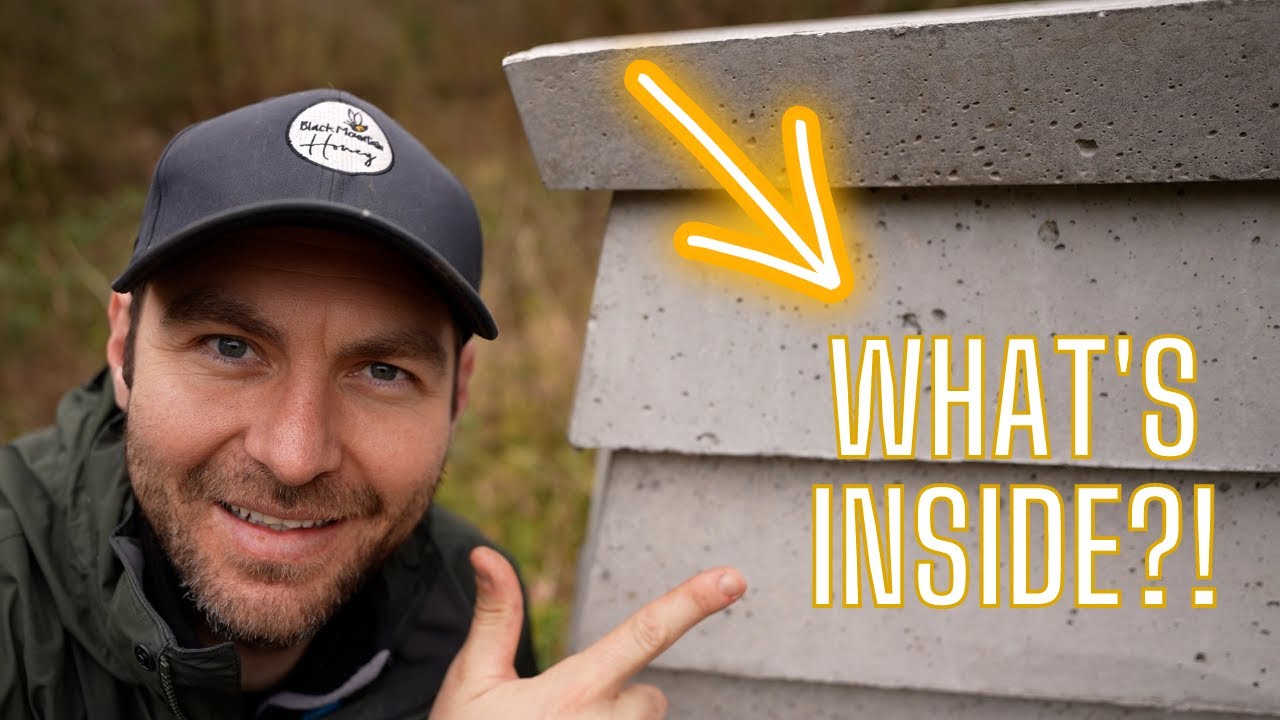
Right, it's about 9 o'clock at night. Uh, it's been a very, very busy Sunday, but I just couldn't resist giving you a real snapshot into the bees that are in this hive here. That's right, I've got my bees finally into my stone concrete hives. I've only filled one of them at the moment. I will do a split. I've still not worked out how to use a crown board in them, but I just wanted to kind of bring you along on the journey and give you that snapshot to say, right, today we've got bees in the stone hive. I also need to clear up one little error that I put on the previous video. So when I spoke to Ross about it, he said he does use perlite in the mix, so he makes the concrete as insulative as it possibly can be. He swears by these hives. I don't know if they work. I'm really excited to try it. I'm not going to listen to what other people say. I'm going to give it a go for myself, and I'm going to use my own experience to inform other people. I'll open the colony up here. At the moment, there is a glaring error with what's going on down there. I'm going to fix the Sharing error tomorrow, but for the time being, all you need to know, I've got a stone hive that's built out of concrete and we have some bees in it. Right, so there is no denying it, it is very difficult to get the roof off. Absolutely weighs a ton, really very heavy. But the fact that I've spoken to Ross and he's told me that it's got the perlite in the mix here has given me a little bit more comfort to go ahead and actually put some bees in it. And I'm really, really interested to see how they get on. I've given them a very, very strong double nuc of bees on Langstroth frames, and the glaring error is that there's no crown board in there. So they effectively got a massive double brood void on top of them that I'm going to have to fix in the morning, because it is about quarter past 9 now on Sunday, which is great because it means that I can do videos so late, but it's also not so great because I've got work tomorrow. So I'm going to open these up. I'm not going to put a bee suit on. I'm completely stupid. They're all going to come up and sting me. You definitely need to watch that and stay till the end of the video. So I'm peering in now. I know I caught you with that little teaser, didn't I? Here's the first one coming to get me, and I'm looking in here now and they look really good. It's a really nice strong colony on Langstroth frames, which are so much better than National frames, but nobody uses Langstroth, so we are stuck with the National. I'll stop just filming me looking in. I'll give you a look inside here now. So I just love the design of these concrete hives. They are so, so cool. Really industrial, rustic concrete. I know, I'm just being a complete tease. I'll get over the top and I'll show you these bees. So there we go, nice colony of bees on Langstroth frames. Got a frame feeder in there as well. They seem relatively content. I know you can't really tell a lot from just the bees clustering up like that, but I need to work out how I'm going to fix a crown board on here. Probably just going to end up getting a piece of ply and putting a piece of ply on there And it'll look a little bit unsightly from the top, but I do need something to work that out. Or I'll just go ahead and I'll put the roof directly onto them and I'll just move the other sections as well. But sorry it's taken so long, lots of people were interested in this one. The bees are coming to get me now, I don't want to get stung. We'll call it a day there. So I'm going to kind of tempt fate a little bit and try and talk for a bit longer. It's very interesting coming up to your apiaries late at night. I don't always get to do it, but it actually tells you a lot about some of your colonies. The ones that have not got enough room will be clustering outside the entrance. The ones that are generally just really, really horrible will come out and sting you, which is a colony over there that are just horrible. It's actually the checkerboard colony. I walked past them, active entrance, and they battered me. So it's an easy decision for me now knowing, well, that's a horrible colony, really not a good queen, going to requeen that colony at some point. Whereas other ones I've got really light activity, they're not stinging me as much. Doesn't mean that they're not bad colonies, but the ones that are stinging you are definitely bad colonies, so it's quite easy to identify which ones to cull. But I'm really happy with this. Going to be a very, very simple method to get that crown board on. I'm going to overwinter 2 of these this year in this apiary, which is probably my most challenging apiary for overwintering. You get heather honey, which isn't the best. I know some people do say you get dysentery with heather honey, but the problem that you do get with heather honey is that it's very high moisture content, And then the other problem that we have up here is the altitude. Very high up here, we're about 950, 960 feet, which means that you get very, very cold, very wet winter— ah, which means you get very, very cold and wet winters. I'm closing them up. That's the video done. Good night, everyone.