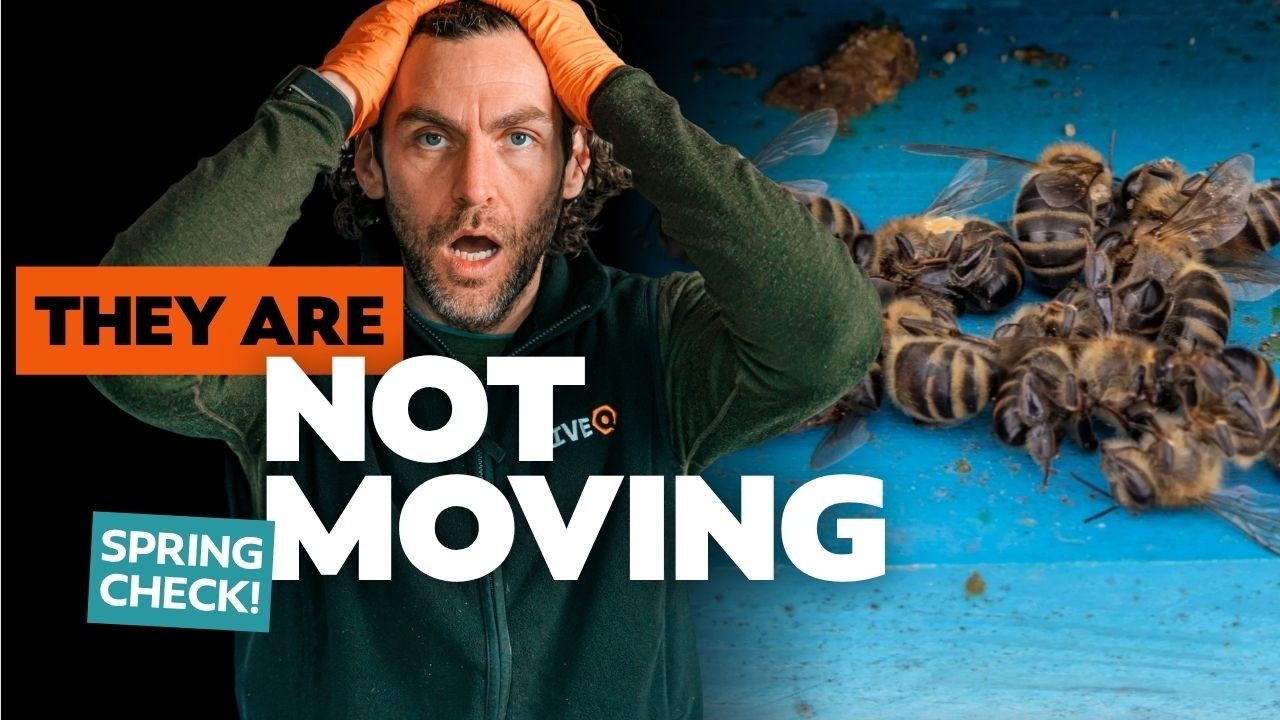
In this instructional video, Laurence Edwards explains that large piles of dead bees observed in front of a beehive during early spring are usually a normal consequence of winter bee mortality. He describes how winter bees, which number 5,000‑10,000, die off as the colony transitions to spring, and how undertaker bees normally remove corpses unless the hive sits on a hard surface (roof, concrete, tarmac) that causes the dead bees to accumulate visibly. Edwards advises beekeepers to assess colony health by checking hive weight, frame population, and food stores, but warns against opening hives for a full inspection in January. He outlines the visual cue of seeing ten frames full of bees versus empty frames as an indicator of colony condition. The video also mentions his recent £12,000 investment in high‑end camera equipment to improve video quality and includes a brief plug for a related video on performing a pre‑emptive Demaree split to prevent swarming.
Chapters
Do you have a dead pile of bees in front of your beehive? In this video, I'm going to tell you why you probably shouldn't worry. I fully understand it, a dead pile of bees in front of your beehive never looks good, but what you need to remember is that bees, when they're overwintering, all of those winter bees will die as they transition into spring. It's just what happens with bees. They might go into winter with 5,000 to 10,000 bees. Their job is to get that colony through the winter, keep the queen warm, keep whatever small amount of brood there is warm, and then as they transition into the new season, the old bees will die off and the new bees will take over. So if you think about it, if you've got 5,000 bees going into winter, every single one of those bees will be dead by By the time you get to May. That is a lot of bees. That's going to be a big, huge pile of dead bees. Now normally, depending on how you have your stands, those bees will fall down, they'll go into the grass, and you generally won't see them. Undertaker bees as well, bees that will go out and take those dead bees away. If you get nice warm weather, the bees will fly those dead corpses away and discard of them and then come back to the hive. However, if you're like me and you've got a colony of bees on a roof or anything with a hard-standing surface, so a roof or some concrete or Tarmac or anything like that, you will see a buildup of dead bees in front of your hive at certain times throughout the winter. So I always find it, we get into spring, it's like 11 or 12 degrees, the bees are out, they're flying, and then I come back down later on in the evening and I see lots of dead bees outside the front of the hive. And I said at the beginning of this video, there's probably nothing to worry about. This is normal. That's not to say that there's always nothing to worry about, but I would say 9 times out of 10, if you're seeing what you're seeing on this footage here, There's generally nothing to worry about. The clue and the big giveaway to see if anything's wrong with your colony is to take your frames out and do a full inspection. Do not do that inspection in January. There's no good that can come from it. Just cross your fingers and hope for the best. When you're checking for weight, you're seeing if they've got enough food to get them through, you're thinking about putting fondant on, you can lift the roof off and see what the colony is looking like. If you open it up and there's 10 frames of nothingness, then you probably do have a bit of an issue. But if you open up the colony like I've done here and you look inside that colony and you're seeing 10 frames of bees, then chances are those bees are just winter bees that are being replaced by the younger spring bees that are coming through the system. I hope you like this video. I hope you like my new camera. I have invested £12,000 into cameras and videos to make sure you get the very best videos on YouTube. If you want to see what my videos looked like before this camera, check this video out here to show you how to do a pre-emptive Demarest split to stop your bees swarming.