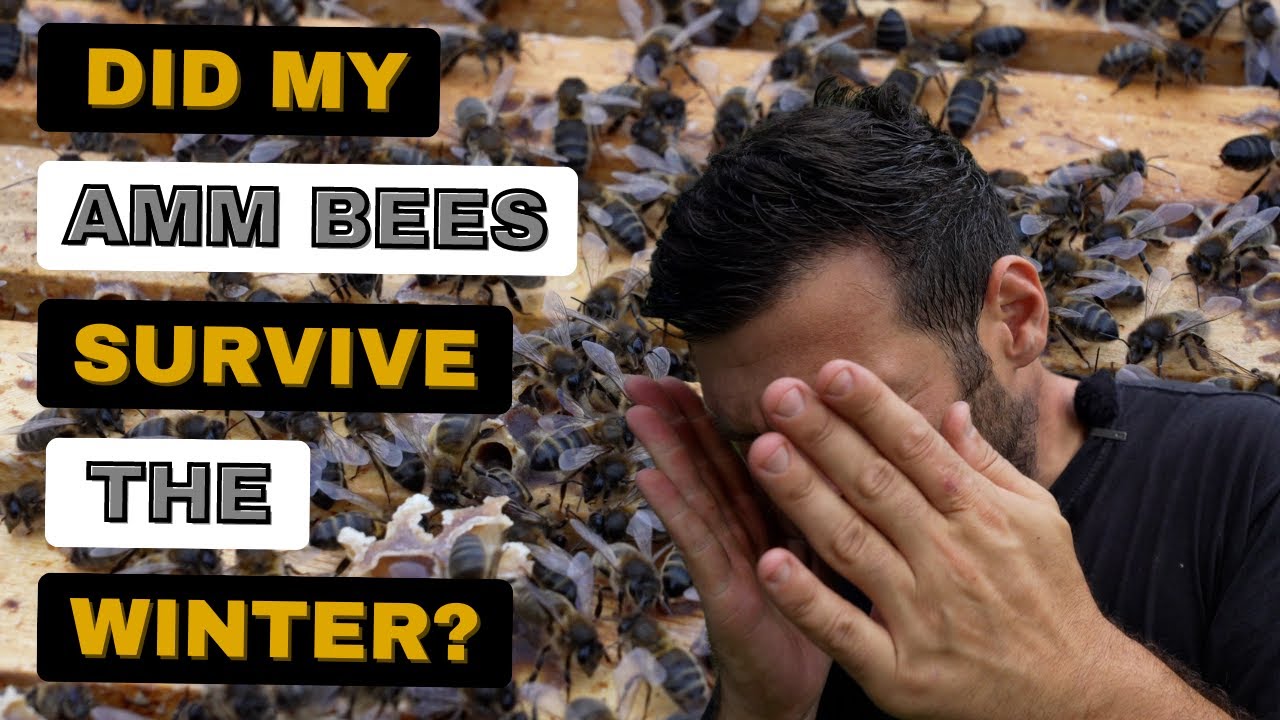
In this January beekeeping vlog, Laurence Edwards inspects his recently acquired native dark (AMM) colony, which he obtained from Jonathan Getty in Northern Ireland. He contrasts AMM bees with his production Buckfast colonies, highlighting breed differences such as winter cluster size, store usage, temperature activity, temperament, and coloration. Edwards documents the AMM colony’s overwintering condition, noting a reasonably sized cluster, unexpected activity at 8‑9 °C, and a dark appearance. He mentions a prior chalkbrood issue that seemed to resolve, expressing surprise at the colony’s vigor. The video includes close‑up footage, a candid moment of being stung, and a call for viewer questions for future livestream Q&A. Overall, the vlog serves as an observational update on AMM winter survival and sets the stage for ongoing comparative monitoring throughout the season.
Chapters
One of the things that annoys me most in beekeeping is when people have a really strong opinion on something but absolutely no experience on it. Up until last season, I had very limited experience with AMM bees until I got myself a queen from Jonathan Getty in Northern Ireland. And as promised, I'm going to give you regular updates on this colony throughout the season, and I'm going to compare it to my local bees, and I'm going to compare it to the Buckfast queens that we use within our production colonies. AMM have very, very different characteristics to Buckfast. AMM is a pure breed of bees. Buckfast is the hybrid. AMM tend to have very small wintering clusters, very frugal with their stores, maybe a little bit more susceptible to chalkbrood. Temperament can be very variable from super, super calm to quite aggressive. The ones I've got here do seem pretty good, whereas Buckfast, they have huge colonies, get through tons of stores, are generally quite gentle in the first generation. And then the obvious difference is the AMM over here are very black and the Buckfast are very orange. So if you want to know the differences between the two, I'm going to do a separate video just giving you a little comparison between the January stage of overwintering between the AMM and the Buckfast colonies. But in this video, we're just going to take a look inside the AMM colony, see if they've made it through to January, see what the cluster size is looking like, and give you some more close-ups of those beautiful dark black bees. I'm not going to be stupid enough to wear a bee suit at this point of year because obviously the bees aren't going to sting me. So let's get inside and see how they're looking. Ah, fuckers! Right, so I've got this on fully zoomed in, standing back about 3 meters without my bee suit on because they stung me in the face as soon as I got close. Thank you, AMMBs, that wasn't what I was expecting, although entirely my own fault for not wearing a bee suit. But look at that, they look very nice. I wouldn't say that's a particularly small overwintering cluster, and one of the benefits that you get with AMMBs is that they will work and continue to work at much lower temperatures than Buckfast colonies. So it's about 8 or 9 degrees today, my Buckfast colonies will be clustered up nice and warm. The poly does help keep them active, but it is known that AMMBs will be considerably more active in lower temperatures. Even the front of the hive here, I've still got a few flyers coming in and out, and it is quite a cold January day. So I'm really happy with that. We're at the end of January here, nice amount of bees covering the majority of the frames there. They're on a 14 by 12 box. Let me see if I can get in and just give you a close-up and show you just how dark these bees are. So you can see, very, very dark bees indeed. Nothing like my Buckfast colonies. Very dark, but I am surprised to see them so active, and I'm surprised to see such a prolific colony this time of year. These bees went into winter and they didn't look that great, had a little bit of chalk brood, and I was worried that they were just going to dwindle away. But they seem to have made a remarkable comeback, and I'm really excited to see how they're going to get on throughout the season. So there we go, that's a snapshot of my AMM colony. I'm so excited and so impressed to see how well they're looking. I'm really looking forward to this season, seeing how these AMM bees do and comparing them at all times to my Buckfast colonies. If you've got any questions, stick it on the link below, ask me a question, and I'll do my best to answer it in a live stream.