Do My Bees Need Feeding For Winter: Stick Or Twist?
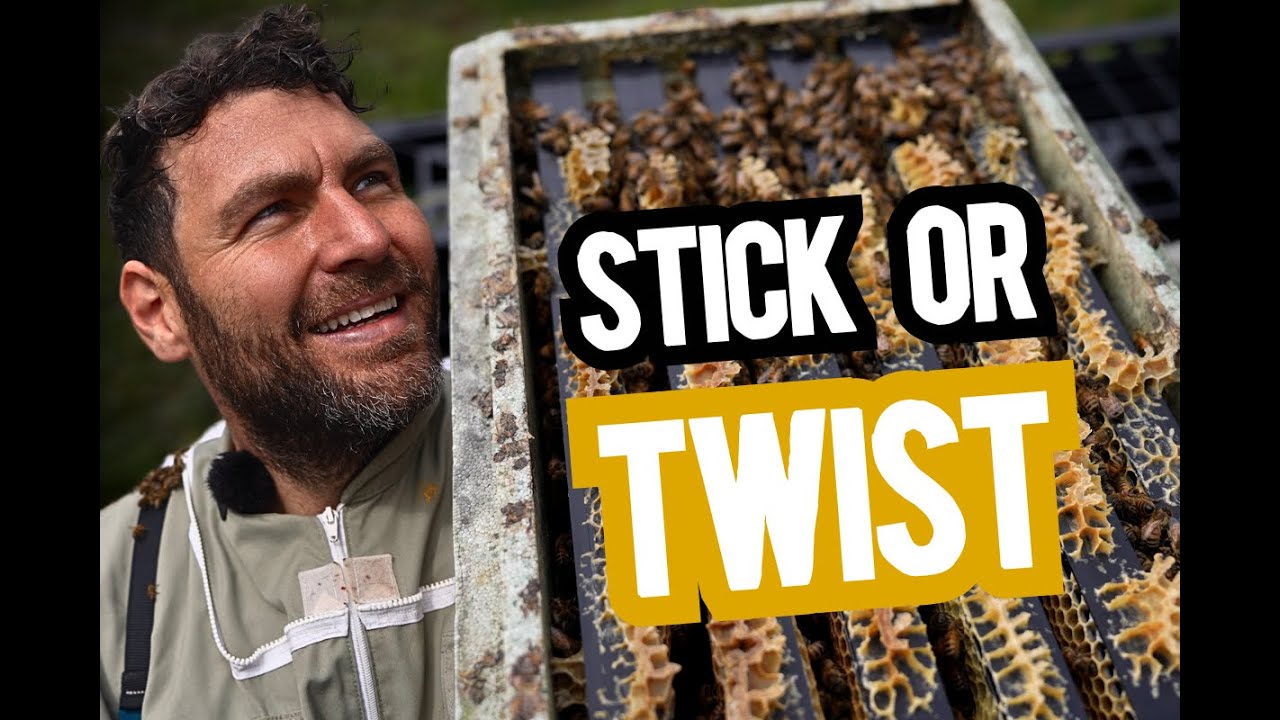
Laurence Edwards shows how to weigh bee colonies with a luggage scale to decide if they need winter feeding. A hive under 8 kg likely needs help, but weight alone doesn't tell the whole story: you need to open it up and check for stored honey, brood, and the queen. He feeds 1:1 syrup early season, switches to 2:1 after mid-September, and uses fondant as backup.
Chapters
Today I'm going to weigh some colonies of bees and show you inside so you can get an indication of what weight is good and what weight is bad. Probably the number one question that I get around this time of the year is, when should I feed? What concentration of syrup should I feed? How heavy should my bees be going into winter? And it's one of the most difficult questions that I can ever answer really, because Not only is it subjective in terms of some people like their bees to weigh like a little bit more, but it's also very relative to kind of how strong you are. Like, what do you deem heavy to be? So I say to people, well, lift up the box and if they feel too light, give them a feed and lift up the box. And if they feel too heavy, you don't need to feed. And they say, well, that's like, it's very relative to your ability to lift up a box. So I thought I'd go a little bit more scientific, as scientific as you can possibly be, and actually lift up some of the boxes. Now I've got 2 really good examples here. They are on similar-ish size poly boxes, but the difference between the weight in the poly boxes is negligible. But I've got some poly boxes that are completely full of bees and full of feed, and they're probably at their winter weight now. And I'll be able to lift it up and say, right, I'm happy with that as a winter weight, or I can add a little bit more feed in. And then I've got a couple of colonies up here that I've just been feeding fondant because I ran out of feeders, and I'm due to switch some of the feeders over and give them their feeds today. They are considerably lighter than the ones that have been fed syrup already. And what I'll do in both of those colonies is I will weigh them and then I'll pull out some of the frames and I'll show you why they look so heavy. And as I said, all of these nucs will weigh within plus or minus half a kilo of each other, probably a smaller range than that even. It gives you an indication if you want to get yourself one of these luggage scales from Amazon, get anyone, they all literally work. This one here goes up to 50 kilograms. And then all you do is you ratchet strap up your hive, And you're just gonna pull it up like that, and then you'll be able to see what's good, what's bad, what needs feeding, what doesn't need feeding. And hopefully it gives you some good advice to get your bees through the winter without the requirement to feed emergency fondant. Let's get my veil on, let's go and do it. Right, so this is a colony that I'm gonna start with here. And the first thing I'm gonna do is I'm gonna put that ratchet strap on and I'm just gonna lift it up. Now it's interesting, that one, 'cause I, I thought that was gonna be a bit heavier than it was. So maybe we'll do like a medium, A heavy and a light one. But if I came up to this colony at this point of year, I would lift that up and I'd say, right, that's kind of almost exactly where I want it to be, but a little bit lighter. It's not ready for winter yet. It definitely needs a feed. And, you know, previously when I've said that to people, they say, well, how on earth am I supposed to know what that means? So let's have a, let's have a little go with the unit here. So really, really simple. You just turn it on. It's already calibrated for kilograms. And then all I'm going to do is— there we go— get that open, lift it up. And this isn't like a perfectly neat solution. It's not going to lift it up like really, really cleanly, but I will be able to lift it off the ground and I'll be able to show you the weight on that there. So, you know, jumping around a little bit, 11.36 kilograms. Show you that on the camera there. So 11.36, there we go. Right, so let's open that up. This is like a standard Maysmore with a feeder. Let's have a look at what 11.36 kilograms looks like with bees inside. And if I had to have a guess, I would say we're going to see a little bit of stores, we're going to see quite a decent amount of brood, and we're going to see a little bit of empty space in there as well. I think we're going to have a complete mix. If that was like 15 kilograms, I'd be thinking, right, we're going to see lots of stores and not that much brood. But let's get inside and see what 11 kilograms, 11.5 kilograms looks like on a Maismore or a Beers Honeybees nuc. So you can see empty feeder, the bees have been taking that down. Bees up in the feeder, they're desperate for a bit more. I'm guessing we're going to see a good 6 frames of bees. What I notice here as well, really well propolised down. It's worth noting at this point as well, I'm only opening this colony up to show you. If you're doing this in your own apiary, don't go in, don't look, you don't need to. September, You never need to be going into your colonies at all, doing this just for you. But they are really well propolised up. So sorry, bees, I'm gonna be breaking all of those seals that you've made. You can see we've got the Apivar strip in there. Just pop that out for the time being 'cause it will help me get these strips out, or get the frames out, I should say, without breaking anything. You can see we've got a few dead bees on there as well. So being super, super gentle here, really trying my best not to roll any queens. So, as suspected, decent amount of stores, but in the middle there, quite a decent amount of empty space. Bit of pollen going in, no brood whatsoever. I said this on one of my channel member exclusive videos: I wouldn't worry about not seeing brood at this point in the year. I've been in previously, and I've checked to make sure that all of my colonies have got queens about four weeks ago, so nothing really should have changed at that point, and. I'm hoping, you know, that we're gonna see a queen in here, we're gonna see brood, but if I don't see any brood, I'm not worried and I'm just confident that the queen is having a little bit of a break after laying up all of those winter bees. So there we go, next frame. Lots and lots of stores, decent amount of brood as well, but again, you can see, and I'll just give you a closeup on that camera up there, lots of space, lots of space that's available for the bees to fill with stores. So next frame. That is a frame of foundation that's not been long in there, and look at that. You can see the bees are working. If you want an indication that there is a flow on at the moment, look at that frame. They are completely intent on doing one thing and one thing only, and that is putting feed away in this frame here. Look, they're just not fussed. That is amazing. I don't think I've ever seen a frame so intent on gathering stores. Brilliant. So good, good to see that there is an ivy flow on. It means that I don't necessarily need to feed this colony that much in order for them to get up to weight. It's the 23rd of September at the moment, so we've still got a little bit of time in order to feed syrup if they need it. But for me in North Wales, the weather looks so, so poor. Real, real shame. It's about 13 degrees here today, massive flow on as you can see here. The next 2 weeks just look like torrential rain, so the bees aren't going to get that opportunity. So whatever happens, I will give them a drop of 2:1, and anytime past middle of September, I only use 2:1. I saw a video the other day saying about feeding 1:1, and you can feed it all the way through the year, even up until the very end, kind of getting your bees ready for winter. And I just thought, no, that's really, really bad advice for the UK. Might work elsewhere, definitely doesn't work in the UK. Just to recap the technique that I use, take my honey crop off, Apivar strips in middle of August, Feeders on, give them 1:1 feed if they need it for about 4 to 5 weeks. And then as we get through to the middle to the end of September, I switch over to 2:1 for the final feeds of the year. Works really, really well. Doesn't give the bees a huge amount of work to do late on in the season, but it means that you're stimulating the queen to lay by simulating a late season flow with 1:1 syrup. And that gives you kind of the best of both worlds. So next frame, you can see again, Not a huge amount of stores on this one at all. That is a very, very light frame. Good to see though, you can see you got eggs in that corner up there. And this is why this colony here isn't weighing kind of like your 15 kg, it's weighing 11 kg, 'cause there's quite a lot of frames in there that don't have the correct amount of winter stores. And again, exactly the same. So brood on that frame. I'm not going to start shaking frames off. Lots of brood, But hardly any stores whatsoever. So last frame there, frame that definitely needs cycling out, is just a super frame. And there we go, I found my queen. Didn't have to worry about her. Very, very good queen, this one. Clipped wings, lots of, lots of eggs in this frame as well. So overall, I'm really, really happy with this colony. Very strong, exactly what I would expect to see, maybe a touch light. Maybe I'd expect them to be a little bit heavier at this point in the year. Really, really easy to fix. So I'm going to put this one back together again, being super, super careful not to squish that queen. You can see bees are pretty chilled out. This is like the worst time of the year for bees. If the bees are going to show any aggression, it's at this point in the year if you're not feeding them. I find once you start to feed them, they chill out a bit. Don't forget to put your Apivar strip back in. I like to just kind of let it fall back in like that. You never want to push it down, just let it fall. There we go, Apivar strips in. So the big question there, how much feed would I use in this feeder? I've got a BS Honeybees feeder here and I'm using invert syrup that's not going to go off. Really simple, I'm going to fill it up to the top. That colony there is a big colony of bees, lots of mouths to feed, lots of brood being laid. I can fill that one right up to the top with no fear that I'm going to overfeed this colony at all. Really careful at this point in the year, although there's a flow on, you don't want to spill any of that syrup, so don't take it all the way to the top. That there is about perfect, and they will take that down in a matter of hours. So there we go, hive number 1, 11.3 kilograms, and as you can see inside, there was lots of space, there was lots of brood, and the bees were on a flow. I've rimmed that feeder, I've gone all the way to the top, and if you're weighing a colony and a nuc like that, I would suggest you do the same. Right, let's go and weigh one of the colonies that have been fed fondant. They're going to be much, much lighter. Right, so next one. This one here has been fed fondant only, and before I weigh it, I'm going to lift it up, and I would say that is dangerously light. I'm lifting that up and I'm thinking, wow, like, I'm hoping that they're alive in there. They will be alive because I've been checking them, but that is about as light as you would possibly want it. So what I'm expecting to find in here Is much angrier bees. They're on the brink of starvation, and that sounds really bad. They're not on the brink of starvation because I've been feeding them. They've got fondant, but there's nowhere near enough stores in here to get these bees through the winter. I'm expecting to see a limited amount of brood. There'll definitely be some brood in here, but nowhere near as much as the colony over there that's been well fed. And then I'm expecting to see tons and tons of space, loads of space, loads of empty cells. This one here needs the biggest feed possible. This one here will need multiple feeds. If I had to have a guess of how much that weighed, considering that one there was 11.3, I'm gonna say this one here is gonna weigh like 6 or 7 kilograms. That much of a difference. So there we go, 7.5 kilograms. So it was a little bit more than I thought, but you can see there, that is a dramatic difference. That is 4 kilograms less than the one that we've had over there. So let's get inside and see how these ones are getting on. So you can see from this one here, I ran out of feeders and I ran out of roofs, but it's fine. I know that this colony here will be in an okay situation. You can see that they've eaten all their fondant there, tiny little bit of fondant left. So I've been keeping tabs on that, making sure that there is sufficient food for them. Just gonna place that over there, keep it out of the way. I've got a feeding eke on here. Remove that eke as well. And I'm going to take out the Apivar strip. And the first thing you'll notice on here is there's nowhere near as many bees. Nowhere near as many bees because the queen hasn't been rearing that many bees because she's not been stimulated by a flow or a fake flow by feeding 1:1 syrup. They've been getting fondant. Fondant doesn't do the same thing as 1:1 syrup. They see fondant as like their stores. They don't really move it around that much. They will take solid feed like that and put it downstairs, but it doesn't simulate the flow in the same way that feeding 1:1 does. So you can see nowhere near as many bees. I think over here even we've got a little bit more fondant. What you'll see over here as well is a little bit of water ingress with my silly roof that I've made there, so we'll fix that at some point as well. And what you would notice in a smaller colony like this is that they're not able to manage the condensation quite as effectively either. But a very nice calm colony of bees, so we're happy about that. So you can see they've got enough feed to keep them alive, but lots and lots and lots of empty space. Like I'm talking huge amount of empty space there. And again, look, still got brood, so that's good to see. Nice pattern. Got eggs over here as well. You can see that eggs up here. Show that to that camera as well. Decent amount of brood. And again, a little bit of brood there. Look at all of that empty space around here. We've got the brood in the middle. I'd want to be seeing stores all the way around the edges there, but I'm not seeing that at the moment. I'm just seeing lots and lots of empty space. So you can see it up there, tiny bit of stores. I want to see that all the way around at this point in the year. Very light frame, that one. Like I say, they're bordering on starvation. This one got the queen in there. Queen's looking good. Nice plump queen. Lots of brood. Few eggs over here as well. So the queen's in good working order. Again, very similar. You can see not that much feed at all. I know I'm going on about it. Completely empty that frame. And hey, take a look at this. That went in 4 weeks ago and they've not even bothered to draw it out fully. They're starting to draw it out now because there's a little bit of a flow going on. But that for me, what they are, they are close to the brink there. I'm not worried about that. Like, I've been coming up here weekly, I've been taking a look, I've been seeing that there's bees in here, and I've been applying fondant. You can see they still had a little bit of fondant on there, knowing that I was going to come back up and put these feeders on. So I'm going to do that today. What I'm going to do with this frame here as well, I'm just going to help the bees along by putting that into the middle. And I know when I come back next year, that will be completely fully drawn out. More than enough bees to do that. If you want to know where I got that tip, Murray McGregor, the oracle of beekeeping, he showed me that one, saying how you can get perfectly drawn combs this late on in the year, even at low temperatures. Single frames like that, no problem going into the middle of a small nuc. Certainly knows his stuff. So I need to go and find a feeder from somewhere. I want to find a colony. So I've just gone to this colony here. You can see absolutely jam-packed full of bees. I've hefted that one up. That has got tons and tons of stores in it. So all I'm gonna do is I'm just gonna switch that one here over to fondant, and I'm gonna take this feeder and plop it onto this new one. I've tapped all of the bees out of it, so there's no risk that bees in here will go and kill my queen here. Place that feeder on, make sure that the plug is well and truly in. Before I do that, I'm gonna remember to put my Apivar strip back in. Still got about 3 weeks, 3 and a bit weeks maybe of that one. And I'll come back in around the end and take that off. Let's get some syrup into these bees. And again, you're wondering how much I'm gonna put in here. Filling this one right up. A little bit of an angle, this one, which is annoying. Wish that one was flat, get more syrup in. There we go. They will be very, very happy bees. So I can close this one back up now. I'm not going to try and lift that up and show you how much that weighs now because all of the syrup will fall out. Believe me, I've, I've done that before. Don't, don't do it. It's very annoying. But that will have increased that by, I reckon, by a few kilograms, probably a couple of kilograms worth of feed that I've put in there then. So that one's fixed. What I'm going to do here, the bees that are in this fondant, I'm just going to shake those out. And then on the colony over here, look at that lovely colony, just going to place that eke on there. And I'm not going to bother feeding these for the time being because there's a flow on at the moment and these were really, really heavy. So this is the final one I'm going to show you here. I'm going to heft it first and I'm feeling that it's like probably the heaviest one that I've got here, but I don't think it's that much heavier than the first one that we looked at. The first one was 11.3. I'm guessing that one there is going to maybe be like 13. So we'll get inside of that one, we'll weigh it first, but what I'm expecting to see in that one is a bit more stores, decent amount of brood, very nice calm bees, packed full. Hopefully we'll see the queen, hopefully we'll see some brood as well. Let's go on and weigh it. I'm guessing, if I had to guess, like I say, probably 13 kilograms this one. Maybe 12.5. But definitely heavier than the other one. And this is what this video is all about really, is calibrating your ability to see what things weigh. Now if you'd have said to me at the beginning, how much do you think that beehive would weigh? There's no way I would know that it was 13 kilograms. I'd be like, well, I don't really know, it's just like heavy enough. But now that I know that the other one was 11.3, I'm thinking, okay, well that's, that's kind of like average. We've had a below average one and I'm feeling that one, I'm thinking, okay, I think that's a little bit more. So let's have a look, see how well I've calibrated myself today. I'm going to guess about 13, 12.5, 13 kilograms for this one. So there we go, 13.21 kilograms. Quite happy with that as a guess, I have to say. But it really is that easy being able to kind of work out what's lighter and what's heavy once you give yourself a little bit of a baseline. And I'm not telling people to go into your colonies, do not go into your colonies at this point in the year. I'm doing this so you can have a rough idea Of what's a good weight, what's a bad weight. You can see the range that I've got here. One is 7.5 kilograms, one was 13 kilograms, so not far off double the weight. The 7.5 kilogram one was way underweight, shouldn't be that low. This one here I would say is about perfect. So even the other one was slightly underweight, I'd want to see a little bit more stores in it at this point in the year. I do think this one here is about exactly where you want to find yourself towards the end of September. Let's get inside, don't take a look at this one. So you can see lots of bees up in the feeder here, different feeder on this one, this is a Mazemore feeder before they increased the price by about fourfold, and super, super calm. I always find there is correlation between how well the bees are fed and how calm the bees are. You do need to start off obviously with nice calm bees, but if you have nice calm bees, if you feed them well, you'll end up with something looking like this. So this is something that none of those other 2 hives had, a frame of stores, a frame literally dedicated to stores. I'll show you up on that camera there, probably 90% full of stores. You've got a little bit in this corner, top right-hand corner I think if you're looking at it on the screen, but apart from that we've got a properly weighty frame of stores there. Really, really nice to see. So next frame, we've got a little bit of stores on there again, decent amount of stores, and we've got Eggs, brood in all stages, and lots of, lots of eggs being laid. Really, really nice to see. This is interesting, like we're working towards the middle of the colony here. You'd expect to see a little bit more brood towards the middle of the colony. This frame here is getting cycled out next year as well. That's a very, very old frame, but no brood in the middle there. So these bees have probably laid up their winter bees, tons of bees in here, and they are just getting ready to Backfill now. I think the frame next to it is also a frame that needs to be cycled out, just looking at the top of the frame. And on this frame here, lots and lots of brood, really nice frame of brood. And as we said, covered, nice ring of stores around the edge as well. That, that's like a textbook frame, I would say. That is kind of what you want to see on all of your frames at this point in the year. If I saw that on every single frame, I'd be really, really happy. Next one, decent amount of pollen, not a huge amount of brood on that one, although there are some eggs on that one, which is good to see. And again, a lot of stores on that one there. Really, really happy with that. And then the final frame, as expected, there's stores. That's all I'm seeing on that colony there is just stores, nothing else. And that completes that colony there. So what am I going to do with that colony? Definitely not going to feed because I'm looking at that and thinking, well, they've got a little bit of brood, there's hardly any open space, they've got brood in the middle, and then they've got stores, and then another little bit of brood. So they're already kind of trying to backfill in that area. And if I'm looking at that frame there, I'm thinking, you know what, I'd probably like to see a little bit more brood at this point in the year. So the last thing I want to do is flood all of that available space with stores Because they might want to fill it with brood, they might want to fill it with pollen. There is plenty of stores in there and I've got plenty of time still to come back, 2 or 3 weeks to come back and to actually go in there and top that one up. So 13.5 kilograms, I'm not touching that one at all and I'm just going to quickly put that one back together again now. So I'm only human, I'm just like you. I've opened up that colony, I've seen brood, I've seen eggs, but when I'm putting a colony like that back together again, like, it's hard. Everything's getting squished next to each other. So what I want to do is I want to make sure that the queen is okay. So I did, I just had to go in there and find the queen, but you can see I found the queen there. She was on the outside frame, she was actually in the safest possible place that she could be. So there we go, there's the queen. If you are going into your colonies at this point in the year, just be super, super careful. My advice is do not go into your colonies. I'm doing this so you don't have to go in, but if you are doing it, make sure that you find the queen, make sure she's on the middle of the frame when you put it back in, and what I like to do is put it back in at the edge of the colony, knowing that there is no possible way that I can squish her. You'll see there she's on the middle of the frame. I'm going to get this one right back in at the edge of the colony now because that is the safest possible place that I can put that queen. I can't compress that frame any more than it's already compressed, and what I'll do is I'll just move a couple of frames up next to it like that, and then I'll put the final Now it's going to be very, very difficult for me to not squish any bees at this point in the year, so I would advise shaking off that final frame, and you just want to kind of try and let the frame drop in as best as you possibly can. See how it dropped in there? If I'd have left the bees on there, the bees would have been squished. I'm going to clear up that edge. I'm going to put my Apivar strip back in, nowhere near where that queen is. Again, just letting it fall. Not trying to push it in, not trying to force it, and they're just going in through gravity, giving the bees a chance to move away, and then the feed is going back on. So I hope you found that useful. I'm off to do the rest of the colonies in this apiary now, and I'm doing that as a channel exclusive member video. If you're not already signed up for our channel exclusive member videos, there are over 40 videos on the channel membership page at the moment. I do exclusive membership videos giving people advice at certain points throughout the year to ensure that they get the very best out of their bees. Making sure the bees are healthy, making sure they're fed at the right time, making sure they don't swarm, giving the bees and giving you the very best chance to thrive as a beekeeper. We've got a wide range of membership options available, but the exclusive membership option is only £8.99 a month, and we've had very, very good feedback from all of our members saying it's really good value for money. So I'm gonna get on with the rest of these bees now. Hopefully that video was useful for you. It means you do not need to go into your colonies to see what's going on. Get yourself a luggage scales and hopefully you'll fall somewhere within a reasonable range, and it means you know what to do next.










