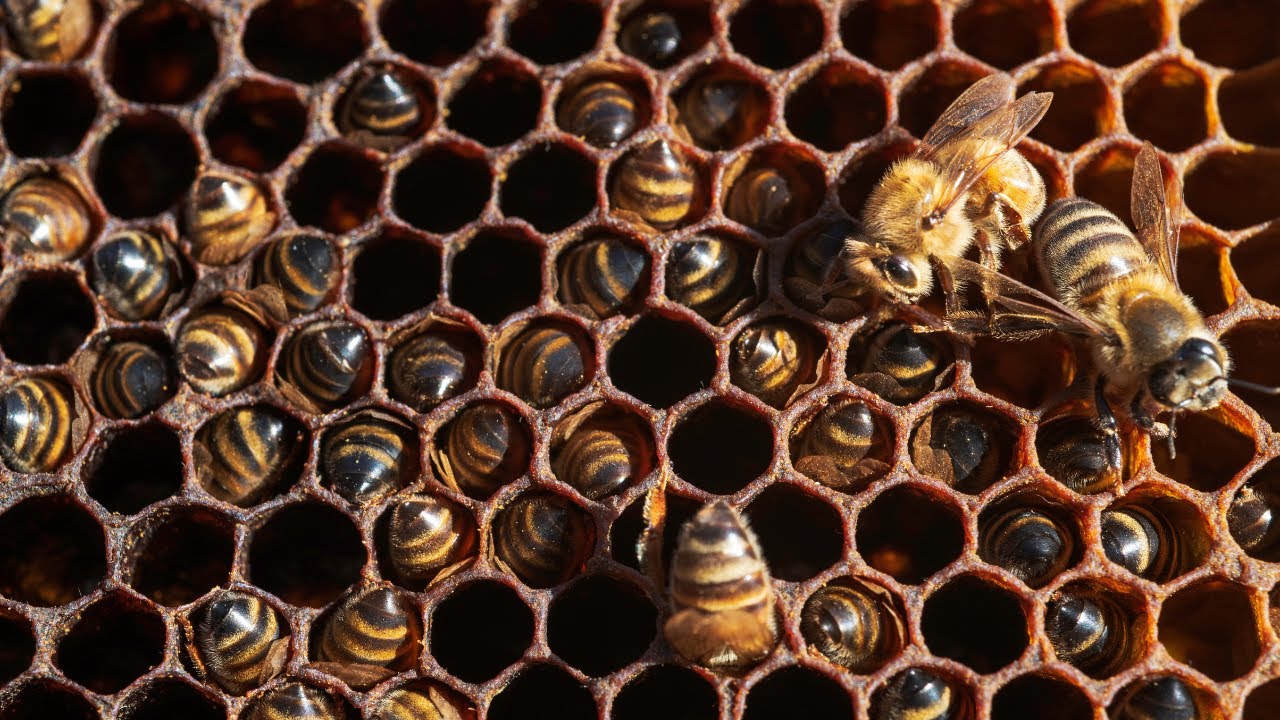
Laurence Edwards explains why UK honeybee colonies starve in March, not winter. Once brood rearing starts, honey consumption spikes and any cold snap or delayed nectar flow empties stores fast. Check hive weight weekly and watch for bees with heads deep in cells, the sign of starvation.
Chapters
Don't be that person that makes this huge beekeeping mistake. I've done this in the past. I'm doing this video so you don't make the same mistake. Luckily, it's a really simple one not to make, but unless somebody told you it, you definitely wouldn't know. So bees generally don't starve in the season. Very hard for the bees to starve unless you take all of their honey. They don't starve in the late season as well, so in the late summer or the autumn. They generally don't starve over winter as well. I know a lot of people say, well, the colonies have died through isolation starvation, and I guess I used to think that was a thing, but in my view it's not a thing in the UK. It doesn't really get cold enough for that to come into play, and if you're using a single national box or a single 14x12 or even a double national box, quite difficult for the bees to move away that far that they can't find it, especially when the temperature's not that cold in the UK. So you don't lose colonies through starvation through the winter either, and you'll be getting into January, getting into February, starting to heft your hives and thinking, wow, there's loads of weight still in these hives. I wonder if the bees are going to get through all of this feed. So you're hefting them in January, they're really heavy. You're hefting them in February, they're really heavy. Come to the middle of March and you're hefting them and you're thinking, the bees aren't going to get through all of this feed. I'm going to have to devise a plan to make sure that my bees get through all of that feed and I'm not left with loads of overwintered stores that I need to do something with. And then you think, well, the bees have got loads of stores, so what's the point in going back in March, checking them, hefting them, making sure that they're okay? Because I've hefted them and they're nailed to the ground and there's going to be tons of stores coming in in April in the form of new nectar. Then you go back to your apiaries and you find that loads of them have starved, and bee starvation is the worst thing in the world And it's really easy to identify as well in that there's not corpses, there's not rotting bees, there's just lots of bees with their heads down deep in the cell trying to get every last milligram of honey out. Bees starve in March. That's a simple way to remind yourself in the UK. Bees starve in March. So regardless of how strong and how big and heavy they are when you go and heft them in February or the first week of March, make sure you're constantly going Minimum of once a week, I would say, in March. Heft your hives, because as soon as that colony starts producing brood, the rate in which they consume the existing overwintered stores exponentially rises. And if you get a cold snap or you get a delay to the nectar that's going to be coming in, your bees will starve, they will be dead, and you need to start again. I've made that mistake, countless others have made that mistake. Don't follow suit. Double-check your bees, make sure they don't starve in March. If you found that video useful, please give it the thumbs up, hit the subscribe button. We've got loads more tips, tricks, and guidance on our beekeeping channel.