Drone Laying Queen Disaster - When You Must Let A Failing Bee Colony Die
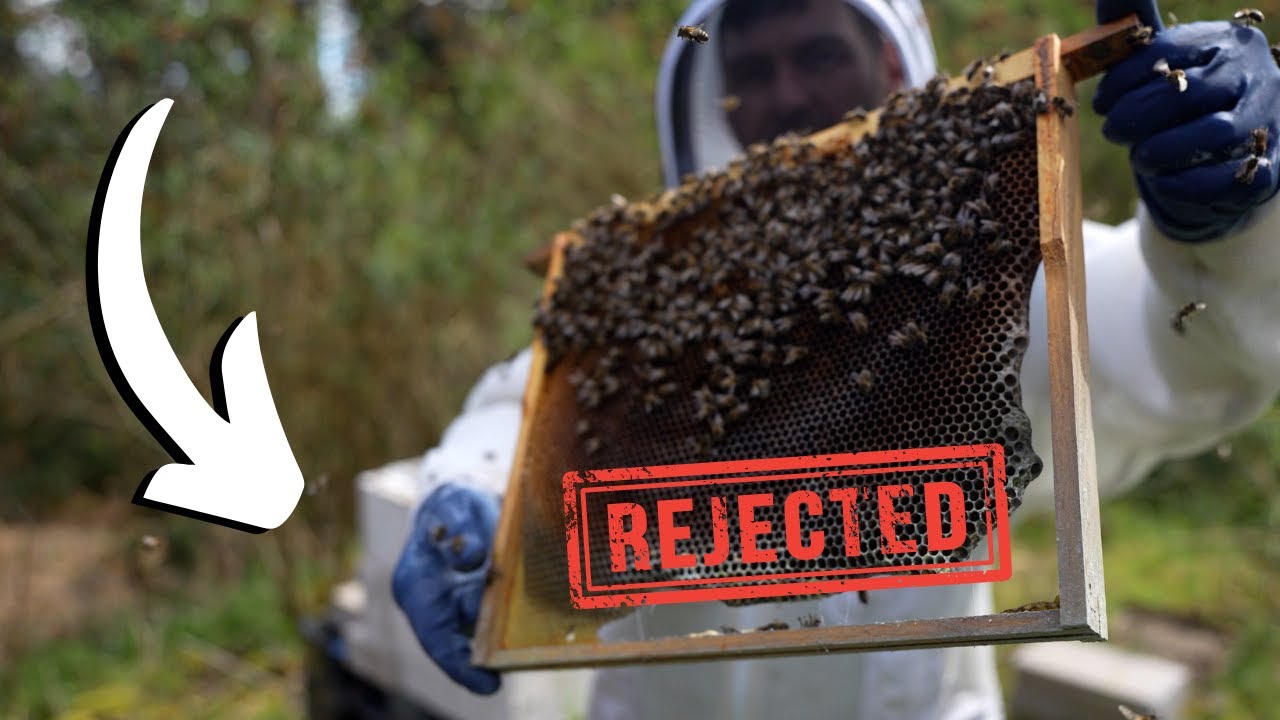
Laurence Edwards finds a colony with a drone-laying queen that can't be saved in mid-March. He shakes all the bees out and moves the hive stand so they'll fly to weaker colonies instead, redistributing resources without robbing other hives.
Chapters
So I'm busy in the apiary today, checking over all the colonies, making sure they've got food. Something is wrong with this beehive. Doesn't look like it, does it? A box completely full to the brim with bees. These guys aren't going to last for another 3 weeks. In this video, I'm going to show you why I'm going to shake them out, because the colony is doomed. We're down at the River Apiary. We're checking to see what the store situation is like, and the store situation is very, very good indeed. So much so that I'm a little bit ahead of where I really want to be at this point of the season. There's too much stores in the We're going to fix that in about a week's time. I'll do a separate video on that. But this colony here caught my attention. I opened it up, something was definitely wrong. There's too many drones in this colony, so I could not resist just cracking one frame out just to see if I could identify some worker brood. First frame I pulled out, I knew we had a drone-laying queen on our hands. And I just wanted to share it with you to show you that you can have a big strong colony like this Look at the size of it, 14 by 12, filling all of the frames, really strong activity at the entrance, loads of pollen coming in. You'd look at this colony from the outside and you'd think, you know what, that colony is doing so well. But in actual fact, it's doomed. The colony cannot proceed into the season because it's not got a viable queen. There's no risk therefore for me going through the frame, so that's what I'm going to do. I'm going to show you some of these frames, Full of drone brood, not a single bit of worker brood in sight. But there's a really important lesson here in that you look at all of the bees in here, I reckon there's maybe 10% of them are actually drones. So this queen here has turned drone layer, I would suspect, in the last 3 to 4 weeks. She's got all the way through the season. If I'd have kind of gone in and looked 3 or 4 weeks ago, not that I'd recommend that, you'd have probably seen lots of worker brood. However, coming into the season, they turbocharge that queen. They say, right, the season is upon us, lay loads of eggs, we're going to expand this colony. And at that point, the queen has failed. This will happen. There's nothing you can do to stop this happening. There's nothing you can do to fix this at this point of the year either. If this was, say, May or June, it would be the easiest fix in the world. You'd go through, you'd find the drone-laying queen, you'd kill the drone-laying queen, you'd add a new queen in, mated queen or a queen cell, And you just start again, and within a few weeks everything will be back to normal. In the middle of March, that's not possible. You're not gonna start going stealing resource from another colony. I'm certainly not gonna try and combine these up with another colony. So I'm gonna get in there, I'm gonna show you some of the frames, and then all we're gonna do is we're gonna shake these bees out and let them go into all of the other hives within the apiary. So this is what the colony's looking like from the top. 14 by 12, this is. They go all the way down. That is a box full of bees. I'll get you in nice and close. You can see there, no drones to be seen now. It's only because I spotted about 3 or 4 in a particular area, and I thought that is a little bit strange. And also, the entrance wasn't anywhere near as strong as all of the rest of the entrances within this apiary. Sometimes you just kind of pick up on these things as and when you go throughout your beekeeping career. I thought I'd take a risk on this one, pull a frame out. Lo and behold, we found a drone-laying queen. I'll pull out a couple of frames now and I'll show you what I mean. Absolutely chock-a-full now of drone brood. Every single frame looks like this. There's probably 7 or 8 frames of brood in this colony and they're all identical to this. No worker brood, lots of drone brood. There is no saving this colony. But as you can see, lots more drone brood there. I can't find the queen in here. I'm not going to bother going through. All I'm going to do is I'm going to shake out every single frame and let those bees fly into other hives. So I can just take these frames of bees now. I've got a couple of colonies here that are a little bit weaker than the other ones. I'm gonna go and shake the bees in front of those hives. A lot of the bees will return here, but a lot of the young bees, they'll just go to the closest hive. They'll be easily accommodated this early in the season, and it means that you can help boost some of the weaker hives while taking care of one of the duds. Just going through the frames, you can see dead giveaway there. They're trying to put themselves in some cells. Not going to be a viable cell because it's going to have come from a queen that's not got the ability to lay worker eggs. There is a larva in it though, but that will just turn into a dud queen. Nothing we can do in this situation. Again, you can see little pocket of drone brood. So here you can see the bees going up into that beehive. They're young worker bees, they'll be readily accepted at this time of year, no problem with them going in killing the other queen. Shake them out in front of your weak hives, boost the weak ones, kill the duds. So what's really important here is that you move all of the beehive, all of the stands, and everything from the original spot first. So I'm sitting back here now, I'll show you it in a sec exactly what I've done. I've completely removed the hive stand, completely removed the pallet, moved all of the beehives, And then what you'll find is that all of the young bees that you've shaken out in front of your weak hives, the young ones will go into the closest hive, and then all of the flies will gather up near to the nearest hive where the original beehive was. If you leave the original beehive in situ, everything pretty much just comes back to the original beehive. Don't make that mistake. Before you shake them out, completely remove the original hive from its stand, take the stand away as well, and then you'll see that all of the bees will go into the closest Beehive within the apiary. So that's what I mean, pallets away, hive stand away, everything's gone. The bees are flying, they're going to go into the closest beehive, which as you can see is just over here. So not too far away at all. Loads of activity in this apiary anyway today. Nice warm flying day to do it. You're boosting up those weak hives, getting rid of the duds. That's what you need to do at this time of year. So this is one of the beehives that I shook all of the bees out in front of. They'll make their way in as well. But as you can see, look how many good quality young worker bees there are there. There's no point wasting all of those bees. The colony's not got a future. You might as well make the use of those worker bees, shake them out, make good use of them.










