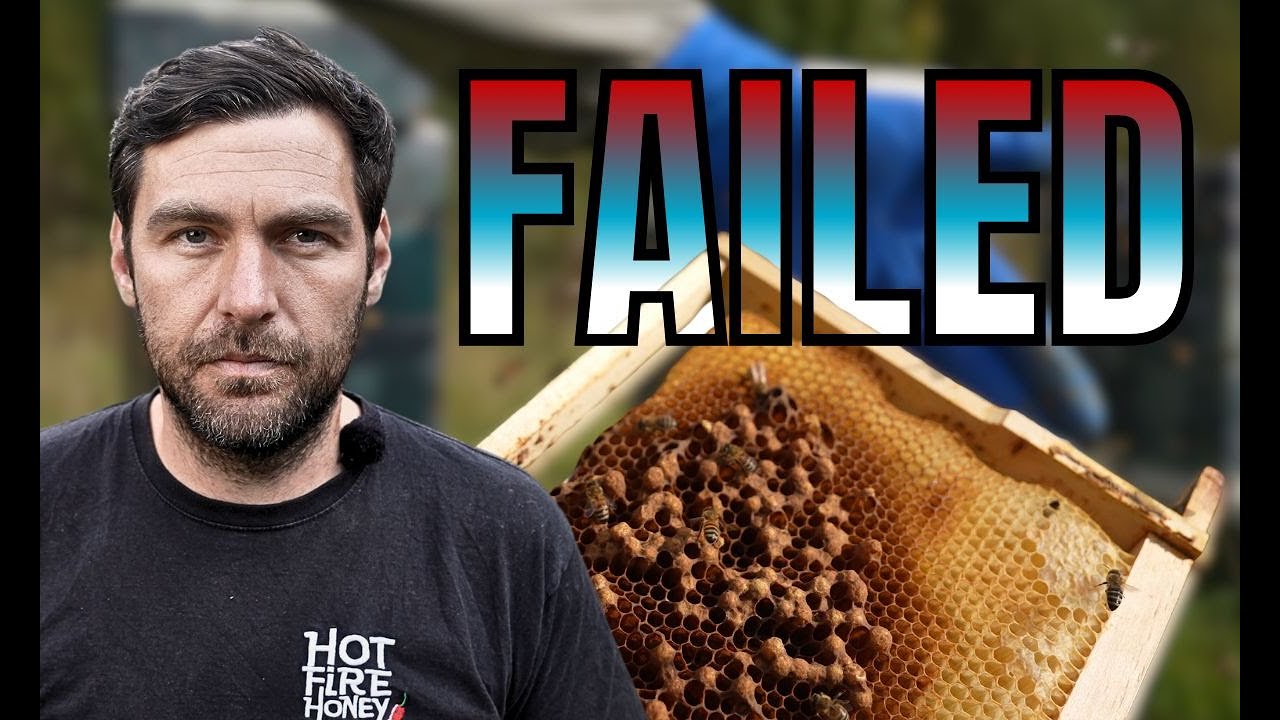
Laurence Edwards inspects a hive that starved over winter after a drone-laying queen failed to produce enough workers. He walks through the autopsy, shows how spotty brood and disease cascaded, then details the rigorous sterilization needed: melting frames with caustic soda and bleaching boxes to prevent foulbrood spread to other colonies.
Chapters
Today I'm going to show you my first dead out of winter. Let's get inside and see what's happened. So seeing this on the entrance here is never a good sign. Clear dysentery, possible Nosema, but you wouldn't know until you get it under a microscope. But as soon as I saw that, I feared for what was going on inside. Let's get inside though and take a look. Now you might be thinking, Apivar strip in there, I knew this colony was failing. This was a drone-laying queen going into the winter. I knew they were dwindling away to nothing, so I decided to leave it until it was a little bit colder and then just close the entrance up on these bees. And this is why you always need to look at all of those different factors as a collective. You look at that entrance and you think dysentery, you're thinking Nosema, you're thinking disease, you're thinking something's wrong. But I knew all along that it was a drone-laying colony in here, a drone-laying queen. And then once you get a colony that's a drone-laying queen, You don't have enough of the different types of bees in order to do all of the jobs. And then that can lead to dysentery because the bees are overworked, the bees are stressed, the bees are kind of like nipping out to try and go to the toilet when they've not really got the energy in order to do it 'cause there's not enough stores. That whole dynamic of the beehive collapses when the queen can no longer lay worker brood. So let's get inside, do a little bit of an autopsy, and show you exactly what is going on inside. Of course, if you're ever doing anything like this, autopsies, you've got a colony that's failed, apiary hygiene, colony hygiene is so, so important. So I've got my gloves on. I'm gonna seal everything up inside here. I've already closed the entrance. Nothing is coming in, nothing is coming out. Every single frame here will be rendered down, sterilized, caustic soda, send it down to Richard. He does all the cleaning of all of the nucs out for me now. It's brilliant. But he will melt down all of that wax, reclaim the wax, sterilize the frames, and then he'll clean up the box as well, dip it in some washing soap, to clean it down, then dip it in sodium hypochlorite bleach, very, very strong bleach, and then everything is good to use again. If there's one thing that you can do for me, if you see something like this, please, please, please do not reuse those frames. Do not just think, oh, it's a drone laying queen. There could be something more sinister going on here, and you just have to treat it for the absolute worst. If you treat all of your colonies like that, you will be on the safe side of disease, and it shouldn't come back to bite you hard when it really does matter. But let's get inside here and take a look. So cluster of bees over in this corner here. We've got some frames there. You can see the moisture just starting to set in on those frames there. That one will definitely get melted down. I say that one will, they'll all get melted down. Another empty frame there. Slightly annoying. Might have been— so you can see they struggled a little bit, these bees. There's not much stores in here at all. It does make me think that maybe they got robbed out and I left this one a little bit too late, which is frustrating when you're trying to do the right thing. So still no signs of any stores. You've got a bit of pollen in there. And here we go, this is the perfect identifier here. Let's give you a close-up on that camera. Spotty brood, spotty drone brood. That is an indication for me that we had a drone-laying queen in there. Really, really simple identification there. You can just see a few capped-over drone brood cells. Very, very easy to identify. So again, left that Apivar strip in there because I knew that this colony was collapsing, this colony was failing. You just see little things like that start to creep in as well. Tiny little bit of chalkbrood there, and I don't reckon that colony had an issue with chalkbrood, but as soon as you put these stressors in place, then things like chalkbrood, things like sacbrood, things like bald brood can come back and infect that colony, even if it is just a really mild infection. So looking at this colony here now, very, very easy to say what's happened. Drone laying queen, Colonies failed, not enough worker bees, not bringing in enough stores, and then they have starved. Now I closed the entrance on this hive a couple of months ago and they were still active and still flying in and out at that point. So the colony's not been robbed out. That was my big fear here, thinking, have I left this too late to close it up and the colony's been robbed out? But it hasn't. This is quite straightforward to me now. So I've closed it up in time and then the bees have starved, which is exactly what I wanted to happen. These bees were going to die. They were gonna fail. There was nothing that I could do to save them that late on in the year. But what I've done here by killing the bees on this frame here has prevented any potential disease spreading across the apiary. That is more important than saving a single colony of bees. So you can see there's still quite a few bees on here. Just wanna kind of like shake a few of those off and see what the brood's like underneath. Again, being really careful to make sure that I'm only brushing it off into the beehive. Don't want to be dropping these on the floor anywhere. Yeah, so it's classic starvation there, but it is as a result of a drone-laying queen. You can see the dotty drone brood around the corner there again. Let's just get that final frame out. You can see again, starved-out frame, bees starting to decompose a bit. And then if you look down into the hive as well, you can see big pile of dead bees at the bottom. So really, really important, seal this back up as best as you possibly can. Close the entrance, pin the entrance closed, ratchet strap it back up. You need to deal with that. That is a disease risk. Drone laying queen, closed it up in time. The colony starved. I've mitigated the spread of any disease, and it means that I can start again with a fresh colony inside here next year once I've done all of that cleaning, once I've made sure that the frames are safe and the box is safe to use again. Please, please, please get into a good habit of doing stuff like this. Do not reuse those frames. Do not reuse the box without any sort of cleaning. There is nothing worse than not treating your bees properly, not having good apiary or colony hygiene, and then getting the bee inspectors in and finding out that all of your colonies need to be killed because they've got AFB or EFB. Not what you want at all. This is the first step to making sure that you've got good apiary hygiene.