EP 5 - My First Nucleus - Do My Bees Have Chalkbrood?
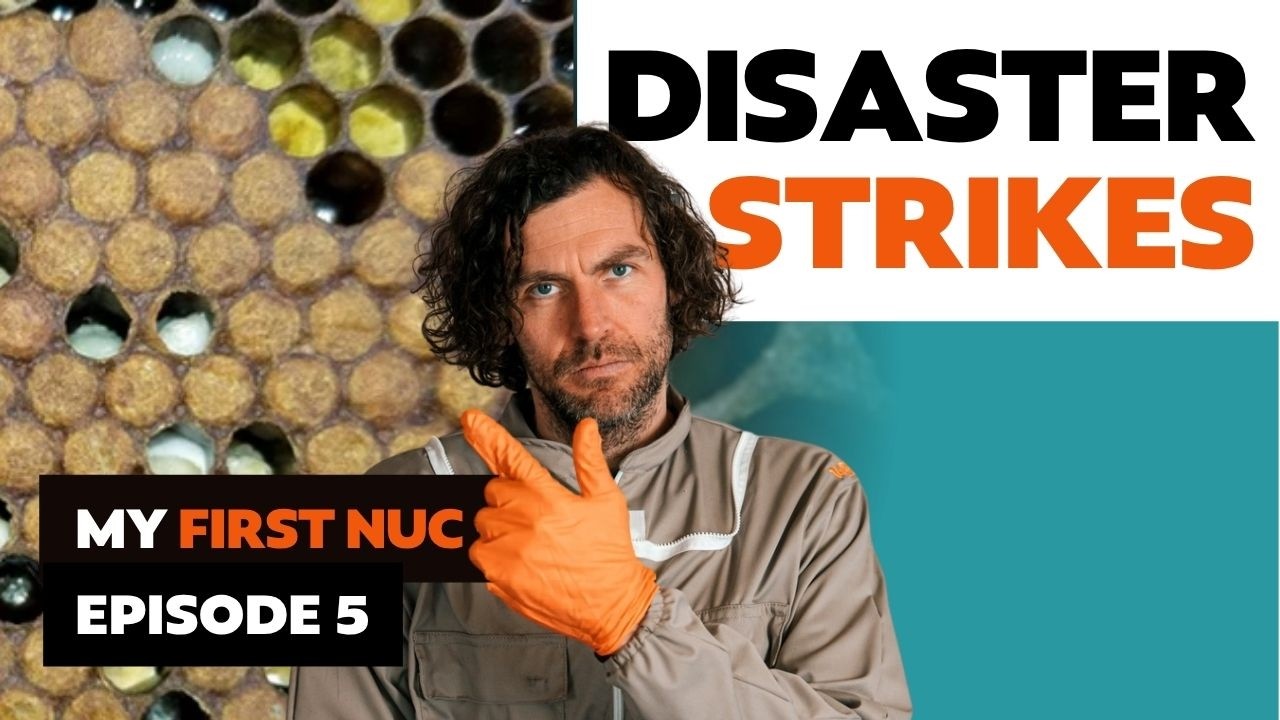
Laurence Edwards inspects a nucleus colony with severe chalkbrood, caused by wet weather and poor airflow. He removes the queen and plans to requeen with a resistant strain, then monitor for six weeks. If chalkbrood persists, a shook swarm onto fresh equipment is the last resort.
Chapters
So the bees are out working in the super, which is fantastic to see. Exceptional growth at this time of year. You really do notice the boom because it's the first round of brood that is all emerging. The brood box is now full of bees, no swarm cells. We've seen eggs, we've seen the queen. The bees are looking really, really healthy, really strong. Hi, I'm Lawrence Edson, Black Mountain Honey. Welcome to another episode of No Nonsense Beekeeping, episode five today of the My First Nuclear series, and we're going to get inside and see how the colony is getting on. If this is the first video in the series that you're looking at, be sure to go back through all of the other episodes, episodes one, two, three, and four, and see how we've got to this point with this colony so far this year. They're building up really, really nicely. They've built up over 10 frames of bees and brood down in the brood box, and in last week's episode they moved up above the queen excluder into the super. So I'm going to go and get my bee suit on, get the smoker lit, take a look how the colony's getting on. Right, so as always, get your smoker lit, plenty of smoke into the colony, get them nice and calm before you crack them open to inspect them. So the colony is looking nice and strong, not so much of a dramatic growth this week, but it's been terrible, terrible week. A lot of my colonies have gone backwards, a lot of my queens are off-laid just because the weather's so bad. Still bees though up in the top box, which we are treating as a super, but it is actually a brood box in size. So here we are straight into the brood box. Don't need to look in that top box because there's nothing to see in there, just loads of honey and stores. Surprising amount of stores in there actually. I thought these would be a little bit further back than that. They've still been out collecting stores. And as you can see there, the brood box is jam-packed full of bees. So what I'm going to do now is I'm going to show you, as always, every single frame one by one, and we'll have a look at those frames. So just going through the colony now, pulling the frames out one by one, you can see how that brood nest has expanded. Plenty of eggs still in this colony, plenty of brood in all stages, but there is a real issue with this colony. And see if you can spot it as we go through the frames, and this is a direct result of the stress that this colony is under, and also as a direct result of the weather. It's been wet, the airflow isn't going to be anywhere near as good because it's so wet, the moisture levels in the hive are probably not where they should be for this time of year, and as a result, this colony has got a terrible, terrible case of chalkbrood. And when I say terrible case, this is one of the worst cases of chalk brood that I've ever seen. It's really, really bad, and I'm going to need to take action on this colony to resolve this chalk brood issue. So ultimately, chalk brood is caused as a result of stress to the colony. But if a queen isn't susceptible to chalk brood, means her daughters aren't susceptible to chalk brood, which means the colony won't get chalk brood even if they are under that stress. So really, the only way to fix chalkbrood, the first thing you definitely need to do is you need to replace the queen. So we're going to do that today. We're going to find the queen and we're going to kill the queen. And the reason I say that's the first thing we need to do is I'm going to change the queen over and I'm going to leave all of the frames as they are. Obviously, the top frames, there's no brood in there, so there's no contamination. But as you can see from the frames down in the brood box, there's a real bad infestation of chalkbrood. And it means that there's going to be contamination of those frames. Now, in some colonies, requeening and then followed by good weather is more than enough to clear up a chalkbrood infestation, and that would always be my first port of call, and that's what we're going to do in this video. However, I'm just raising it that maybe we need some sort of extreme manipulation later on in the year in order to resolve the problems with this colony, and we're talking about a shook swarm. Don't go shook swarming your colonies without a really valid reason. And this is why I'm trying to show you this in 2 different steps. First one, try and requeen with a mated queen that you know is proven to be able to resist chalkbrood. So speak to the person you're buying the queens off. Say, are these queens proven to resist chalkbrood? They should give you the thumbs up and say, yep, they'll be fine. Introduce that queen. I'll link you out to another video here. Plenty of videos on how to introduce queens. Give it a couple of cycles of brood. So you're talking around 6 weeks after successful introduction, and then evaluate the colony again. And if the chalkbrood problem has gone away, fantastic, proceed as normal. If there is still a remaining issue, then we need to go down the route of doing a shook swarm onto brand new foundation and brand new kit, just to eradicate any chance of contamination of chalkbrood from within the frames and from within the hive. And I'll reemphasize it: that is the absolute worst-case scenario and the last option you should be taking. Don't find a few chalk brood cells in your colony and think I need to oh I need to do a shook swarm. That's how we resolve it. Get the queen, kill the queen, introduce a queen that is proven to be able to resist chalk brood, give it six weeks and reevaluate. That is my advice. So we're going to get into this colony now. I'm going to find that queen and I'm going to squish that queen. I'm going to make this colony hopelessly queenless, and I'm going to introduce a queen next week, and we'll cover that in the next episode of the video. So there's the queen. Unfortunately, she is susceptible to chalkbrood, and I don't like colonies that are susceptible to chalkbrood because they can dwindle at really short notice, and it can spread to other colonies. So we're going to dispatch this queen now, As humanely as possible, just by squishing her. So there's the dead queen. Right, so this colony is now queenless. 5 weeks in and we've had to kill the queen, so not the best start, but you need to stay on top of disease control and brood disorders such as chalkbrood. A lot of colonies can live with that disorder, but this is a really, really bad case of There's upwards of 60 or 70 cells on each frame, and that is way over the point where I would look to intervene in the colony. So what we're looking to do in this series is pick up the issues as they come along. We've got to week 5 and we found a really bad issue, so I'm not shying away from it. As always with No Nonsense Beekeeping, you get to see all of the bad stuff as well as all of the good stuff. So this colony now needs to recover a little bit, and what's going to happen Next week's episode, you're going to come back and you're going to see emergency cells spread across all of these frames. We will wait and we will get this colony into a point of hopelessly queenless. And what that means is that they're queenless, but they also don't have any of the resources, so any of the eggs or larvae at a suitable age in order to produce their own queen. We're going to get them to that point over the next week, week and a half, and then we're going to introduce a mated queen to this colony. And what we're hoping to do by doing that is that the genetics of that queen is going to resolve the issue with chalk brood. In the meantime, the colony will probably do a little bit of a cleanup. You might see some mummies on the floor. I'll try and show you a picture of some mummies next week as well on the floor, and that is just the, the decaying corpses of the larvae that have been impacted by chalk brood. We'll get that queen introduced, we'll let her have a round of 2 or brood, Hopefully we will have resolved the chalkbrood issue. The colony can just get on as normal. In fact, we find when we take queens out of colonies, the honey production very temporarily does go up because they don't need to mess around with tending to the very small brood. So we'll just let the colony get on as normal and we'll come back next week, see how this colony is getting on. So that's it for today's video. Bit of a negative one this week. We've identified a serious case of chalkbrood. We've killed the queen and we're going to wait until next week to see them draw out the emergency cells, which we'll knock down, introduce a mated queen, and then we'll see this colony through. And hopefully that will resolve the chalkbrood issue. As always, thanks for watching. Please hit the subscribe button, please hit the bell so you're notified of every video, and I'll see you next time.










