Episode 7 - My First Nucleus - How To Introduce A Mated Queen
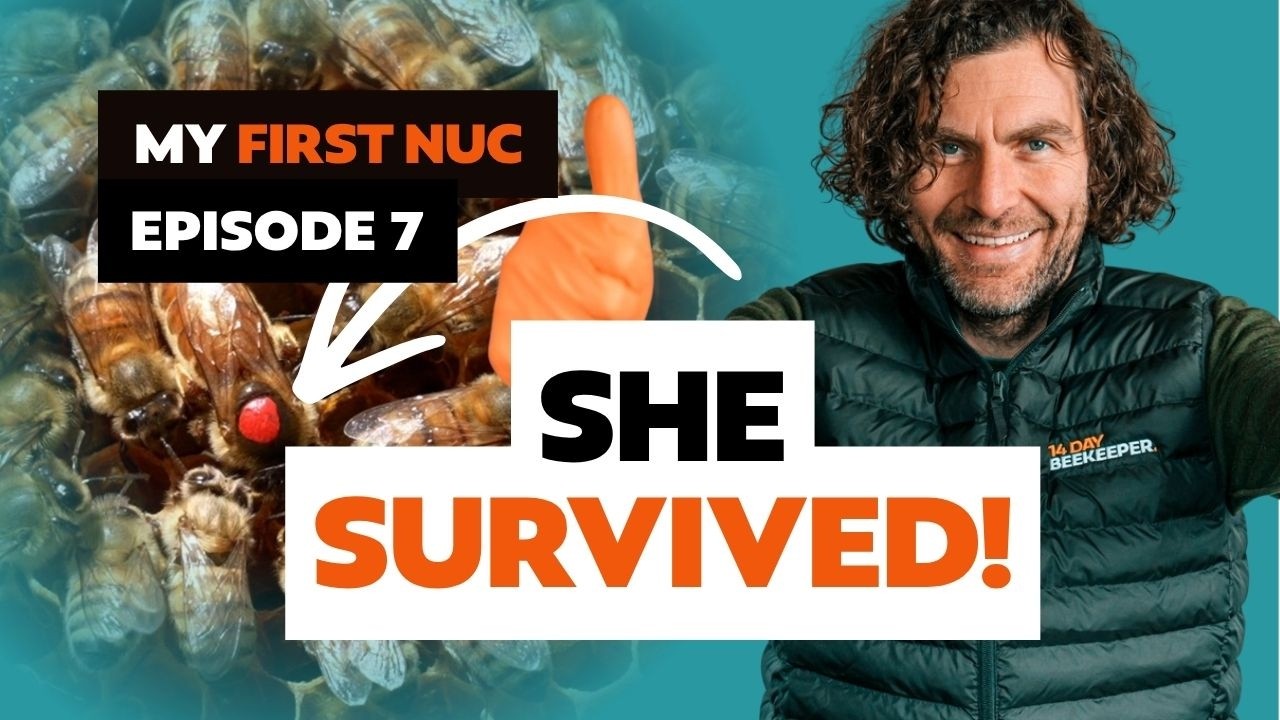
Laurence Edwards requeens a weak colony plagued by chalkbrood using a mated F1 Buckfast queen from Murray McGregor. He eliminates all queen cells to make the bees queenless, then introduces the new queen in a cage with fondant. Open-mesh floors, sunlight, and space prevent swarming and support the colony's recovery.
Chapters
But this year is just rubbish. The weather's so bad. We're taking down absolutely everything this week that can be conceived to be a queen cell. So you need to get this colony into a point that is hopelessly queenless. Right, so now the colony is hopelessly queenless. So then at this point, you want to take your mated queen. That's going to give you a much, much better chance of a successful introduction for your queens. Hi, I'm Lawrence Edwards from Black Mountain Honey. Welcome to another episode of No Nonsense Beekeeping. It's episode 7 of the My First Nuclear series, and last week we killed the queen, we introduced a new mated queen in a cage. We did that in an attempt to try and control the bad chalkbrood problem that we have, and the reason for introducing the queen is that the old queen was producing bees that had genetics that had a predisposition to have chalkbrood. So the idea was to take away the old queen's genetics, and then as the colony accepts that new queen, she starts to lay her new eggs, the new bees shouldn't have that same predisposition, which means that they can defend themselves a bit better against chalkbrood. Other ways to improve chalkbrood in the colony is to ensure that on an open mesh floor Good ventilation, bright sunshine really helps. Keep them right in direct sunshine. And then the last thing to say is that it can clear up on its own. So I did mention that in previous videos. It's only on a really bad case of chalkbrood that I would do any sort of manipulation like this, taking away the queen and adding a new one. So in this video, all we're going to do, same as normal, we're going to go through every single frame, show you the status of the colony. But big one this week, hopefully we're going to find an empty cage. And we're going to find a mated queen running around the colony, and we're going to find eggs. That's what we're going to look for today. I'm going to get my bee suit on, get the smoker on, and we'll get inside the colony. Right, so we're going to get inside this colony and we're going to check to see whether the queen has been accepted. I do apologize, I have a full audience here today of about 40 young cows, and they have no camera etiquette whatsoever, so there's plenty of moos in the background. Right, let's get in, see if we've got that queen accepted. As always, plenty of smoke. Get those bees as calm as you can possibly get them. Bit warmer here today, but still not perfect conditions to be inspecting them. Good weather on the way next week though. Right, so the first thing we found is an empty cage. They've eaten out all the fondant. Completely empty cage. So we'll either find the queen on the frames or you'll find her dead on the floor out the front of the hive or on the floor of the hive. Hopefully, we're going to find a live queen in here. I think we're going to have this queen accepted. Right, so as always, I'm going to show you every single frame in the brood box. We're going to go from back to front, show you every single frame. Probably going to see a bit more nectar, I would imagine, in the brood box this week because it's been quite nice on a couple of days, specifically yesterday. So we'll see a little bit more nectar in the brood box. So I'll flash up now every single frame. Maybe you can spot the queen as we go through, but I'm not going to look for the queen at the moment. I'm just going to go through and show you every single frame. From front to back. So as we move through the frames now, we're seeing stores towards one end. Again, as you get towards the middle, you're still seeing that brood nest. This colony is going to be set back a little bit in terms of brood rearing, but hopefully we're going to find that queen. She's going to be laying some eggs now. This colony can begin to expand again. So there you go. We've had a successful introduction. I've seen a couple of eggs in there. Really difficult to get that on camera. More importantly than that though, we've seen the queen. So as long as you're seeing eggs after an introduction, you don't need to see the queen. Obviously, if you see the queen just walking around on the frames like that, no problem whatsoever. This is now a queen-right colony again. And remember the steps we took to go through that. Killed the queen, made the colony queenless. We let them develop their own emergency cells. We knocked down all of those emergency cells, made them hopelessly queenless. And then we put the queen in, and that's how you get a successful introduction. So I'll just make a reference at this point in the video. We have started stocking very high-quality F1 Buckfast queens from Murray McGregor, so the biggest bee farmer in the UK. That's the queen that's gone into this colony. We're going to stock them every single week on our website. I'll put a link up at the bottom of the video. Wait till you see the progression of this colony. This isn't a nice colony. It's got chalk brood, it's got a really poor temperament. They're trying to get me in the veil like this. We've requeened it with an F1 Buckfast colony, and you're going to get to see the transition week by week from a grumpy colony like this into a much better behaved colony. And that's going to be as a result of the F1 Buckfast genetics, because you're not relying on local drones, you're getting that mated somewhere where they're controlling the drones. It's just going to result in a much nicer beekeeping experience. So I appreciate everyone watching my videos. I really do appreciate your support. But also now we supply F1 Buckfast mated queens. Get them on the website. We send them out every single week. So if you need a queen, give us a shout on www.blackmountainhoney.co.uk. So in terms of the chalkbrood of this colony, it's obviously not got any worse. There's no additional mummies that are in there. I know I said I'd show you a picture of the floor this week because I thought there would be some mummies on there, but they're doing a really good job of actually clearing those mummies out, not only out of the cells but out of the hive as well. So they're doing a really good job of clearing it up. Hopefully that new queen is going to resolve the chalkbrood issue. Loads of cows in the background. It's absolute chaos here this week, but you know, we have to deal with that in farm world. But going forward, you're going to see hopefully significant reduction in the amount of chalkbrood Hopefully eliminated, and we're going to see a real improvement in temperament after about, say, 6 to 7 weeks, after you get a couple of rounds of brood and all of the original bees with the nastier genetics have died off. So that's it for the video. We are back on track, whereas last week was a bit of a calamity and we had to kill queens and we're resetting things. It's really easy to get your colony back on track. Be positive, take those interactions, Do the manipulations and do what's best for your bees. These guys are really going to expand over the coming weeks. That brood box there is nearly full, so I'm going to leave them this week. I'm probably going to come down halfway during the week just to check they've got enough space, and I might add another box on. So we might only fast forward a few days for the next episode of this video, but what we're almost certainly going to be doing next week is adding on another super just to give them extra space. The weather next week is glorious. across the UK, you need to make sure your colonies have got enough space, because all they'll do is they'll start storing the nectar upstairs. It will go down, down, down. If they haven't got the space, they'll store it in the brood box. Signals are triggered to the queen that there's not enough space and they will swarm. If you are going to go and catch swarms, next week is going to be swarm central. This cow thinks it's going to be swarm central as well, so listen to the cow. He knows a lot more than me. But that's it though. The colony's in a really good position now. Hopefully we're back on track and we can see how this colony progresses through the season. Right, so there you go, a successful queen introduction. And as I said before, what's important there is you go through the steps, make the colony hopelessly queenless before you pop that cage and give them access to the fondant, which they'll bury through in about an hour, hour and a half maybe. If they're not hopelessly queenless, you run the risk that they're going to kill that queen. So if you are requeening, just follow the steps, make sure they're hopelessly queenless, and then introducing queens is really, really easy. So hopefully we're back on track with this colony now. We've got a laying mated queen, we've got a brood box that's very, very full, we've got a lot of bees, and the big one is we've got really good weather incoming. That's what's important. And I hope next week I'm going to be able to give you an update to show you how much Honey the bees have stored. We're definitely going to look to put another box on next week. We don't want to run the risk of them running out of space because it can make the bees swarm. So I always go by the rule, when the top box is 80% full of bees, get the next box on, be it a brood box, a super, whatever you want to call it. You're putting it above the queen excluder, so it's going to be a box to store honey. But we'll cover all of that in future episodes. And hopefully with the introduction of that new queen, we're going to see much less chalk brood. We won't have to worry about that on future episodes. So I hope you enjoyed that video. As always, please hit the subscribe button, please hit the bell so you're notified of every video. I'll see you next time.










