F0 Breeder Buckfast Queen 2022
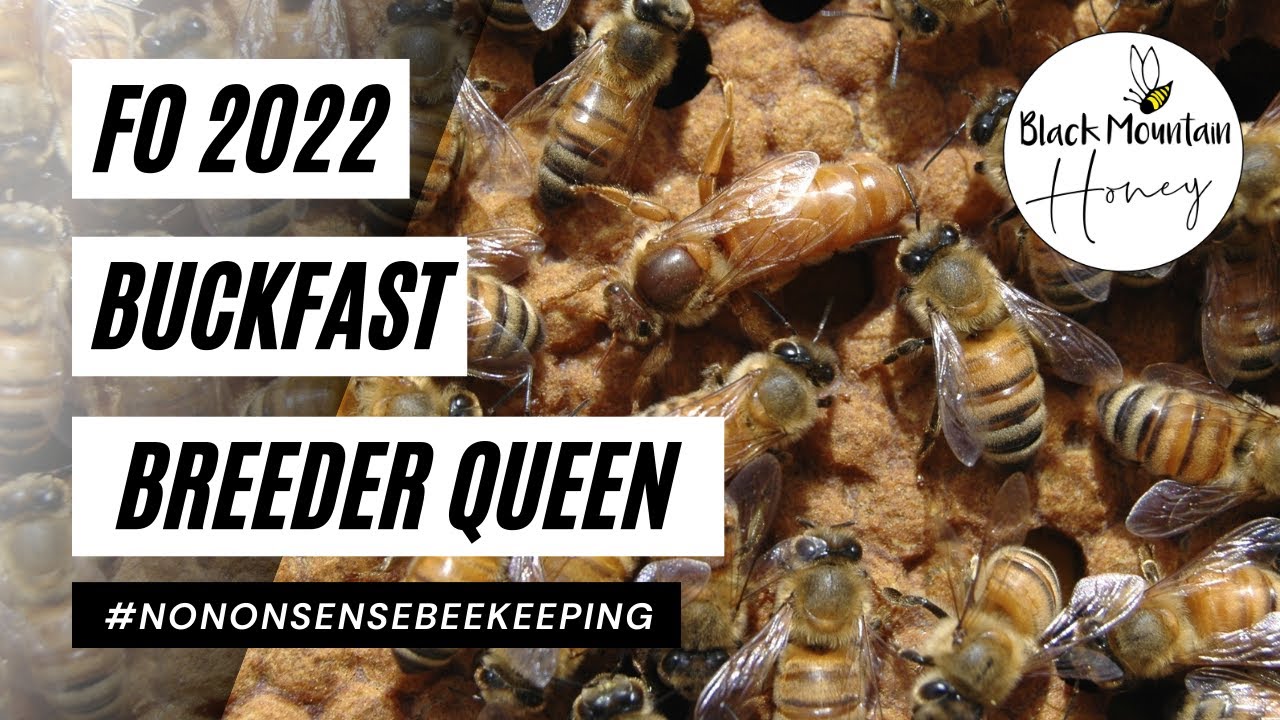
Laurence Edwards of Black Mountain Honey bought an artificially inseminated F0 Buckfast breeder queen and walks through his requeening process step by step: removing the old queen, caging the new one, placing brood, and releasing her. He chose a low-altitude apiary for better temperatures and plans to use her for grafting in spring.
Chapters
Today I'm going to show you my 2022 breeder queen. Hi, I'm Laurence Edwards from Black Mountain Honey. Welcome to another episode of No Nonsense Beekeeping. 2021 has been the worst year in terms of queen rearing. A, because the weather's been really bad, and B, because I haven't done any queen rearing. I have just been way, way too busy with so many other projects. that I've just not got round to doing the queen rearing. And it's something that's really frustrating because every single year I'm going to use this queen for queen rearing. This is where I'm going to set up all my boxes. This is how I'm going to flood the apiary with drones. I can't wait to get all of my production colonies requeened with really good quality breeder queens. And 2021 was just a complete year to forget. Now, speaking with other bee farmers, so many of them have had issues getting queens mated this year. So maybe it's not the end of the world missing out on 2021. However, I would definitely not be missing out on 2022. So much so that I've already gone ahead and bought myself an F0 Buckfast breeder queen that's artificially inseminated. So that's what I'm going to show you in today's video. I've gone ahead and bought this from a very well-respected breeder. I wanted to get an artificially inseminated queen. I wanted to ensure that it was a real true F0 pure queen, and I wanted to make sure that that colony had been tested throughout the course of the season. Hence why I'm getting it so late. So I'm getting like the back end of August after we've seen how the queen and her colony overwinter, how they build up in the spring. How gentle they are, what the spring crops like, what the summer crops like, and then the breeder's gone out there and picked his breeder queens from all of his artificially inseminated F0 queens. So here's my queen. She's a 2020 mated queen, marked blue number 79. So it might seem like this queen is a little bit old, but this is what you need in order to ensure that they're fully tested. So this queen would have been mated in 2020. Overwintered, come into 2021, and then we see what she's like throughout the whole of the season. Give her a full season to prove herself, and then she's come to me. I'm going to overwinter her, and then I'll use her for my breeding next year. I'll keep on replacing her because these queens don't last for 5 or 6 years. Probably going to get 1 or 2 years out of this queen. I will be managing her really carefully. She's been fully tested for me already, so I don't need to put this queen into a colony and let her go wild and see how much honey they produce. The breeder has done that for me already, and I trust that the breeder has done a good job in doing that. So what I'll be doing with this queen is I'll be putting her into a nucleus colony, and I'll be constantly removing brood from that colony in order to limit the size that the colony can get up to. And by doing that, a queen's only got a finite amount of eggs. If I restrict her to a nuc, make sure she's always got space to lay, then I can keep her for hopefully 2 or 3 years. As opposed to her getting to the end of her usable life and then them trying to supersede her. So here's my queen. There you can see she's marked blue, number 79. It's really interesting because sometimes you get queens in cages and all of the worker bees are going a little bit nuts and the queen's running around as well. You can almost tell a little bit from the temperament already that they're going to be a really calm colony. I've seen the colony as well and it does look very nice indeed. So in this video, all I'm going to do is I'm going to go into one of my nucs, I'm going to find the queen, I'm going to put her into a cage. She's an F1 Buckfast queen, so she'll just go back into the stock for sale this year, and then I'm going to replace her with my F0 breeder queen, and that's where I'm going to keep her over winter. I'm going to do everything I possibly can to ensure that I get this colony through the winter. Be very, very annoyed if I don't, so I'm making sure that she's going to go into one of my nice strong nucleus colonies. And then we're going to trickle feed and we're going to get that colony going, doing the normal requeening process. We're going to put her in for 8 days once we've taken the other queen out, let them draw their emergency cells, knock them back, pop the cage open, not touch them for another 7 days, and then I'll come back later on in the year just to show you how this colony is looking going into winter. So I'll get my bee suit on, I'll get into the nuc, and I'll introduce my 2022 F0 breeder Buckfast queen. Right, so this is the nucleus that I'm going to requeen with my F0 breeder queen. I've chosen this nucleus for a few reasons. One, it's in a much lower down apiary. I find I get very good overwintering success in this apiary because of the temperature, because of the altitude, because of the late season and early season forage. So I just think it's a very good apiary to protect my queens, especially the expensive breeder queens. Next one is I want it to go into a relatively strong nuc. I want it to be as strong as it possibly can to give it the best chance of going through winter, but I want it to be as weak as it possibly can to ensure that the queen gets accepted. So this one here is real middle of the road, probably covering 3 or 4 frames. End of August at the moment, loads of time ready for it to build up. And obviously I've gone through, I've checked that there's no disease, the colony is free from chalkbrood, free from sacbrood, obviously free from any foulbrood diseases as well. The combs are looking nice and healthy, and there's plenty of stores in the frames as well. So there's a little bit of logic that's gone into this decision here. I'm going to get inside, I'm going to find the queen, and I'm going to put her in a cage, and then I'll requeen with my F0 breeder queen. Like I said, not a massive nuc, not a tiny nuc, but a nuc that hopefully is going to accept that queen really well. A good healthy nuc in a nice position in the middle of a 3 to help keep it warm. In a nice sheltered apiary at a low altitude. So that's the queen that I'm going to be removing. F1 2021 Buckfast. Absolutely nothing wrong with that queen. In fact, she's a really, really good-looking queen. That's going to go back out for sale, so someone on our website is going to get this queen here. She's proven herself though. Lovely brood pattern as well. So she's going to go in a cage now. Let's get her requeened. Right, so there you go. Queen's in a cage. The colony is now queenless. And remember, don't mistake that for hopelessly queenless. They've still got eggs. They've still got larvae. We're going to do the same requeening technique that I've done a million times now, so I'm not going to go through it here. I'm going to put the sealed breeder queen in between the two frames of brood, leave it for eight days, come back, knock down the emergency cells, pop the cage. Seven days later, that queen will be introduced. So I've just taken a quick look through the nuc. I was going to add an additional frame of brood in here just to boost that colony up. There's 3.5 frames of brood in here, so I don't even need to go and do that, because 3.5 frames of brood, the end of August, in a nuc this big, they've got more than enough bees to do what they need to do, which is expand to a good size to overwinter. So here we go, I've got my F0 breeder queen. I'm going to pop her in between the 2 frames of brood, away from the Apivar, and I'm going to seal them up, and I'm going to let this colony requeen. What I'm going to do at this point is mark The back of the nuc with the fact that it's got a very expensive queen in there. Believe it or not, you do forget where you put these queens. Make sure you get a nice oil-based pen, stick it on the back. Don't forget where you put your expensive breeder queens. So there we go, that's the end of the video. I'm so excited to see how well this queen performs into 2022. Like I said, I'm not doing any testing. That's why I've paid a lot of money for this queen, because she comes pre-tested. She's had the whole of 2021 to prove herself. And she's been selected to be a breeder queen for 2022. So I'm going to be going for it early May next year, first round of grafts. They're definitely coming from that queen, but I'll give you plenty of updates along the way. So there we go, simple as that. Really quick video. I just wanted to introduce you to the breeder queen for next year. I'll give you regular updates on this colony, both going into winter and into the next year, and then I'm going to give you some really good detailed instructions on how to graft, how to rear queens, and then we're going to assess some of her F1 daughters. So I hope you enjoyed that video. As always, please hit the subscribe button, please hit the bell so you're notified of every video, and I'll see you next time. Bye.










