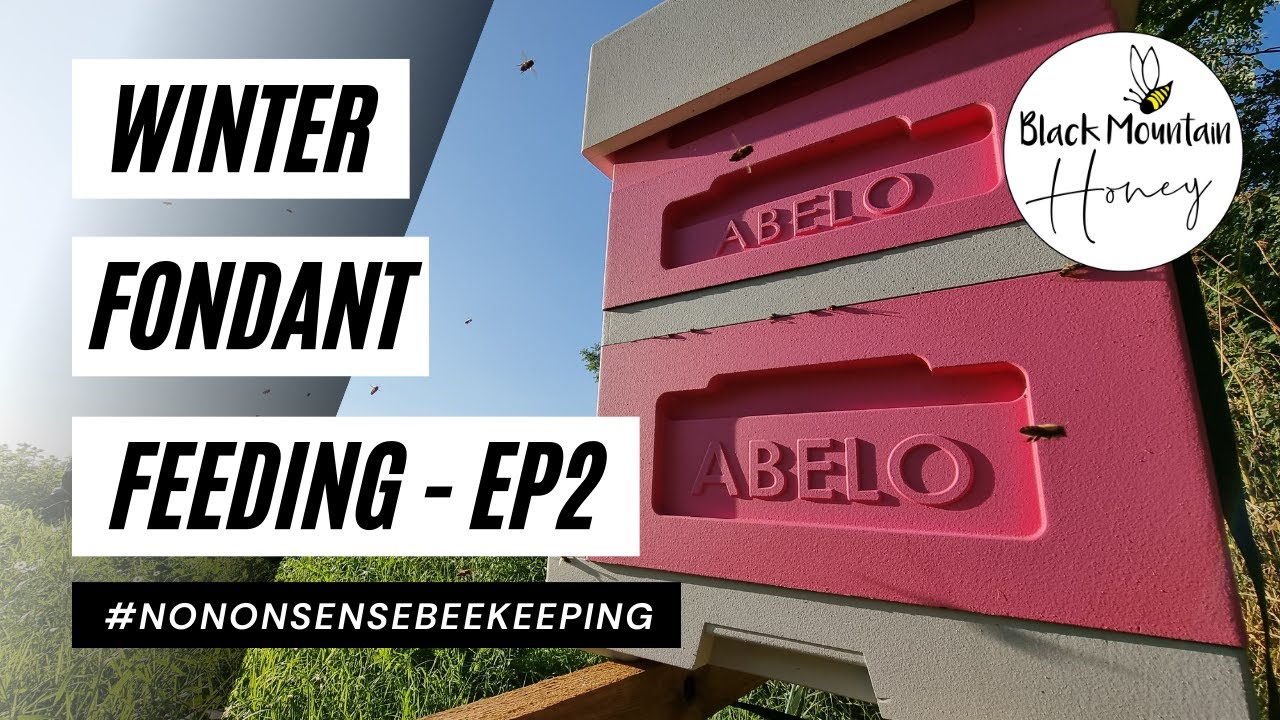
In this episode of No Nonsense Beekeeping, Laurence Edwards returns to the Abello apiary to give a detailed update on colonies that are being fed exclusively with fondant as they prepare for winter. He highlights the surrounding three‑acre wildflower meadow (sunflowers, phacelia, clover) that is providing abundant forage, and shows how the colonies have rapidly consumed the initial 6 kg of fondant placed two weeks earlier. Edwards demonstrates how to reposition fondant over the central feeder hole, top‑up with 2 kg slabs, and plans to add larger 12.5 kg slabs later in the season. He inspects brood frames, notes strong brood patterns, and emphasizes that the colonies are in prime condition for overwintering in a single National Deep without adding supers. He discusses early Apivar treatment, the importance of marking queens on frames of stores, and shares observations of colony temperament changes and a brief bumblebee intrusion. The video concludes with practical advice on winter feeding, a celebration of the apiary’s location and wildflower resources, and a call to subscribe.
Chapters
We're back at our sponsored Abello apiary, and we're going to check up on the colonies that we're feeding exclusively with fondant. Hi, I'm Lawrence Eders from Black Mountain Honey. Welcome to another episode of No Nonsense Beekeeping. I cannot believe how good the weather is. This apiary is my lucky charm because I remember the last time I filmed here, it was about 30 degrees, and it's now about 6 o'clock in the evening, as you can tell from the low sun. And it's about 25 degrees. It's really, really warm again, absolutely out of nowhere. And even better than that, the farmer that I've got here is the best guy in the entire world. He has planted the biggest field of wildflowers, about 3 acres, all the way behind this camera. So I'll do a few close-ups, I'll show you some of the amazing flowers that he's planted here. The bees are going wild for it. They're really working the wildflowers So well. Lovely mix of wildflowers as well. Got some white clover, red clover in there for the butterflies and the bumblebees as well. Lots of sunflowers, good amount of phacelia. It's a really nice rich mix of wildflowers, and he's planted it late in the year as well. So he's not done this as a, as a strip. This is 3 acres completely covering and surrounding the bees. And they are working it so, so well. So in this video, I'm just going to give you a quick update on the colonies that I'm feeding exclusively with fondant this year. If you remember, we put 6 kilos on. That was about 2 weeks ago, and we're back here again today to see how much fondant they've got through. And if we need to put more fondant on, we're going to put more fondant on. Now I'm waiting for an order from Baco for some big 12.5 kilo slabs, but I've still got loads of 2 kilo slabs left over from last year. Perfectly fresh, so we're just going to top them up if they need it. But at the moment, while they're working the field behind me, they don't really need that much help with the fondant. But you'll be amazed how quickly they go through it, even when they're on a flow. So let's get inside the colonies now and I'll show you how quickly they've worked through all that fondant. Right, so let's take a look inside our pink Abello poly hive, see how much fondant they've got through, and let's take a look at the brood nest and see how that colony is expanding as well. So as you can see, the bees have made such good progress through that fondant. Still got a little bit on that side there, but you do find that you do need to reposition that fondant every now and again. Glad I've come up here today because you will see there'll be bees in there working that, but if you can reposition it and just get it back over that central feeder hole, they'll take it down so much quicker. So I'll get that plastic backing off and I'll just show you all the bees underneath that are working away on that fondant. So there you go, you can see really, really active, nice big strong colony working that fondant really, really well. So I'll cut back to this at the end of the video. I'm just going to show you how to rearrange that. We're going to get that all over that central feeding hole. I'll get another slab of fondant on there as well because they'll work through that remainder in a very short amount of time. But let's get into the colony and see how they're doing, see if we can see any stored fondant. So the colony is looking Fantastic, just what we want to see at this time of year, covering every single one of those frames. Really, really good to see. I'm going to get in, I'm going to take a look a bit at the brood. But if you remember, this is the colony that I did the video on where I didn't have my veil on, I didn't have my suit on, and you remember how chilled out and gentle they were. Now I'm not saying they're not chilled out and gentle anymore. I've not even used any smoke on them. But they seem a little bit more techy today, even though they're on a bit of a flow. So it just goes to show, as the colonies do get bigger, the temperament can change. I think you'll agree though, this colony is looking particularly fine. Feeding it exclusively fondant has not knocked this one back at all. Right, so let's get inside then, have a look at this colony, see how it's building up. These are looking in prime condition to go into winter. I've said this so many times, and I do feel I'll probably repeat myself on a lot of these videos. But don't think in this situation here that they need a super. Like, we're in the last week of August, nearly in the first week of September. Last thing you want to be doing at this point is adding on a super thinking, oh well, they can go brood and a half. Really don't need for them to do that. Plenty of space in a National Deep for a colony that's expanding like this to have enough room for brood, enough room for stores, and they will contract naturally as they go through winter. And the beauty of overwintering on a single box is that come the spring, you can just pop a queen excluder on, you're straight back into your supers. There's no faffing around, no nadiring, no switching boxes. Just makes life so much easier. So frames are looking really nice, really nice brood pattern. Not going to go crazy going through all the colonies here. I just want to get a rough feel of how many frames of brood they're on now. That's a frame directly from the middle. You can see lots of nectar coming in because they're Storing it in the middle there, nowhere for them to move that up. This colony is looking really, really healthy. Next frame along, lots of nice frames of brood in here, and we have a bumblebee knocking around in there as well. So that bumblebee is desperately trying to escape, not sure what's happened there. I'm not going to intervene, just let them get on with it. It's finally got away. Always interesting in things you find when you open up a beehive. And there we had a bumblebee that tried to get in there, maybe thought it was a bit of an easy target, and the bees saw it off straight away. So here's a frame of stores we've got in here. This is frame 2. And what do they say about queens not being present on frames of stores? They never read the books. Remember this queen, she's not marked. Beautiful queen. Now, the same way that you never drive past a petrol station if your petrol tank is flashing, Never ever go past a frame with an unmarked queen on it without getting your pen out and getting her marked. So easy to do at this time of the year. Small colonies, queens are easy to find. Get them marked with a good oil-based pen. You will come to thank me when you get to the spring, when you get to next year, and your queens are marked and they're easy to find. Seems a pain to do it, just make it happen. You'll thank me next year. So I have to say, I am So pleased with how this colony is getting on. Early apivar, early feeding of fondant, but there's no denying it—I've done nothing here. It's the big massive three-acre field of wildflowers that is in the background. I'll pop a few pictures up of here again. That's what's making these colonies nice and big and strong. Don't feel the temptation to put the super on. I don't know anyone in North Wales that gets a super of honey in September. Could probably do it down south if you're getting this kind of performance down south. I know people that put the supers on to get the ivy honey. For me though, once the Apivar's in, game over. No supers can go on anyway because you've got your Apivar strips on. Just enjoy the fact that the bees are doing what they need to do. They're getting ready for winter. They're going to go into winter really, really strong, and you give them every chance to be really prolific into the next year. I'm going to stack everything back up now. I'm going to give this colony here another 2 kg of fondant just to tide them over. And then once the weather turns again, I'll come back, stick another 12.5 kilo slab on, and then I'll just leave that slab on all the way throughout winter, and that should see them through until the spring. So I'm just stacking the colony back up now. I'm going to rearrange that fondant, I'm going to get it back over that central feed hole, I'm going to get another 2 kilograms of fondant on, relay the blue plastic over the top, give it another week or so, and I'll come back later on in the year and give them their final 12.5 kilo block of fondant. So this is what it's looking like now. I've just centralized that blue plastic fondant. I've whacked on another 2 kilos of Honeybee Pro. The bees will continue to work that, and then later on in the year, if they need it, we can give them some more. And I'll just probably stick on a 12.5 kilo slab. So there we go, that's it for the video. I hope you enjoyed that one. This is probably the most enjoyable video I've done of the year. I love this new apiary, I love the farmer, I love the fields. I love the position, the late evening sun you get here. There's even a smell of heather in the air because it's a couple of miles away. You probably find some heather over there. Long may the good weather continue, and long may the colonies build up for winter. So I hope you enjoyed it. As always, please hit the subscribe button, please hit the bell so you're notified of every video, and I'll see you next time.