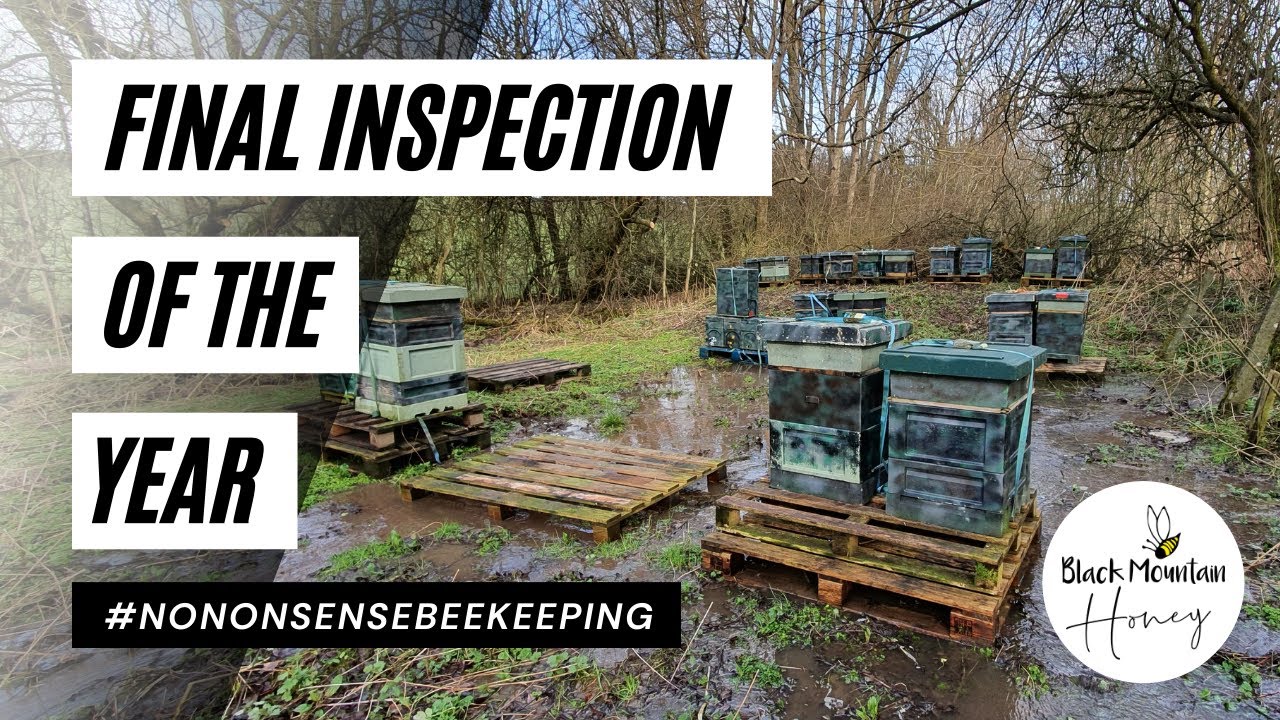
In this short instructional video, Laurence Edwards of Black Mountain Honey walks viewers through a concise, hands‑off end‑of‑season hive inspection performed in early October. The primary goal is to prepare colonies for winter while minimizing disturbance. Edwards emphasizes removing any varroa treatments—specifically Apivar strips—exactly according to label timing to avoid mite resistance. He then demonstrates a quick weight check (aiming for ~40 kg for 14 × 12 hives) to confirm sufficient stores, and inspects the feeder to ensure it is empty or nearly empty, indicating the bees have consumed supplemental syrup. A brief visual scan of the cluster confirms a strong bee population without opening the brood nest. Finally, he conducts a health‑check of the hive’s exterior: sealing gaps, confirming entrance reducers are in place, securing the hive with straps, and ensuring floors and crown boards are intact to protect against wind, vermin, and wasps. Throughout, Edwards stresses that at this stage one should not pull frames, look for eggs, or assess queen health, as such interventions can cause more harm than good. The video concludes with a reminder to follow these simple steps, avoid over‑inspection, and ensure colonies have the best chance of surviving winter.
Chapters
Hi, I'm Laurence Edwards from Black Mountain Honey. Welcome to another episode of No Nonsense Beekeeping. Today I'm in the orchard apiary and I'm doing my final inspections of the season. So this is going to be a very short video. I'm just going to show you the steps that I take for my final inspection of the year, and you're probably going to cut to the end of the video and say that wasn't much of an inspection, But that is the point of the video. So we're in the first week of October here. I'm going to go around all the colonies here, do my final inspection, remove any varroa treatments, especially Apivar. If you've got Apivar in your colonies, make sure you follow the guidelines on the packet. Do not leave them in for any extension on what it says on the packet, because you don't want your bees or the mites on your bees building resistance to the amitraz that's in the Apivar. So that's all we're going to do. We're going to crack the lid, we're going to give the colony a little bit of a weigh, make sure they've taken down that syrup well. We're going to remove all of the strips, and then we're going to take a look at the cluster, and that is all we're going to do. We're not going to remove any frames, we're not going to check for eggs, we're not going to check for the queen. Way, way too late for any of that. All you can do this time of the season is pray and hope there's brood in there, pray and hope the queen's in there. You should have done these checks before, Earlier on in the season, around August, September, that's when you need to kind of be checking that the colony is well, healthy, and you've got mated queens in there. Don't do that last inspection of the season. All we're doing here is removing the varroa strips, checking that there's no gaps anywhere in the, in the boxes. You don't want any kind of ingress. Checking that you've got entrance excluders on or you've got the right type of floor, and basically just doing a health check of the colony because you're probably going to leave it now for a good few weeks without any visits, and you just want to make sure it's in the best state possible going into winter. So I'll get my bee suit on and we'll take a look. Right, so final hive inspection of the year. What are we looking for? We're looking for weight. We want to see a really nice heavy hive. Hopefully they've taken down all the syrup that you've given them. If not, you might need to give them a little bit more syrup or give them some more fondant. But what we're doing is we're going in And we're giving them a heft. And I can feel from this hive, absolutely jam-packed full of stores. This is where I want it to be. If you want to see the separate video, I'll stick a link up there showing you how to weigh your hives with a luggage scale, some of the weights you're looking for. Really simple though, just make sure you turn it on properly, hook it up in between, and then you just want to steady it with your leg and you get a reading. And that one there is reading about 38 kilos. We try and get them up to 40 kilos for the ones in the poly with the 14 by 12, but I I'm not going to fuss too much about a couple of kilos. We'll come back later in the year, we can feed fondant if necessary. So it's up to weight. I've checked it, I've lifted it, and it's up to weight. If you've not got straps around it, you can do a bit of a heft, and we've done this on other videos. Good ways of working out approximately how much stores is within the colony. Looking for around 40 pounds for a national, 45 pounds for a 14 by 12. So that's the first check. Check for weights. Then we get into the colony, and this is what I want to see. I want to see an empty or nearly empty feeder. So they've pretty much taken all of those stores down. Really happy with that. Taking down stores and taking down syrup is a sign that a colony is strong. If a colony is not taking down the syrup, something can be wrong, or it can just be full up already. But I mean, I knew that these guys needed a feed. And they've taken down about 14 litres of syrup in about a week. So really happy with that. That shows that they should be good. And when I take this feeder off, I'm expecting to see a lot of bees. That's what you want to see at this time of year, early October. You want lots of bees. That's how you get good, strong colonies through the winter, especially here in North Wales. So I'll just get the feeder off to one side, and as you can see, we've got lots of bees, and that is what we're looking for. We want to see lots of bees. So that's kind of like the first thing that I'm really looking for. If you see lots of bees, you see them starting to form into cluster, this is a good thing. What we're doing though this time of year is we're taking out our Apivar strips or taking out any varroa treatments. Make sure you Follow the regulations and the timings that's recommended on the packet. But these ones here, eight weeks, so we're taking them out. Generally just slide out. If not, you can get them out with your hive tool. They just pop out, and then all we're doing is a. visual inspection. We're not pulling out any frames, we're not looking for eggs, we're not looking for queens. It's too late for all of that. All we're doing is just taking out the Apivar strips, giving them a heft, doing a visual inspection on the colony, and that's it. That's the final inspection of the year. It's as simple as that. Don't overcomplicate it. Don't think, oh, I want to have a look in there, there's something not right. You can only do damage at this stage of the year. If you go in there and see that there's kind of, I don't know, not enough brood or there's a damaged queen, it's just a bit too late. The chances are you will damage the queen at this time of the year. You can do more harm than good. So that kind of backed-off approach, hands-off, don't mess around with it, that's what you want to do at this time of the year. So you can see the kind of bees coming back onto the colony now. I'll just do a bit of a zoom in to show you exactly kind of how that colony is looking. But it's really strong. It's over every single frame, front to back. That's a nice-sized colony of bees going into winter. There'll be a variety of brood, brood in all stages, pollen, lots of stores, real nice mix in all those frames. But we're not going to go inside and we're not going to have a look because that's what the final inspection of the year is all about. It's just checking they've got the weight, taking these off. I mean, that's my reason for coming into the colony today. It's a take out the Apivar strips. If they don't have Apivar strips on, the final inspection of the year, you don't even need to take off the roof. All you're doing, bit of a heft, check they've got enough weight, give them the thumbs up, and then you can roll on to later on in the year. So that's what this colony here is looking like. As you can see, covering front to back, 10 frames, 10 14x12 frames, really good weight in this colony, nice temperament of bees. Gonna be as quick as I can. They want me to get that crown board back on because it's probably a little bit cold. So yeah, that's what the colony is looking like going into winter. So yeah, that's what the colony is looking like. A little bit of a close-up of the bees. You can see they're nice friendly bees. They're getting ready for winter, so we'll leave them to it. Right, so the next thing you want to do once you've kind of done the visual check of the bees or you've done your hefting Is you just want to do a bit of a check round, make sure there's no gaps, no cracks, no areas where kind of they can get any ingress of wasps, any ingress from vermin. You're doing that health check. You want to kind of do this every week really, but it's very important to do this as your kind of final winter inspection. Just make sure there's no cracks, there's nowhere that wasps can get in, because once that colony starts to cluster, if the wasps get in or vermin gets in, which is probably the bigger risk when the temperatures drop, Do you know what I mean? They can cause real damage and it's just not good. Take your time at this stage of the year when you're doing your final inspection and just make sure everything's right. So kind of any cracks around there, if you've got a feeder or a crown board on, check that your entrances are the right depth. Do you know what I mean? Here we don't put an entrance reducer in on these ones because they're on an 8mm slot, but if you're doing it on a full wooden size national floor, Make sure your entrance reducers are in. You can get it down to the, literally the smallest one at this time of year. And that's it. It's really quick, a really simple inspection. Don't go looking for the queen, don't go looking for brood, don't go looking for eggs. You just want to get your Apivar strips out, give them a nice heft, make sure they're strong, make sure they've got enough stores, and then they're good to go for winter. So that's it. It's a really quick visual inspection this time of year. It's not hands-on. You don't need your smoker. You really don't need to go crazy. You're just doing a bit of a tick box exercise to make sure that all of the steps are in place to make sure that colony can get through the winter. And most importantly, you're taking out those Apivar strips because you don't want your bees or the mites on the bees building resistance to Amitraz. So just to summarize it again, we take out all varroa treatments, make sure they're gone. You can weigh your colonies, make sure they're up to weight. If they're not up to weight, you can add more syrup or you can add fondant at this time of year as well. You want to make sure that your colonies are well and truly square with each other, there's no gaps, and if there are any gaps, make sure they're kind of filled and closed now. Make sure your colony is secure from wind. I like to put a strap around the colony and then I put another strap onto the hive stand as well, extra protection, but it means whatever happens, that colony is not going to topple over. Check your floors are intact. Check your entrance reducers are in place. You don't want any vermin or rodents coming into your hive over winter. And that's about it, just a few simple steps you need to follow to make sure your colony's got the best chance of going through winter. I'll reiterate though, don't go into your colonies, don't pull out any frames. You want to do as absolute minimal possible inspection as you can. Don't go looking for eggs, don't go looking for the queen, don't pull out the frames. It can only end in disaster. And you don't want to be adding, trying to add mated queens to colonies at this time of year. It's a recipe for disaster, and all you'll end up doing is having to merge it with another queen-right colony, which you could potentially bring down as well. So just hands-off is a much better approach for October inspections. So as always, I hope you've enjoyed the video. Please hit the subscribe button, please hit the bell so you're notified of every video, and I'll see you next time.