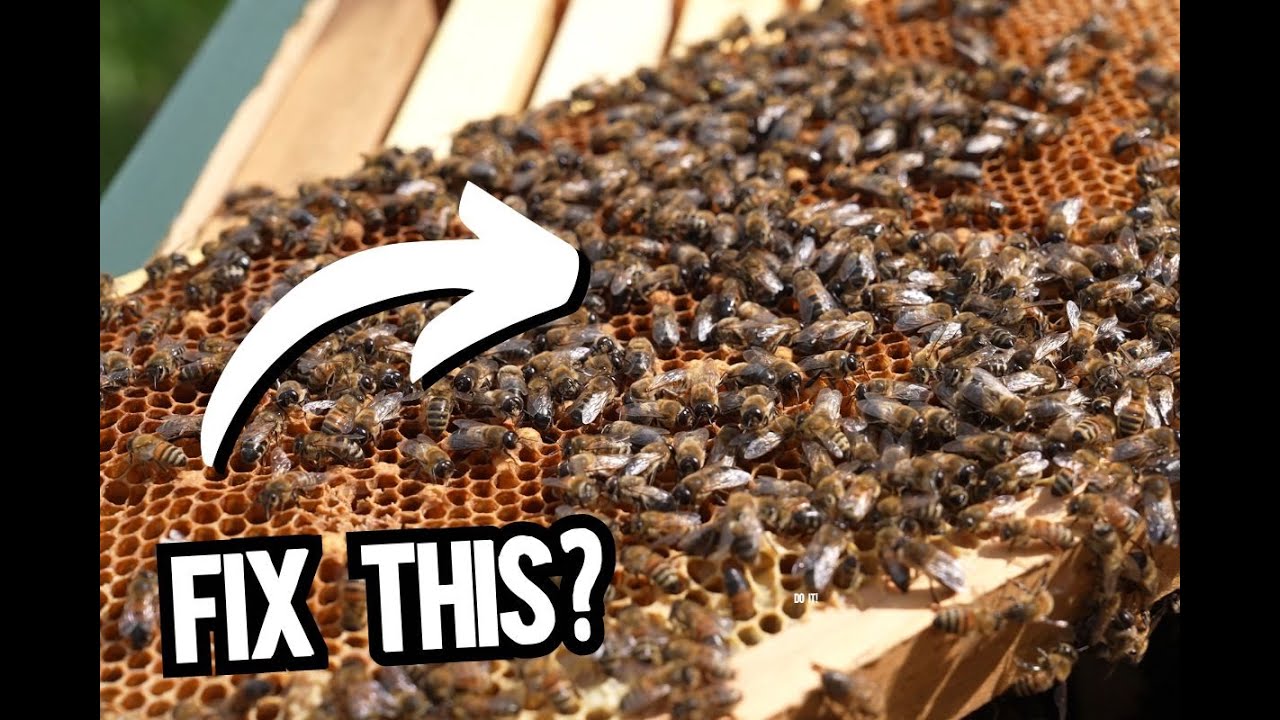
Laurence Edwards shows how to save a hive from a drone-laying queen: kill the bad queen, wait eight days, introduce a new one (he used a Black Mountain Honey F1 Buckfast named Splodge), and add capped worker brood from a strong colony. Five weeks later, the hive is producing healthy worker brood again.
Chapters
5 weeks ago, I found out that I had a drone-laying queen. I killed the queen and I replaced her with a new one. In today's video, we're going to check up on the colony and see how they're getting on. So drone-laying queens are very, very frustrating. It's a queen that's not fertile, it's not mated properly, or it's run out of fertilized eggs, and it starts laying either predominantly drone brood or only drone brood. The one in this colony here was basically 100% drone brood. So if you find that early on, it's a really easy fix. You just go in, kill the queen, wait 8 days preferably. But with drone-laying queens, you can really add the queens in straight away as long as there's no open-capped worker brood. Doesn't matter if there's any open-capped drone brood because obviously they can't create a viable cell from that. Once you've got the new queen in there, wait until she's laying and then add in a couple of frames of capped worker brood from another colony. That will help get the configuration of bees in the hive correct again by adding more nurse bees into the mix. If you're trying to do it with loads of old bees and loads of drone bees, you'll get very slow progress and the colony might not bounce back. That's what I've done with this colony here. That was 5 weeks ago. I'll show you now what the colony looks like. There's loads and loads of drone brood everywhere, and because there were so many drones in the colony and so much drone brood, you end up getting a lot of chilled drone brood. So even 5 weeks later, you're still seeing it dotted around on the cells, which Which means you'd look at it and think, okay, well, the new queen is a drone layer as well, but it's not. That is just old drone brood that the colony has not built up to a sufficient size to be able to go out and clean all of that out. This time next year, once the colony's back up on its feet, everything will be fine. But I think you'll see from these images here, really bad drone laying queen, obviously needed a fix. So fast forward 5 weeks to today, the colony is well and truly back up on its feet now. There's lots of nice capped worker brood in here as well. Still got a smattering of drone brood occasionally on some of the frames. Some of the outer frames got a bit of chilled drone brood as well, and my replacement queen Splodge has been doing a reasonably good job. Now if you want to know why it's only a reasonably good job, I'm going to show you on a separate video the issue that I have got with Splodge. So if you're interested in that, definitely hit the subscribe button. It's going to be the very next video after this one. Until that video though, let's get inside here, take a look at how well this colony has bounced back from being a drone-laying queen. So you can see from the overall size of the colony, we've expanded a fair What I'm going to show you up here on this side though, and that is one of the frames where you'll be thinking, right, the new queen is a drone layer as well. She's interspersed that with nice capped worker brood, but you've still got some really chilled old drone brood in there. Just going to point to one example where you can really tell. That one there, you can just tell because it's starting to go like a bit of a weird color. And don't worry about that, that is just kind of decaying brood inside these cells, and there's just not enough bees in here to be able to actually go and fix that just yet. But you can see here now, I'll pull out some of the other frames. We've got capped worker brood, we've got brood in all stages, we've got splodge still hanging on doing a job in here. Very splodgy queen, accidentally painted before it got sent to us, I might add. That's not my handiwork. But you can see here the queen is doing her job, with one exception I will add, which we'll follow up on a separate video. But just compare these images to what it looked like 5 weeks ago. Far less spotty brood. Nowhere near as much spotty brood. Backfilling all of that with capped worker brood now. So I think it's safe to say that we've got the colony back on track. I'm happy with that. I'm happy that the queen is laying well, and I'm happy that the inclusion of that additional capped worker brood has brought the balance back to this colony. So another frame there, nice ring of capped worker brood around the edges, backfilled in the middle with eggs and larvae. And I'll just show you one of the final outside frames again, because you might be seeing this in your drone-laying colonies that you're trying to fix. Outside frames still a little bit spotty, but as I said, they're not new drones being laid by Splodge, who is on this frame here. They are the old ones that are just chilled drone brood and nothing really to worry about. So we managed to get our drone-laying colony back on track. If you have a drone-laying queen, you need to fix it early. Get in there, kill the queen. Wait 8 days, replace it with preferably a Black Mountain Honey F1 Buckfast queen, the very best that we do, and you can get colonies like this back on track as long as you add in a couple of frames of capped worker brood from an adjacent colony.