Flow Hives. The Good. The Bad and What You Should Know
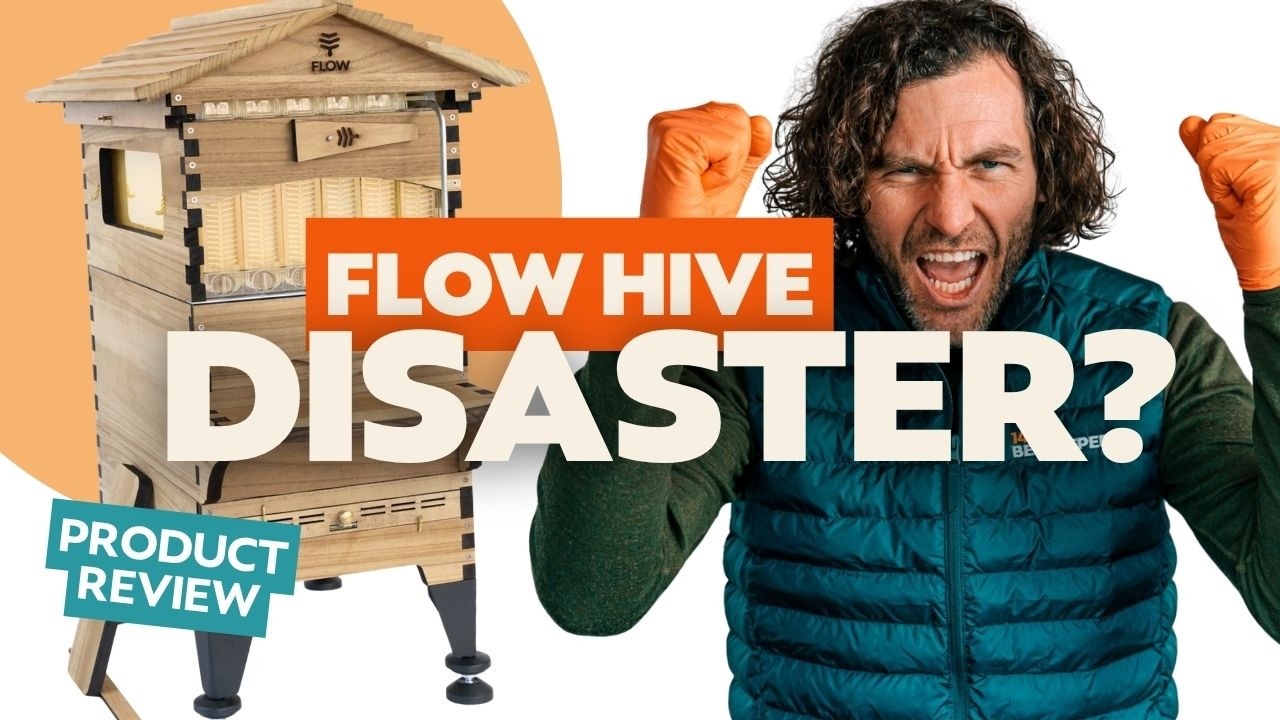
In this unscripted, first‑person video Laurence Edwards attempts to harvest honey from a Flow Hive super for the first time. He walks through the setup, explains why and when to extract honey, and demonstrates turning the Flow key to release honey into jars. Throughout the demo he encounters a series of practical challenges: a mis‑assembled shelf, bees swarming the honey tap, bees getting trapped in the honey, and the need to improvise with makeshift equipment. Laurence evaluates the Flow Hive’s performance, noting the quality and moisture content of the capped honey, the minimal impact on wax cappings, and the speed of extraction compared to traditional methods. He also critiques the marketing narrative, highlighting issues such as bee loss, the difficulty of keeping bees out of the honey, and the lack of guidance on preventing bee contamination. The video concludes with observations of the extracted frames, plans for future improvements (e.g., using a lid‑and‑hose decanting system), and an invitation to follow more Flow Hive content.
Chapters
The time has finally come to turn the key and get some honey from my Flow Hive. Today we're going to cut through all the rubbish. I'm going to go and show you when you should be extracting your honey from your Flow supers, and then I'm going to get myself a nice jar of Black Mountain honey produced in one of the best apiaries I've got. So I'll get my bee suit on, I'll get the super turned around the right way. Let's go and get some honey out of the Flow super. Right, so I am so excited to finally get some honey out of my Flow super. And all the way through the season I've been thinking this is going to be really, really difficult because I'm going to be trying to get honey out and try and do a video at the same time. And already all the bees are all over me, kind of thinking what's going on here. There's a good flow on at the moment, but the bees are really out in force, and there's a bit of a kind of water shortage at the moment. So anything liquid, they're all over it, and I just fear a little bit that the bees are going to go Wild when I start tapping the honey out of here. So, you know, this isn't a promotional video. I don't work for Flow Hive. If it goes horribly wrong, it goes horribly wrong. But I thought we'd have a go at doing it. If it doesn't work, what I'm gonna have to end up doing is coming back really late at night, maybe shutting in a lot of the bees, and then trying to harvest the honey that way. Little bit of a faff, but if it's kind of in your back garden, maybe not the end of the world. But in this video, I'm not going to show you how to extract honey from a Flow Super because I've never done it before. But you are going to be able You're able to watch me attempt to extract honey from a Flow super for the very first time. I'm not going to lie though, I am so excited. There's lots of honey in there. We're going to try and get it in this jar. I know that the super's capped. I've decided not to open it up just yet because all the bees are going to come out. So what I'll do is I will extract one of the supers and then I'll go in and I'll show you the super next to it to show you that it was indeed capped. So let's get on with it then. First thing we need to do is start taking off the bits that are going to show you what's going on. Within what, 5 seconds of me getting into this video, I've realized that the box that I've set up with the screws to turn this into a shelf, I did a Demerara split and that's up there the wrong way round. So it's already a massive fail and maybe goes to highlight a little bit just how particular things need to be on a Flow Hive to get them to actually work. I'm used to stuff and everything being completely and fully interchangeable, but on this box at the bottom, there's no screws to hold the shelf in. And they are on the other side up there. So I'm a little bit lost already and I'm going to have to try and bodge things. Now, I'm definitely also trying to do this a little bit prematurely. I know that. And the supers here aren't completely full, but there is plenty of honey in it and you can see it pooling in the bottom there. It's enough to show you how it works. Just keen to kind of get the first video out of the way. But I know for a fact we're going to end up getting some honey here, even though the side bits here Aren't full of honey and they're definitely not capped over. That's the frame I'm going to have a go on there, that middle one, third from the left, because that is pretty much full and pretty much capped over, even though that line there that you can see from the window isn't. Right, so a little bit of improvisation. I've just got kind of like a turned around, upturned wooden box, propped it up, and that's given me the space and the lift I need in order to get my jar in position. I'm not standing there for half an hour holding a jar. Got better things to do. So I know I'm going to do this frame here. First thing I need to do is take off the little plug, get my hose in there, and then we're going to try and get some honey in this jar. Someone gave me the tip, don't go full whack with the key, go kind of like a third, two-thirds, and then a final one. I'm only going to try and get a couple of jars here today. I'm not going to completely drain that super. I know that it's capped. I know that the moisture content is going to be correct, but I don't want to kind of like extract everything today. I'd prefer to do a few different extraction videos. And you never know, we might get to the end of it and I can finally extract it properly. This one here is how to bodge the extraction of a Flow Hive. So that started really well. I took the plug out and I dropped loads of honey. This is going to be like a comedy effort here, but already look how many bees are going for that honey. It is incredible the attraction that that's given literally 10 seconds into not even turning the key, just trying to get that tube in. So all I'm doing now, I'm getting my key in. I'm just trying to take note of what people have said. Don't go all the way. So I'm going to put it to the back and I'm just going to turn it just maybe a quarter of a turn like this. Little bit of resistance. Weasel it around a little bit. Right. So I kind of probably did that a little bit too much. But there we go. The key is open and already we can see lots of craziness going on in there because the bees are going to be thinking, What is this guy doing? He is stealing all our honey. And there we go, we've got honey coming out of the tap. It's really cool. Here it comes, loads of that honey coming through. And there we go, my first bee is in the honey mix. So that's fantastic. Um, I'm gonna try and rig up a little thing next time, I think. Maybe put some hoses on there going into a bucket or something like that. I don't know, but at the moment We've got one bee in the mix, and I can probably live with one bee. So hopefully we won't get any more bees going in. Little snapshot down there. I've actually messed loads of honey. That's all gone down there. That's really annoying. But look at that, that is coming out now so, so well. I am really impressed with this. I always knew this was going to be super, super exciting. I did not think it was going to be just about this exciting though. I am Well pleased with that. So we've got one bee stuck in there at the moment. Look at the color of that honey though, that is beautiful. I know that this honey here is the correct moisture content because it's fully capped over, and you can kind of see just if you sneak through there, you can see that it's capped over. And I will show you that at the end of the video as well. You, my friend, do not want to fall in. You can mop up the remnants there though. And there we go, we've got the third one in there now. So as I said, this isn't a promotional video. You're not going to see kind of like a filtered version of this, which is you're not going to get any bees in there. And I know the Flow Hive videos, I've seen the one with Cedar doing it, saying that there's a couple of bees that get stuck in there. And personally, I don't think it's the end of the world. I'm going to do this video over and over again on a different number of frames because I like to kind of like iteratively improve what I'm doing each time. If we can reduce the number of bees at the same time, I'll be really, really happy with that. At the moment though, we've got 4 bees. They are stuck in, and hopefully if they stay at the top, I'll just scoop them out at the end. It's still flowing, the honey, though. Really nice, good yield from this frame. Hopefully the rest of them will be as good, and we will do those on future videos. So how cool is this? Like, if I only had 1 or 2 hives and this was in my back garden, and I went out kind of— I'd go out late at night, you know, when the bees completely stopped flying. And I will do that again and try and kind of bring the good camera. How cool would that be? Even going out like first thing in the morning and doing it and getting your honey, putting it on your toast. Like, I know I don't need to do any more marketing for Flow because they are the kings and the masters at marketing, but it kind of really does serve an amazing purpose. And I can see why the Flow Hive has sold so well all over the world. We are really mounting up the numbers though in terms The amount of bees in there. See if I can get kind of like a top view. Lots and lots of bees in there. That one there is tempting fate, getting a good old clean on it, good lick, and you know where he's going to end up, where she's going to end up. I'll get another jar prepped because we're getting close to the top there, and I want to do as clean as possible transfer over between those jars. Should have probably bought some more jars with me. Just want to try and get the absolute maximum in there, including that bee that just went in, and then I'll do a real quick changeover and try and not dribble that much honey, which I failed at miserably. Right, one jar done, and that is a mega, mega jar of honey there. So I'll go and put that off to one side and try and clean up this little drip on it, and then I will leave this one going, see how many jars we can get. I do actually have a few more in the car, so I might just quickly nip back up there now, see if I can get Right, I'm back with some more jars, and already in this one here, let me count them. 1, 2, 3, 4, 5, 6, 7, 8, 9, 10 bees in there. It is a little bit annoying, but I do think it's an easy fix. I've seen a couple of people do this. I think, Dean, it was either you or one of your friends had the kind of plastic flexi hoses that go down, and I think if you get kind of like a little lid like this— this is what I'm going to do— drill a hole in the lid and then use that as kind of like your decanting method. Just a single master lid and a hose. I think that'll work really well. You'll still attract the bees in, you'll still get the robbing bees trying to come around if you don't do it at nighttime, but at least it means you don't get all the bees in the honey like this. I wanted to do it like this. I knew this was going to fail, but I wanted to do it like this is because this is what they show you on the adverts. This is what they show you in the marketing But they don't ever show you like loads of bees going in like this. And I've always looked at it and kind of thought, I reckon loads of bees, definitely my bees, would go in there and just hammer it and they'd all just get stuck in the honey and then I'd have to scoop them out at the end. Not the end of the world, but not quite a clear picture in terms of what you're actually getting. Now I don't want this to turn into like a me bashing Flow Hive or kind of saying how much I don't like certain things like the gap in the brood box and the roof and the fact that loads of bees go in the honey. I will pick out the negative points, but I'll also really focus on the positive points. And so many people, especially in the UK, give Flow Hives a really bad rap. Like, it's always so frowned upon to kind of have someone who uses Flow Hives either on a commercial basis or to have them in the back garden, saying they're not real hives, they're kind of really difficult to work, you're going to have a nightmare with oilseed rape, and I hate that stuff when people have a real strong opinion on something without actually trying it. So hence why I've got a Flow Hive and why I'm trying it for myself. And yep, I'll pick out the negative parts. There's probably 30 bees stuck in this jar of honey now, but there's so many positives. Really are a lot of positives here. Okay, I'm gonna have to fish out the bees from my honey, but I'm getting honey directly from the hive. Into a jar within like an hour, something like that, with hardly any effort whatsoever. Really fun to watch. Like, this would be so good for kids if you didn't have like the flying bees around. But even with the flying bees around, as long as the kids have got their bee suits on and their gloves on— oh my goodness, my daughter will love to come and watch this. Definitely gonna have to get one of these in the garden, I reckon. But also the huge benefit, like absolutely massive benefit, as I've said previous videos. If you've got, say, 2 or 3 colonies and you don't want any more than that, you don't need to go and get a 20-frame extractor and have a hygiene-certificated honey room and an uncapping machine and all of that stuff. Just get a Flow Hive. Like, get a Flow Hive, stick it in your garden, get the honey directly in the jar, and it's done. The job's finished. I'm really excited about it, and I'll continue to give a very Honest opinion on why I like the Flow Hive, why I don't like the Flow Hive, but more importantly, give you tips and tricks as I learn how things go to try and make that Flow Hive experience as easy, as simple, and as manageable as possible. So you can see the problems that I'm having though. The bees are really attracted to that honey. They're going and telling all of their mates, all of the ones that don't go into the vortex of doom, and a A lot of them are getting stuck in there, so not ideal. Unfortunately, all those bees in there, they are going to die because I'm going to take this home and have to scoop them out. And even scooping them out here, it's not good in terms of disease practice. Don't want to be leaving honey around the place. So unfortunately, every single bee that goes in there is going to die. They definitely don't tell you that on the marketing material. We will fix this though. The next video I'll do on this, I will show you a method to Completely eliminate the risk of any bees getting stuck in that honey like that little poor bee just did there. So again, another real positive that I like. Okay, I've dripped a little bit of honey down there, but in terms of the actual hive, the setting it up and the kind of taking it back down again is really quick, really hassle-free. No honey on the hive there. The bees are kind of none the wiser now, and I can just leave that colony to get on with it. I'll reset up the camera. Let's go inside, take a look at one of the supers that was fully capped over. That's indicative of the one that I just extracted. But then even more fun than that, let's go and take a look at the one that I extracted and see what state is inside the colony. I know a lot of that honey is going to have fallen down. I know all of the cappings are going to be completely ripped to shreds. I'm really interested to see this, and I've never seen it before. Right, so first off, this is the frame that was next to it that was mostly capped, and then the other one was pretty much all capped. I would say like 85%, 90% capped, definitely ripe for extraction. But I'm really impressed just how well they've managed that. It's just like any other frame, they fill it up with honey, fan it down, get it to the correct moisture content, and then it's ready for extraction. And you definitely know it's ready for extraction when you're sitting at around 80 to 90% Capped like that. Quick close-up there on the good camera. Really, really beautiful heavy flow super, nearly capped over. This one, we're going to extract it next week. If you want to see more videos like this, definitely hit the subscribe button. We're going to do loads of flow videos going forward. Right, this is incredible. I had in my mind for some reason that when I turned that key, it was going to break all of the cappings, like completely destroy them. But like, I'm picking up this frame, this frame is so light in comparison and is pretty much capped over the same way that the other one was capped over. All of the honey, or a good proportion of the honey, has gone from the inside, but it's really not made a huge difference to those cappings. So the bees now are going to have to go and uncap all of that. They'll probably reuse the wax, repurpose it somewhere within the hive. But I have to say, I'm so impressed. Like, there's no honey dripping off it. Okay, a little bit of nectar trickling out some of the corner bits, but apart from that It's just going to be downstairs in the brood nest. I've got the drawer in. The bees will mop it all back up, put it back into the Flow supers, and then I can come back and extract it again. So there we go. That's my first Flow honey super extraction video. I'm covered in honey. I got it all over me. So the bees are now properly going for me, licking it all up. I will do loads more of these videos. Hopefully you enjoyed that one. I certainly did. Please hit the subscribe button. I'll see you next time.










