Getting Nucs Ready For Winter
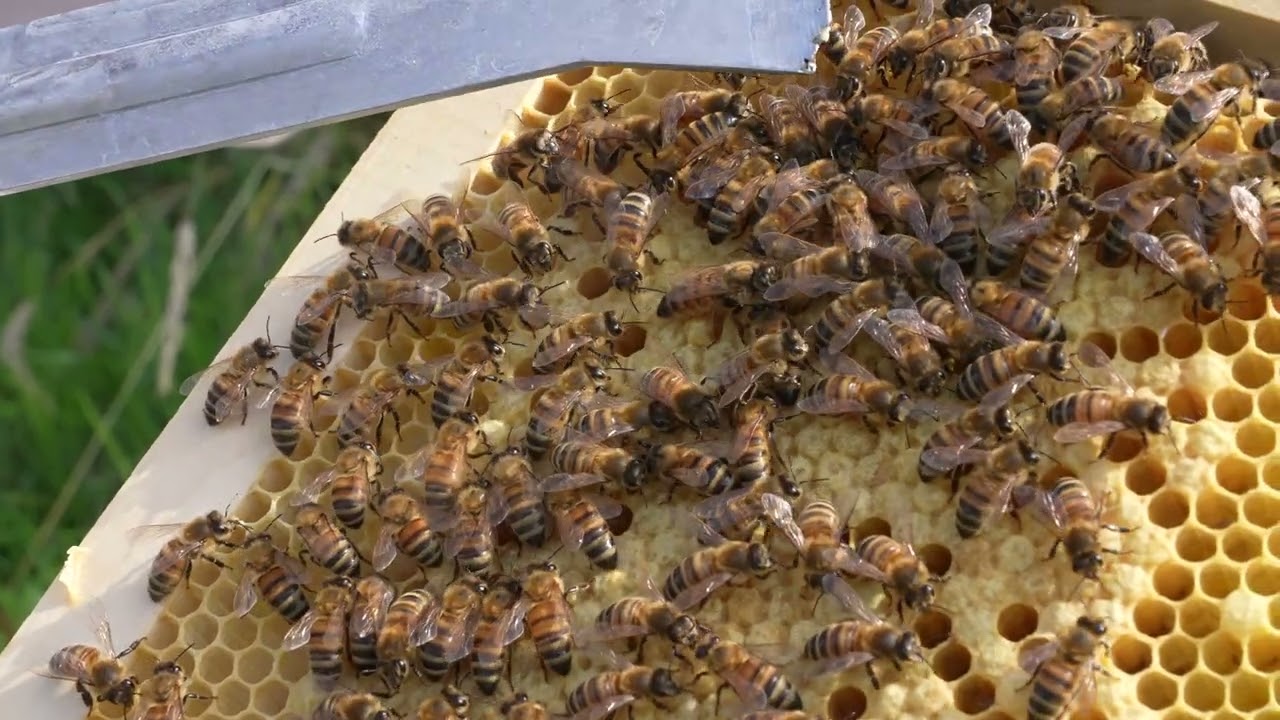
Laurence Edwards shows how to prepare nucleus colonies for winter starting in early July. Nucs need 2-3 frames of brood, half a frame of pollen, 1-2 frames of honey, and a well-mated queen. He treats varroa mites early with oxalic acid and Apivar strips so winter bees develop with low mite loads, and uses brand-new frames in Payne's boxes to reduce viral load.
Chapters
I'm sitting with Richard in our nuc apiary, and in this video I'm going to show you the perfect setup for a nucleus going into winter. Now, it might seem a little bit early to be talking about how you're going to get your bees ready for winter when you can quite clearly see it is a beautiful, hot, sunny day, but you need to start thinking about the winter season as soon as the days get shorter. That's our rule here. Make sure that the bees have got enough brood, make sure they've got enough pollen, Make sure they've got enough stores, make sure they've got enough space, make sure they've got a good quality mated queen, and try and time it for the longest day of the year. So we're in the first week of July at the moment, it's a couple of weeks past the longest day of the year, and it's become really noticeable that the bees are preparing themselves in order to get themselves ready for winter. In some apiaries you're even seeing the drones being kicked out, which is a little bit early even for this year, but the bees are Responding to the shorter days and they are getting themselves ready for winter. So it is a delight to be in this apiary even though it is very, very hot today. Really nice calm bees. First week of July, we're aiming for maybe a couple of frames of brood, good solid frames of brood, maybe around 2 or 3 frames of bees. You want to see a decent amount of pollen in there, but as long as they've got maybe half a frame of pollen, you're good to go. But the most important thing that you need at this time of the year is to make sure that you've got a good quality mated queen. So I'm not saying you need to put in a mated queen at this point, I'm just saying you want to see that the queen is fully mated, firing out the eggs, and is ready to build up. If you don't have that at this point of the year, you're really delaying that buildup of the colony, and then that will stunt your bees going into winter, and that's when you see the failures coming out of spring. Now another really important thing that I want to mention in this video as well is varroa treatments. Now everybody thinks that you do varroa treatments at the end of the year once the honey comes off, but for a nuc that's completely irrelevant. So you can put your varroa treatments in a lot earlier and you will see massive benefits to doing your varroa treatments early. Even better than that, if you want to get your nuc to a point where they're broodless and do some sort of oxalic acid sublimation, get the mites down before you even get them to a point where you're building them up for winter, And then put your Apivar strips in maybe the middle or the end of July, you will see that you get the mite numbers so low that when the colony starts producing its winter bees, the winter bees come out healthy because they've not been subject to such a high varroa load. Right, so let's get inside this nuc here and show you what you should be aiming for when you're setting your colonies up for winter. So we overwinter all of our nucs on 6 frames, and this one here I would say is about average for the bees going into winter. This first frame out there is a nice frame of stores. One of the big risks that you run going into winter is not giving your bees sufficient food. If you make them up early enough, the bees will go out and they will forage for themselves. And you can see their beautiful white cappings, lots of stores, nice good outer frame of stores. So again, there's another frame not capped over, but a really nice amount of stores. You're always weighing up a balance when you're making up these nucs. You don't want 4 or 5 frames of stores and nowhere for the queen to lay, but you also need to make sure that the bees have sufficient food. If you knock them back due to starvation, really, really difficult to recover them. It's a balancing act, but I would say always err on the side of having enough stores in there. You need at least 1 or 2 frames of stores, Accessible stores at all times. Now you can see here we're into frames of brood, but they're not completely ram-packed full of brood, maybe 50-60% full, and we've not even got a full frame of bees there. That's really important. This isn't a 6-frame nuc that's ready to go into winter. This colony has still got maybe 8, 9, 10 weeks of building up before they're ready. But at this point you can go in and you can Start treating them. I would suggest get your Apivar strips in nice and early. Don't need to feed at this point, but by getting those strips in early, you'll keep that mite load very, very low. But important to note, there are lots of space. The colony still needs to expand. We're past the point in the year where swarming is going to become a major issue, and you can really pack the bees into these boxes. You've got 3 rounds of brood now, probably before this colony is ready to go into the winter. I'll do another version at the end of the year showing you what they're like, kind of back end of August, early September, they will be completely full. So there we go, there's our queen, absolutely beautiful queen, very well mated in this apiary, nice calm bees, and she will get to work now laying as many eggs as she possibly can, but that will be tempered always by the fact that there's not sufficient bees to lay too many at However, 2 or 3 rounds of brood, this box will be full. But at this point of the year though, we have all of our queens mated. You shake out a few of the drone layers and you get your numbers sorted very, very early in the year. So another thing to notice on this nuc box here is that all of these frames are 2023 frames. Brand new frames made with foundation, brand new Payne's boxes. And we find really nice new clean kit and new foundation keeps the viral load of the colony very low, and it means that your overwintering success is very high. Overwintering colonies on dark horrible black brood, don't be surprised if they fail throughout the winter. You don't know what's lurking in those nasty old frames. So what you can see in here is lots and lots of pollen as well, and pollen's a really important source of protein, the only source of protein that the bees get. I wouldn't say that you need to do any sort of simulation or pollen feeding anywhere in the UK. You're going to get sufficient amount of pollen coming in. All I would say is make sure there's not too much. If you've got like 3 or 4 frames ram-packed full of pollen, you might want to take a couple out. They're handy to use for queen rearing, but it's nice to see a couple of frames, a little ring of pollen around like that, and it's always nice to see a very good mix of different colors of Pollen. Love to see that. So we're on to the outer frame again now, and pretty much all stores but just with a little bit of brood on it as well. You can see the bees there, lovely amount of stores, beautiful cappings, nice calm bees. But what's good to see is we've got a good mix of all of those resources. Nice amount of pollen, couple of frames of stores, 3 or 4 frames with brood, And then at this point of the year, a good amount of space for that colony to expand into. And obviously the most important thing out of all of that is you've got a good, well-mated queen that's going to build and expand that colony and get them ready for winter. There we go, that's how we set up our colonies to overwinter. It's really nice to get the bees in this position early on in the year, then all you need to worry about is getting your mite treatments in and topping them up with feed when they need it. If you do it early enough, you really don't need to feed that much. But we really do find that the colonies that we build up nice and early do build up well for winter and come through the winter better than the ones we are trying to make splits in August or even September. We're overwintering a lot of nucs this year, top quality Buckfast bees. If you're interested, go on blackmountainhoney.co.uk.










