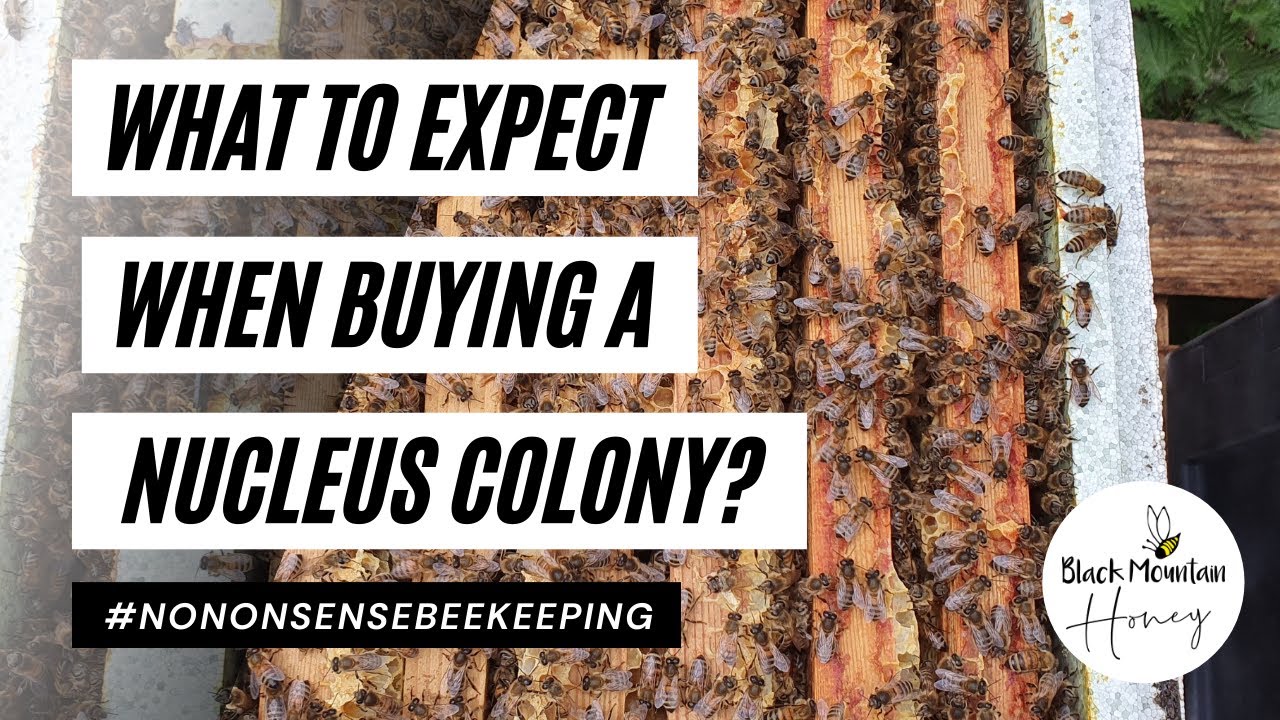
In this instructional video, Laurence Edwards of Black Mountain Honey walks viewers through the key factors to consider when purchasing a nucleus colony (nuc) from a reputable beekeeper. He advises ordering early in the season and selecting an overwintered, preferably marked queen from the previous year. Edwards recommends a 6‑frame poly nuc with a cell, using National DN4 frames for easy spacing, and ensuring all six frames are populated with bees, including 3‑4 frames of brood at various stages and two heavy frames of stores. He stresses the importance of gentle, well‑tempered bees, ideally an F1 Buckfast queen, and urges buyers to verify that the colony is disease‑free and has received proper varroa treatments and inspections. Finally, he suggests feeding the nuc with 1:1 syrup upon installation if additional stores are not present, and demonstrates a healthy nuc in the hive. The video concludes with a call to subscribe and acknowledges sponsors.
Chapters
Hi, I'm Laurence Edwards from Black Mountain Honey. Welcome to another episode of No Nonsense Beekeeping. Today we're going to talk to you about what you should expect in your nuc when you buy it from a recognized and reputable beekeeper. So there's a few things that I would always look for and I would always recommend when you're getting your nuc. We've discussed some of these in previous videos, so I'll go through them again just for the kind of clarity on this video. The first one is get your orders in early, so get your order in with the beekeeper as soon as you possibly can, and then you're likely to get that earlier on in the season. Next one is always go for an overwintered queen. You'll see differences in price. The overwintered ones are proven to successfully overwinter, and that's the one that you want. Later on in the season, beekeepers will make up nucs and they're called kind of summer nucs, and they're with a queen that's mated in the same year. They're never as big, they're not proven to overwinter, and you're less likely to get honey in your first year with them. So always go for an overwintered queen. Always ask them for a queen from the year before. So now we're in 2020, you want to go for a 2019 queen, preferably marked. I think for beginners it's always helpful to see the queen marked and ask the beekeeper if you can kind of see the queen before you buy it. I would always recommend for everyone a 6-frame nuc. So you can either go for a 5-frame or a 6-frame. My preference is always for a 6-frame nuc. It just gives you that either additional frame of stores or additional frame of brood, but it tends to be the bigger, stronger colonies that will be over 6 frames, and a lot of the poly nucs that they come in are 6 frames anyway. So I'd always recommend a 6- 6-frame nuc. I would always recommend getting the poly nuc with the cell. So some beekeepers, and I do this as well, I offer it in a Correx nuc as well, and we do that to keep the cost down, and there's nothing wrong with it. But if the beekeeper is offering you a poly nuc along with the cell for a little bit more, I'd always say go for that. It means that there's a lot less disruption when you come to put the bees into the Correx nuc, and you can just kind of pick up the poly nuc and take it away. Next thing that I would always recommend is the type of frame. Now we're going to do a video on the types of frames, but I would strongly recommend going for a National Hive. That seems to be the standard in the UK, and it makes things a lot easier to purchase and keeps the cost down. But also I would go for a DN4 variant. So a DN4 is a Hoffman self-spacing variant that makes it really, really easy to kind of get the correct spacing within the brood box. And you haven't got to mess around with plastic spacers. We don't like plastic. Ideally, if you're going to go down the DN1 route, that's fine, then you need the plastic spacers, or you need to use castellations. But we don't like castellations in brood boxes. I don't anyway. So if you're going to go down that route, you do need to make sure you get the plastic spacers with it. But I would recommend DN4 frames. Make sure that all of the frames are full of bees. So just because you're getting a 6-frame nuc You want 6 frames of bees, so if you open it up, you should see bees across all 6 frames. There shouldn't be just bees on 3 frames and then they've given you 3 frames of stores. If they do that, they're kind of selling you short. Make sure you get your full 6 frames of bees. I would expect to see at least 3, preferably 4 frames of brood in all stages, so that's kind of capped larvae and eggs, brood in all stages, and obviously the queen alongside that as well. And then I would like to see 2 really, really hefty, heavy frames of stores on the outer frames as well. That means that your bees aren't going to starve if it kind of turns rainy when you go to install them. Always try and get your bees from a reputable beekeeper and try and get bees with a nice temperament. So you don't want kind of someone's leftover swarm from the year before, you want nice temperament bees. It's probably the number one reason why beekeepers give up beekeeping after the first year It's not enjoyable opening up hives where they just sting you all the time, so go for a reputable company and get some really, really nice gentle bees. I would always recommend going for an F1 queen. An F1 queen is the daughter of an F0 queen, and it means that the characteristics are really, really strong and pure throughout the colony. So if you go down to an F2, then you're kind of opening yourself up for a lot more genetic variation, and especially with Buckfast, if you're go down to F2 and F3, they can become quite aggressive. So personal preference, I would go for an F1 Buckfast variety, and that would be my personal preference. Make sure that there is no disease. So ask the company and say, what checks have you done to ensure that there's no disease in my colony? Check that they've been treated for varroa. So you want to see a good autumn treatment and preferably a December treatment as well. Um, and then you want to see that they've been inspected previously by the bee inspector, either before you collect them or as they go into winter. You don't want any foul brood in there whatsoever, any of the brood diseases. You want to make sure they're as healthy as they possibly can be. Shouldn't be any signs of chalk brood, really, really healthy nucs. So then we touched on this a little bit in the previous video, but I'll just kind of, for the fullness of this video, I'll let you know. When you get your nuc, I would always recommend feeding it once you put it into the hive, unless you've got drawn comb or excess stores to go into it. If you're putting a 6-frame nuc into kind of a 10 or an 11-frame hive and you've got store— you've got frames of foundation, I'd give them a little feed. It's not going to hurt, just get them to kind of expand into that brood box, draw out those frames, give them a little bit of 1:1 syrup and it really helps them along. So I'm going to put my suit on, we'll have a quick look inside this colony and I'll give you an idea of what good looks like. This is what a healthy 6-frame nuc should look like. Absolutely bursting at the seams. These are going to come on really, really nicely this season. Completely run out of space here, you can see them kind of clustering up in the feeder, so we're going to put them over into a brood box now, give them more space. So that's it for today's video. Now you've got a good idea of what a good nuc looks like, so follow those steps and you'll end up with a really, really good colony. The number one thing I'd say is make sure that you get a nice gentle colony of bees. It makes beekeeping so much more enjoyable and you kind of don't have to worry about getting endless stings all the time. So that's it. Please hit the subscribe button. Please hit the bell so you're notified of every video. Thanks to our sponsors BB Wear and Abello, and I'll see you next time.