How To Do A Full Beehive Inspection - Complete Walkthrough For Beginners
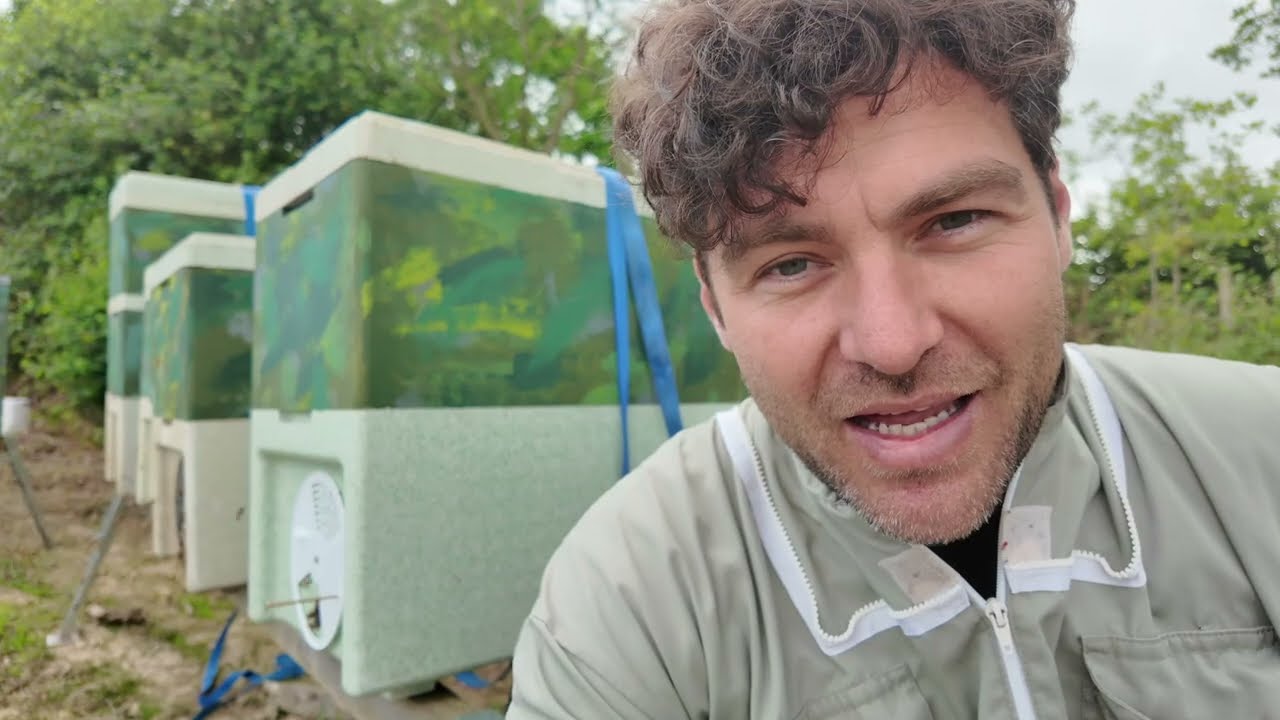
Laurence Edwards walks through a full hive inspection at his Black Mountain Honey apiary, checking brood patterns, queen presence, and colony strength. He demonstrates frame management, explains when to move colonies to honey-production boxes, and covers two drone-laying queen problems: one solved by re-queening, the other by a shake-out method that temporarily disorients the bees.
Chapters
Welcome to another Black Mountain Honey livestream at the apiary. I'm here with the bees, and even though the weather at the moment is pretty shocking, like it's downpour after downpour, in between the downpours, the bees are doing the business, filling the supers up, filling all of the boxes up, growing really, really well, expanding nicely. I've got a few jobs to do in the apiary today. I need to check on a couple of drone layers that I potentially want to change out. I want to change and move out some of these Payne's Langstroth extension boxes and poly nucs and put them into the Abello Lyson ones that I had planned for this apiary. You can see I've done 4 of them over there already, and I've just got another 3 to do today and one missing that I've got coming in the post soon. I'm going to have to try and retrofit that fancy paintwork that's on those ones up there, but I'm sure we'll do something nice and fun with those. Going to cover everything in today's live stream though. We're going to be looking for queens, we're going to be looking at laying patterns, we're going to be looking at swarm cells, looking for base, everything that I would normally do on my, my weekly inspections. Trying to get my words out there. I'm going to stick the camera back on the tripod, I'll get my veil up. Let's have a look and see how the bees are getting on. So it's crazy dealing with the weather that's going on at the moment. Very, very strange weather. When I was doing the, the ones over there, I got caught in a really bad, really bad downpour. Absolutely drenched I was, and, uh, I've only just about dried off from that. So hopefully the, the rain, uh, Stays away. But looking around looks pretty good. I don't think we're in for too much of a shower. I'm going to try and keep these inspections to around 45 minutes to an hour, so I'm going to be a little bit quicker than I was previously, although I do need to swap out some of the boxes. And the reason for swapping out the boxes, like these extension boxes here, they're good for overwintering nucs, but I've not got any excluders for them. And if I want to turn the bees in this apiary into honey production colonies, they need to go into beehives. and earn their living that way as opposed to just constantly being split off to make nukes. I had a message from a random lady on Facebook the other day saying, I work for a company called Cleaning Supplies 4 U, and I think you might have recommended us on social media the other day. So weird, because you recommended our gloves to people, these gloves here, brilliant gloves, and we sold out. We've had absolutely tons of orders. So they're just saying thanks for the recommendation, which I thought was quite nice of them. No affiliation with them whatsoever, never dealt with them before, but I was given a tip by someone about these gloves. I love these gloves, really nice and thick, but not too thick that you lose the dexterity. Strong, they don't rip, super long cuff, but a ribbed tight cuff, and that's about it. They fit really well. I'm an XL and they're a little bit small on me. I'd like an XL and half an L, maybe that would do for me. Right, let's get into these bees. So I am marking the names of all of the queens as well as I go along, and I cleaned out my truck. I like to get my truck cleaned out like once a week, like a good clean, just for kind of disease and apiary hygiene and stuff like that. And whenever I do it, I take everything out, and then for weeks I'm coming back into the apiary and I've not got the stuff that I need. So I've not got my pen, which is a bit annoying, but what I'm going to do is I'll put the cages and strap the cages back on the top and see how they're getting on. So we've got a few bees. Yeah, not too many bees up there. Still waiting to come up to this one. Let's take a look inside, see how the bees are getting on. Been a weird week in terms of weather. Very, very strange. For people who didn't see the live stream or maybe missed one, when I was doing the live stream here and trying to show people the elongated cell, I missed three queen cells and one of my followers, one of my subscribers. Pointed it out to me, and I came back and realized my mistake. So I came and fixed it, and luckily we got that queen successfully introduced, which was very, very good indeed. And let's get in now and see if we've got a good queen in here. So bees are looking good in there, remnants of brood. I can see eggs in there as well. Lots of stores, which is very, very positive. Seems not that long ago that we were talking about like starvation and all of those problems that were going on, and since then it's just— it's been okay. It's been a lot better since then, I have to say. So there's my queen, green marked, F1 Buckfast. You can see some of her brood now starting to turn into capped brood. So very, very happy about that. Really, really nice strong laying pattern. So successful introduction, very, very happy about that one. So what I'm going to do is I'm just going to quickly assess some of these colonies. So for this one here, this one's only on 6 frames, so I think that's probably going to be the weakest one out of all of them. And because I've got 4 hives that need— oh sorry, because I've got 4 hives but I've only got 3 Hives that they can go into. 4 colonies, 3 hives. I just want to make sure that I'm leaving the weakest one in its poly nuc. So I'm happy with that. You might think, well, that was a quick inspection, but I saw everything I needed to see there. I saw eggs, I saw a nice laying pattern, I saw capped brood. I didn't see any swarm cells, I didn't see anything like worrying in terms of disease. The bees had plenty of stores. I saw the queen. So done, closed. No, no need to kind of go through the colonies and Be pestering them or doing stuff or like opening them up and keeping them open when you don't need to. That is the weekly inspection done on that one there. So let's move along. That one there was the F1 Buckfast. Come down a little bit for you there. Need to make sure I'm getting the cages back on my tracking system. So this one here is an F1 Buckfast as well. Let's get inside this one, see how this one's coming along. It's considerably stronger, this one here. So second frame in, and they're drawing out combs, which is really good to see. I've got 4 or 5 frames up here now, top box, that are drawn. No eggs in that one, but I can do a little bit of checkerboarding in that top box now. Got enough bees in there. To warrant that. No eggs being laid up there as well, which is good. I'm not a massive fan of checkerboarding when you've just got like a random frame of eggs up there, because they're going to know where to put that frame of eggs to keep it in the best condition, or keep the eggs in the best condition. So when it's just frames of stores like that, and you can see we've got a decent, decent amount of bees underneath there, so when it's just stores like that, you can safely checkerboard. So I will, I'll move the The frames of foundation into the middle, intersperse them into the frames that have been already drawn out a little bit. Always check in the feeder, make sure the queen's not sitting on the feeder. I know, I know I showed you this last week. I can kind of lean forward a little bit here as well, but look at that frame of pollen. Really like to see colonies where they, they go A little bit wild for the pollen. You don't get the— it appears like you're not getting growth and you're thinking, well, just go out and, you know, bring something back that's going to boost the colony and lay some more eggs. But give them a few weeks and it always, always stimulates that queen to go. Lots of pollen coming in. So I'm not sure if I showed you that frame on the last week, but that was the other pollen frame. But look at it now, completely laid up, lots of capped brood. Very happy bees. And again, frame next to it, broodal stages. Really nice. So not seeing the queen in here, and I could close this colony up now, but I will, I will persevere with this one just to see if we can see that queen. Right, so it's made my mind up on this one. It's definitely bigger than the other one. That's kind of like my benchmark. If it's bigger than this one over here, it's going into a beehive. So we will transfer this one over. So the way— whenever you're transferring things over, the bees will always get like a little bit confused and they'll try and go into the size of hive, the shape of hive that they're used to. So you need to be quite quick and you need to just kind of get all of these done as quickly as you possibly can. So I'm just going to move the camera back a little bit so I can kind of film all 3 of these in one shot. So these 3 hives here, kind of 1, 2, 3, they're going to be the 3 that I put into the hives. And I'm going to do it by stacking that box up here, I think. Yeah. And put it up there to start off with, and then I'm just going to put the new hive in its position. And you want to work quick because the flying bees will now go back into the adjacent hives. And I'm not too fussed because this is a super strong hive and the one next to it isn't quite as strong, so not fussed about that. But if they were small little hives, you'd want to, you'd want to almost do it, take all of the 4— oh, here we go, it's gonna be fun on live— all of the 4 nucs off at once and then just put all of the 4 hives back on. Nearly twisted my ankle. One of the things I love about the Lyson hives and these stands is the way they stack in, like completely stack into the wood bits that go across. Right, so I've got my new hive on, obviously Langstroth, so it needs to be the cold way. Cold way means the frames are like that, warm way means the frames are like that. It's a bit of a bugger actually because I love the warm way. It's one of the good things that National's got going for it. But what I like to do whenever I'm moving things over— and again, beautiful frame of drawn-out comb there, a little bit wild— but what I always like to do is I like to find the queen before I start moving frames over, because then if I can't find the queen, I've got to start looking in 2 boxes. Where at the moment, I know, I know I've kind of split this into 2 already, but I know that she's going to be in the nuc half of it. If I start putting frames in there, then she could be in any of the boxes. So I'm just having a look down here, going through, seeing if I can find that queen. Should be pretty easy to find. Like, there's no, no signs of any swarming in here. There's eggs, so she was definitely here kind of like a few days ago, but I reckon she'll be in here. I love it when colonies get to this size where you've got like 3 or 4 frames, like completely capped over frames of brood, because they are a couple of weeks away from like massive, massive expansion. And that's where beekeeping gets really fun, when the bees expand at a rapid rate like that. And I'm not too fussed about swarming at this stage of the year. Like, people have maybe misquoted me a little bit on the solstice and not being fussed about swarming and stuff, but The summer solstice is the signal to the queen to stop laying quite as much, but then you've got all of the brood to emerge that she laid at the height, so you don't really start to see a drop in reduction of swarming until maybe 3 or 4 weeks after. But these are little, little baby nucs, these aren't big strong colonies, so I'm not really worried about any of these swarming. They've got loads of space. Right, I can't find the queen, so I am going to just do what I just said not to do here and start, start putting them in. I'm going to do a little bit of checkerboarding just with the mature frames and the slightly drawn-out frames. They're the ones that I'm going to go for because that gives the bees, the queen, really good access to lay. Not going to go aggressive and mess them up too much with frames of foundation at the moment because that will confuse them a bit too much. They'd probably cope with it, but this way, the fact that I've got lots and lots of nice frames of drawn-out combs, that bee, that queen is going to be really, really pleased. So I've not looked properly at all of the frames up here. The queen might be up here, so I'm just checking to see if she's up there as well. Just taking one frame from one box, which is a nice frame of brood or frame of eggs, and then interspersing it with one frame of drawn-out comb. If you've only got foundation in this stage, I wouldn't intersperse it with foundation. It's a bit too aggressive When the colony is not big enough to cope with it. If you've got a huge, you know, if this was completely full to the brim, ready to swarm, then you could get away with that, that kind of aggressive checkerboarding, but definitely not when the colony is on this size. Only on like realistically, what, 8 frames of bees? And they're not full frames of bees, some of them. So you just want to be a little bit conservative in terms of what you're asking that colony to do, right? This colony, this Ah, there we go, there's my queen. Beautiful queen. Right, look, get you a bit quick close-up of that queen. Here we go. I've worked out that this camera here will let you get a pretty good close-up of a queen as well. She is a beauty, isn't she? F1 Buckfast queen. Right, so that's one done. I'm always happy once I know that the queen's in there. Queen's in the middle of the frame there, definitely not going to squish her. Putting that in, and then what I like to do is move one frame over, and then I'll squeeze a frame in between. I just, I hate squeezing the last frame in next to where the queen is. So I know the queen's on the first frame there, and I'm putting this frame back into slot 3. And okay, I might, oh, it might squish a bee or two. You're always going to squish a bee or two when you're doing bee inspections, but don't split the important, don't squish the important queen, which is, you know, your queen. The important bee, which is your queen. You can tell this is live, I can't get my words out. Right, so I've got one frame of brood left, that's going to go in the middle up there, and then I'm just going to kind of pack it out with the best looking frames that I've got up here. And I am short of frames, I've just realized I'm going to be short on all of these boxes of frames. How am I going to do this? Right, what I'm going to do So, so tip, always count the number of frames you need before you start, unlike me. Final thing before that is I'm going to tap the bees in here, one tap, get them all out, and I'm just going to go and put the nucs back out of the way so they're not getting used to that sight. So I am I'm gonna be 8, 6, I'm gonna be, oh, 9 short. Yeah, okay, we'll do this anyway. So this box here was, was kind of empty, didn't really have a huge amount going on in it, and I've got 8 frames in there. So I'm just going to pinch those frames because that one, it was, it was taking its while, taking its time, sweet time to get going anyway. It's a little bit behind because it had a failed introduction, so the brood isn't emerging just yet on that one. And then I need to go and get another hive for that one anyway, so the timing here has worked out pretty good. Right, so let's put the roofs back on, put the cages on. So remember which one's which. These are both F1 Buckfasts. Right, really important thing to do is always check your entrances like that. I'm hoping the audio was okay there and it's not just turned itself off and turned itself on again. I'm not having luck with audio, am I? I like to, um, keep this on basically the fully open setting, so I'll keep it like that. You can have it like out or in or whatever. I just like to keep it as open as possible this time of the year. It gives me like a little bit of flexibility for later on in the year. You can in fact just kind of do it like that. I'm going to leave it on. There's— I normally do it another way like that, but I don't want to lose it. I just want to get them in. So let's just focus on, focus on getting them in. I am— I'm still one frame short in there, aren't I? What am I doing? I genuinely can't count today. Here we go. Right, so that's one hive completely done. Now you might ask at this point, should you, should you feed? And I wouldn't. You saw there's, there's a good flow, there's bees coming in, coming out, everyone's happy, so you don't need to feed. And why would you feed if you're gonna risk contaminating stuff? I said this on the live stream the other day, I can't remember ever feeding like after the middle of April before. That's not really what you do in beekeeping. And if this is your first year and you've done loads of feeding and you're thinking, wow, You have to feed bees a lot, then, uh, it's not normally like this. It's normally the bees will just about take care of themselves and you only need to feed maybe like not even in the spring. You don't really need to feed in the spring a lot of the time, and then you feed once in the winter, like a big heavy feed. So that's that done. Ratchet straps— I wouldn't live— I wouldn't keep bees without ratchet straps. I love them. Everything's safe. Like, I know If we got 80 mile an hour winds tonight, this beehive would be fine. There's going nowhere whatsoever. You've got splayed legs, everything strapped down really, really good. Right, let's go to. I've just realized that I've got an extra roof that I've not put in. Organized, eh? Oh well, I hope this is enjoyable. This is this is real life beekeeping. This isn't kind of polished YouTube beekeeping where you see. All of the fancy bits and it's just like 8 minutes. This is, this is the graft, this is the real thing. Right, got an extra roof on that one, keep that there for the time being. I'm going to do this one in a slightly different way, so I will do it— where shall I do it? I'll come and do it at the front so you can see. So this one I'm just going to lift the whole hive up and out of the way, and I'll just put the new hive directly into position. Get the straps sorted and then try and kind of lure all of the, the flyers in. You can see them congregating already, but if I can get them going in straight away and I can get that queen in there kind of as soon as possible, hopefully it will avoid any of the drift. There we go. If you've never, if you've never seen these poly Langstroth hives before, Disclaimer, I do do the social media for Abelo, but they are really good, brilliant, brilliant hives. Just rock solid, rock solid, work together really nicely. They just feel good, good and strong. Right, so the top box here is again looking really nice, so you can see bees up in the top box. I just need a place to put this top box. So what I'll do is I'll take the, um, the floor, the roof, turn it into a floor, and then that way I know if the queen was in that top box, she can't actually get out anymore. Um, I just— I'll show you down because there's quite a nice little nuc down there. There you go, you can see it. But I will— I'll pick the frames up and then I'll show you the frames as I take them through. So just shaking off the feeder. Hopefully we find the queen straight away, but I think just to speed things up, I'm just going to go frame at a time. I'll show you the frame first, I'll have a quick look, and then we'll just pop her in. And we won't checkerboard, we'll just go one frame at a time, keep it nice and simple. So again, nice frame of brood. Really happy with these bees, like the F1 Buckfasts, and, and this colony here is turning into a Carniolan, but Temperament's brilliant, and it's just so nice to deal with nice, calm, friendly bees. A few drones on that frame there, nothing to worry about. Lots of— no drone brood that I can see, but just a few drones congregating in one corner. Good to see drones. Drones are the sign of a healthy hive in reasonable numbers. If you start seeing 80% drones, then you've got a problem. If you're seeing queens like that, you definitely don't have a problem. That is a beautiful black Carniolan queen. Really, really good looking. And then just as I was looking on the other side of that frame there, you could see a number of bees doing a waggle dance, which shows obviously that there is a good flow on. And you can almost smell that there's a good flow on. You can see it in the frames. The bees are happy, they're in a good mood. I've got nice heavy frames like that, really good and heavy. I'll put the heavy frame over to one side there so you can see. I'll put all the brood on one side, I'll put the stores on the other side. What I don't want to do is I don't want to kind of use checkerboarding to my disadvantage by putting frames of stores in the middle. I'd prefer to put frames of empty drawn-out comb or maybe some eggs in them, put them in the middle, keep all of the stores over to one side or even on both sides, and then that way you're setting up the bees for success. Right, so that's the second one done. Get the rest of the frames in there now. I'll pinch some more of those frames. I know I've got a drone laying queen up here that I need to come and fix, so I'll have to put on my list, I'll have to put a few more frames just to fill in the gaps. But if you find yourself in this situation where you've not got enough frames to fill the gaps in a beehive and the bees and the colonies are like this, really not the end of the world. All you do is you just come back the next day and fill in the gaps. Bees aren't going to do anything in that time. A few bees hiding in the feeder there. And again, one good tap here. And the farmer, the farmer is driving past. I really hope he can get through. I don't think he can. Right, so that's going to be very, very good fun. Oh, we can get through. Can you get through? Come Yes, I've not got to stop the live stream. There you go, that's— that is real. For all bee farmers out there, you are going to completely appreciate that. Top man. We are— we are so, so lucky where we are in North Wales. Just people in North Wales are really nice anyway, but the farmers are so generous, do anything for You know, section you off a bit of land, build your fences. You have to repay the trust and repay the faith by, you know, not leaving gates open and stuff like that. But they are only too keen to help. They want to plant kind of wildflowers, they want to plant green pasture and herbal meadows and herbal leys, and they just want to do everything they can to help out. And, and they really do, and it is noticeable. And I'll tell you what else is noticeable is that big massive black cloud behind me. This is exactly what happened yesterday or the day before when I was doing this, that it started off so brilliant and I thought, well, this is, this is the time to get in and do my work. And then within an hour it was carnage. Right, tap the rest of those bees outside the front. It might look aggressive what I'm doing there, but I'm making sure that I'm not squishing any bees. And then all that happens is the bees just fall off into the air and they'll fly back in. People say, oh, you should use a bee brush or you should use a feather, and I tell you what, I've never got on with a bee brush or a feather, and all that happens is that you just squish loads of bees. So, you know, you've got to do what works for you, and I've found what works for me is tapping the boxes like that. And I want what's best for the bees. I don't want dead bees. Dead bees just means they're going to get angry and they're going to attack me. Right, this one here has got an extra box on. If this extra box has got frames in, then we've got enough frames up here. That would be good. So we'll do the same again. You can still see me. I'm tripping. We should have a sweepstake how many times I trip up. Somebody else said that they should have a sweepstake on how many times I say F1 Buckfast Queen. Definitely say that one a lot. We do use a lot of F1 Buckfast Queens, so Kind of got a roll with that one. Right, let's see what we've got in the next one. Hoping that audio is good. Here we go. I do think over winter when it gets a bit softer, this ground— I'll appear with— yeah, I've got to frame something to like level the ground out a little bit with. It is a bit, it's a bit intense, the ground. Oh, it is disconnecting the audio. Why is it doing that? Right, I'm gonna go with a new stove outside, and hopefully that's okay now. Sorry about all these issues, we will get there. We'll do a perfect stream one day. Right, so this colony here, probably the weakest one, I think, out of all of them. Definitely the weakest one, right? So I might actually even scrap this one and go back to the first one and put that one in. Let's have a quick look what's going on with this one. Might just be that they're a bit quiet, not wanting to come off the frames. Oh no, there's a decent nuc in there. This is good. Yeah, looking good. Just a lot of capped brood waiting to explode, this one. So we will transfer this one over, that's fine. Might just leave this one in a single brood box though, because it is a little bit behind the rest of them. Not quite as many bees, not quite as much brood, but more than enough to transfer it over. For me, this time of the year, I'm always erring on the side of an early transfer. Do this in April and it's like the complete opposite. You can Stuff a colony. You can compress a colony down, and you can really push them far without them swarming. There we go. There's my queen. So we're good. Actually, surprisingly dense the amount of brood that's in here for a colony that's not that got that many bees. So I'm happy with that. That's like three really big frames of brood there. So this colony will take off quickly. And then I've got a frame of stores there. So now we're just going to build the frames out around that. So what I'll do— this is a good way to kind of get your colony set up here. I'll show you it once I get this other one out. So I've got another frame of stores, so 3 frames of brood in the middle and then a frame of stores either side. And then I've got a frame here, it's got a little bit of pollen in. I'm just gonna Put that further out, and then I'm going to use the additional frames. So it's not really— it's kind of a checkerboard. You're basically checkerboarding, but you're not checkerboarding the brood. So you've got all your brood in the middle, and then one frame, and then another frame on this side, and then your frame of stores. So you're basically checkerboarding one frame in between a frame of stores and a frame of brood. About as simple a checker checkerboard as you can get. One tap, everything out. Tidying everything away as I go, as best as I can. Try not to trip over. Hoping these live streams are educational. Hoping they're enjoyable for everyone. I think people enjoyed the other one the other day we got stung in the face. That was good fun. Not been getting stung anywhere near as much in the face recently. It is the calm, gentle F1 Buckfast queens, but I kind of go back to some of my old videos and I used to get battered by my bees. And it's— I went and helped someone else with their bees the other day. I didn't, I didn't bring the cameras, and they were a little bit angry, a little bit feisty. And I just thought, you, you forget about it when you stop Dealing with like angry bees, you do forget how— so just on this one here, I'm gonna, I'm gonna put the crown board on and then put the frames on, and then that way I'm, I'm not giving them too much space, I'm not giving them too much work, and then I'll just put the frames above ready for when I need them. But as I was saying, you kind of, you forget how difficult it was. You forget the sensation, the stinging sensation in your arm where the bees Were blitzing you, you know, pumping their, their venom. Is it called venom with a B? I don't know. Pumping their stings into you, and it, and it hurts. And I always remember the taste in my mouth. That's what always gets me if I get stung a lot. And I think other people will appreciate this. You get this kind of almost like metallic taste in your mouth, and it makes you feel like a bit nauseous and a bit sick. And it's probably not It's probably not a good thing. It's probably like the early, early stages of anaphylactic shock. But luckily for me, I don't get too bad a reaction with stings. It's never that bad. But I was doing these bees the other day, and I did— I remember, and I thought, I'm— I can see why I nearly quit beekeeping now, because they were so horrible and so aggressive. Yeah. And I, I don't want to— I don't want to alienate any people out there in terms of the bees that they keep, but it was what I was told, which was don't worry about the aggression, what's more important is that you keep dark local bees. And I just never really liked that idea, and often in the end went off on my own away from the local beekeeping association because they wouldn't tolerate Buckfast. And I've had a number of people say that to me like this week, saying, mentioned that mentioned my local apiary that I'm buying some Buckfast from Lawrence Edwards, and yeah, it didn't go down too well, which is, which is a shame. Like, and I understand it, I understand the reasons for people wanting like local native bees, and maybe I don't, maybe I don't understand the reasons because it's a mongrel, isn't it? How can you, how can you save a mongrel? You can never get back to a pure bee. Right, I'm gonna, I'm gonna switch it up. I'm gonna do it this way around because I think it's Slightly better for the light. I'm going to unstrap this one as well. I've started writing. Is it stuck yet? Oh, I did it in the rain the other day, so I just need to remember which one's what. So Carpathian, VSH, in case I get it wrong. Excellent. We've got bees up there, so let's just take a quick look. This is the Carpathian one, so you can see this is the work that I did last week. These are drawing out the combs nicely. You should be able to see it really nicely there in the sun. I do love a summer's evening inspection. There's nothing quite like it. End of the day, you've done all your jobs, looked after the baby, and you come out and and you're checking out your bees and seeing how they're getting on. And it's even better when the inspections go well and the bees haven't swarmed and there's nice frames of brood. Oh, there's the queen. So there we go. Well done for anyone who spotted it first time round. There's the queen on there. So that's as good as an inspection for me. Don't need to see anything else because I'm confident in my queens and I'm confident in— if you're getting good quality young queens first year, If they've got space like this, they're not going to swarm due to space. And if they're going to swarm before that, you don't want the genetics. So it's— I don't lose many swarms now. I do obviously lose some swarms. Anyone who says they never lose any swarms is lying. But I will— I'll limit my management and I'll try and make my inspections a little bit smarter. If you've got big heaving colonies on 3 supers and 10 frames of brood, and there's no swarm cells, then I'm doing a Demerest split. I'm doing something before they get to the point of swarming. And if I've got a colony like this that's on 18 frames, it's got 18 frames in it, but it's only on 8 frames of bees and, you know, 4 frames of brood and loads of frames of foundation, I don't even really need to come in and do an inspection. You could probably get away without even doing an inspection. But I like, I like to come around and just check that everything's still okay. I like to come around and check to see that the bees are still here, the main thing really. And obviously for me, I've got to come and do some videos, haven't I? So, um, looking good in this one as well. This is one of my favourite queens, this VSH queen in here. We've been selling a huge amount of VSH queens, and I like the— I like the idea behind the VSH, I really do. And I think it's a good idea just to give the bees That additional help in terms of these queens' daughters' proven behavior to clean out mites. But I don't think it's a case of, right, let's just buy a VSH queen and then not treat, especially not, especially not in the first year. Like, if you're requeening a colony, you've got to give it a full season before you get to the point where you can trust the bees in there are 100% daughters Of the Queen. It's definitely going to start raining. If you see me run off ducking under a cloud, then, uh, we'll call it— we'll call it quits on the stream. But this colony looks nice. They're drawing out frames down here. That's a lovely frame. I'll show you this frame here. Oh, don't ever waste a frame like that, which is a perfectly drawn out frame with nothing in it, like literally empty, devoid of anything. That is a really valuable frame, and I'll show you where I'll put that in a minute. Let's just quickly find the queen, see if she's in here. Nice frames of capped brood, double-sided. I'll come around and show you that one, why not? There's a good frame of brood. What's particularly nice as well about Langstroth frames of brood, because they're like Probably equivalent to maybe 1.4 times the national, I think it is, something like that. So when they emerge, you get a huge surge in the number of bees. Really, really good. That's a nice frame again. So remember I said about that one that was completely devoid of anything? That's what this frame would have been last week before I put it in the middle, and it might still look devoid of anything. It's not. It's laid up top to bottom. And I've just made that life really, really easy for the queen. I've just dropped my cage there, so I'll get that back in a sec. Just by giving the queen exactly what she wants, where she wants it, which is space to lay in the centre of the brood. That's all she's interested in doing is just pumping out eggs, keeping that colony growing. Another lovely frame of brood there. And as I said, I'm not too fussed about finding the queen. I like to show you. I like to show people on on the live streams the queen. We're live streaming to a lot of places again. We're going to Facebook, to Instagram, to Twitch, to YouTube, and to Twitter all at once. Probably got about six people watching in total, but we are we are live streaming to five different platforms all at once. So you never know. You throw enough beep, some of it might stick. That was the Lawrence Edwards certified. Censoring I had there. So what I'm going to do with this frame, I'm not going to find the queen in this one. I'm just going to take that frame of drawn comb and that is going in between my 2 most mature frames of capped brood. And for anyone who's like super observant, have a look at that. Yeah, that is next to that frame there, so it's 4th in from that side and it's next to an older looking frame. And I bet you it's laid up with eggs next time we come back. Or capped brood. Right, just getting my cage back. I do have some nifty pins. I've gone through so many different methods of marking hives so I know what queens are in them and notes and stuff, and I bought some pins with like some metal numbered discs, and I thought this is brilliant, this works really well because it was like a removable— you can like move the numbers round as you move the queens. And just came back one day and they just all blown off and I lost all my records. So I am back to writing things down on like with an oil, oil-based pen and cover it in paint when you don't want it anymore. Right, these 2 here are F1 Buckfast. I think this one might be the drone one that we need to replace. Let's move that camera, take a look. Hopefully that audio is holding up now. I think, I think it is. Yeah, sorry about that blip before. Oh, if it's a drone layer, it's a very strong drone layer, this one, especially if they're downstairs as well. Wow, it's a good one. Let's have a look though. Just jumping straight to the— oh no, that's not a drone layer. That's not a drone layer, and that is not a Buckfast queen. So I've lost my cage on that one. What's going on there? That must be the Caucasian. She's doing well, isn't she? Look at that laying pattern for a Caucasian. Not that they have bad laying patterns, but that is— let me get you in super close there— that is a Really super dark. That's probably the one that I can guarantee that I can identify because she is so, so black. Yeah, really, really nice. And that's not just like a one-frame fluke; that is repeated across a number of frames. So checkerboarding without a doubt that one because that's a big strong colony, lots of bees. They can cope with it. Gives them something to do, helps suppress the swarm instinct, helps me get stuff drawn out quicker. Why would you not do it? That's it, inspection's complete. That's the biggest colony today in the apiary because that bottom box was basically full. I wonder where I put that cage. I don't know. I've even written on the front F1 Buckfast because when I moved them over I wouldn't have seen her. But that's not— that's the Caucasian. I'm going to go back. I'll tell you what, anybody who wants to swat up, you can go back on the channel member videos and you'll be able to tell which one that is. It's the, the 7th in from that side. Bet you it's a Caucasian. Right, this one must be the droney then. Let's have a look. Looks more like a drone layer to me. Yeah, empty top box, half-filled bottom box. That's what I'm thinking with a drone layer. Frame full of stores. It's a bit spotty. It's not, it's not terrible, you know. He says, right, definitely a drone layer. If you're seeing that in your colonies, you have got yourself a drone laying queen. You need to fix drone laying queens pretty quick. And I've found the queen up here, so I think I gave her a chance last week to prove to me that she wasn't a drone layer. But she definitely is. So I, I know this is horrible, yeah, and I know I'm probably gonna get loads of abuse on here, but I'm gonna do this before I get told off, right? So that is— I've killed the queen. That is me killing the queen, and I'm just going to chuck her over there, and I'm going to tell you why that wasn't a really horrible thing to do before people start hating on me for killing bees. If I hadn't have killed that queen, every single one of the bees you see here would be dead. And every single one of the bees in that colony there would be dead without a doubt within 3 months. So by killing that queen and coming back and introducing a brand new queen, and I'm going to have to— once I've got that new queen laying, I will add some more brood in there as well because this colony is going to be really low on worker bees. But by doing that, I've secured the future of all of the bees here and that colony going forward. You've got to be a little bit ruthless sometimes when it comes to beekeeping. You can't let things like that just go on. Because nobody wins in the end. You don't win as a beekeeper. You don't get a prize at the end of the year for being the world's nicest beekeeper. And ultimately, you, you're failing the bees. So it's not like you're doing— oh, I'm doing the right thing by not killing that queen. You're doing the right thing by killing that queen. And the responsible thing. Because if you don't kill the queen, I'll tell you exactly what will happen as well. That colony will fail. It will limp into winter. And it will fail, and it will leave behind— because there's not that many bees in there, it'll leave behind all of its stores, it will leave behind all of its old frames, all of its drone comb. And what will happen is other bees will come in and rob it, and if you've got a disease issue in there, you've just infected your entire apiary. So by not killing that one queen and fixing the problem, you're potentially killing hundreds of thousands of bees in your apiary. So it is the responsible thing to do. I know, I know that'll upset some people, some So I am sorry, it's not nice to see, but that is the right thing to have done there. Right, from one drone, from one drone layer to another. This one here I thought was definitely queenless, and then we came back last time and we found eggs. So now I'm not sure what's going on, and I suspect we're going to come in here and find a drone-laying queen, another one. But they might prove me wrong and we might find capped worker brood. If we do, brilliant. Happy with that. This one here, slightly more vicious, also on 14 by 12, also on plastic frames. So lots of different things going on with this colony here. Still not drawing out the frames, but to be fair, there's not really enough bees in there at the moment. I think I've just spotted some drone brood. Brilliant. Drone brood. So we've got another drone layer. That is a natural mating, that one, as well. And you're gonna get that this year. The weather's so bad, like, my success rate's gone from maybe 65-70% to 40s. A lot of that at the moment. So this one again is, is going to be a failed one. It's a small colony here, so I will have a quick look through. But what we might do with this one, if we can't find the queen in this one and kill her, what I will do is I will just shake these bees out. All of the bees will go into other hives around here. I'll completely move the stand, and then I'll just clean up and recycle these frames, which at least, at least that part of the frame recycling is quite easy to do. Never seen the queen in here, so it could Could be laying workers, but you, you'd see laying workers. You'd see the multiple eggs in the cells. You'd see the cells, the eggs not all the way down in the cells, just kind of sitting on the walls. So I do think it is a drone-laying queen in here. It's definitely, definitely a drone layer. Definitely full to the brim with drones. Never nice, that. Worst thing in the world when you go into a colony, you find eggs and you think, oh, Got some eggs. We might be on to a winner. And then you— there, then you find drone brood. Right, so can't find the queen. So what we'll do on this one is we'll do a shakeout. And let me just move everything back a little bit so you can see exactly what I'm doing here. You need kind of like a bit of a far away view of this one. So a shakeout like this in an apiary like this works pretty well. The really annoying thing is that they're all going to go next door into the other drone layer, but that's fine. So all you're doing, you're just shaking all of the bees off into the air is the way to do it, and you'll see they're coming back now. So that shows you first not how to do it. If you shake them off like that, they'll just come back into the air. So what you want to do— they'll come back into the air, come back to your hive. So what you want to do is take the hive away Completely remove it. But not only that, remove the stand, remove just everything. You want to completely confuse these bees so the bees have got no idea what's going on. Right, so this stand can come up here. That can be your new home, completely out of the way. And then at this point, You get your hive, and I know I'm standing right in the position, but you just shake all of the bees out. You can lay the frames on the floor; they're all just going to get scraped back. I'll reclaim the wax if I can. I don't want to take any of the bees back with me, so I'm just shaking everything out. Ah, and that is why livestreams. brilliant. So did you notice the massive mistake there? Full to the brim with syrup, that feeder. Should have checked. Doing stuff in a rush though. Right, so that's all of the bees out, and then I'm going to put the frames back in over here. You can see them all going back to it. They're not stupid, the bees. They know where they want to be. Now that syrup on the floor, that is not ideal, but it is really not the end of the world. It's very, very different to honey on the floor. Honey on the floor, huge disease risk. So there we go, that's a drone-laying queen shakeout. 2 drone-laying queens there, 2 different ways to fix those drone-laying queens. One is a shakeout. All of these bees, I'll show you at the end, they'll find their way back in. And you can actually see over here already, see that hive there? Do it the other way. They're trying to get back in there, and they will. They'll just beg their way in there. They'll be quite happily going in there. Um, so I'm gonna, I'm gonna call it a day there. I'm not gonna do the last 2 because when you get flying bees in the air like that, last thing you want to do is start opening the colonies. They'll go into real worry mode. But I hope that was useful. Always fun doing these live streams, always something completely different. 2 drone layers there. I need to bring one new queen up to requeen that one, and we've shaken one out. Oh, we'll repurpose all of that wax, scrape it down, sterilize all of those boxes to make sure they're perfectly clean for next time. I'm going to get in the car and take a little bit of a breath, have some water. I hope you found that enjoyable, and I'll see you next time.










