How to Inspect Bees Before Winter: Essential Hive Checks for a Healthy Colony
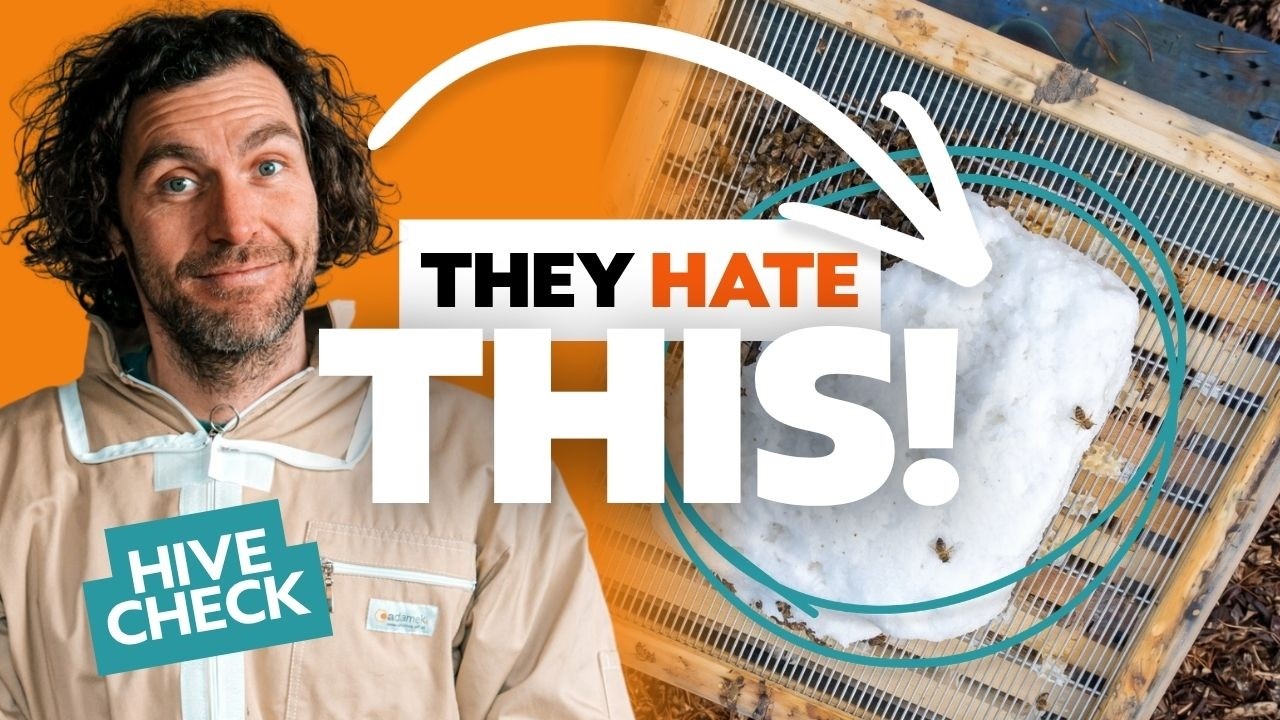
Laurence Edwards of Black Mountain Honey shows how to prepare nucleus colonies for winter by condensing them into smaller boxes, checking for live bees and food stores without opening the hive, and using fondant and oxalic acid treatments. His colony loss rate stays below 1 percent across 120 hives.
Chapters
Hi, I'm Laurence Edwards from Black Mountain Honey. We're at the apiary today and we're gonna have a look at some of our overwintering nucs, see how they're getting along. All right, so we'll have a look at these 3 nucleus colonies here. I tend to run my overwintered nucs on doubles like this. I've got a normal nuc and then I have a double chamber there with a feeder on top. That means I get 12 frames of overwintered brood. Now, sometimes they're just not big enough for that, and then if they're not, they go into the singles like that. The idea with overwintering them is that you want to kind of condense them into the smallest box possible. Any additional space in there is wasted space because they have to generate more heat to keep the entire box warm. That's the whole idea of overwintering. So we're going to take a look in them today, see if they've got enough food. They've had their varroa treatment for December already, so they should be nicely low on mites. Do a couple of checks on that next week, maybe do a video on that as well. But basically we're checking to see, are they alive, have they got enough food, that's about it. So I strap all of my hives up like this. It's quite windy up here, so we strap them down to the pallets, make sure they don't blow over, and they never do blow over. Nice low center of gravity. And as you can see there, first colony is alive and well. So I'll get a little bit of a close-up on that if I can. So we'll come in and you'll see lots of food, lots of active bees. It's the 30th of December and the bees are very happy there. So it looks probably like there's quite a lot of excess food in there. There's not. They'll get through all of that whatever happens come the spring. And that's about it really. So that's the check that I do on them. So they're happy, they're good to go. Check the next one. And again, much smaller colony here. So you see kind of the difference between the colonies. So this one, you come in and you can see there are bees, there is food. That's all I'm going to check for now. Like, I don't start pulling open the frames or looking for queens or any of that stuff. All you can do at this time of year Is damage to the colony. So you just check to see whether they're alive, you put the lid back on, and you say, right, we're happy with that. Strap them back up. Those 2 are done. So it's a very, very quick, simple check. Let's have a look in this little double frame, double colony here. Again, nice sound is always a good, good thing to look for. Nice little roar. We go in there and again you can see bees, you can see they've got lots of food. They kind of burrow their way up through that first layer of fondant there. I find with my nucs they always need fondant. I never, I kind of never get to a year where I come to December and the bees have got enough food, and I'm not sure, I'm not entirely sure why that is, but I I kind of just manage it that way and stick a bit of fondant on them for it. It's cheap and it's insurance, and that's the way that I see it. If I was getting to kind of April, May each year and there was absolutely tons of fondant left over, then I'd be a bit worried and I'd be concerned that it'd be contaminating the supers. But I can guarantee this will be long, long gone kind of come March, and then I'll probably start doing some stimulative feeding there to get those colonies nice and strong. So what I do with my overwintered nucs is I keep them in this configuration, I build them up nice and strong to overwinter. I feed them with fondant, I oxalic treat them in December for varroa. I've already done one of them in September to keep the mite drop low. I do a check in December, do you know what I mean? I'll probably come here now once a month and just check to see whether they're alive and if they've got enough fondant. If not, chuck a bit more fondant on. Come end of Feb, early March, I find around here, I'll do a check and And see if they need some stimulative feeding. We tend to get quite a lot of pollen coming in around that time, and if the pollen's there, I might give them some 1:1 syrup and start to get that brood going. It's always a gamble though, because if we get like a really cold spell after that, they need to work harder and keep that brood warm. But I've found around here it's relatively reliable around that time. You might get a bit of snow, but like I say, it's just a gamble. The fondant's safe, so if you They will— the fondant will stimulate them, not as much as the syrup will, but as long as they can get out and get the water, that will keep them going. Around April time, I'll probably put some pollen sub on there in the form of a patty, and that really kind of gets them going. The aim for me is that come April, back end of April, middle of May, I want really, really strong nucleus colonies like in these single sixes here. I want them absolutely Absolutely bursting out, because when I sell them to someone, I want a nice strong colony that I know is going to survive. We make sure that there's 3 frames of brood and then 3 frames of stores, and then we kind of give them instructions on how to install that into a new hive. So let's go look at some more. Let's have a look at some of the bigger colonies. Right, so here we are with 2 different colonies. So I tend to overwinter on a double brood configuration. Now I'm moving away from that now, as you've seen previous, uh, in a previous video. So I'm moving over to all I'm using is 14 by 12 brood boxes. And the reason for that is that when I use a double configuration like this, so a brood box and a brood box, I find that when I'm building them up to overwinter I put too much stores in there for them, um, so I'm trying to get away from that. I also find that when they're doing, uh, when they're making honey, they don't fill the 2 boxes of brood. And now that's completely dependent on the type of bees that I'm using, but my bees, they're just not that prolific. So if I wanted to get more prolific bees, I'd fill the double brood configuration, and then I'd have to look through 20 frames, 22 frames, um, but I'm trying to move away from that. I'm going with a 14x12 frame. I know some beekeepers absolutely hate the 14x12, but I've found beekeepers sometimes say stuff that I don't agree with. So unless I give it a go for myself and see, then, uh, I don't tend to believe it. So we'll give it a go. If it fails massively, I'll hold my hands up, but we'll have a look. Right, so let's open up this one here. So this one is in the Deirdre configuration. So what we've got here is a single brood and then a super. So the reason that would have The idea of it being like that is that come the end of the year, I would have had the brood box at the bottom and then a super at the top with partially filled, probably not capped nectar. And we don't want to extract that because then the moisture level of the honey goes too low. So we put it underneath, and the idea is that the bees go down. They don't like nectar underneath the brood chamber, so they bring that nectar up and then they fill it in here. So when I come back in spring, That will be empty, be guaranteed, and I can just take that off and put it above the extruder. Now this year I've had real issues with them getting to take down feed, and I'm not 100% sure why that is. Um, but what it's meant is that I've had to feed a lot of them with fondant, so it's no big drama. But what you'll see now is that I have the configuration where I have the Nadeered super, a brood box, and then I have an up Upturned poly feeder. And then when I look under the upturned poly feeder, you'll see a big lump of fondant. Now, I don't mess around when I do fondant. Some people put a kilo on, some people put 2 kilos on. I put 12.5 kilos on. And the reason for that is that I don't want to mess around and kind of come up there all the time. I want to just get in there and say, right, there you go, there's a big lump of fondant, have as much of it as you possibly want. Now, again, I know beekeepers really Don't like what I've done here where I've just slapped a big 12-kilogram lump of it on and then I've got an upturned feeder on, but it works for me. Like, I do this year in, year out. I don't lose colonies. Um, I mean, that's a— it's a nice big colony there, big happy colony, probably occupying 6 or 7 frames. Um, I get what they're saying, that there's probably a bit too much of a void there for the heat, but these— this is a thick poly feeder. So if you were doing this in a wooden colony, it wouldn't work. It wouldn't be anywhere near as good, and you'd probably risk the bees getting through. But the fact that I've done it year on year, I know that it works, especially with the poly feeders. Then I'm confident doing it. So that's pretty good. That's 4 out of 4 colonies at the moment. We'll do a few more, mess around with the straps a little bit. So that's that one put back together. Right, let's have a look at this one again. Right, so now this is very interesting. This is the one colony that I thought I'd try something different on. Now I really don't like what I'm seeing here, and I'll show you why. There is a lot of water pooled on the crown board. So what I've done here is I've tried to use a multi-purpose crown board with fondant on it Now I really don't like what's happened there. What's happened is the bees have come up and they're only going where the hole is. There's pooling water in the corner. That's not good. So I'm going to make a change here. I'm not happy with that at all. So I'm going to go and find another poly feeder and I'm going to change that one round. That's what it's all about, beekeeping, is that you, you need to adapt. You need to change things. So you'll have a look at this here. The bees will be happy underneath here. You can see this here isn't actually water, it's a very thick syrup. Yeah, so we'll get rid of that. My, uh, this, this multi-purpose board is basically knackered now. That poly— the plywood's going to start delaminating. Not happy with that at all. You have a look though. The bees, they're happy enough. They're quite remarkable bees. Like, whatever stupid things us beekeepers do, they kind of just tend to get on with it. As long as they get through and they're alive, it's fine. But that colony there isn't as strong as I want it to be. I mean, it's sitting on double brood, it's probably only over 6 frames, um, so we'll make some adjustments on that one. And, uh, that'd be all right though, we'll get through that one. So I'll just put this back together for the sake of the video, and I'll come back and do that at a later date. But the good news is they're alive, 5 out of 5. We like, we like bees to be alive. Dead bees don't make any honey. So if you have to spend a bit more money on them, you have to give them a bit more fondant, a bit more syrup, They're up, so be it, as long as they're alive. Right, we're gonna have a look at 2 more colonies, I think. Let's go and have a look at some more of these nucs. Um, right, we'll have a look at these 2 nucs over here. As you can see, just have a little look around, got quite a lot of colonies up here. It's, uh, I like to keep them all close together. It makes kind of looking at colonies over the winter Much easier than having them all at different places. So we'll just feed this one in. Right, 2 more colonies. So we've got 5 out of 5 so far. Let's see how we get on with these 2. Get the straps off. Again, now difficult one this one because probably not that big a colony in there, but you can see that they're there. Like this fondant on the tops of it is a great idea because you can get in and you can say, right, as long as I can see a little hole there and a couple of alive bees, which I can, that's good enough. That's all I need to see. I know some people, they Maybe some beginners, and I certainly did this when I was a beginner, you'd look at that and you'd say, I can only see a couple of bees, there's a hole but there's only a couple of bees, I'm going to take this feeder off and I'm going to have a look. And what's the risk there? Risk is that you take the feeder off, queen comes up to say hello, you put the feeder back on, she's dead, colony's dead. Got absolutely zero chance of getting through winter that way. Um, and that's That's not what you want, is it? So it's all a kind of bit of a game, and the idea is to mitigate the risk as much as you possibly can. You want to check that they're there, check that they're alive, check that they've got enough food. Don't kill them. Don't do anything that you could possibly do to kill them. So there we go, 6 out of 6, all alive. So let's have a look. This is the last one we'll do for this video, and yep, they're alive. So we're happy with that. Now, the reason that they, uh, they might not have eaten as much of the fondant could actually be a really good reason. It could be that they've got plenty of food in their, in their brood area and they don't actually need to come up and get that. Um, so it's not necessarily a negative, the fact that there's not a huge amount of movement there. But we'll see. So we'll do these checks now kind of once, once a month. It doesn't take long to do it, as you can see. I mean, within that time there, we've done 7. I'd have probably got through 20 there if I wasn't talking and yakking away on the video. So yeah, so that's, that's kind of how we overwinter our brood colonies. Now, these nucs that we sell, we sell loads of these every year, so they come in a Correx nuc. So we transfer them out of here and they go into a Correx nuc. We don't send them at the moment. We don't particularly like sending them in the post. I think it just stresses the bees, so we welcome people to kind of come and collect them. We have dedicated collection days and collection points. We do them in a 5-frame variant, that's £180, and we do them in a 6-frame variant, that's £200, and it's entirely up to you which one you get. They come with 3 frames of brood, 3 frames of stores, or 2 frames of stores depending on which one you get. They come with an overwintered queen, so we don't kind of import queens in and give you a new 2020 queen or anything like that. These are queens that have kind of gone into winter, they're proven to overwinter in here, here in North Wales, um, and they're kind of ready to get into that next season. Like, they're very young queens. That's the big thing, because if you, if you take old queens and put them in nucs and then sell them to people, they're much more likely to swarm. You want the youngest queen possible, and then you're reducing the risk of swarming. Um, so yeah, so we've got loads of these for sale at the moment. They are selling out very quickly, so we've got a very limited quantity this year, 45 nucs. We've already sold 15 of them, so you've got to get in there quick. Uh, it's £20 deposit to secure your nuc, so if you're interested in that, you can take a look at our website, www.blackmountainhoney.co.uk. Or message me on Twitter, Instagram, or Facebook. All right, so we've got another look through 30 colonies there. 1 dead, so I'm pretty happy with that as a percentage rate. It's never, never nice to see a dead colony, but they were dead. So I don't know what's happened to them there. Now, I think one of the most important things with beekeeping is to understand where you make the mistakes, and I make mistakes every single day with beekeeping, and I often make the same mistakes twice. So as I said before, I'm not looking to go into the colonies there, I'm not looking to take them apart, but if you looked at that kind of hyperlapse video I just did there, you might have seen that I actually did take a couple of them apart. Now the mistake that I made there was that when I was trying to build them up onto that double configuration, I put the additional brood box that I put on top wasn't properly drawn out. It was probably too late in the year, so I found a couple of those there. I had a brood box at the bottom that I didn't know what was in it because I couldn't see, a brood box on the top that wasn't properly drawn out, definitely didn't have any stores in, and then I had my fondant on top Now there's no point having fondant that high up in the hive. It needs to be in contact with the bees because when it's cold and they're in a cluster, they can't just fly up and get a bit of food and come back down again. They need to be in contact with it, and the other 29 were all in contact with it, and there was one there where I wasn't really sure what was going on. So to be on the safe side, and again to mitigate the risk, I said, right, well, I'll have a look in there. If there's a cluster down below, I'll take that additional brood box out because A, there's no stores in it, B, it's stopping them getting to the fondant. And C, the whole volume is increased, so it means they've got to work harder to keep it warm. So the best thing to do is get that out without damaging the bees. So I tried to do that there. And look, going forward, what I've looked at next year is I'm not doing the double brood anymore. Double brood has so many advantages to it, and they definitely outweigh the disadvantages. But that is one disadvantage of double brood, is that when you're coming to do kind of mid-winter manipulations, which you shouldn't really be doing anyway, you run the risk of damaging a queen. So going forward, I'm just going to have a single brood box, which is about 40% bigger than a normal brood box, and I'm going to try and get them to cram all of their stores in there. That will, that will stop that happening again in the future. But there's disadvantages that come with 14 by 12 as well. So 29 out of 30, not too bad. I've moved The one that was dead out of the way. I don't want a dead hive amongst all of my live hives because it means I can't remember where they are, and I come and check on them and I find them dead again. I probably remember it was dead before, but that's the way it goes. Reasons for the death could be— it could be a number of things. A lot of the time you get poorly mated queens. In those colonies, you'll tend to find bees still alive but loads of drone brood, no normal brood. You might not find brood this time of the year anyway. To be honest, poorly mated queens, you wouldn't— you probably wouldn't find out this time of the year that they're a dead colony. More than likely what's happened with there is maybe disease, could have been too much varroa, could have had Nosema, could have starved through isolation starving. So like that example again where you've got the cluster below, a gap, and then the fondant, and they might not have found their way to it. That would have definitely been my mistake. That wasn't what happened there because it was a single brood box. So it happens, bees do die. We run kind of roughly around 5 to 10% losses each year, and that's about the average that we're looking for. So we try and keep that down to an absolute minimum, but it does happen. And there we go, that's us done for the day. So it was just the one colony we found that was dead out of 120. So less than 1%. I'm sure we'll find more colonies later on in the year that are dead, but that's the way it goes. Generally looking in very good shape, like there's probably 2 or 3 nucs that I'm not overly happy with, a bit small, and that would indicate to me a drone-laying queen, a queen who can't keep up even throughout the winter months laying just a little bit of brood just to keep the colony at that right strength. But there's no point me going in and looking now and kind of just Determining what it is because it might just be a small colony with one queen, a few workers, and they'll just cluster. I mean, some people get mini nucs through the Apidaeas, and then a mated queen is very useful in the spring. So there's absolutely no reason for me going in there and kind of messing around or doing anything. We'll wait, we'll monitor it, and we'll have a look kind of March, April and see exactly what the score is. If it's a drone laying queen, then that's fine, and the colony will. dwindle anyway. There's definitely no need us trying to do any unites or take resources away from another colony. It's just asking for trouble. One final thing to say on this video, that is that you'll notice that all my colonies have fondant on, and again, that's my mistake. Really, you shouldn't be feeding fondant to your bees. It's not needed, and if you feed them properly and get them up to a suitable strength in winter, then you You shouldn't need to feed them fondant, and they should be able to get through on their liquid stores. That's definitely the preferred way of doing it. This year I took a gamble. I went to the heather. I tried to get a late season crop for my bees. Massively failed. They came back really weak. I started feeding in the middle of September, and I just didn't have enough time to get them up to the weight that I like to get them up to. So I knew that I was going to have to feed fondant. The first fondant went on in the middle of November. So it's very, very early. Normally you're looking at kind of like end of December, middle of January as like a bit of fondant as a top-up, and this year we just had to go with it early. So I'm glad I did it. There would definitely be a lot more dead colonies here had I not kind of gone in and taken that action and given them that additional food. So overall, I'm relatively happy with it. So finally, that genuinely is it now for today's video. I hope you've enjoyed watching it. If you have any questions about anything that I've said or want to request a specific topic to review or anything to discuss, drop me a message on Twitter, Instagram, or Facebook, or visit our website www.blackmountainhoney.co.uk. Um, and, uh, tune in next time. Thanks very much. Bye.










