How To Make Soft Set Honey in a Bucket Using a Paddle Mixer
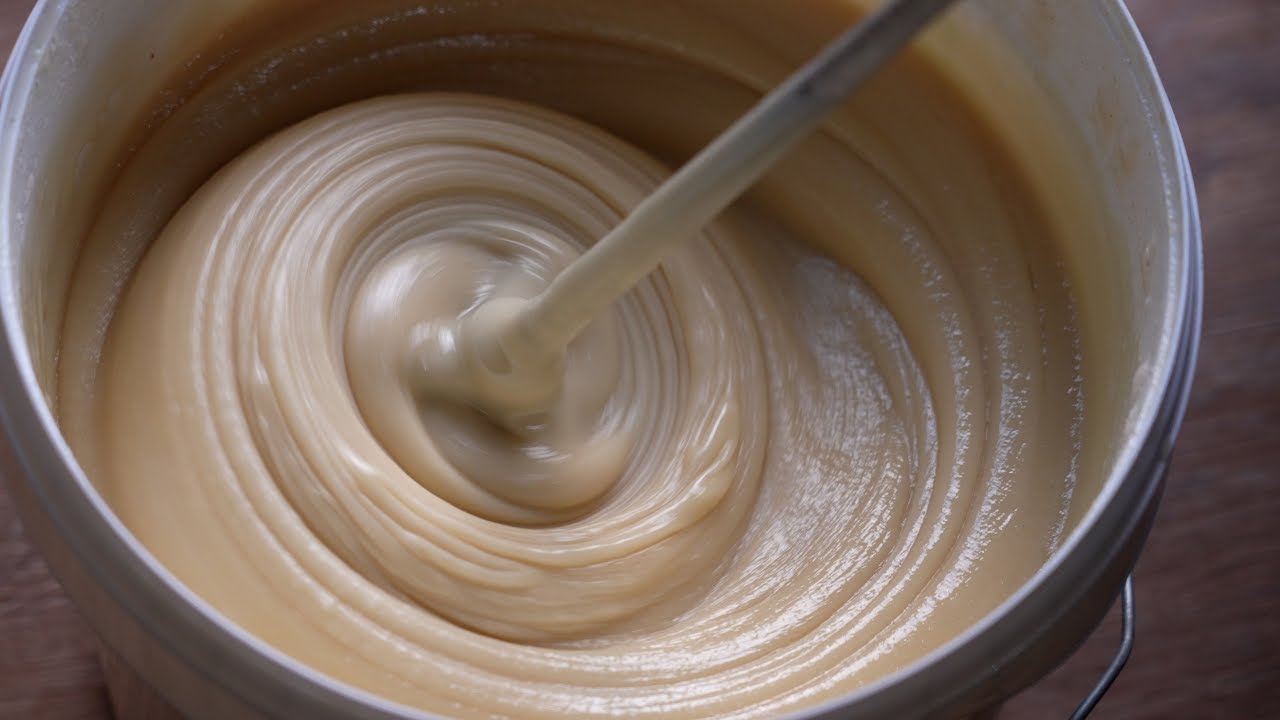
Laurence Edwards shows how to turn bucket honey into soft-set using a stainless-steel drill bit and paddle mixer. Warm the honey to 36-40°C, then run the drill at low speed over several days at a 45-50° angle to grind down crystals. Store the finished jars at 14°C for a smooth, creamy texture.
Chapters
In this video, I'm going to show you the cheapest method to make soft set honey using a stainless steel drill bit, and I'm going to give this drill bit away for free to one lucky subscriber. First things first, if you want to be in with a chance of winning this stainless steel drill bit, hit the like button, stick a comment on there, make sure you subscribe to the channel. So I've showed you a couple of methods for making soft set honey now. One is the dice method where you liquefy your honey and then you add a seed honey with a known crystal size in and blend that all up. That was in the Lysen creamer. I then showed you a new method that I use using oilseed rape honey, and you don't need to liquefy that honey as much, and it's done by mechanically breaking down the crystal structure of the oilseed rape honey to make sure that it's silky smooth. Again, that's in the Lysen creamer. Cost me £3,000, that creamer, so I appreciate that's not for everyone. Supposed to be no-nonsense beekeeping. I like to try and keep the cost down as well. So I wanted to show you a method using a stainless steel drill bit, and this is specifically for oilseed rape honey. It will work with other honey. It's not quite as repeatable is what I've found when using the drill bits, so I recommend using oilseed rape honey. I want to thank Danny from the Beekeeping Forum. She sent me this drill bit, paid for it myself, but she was selling it. I've seen these drill bits in action and these are the ones that I would recommend. I think they're really, really good. So in this video, I'm just going to show you that my no- nonsense beekeeping method. Not my method, it's just one that I'm showing you. I'm going to show you though how to turn a bucket of oilseed rape honey into soft set honey. So the first thing you need to do is you need to warm up your soft set honey. If you've just left it into a bucket, it will look something like this, be absolutely rock solid, and you can see the imprint of where I've just had a go of putting the drill bit into that one. You definitely can't do anything with it, or if you could, you will be there for about 6 years, I reckon, trying to get that into soft set. It's set, but it's not soft, and that doesn't quite make sense, but what it means is that it's set to a natural crystal size. So it's set, it's hard, and the crystal size is unmanaged. Soft set means that you need to get it to set and it needs to remain soft, and you do that by managing the crystal size. The first thing you need to do is you take your set bucket of honey, that big rock-solid set bucket of honey, And you need to liquefy it. When you're using the drill bit method, all you wanna do is just get it to a point where it's soft enough to get the drill bit in and move it around. Doesn't need to be completely liquefied. In fact, if you get it completely liquefied, it's gonna take you a lot longer to do this method. Either way though, the method could not be any simpler, which is you take that bucket of honey, you warm it up enough to be able to get this drill bit in, and then you just beat it with this drill bit. I find if you spread it out over a few days, you end up with a better result. You're not gonna get this result kind of like in 15 or 20 minutes. I like to go in, do the drill for say 5 or 10 minutes, maybe 2 or 3 times a day over the course of about 2 or 3 days. That'll give you the best chance of getting a super soft-set honey. So I'm gonna show you that now, show you where I start off, show you where I end up. So this is what your oilseed rape honey will probably look like once you've taken it out of the warming cabinet. I've decanted a little bit of it out here, and that's a good tip. Say you've got 3 buckets, Grab another one and just pour maybe like a third of each one into a separate bucket. Give yourself a little bit of space to work. But as you can see, it's not fully liquid. It's pretty much still set, but if I give it a little bit of a shake, you can see it is liquid, but it's not clear. I only took that up to about 36, 37 degrees, just to the point where it's fully liquid again. So we're back into food hygiene mode. Got our gloves on, we've got our hairnets on. And then the big important thing to say here is never have the drill over the bucket. So you always want to work at like a 45-degree angle, maybe a 50-degree angle. Don't go in from the top like that because then you've got a potential risk of bringing stuff from the drill into the honey. Don't want to do that. 45 degrees completely eliminates that risk. Obviously everything gets a big, big clean down prior to use. This one here We're not gonna use this honey, we're not gonna sell this, this is for my own personal consumption, but everything has had a really good deep clean as well. All of our honey is coming out of that creamer back there. I've cleaned the drill, I've cleaned the bit, food-grade sanitizer on all of the bits, left it to dry, and then we're just gonna go in and we're gonna mix that honey up. Get your drill bit down to the lowest possible spin speed that you've got. It's not about making whipped honey, it's about grinding those crystals down. So you start off like this with a really slow speed. What you want to be really careful with is that you're not hitting the sides, you're not hitting the bottom. Don't want to scratch any plastic in there at all. You just want to go all the way around, avoiding the sides, avoiding the bottom. Might seem like you're not doing much on the first day. You'll keep on going, give it 15 minutes, and just keep on coming back every few hours or so and give it another little go with the drill. It's a slow process, best to do it over a few days, but give it a couple of days and you'll see it will start to tighten up. It will start to grind down and you will end up with the smoothest of soft-set honeys. So we're on to day 2 now, and hopefully you can see that has changed consistency a little bit there. You don't expect to see a huge dramatic reduction on day 2, but we've got a smooth liquid honey now, and we're just going to break it down again, give it another 10 to 15 minutes, keep on going. You wanna do this regular and often. You don't wanna come in and do kind of half an hour of whizzing and then come back 3 days later. Make it a lot harder for yourself. Just keep on going in. You can't really overdo it. And as you get to this point here, you can ramp up the speed on the drill as well. And then you'll see it starts to blend itself together. So here we are, day 3. It's still liquid, but it's definitely thickening up. Like I said, this isn't an overnight fix. And it's when it thickens up and you start to grind it down, that's when you're gonna get really good creamy honey. So just keep at it, keep on coming back, keep on mixing it. You'll soon see it start to tighten up, and it's when it's nice and tight, that's when you're gonna start doing the real grinding down of those crystals. So don't worry too much about it at the moment. You just need to get it somewhere cool, get it to stiffen up, and then you can really start to make a difference. So I've let that set now for a couple of days. We're onto day 4 of the process. You can see it's completely set. And we're just going to get that drill back in there, grind it up again. And this is where you do the grinding in this process. You need to wait until it's partially set and just keep on breaking up those crystals again with the drill at a 45-degree angle. So you can see the honey, it's very nice and Set now. This is where we want it to be. Remember, it was completely liquid before, but you just need to keep on getting in there, getting that drill in, working it round, and then you'll end up with this, which is a perfectly set, smooth soft set honey. So the process isn't quite complete. We've got the honey to a point now where the crystal size is where we want it to be. I've tested it, it's silky, silky smooth, but I've essentially got a big bucket of soft set honey now that That's no good to anyone. We need to get it back into the jar. And all you do, you follow a very similar process. You need to warm that honey back up now. Don't take it up too high. You don't wanna reset the crystal structure. Just wanna get it back to a point where it's completely liquid again. So around 38, 39, 40 degrees C. And then you can just decant it into jars. And then you wanna leave it in jars at around 14 degrees Celsius. That's the optimum temperature, but somewhere around that will work. and then it will set in the jar into a perfectly smooth soft set honey. Don't forget, if you want to be in with a chance of winning the stainless steel drill bit, and I'll even chuck in a jar of soft set honey as well, make sure you hit the like button, stick a comment below, and also make sure you're subscribed to the channel. If you want to take a look around my newly refurbished honey room, check out this video here where I show you all of the modifications from my old honey room design.










