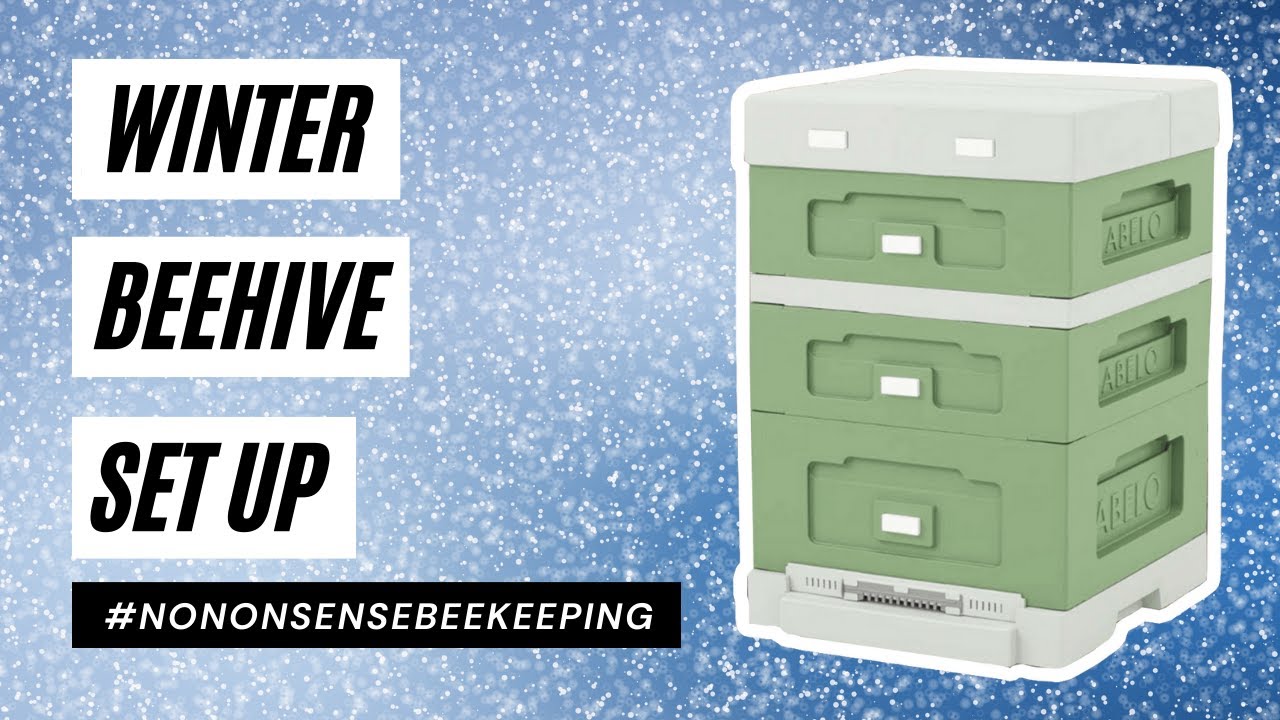
In this instructional video, Laurence Edwards of Blackmans in Honey explains his preferred method for preparing honey bee colonies for winter in the UK. He emphasizes a hive configuration that provides extensive insulation above the bees (poly/ polystyrene roof, insulated Ashforth feeder, polystyrene brood box) while allowing ventilation from the bottom via an open‑mesh under‑floor entrance. Edwards argues that bees tolerate cold well, but condensation is the primary winter killer; his top‑insulation, bottom‑ventilation design directs any moisture to condense on side walls and drain out the base, minimizing damp. He contrasts this with the alternative “top ventilation” or “matchstick” approaches, which he views as unnecessary in the UK climate, though he acknowledges that deep‑snow regions (e.g., Canada) may require different solutions. Throughout, he stresses that his advice is a personal approach, encouraging viewers to consider local conditions, other beekeepers’ input, and make their own judgment.
Chapters
In this video, I'm going to show you how I set up my colonies for winter. Hi, I'm Laurence Edwards from Blackmans in Honey. Welcome to another episode of No Nonsense Beekeeping. In this video, I'm going to show you how I set up my colonies for winter, and I'm very specific about that because this is going to be different where you are throughout the world. And all of these videos, I don't want people thinking that I know it all and And I'm just telling people how to do it. That is not what this is about at all. It's a 2-way process. All I'm doing is I'm telling you how I do it, what my thoughts on the processes are, and then hopefully you can look at all of the information there, different beekeepers on YouTube, different beekeepers in your association, and you can make a judgment call for yourself. The reason I get that caveat out of the way is that this topic here, it really does cause a lot of arguments. And what I'm talking about here is ventilation and insulation. How should you set up your colonies so you're going to insulate them as best as you possibly can over winter? And do you need to put ventilation into that colony? And should the ventilation be at the top or should the ventilation be at the bottom? I told you already, you can see the can of worms is well and truly opened. And I know some people are going to say top ventilation is the best and other people are going to say bottom ventilation is the best. And you know me, I like to sit on the fence on loads of things, I'm definitely not going to sit on the fence on this one. I do not believe that you should be using top ventilation in your colonies. The caveat's still here though, in the UK. I fully get it if you're in Canada and you've got to deal with 8 foot of snow, then there's not much point having ventilation at the bottom and you might need some ventilation at the top, or you might need an entrance at the top for the bees to come out to go on their cleansing flights over winter. This video specifically for UK beekeepers. So what I'm going to do in this video is I'm just going to show you some of my colonies, and I'm going to show you what my standard setup is when I'm getting them ready for winter. But this applies for me all the way throughout the season. So I'm not going to get into another debate, which is poly hives versus wooden hives. I use poly hives because I like the insulation properties. I use underfloor entrances with an open mesh floor, full open mesh floor. And then I use an insulated poly Ashforth feeder and a poly roof. So for me, I have the entrance at the bottom. I never use a top entrance. I have my open mesh floor open, so I have bottom ventilation. And then I have a brood box that's made out of polystyrene that's well insulated. And then I have a poly feeder that's really, really good at insulating the bees. And then I have a polystyrene roof on top, which again is excellent for insulating the bees. So in effect, what I'm doing is I'm putting all of my insulation above the bees. That's where I'm insulating, at the top, and then I'm letting them ventilate at the bottom. My idea behind that is that bees can handle the cold. They've not got an issue with the cold. You see the bees— I watch a lot of Canadian YouTubers and it is cold there. Like, you're lucky in the UK if it gets below freezing. In places like Canada, it's very far below freezing. And they do fine on open mesh floors. So bees, no problem with cold whatsoever. It's the damp that kills bees, and the worst thing that you can get for a colony is condensation on the top of the cluster. Condensation on the walls, not the end of the world. Condensation on the top of the cluster dripping down on it consistently is a real killer of bees. So my system, and I say my system, the system that I use Like I said, lots of insulation at the top, no entrances at the top, polystyrene all the way around, but the best insulation at the top, which means that top face that sits directly above the bees is going to be the warmest part of the hive, the part that's least likely to accumulate condensation. If you get any condensation, you're going to get it on the side walls, which can drip down and exit out of the base of the open mesh floor. That is my system. I find it works really well. I rarely have any issues with condensation over winter. So I'll show you a couple of my colonies now, and I'll just give you a visual exactly how they're set up and the elements to give you that top insulation and bottom ventilation. Before I do that though, I'll talk about some of the other variations on that. So what some people do is they'll have a solid floor and then they'll ventilate the top. And you've heard people talking about putting matchsticks underneath the crown board to give the air somewhere to escape. I'm not even going to go much further than that. That is an option, and that is something that I don't use. Now, I'm not bashing solid floors. I don't think solid floors are an issue. I find the difference between solid floors and open mesh floors is very, very minimal. So I'm not against solid floors in any way. I am against top ventilation though. Really do not like top ventilation, and I think it's just a bit of a fad and something that offers no benefit to the bees. Actually makes the environment a little bit bad for the bees over winter. I'm not against top entrances though, and I do understand and appreciate in places where you're going to get a lot of snowfall, yeah, it's quite difficult to not have a top entrance. And then if you have a top entrance, you're kind of having top ventilation anyway, and then you need to put in place a system that's going to manage that top ventilation. I'm not going to deal with that in this video though, because in the UK I don't think you need that. I'm going to go with top insulation, bottom ventilation. So let's go over to the bees. I'll take a look and I'll show you what I mean. Right, so here we go. This is my classic hive setup for the UK. I've got a poly roof, poly Ashforth feeder, wooden queen excluder, poly brood box, and then a wooden underfloor entrance. So you can see it there, everything at the top is made of polystyrene. So poly roof, poly Ashforth feeder, that remains on all year round. Wooden queen excluder to give me that bee space so they don't stick it all down and they can move freely underneath it. And then I've got my polystyrene brood box sponsored by LMP Group this time. Thanks for the sponsorship. And then I've got a single bee entrance at the front there, giving me a little bit of ventilation, but also giving the bees access in and out of the hive. And then it's like Blue Peter, here's one I made earlier. So this is one of my underfloor entrances that's not in use at the moment, but you can see it's got a big massive void all the way around. Mesh so the bees can't get through, but a huge amount of space for the bees to regulate their temperature and to live with that ambient humidity that's in the environment. I like these OMF floors because they give the bees the ability to work well with the humidity in the environment, and you're not placing them into a situation where they can't control that environment very well because it's so condensed. I do, and I understand partially the logic from other people by putting in top ventilation, by putting quilts on top where the moisture is going to rise upwards and then it's going to expel out of the sides or store in pillows. Like, I can kind of understand the, the logic behind the thinking, but I don't necessarily agree with it. I don't like that. What I like is I like any moisture to fall out the bottom of the hive, and I like to have lots of with insulation at the top, so any moisture is gonna condense on the walls or towards the side and drip down and fall out of the bottom of the hive. Top insulation and bottom ventilation, that's the system that I use, that's the system that I find works really well in the UK. So there we go, that's how I set up my colonies. Top insulation, bottom ventilation, and they do really, really well in that format. I hope you enjoyed that video. As always, please hit the subscribe button, Please hit the bell so you're notified of every video, and I'll see you next time. Bye.