In this instructional video, Laurence Edwards explains why scorching second‑hand beehive boxes is essential for preventing the spread of diseases such as European Foulbrood (EFB). He walks through his progression from a cheap cook’s torch to a plumber’s torch and finally to a high‑output roofer’s torch powered by a 70 kg gas canister. Edwards details the cost, components, and operation of his upgraded setup, demonstrates how to safely scrape and scorch boxes (including bio‑secure disposal of debris), and shows the rapid, thorough char that kills bacteria without damaging the wood. He emphasizes the importance of treating every box, even new ones, to maintain a disease‑free apiary, and provides practical tips on equipment sourcing, safety, and cost‑effectiveness.
Chapters
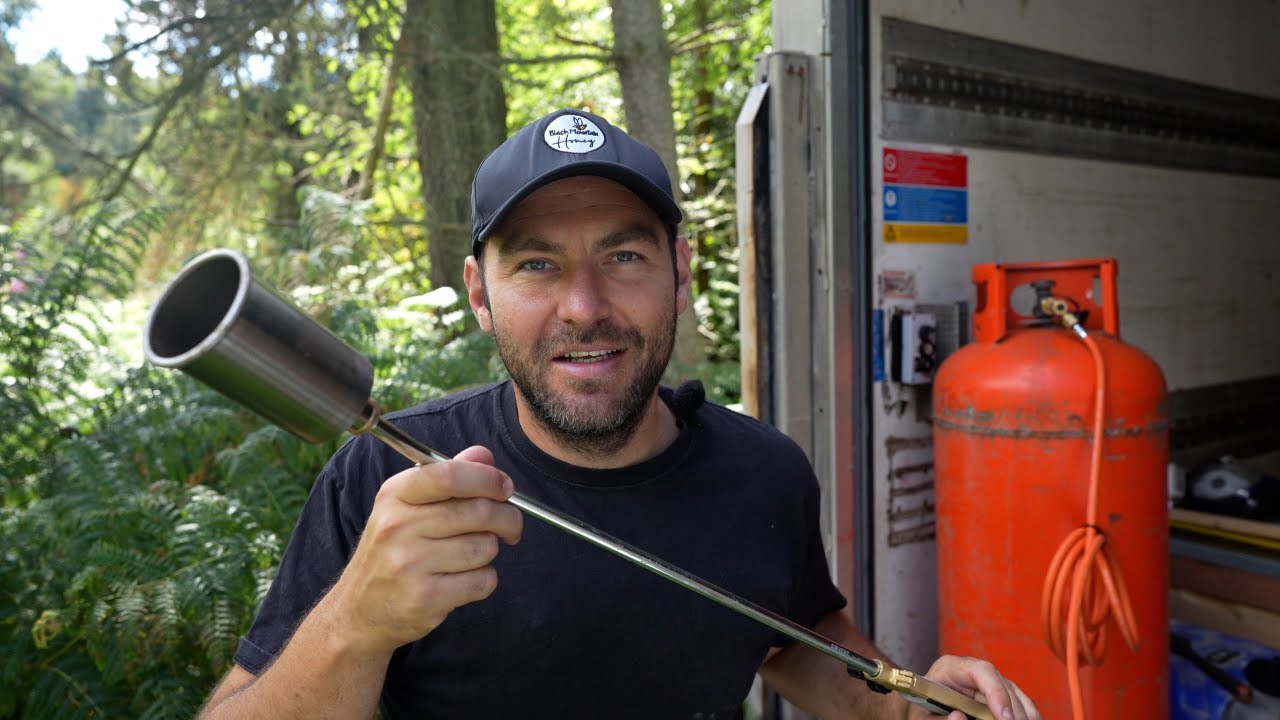
Scorching your secondhand beehive equipment is so important if you want to mitigate and reduce the spread of disease as much as you possibly can. In this video, I'm going to show you my new and improved scorching setup, talk to you about what I used to do, talk to you about what I do now, and most importantly, show you a demo of my new scorching setup. So previously, I used to use a little cook's torch, cost me about £10 or £15 from Amazon, and it was okay if you had maybe like 1 or 2 hives, but anything more than that and it became very, very slow, takes quite a while to do a single box. Then I moved up to a plumber's torch, and this is the torch that I would probably recommend to most people watching this channel. If you've got, say, between 10 and 40 colonies of bees, I would go with the plumber's torch because it's cheap— cheapish, maybe around £100 by the time you've got a good quality torch and the butane or propane that you're going to use. Very, very effective. It's not quite as quick as the setup I'm going to show you today, but it's relatively quick and wipes the floor with the cook's torch and gives you a lot more bang for your buck as well. Very powerful, gets into all those nooks and crannies and really does a very good job. We'll hold fire on the setup, but you can probably see it there. It is going to be an absolute monster roofer's torch, giving me the most available power and giving any bacteria on those boxes absolutely no chance whatsoever. So why do I have to scorch my boxes? Secondhand boxes should always be scraped down and scorched prior to use. The main risk that I'm trying to mitigate here is the spread of disease, and most notably for me, EFB. It's a really important process, and it means that you can move into the season safe in the knowledge that your beehives are going to be not Transferring any diseases. So let's jump straight into it then. Let me show you my new upgraded scorching setup. Right, so I know it looks pretty heavy duty, doesn't it? What we've got is we've got a 70 kilogram gas canister, same one that you'd get for cooking on, running exactly the same gas that comes into your house. And then I've gone and bought myself a £150 Cyver roofer's torch, and I've gone with the maximum power capacity. You can get detailing torches, you can get a variety of different torches for these. But for me, and for doing boxes, all you need is an absolute power monster that's gonna blast a lot of fire. So let's crank it up and show you just how much power this can actually get. So you can hear the gas coming out of there now. We'll give it a little light, get it going. Very, very powerful gas torch. So what you can see on this gas torch here, you have 2 dials, one for when it is in standby mode and then one for maximum power mode. Really nice metal castings and all you do is you turn it off and on by using that handle there. Really great, leaves you with a good pilot light, means that you're not burning gas when you're not burning the boxes. I know you all wanna see it in slow-mo fired up now, so I'll get it going and show you that gas flame. This is the head that I use. As I said, the absolute max capacity head, doesn't get any bigger than that. I wanna be able to blast these boxes really, really quickly with as much power as possible without actually burning the boxes. Gonna give them a really good char all over. And you'll see just how much I go over these boxes to make sure that they're not spreading any disease. Right, so let's get a box ready to scorch. Scorching down every single box that I've got this year, not just doing this on used equipment that I'm bringing in. In fact, I've stopped buying used equipment, full stop. No more used equipment. But I'm melting down all my frames, I'm sterilizing the frames, I'm scorching all of my boxes. I'm effectively starting again and doing a clean sweep in order to try and reduce the risk of EFB being passed across any boxes. So here we go, we've got a box here. First thing you wanna do is you wanna scrape it down with a hive tool. Make sure you're getting rid of all of the scrapings in a biosecure manner. Do it onto like a big tray and just go and burn them or use it for propolis tincture. And then we can go on to the next step, which is burning the boxes. It's quite good fun and I'll show you exactly how to do it now. So what I'm doing is I'm setting up my wooden super on a couple of breeze blocks. You can set it up on anything that's going to be completely flammable and flameproof. Don't go setting it up on something that's going to burn. You can see this is a really strong, powerful torch, and you can see just how incredibly quick it is to do the super. Don't need to do the outside, but you know, I kind of want to go belt and braces on this one, so I'm doing the outside on all of them as well. Paint seems to be okay, but they might need repainting if it starts to blister. But on the inside, once it's been scraped, I'm going through inside and out into all of the nooks and crannies, paying particular attention to the nooks and crannies. And I'm getting it to a point where it's just before it's black. You definitely don't want it smoking, you don't wanna set them on fire, but I've come to realize now that you really do wanna give them a very good blast and you wanna make sure that you're actually darkening the wood. So there we go, that's my brand new setup for scorching wooden boxes. It's not actually that expensive. Paid about £100 for the gas canister and the gas inside it as well, but like loads of that money's on the deposit for the gas canisters, which are quite hard to get at the moment. And then I paid £150 from Screwfix for that torch. And it's a really good, strong, powerful torch. But take a look on Facebook, take a look on eBay, you can pick these up relatively cheap and it saves you a huge, huge amount of time over a cook's torch and even over a plumber's torch.