How To Set Colonies Up For Success In Winter
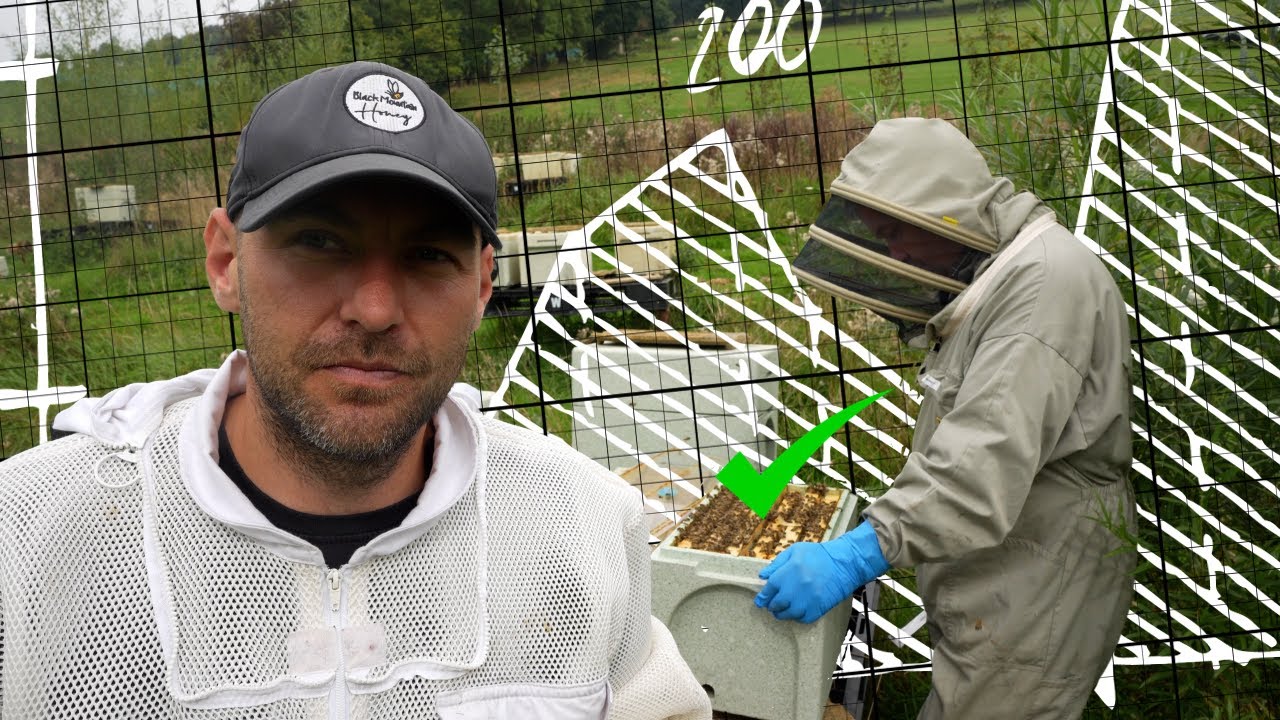
Richard shares how to prepare nucleus colonies for winter: start 4-frame splits in early August, aim for 3 frames of sealed brood and 1 of stores, keep the hive compact to retain heat, and stop feeding by October. Over-feeding clogs the nest and weakens bees for spring.
Chapters
I'm back down in Richard's apiary, and today we're going to talk about setting up nucs to overwinter, how strong you should get them, when you need to start, and how to tackle wasps in the worst part of the season. So Richard, thanks for having me down here again. One of the things I noticed when I came down here is there's lots of wasps, real wasp issues at this time of the year. What's your take on wasps, and what do you do to make sure that they don't batter every single one of your colonies?
If, if, if a colony is, is suffering with a lot of wasp problems, generally there is a problem with that colony. My view is, if there's a problem with the colony, the colony needs sorting out. If it's a last resort, you would take that beehive somewhere else, but 9 times out of 10, you'd have the same problem at that apiary. So it is just how you prepared them bees prior to the wasp problem. I don't kill wasps.
Oh, well, that's good, and I'm glad to hear you don't kill wasps. I don't kill wasps either, but we do have real issues with wasps, and I found it to be a particularly bad year. But the wasps are targeting some, aren't they? They're going for some. And we went into a nuc earlier on today and you could see you've got a virgin queen in there, maybe 3 or 4 frames, and the wasps know to go for the weak ones. And then you look at this nuc here and the wasps are not touching this one at all, are they? Because they know if they go inside here, they are going to get completely battered. So talk to me about this nuc here. Is this kind of roughly where you want them to be at this time of the year? And like, how do you build up your nucs to get them ready for winter?
So this is definitely where I'd want these nucs to be at this time of year. I mean, if you could get closer to this, I mean, even the feeder is full of bees. It's probably been fed now for 6 weeks. The strips have been in for 3 weeks, so they've got another 4 or 5 weeks to go before they'll come out. But by which point, Arla, want this colony to have the full weight for winter? Which is not going to be a problem because if I fill that feeder, within 24 hours it's going to be empty again. So 3 feeds and the job is finished. Go back to the wasps. In terms of wasps, if the beehive is full of bees, you won't get a problem with wasps. I mean, it's what the wasps like to do, even in a queen-right colony. If there is too much space in that hive for the bees to cover, the wasps will go round and they will seek out the sores on the outside frames. Reducing entrances, that can work, but if the space is not covered, if the cavity inside is not covered with bees, then wasps will still get to work with that hive.
So this one here, 6-frame nuc, absolutely covered full of bees. You're probably looking at 3 or 4 frames at least of brood in there at the moment, and we are in the first week of September at the moment. So let's rewind a little bit, and how do you get the nuc up to this strength? Do you make a 6-frame nuc last week, or do you make a 1-frame split in May? How do you get your nucs so big and strong at the right time of the year?
If you make a 3-frame split, I mean, if it was me and it was a Payne's box, I would make a 4-frame split at the start of August. If you fed from that point and put a cell in, you'd have a laying queen and you'd also— they'd build out the other 2 frames of foundation. And as soon as she comes into lay, they will literally— she'll lay out them 4 frames as long as everything goes to plan. And they'll backfill the others with stores. And as long as you carry on feeding, but when I say carry on feeding, you don't want to just keep glugging one lot in after another. So I would fill this feeder up probably at the point where I thought the queen cell was going to hatch. I would then wait until I've seen that queen laying, so she's backfilled a lot with eggs, and then I would feed again. Only for the simple reason, if the cavity where the queen should be laying is full of larvae, they cannot backfill that with nectar. So then they'll draw out the other 2 frames, which leaves then an adequate cavity for winter bees. And when I say winter bees, they must be bees that go into winter that haven't done any work. So if you carry on feeding right through till October, is all you're doing is you're tiring out your colony and don't expect to see them alive in the spring is what I would say, because they just, they have to last the 6 months or 8 months.
Cool, so your 4-frame split that you make first week of August, say with a cell, what's the composition of that 4-frame split?
Oh, so the composition of that split would probably be 3 frames of sealed brood and 1 of stores.
Okay.
And bees.
And then do you just take the 4 frames of bees, or do you put 4 frames of bees and then shake extra bees in?
No, at that point in the year, as long as most of the brood is capped, you've obviously got over the next sort of 10 to 14 days a lot of bees to hatch out. And it all works perfectly because, like I said before, the queen will emerge, roughly 10 days she will be mated and be laying, by which point all the brood will have hatched. And that leaves just a beautiful pattern to go at.
So then that's kind of like a late season split. Do you ever do any earlier season splits as well? And how far back do you think you could take that to build them up to a point where they're strong enough?
So early, early May, or sort of middle May onwards, um, June, first couple of weeks to July, you probably could get the same result for winter with just a 2-frame split. Early in the season, you don't tend to get the robin issues. Obviously, you don't get the wasp issues, so you can just build them up. But the main thing is everybody— or I say everybody, but a lot of people are so obsessed with feeding And they just backfill the whole hive with nectar, and then there is no room for that queen to lay. And the whole— everything for winter, you need young bees. It's no good with shiny old bees when you open that box because they will not survive the winter.
And I think that's a really good point. I see a lot of people feeding and feeding and feeding and thinking they're doing the right thing, but you can't. If you clog that nest, not only are you going to overwork those winter bees, but you're going to restrict the area for that queen to lay, which means you don't get as many winter bees. If you want to know roughly like the best way of working that out, you're just lifting that up there. So this nuc here, you can feel it, it looks really, really packed and really heavy. It's definitely not light, but it's not heavy, is it? It's not nailed to the ground at all.
No.
And you know when you pick that up at the end of the year, like you can feel it's heavy for its size. At the moment when I'm lifting it up, I'm thinking it's got a decent amount of weight in there, but it's not particularly heavy for its size. So the other thing to quickly talk about is, say you've got this colony here and it looks like they're struggling for space. They're in the feeder, you've got bees everywhere, and it's the middle of the day at the moment, so you're going to get all the flying bees coming back in here. You might even get a little bit of bearding. I see people and they send me pictures saying, should I put an extension box on here? What do you think, Richard? Should you put an extension box on a nuc like this?
Definitely not, because you will just open up that, that whole thing with the wasps. There's just too much room in that cavity.
Too much room in the cavity. Going to cause issues with keeping the colony warm over winter. But it goes back to that work, doesn't it, as well? If you've got foundation in there and the bees get a little bit of a flow, the bees that are destined to be winter bees and do nothing and just chill out for 6 months and be warm, they're working, they're drawing foundation. You might get more brood, they start to rear brood, and then they're just knackered. And then it looks like you're doing the right thing, you're building up this big mega strong colony, but then when you get through to spring, that's when you start to see the issues and it really does contract down a lot. So do not worry at this time of the year. As soon as you're through to September, my rule is any bearding is a good thing. Definitely don't give them any space. I tend to not really give any space in August as well unless they're up on the heather and they're collecting honey. But for me, the aim of the game is condensing things down to the smallest possible size, which I find gives you really good overwintering success.










