How To Start Beekeeping in 2026 | Simple Steps for New Beekeepers
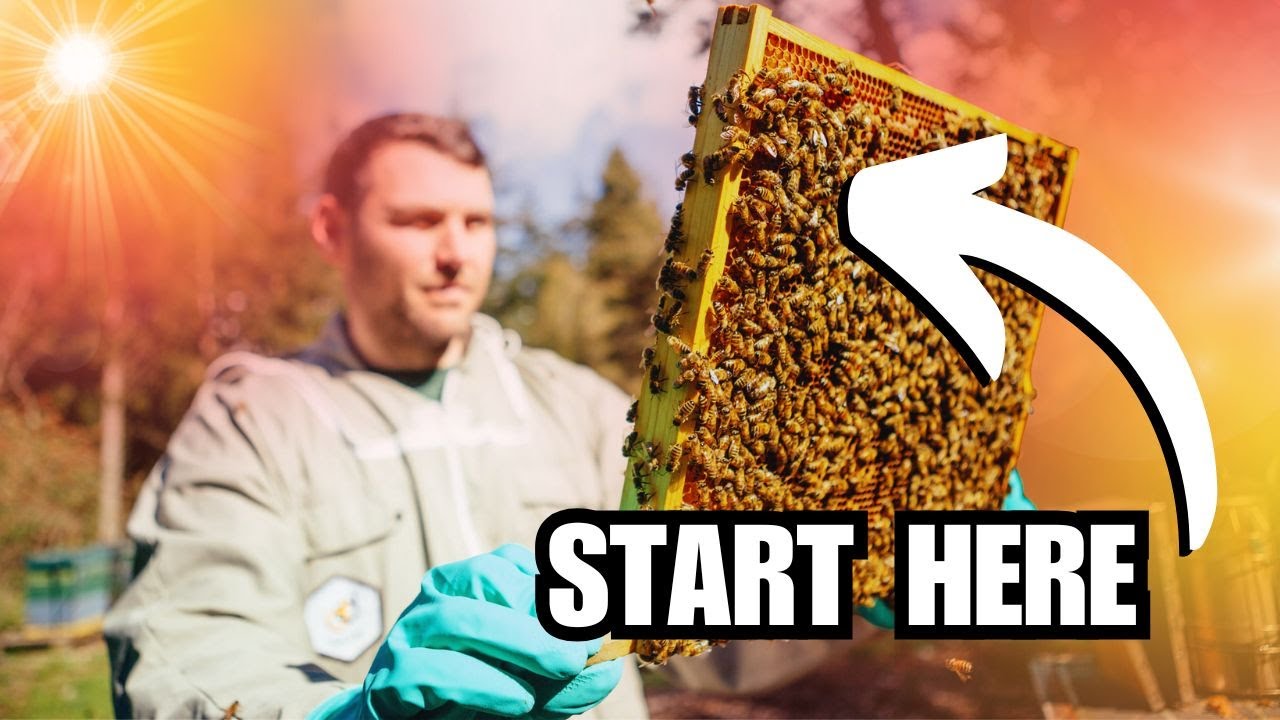
Laurence Edwards covers the essentials for new beekeepers: join a local association and find a mentor, use a standard UK National or Langstroth hive in a south-facing spot, buy overwintered nucs of the calm Buckfast strain, feed 1:1 sugar syrup until frames are 80% covered, and treat varroa and small hive beetle seriously rather than going treatment-free.
Chapters
If you're interested in starting beekeeping in 2024, you have come to the right video because I'm about to give you every single piece of advice and information that you need to start your beekeeping journey. Let's jump straight into it with education and research, and what I advise is going away and trying to learn as much as you possibly can about bees before you jump in and buy your first nucleus. Now you can do that by reading books, you can do that by watching videos online, We've got an extensive library of videos on our YouTube channel, but the way that I would really recommend you going away and learning about bees is by signing up to your local beekeeping association and trying to get booked into one of their taster days that they hold generally early on in the season in the spring. This will give you the opportunity to go out, kind of feel the bees, touch the bees, see if the hobby's right for you, and I guarantee you'll walk away from that taster course and you'll either know that you definitely want to keep bees Or you'll think I definitely don't want to keep bees. Hopefully, it's the former, and you get started on your beekeeping journey. So quick one to get out of the way very early on is that if you have any allergies, beekeeping probably isn't the best for you. If you have a very mild reaction to stings, then maybe it's okay with adequate PPE in place. But if you know you've got a severe allergy to bee stings, then I definitely wouldn't take up beekeeping as a hobby. The next piece of advice I would give you is try and get yourself a mentor. Now when you go down to your local beekeeping association, they might just. Buddy you up with someone. But if they don't, kind of suggest to them, is there someone local to you who would be able to take on the role as a mentor? It's great having a mentor in place. It means you can ask them all of the stupid questions, and it means you don't make the amateur mistakes that pretty much everyone makes. And believe me, I have made pretty much every single mistake in beekeeping. But to have a mentor in place, it kind of cuts out a lot of that rubbish, and you can use them as a sounding board, and you can use them to eliminate all of those newbie mistakes. Now, if you can't get a mentor, you can kind of try and use me as your mentor. I will answer as many questions as possible if people put them at the bottom of videos. And if I miss your message at the bottom of any videos, dial into one of my live streams, which I hold maybe every 2 or 3 weeks, and you can ask me the questions live, and I'll try my best to give you as detailed as possible answer. Now, this one's rather apt because the advice that I want to give you is to have patience. And I appreciate the irony because I've not even got to any of the beekeeping parts of this video But patience in beekeeping is pretty much everything. Bees do not expand and fill the brood box overnight. You don't come back after 2 weeks and you have 4 or 5 supers full of honey. It's very slow, it's very incremental, but try and embrace that slowness because when you get to the end of the season and you look back, what the bees can do throughout that period is absolutely extraordinary. But it's like standing next to a pot of water that never boils. When you're watching them, it looks really slow, but kind of over the course of a season, it really is truly magnificent. So when you're doing your education and research, try and think of what your role is as a beekeeper. You're there as the custodian of the beehive, and you're there to give the bees absolutely everything that they need, some of which we're going to cover later on in this video. But all I would say in terms of a piece of advice is try and get away from both of the extremes. One extreme, which is just do nothing, put some bees in the back of your garden and leave them to it and never go and do any inspections and just let them swarm into your neighbor's chimney. Definitely do not advocate that approach. But also try and avoid the person who's in the beehives literally every single day and the bees are looking at you kind of saying, what are you doing? Like, you were here yesterday, you don't need to be in here again. Throughout the season, you only need to do one inspection a week unless you see something extraordinary happening inside or outside of the So now we get into some of the really juicy stuff. The first one is choose a location for where you're going to put your beehives. Now I guarantee 90% of people watching this video have already decided this, and they have already decided that they're going to keep bees in their garden. Now I'll tell you a little story at this point. I'm looking out at my garden behind me here, and I remember moving to North Wales, 4 beehives in the back of my car. I took them up to the top of my garden, And within 2 years of being here, I had 35 beehives in the back of my garden. And I would regularly look outside and I would see my next-door neighbor strimming the lawn or mowing the lawn, getting blitzed by my bees. And it was really awkward and it was really embarrassing 'cause the bees weren't the best behaved back then and there were just too many of them in my garden. So I made the decision to branch out and go and speak to some farmers and find some out apiaries, which is just another way of saying other people's land. And I put my bees there and it was so much better. I enjoyed my beekeeping so much more once I chose to not keep bees in my back garden. However, I appreciate everyone has different sized back gardens, and I also appreciate if you're just going to have like 1 or 2 colonies in your back garden, it's probably not as bad as having like 34 or 35 colonies. If you can, keep them somewhere else. If you can't, keep them in the garden, but just have a think about where it's suitable to keep them in the garden. In terms of tips for location and orientation though, what I always say in the garden is put the bees where suits the humans. Just ignore everything else that people tell you in terms of orientation, facing them south, keeping them away from wind. In a garden they're going to do okay, but just keep them out of the way of humans. If you do that, then the bees will do fine. If you've got like a perfect garden with endless opportunities, definitely face them south, facing south is best for the bees because it means that they're getting more of the sun, means that they get up earlier, means that they stay working later. Give them as much sun as you can possibly have, so don't just face them south in some woodland. You want to keep the beehive, at least in moderate temperature countries, in the sun for the majority of the day. That's good for the efficiency of the hive, but it's also good for some diseases as well. Helps to keep things like chalkbrood really, really low. And then definitely, if you can, try and keep them out of the wind. It does make a massive difference. It's surprising, even if you go out on like a relatively warm day when the bees should be flying, if there is a lot of wind around, they tend not to fly. So if possible, try and keep them out the wind. Now we really are getting onto the fun stuff now. So beekeeping equipment. Now I hope that people watching this video haven't just gone out and already bought their own beekeeping equipment, but if you're anything like me, then you definitely have. Like you get an idea in your head and you just go onto the internet and buy loads of stuff, and then you try and fit it all together and realize that you probably bought the wrong stuff. Or the bits that you've bought don't necessarily fit together or are not compatible with one another. So here is where it's good to get advice from people who have kind of been through that and had those issues and experiences in the past. So if you're in the UK, I would recommend going with a standard National Deep or a standard Langstroth hive. Try not to kind of stray outside of anything either National or Langstroth. And if you want to go down the 14x12 variant with a National hive, then you can do that, but personally I wouldn't recommend it. I would just go for the most standardized option that you can get. Do that for a couple of reasons. One, everything is going to work out a little bit cheaper, and 2, the availability of kit is far greater. So if you need a super, if you need a brood box, if you need a queen excluder, you're much more likely to be able to obtain that if you've got a standard sizing. The next piece of advice that I would give is try and buy the equipment when it's in the sales. If you're trying to buy a beehive in May, then you're likely to pay the absolute top dollar for it, but you're also likely to wait kind of like a significant amount of time because there's a real demand at that point in the year. So if you're buying your equipment between, say, October and February, speak to the supplier. You're likely to be able to get a really good deal at that point in the year. Now, when you're choosing this hive type as well, do try and stick to one specific hive type. Don't think, well, I'll just have one National and one Langstroth, or I'll have a mixture of National and 14x12s, because it just ends up as a real mess. Do your research at the beginning, find a hive type that you think is suitable for you that is a standard hive type, and stick to that. Now the next piece of advice is to make sure that you buy enough equipment. So when you're buying like a standard beehive, you generally get a brood box and a couple of supers, but that is nowhere near enough space for a single colony throughout the season. My rule of thumb is on a single National brood box, or even a single Langstroth brood box, you should be aiming for around 3 or 4 supers to go on top of it. And a super is just a fancy way of saying a shallower box, or any box for that matter, that goes above the queen excluder. A 4:1 ratio is a really good ratio to work with, and it means that pretty much at any point throughout the season, you've got enough supers to go on to match the amount of honey that's coming in. Now, for people who have never worked bees or had any experience with bees before, I do highly recommend buying a fully assembled beehive, especially if you're working with National kit. Beehives are quite tricky to put together. Now, I'm not the best at DIY, but I kind of thought that I could put together a beehive, and my first few attempts were really, really bad. Like, they weren't square, but worse than being not square, the bee spacing was incorrect. Now, you don't really understand this when you're starting out beekeeping, but all of the tolerances within The manufacturing of that beehive are very, very precise, and they work on something that's called bee space. So bee space is around 8 millimeters, and if you have anything that's less than 8 millimeters, the bees will propolize it up and like stick it down together. And if you have anything that's more than 8 millimeters, then the bees will build comb in there. So when you're putting together your beehive, you need to take that into account, and you need to make sure that you're putting the bee space in the correct place, and you need to make sure that you're putting the correct bee space in where it needs to go. But my advice is just get somebody else to do that and buy a fully assembled hive. Now I'm not going to go into the benefits of wood versus poly. I personally prefer poly, but there's really not that much in it. If you want my recommendation in the UK, hands up, I do the social media for Abello, but the Abello 12-frame poly hive really is for me the best poly hive in the UK. And if you're going to go down the wooden variant, I would go with a Western red cedar seconds beehive. So seconds just means that there's a few knots in it, but definitely go with Western red cedar over pine. Please do not buy pine beehives. They are absolutely rubbish in the UK. So I know across the US plenty of people use pine, but the conditions in various places in the US are so different. It's nowhere near as wet as it is in the UK, and you can get away with pine so long as you're treating it or painting it regularly. But in the UK, like, I've got some pine beehives and they're just falling apart after a few years. They're really heavy to work as well, so much heavier than cedar. And what might look like an initial bargain when you're comparing pine versus cedar, believe me, you'll come back to curse it when you're actually working them and when you have to come back and do regular maintenance to upkeep that pine. So to summarize that bit there, I would recommend buying a fully assembled beehive with all of the components in place. So you're going to get a floor, you're going to get a brood box, you're going to get a queen excluder, You're going to get some supers, you're going to get a roof, you're going to get a crown board, and then there might be options to get the frames that come with it as well. And if you're starting out and this is your first beehive, I would recommend getting the frames as a package with the beehive. There is nothing more frustrating than buying frames, buying the foundation that goes into them, and then realizing that not only are they not compatible with one another, but they're not compatible with your beehive as well. And then it's really difficult to go back and exchange it. Just buy a completely ready bundle. Everything that you need is within it. And then say to the manufacturer, can you add a couple of supers on as well? That way you know 100% you're going to end up with a beehive that's got every single bit that you need. So then the next thing that you're going to need is some sort of protection for yourself. I recommend buying a really good top-quality bee suit from the very, very start. I like the standard BB Wear suits, but I really do like my BB Wear Ultra Suit. It's a ventilated suit, so it means that I can work in a really nice cool temperature. Great airflow running through it, but the bigger thing for me is the fact that the bees can't sting you through the suits. So if you're starting out and you're worried about getting stung, buy yourself the BB Wear Ultra Suit. It really is the best suit on the market. And then there's only really a few more things that you need to get going in beekeeping. You're going to need to get yourself a smoker. If you want my recommendation, go for a large stainless steel Empire smoker from Thorn Beekeeping with the external cage and the baffle that goes inside. Top quality smoker, that one. It will literally last you a lifetime as long as you don't run over it with your truck. They really are built very, very well. And then I would recommend going for a 100% stainless hive tool, which you can pick up pretty cheap. Like, there's not a huge amount of difference between the hive tools. Don't go for a carbon steel one, don't go for a galvanized one. Ideally, don't go for a painted one. Just go for a nice standard long stainless steel hive tool. And then the final thing that you're going to actually need just to be able to go and do your inspections is some gloves. I would recommend a nice tight-fitting nitrile glove with a really long cuff. It's not going to give you the absolute maximum protection, but it means that you learn to handle the frames correctly without squishing the bees, and it is by far and away the best type of glove for apiary hygiene. So you've basically got everything you need to keep bees now. The next thing on the list is to go and buy some bees. Now you can go out and try and catch swarms if you want, but I wouldn't recommend it. But if you've never kept bees before, going and doing something quite advanced like catching swarms Probably not the best idea. And then the other option, especially if you're in the US, is going and getting a package of bees. Now I say this from personal experience, putting a package of bees, which is just like a big box full of bees and a queen, onto fully drawn out comb is reasonably okay. It's not too difficult to do that. But putting a package of bees onto brand new comb within a brand new beehive is very, very difficult. Trying to get them to stay there is difficult. I've had it a number of times where you do that and they just fly off and you just think, oh, I've paid £200 for a package and they've just flown off into the tree and I can't get them back down. Whereas with a nuc, it's just impossible for them to do that. So a nuc will come generally in either a wooden or a poly box, and it comes with either 5 or 6 frames, comes with a mated queen, but more importantly, it comes with brood in all stages. And what that brood in all stages does is it gives you a massive boost to get your bees going as quickly as possible, but it also acts as the perfect attractant to the bees that are in that nucleus. They're not just going to abandon it. So although the nucleus option is generally quite a bit more expensive, you're getting a lot more for your money, but you're also guaranteeing that the bees aren't going to fly off into the neighbor's chimney. Now at this point, you're probably going to have to make a choice. Do you want to go with a local mongrel native bee that some people say is the best, or do you want to go with a more pedigree option like a Buckfast bee that's been bred for specific traits. I'm not going to massively try and plug our nucs here, but we sell the Buckfast bee. We specifically sell the Buckfast bee because it is so calm and placid, suitable for your garden, and just makes a much more enjoyable experience in terms of beekeeping. I tried the local mongrels, I couldn't get on with them, they were just too aggressive for me. I've got about 7 or 8 years experience using exclusively Buckfast bees and they genuinely have transformed my beekeeping. If you're in the UK and you're looking for overwintered nucs, check out our website blackmountainhoney.co.uk. We've got relatively good availability left on the summer nucs, but if you're looking at this in subsequent years, best to get your orders in as soon as possible as we generally sell out the overwintered nucs around January. So the final thing that I'll say about nucs is just make sure that you get your orders in early. Don't wait until April. You'll generally find that people don't have stock of overwintered nucs in April. And do try your best to get an overwintered nuc, which is a nucleus of bees that has a queen from the previous season. That means you know that the queen is well mated because she's been able to survive through the season, and it also means they're going to get the very best start going into the next year. So in terms of where you're going to place your beehive, either in an out apiary or in your garden, you want to make sure that you've got a nice level area and you want to make sure that you've got a really nice secure stand. Stand for it to go on. My personal choice here, little tip, I use 3 pallets stacked up on top of each other, and I like to use plastic pallets because they don't rot, and you can get 4 beehives to a pallet. Doesn't look the best for your garden, but you can probably fashion something similar. But for me, having it 3 pallets high makes beekeeping so much more enjoyable, as opposed to having it, say, a single pallet or 6 inches high. I was always bending over, and I always got such a bad back. But just by lifting that beehive off the ground by about a foot and a half really makes for a much more enjoyable beekeeping experience. And then the other thing I'll say, and this applies whether it's in your garden or whether it's in an out apiary, just keep the bees away from any areas of high traffic— vehicular traffic or even people traffic. Just keep the bees out of the way as much as you possibly can. Now this is something that is a little bit iterative and something that you will not know as you start out in beekeeping, but what I'm talking about is the forage that's available in a particular location. You might find that you put your bees somewhere and there just isn't any forage for the bees. What you need to do in that instance is just kind of understand why the bees aren't doing well in a certain location, and not to be afraid of saying they're not doing well here, I'm going to move them away, move them somewhere else. And as long as you're moving the colonies over 3 miles away, then you won't get any drift back to the original location. You can't just pick up a beehive from one end of the garden and move it back to the other end of the garden The bees, once they've orientated to a spot, they will just go back to that spot and you'll lose loads of bees by doing that. So do your research first and make sure where you're going to put your beehive is definitely where you want to keep your bees. So the next item on my list is feeding your bees. Make sure when you're buying your equipment you have some way to feed the bees. Personally, my top tip for you here, whether you're going with a wooden hive or whether you're going with a poly hive, invest in a poly Ashforth feeder. Now you can use a poly Ashforth feeder as long as the dimensions are correct on a wooden hive, but a poly Ashforth feeder is great because it means that you can feed your colony a huge amount of sugar syrup. But the biggest benefit is that it's so well insulated, and you keep that insulation at the top of the colony, that during the winter months the bees are really nice and snug. And what I do is I just use the poly Ashforth feeder as a crown board, and I just do away with the crown board completely. Massively simplifies the operation, but it gives you the ability to feed your bees straight away, and that is what I would recommend. Now, I've done separate videos on this, but once you put your nucleus colony and introduce it into your beehive, the first thing that you want to do is to feed them, and you want to feed them 1:1 sugar syrup. So that sugar syrup that's made up with 1 kilogram of sugar to 1 liter of water, and you just mix it until it's completely dissolved. With 1:1, there's no need to even heat it. It will just dissolve by stirring it together. And then I would continue to feed the bees until they're covering at least 80% of the frames in that brood box. But the important bit here is once they get to 80%, you do need to stop feeding them, remove the feeder, or at least take all of the sugar syrup out of the feeder, put your queen excluder on, and then put your supers on directly on top of that queen excluder. Don't be tempted to put the feeder back on and feed them. Really easy way to contaminate your supers with sugar syrup. But I've seen many people do this. They think they're doing the best for the bees by continually feeding them, but they only really need the feed as a little bit of a kickstart just to get them going. Once you get to 80%, make sure you take your feeders off. Now the next thing to think about with your bees is disease and pest management. Now this will vary depending on where you are in the world. But the main things that you're going to really be worrying about is varroa, small hive beetle, and then the different types of foulbrood. So say American foulbrood, European foulbrood, and then the minor brood ailments such as chalkbrood, sacbrood, bald brood. And you get to a point where you can kind of read a frame and you see all of these different ailments and you understand a little bit what's going on. But I do really recommend going away and trying to learn as much as you possibly can about the diseases and what to look out for and good apiary hygiene and how to avoid getting them in the first place, but also the pests, so say varroa and small hive beetle, what treatments you should be doing at what time of the year. I really do not recommend treatment-free beekeeping. I know that will annoy some people, and some people think we need to do whatever we can to get the bees to naturally evolve against varroa, but natural evolution can take thousands, if not tens of thousands of years. I'm not willing to kill the bees just to try and get that marginal improvement. I would much prefer to give them something that I know works and something that I know alleviates the pressure of those pests and those viruses and those diseases to make sure my bees are as healthy as they possibly can be. So we touched on this a little bit before in terms of a hive inspection schedule and where you sit in between those 2 extremes of doing nothing and doing way too much. For me, in the Northern Hemisphere, UK and most of the US, a single hive inspection once a week at regular intervals is more than enough. So I'm talking about maybe starting that early April, weather dependent, and then finishing— we actually finish a little bit earlier, around early August, because we see that we lose very, very few swarms as we progress into August and September. But you could continue like a weekly inspection all the way through until early to the middle of September. You want to be going in every single week. Choose a day of the week, do it every single, say, Friday at 4:00 PM or Saturday morning, and you just want to go in and you want to inspect every single frame. And what you're looking for during those inspections is you've always got one eye on disease and brood ailments, and it's nice to see the queen. Like, I do like to see the queen and see that she's in good condition, but the main thing for me, the main thing that I'm looking for, is signs of swarming. If I go into a colony, I might pull out 3 or 4 frames and it's just full of eggs and there's no swarm cells anywhere. I don't need to see the queen. I know the colony is not going to swarm. I just close them back up and I wait until the next weekly inspection. What you're looking for during the weekly inspections is the early signs of swarming. You're looking for premature uncapped swarm cells because what that gives you is the ability to take action before the bees swarm. The skill and the art in beekeeping is keeping every single bee in that beehive to maximize their honey production. What you don't want is bees swarming into your neighbor's chimney because you lose all of your honey, it creates a massive nuisance to your neighbors, and it also makes beekeeping very, very difficult. Because once the colony swarms, you've probably got 10 or 12 virgins running around the colony fighting with each other And then if those queens don't go out and mate, then you have to go through that colony and find these really difficult to find virgin queens and kill them before you try and introduce another queen. The best way to avoid that is by making sure you do your inspections and not missing any swarm cells. So going a little bit further into swarm prevention and management, what I would give you as a piece of advice is your bees will try to swarm, guaranteed. Might not be in the first year, but if it's not in the first year, it will definitely be in the second year. And the likelihood is it probably will be in the first year as well. So be prepared for when the bees are going to swarm. If you've got a colony of bees that's coming out of winter, that early period, the first 8 weeks of the year as they're building up and the days are getting longer and longer, that is the time when the bees are going to swarm. So make sure that you don't miss any inspections and make sure that you don't miss any cells as you're going through doing those inspections. Now it's very, very easy to pick out a frame Have a look at it and think, right, there's no swarm cells on there, but then the swarm cells are hiding underneath the bees. So what I actually do, and it's probably not the best advice, so maybe you shouldn't do this, but I take the frames out and I shake all the bees back off into the beehive without even looking to see if the queen's there. Means I can get a proper inspection on both sides of the frame. And I've been doing this for years and years now, and I never come back and I don't have a queen. The queen is always ultimately in the beehive, even if I shake her off the frame back into the the beehive. But what it does is it gives you the ability to look at those frames and give a proper assessment to see whether there is swarm cell preparation going on. That's a really good trick to make sure that you don't lose swarms. But the other trick, and the method that I use, is what's called a preemptive demaray, which sounds like a really difficult manipulation, but it's not that bad. But it involves taking all of the open brood, lifting it up to the top of the colony, putting some space in between the brood and the existing queen with the supers and then going back 10 days later and taking down all of the emergency cells that they create. You're basically tricking the bees into thinking that they've swarmed. And if you do that at the right time of the year— so in the UK, first or second week of May— assuming you've got good weather and assuming you've got sufficient bees to do it, then the bees probably won't swarm for the rest of the season. It's a really, really good trick, doesn't take long to learn how to do it. I'll stick a link down in the description of this video for how to stop bees swarming using the Demarais method. It's definitely something that everyone should try because it really is a good technique. So the next piece of advice, which follows on from the previous piece of advice, is to kind of understand the beekeeping year, understand the seasons, and understand what the bees are doing. So in the spring, the bees are building up. They're trying to expand the number of bees that are in the colony. As we move throughout spring, like, all the bees want to do is expand as much as they possibly can, and they want to swarm. So like, that's the area to target your swarm management, As soon as you get to the longest day of the year, it's like there's a switch that gets flicked and the bees are only really interested in going out and collecting as much honey as they possibly can. There's still a smaller chance that they will swarm, but for us, and I think for most places, that's the period where you're gonna gather lots and lots of honey. And that will just continue all the way through until the bees are starting to prepare for winter. You'll see them kicking out the drones 'cause they don't need the drones anymore. And it's understanding at what point throughout that late summer period you should go in and do your mite treatment. For us in the UK, August 15th is our cutoff. We take off all of our honey, we put our mite treatments on, we give the bees a little feed, and then that's it. We don't touch them again until they come back in the spring. And then throughout the winter period, the bees really don't do anything. If you give the bees enough feed to get them up to weight to winter, and enough weight should mean when you're lifting up that beehive, it is incredibly heavy, then over winter you really don't need to do anything other than maybe going and hefting them once a month just to make sure there's enough weight in the beehive. But you definitely don't need to be going and inspecting them throughout the winter. Now this isn't something that we necessarily have to deal with in the UK, but I do think it's good general advice to give to people, is just be aware of what's going on with the weather. So if you've got really windy season, make sure your beehives are properly strapped down. What we do, as I said, we use 3 pallets on the ground and then we use ratchet straps to strap the beehives up together, but we loop them around the pallet so they're strapped onto the pallets. It's a really big, heavy, low center of gravity object that's very difficult to be blown over by the wind, even if it's really, really gale force conditions. If you're somewhere in the world where you're going to get excessive heat in the summer, consider a way of maybe shading the beehives or painting them white to deflect the heat. I would just look at your local conditions and try and do everything you can for your bees to make it as easy as it possibly can be for them. My next piece of advice is make sure that you're good at keeping records. And this is something where I probably don't keep as good of records as I could. But when you're designing your inspection record sheet, try and work out like what's going to actually add value to you. Don't just keep records for the sake of keeping really detailed records because it does become very tedious throughout the season trying to update everything. You want to just try and simplify it as much as you possibly can and record the things that are actually going to be important. So I definitely don't record whether I've seen a queen on an inspection because that's not really going to add much value to what I'm doing. But what will record is the status of that colony. So if they've swarmed and there's a virgin in the colony and I'm waiting for that queen to go out and get mated, then I'll record that in some way so I know when I come back I don't need to inspect that colony again because there's going to be an unmated virgin in there. Work out what's important, work out what's relevant to you, and design your record-keeping sheets based upon what you need. Community relations are very, very important. Now generally people are quite open when it comes to keeping bees. But I would just try and keep your neighbours in the loop, or if you're keeping them on an allotment, try and keep the allotment association in the loop, or the farmers if you're keeping it on farmers' lands. You want to keep good relations with as many people as possible because regardless of how nice and calm your bees are when they start out, there's always the risk that something could go wrong, or if they're being attacked. I had a colony once that was a really nice gentle colony and they just turned savage, and I put a camera on them to find out what was going on. And it turns out that they were being attacked like nightly by a group of badgers. And it was just crazy. Every night these badgers would go and attack this beehive, and then I'd go down there the next day and they'd attack me. And if that was in my garden and they were attacking my neighbours instead, I wouldn't really know what was going on. So keeping good relations is very important just in case something bad happens in the future. This is probably the most important thing that I'm going to talk about today. So emergency response— have a plan in place in case something goes wrong. Wrong. And my advice to you is get yourself a personalized Google Maps account and pinpoint where all of your locations are. Give them a name or put them on What3Words and give access to your partner. So if in case something happens, all you have to do is you ring them up and you say, I have got a problem at this apiary and these are the What3Words, come and get me, I'm in trouble. Don't be left in a situation where something really bad is happening, like you're having a heart attack in the middle of nowhere, and you're trying to explain to someone how to get there. Really, really not a good idea. And I guarantee a lot of people don't have that planning in place. That is the number one piece of advice that I can give you today. What3words, Google Pins, give it to your partner or someone who is reliably going to pick up the phone, and make sure that your mobile is fully charged before you go out. So everything else kind of seems very trivial in comparison to that last one, but my next piece of advice is to try and continue learning every single day. I love learning from other beekeepers. I love going and visiting professional bee farmers, seeing what other people do, and trying to adapt the way that I keep bees. I'm never going to get to a point where I know everything about bees, and I'm so far away from that point, it is absolutely unreal. But I do see people who are very arrogant in their views, and they do think that kind of they've completed beekeeping and that they know everything there is to know about bees. Beekeeping. Try not to be one of those people. Always have an open mind, always challenge the status quo. Do things because you've seen it yourself and you know what works. Don't just listen to other people's experiences because 9 times out of 10 they've not even tried the thing that they're disregarding. Now, not everybody likes going out and meeting people and going out and networking, but I do believe that is the way that you become a better beekeeper. And it's the way that you feel part of the community as well. Now, I'm very lucky with my YouTube channel because I get to talk to different beekeepers of different levels every single day of the week. But I would recommend just kind of making that attempt to go meet other people. Go to your local beekeeping association, go to conventions. I'm going to the North American Honeybee Expo in about 4 days from now, and I am so excited to go and meet all of these other beekeepers and discuss how they keep their bees, how they manage their bees. what works for them, what doesn't work for them, to try and kind of refresh and invigorate my own beekeeping ideas. Beekeeping is the simplest hobby you will ever have, and it is also the most difficult and most challenging and intricate and complex hobby you will ever have. Be patient, be realistic, be kind, be laid back. Let the bees guide you to what you need to do. Don't take things too seriously. Don't get angry at the bees. Every single day is a learning day. I hope you've enjoyed this video. I hope you found it useful. I would really appreciate it if you did enjoy it, give it a thumbs up.










