Hyde Hives Winter Update - Clear Crown Board Long Hives
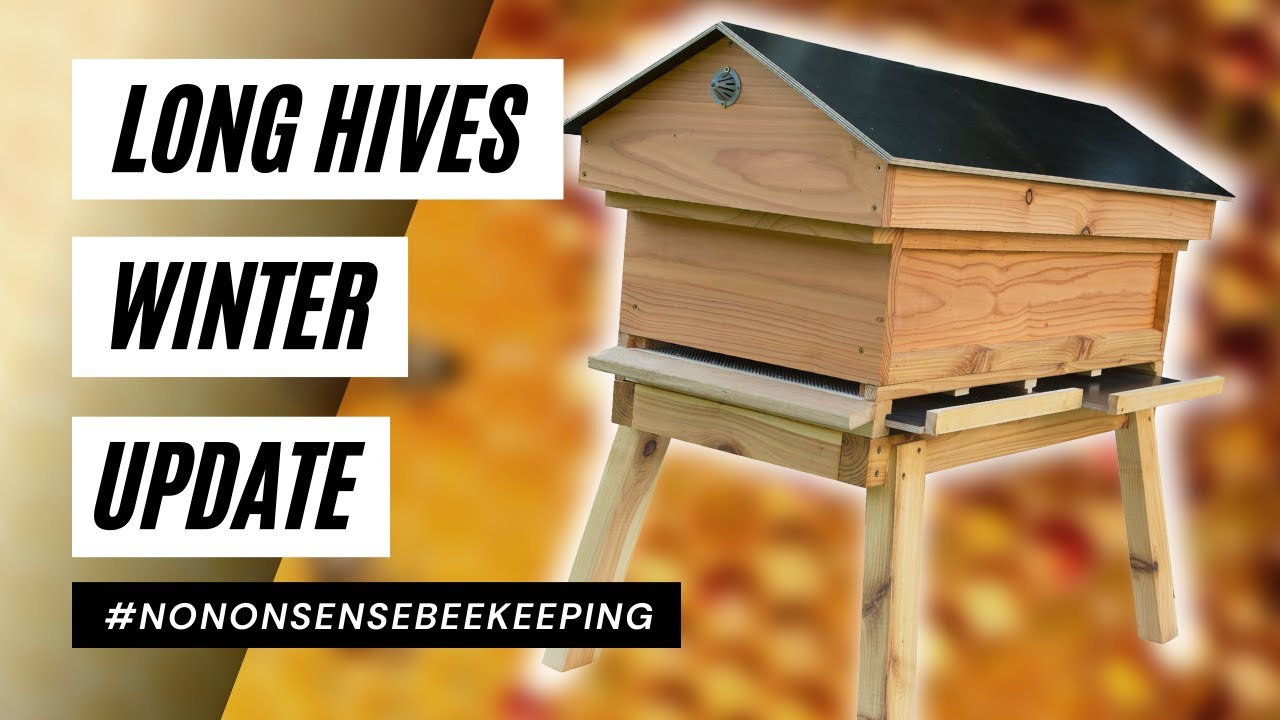
Laurence Edwards inspects four long hives with clear crown boards, comparing insulated and uninsulated roofs. The uninsulated roof fogs with condensation in minutes while the insulated one stays clear, showing how moving the coldest surface away from bees prevents moisture buildup in damp Welsh winters.
Chapters
In this video, I'm going to give you an update on the four colonies that I've got in my hide hives long hives. Hi, I'm Lawrence Ederson, Black Mountain Honey. Welcome to another episode of No Nonsense Beekeeping. Going to take a look inside the colonies in the hide hives today, and we can do that because we've got a clear polycarbonate crown board. And I know I talk about all of my beehives and the setup that I like to have, which is a poly ashforth feeder that you can feed syrup in. Flip it over, feed fondant in, it gives you good insulation. That's my method for the standard national beehives that I run, but there's no denying it, it is so nice being able to go inside these Hyde Hives long hives, flip the lid up, take a look, and you can see the colony. You can see that it's alive, you can see they're clustering up, or in this case today, they're out foraging, getting some water, getting some pollen. It really does give you that sense of satisfaction. The urge to go out and do some beekeeping. And I know I do say to everyone, don't tinker with your bees, but if you've got a couple of hives in your garden, you want to make sure they're okay. So I do really like the clear crown boards here. They're expensive if you're going to run them en masse, but on the long hives you do get the crown boards included. They're nice and clear. So I'm going to open them up. I'm not going to pull any frames out, but I'm going to show you today what the bees are looking like through the crown boards. We can see what the cluster size is looking like. And I'm going to give you an update on the insulation and condensation video that I did a few weeks ago now, where we put additional insulation above that crown board in order to make that top surface not the coldest surface so the condensation doesn't form there. So what I'm expecting to see is when I open these up, we should be able to see straight in, no condensation forming. I'll leave them open for a little bit as well while I do the video, and then I reckon towards the end of the video you'll start to see that condensation building there. That will prove that the insulation that I've put in is very, very effective at moving that coldest surface to somewhere else in the beehive, which means that the moisture and the condensation can just drip out of the hive. So even better, I haven't got to put a bee suit on today. I'm not pulling out any frames. I'm just going to go inside, give you a snapshot of each and every one of the 4 colonies that I've got in my long hives. Got some really nice genetics in there. I'm very, very pleased with how they're looking. Let's go and take a look, see how they're getting on. Right, so this one here, this if you remember is the 8-section, 5-frame queen rearing hive. Bit of a mouthful there, but this is the one that's multi-section. It's got 8 different sections inside, and I'm going to run this as a queen rearing nuc for next year. You can move the partitions out, but if you remember, we've got one colony on this side, one colony on this side over here, and they're really good Danish Buckfast genetics. Really impressed with what I'm seeing from these queens so far, just in terms of their ability to build up strong, their ability to keep the numbers high over winter, and their ability to store food when you give it to them. So I'll jump straight in there, let's take a look, see how these colonies are getting on. So you can see the configuration that I've got. I've actually switched it around from last time because I did think it's probably better to run it the other way, which is I've got the top of a feeder there that's just closing over any vents. And then we go straight up into a piece of Celotex or Kingspan, and then on top of that we've got the fluffier rockwool insulation. That makes it a really nice cozy place for the bees. So let's take a look at this colony then. It's so interesting. I was up here the other day and these were over all of the frames in there, up to 10 frames. It's so much colder here today, probably down to about 5 or 6 degrees now, and the bees, they are definitely in cluster. Really nice, healthy-looking cluster there over, say, 1, 2, 3, 4, 5, 6 frames I'm going to give them. But these are 14 by 12 frames, and I would imagine that cluster goes very deep down. They've sealed up that vent. They definitely don't like the vent there, and that one was sealed up before I put that top on. So I think the other ones aren't sealed up as much. You can see a little bit of movement there as well, so you could get in there and do the OA vaping on here today with some apibioxyl. Probably a little bit cold though. I'd like to see the cluster a little bit looser than that to give you a real optimum blast, give that mite drop— to give those mites a real good whack. But they look nice. That's a really good-sized colony for this time of year in North Wales. I've said it before, when bees cluster up like this, they're clustering with a purpose. I always find the beehives that I have issues with, the colonies that don't do well, they look a bit rubbish in winter. And they look a bit like they don't know what they're doing. They're running around, there's no perfect cluster shape. This here is really, really nice. I'm liking the look of what I'm seeing here. Good tight cluster, they're doing what they need to do to get through winter. Let's go and have a look at the other side of this hive now. Right, onto the other side of this hive now, and this one here looks a little bit bigger, definitely bigger over this side, more active as well. They're coming in, they're flying, These bees here, very, very similar genetics. This one here probably just got a little bit of a head start, but this is a much bigger colony. And you can see because they're bigger, you get more activity in there because it takes less bees to keep that queen and to keep that brood warm. So you've got surplus bees that can do a little bit of foraging for pollen, a little bit of foraging for water. This one here though is over 1, 2, 3, 4, 5, 6, 7, probably 7.5, 8 frames. So definitely a bigger cluster than the other one. They've not propolised over that mesh there, but I can guarantee if I left that open, they would propolise that open within a few days. The reason that one's not been propolised over is because when I put it on, I put that cover straight over it so the bees don't see it as a hole that's there. If I left it off, they would propolise it straight away. But looking really, really nice. I'm so happy with these queens, and I'm so happy with the long hives as well. Just so nice to be able to come in in winter, Take a look at your bees, verify they're okay, verify they're still there, close them back up and go inside, have a cup of tea. Right, so what I'm going to do at this point, I'm going to go over to the hive that's behind you, but I'm going to leave this long hive in this configuration. One with just the polycrown board on, nothing in the roof, and this one here with the feeder top on, the piece of Kingspan and the rockwool as well. So this one here is not insulated, this one here is insulated. Come back at the end of this video and we'll look to see if any condensation has built on the one that's not insulated versus the one that is insulated. But we'll go over to my original long hive that I got again. That's split into two colonies. We'll see how they're getting on. So similar levels of insulation on this one. No rock wool, but I've gone with a hundred mil layer. So two fifty mil layers of king span. Really, really good insulation. Let's get inside, see what the colonies are looking like. So as you can see, another really nice big. Big strong colony of bees. They're really dark, these bees. This was a swarm that I caught that I could have swore was one of my own, but it's not. It's a big colony of bees. They're very, very dark. They've not propolised that hole, and they're looking really, really active, which isn't necessarily a good thing, but it does give you peace of mind that everything's okay in this beehive. Really nice to see though. This one here is over about 8 or 9 frames, and this one has got the whole of this half hive to expand into next year. Really excited to see how these go. Very nice looking colony of bees here though. Hopefully the last one is as good as this. And here we are, we're on to the last colony again, which looks very nice. Not quite as big as the one before, probably over 6 or 7 frames. What's so interesting about this colony here though is that I've checked them a few times already this winter, and if it's a warm day, they're looking like this— really, really active, not much clustering at all. But when it's a cold day, they cluster small and they cluster very deep. I went in here and looked, and the cluster size was— looked no more than, say, a small grapefruit. Now obviously you can't see how big the cluster is deep down in the colony. It might only be a small grapefruit at the top, might be a huge watermelon at the bottom. You just can't see it. But it's interesting to see how the different bees cluster in different ways. If I had to have a worry about any colony in my long hive, this would be the one. It swarmed late last year, and then I think they superseded again. Looking at it here though, can't see too many drones, but I just get a little bit concerned when I don't see that tight clustering, or I see very small clusters when it gets cold. Looking at them today though, they look okay. Definitely the weakest of the 4 though, and I just don't like the fact that it's quite cold today. The other ones are in cluster These ones here seem a little bit active. If you left this one open, they would definitely propolize it. You can see where they propolize some Apivar strips as well. Dark bees again, little bit feisty, these ones as well, but I'll give them a 6 out of 10. Right, so it's been about 5 minutes now since I've left this colony here without the insulation on the top, and quite clearly, look, you can see that moisture building up really, really quickly. If I was to leave this for any longer, the moisture would build up to such a point that it would start dripping on the bees. It's really not what you want. It's so easy to block that out by just putting that piece of Kingspan in there, that little bit of insulation, and the bees have the ability then to maintain their temperature a lot better and the moisture content within the hive because the moisture isn't dripping directly on them. It's a really quick fix, a really quick hack. One piece of Kingspan in there over winter and you don't have this issue. Let's go and have a look at the colony that's got the insulation on. And I'll show you the difference. You won't see any of this clouding, any of this moisture content building up there. And there you go. As you can see, nowhere near as much buildup. We've got a little bit of buildup in that corner, but that's because I've taken it off for a little bit. But as you can see, nowhere near as much. So that's the one that had the insulation on. This is the one that hasn't got the insulation on. It's only been for about 5 minutes, but you can see it building up. You can see that fogging. That's what you're trying to avoid. Keep the insulation on. Your bees will look like this. The walls will attract the condensation. They'll track out of the hive, and the bees will do a lot better for it. So there you go. That's the update on the four colonies that are in my long hives. And I have to say, I'm really, really happy with how they're getting on. And I really do like playing around with the long hives. I do find them good fun. I love the fact that you can go and check up on them in winter. They're holding up with the very damp North Wales weather really, really well. Hopefully we'll get many years of good use out of them. Thinking about relocating them though, because at the moment the stands, they're on wet ground, they're getting a bit boggy. Maybe want to put them somewhere with a little bit more shelter, little bit less moisture in the air, somewhere that's going to increase the longevity of these hives. But they're coping with it really, really well. Need a little bit of maintenance though, year on year, just to keep them looking pristine. But I quite like the weathered effect of weathered wood anyway. So if you've got a long hive, Hope they're doing really, really well. I hope all your beehives are doing well. As always, please hit the subscribe button. Please hit the bell so you're notified of every video, and I'll see you next time.










