I Can See Why This Is His Favourite Hive!
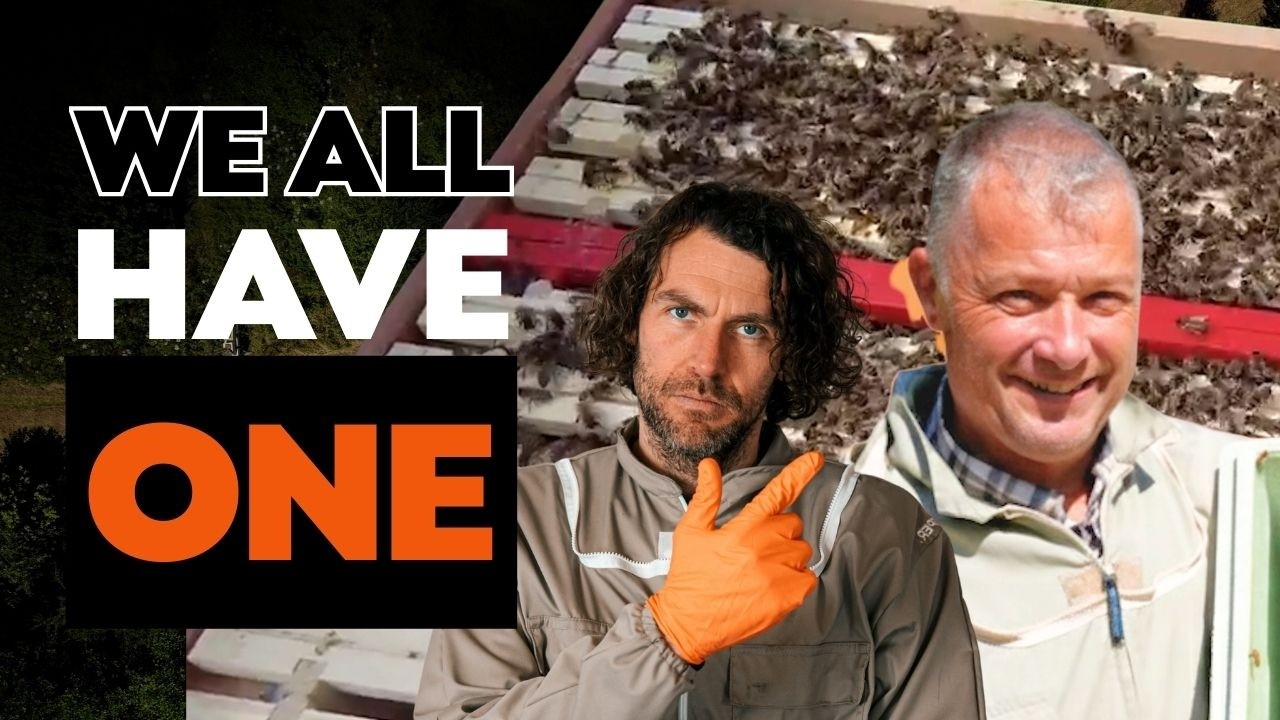
A tour of a Welsh apiary shows how controlling drone populations matters as much as selecting a good breeder queen. By flooding the valley with drones from a pure German Buckfast queen, the apiary produces calmer colonies and premium honey. Isolation and seasonal timing are key to managing the paternal side of queen breeding.
Chapters
In this video, I'm going to show you inside one of the best colonies inside Richard's apiary. Now, Richard is a bee farmer with over 30 years of experience, and his dad was a bee farmer with even more experience than that. So Richard knows a thing or two about bees, and he knows a breeder queen when he sees it, and he knows how to set up colonies to flood the local area with drones. This colony here is a pure German Buckfast breeder queen that is producing pure Buckfast drone that is flooding this valley. Controlling the drone side, the paternal side of our queens, is so important. If you take a breeder queen and you graft the young larva and you put it into a starter finisher and you create wonderful young cells, those cells carry all of those maternal characteristics, all of the genetics from the mother. But the offspring from that queen relies on a natural mating process. So the other 50% of the mix, and 50% is a pretty big bit of the mix, is completely reliant upon what is in the air. Now, if you go to heavily populated areas where there's loads of beehives, what's going to be in the air is a real mix of drones. Now, a real mix of drones could be good. It gives you good variety, means you'll get some amazing colonies, means you'll also get some really bad colonies. What you want when it comes to producing top quality queens is as much isolation as you can get, which here in the middle of nowhere in Wales is very, very easy, especially considering the topography here. You look around, you look at the drone footage here, very, very he. We're in a valley, we're blocked off, so that segregation piece is much, much easier by us. The other part of the jigsaw vote is what this colony here or that. We're flooding the Aprilu. He's top. Quality drones. Now there's a lot of colonies here, but within the local vicinity and not just in this apiary, there's various apiaries that are set up with these drone colonies. Now to set up a drone colony, it's super easy. All you do, maybe last week of April, early May, you just go into a colony, a big strong colony where you know it has proven genetics. Break stick, you want some trophigase? And you just take out a couple of frames from the brood box, place in a couple of brand new frames, the drone foundation on. And if you want to, you can give your bees a feed in that fall. At that time of the year, the bees do not need any additional encouragements to draw that out and create 2 brilliant red drones. They'll continue to do that all the way throughout the season until they get to the point where they say, right, we don't want any drones anymore. They stop doing it, backfill it with honey, kick all of the drones out, and now you see ophat. We're probably 3 or 4 weeks away from that, I would say. It's early July here in the UK. Normally June and July are the very best months, and this year June and July are very good months up until now, but we're just beginning to see the slowing down of the flow, or the flow stopping altogether. The signal that the season is coming to an end. So in the next couple of weeks, all of these drones pass out. But take a look at some of these frames, kids. Take a look at the amount of drones that were in this colony. Lots of drone brood, but tons and tons of cells. Now these drones, once they're sexually mature, they'll go out later on in the day and they will search for virgin queens. Now again, go back to that example of the heavily populated area. If our drones go out searching for virgin queens, they have huge competition. These virgins will mate with up to 20 different drones to store that semen inside of them, and then it will be used to fertilize her eggs. Now, as I said, if you have that huge amount of variety in the drones, you could get some exceptional queens. You could also get absolutely shocking breasts. So when people say to me, how do you get a so calm? Why Black Mountain Honey nucs so much calmer than any other Sapphire? And check out our reviews online. They really are. We provide the calmest bee. Okay, and we've been working on this for weeks. The maternal side is easy. You buy yourself a breeder queen, you take her home, you put her in a colony, you look after her, you graft her larva. But the paternal side is not difficult and it is not expensive. £300 or £400 top quality breeder queen. Make sure she's tested, good breeding stock, good genetics, and maternal side fixes itself. What a lot of other people do is they just fix the maternal side and they don't worry about the paternal side, neglect the other bit. That's not neglecting 5% or 10%, that is neglecting half, half of the jigsaw puzzle. And by creating this environment here away from pretty much any other beekeeper, probably not even that many wild colonies due to the fact that it's very mountainous, and because Richard is bringing in so many good top-quality drones into the area, that equation for the virgin queens becomes much more simple. It's not hundreds of thousands of different types of drones in the air. And you're not getting this mix that you're not able to control. The chances of our virgin queens going out and mating with our drones is much, much higher. We're controlling the maternal side, we're controlling the paternal side as best as we possibly can. Isolating the apiary, packet book, really good drones, and making sure those drones are correct quality as well. 2 drone friends inside your colony back end of April, early May, was going to do the world of good. It's probably at the top end. I think you could get away with a single frame as well, and as long as you've got the isolation, going to produce really, really good. So this queen here, although she's a breeder queen, she's not been tested yet, but Richard is very fond of this. The calmest colony that we've got, be using it to control that determinicide. But have a big plan for this colony. Going to do some grafts, test the offspring, maybe this one be upgraded to a proper breeder queen before. I just quickly turned around and Richard said, how old is that queen there, if you're wondering? Because a lot of people say, oh, we're grafting from breeder queens and she's a 2025 breeder queen. You think, oh, hang on, it's not a question about can she be a breeder queen, she is this year's queen. I've tested her, you can test her daughter. So I just asked Richard what color spot this one here is. Rich beige. 2021, and it's the same queen, she's not swarmed. These are the genetics that we're talking about. If you've got any colonies at home where the queen's Or old, she has not swarmed yet, and the colony is super calm and precocious. So a beautiful day here. Just wanted to give you a real close-up shot of that colony, showing you how amazing those bees are. You're interested in getting your hand on top quality Black Nancy honey over weeks of nucs. I will get the orders in as soon as possible. Generally sell.










