I Caught A Swarm And Gave It A HOME
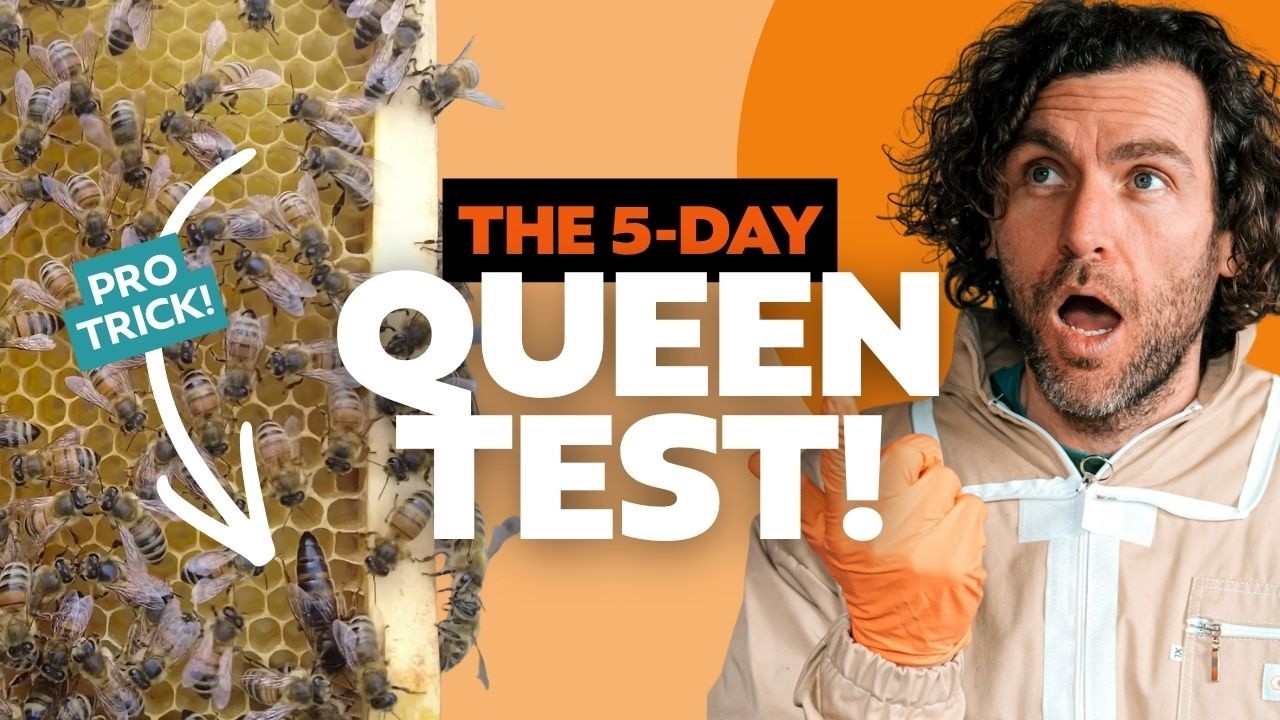
Laurence Edwards catches a wild honeybee swarm from a tree branch with minimal gear, then relocates it to his apiary. He uses a nuc box and ladder instead of a bee suit, transfers the bees quickly to prevent overheating, and confirms the colony's success five days later when a mated queen emerges and starts laying eggs.
Chapters
So in this video, I'm going to try and catch this swarm today. All I've got with me is a box. I've not got my bee suit with me, it's in the car. I'm going to try and get up there with some ladders, with some secateurs, get that branch of bees down, and I'm going to take it to an apiary, and then we'll shake them in down onto the floor and put them up through a blanket up into a hive. That's the plan anyway. Stay tuned to this video to see how it goes. So here's the swarm in the tree. As you can see, we're just on a little country path here, dog walkers as well, so I'll have to cordon it off when I go up there. But relatively nice-sized swarm there, probably going to cover, I reckon, 5 or 6 frames once you get it into a box. It's a little bit high. I'm going to try and get up there as best as I can, chop that branch off, get them into a box, and take them down to my apiary. So I'm quite amazed at how far my camera will zoom in, but here's the swarm. You can see it's shaking around in the tree like that. Apparently been here for about two or three days, and they look intent on staying. So they're sending out a few scout bees as well. I'm going to go and try and find somewhere new. The weather's on the turn though, so they really do need to be housed into a hive as soon as possible, or they are just going to get completely drenched. So as you can see, it's quite high up there. Hopefully you can see the swarm top there. Not ideal to get the ladder on, so we're going to try and get a bit of rope. Pull it down. So instead of trying to get the ladder up there, I'm going to try and get the rope up, because it's going to be a bit easier than me trying to clamber up into a ladder. I think there's enough length on that branch for me to get a rope round, try and pull it down, disturb them as, as little as possible, try and get them into that box. It might take me a couple of goes. Right, so there we go. It struck back a little bit like that, and I wasn't expecting it to do it like that, but it's a really good way of trying to get it down. Probably best if there's 2 people there, and we would have got all of the bees without them actually like flinging off like that. But I've got probably 80 or 90% of the bees in the box now. There's probably another 10% or so on the floor. The bees are going to crawl back into that box. You're always going to get a few that are going up there, so we'll give it 10 or 15 minutes, let them cluster up, and try and catch the remainder of the bees. So there you can see the bees fanning, and it just goes to show you, you don't need a lot of equipment to, to actually go out and catch swarm Swarms. I was completely underprepared here again, so, uh, someone's lent me their ladder. Um, but I'm just doing it in a box here. This is just an old nuc box that I've got. Box is perfectly fine for collecting swarms, but just make sure if you're collecting swarms in boxes, as soon as you get home you go and put them into a hive within a few minutes because they will overheat in a matter of minutes in this box here. So don't go and do anything else and leave the box in the car or leave the box somewhere else, you need to make sure you get that home as soon as possible. So this is what it's looking like inside the box now. You can see, got the branch, got the cluster of bees, got them fanning down in that bottom corner, all making their way in. Just a matter of time to wait to get the majority of the bees. So you can see that little cluster of bees building up there again. Just give it enough time, give them 15, 20 minutes, half an hour until they've formed a cluster, you want to get as many of the bees as you possibly can because the queen could just be in that little cluster there. You just don't know, and you might as well go and take all the bees you possibly can. So all I'm going to do is I'm going to wait for them to cluster up properly, bring that little mini cluster down, add it into the nuc, close them up, take them away. So I'm just waiting for the bees to cluster up now. I'm going to try and get as many of them as I possibly can. Not sponsored by Costa Coffee, but I am— I'm having a coffee, just kind of taking it easy, waiting for the bees to cluster up. Best to get as many as you possibly can in a place like this where it's public walkway. You really want to get as many as you can, take them away, take the hazard away from other people. No point leaving just a fist size of bees there. So I'm going to finish my coffee, I'll let the bees cluster up back into the original position, I'm going to pull them back down again, cut off the remaining cluster, add that to the box, give them another 5 or 10 minutes just to all make their way in, and then I'll leave whatever is remaining on the branch and I'll take them back Nearly impossible to do this on your own because every time you cut the branch, it flings them back up into the air again. So probably got 10% of them there. I'll shake them into the box. I'll have another go. Right, I've got the final one down and that is as far as I'm going to go because you could be here all day doing that because every single time you cut them you're going to get a few that fly back up. There's going to be probably like a big tomato size left of bees, but I've got 98% of them I reckon in that box there. So I'll give them a little bit longer, probably shake them off a couple more times, and then I'm just going to package up that box and take them home. So you can see now there's a few stragglers, but they're not even clustering up because there's not enough bees to do it. They will ultimately cluster up overnight, but the majority of the bees are down there in that box now. And when you look into that box there, you can see all of the bees in there. Loads at the top there, they tend to cluster up at the top. Loads on the original branch, and then all of the bees trying to And then there's enough land. I like to think they're fanning the queen's pheromone out. It's probably a little bit of both. So I'm going to close this box up now, take it straight to her. So I've just got a simple underfloor entrance here, and underfloor entrances can be a little bit difficult when you're dealing with swarms because they can't work them out straight away. So all I'm going to do is I'm just going to turn it upside down. So that's the correct way around. I'm going to turn it upside down and I'm going to get them in this way just until they're used to it and they know where the colony is and they've reorientated. Then you can switch it around the other way. So I've placed my floor on the ground, and then I've just got a rug, and you can use a sheet or anything like that. Roll that down so the bees can walk up it. I've then got a brood box full of nice drawn comb. This is what makes it so easy. As soon as they smell this, they are going to be all over it. They're going to want to get into a nice safe place with some brood comb. So it's a little bit difficult to show it on camera, show it as best as I possibly can, but the brood box is offset, overhanging, so the bees basically come up underneath the brood box, completely bypass the floor. But the floor is there just because I'm going to turn it around at a later date. And then all you need to do, put the box on its side, let the bees walk up into the hive. Before you do that though, put the roof on, give them a nice secure environment. Put that roof on, make sure your frames are evenly spaced. I've got DN1s here, which is a real pain, but it's the only ones I've got. Make sure they're evenly spaced, and then we can get the bees in. So this is what the inside of the box is looking like. Nice size swarm, not huge, but big enough. I'm going to lay that down on its side, let the bees walk in. So I'm just sitting here, you know, I love swarms because they're so chilled out and gentle. They look a bit crazy, but you hear that roar there. It is just a phenomenal sound, and they're just, they're fanning their pheromones out. You can sit here and watch. I, uh, I find it quite amazing. So fast forward an hour or so, get every single last bee in here, and then come back later on in the video and we'll take a look to see whether there's a virgin in here or a mated queen. Like we do with all of the videos here, you get to see them all the way through. So I'm not just going to leave you at the end of this video. Stay tuned to the end because you'll find out if there's a mated queen, if there's a virgin queen. We'll let the colony build up a little bit. I'll show you some of the capped brood. We'll do a little bit That's just to see how this colony is getting on. So there we go, successfully introduced to their new hive. They will make their way up eventually. You just want to get the majority of them in there before you start messing around with them. I'm going to give them a day just to kind of get acclimatized to it, reorientate probably tomorrow, and then give it a few days and I'll get in there to see whether there's a virgin in there, mated queen in there, just how big that swarm is. So as you can see, there's nothing left. They've either completely absconded, or more likely they're going to be all in that beehive there. And just as I say that, I see a couple of them coming out. So hopefully there'll be a full box of bees. Let's get that lid off, see how many bees we've got. And there we go, really nice gentle swarm covering, I reckon, 6 frames of bees there. So sizable swarm. Not a massive one, but absolutely fine for this time of year. They're going to grow into that brood box and make a really, really nice colony. So we'll give it 2 or 3 weeks. Stay tuned to this video and we'll come back, we'll see whether we've got a mated queen or a virgin, and then we'll take a look at the brood and we'll see how they expand. But really happy with that. I'm just going to straighten up those frames now, leave the bees to it, see how they come on. So the bees have worked out where the entrance is. I'm going to get in there now, see if we can find the queen, see if she's a virgin, see if she's mated, just have a quick check, see if we can see any eggs, and then we'll close them back up again, give it a few weeks, see if we can see any capped brood. So I'll get my hood on, we'll get inside the bees. So reasonable amount of bees covering, what, 4 or 5 frames, maybe a few more, just coming out to say hi now. I'm gonna get inside, pull out some frames, see what we've got. So just looking through the frames, haven't found the queen. I've been through all of the frames here and I just cannot find a queen anywhere. So may well not be a queen in here. There's definitely no eggs. I've looked through all of the frames, every single last one, haven't seen a single egg. That doesn't mean that the queen isn't in here. She may well be in here. And she's just getting mature, getting ready to lay eggs. But at the moment, no sign of any queen, no sign of any eggs. We've got about five frames of bees. So in this situation here, where you catch a swarm and there's no eggs and you can't see the queen, best thing to do is to put a frame of eggs from another colony into your hive, and then that way you can determine if there is a queen in there or if there isn't a queen in there. I've covered this in separate videos, but all I'm going to do now is I'm going to add a frame. Frame of open brood with some eggs and larvae, and I'm going to let them pull out some emergency cells. If they pull out emergency cells, there's no queen. If they leave it alone, turn it into capped brood, then there is a virgin in here, or there is a mated queen in here. You just have to give them a little bit of time to lay some brood. So we're going to do that in this video. I'm going to add a frame of eggs from this colony over here, close them back up, fast forward 5 days, And we'll see if there's a queen in here. So here's my frame of brood in all stages. Got some eggs, got some larva. I'm going to put that into the middle of this swarm here, give it 5 days, see what we've got. So there's my frame of brood, that DN4 frame sitting in between all of those DN1 frames. Brood in all stages, eggs and larva. If there's no queen in there, they're going to draw emergency cells on that frame, and we'll be able to confirm If there is a queen in here or not. So I've closed the colony back up now. This colony is no longer hopelessly queenless, if that's what they were. They've got the capacity to draw some cells if that's what they need. You do find swarms that don't have queens in them. The queen might have got lost, anything could have happened to that queen, so it does happen. That test there will show you though how to confirm if there is a queen in your swarm. So I'll come back in 5 days, And I'll show you that frame again and we'll confirm either way if there's a queen in this swarm or there isn't. Right, so we're back at our swarm now. It's been about 5 days since I put that test frame of eggs in here. I'm going to get inside, we're going to see if they've drawn out any emergency cells. If there's emergency cells here, then there's no queen and we'll just let them requeen from the emergency cells. If they haven't drawn any out, then there's almost certainly going to be a virgin in here. Or maybe a mated queen that hadn't come into lay yet. So I'll get into the colony, I'll pull out that frame, and we'll see whether there was a queen with the swarm. So I'm really pleased to report that there is no emergency cells on the frame, and as I look at this colony now, I've just spotted a beautifully large queen. Not marked, but definitely mated. So I'll ping up a little picture of that now showing you this queen. I suspect that she was a virgin. Obviously I didn't see her first time round. She's just on the edge of this frame here now, but without a doubt she is mated. I can tell she has got a very, very long abdomen, and hopefully we'll go through the rest of the frames now and we'll see some eggs. I'd be very surprised if we didn't see some eggs. And there we go, this is one of the original frames that was in here. I'll do my best to zoom in there. It's always really, really difficult to show you this on camera. But she has laid up that entire frame of eggs there. So there you go, a well-mated queen. We didn't need that additional frame of eggs, but it's always a good measure just to test whether they are queenless. And in this instance, they've come back and proved to us that there was a queen in here because they didn't draw out emergency cells. And we've come back and the queen is mated and we've got eggs. So good news, we found the queen, she's definitely mated, really nice long abdomen. Proof of eggs in the cells as well. We'll fast forward a couple of weeks just so I can show you some capped brood on this colony, ensure that there's no disease present at all, and then we can put it back into the apiary and that'll be the end of the video. So it's been about 5 days since we opened up this hive last time. We're going to go inside, check for any capped brood, see if that queen is mated. So it's a really nice-sized swarm, they're still covering 6 or so frames, obviously not going to have expanded at all because there's no brood that's emerged, but seem to be a lot more calm today as well. Nice warm weather, there's a good flow on, and they're probably covering about 6 or 7 frames in total. So I'm going to get in there now, see if I can find some eggs again, see if I can find some capped brood, take a look, confirm there's no disease. We'll take it from there. So as you can see here, lots of eggs, lots of larvae, brood in all stages, and they're starting to cap it out with worker brood in the middle there. So I'm confident that the queen is mated. All is looking good on this frame here. And then we've got some really nice capped brood on this frame here as well. Nice tight laying pattern, nothing wrong with that brood at all. Definitely been out, mated well. And there she is, queen again. You can see her just pottering around on the frame there. Doesn't seem to be anywhere near as stressed as she was last time as well, which is really good. Shows that she's a lot less nervous as she was as a virgin. Really nice looking queen.










