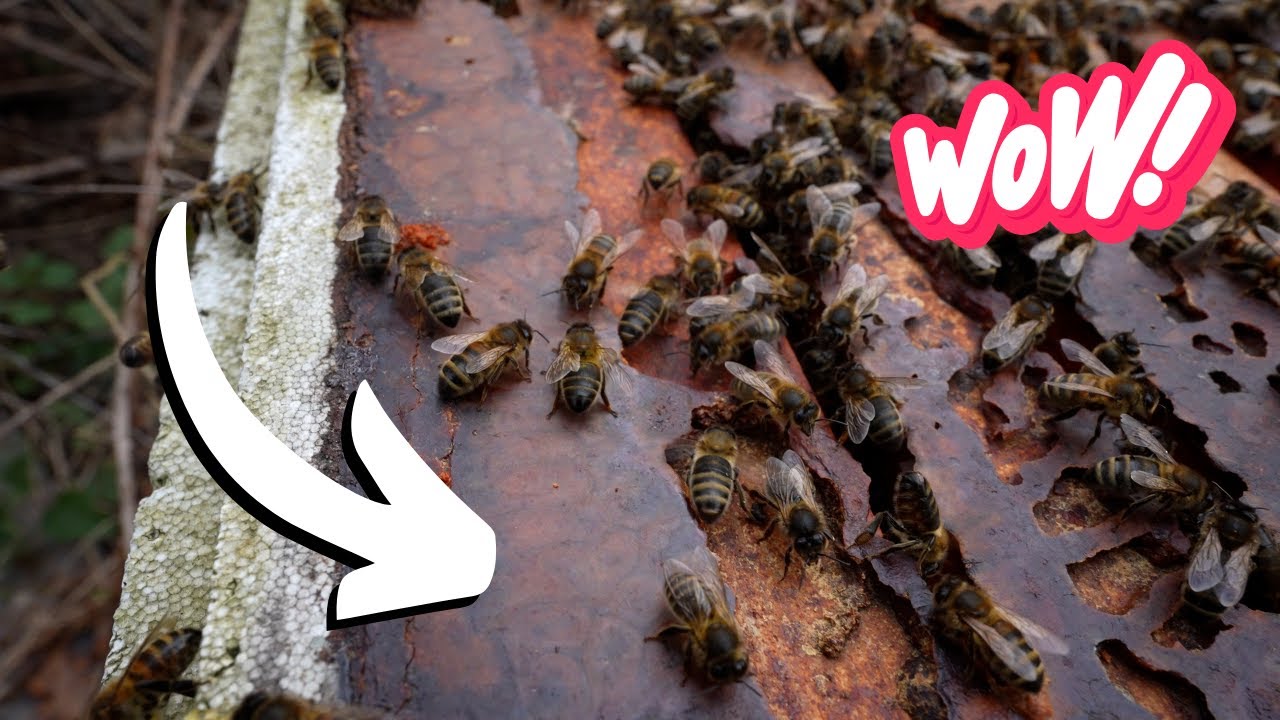
In this vlog‑style beekeeping video, Laurence Edwards documents a small nucleus (nuc) honeybee colony in North Wales that survived three months of winter without a conventional hive roof. The original plastic roof was blown off, leaving the bees exposed. Remarkably, the bees constructed their own protective roof using propolis, sealing the frames in a thick, wax‑like coating. Edwards inspects the colony, noting a strong, healthy brood pattern with capped brood and pearly‑white larvae, and confirms the absence of foul brood or disease despite prolonged cold, rain, and sub‑freezing temperatures. He describes the difficulty of extracting the heavily propolised frames, the decision to break the propolis seal for a health check, and his amazement at the colony’s resilience and hardiness. The video highlights the unexpected adaptability of honeybees, the importance of monitoring colony health, and practical beekeeping challenges when colonies self‑modify their hives.
Chapters
In this video, I'm going to show you how a small nucleus colony of bees has survived 3 months of winter in North Wales without a roof. As we were talking about this colony, we were saying that roof had blown off. There was kind of no bees there at all. And we thought, without a doubt, this is going to be the colony that hasn't survived. They have survived over 3 months in North Wales without a roof, and they have done that by making themselves a roof out of propolis. So who needs a roof when you're a honeybee and you can just make your own roof out of propolis? Just smelling this one here because I'm thinking, oh my God, there is an absolute rank smell coming out of this. Please don't be foul brood. But it's not. The feeders just full up with water where it's been raining onto this colony for about 6 or 7 months throughout the year. Absolutely astounded at how well this colony has come through. They have not got a roof. This colony has made its own roof out of propolis, and look how big and strong they are. Very, very hardy bees. I think we're going to have to break the roof though and give them some sort of protection just to confirm what's going on inside. But look at them, big colony in there, lots of weight in here as well. They've been out, they've been foraging. I'm amazed at these. So have a look at this. This is the state that we found them in. The plastic had fallen off again. We'd put a little brick on there to stop it. I don't know what's happened, it's obviously blown off somehow, but just check out what the bees have done. I was speaking to John about this one and said, what do you think's happened? And he said, well, the plastic's blown off, so got no hope whatsoever. And as we said, you just never know with honeybees. You never know which ones are going to do well, and you never know which ones are going to fail. Turns out that the biggest one, the strongest one, our absolute banker, is gone, and there's no queen, there's no eggs, there's no larvae, there's no nothing. And the small little nuc that didn't even have a roof for 6 months is pretty much full. This hole here is my favourite hole in this propolis roof. Absolutely fascinating. Jon said he's got another roof that he can bring back this evening, so we're going to break open this seal now. We're going to check to see if there's any brood inside. If this colony has got through the winter, they are the most hardy bees that I've ever come across. So it's going to be really, really difficult to get these frames out. They're going to be propolised in every single direction. I've kind of tried to cut them over a little bit like that just to give me a little bit of room to manoeuvre, and I'm just going to get in there now and try and get them out with Without breaking them. Seems a little bit harsh to do this to this colony, but we do need to get in, check to see what that brood situation's like, make sure there's no foul brood present, and then we can take it on from there. And there we go, we've managed to get the frame out, and what an incredible brood pattern on that frame as well. I really just can't believe these bees have managed to last this long throughout the North Wales winter, and it's been cold, like it's definitely been kind of single figures down into below freezing temperatures. And it has rained a lot this year as well. So looking into the colony here, we've got nice capped brood and then we've got a ring of really nice pearly white larva. I'm happy that there's no disease present in this one. Perfect ring of brood, really nice pearly white cappings. Very, very hardy, resilient bees.