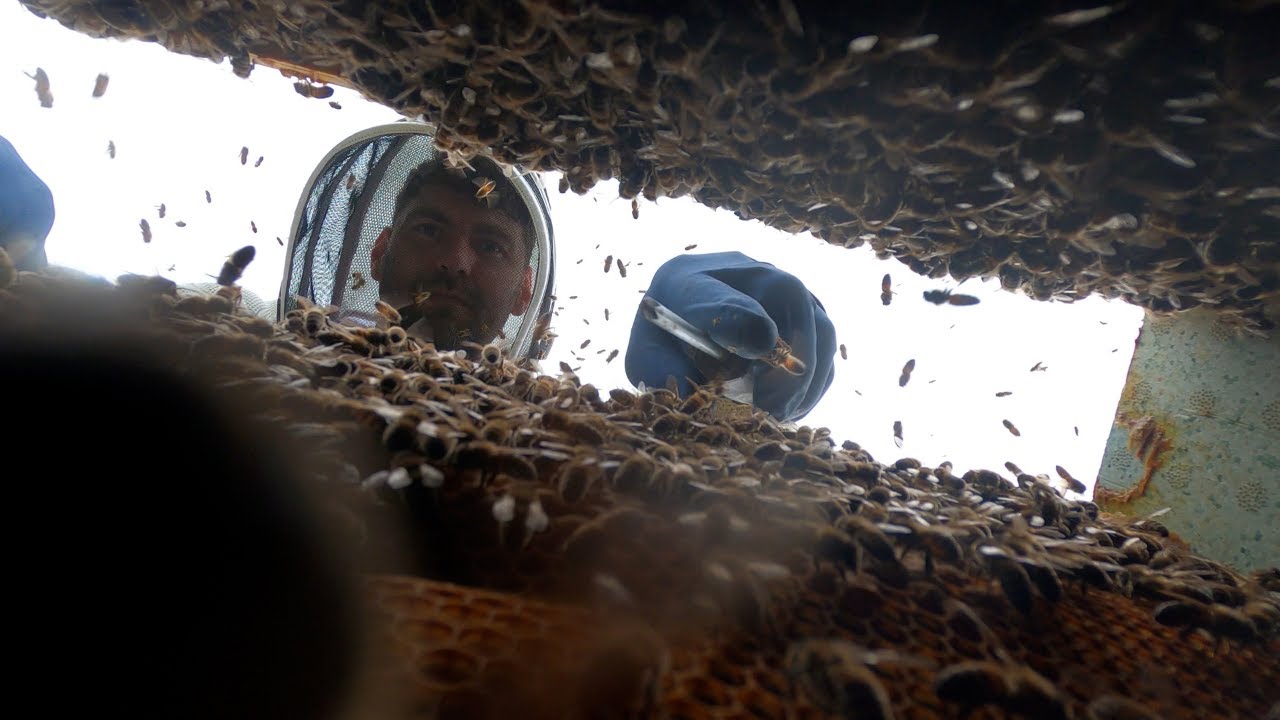
In this solo beekeeping walkthrough, Laurence Edwards explains why he performed a full shook‑swarm of his heather apiary before the heather flow began. He outlines the proactive disease‑control rationale (reducing potential EFB transmission), the need to replace very old, dark comb and under‑performing colonies, and the timing advantage of a rainy, brood‑less period. He describes the shook‑swarm procedure: removing all frames, shaking bees (including the queen) onto brand‑new Payne/Langstroth boxes, foundation, and removable side feeders, then inserting Apivar strips on day three to curb Varroa early. Throughout the video he inspects several colonies, noting clean new frames, healthy brood patterns, stores, and the benefits of the side feeder for easier manipulation. He feeds a modest amount of syrup, monitors mite treatment duration, and discusses winter preparation. Finally, he projects that the refreshed colonies will overwinter better and aim for a bumper heather honey crop in 2024, planning to compare shaken versus unshaken colonies.
Chapters
In this video, I'm going to tell you why I shook swarmed my entire heather apiary before the heather flow had even started. So for those that don't know, a shook swarm, very simple, you take away the beehive, you take away the frames, you take away the brood, and you shake all of the bees including the queen onto brand new frames and equipment. It's promoted by BBKA, it's promoted by the NBU as a proactive way to nullify any disease within your So if you've got, say, asymptomatic EFB and you do a full apiary shook swarm, chances are you're going to be able to reduce the chances of any transmission of EFB. However, if you've never even had any EFB, might be an idea to actually give it a go, and that's what I've done in this apiary here. So we've, we've never had EFB in this apiary here. It's been inspected 3 times in the past 12 months by the NBU through various training programs that I've been on. And they've never found so much as a dodgy cell up here. So fingers crossed that continues. However, I still went ahead and did a proactive shook swarm up here. And the reason that I did that is that I found that the bees just kind of weren't performing as well as I wanted them to perform up here. There were some very, very old combs. So there were combs up here that were maybe 7 or 8 years old, various brood cycles that they'd been through, really dark black combs. And then the deciding factor for me up here was the fact that It rained and rained and rained, kind of like all the way through July, all the way into the beginning of August. And I thought, there's no way that the bees up here are going to produce any kind of decent honey crop. Even if there was a good flow, they weren't going to be able to make good use of it. So the timing for me was pretty much perfect, which was I've got lots of bees here that aren't performing particularly well. I've got lots of frames and lots of beehives that haven't been shook swarmed in years, and I just want to have a clean break. So I could do Bailey comb exchanges over the years, but Bailey comb exchange is a fair amount of work as well. Whereas doing a shook swarm, you kind of do all of the hard work at once and you get this nice clean break. And then if you do have any asymptomatic EFB, you're hopefully going to get rid of that as well. So I'm going to open up a couple of these colonies now because I am so, so pleased that I did the shook swarm. Looking at these colonies now, they look absolutely fantastic. And what I'm hoping is that going into next year, I'm really going to reap that benefit. All new equipment, brand new Payne's Langstroth boxes, brand new frames, brand new foundation. I've given them a little break without any brood as well. And at that point, because I wasn't going for any honey, I put my Apivar strips in. So my Apivar strips went in very early this year. I know some people are cursing because they followed the advice and they put their Apivar strips in early. I can only show you what works for me. So I'm sorry, Aaron, if you missed a bumper Himalayan balsam flow, but believe me, your bees will thank you for it next year. And hopefully you'll get double the crop because you've got such healthy bees. But I took advantage of that broodless period. So when I did the shook swarm, I left them for 3 days, no feed. And then obviously within that point there, there's no brood that is capped over. And then after 3 days, I went in and I put the Apivar strips in on day 3 and fed them at the same point. What that's hopefully done as well is reduce the mite load down really early in the season so that my winter bees are exceptionally healthy, which I'm hoping should lead to very, very good overwintering. They're a little bit light on feed in some of them because the heather has been rubbish this year. But if I come in here and kind of lift this up, that one's absolutely nailed to the ground already. So no issues with feeding that one. Some of the bigger ones are a little bit light and just need a bit of topping up. But let's get inside. I'm going to show you this one here. This one is pretty much average, I would say, for this apiary here. It was shook swarmed about 6 or 7 weeks ago, and they have built up to a point where I'm very, very happy with how they're looking going into winter. So you can see on all of the tops of the frames there, really nice new pine frames. Got my Apivar strip in this one as well. I've got my feeder on the wrong side for this video, so I'm gonna have to lean over and get that feeder out. Hopefully when we go inside, we've also got nice calm bees. I know people are going to get so bored with me saying this, but really, pains, you do need to bring the removable side feeder into the national I'm loving having it on the Langstroth versions. It really does make my life so much easier. And the reason it makes my life easier, it's really clear to see, isn't it? Look how much space I've got to work now. I've taken that feeder out, popped it off onto the side, double-checked first to make sure there was no queen on there, and then I don't have to lever in with a hive tool because I've got so much space. I can just get in there with my hands and pull the frames out. Right, you know me, the rule is always there. If they sting me in the face, I will show you. These bees are a little bit more touchy than the other ones today. I did just take a couple of stings to the face there, so I put my veil up. You can immediately tell when the bees are going to be a little bit touchy. Like, it is so cold here today, so overcast and so rainy. But I want to show you these bees, so we will continue. So you can see from these frames here, look at how nicely the bees are drawing those out. Better on that side there, but just look how nice and clean the frames are. I'm going to turn that one around just so they work on that one before we get into the winter. So beautiful frame there, good amount of stores, lots of capped Brood, no eggs on this one, and that's the common theme in this apiary is that they are kind of getting ready for winter, hunkering down a little bit. Really glad I put my veil up. And again on that frame there, good amount of brood, good amount of capped stores. That one is laid up with eggs, pretty much fully laid up with eggs that one. Still no sign of the queen though. Got my Apivar strip in there and I've got about 2 weeks left for the Apivar strip before that has to come out. Bees are looking really, really healthy though. No eggs, no brood on that frame either, so we've only got like a couple of frames of brood, but the bees have still got sufficient space in order to lay. Probably going to have about 2 or 3 weeks more of the ivy flow up here, but these bees really don't need a huge amount more. What I'll do is I'll just leave them to it and then I'll come back later in the year and I'll top them up. So another brood frame there. Very odd. You don't often see that where the bees backfill the middle frame between two frames of brood with nectar and stores, but they have. And you can see there I've still got a little bit of space on that side for the bees to draw out the frames. This one has been timed pretty much perfect, I would say, in terms of building it up, getting it ready for winter. Wouldn't want it any smaller, wouldn't really want it any bigger. Bees are looking really, really healthy, and the pattern of brood is looking Looking very good as well. So then the final frame, you can see they've drawn out one side and again they've not drawn out the other side yet. So I'm just going to turn that one around, put the face that's not been drawn out facing into the colony. Then I'm going to get my feeder back in and I'm going to top this one up with syrup. Obviously being really careful there not to spill any syrup. Worse thing you can do at this time of the year. Just going to give them half a feeder full. You definitely can feed too much at this point in the year, but I've still got foundation that they need to draw, and there was still sufficient space within those frames for the queen to lay. Half a feeder should be plenty for them. Might come back at the end of the year, kind of first week of October, and give them maybe another half feeder, but they definitely wouldn't want any more than that because they are weighing very heavy when I lift them up. But the benefit of this shook swarm for me should be seen in the following year. I'm going to show you this next year. This whole apiary has been shook swarmed, and I'm going to keep some colonies here and try and build them up for the heather and see if we can get the absolute bumper heather crop in 2024.