I Should Have Done This A Long Time Ago
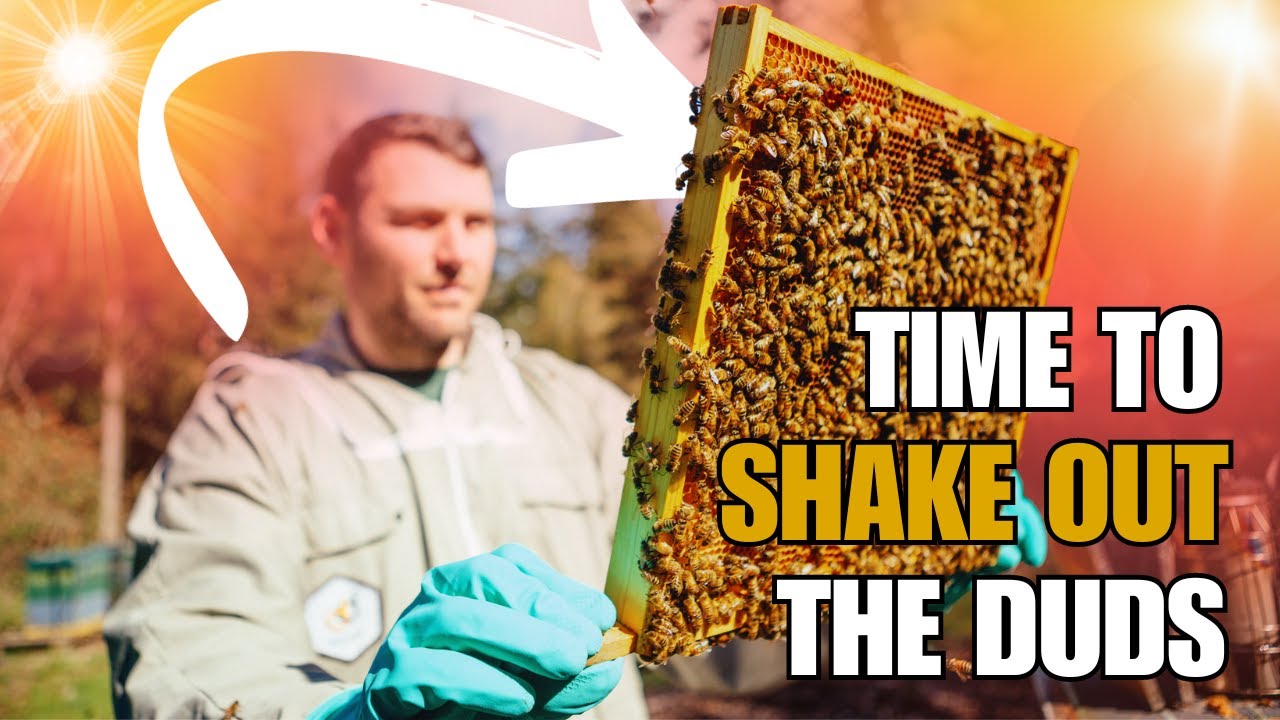
Laurence Edwards inspects a failing winter nucleus colony with an unmated virgin queen left after a late-season swarm. He shows how to identify the problem, kill the queen, and merge the remaining bees into a strong hive, noting this rescue should happen in September, not December.
Chapters
In this video, we are going to take a look inside a nucleus colony that is failing, and it is failing over winter. So this nucleus colony has a little bit of a backstory to it, a very annoying and a very frustrating backstory. That is, I introduced an F0 pure Buckfast breeder queen into it. I came back to clip the breeder queen's wing to make sure that they wouldn't swarm late on in the season, and she had already swarmed. And I was so annoyed, like loads of money spent and the breeder queen has gone off into somebody's chimney. Probably the most pedigree swarm you're going to get in North Wales. However, she left behind numerous swarm cells, and I didn't even bother taking them down because it was so late on in the season. I thought, you know what, they're not going to cast away to nothing, and I just don't think that there's any chance that the queen's going to be able to go out and actually go and mate at this point in the year. I did a few checkups later on in the season, and I didn't see any eggs, I didn't see any brood. And the colony is now dwindling away because there's a virgin queen in there and the queen is not mated. So I just want to kind of give you that little comparison to show you a couple of nucs, a quick sneak peek inside, what a healthy nuc looks like at this point in the year and what a failing nuc looks like in the year. There's a few telltale signals that you can see just from the top, just from the cluster. And then with the failing nuc, I'll quickly open it up, see if we can see the virgin queen. I'll show you that there's no brood in there, but more likely than that, what we're going to find when I open it up is probably scattered drone brood because you've got a queen that hasn't been mated properly. So this is the nuc here in question. Never forget this nuc. So, so annoying. Let's get inside it now and see how the cluster is looking. So the cluster's not actually looking that bad. I thought it was going to be worse than that, but you can see not covering a lot of the frames. You've got Maybe just half of the bees over in that corner over there. Dead giveaway for me here though is the difference in coloration of the bees. This is supposed to be a breeder queen. She's very orange, but look at those bees there. They're very dark. And then you've only got a few lighter colored orange bees, which are the legacy daughters of the pure breeder queen that I put inside here. So there's no real telltale giveaway there to say that this colony here is failing. But I know it's failing. So I will come back to this one in a second. I'll pull a couple of frames out to prove to you that this colony here is failing. But first, let's go and have a look at a nuc and what a nuc should look like at this point in the season. So I think you'll agree the difference is quite clear. Although they're only over half of this nuc here, you can see, look how many bees we've got here. Absolutely jam-packed. They're clustering up for heat. This is what you want to see when you open up your nucs in the winter. I'm going to close them straight back up now because there's no need to be inside this one. This is what a healthy nuc looks like. So just because this colony here is failing, it doesn't mean that you need to go in and actually do anything. Like, if these were your bees and you knew they were failing, all I would do is just monitor them, and then when all of the bees die, I would just close up the entrance. I just want to prove to you that this colony here is failing, though, so I am going to go in. I'm going to take a look. I'm gonna show you a couple of the frames. So these bees here are definitely not happy. That is one of the signs that you'll get. They're not intently clustered 'cause they've got nothing to cluster around 'cause there's no brood inside. So I don't wanna get stung in the face today, so I have put my veil on, a very nifty veil, one of the prototypes from BB Wear that you will see coming up over the next few weeks. But I just wanted to make sure that I didn't get stung in the face here 'cause it could have been a little bit embarrassing. So let's get inside and see what those bees are looking like. So what you can see there, first frame, frame of stores, no brood on there whatsoever. Next frame along, another frame of stores. You'll see some stores crystallizing in there as well because there's not enough bees to keep it warm. And then see if you can see the dead giveaway on this frame here, which is a runty little virgin queen running around the frame. Oh, I can see her. Right, she is around there in the middle, but you can quite clearly see she's not a mated queen. She'd be much, much longer than that. Even when they're offlay, you'd see that they are considerably bigger than that. So what I'm going to do here is I am going to take the opportunity to get that queen and I'm going to kill her because she is no good to anyone. And then what I'm going to do with this colony is I'm just going to shake the bees out. But what I don't want to do is I don't want to shake the bees out and then leave the queen to run into another colony. So I think whenever you identify a failed virgin queen, the best thing to do is just to get directly in there and kill that queen. So there we go, I've got the queen. She is now dead. You can see on the top of that frame there as well the remnants of the cells where the queen came out, but this colony here is completely doomed. Just quickly show you the rest of the frames as well because there's no disease risk on this one. I know that it's due to a failed queen. You can safely reuse all of these frames. And it's best to kind of secure them now, get them nice and sealed, no bees on them, and then that way they're not going to ferment. And these really are very, very safe to use. Again, you can see on the bottom of that frame there, look how many cells there were. So annoying. A super, super expensive breeder queen. She's left behind a lot of her daughters, but unfortunately they did swarm and I lost that queen. But I might as well put to use all of these bees here, so I am going to shake them out in front of another beehive and just let them wander in. So here's the nuc here. As you can see, quite a few bees in there, but they are definitely destined for failure. So I'm going to shake these bees out now. I'm going to put another nuc in front of it just to collect all of those bees. There's no point wasting all of these resources when they can boost the population of another colony next door. So there you go, you can see all of the bees going into their new home there. All of the ones down on that pallet, they'll find their way back in, and I've used all of those bees to boost the population of a really good colony, but a colony that could do with a few extra bees. As I said, don't go doing this if you don't know 100% that the colony's failing, and really you should be doing this towards the back end of September and not coming in and doing it in December.










