I Wish Every Apiary Looked Like This One
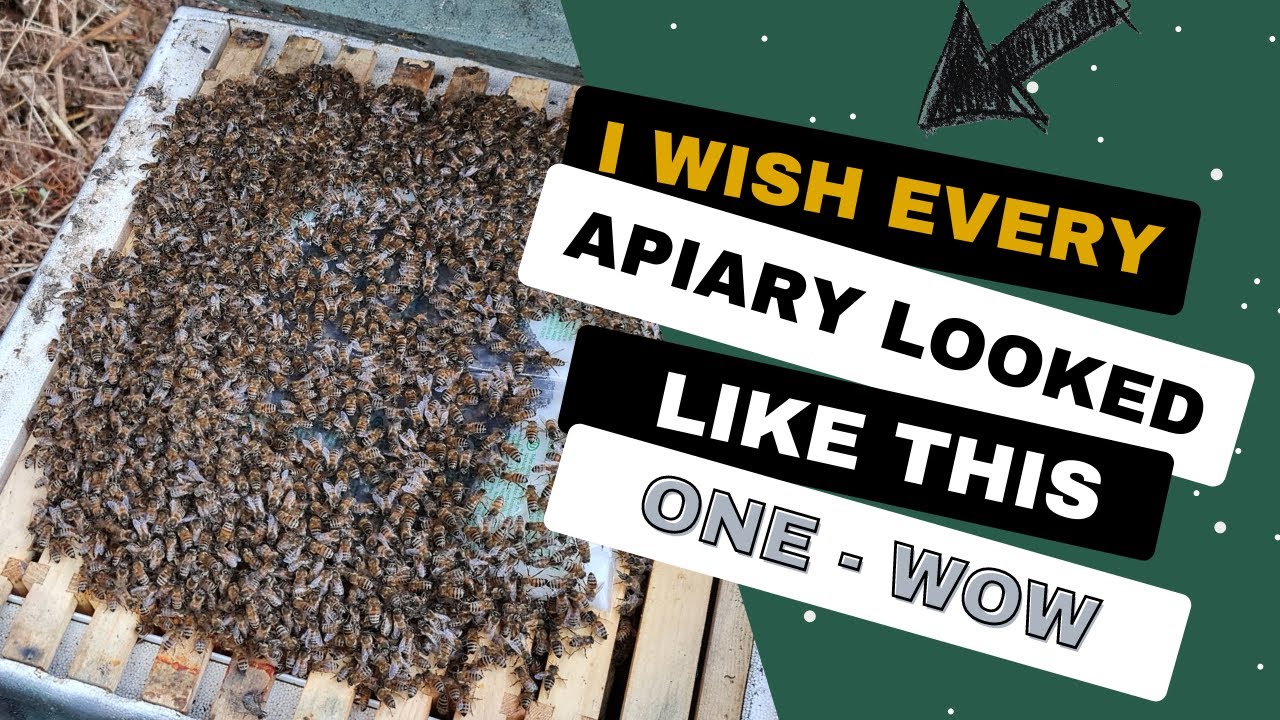
Laurence Edwards walks through the River Apiary in early March, inspecting each colony's strength, brood, and fondant. He finds one hive with high varroa load and deformed wing virus, discusses condensation damage in nucs, and explains his varroa management strategy: multiple Apibioxal applications followed by early Apivar treatment to prevent honey loss.
Chapters
We're at the River Apiary today and we're going to go around every single colony, take a look inside, see how the colonies are getting on, see if they've worked their way through their fondant yet, see if there's any colonies that are dead, and just give you a general snapshot for the first week of March. So this apiary here was very, very good last year. It was my top performing apiary in terms of the amount of honey production, and it did really well in terms of getting queens mated here as well. All of the colonies went into winter very, very strong. Because the Himalayan balsam round here just keeps on going all the way through to September, October, even into November it went last year where we didn't get the frosts. And there is so much of it round here. So the colonies were booming as they went into winter. So I'm expecting to see good things today. I'm expecting us to go in, have a look inside the colonies. Hopefully we won't find any that are dead. There is one that's a little bit suspect that had very high varroa impact that you could see last year. Visible varroa, holes in the brood cappings, and also a bit of deformed wing virus as well. So it'd be interesting to see how that one compares to all of the rest of them. I'll single that one out though so you can see. Maybe there's a difference between the rest of them. I'll go and get my bee suit on. Let's go and check the bees out. Right, colony number 1. Let's hope they're all like this. I've hefted the box. There's a decent amount of weight in there, but they are a little bit light. I'm gonna stick a little bit more fondant on this one 'cause I don't want them to die. It's a very big, strong colony of bees. Right, next in line. These have got a lot more weight on them. I've taken the fondant off because there's plenty of weight within the frames on this one. But again, looking good. Nearly filling the box. Not quite as big as the other one, but we're happy to see them alive and still covering, say, 80% of the frames. Right, next hive along, probably leaving 3 or 4 kilos of fondant behind. Gonna leave that fondant in there because they're not overly heavy and I wanna make sure they've got something to feed on. But again, covering all the frames. These are all 14 by 12s in this apiary, so they're big, big strong colonies. Gonna be really good fun and see what we can get out of them this year. Right, another big strong colony of bees. They've nearly finished their fondant. Happy with the hefting though, so I'm not going to add any more fondant because I think they've got enough in the frames. But this is boding very, very well indeed. 4 boxes so far, 4 colonies, they're all box fillers. We're looking very, very good. Hopefully it continues. Right, I've just pulled the fondant off this one because it's hefting really heavy. There's nowhere near as many bees in this one, but they're looking okay. Could just be that it's a small colony. Obviously, I'm more worried when they look like this than compared to anything else. Covering maybe 25% of the frames, and then we've got nothing around these edges here at all. When I heft the colony, it's hefting really heavy, which is always a concern because it means that maybe you've got a dwindling colony, they're not using their stores. 100%, I'm going to take that fondant off, not leaving that on for them because they definitely don't need it. Hopefully this is just going to be a bit of a slow grower, not a shower. This is the first of 2 nucs that we've got in this apiary. And yeah, it's the first week of March and I'd say they're pretty much ready to go out now. So these are definitely going to need an extension box. Reminder, that's going on my list. They're heavy but they need more space. Right, next nuc along. I'm not happy with what we're seeing here. These are absolutely fine and they're kind of making good, but what I've done in this one is I've put a Maysmoor roof directly on a Maysmoor brood box, and look at the state of the condensation down on those frames. That is not good at all. So clearly what's been happening is that in the middle you've got a nice warm cluster of bees, the moisture is condensing upwards, and then it's sitting in these grooves and it's going to be rotting my frames. Bees are fine, frames definitely not looking good. We'll keep this one for ourselves because I don't like the look of those frames. Bees are doing okay though. Next colony along, again looking really nice and big. Taking off the fondant there, Made a big mistake this year putting the fondant directly on the queen excluders again and then having the feeder on top with the bee space. Definitely going to remove all the queen excluders next year because it does take a little while to clean them up. Some nice patterns in the brace comb though, the bees don't seem to care. Another box of full healthy bees. Definitely doing okay in this apiary, the bees really, really do like it here. We've got a full colony of bees, these are on a double brood so I'm not going to check and see how far down they go. But as you can see, filling every single frame on a 14 by 12, exactly what we want to see. Another full box of bees. They've worked through all that fondant. Quite heavy, this one, definitely borderline in terms of whether I should add more fondant. I'm going to err on the side of not adding it because I think they've got enough. Too much fondant will definitely set them back at this time of year. But really, really happy with what I'm seeing. Every single box barring that one so far is pretty much full. And then the final colony, and you know what, I'm so happy with this colony here. If you remember, I'll flash up a little picture of this before. This is the one that got attacked by a badger, but this is the one that also was very, very badly infested with varroa. We did numerous apibioxal treatments throughout the course of the season, and then we put the Apivar in early and we cut all of our losses in terms of honey production. This is definitely what I would recommend if you're seeing visible signs of deformed wing virus, Lots of visible varroa, getting high drops on the board, seeing holes in the cappings. If you know you've got a problem with varroa, don't leave it until the middle of August to say, right, that's when you do your varroa treatment. You need to act immediately. We've forfeited any honey crop on this colony here, and look at it, it is full to the brim. I can't see any deformed wing virus at all. Be interesting to see how they progress through the season. We'll keep an eye on this one though, and I'll give you regular updates. So there we go, colonies are looking very strong indeed. If you want to see what these bees were looking like going into autumn, here's the last video I took of them showing a bumper spring crop for my Xylanta colonies.










