If Your Colony Is Dwindling - Do THIS!
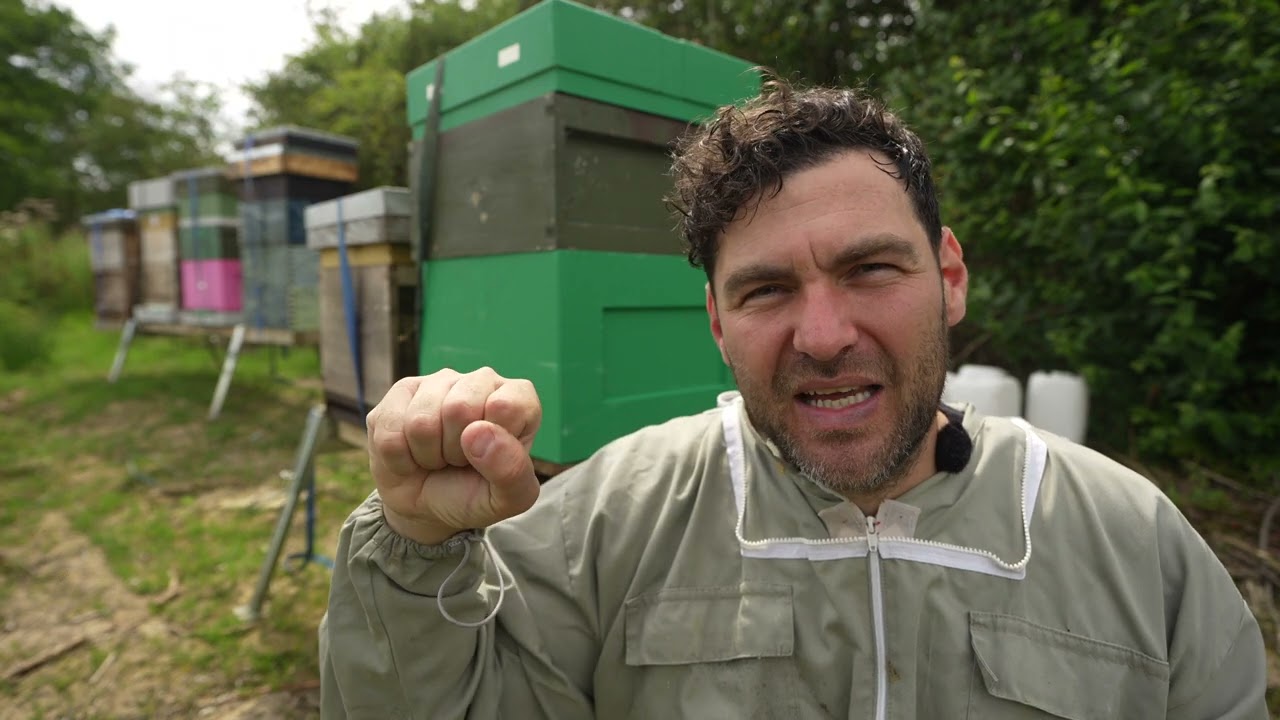
Laurence Edwards shows how to save a failing honeybee colony by adding frames of capped brood. Shake off every bee before transferring, start with one frame, wait ten days before adding more, and make sure the colony has enough workers and food. Merging two weak colonies is better than robbing brood from one to feed the other.
Chapters
If you've got a dwindling colony and you're thinking of adding some brood, this is the video for you. Adding brood into a dwindling colony is a really good idea to boost the number of nurse bees and to get the colony back on track, but do it wrong and you risk killing your queen, and do it wrong and you risk sacrificing all of the brood that you put in there because there's not enough bees to keep it In this video, I'm just going to give you the dos and don'ts of adding frames of brood into a dwindling colony to make sure that you get that colony back on track. So the first one is definitely a don't. You cannot add frames of brood and bees into another colony. If you just take out a frame of brood with bees on it and you place that into a dwindling colony, the bees will fight. The bees that you're adding in will probably kill the existing queen, and then you're back to square one. You've got dwindling colony and you've not even got a queen in there. The next don't is don't think that if you've got a small dwindling colony, by adding a frame of eggs in there, you're going to get that colony to requeen itself. What they will produce is terrible quality scrub queens because there's not enough young nurse bees to copiously feed all of the larvae with royal jelly to produce good quality queens. So what you need to do with a dwindling colony is fix the first problem that is there. Have you got a good quality mated queen that's laying eggs in a good pattern, good capped worker brood? If you haven't got that, that's the first thing that you need to fix. Why is your colony dwindling? Is it laying workers? Is it a drone laying queen? Fix those problems first, and then when you get them to a point that you've got a small queen right colony of bees with eggs, larvae, and capped worker brood, you can start to gradually add frames of brood. Now when you're looking for frames of brood, what you do not want is brood in all stages. You don't want frames of eggs, you don't want frames of larva, you want frames of completely capped brood, but you want the oldest capped brood that you can possibly get. Now the way to work out what the oldest capped brood that you can possibly get is, you're looking for a frame of completely capped brood and you want to see emerging bees in the middle. Queens generally start to lay in the middle and then lay outwards like that, so if you've got a frame that's fully capped over with capped brood and they're starting to emerge in the middle, what will happen is they'll start to emerge gradually outwards like that. That is the perfect frame to add. So you take out that frame of brood, shake off every single bee, and I mean every single bee, and you want to go and place that directly into the middle of the dwindling colony of bees. Now don't get greedy, don't add 2 frames. A dwindling colony should always start with 1 frame of emerging brood. Give it about 10 days, allow all of that brood to emerge, and then what you should have, if that's gone well, is a dramatic expansion in the number of bees in that colony. That one frame of brood there should roughly turn into about 3 frames of bees if all of it emerges properly and if all of it has been kept at the correct temperature. So here's the next reason that people can fail doing this. You need to ensure that the frame of brood that you're putting in there, there is sufficient bees in the colony, the dwindling colony, in order to cover that on both faces. Now with most dwindling colonies, there shouldn't be any issues with that. But if you've got like a little fistful of bees and you're thinking, I want to try and save that, I would just say you're much better off just shaking that out, starting again with a fresh split. I see too many people like chasing losses with small dwindling colonies like that. And you might say, well, there's a decent queen in there, I want to save that queen. All I would do is just get the queen, put her in a cage, shake out the bees, make up a fresh split with a couple of frames of brood from a nice strong colony, and start again like that. Much easier and far less risk. So once that first frame of brood has emerged, you can go back in and you can add another frame of brood. Again, don't get greedy, don't think, right, I'll go from 1 frame to 2 frames of brood. You can get this wrong, and if you put too much brood in there, all that will happen is that brood will chill, and then you're giving the bees in that dwindling colony more work because they have to go inside and they have to remove all of that chilled brood. Quite time-consuming and difficult work for your bees. Now the next thing I want to talk about is kind of a do and a don't. If you've got a small, tiny, dwindling colony and you've added your frame of brood in there, you need to check for stores. You need to make sure that the colony has got sufficient nectar and has got sufficient pollen in order to aid that expansion. But don't go feeding a little tiny fistful of bees loads of 1:1 syrup in a leaky feeder in the middle of August, because all that's going to happen Is you'll come back and there will just be nothing left. There won't be any bees, there won't be a queen, and you'll just be left with frames of chilled brood. So if the colony is big enough to be able to defend itself, then you can start adding 1:1 sugar syrup, but be super, super careful that you do not drop that syrup anywhere. It's all completely contained within that hive. And then reduce the entrance down to a single bee entrance. I would say with a dwindling colony, that's probably good advice anyway, just to reduce the risk of robbing, because if any of the colonies cotton on that there is a weak colony there. The wasps will get in, but definitely the bees will get in there as well. Now, if it is a super small colony, what I would recommend doing is going and taking a frame of open but ripe stores from another colony and adding that in, hopefully with a little bit of pollen in there as well, adding that in next to the frame of capped brood that you're going to add in. That is a safer way of doing it because there's no risk of any spillage doing it that way, and you're not enticing bees in from the adjacent hives to come in and Now, when I said about shaking the bees off the frame, it is so, so important to make sure that you get every single bee. It can happen with a single bee left on that frame. You put the frame in, it's got a single bee, and you think, that's fine, it's only a single bee. The single bee goes in there into that hive and says, nice, liking it in here, frame of stores, we like that. Gorges on all of it, goes back to the hive, tells her mates, you know what, there's a free-for-all over there. And before you know it, 2 or 3 other bees come back in. They gorge, they go back, and then all hell breaks loose and the colony is completely robbed out. That is not what you want. So when you're shaking them off, brush off every single bee. Make sure you do not miss one. Now, I talked about diminishing returns and chasing losses before, but whatever you do, if you've got 2 colonies that are on the brink, don't think, well, I'll steal a frame of brood from the stronger of the 2 and give it to the weaker one. It's a false economy doing that, and all you're doing is that You're reducing one down to the point where it can't recover, and you're probably giving the resources to a colony that aren't actually able to use it. What you're much better off doing in that situation is finding the queens, killing the worst queen, caging the other one, merging the 2 colonies together, and putting them into winter as a nice big strong single unit. You can make further splits in the spring if you get that colony through, but don't go chasing piddly little colonies because it really isn't worth it. Now hopefully you found that video useful. If you're wondering why my bees are so chilled out, it's because we use very calm Buckfast genetics at Black Mountain Honey. If you want a nuc like this or you want mated queens like this, they're available on blackmountainhoney.co.uk. There is nothing quite like sitting in your apiary doing a video next to the calmest bees I think I've ever seen.










