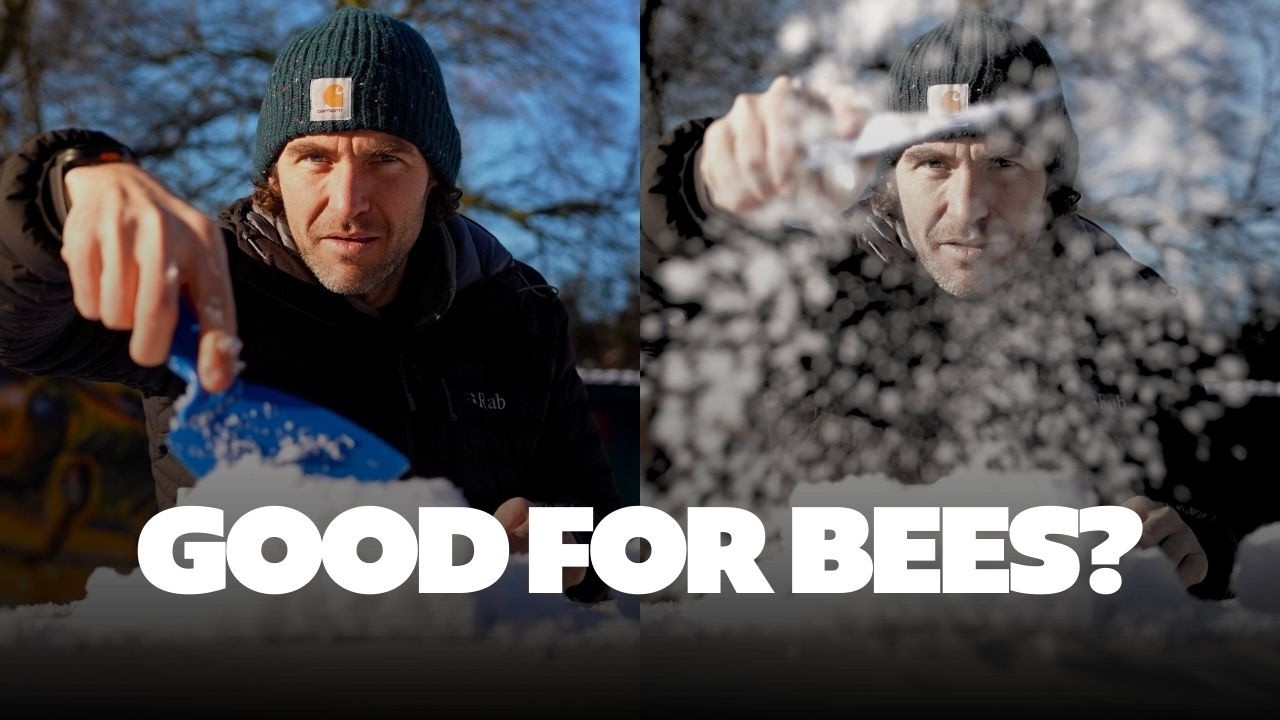
In this instructional video, the presenter argues that, contrary to common belief, cold winter weather is generally beneficial for honeybee colonies in the UK because it tightens the cluster, reduces activity and brood rearing, and makes honey consumption more predictable. Mild winters, by keeping the cluster loose and encouraging continuous brood production, pose a greater risk of hidden starvation. The speaker outlines a concise winter‑preparation checklist: enter winter with a strong, queen‑right colony of the proper winter‑bee demographic, treat for varroa, and feed to a target starting weight (≈40 kg for Abelo polyhives, ≈42 kg for wooden hives). He supports his points with 2025 HiveWatch data showing rapid store depletion during an unusually warm autumn and a subsequent slowdown after a cold snap. The overall message is that, once the basic health and weight targets are met, beekeepers should not panic during snow; the cold is a friend that stabilises consumption, while the real threats are weak colonies, poor varroa control, and insufficient stores.
Chapters
In this video, I'm gonna tell you why the cold is probably a blessing for your bees. So most people do have this one backwards. They see the snow, they see the cold and think, oh no, the bees are gonna starve, they're gonna struggle, something is gonna go wrong. But in the UK in particular, most of the time cold weather is actually good for your bees. Not because the bees love being cold, but because cold creates the conditions that makes winter predictable. And predictable winter is what stops colonies starving. So in this video, I'm gonna explain to you why cold is helpful, what the real risks are and what you need to do before winter so you do not end up worrying every time the weather changes. So here is what a cold winter does versus a mild winter. This is the simple truth: the cold tightens up the cluster. A tight cluster conserves the energy within that colony of bees, and when the cluster is tight, the bees stay calm, they move less, and they burn through the stores more slowly and much more steadily. When the winter is mild, the complete opposite happens. The cluster of bees stays much looser, the colony stays more active, and brood rearing often continues, sometimes all the way throughout the winter. It's this brood rearing that is expensive. It costs you stores, it takes energy to produce. So mild winters are often the biggest risk for starvation because the colony can quietly consume far more than you expect. Here's the real goal in winter. Your job in winter is not to keep the bees warm. Your job is to make sure that they can manage their own winter properly. That means you want your bees healthy, strong, and heavy enough going into winter when you've actually got the time to make a difference. If you do that, then cold weather usually makes your life so much easier because it stabilizes the consumption. The risks of extreme cold. Now, there are risks with extreme cold. The one that people talk about most is isolation starvation, where the cluster cannot move to reach the food within the beehive. That can happen in very cold climates, but in the UK, We rarely get cold for anywhere near long enough or extreme enough for that to happen. Might look cold here today, it is 1°C, which is about 33°F. Not really that cold, it's just slowing everything down. But this isn't what people need to obsess over. In most winters, the bigger risk is a mild spill that keeps the brood going and quietly drains the stores. So here is your winter checklist. If you want to stop worrying about the cold and you need a simple checklist, number 1, a strong colony going into winter. Number 2 is having a colony of the correct demographic. So you might have lots of bees, but are they the nice young winter bees that are going to be able to get through the winter? Number 3 is checking that the colony is queen right and stable back when you have the chance to fix it. So August, September, you need a healthy queen to get the bees through the winter. And number 4, amongst others, is treating properly for varroa, because weak virus-loaded bees do not winter well whether it is mild or cold. Number 5, and this is a big one and the most relevant one to this video, is that you fed them properly using hopefully sugar syrup or some really high concentration sugar syrup to get them up to their starting weight for winter. Because once they're heavy enough, winter becomes so, so simple. Now for me, my target weight is about 40 kilograms per beehive, and that's in the Abelo polyhives. If I'm doing that on a wooden hive, I'll often push that to around 42 kilos. That's just a floor, a brood box, a poly ashware feeder, and a roof. Now you would have seen in my videos I run Abelo polyhives, and because they are lighter, that 40 kilogram starting point works for me as a simple rule. But the point is, it's not going to be the exact number for every beekeeper because you've got all of these different sizes. Just get a target in your mind and work to that every year. The point is having a target, hitting it, and knowing that you're starting winter with a proper safety margin. So what the data is showing us this season— now this is where having the HiveWatch data on my beehive over there gets really interesting. This season, 2025, I fed the bees up normally to around 40 kg for their starting weight, middle back end of October. But looking at the graph, they were burning through their stores much faster than I would normally like. That was as a result of the warm temperature. The reason was simple. It was very mild all the way through August, September, October, November, and it's only now that we're getting into a much colder period. But the temperature has been high enough for more activity, more brood rearing, more energy consumption. And when that happens, the colony eats more. It's that straightforward. So even though the hive is healthy, the mild weather accelerates consumption of stores. So this is why snow can be a good thing. It's the 3rd of January here today, and we've had a real drop in temperature. Overnights going down to -1, -2 degrees C, and daytime temps just hovering around freezing. We've had a decent amount of snow, and for me, I look up and think that's brilliant news, because a cold snap like that usually sends the bees into a much tighter cluster. Less activity, less brood, more energy conservation. I'm expecting to see the consumption of stores slow down. And this is exactly what you want, It becomes slower, it becomes more predictable, it gives you more time to intervene. So snow is not a reason to panic at all. In most cases, snow is a reason to relax because the bees are settled. So here's the lesson: cold weather does not usually cause starvation, it doesn't cause mold, it doesn't cause damp, it doesn't generally kill bees. It's the unpredictable consumption that causes starvation, and that's generally attributed to warm weather conditions. The cold makes consumption much more predictable because it reduces that brood rearing and reduces activity. As long as your bees are healthy and you've treated for varroa, you've got a queen-right colony, you've fed them up to their starting weight, then the cold is your friend. And this is the point that I want to land here. They do not need feeding just because it's snowing. It's often quite the opposite. You should look out the window and say, yes, it's snowing, I don't need to feed my bees because I've done that already. The cold weather reduces the consumption of stores. If you fed them properly in autumn, the best thing you can do in the snow is leave them alone completely. So do not fear the cold. Fear weak colonies, poor varroa control, and going into winter too light. Get the basics right, hit your target weight, and the cold weather becomes one of the best things for calm, reliable wintering. If you want my full system for keeping bees without it taking over your life, head over to 14daybeekeeper.com. It is built to simplify everything, keep you moving in the right direction. Do it once, do it properly, and winter stops being so stressful.