Isolation Starvation - Near Miss
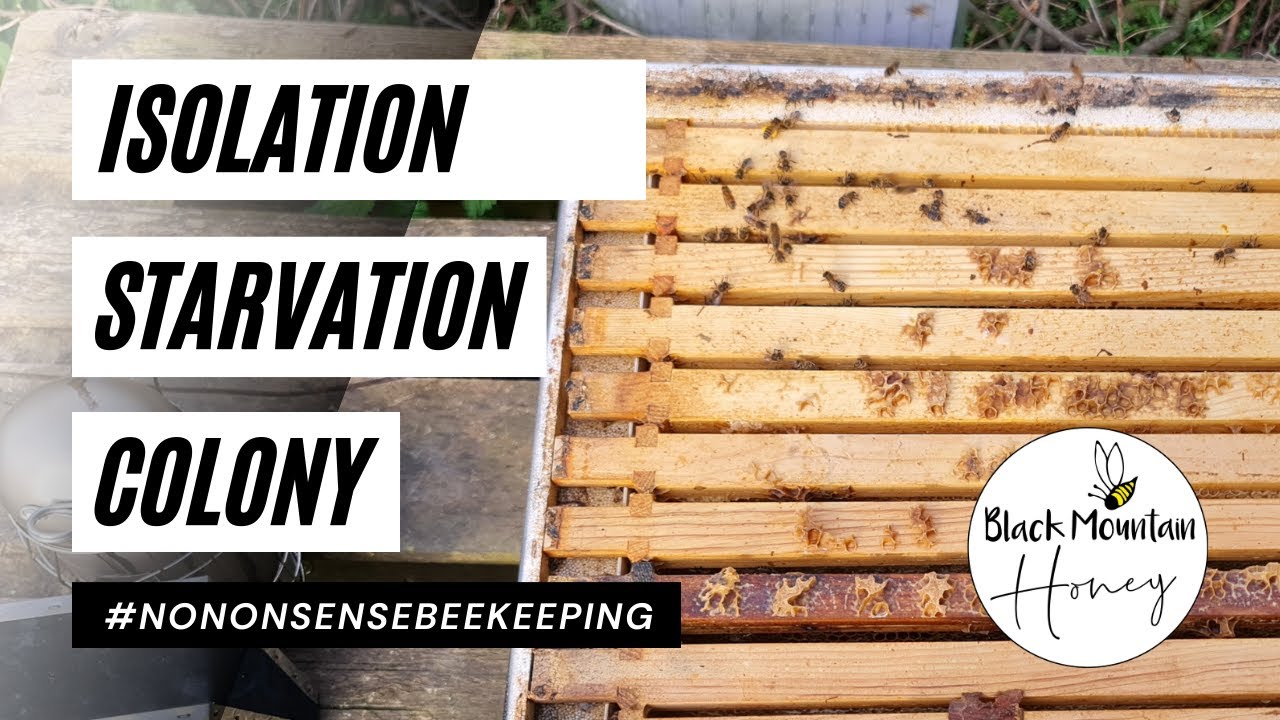
Laurence Edwards shows how to rescue a bee colony starving despite having plenty of food. The bees can't reach stores isolated on the opposite side of the hive. He crushes capped honey to make it accessible, rearranges frames around the brood, and explains why early February inspections catch this before it kills the colony.
Chapters
Hi, I'm Laurence Edwards from Black Mountain Honey. Welcome to another episode of No Nonsense Beekeeping. In this video, I'm going to show you a colony that came very, very close to starving through isolation. I'm going to show you what the colony looks like, and I'm going to show you the manipulation that I did to save the colony starving from isolation starvation. So a little bit about isolation starvation first. It's surprising how often this happens. Bees don't fully understand where the stores are in the colony. This is a very artificial nest for them. We've built it, we put the dimensions to suit the beekeeper. In a natural cavity, they tend to be a little bit thinner and a little bit narrower, which means they work from the bottom, work up, and they don't tend to veer off too much away from the stores. When you've got a big square box like this, they can move over to one side and they can starve because they don't realize that the stores are on the other side. And that is exactly what's happened here. So I opened up this colony All of the other colonies in this apiary, the nucs, they're booming, they're really big, and I opened this one up the other day and I noticed that it wasn't anywhere near as big as the other ones, and I thought, that's strange, probably a drone-laying queen, probably a dwindling colony. And as soon as I opened it up and took a look inside at the frames, I realized that all of the stores were on one side, and then surrounding the queen and the eggs and the worker brood, there was very little Pretty much no stores, and that is classic isolation starvation. The colony doesn't realize they've got sufficient food in order to expand the brood area, so they starve. And it sounds a little bit daft, it sounds like surely they should just move over, but they don't know that the food's there, so they treat it as if there is no food. So I'm going to crack it open now and I'm going to show you exactly what's going on. So when I opened up this colony first, the first thing I saw was the queen. And she's here. You can see her on this frame here. Healthy-looking queen, doesn't look damaged, and I've seen eggs, and I've seen capped worker brood as well. So I know the queen's well mated. I'm confident there isn't any issue with the queen, and I'm confident that the diminishing colony here is as a result of isolation starvation. So when I came across this colony, this portion at the front here was where all the bees were. This is where the brood is. This is where I found the queen in the front 4 frames. When I pulled out those frames, there was nothing in them in terms of stores. No pollen, very, very little stores. There was eggs, there was larvae, there was worker brood, and I identified the queen with no damage. So I'm thinking immediately they've run out of food. As soon as I moved back towards this portion at the back, so the 5 or 6 frames at the back, it was apparent there was lots and lots of food. And the colony was reducing its brood nest down to try and factor in the fact that it didn't have food. Now what you could do with the colony like this, if the temperature allows it, is to give them a feed. But the fact that they've got feed already here, the manipulation in my mind was very, very simple. So I'm just going to show you some of the frames and show you exactly what I was looking at when I first encountered what was going on. So the 2 frames that I've just pulled out there that I'm going to show you now, these were perfectly indicative of the front 4 frames. Very few bees, small amount of brood, brood in all stages, worker brood, eggs, larvae. Obviously the queen's present on one. Hardly any pollen and very, very little stores. This is a few days later now and it's very warm today. They've actually backfilled that with a little bit of nectar, so it was even more apparent and bare than you can actually see in those images there. And then towards the back of the colony you have frames like this. Pretty much untouched, lots of capped stores, nowhere near the cluster. So the manipulation, really, really simple. You take out the frames with stores, you get the back of your hive tool, and you mush them up a little bit. You're not looking to go crazy, you just want to take the very top of that cappings off to make the stores available, and this is especially important if the colony is really weak, which it is in this case here. And then all you do is you just rearrange the frames. It's really, really simple. You're moving the food to where the bees can use it. And what I like to do is I'll identify the best side and I'll put that side facing the cluster on one side, and then I'll do another frame like this and I'll put that good side facing the cluster on another side. So I'm sandwiching the weak, isolated colony of bees with some really good accessible stores. And then what I also do is I look in the colony and if there's a frame with some nice open stores in it as well. I'll put that in the middle, give the bees absolutely no clue whatsoever. They cannot miss where that stores is. It's to the left, it's to the right, and it's in the middle. They will immediately jump on it and it will act as if there's a flow going on. They will think there's lots of food coming in here, and that should turbocharge the queen, get her to lay. So just double-checking, I've got the queen on this frame here. I'm putting that in, that into frame slot 3, so 3 frames in from the front. I'm taking my nicely mushed up stores and I'm going to put that facing in the brood nest. Then I take another frame. This one here is an old national frame that's been built down. Another frame full of stores, put that to one side, and then I want to identify where the brood nest ends. And these frames, they've not got many bees on. You just want to go to the last frame where there's any brood. So there you go, I've identified Frame 4, so there's only really 2 good frames in here with any amount of brood on. The queen has decided to jump onto that frame, so they're next to each other. And then I'm going to take my frame, and I've actually found one here with some really nice open nectar, and I'm going to put that closest to the brood on the other side as well. Now, if your colony was bigger than this and you had, say, like 4 or 5 frames of brood and they were really starving, I would slot that final frame of stores in between the brood as well. And they'll really start to work on it. This colony here is only 2 frames of brood, so I don't want to split it up too much. There's not enough bees here to kind of maintain that colony size over a split frame in the middle, so I'm just going to set it up like that. So I've got a frame of stores, brood, brood, and then another frame of stores, and I've got the good side of the frame facing into the colony to make sure they've got the food exactly where they need it. And then you can just strap your colony up. That is the end of the manipulation. It's a really, really simple manipulation. Might be a bit late on this colony. They look a little bit far gone, but they're probably going to recover kind of come the end of spring. This colony is so far behind the rest of them. I'm out putting supers on a lot of my boxes, 14x12 boxes, because they're full. There's 10 frames of bees and 8 or 9 frames of brood. Obviously this one here, you've probably got a quarter of a frame of brood and a handful of bees. But what you've done there is you've done a manipulation that's potentially going to save that colony. The queen's good, she's laying good eggs, larva, worker brood in a reasonable pattern. You can't really judge the pattern because she's not got the incoming flow of nectar to really perform well. What you've done there though is you've rearranged the colony in order to provide sufficient food to try and get them through that period and to try and get them to build up to an adequate strength. When you're doing this manipulation, you can do that quite early in the year. So when you're kind of coming into February and March, I know people say don't open your colonies, don't go and look into your colonies. If you didn't look into this colony, and I know it's end of March now, I probably could have looked into this one a little bit earlier. But if I didn't look into this colony, that colony would have died and they would have just dwindled to nothing because they didn't have access to that food and they would have starved. So the damage that you can do by going and looking into your colonies is potentially offset by saving a couple of colonies like this where they're going to starve through isolation starving. And what you can do to mitigate it is you can just religiously put fondant onto your colonies, straight on top of the frames, so the bees struggle to not find it. And that's what I tend to do on all of my colonies. This one here, I didn't do that. So I didn't put fondant on this one because it was so heavy when I was hefting it. And it turns out the reason it was so heavy is because they weren't consuming the stores, they Because they hadn't found it. So I think that's the lesson here really, is that hefting doesn't tell you everything about what's inside the colony, and sometimes it's a little bit more beneficial for you just to crack that lid open, take a look what's going on inside. Is there a nice cluster of bees? Is there enough bees to kind of where you think it should be for that time of the season? Is the weight where it should be in the colony? So is everything offset to the back and you've got loads of weight at the back and the bees are at the front? They're the only things that you can start to analyse when you take the lid off. So my advice would be don't look into your colonies unless you need to, but there's really not too much of an issue. Just cracking the lid when you get through to kind of February, March time, having a look inside, seeing how the bees are getting on. So that's it for the video. I hope you enjoyed this one. I'm so happy to be back into the beekeeping season. It's no-nonsense beekeeping, and this is what this channel is all about— getting in, Looking at the bees, talking you through my experiences, learning at the same time. So I hope you enjoyed it. As always, please hit the subscribe button, please hit the bell so you're notified of every video, and I'll see you next time. Bye.










