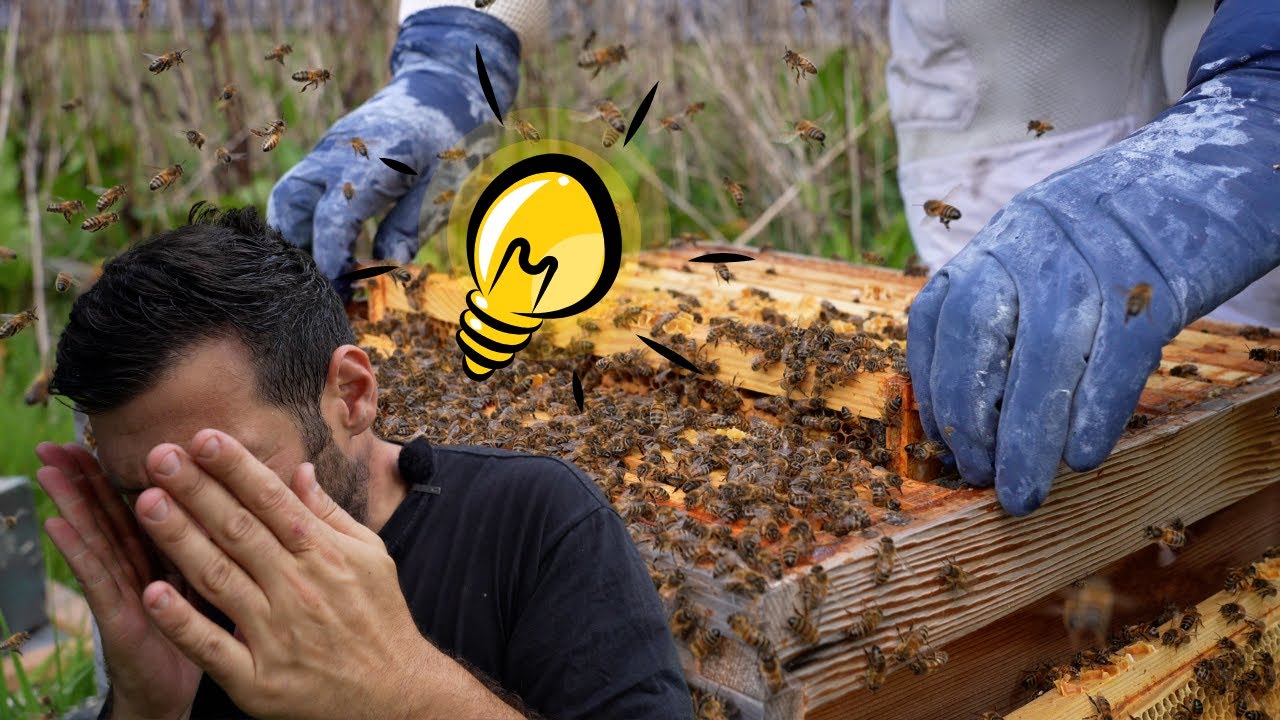
Laurence Edwards tested John White's claim that small-cell foundation stops varroa mites. When he introduced normal-sized brood to the colony, the bees uncapped and removed larvae, showing hygienic behavior. Edwards concludes the colony's varroa tolerance comes from genetics, not cell size.
Chapters
You know me, I'm always happy to hold my hands up when something goes wrong, show it to everyone on YouTube, let you learn from it. And you know what? Sometimes it's when things go wrong you learn a little bit about your bees. This colony here is the small cell colony that I got from John White, who coincidentally is going to be a guest on our channel next week. But by the time you see this, that would have already happened. He gave me these bees free of charge with a promise that I would never ever need to treat them for varroa, Because the small cell foundation is small enough that the varroa mite cannot reproduce in the cells effectively. I am not giving that advice; that is just what I'm told. I have to say, I'm still slightly skeptical of it. But what's very interesting is in this colony, I had some issues last time. I had some cappings with holes in it. But more importantly than that, the bees were trying to swarm. So I took that queen and I went and put that queen elsewhere, tried to requeen this colony naturally. Effectively using an artificial swarm. That failed, came back and I couldn't see any queen, couldn't see any eggs, and that was about 3 or 4 weeks ago. So I gave them another frame of brood from another colony with normal-sized foundation, knowing that this is going to interrupt things a little bit and maybe it's going to cause issues. But you know what, I don't have any queens available and I want to get these queens mated as soon as possible. So I'll give them a chance to create some queen cells from this frame of brood. And if that fails, I will requeen them at a later date. What has happened with that frame of brood is quite incredible, and I think it tells me something more about these bees as opposed to the size of the foundation that they're on. Let's get inside, I'll show you exactly what I mean. So you can see this colony has dwindled down quite significantly, used to be filling that box and is now probably only 75% full. They're definitely queenless and they are not happy with me at the moment because I've just been through all of these bees. And you know bees, when there's no queen in there, they do get a little bit grumpy. So bees flying everywhere. What I want to show you is what the bees have done to the frame of brood that I added in here that wasn't small cell foundation. So this is the frame of brood that I added in, bit of drone brood in there as well. But see if you can spot what the bees have done, which for me is very, very interesting. I'll get it down on its side and I'll give you a close-up now. So see if you can spot it there on the frame. There's plenty of examples of it going on, and what it is is over in this corner here you can see there's lots and lots of bald brood. Now bald brood is no issue to a colony, but what I know 100% is that there was no bald brood on this frame when it went in. I gave them a frame of mostly eggs, some larva, and a little bit of capped brood, but what these bees have done is they have turned some of those eggs into larva But then they've not capped them over properly. They've effectively left them as bald brood, brood that doesn't have a capping, brood that would emerge perfectly normally. But what this tells me about these bees is that they are very, very hygienic bees. At least they were hygienic bees before they lost their queen. So all of these bees that are here at the moment, they'll be the daughters, mostly the daughters of the hygienic queen that was in here. And then there's going to be some of the brood that's emerged there as well. So what I'm thinking now, John, is maybe the fact that it's not the small cell foundation that the bees are on that's making the varroa difficult to reproduce. It's just that you've got a line of very, very hygienic bees that are able to tolerate that varroa, but more importantly, so hygienic that they're opening up cells, clearing it out, leaving it as bald brood. And that is the way that these bees are managing to I'm no expert in this. All I'm doing is I'm observing what I'm seeing, and this is why I think you just need to keep your eyes open when it comes to beekeeping. People told me small cell foundation definitely doesn't work. I was a little bit skeptical. I've not proved that it doesn't work. I've not proved that it works. But just by doing this manipulation here, by adding in a frame of normal-sized brood, seeing what these bees have done to it, VS8's varroa-sensitive hygiene tendencies are definitely on display here, and I think that's what's keeping this colony healthy and strong without the need for any varroa treatments. So I know I say it all the time, I hope you don't get bored with it, don't listen to what I have to say, don't listen to what other people have to say, try stuff out for yourself, see if you can learn from the bees, and try your best to keep an open mind.