Late Season Drone Laying Queen
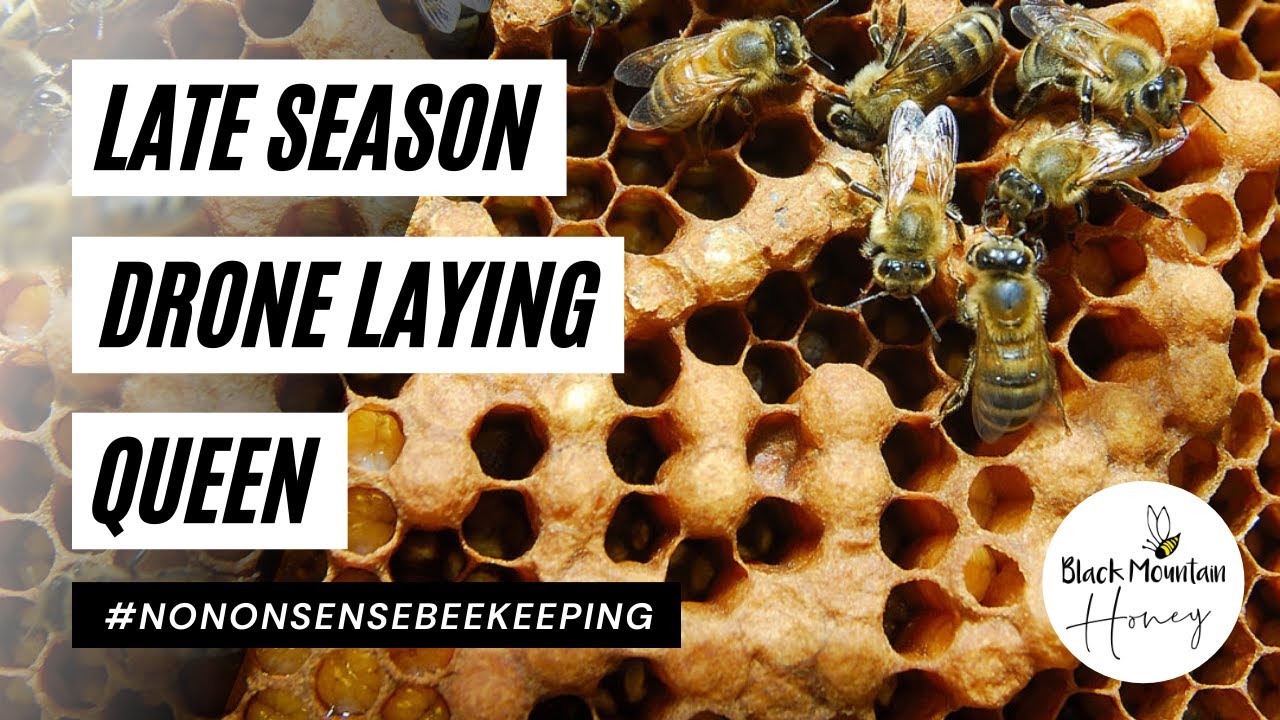
Laurence Edwards of Black Mountain Honey finds a drone-laying queen in October and walks through the fix: kill the queen, shake out the bees, save the frames and stores for spring. Late-season colonies like this one are beyond rescue, but their resources aren't.
Chapters
Hi, I'm Laurence Edwards from Black Mountain Honey. Welcome to another episode of No Nonsense Beekeeping. Today I'm going to show you how to deal with a late season drone laying queen. Now, drone laying queens are so annoying, and they're annoying at the best of times throughout the season, But at least throughout the season you have the opportunity to kind of go in there, make it right, give them a new queen, squish the old queen, do whatever you need to do. We've covered it in previous videos, how to deal with drone-laying queens late in the season, especially this late in the season. It's the middle of October now, there's not much you can do. So this video unfortunately is just going to show you how to deal with a drone-laying queen really late into the season. Now I know I've discussed previously about not doing anything late in the season, especially middle of October. Why are you looking into your boxes? What's the reason for going in and doing the inspection? And the reason for going in and doing the inspection is I'm taking my Apivar strips out. So the, the 8-week period from when I put them in has expired. I'm going in there now and I'm taking the Apivar strips out. This colony, as you'll see later on in this video, It's so small. They didn't take down any of their feed, so I immediately thought, hmm, something's up with this colony. I've taken the feeder off and there's just nothing there. So, I mean, when the colony is in such a state of emergency, there's nothing wrong with going in and taking a look. I was opening it up expecting to see 8 to 9 frames, maybe 10 frames of bees, a full box, which is what most of my boxes are like. I found 2 or 3 frames of bees. And they weren't going into the feeder, so I took a look to see what was going on and I found a drone-laying queen. So I'll cut to the chase, we're going to have a look at the video and then we'll talk a little bit about after you've seen what the bees are like. Right, so this is the colony in question. First thing I noticed is when I came to give it a heft, it was really heavy. So obviously all of my colonies are heavy at this time of year. This one seemed a little bit heavier than the rest of them and it seemed a little bit top-heavy. So I know that's maybe like a little bit too intuitive, but I could just sense that something was wrong. It didn't feel like the rest of the colonies. As soon as I took the lid off, I noticed the syrup was pretty much full. Like, you can see it there. They've not touched their syrup. There's like a very small stream of bees that are interested in it. And you see they're coming to get me now. So it just wasn't quite right. There was something wrong with this colony. Obviously, I'm going into this colony today to check, to remove the Apivar strips. So I need to go in. There's a genuine reason for me to go in. If I didn't need to remove the Apivar strips, I definitely wouldn't have gone in this colony, and I wouldn't have known until maybe kind of like early spring that there was something wrong with this colony. The fact that I've got to go in though to get the Apivar strips out shows there's something wrong. And as soon as I opened the lid, took this feeder off, I knew there was a problem. So I had a look and it's a drone-laying queen. So I'll show you exactly what the issue is. So whenever you're doing stuff late on in the season, just get that syrup out the way. Don't want to attract any robbers. But look at that. Does that look like a colony that's full of bees ready to go into winter? Definitely not. Like, as soon as I took the lid off, I thought, hang on, what's going on here? Full to the brim with stores. Loads of stores in there, nice heavy weight. No bees, no bees, no brood. This colony is gonna die, and the reason I'm doing this video is just to show you what to do if you come across a colony like this. So obviously, I mean, this time of year, my advice is don't go into your colonies. You can only make things worse. Doesn't get much worse than this. So as we said, what you're trying to do is preserve the resources. And normally the resources is brood, is the queen, is the bees. They're your 3 really important resources there. And then other important resources are the hive, the frames, the wax, the combs. I mean, those 4 probably come a little bit further down the priority list than those top 3, but when the top 3 have gone, they're really important resources to take care of, especially the hive. But more importantly in this case, you're in the frames, the wax, You don't want the drone-laying queen to wreck all of your good combs. So this method of kind of shaking them out, and that is all we're going to do today, it preserves the combs as best as they possibly can be, and it stops any further degradation by the queen, the drone-laying queen, turning them all into drone cells, which is not what we want. So I'll go through a few frames and I'll show you what the issues are. So really, really interesting on this frame, it's the majority of it is stores. We've actually got an emerged queen cell in there. So that goes to show this was the late supersedure cell that I must have missed. I've not missed it because I've missed it during an inspection. I've missed it because they've superseded really, really late in the year. That's what the problem is here. So I've got a single cell, emerged queen in there. Do you know what I mean? You can tell when a queen cell has properly emerged and that's what's caused the issue here. So they've superseded their queen late in the season. They've not got the good weather. The queen's come back or not gone out. She's not mated properly, turned into a drone-laying colony. So as you know, maybe we've got lots of frames of lots of stores, really good amount of stores in this colony. They were preparing for winter. They obviously saw a late opportunity to supersede that queen for one reason or another. The bees tend to know best, in my opinion, when it comes to late supersedures. Obviously the queen wasn't suitable to get them through. You can tell by the number of bees, she was obviously kind of flagging a little bit. So we'll work through the frames and I'll show you some of the brood. So that there is the only frame on the colony that's got any brood on it, and it's probably got no more than a tennis ball-sized amount of really poor-looking drone brood. Not what we want to see at all. Right, so all we're looking to do with this colony is we're looking to Find the queen, kill the queen, shake out the remainder of the colony. You can just shake it out, but you mean late on this late on in the year? You really don't want to be shaking out any virgins. You really don't want to be shaking out any drone laying queens because they will try and find their way into another colony. You set off a bit of a war, and Sod's Law: the rubbish queen always wins. Always works out that way. So try and find the queen, kill her, and then you. So I found the queen. Wasn't too difficult to find. She was just on the drone brood, really small. Do you know what I mean? Doesn't look mated at all. You can get queens that are quite small that are mated. This one didn't look mated at all. Actually a bit of wing damage on her as well, which is really interesting. But yeah, queen's dead now. So I've squished that queen and I'll just kind of chuck her over there. Now all you need to do now is just shake out the rest of the colony. Done plenty of shakeouts before, but I'll just show you how to do it again. What you want to make sure is that there's nothing for them to come back and cluster onto. I mean, they might go onto the pallet for a little bit, but just don't give them anything that resembles a hive anywhere close to where you're shaking them out from. You want them to go into there, and you want them to go into there. They will eventually work their way into the closest hive, and to be honest, there's hardly any bees in here, so I'm really not too fussed about that. The important thing though is finding that queen, Dispatching her humanely and then just shaking the bees out. So, Jeremy, these are the resources that you're saving here. Apart from 2 tennis ball-sized clumps of drone brood on those colonies, which they'll use to store pollen and store feed and stuff, we've saved all of this, and this is really valuable resource that can be put to good use next season. So kind of being vigilant and getting in there, doing an early kind of interaction to stop that getting any worse, you've saved all of this really good resource. So then what we'll do is we're going to store that outside for the remainder of the season. I definitely don't recommend doing that. If you've got the space to take those combs inside, store them somewhere safe. Obviously you want to protect them from wax moth, you want to protect them from any vermin entry. But here in North Wales, it gets so cold that as long as you sufficiently put protections in place to stop vermin protection outside, it's actually a really good place to keep them. It's all poly apart from the floor, which is wood, so you've got minimal chance of any kind of damage taking place over winter. That's where I would recommend to keep them, and then you can just use all of that resource early next year to make up nucs, or you can add it to existing colonies that are low on feed. And that's about it. The remaining feed in here, I'm just going to top it up, put it in some other feeders, check which ones are light, and I'll redistribute that feed just to make sure it doesn't go to waste. So there you have it. That's a drone-laying queen in October, and that's how to deal with it. A little bit cutthroat, do you know what I mean? Shake them out. I think what you need to do at that point in the season is you need to realize that that is a lost cause. Don't throw any resources at it. Don't try and add a new mated queen. it really is a lost cause. Don't impact on any of your good, healthy colonies to save something like that. It's just not worth it. Prioritize what is important there. And what's important is securing the frames and the wax and the stores and using it again next year. I mean, that's where the value is in that colony there. You want to get rid of the bees. You want to stop them doing any further damage to that good comb and turning it into kind of further drone comb. And it's surprising how long a drone-laying colony like that will last over winter. I mean, they could last another 2 or 3 months. You could have the drone-laying queen ruining all that good frame and wax that you could use on a good colony next year. You want to get in there. If you can find the queen, ideal. Squish the queen, shake out the colony, close it all up, secure it from any vermin getting in, because vermin will definitely get in there. And wax moth will definitely get in there unless you kind of seal it up, make sure it's completely sealed. It's fine to leave it outside though, especially in North Wales. You're in overwinter, we will get severe frosts. So I'm confident that there's no wax moth in it now. Might be a couple of larvae, but they will soon be dealt with by the extreme cold. So that's it. It's my simple method. You know, it's no-nonsense beekeeping here. We're not faffing around. Shouldn't really be doing the inspections at this time of year, but if there's something that drastically wrong, Get in there and preserve the things that you want from that colony. Identify what the resources are. Here it's drawn comb that's got worker brood on it and potentially some stores that you can use to make up nucs next year. And just protect that resource. The colony is not worth anything. There's a few flying bees there. They'll find their way into separate other colonies. So just shake them out. That's the way that I deal with a late season drone laying queen. So that's it for the video. I hope you've enjoyed this one. I hope you're not finding too many drone-laying queens at this time of the year. It's really annoying because it's a colony that you think is going to do well, but it doesn't and it amounts to nothing. I mean, it's quite a valuable resource, a big colony like that. Obviously they've probably gone for a supersedure later on in the year and it's failed. So some queens do that. It's really frustrating because that was a 2019 queen in there. I wouldn't have expected her to supersede kind of in the first year, but, you know, these things happen. Obviously, the mating period for that queen wasn't good, and then she's just become a drone-laying queen because she's not been mated correctly. So that's how I deal with it, and that's how I'd suggest you deal with it as well. Ideally, though, get that in early in the season. I mean, you want to be dealing with that kind of August, September time at the latest. Don't really want to leave it till October. But you do get some instances where they just try and supersede too late, and if they supersede too late, or there's damage to another queen, or you kill her accidentally, and you leave them with no choice but to kind of go out on mating flights really late in the year, it's just too cold, or it might be too wet, or there's loads of reasons why that queen might not be able to get out, and then you end up with a drone-laying queen and a colony that's destined to fail. So I hope you've enjoyed the video. As always, please hit the subscribe button, please hit the bell so you're notified of every video, and I'll see you next time.










